

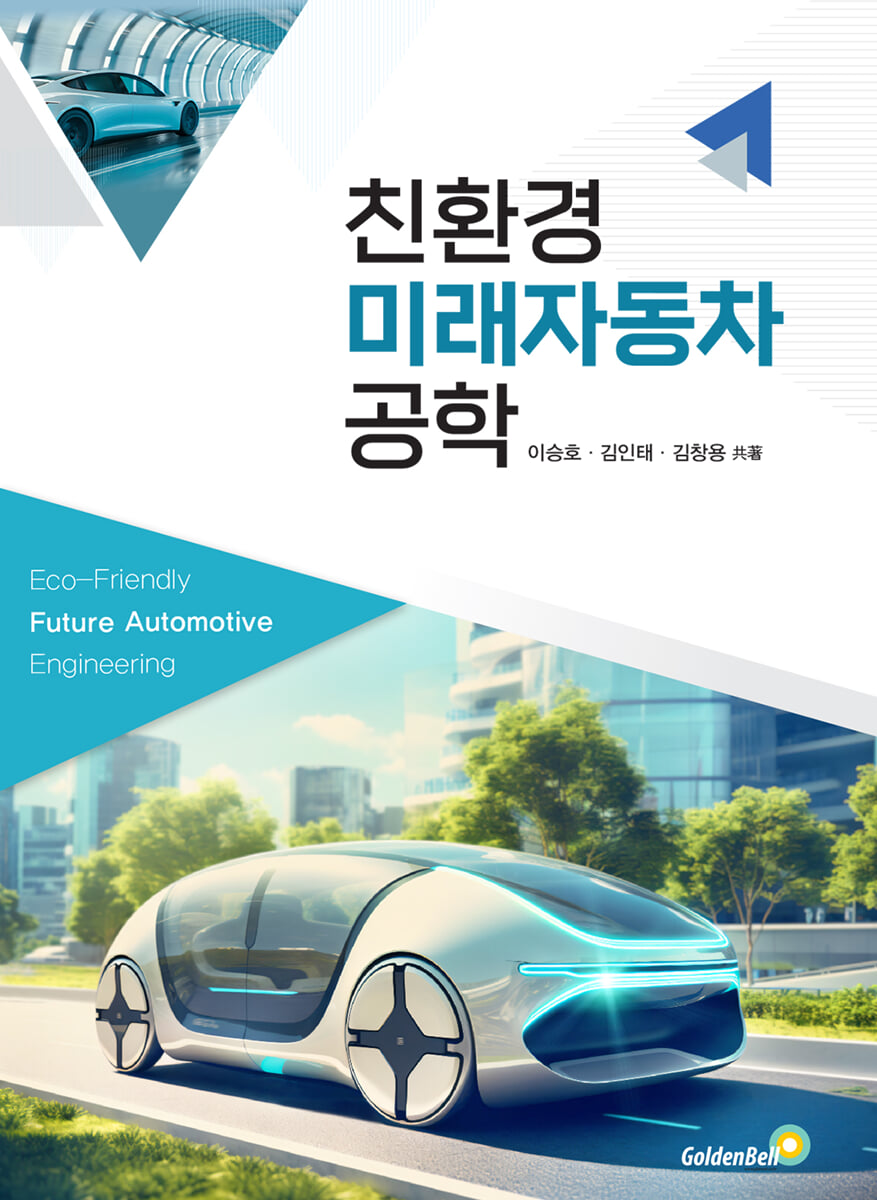
Eco-friendly future automobile engineering
 |
Description
Book Introduction
"Eco-Friendly Future Automobile Engineering" is a specialized textbook that comprehensively and systematically covers the current and future trends in automobile technology, from gasoline internal combustion engine vehicles to electric vehicles (EVs), hybrid electric vehicles (HEVs), autonomous vehicles, and hydrogen fuel cell vehicles (FCEVs).
This book is designed to help you learn the operating principles and components of the latest eco-friendly vehicle technology step by step, based on a basic understanding of existing automotive technology.
The introduction of the book introduces the core structures and systems of internal combustion engine vehicles based on the latest technology in the changing trends of the automobile industry.
By boldly eliminating unnecessary, outdated technologies and focusing on essential content, we provide an efficient learning flow.
Afterwards, the specific system structure and operating principles of electric vehicles (based on E-GMP), hybrid vehicles (based on DN8 Sonata), autonomous vehicles (based on ADAS), and hydrogen fuel cell vehicles (based on NEXO, etc.) are explained, and each part is composed to reflect the latest technology and industry standards as of 2025.
In particular, technologies not disclosed by the manufacturer are summarized based on patent documents, and technical elements applied to actual vehicles, such as E-GMP's drive motor control, thermal management system, and TMED-Ⅱ hybrid technology, are specifically explained.
This helps readers acquire technical sense beyond simple theory to a level that can be understood and applied in real-world settings.
Additionally, it systematically introduces the overall configuration and functions of the EV system, including high-voltage safety procedures, battery management systems, charging mechanisms, and drive and power conversion systems. In the autonomous vehicle section, it also broadly covers ADAS sensor structures, driver assistance technologies, autonomous driving classifications, and the current state of technology.
The hydrogen fuel cell section is designed to deepen understanding of future hydrogen vehicles, including fuel cell stacks, hydrogen supply systems, power flow, and thermal management technologies.
This book covers the entire spectrum of technologies that will drive the future of the automotive industry, making it a valuable learning resource and practical reference for engineering students studying related fields, job seekers, technical educators, and those working in the automotive industry.
In the rapidly changing mobility paradigm, this book faithfully fulfills its role as a guide, guiding readers to simultaneously acquire both technical foundations and practical experience.
This book is designed to help you learn the operating principles and components of the latest eco-friendly vehicle technology step by step, based on a basic understanding of existing automotive technology.
The introduction of the book introduces the core structures and systems of internal combustion engine vehicles based on the latest technology in the changing trends of the automobile industry.
By boldly eliminating unnecessary, outdated technologies and focusing on essential content, we provide an efficient learning flow.
Afterwards, the specific system structure and operating principles of electric vehicles (based on E-GMP), hybrid vehicles (based on DN8 Sonata), autonomous vehicles (based on ADAS), and hydrogen fuel cell vehicles (based on NEXO, etc.) are explained, and each part is composed to reflect the latest technology and industry standards as of 2025.
In particular, technologies not disclosed by the manufacturer are summarized based on patent documents, and technical elements applied to actual vehicles, such as E-GMP's drive motor control, thermal management system, and TMED-Ⅱ hybrid technology, are specifically explained.
This helps readers acquire technical sense beyond simple theory to a level that can be understood and applied in real-world settings.
Additionally, it systematically introduces the overall configuration and functions of the EV system, including high-voltage safety procedures, battery management systems, charging mechanisms, and drive and power conversion systems. In the autonomous vehicle section, it also broadly covers ADAS sensor structures, driver assistance technologies, autonomous driving classifications, and the current state of technology.
The hydrogen fuel cell section is designed to deepen understanding of future hydrogen vehicles, including fuel cell stacks, hydrogen supply systems, power flow, and thermal management technologies.
This book covers the entire spectrum of technologies that will drive the future of the automotive industry, making it a valuable learning resource and practical reference for engineering students studying related fields, job seekers, technical educators, and those working in the automotive industry.
In the rapidly changing mobility paradigm, this book faithfully fulfills its role as a guide, guiding readers to simultaneously acquire both technical foundations and practical experience.
index
Part 00 Intro intro
1.
Car Overview
2.
internal combustion engine vehicles
3.
electric cars
4.
self-driving cars
5.
hybrid cars
6.
hydrogen fuel cell vehicles
Part 01 Gasoline-based internal combustion engine vehicles
Chapter 01 Power Generation System
1.1 Overview of the organization
1.2 Organizational Structure
1.3 Intake device
1.4 Supercharger
1.5 Lubrication device
1.6 Fuel system of gasoline engine
1.7 exhaust system
1.8 Emissions and Countermeasures
Chapter 02 Power Transmission System
2.1 How the car drives
2.2 Clutch
2.3 Transmission
2.4 Drive Line
2.5 Final & Differential Gear
2.6 Wheel & Tire
Chapter 03 Suspension System
3.1 Suspension System Overview
3.2 Car vibration and ride comfort
3.3 Vibration of mass on spring
3.4 Mass vibration under spring
3.5 Components of the suspension system
3.6 Classification of suspension systems
Chapter 04 Steering System
4.1 Steering System Overview
4.2 Hydraulic power steering system
4.3 Electronically Controlled Hydraulic Power Steering (EPS)
4.4 Electric power steering
4.5 4-wheel steering
4.6 Wheel Alignment
Chapter 05 Brake System
5.1 Overview of the brake system
5.2 Hydraulic brakes
5.3 Pneumatic brakes
5.4 Parking Brake
5.5 Auxiliary deceleration brake
5.6 Electronically Controlled Braking System (ABS)
5.7 Electronic Brake Force Distribution (EBD)
5.8 Electronically Controlled Traction Control System (TCS)
5.9 Electronic Stability Control (ESC)
Chapter 06 Battlefield System
6.1 Starting Device
6.2 Charging device
6.3 Ignition device
6.4 Refrigeration and Air Conditioning Systems
Part 02 E-GMP-based electric vehicles
Chapter 01 E-GMP EV Overview
1.1 Why Electric Vehicles Are Needed
1.2 Features of E-GMP-based EVs
Chapter 02 High-Voltage Systems
2.1 High Voltage Safety Rules
2.2 High Voltage Shutoff Procedure
2.3 High-voltage circuits
2.4 High-voltage power distribution flow
Chapter 03 High-Voltage Battery System
3.1 Representative battery specifications applied to E-GMP
3.2 High-voltage battery system assembly configuration
3.3 High-voltage battery system functions
3.4 High-voltage battery assembly components and their roles
Chapter 04 Charging System
4.1 High-voltage battery charging system
4.2 High-voltage battery charging system components
4.3 High-voltage battery charging mechanism
Chapter 05 Drive System
5.1 Overview of the PE System
5.2 Inverter Basics
5.3 Multi-inverter functions
5.4 Drive motor
5.5 Reducer
5.6 DAS
Chapter 06 Thermal Management System
6.1 Overview of the thermal management system
6.2 Electric Vehicle Thermal Management System
6.3 Understanding the thermal management system by system
Chapter 07 Battlefield and Specialization System
7.1 Battlefield System
7.2 Specialized Systems
Chapter 08 Key Technologies of the Second Generation of E-GMP
8.1 Overview of E-GMP 2nd Generation
8.2 High-efficiency, high-output drive motor technology
8.3 Regenerative braking control technology
8.4 Thermal Management Control Technology
Part 03 Self-driving cars
Chapter 01 Advanced Driver Assistance Systems
1.1 Sensors used in ADAS
1.2 Driver Assistance Systems
1.3 Driver Parking Assistance System
Chapter 02 Autonomous Driving System
2.1 Sensors used in autonomous driving
2.2 Overview of Autonomous Driving Technology
2.3 Classification of autonomous driving technologies
2.4 Current Issues in Autonomous Driving
Part 04 Hybrid Electric Vehicles
Chapter 01 Overview of Hybrid Electric Vehicles
1.1 Hyundai and Kia's hybrid technology
1.2 Hybrid classification by power transmission method
1.3 Characteristics of Hybrid Electric Vehicle Engines
Chapter 02 Hybrid Electric Vehicle Battery System
2.1 TMED type hybrid
2.2 High-voltage battery system
2.3 High-voltage battery control system
2.4 Low-voltage battery system
Chapter 03 Hybrid Electric Vehicle Motor System
3.1 TMED-type hybrid system configuration
3.2 Hybrid Electric Vehicle Controller
3.3 Hybrid Motor Cooling System
3.4 Automatic transmission cooling system
3.5 New Technology TMED-Ⅱ
Part 05 Hydrogen Fuel Cell Vehicles
Chapter 01 Overview of Hydrogen Fuel Cell Vehicles
1.1 Basic structure of a hydrogen fuel cell vehicle
1.2 Driving characteristics of hydrogen fuel cell vehicles
1.3 Hydrogen fuel cell configuration
1.4 Fuel Cell Control Unit
Chapter 02 Fuel Cell System
2.1 Fuel cell vehicle power source
2.2 Fuel cell stack
2.3 Stack driving device configuration and function
2.4 Hydrogen fuel supply system
2.5 Air supply system
2.6 Thermal Management System
Chapter 03 High-Voltage Systems
3.1 Power Conversion Flow Relationship
3.2 High-voltage circuit diagram
3.3 Power Conversion Components and Principles
3.4 Power conversion by driving condition
Chapter 04 High-Voltage Battery System
4.1 Power Relay Assembly
4.2 High-voltage batteries
4.3 Low voltage batteries
Chapter 05 Drive System
5.1 Configuration of the drive system
5.2 Motor Control Unit
5.3 Drive motor
5.4 Reducer
5.5 Electronic shift lever
1.
Car Overview
2.
internal combustion engine vehicles
3.
electric cars
4.
self-driving cars
5.
hybrid cars
6.
hydrogen fuel cell vehicles
Part 01 Gasoline-based internal combustion engine vehicles
Chapter 01 Power Generation System
1.1 Overview of the organization
1.2 Organizational Structure
1.3 Intake device
1.4 Supercharger
1.5 Lubrication device
1.6 Fuel system of gasoline engine
1.7 exhaust system
1.8 Emissions and Countermeasures
Chapter 02 Power Transmission System
2.1 How the car drives
2.2 Clutch
2.3 Transmission
2.4 Drive Line
2.5 Final & Differential Gear
2.6 Wheel & Tire
Chapter 03 Suspension System
3.1 Suspension System Overview
3.2 Car vibration and ride comfort
3.3 Vibration of mass on spring
3.4 Mass vibration under spring
3.5 Components of the suspension system
3.6 Classification of suspension systems
Chapter 04 Steering System
4.1 Steering System Overview
4.2 Hydraulic power steering system
4.3 Electronically Controlled Hydraulic Power Steering (EPS)
4.4 Electric power steering
4.5 4-wheel steering
4.6 Wheel Alignment
Chapter 05 Brake System
5.1 Overview of the brake system
5.2 Hydraulic brakes
5.3 Pneumatic brakes
5.4 Parking Brake
5.5 Auxiliary deceleration brake
5.6 Electronically Controlled Braking System (ABS)
5.7 Electronic Brake Force Distribution (EBD)
5.8 Electronically Controlled Traction Control System (TCS)
5.9 Electronic Stability Control (ESC)
Chapter 06 Battlefield System
6.1 Starting Device
6.2 Charging device
6.3 Ignition device
6.4 Refrigeration and Air Conditioning Systems
Part 02 E-GMP-based electric vehicles
Chapter 01 E-GMP EV Overview
1.1 Why Electric Vehicles Are Needed
1.2 Features of E-GMP-based EVs
Chapter 02 High-Voltage Systems
2.1 High Voltage Safety Rules
2.2 High Voltage Shutoff Procedure
2.3 High-voltage circuits
2.4 High-voltage power distribution flow
Chapter 03 High-Voltage Battery System
3.1 Representative battery specifications applied to E-GMP
3.2 High-voltage battery system assembly configuration
3.3 High-voltage battery system functions
3.4 High-voltage battery assembly components and their roles
Chapter 04 Charging System
4.1 High-voltage battery charging system
4.2 High-voltage battery charging system components
4.3 High-voltage battery charging mechanism
Chapter 05 Drive System
5.1 Overview of the PE System
5.2 Inverter Basics
5.3 Multi-inverter functions
5.4 Drive motor
5.5 Reducer
5.6 DAS
Chapter 06 Thermal Management System
6.1 Overview of the thermal management system
6.2 Electric Vehicle Thermal Management System
6.3 Understanding the thermal management system by system
Chapter 07 Battlefield and Specialization System
7.1 Battlefield System
7.2 Specialized Systems
Chapter 08 Key Technologies of the Second Generation of E-GMP
8.1 Overview of E-GMP 2nd Generation
8.2 High-efficiency, high-output drive motor technology
8.3 Regenerative braking control technology
8.4 Thermal Management Control Technology
Part 03 Self-driving cars
Chapter 01 Advanced Driver Assistance Systems
1.1 Sensors used in ADAS
1.2 Driver Assistance Systems
1.3 Driver Parking Assistance System
Chapter 02 Autonomous Driving System
2.1 Sensors used in autonomous driving
2.2 Overview of Autonomous Driving Technology
2.3 Classification of autonomous driving technologies
2.4 Current Issues in Autonomous Driving
Part 04 Hybrid Electric Vehicles
Chapter 01 Overview of Hybrid Electric Vehicles
1.1 Hyundai and Kia's hybrid technology
1.2 Hybrid classification by power transmission method
1.3 Characteristics of Hybrid Electric Vehicle Engines
Chapter 02 Hybrid Electric Vehicle Battery System
2.1 TMED type hybrid
2.2 High-voltage battery system
2.3 High-voltage battery control system
2.4 Low-voltage battery system
Chapter 03 Hybrid Electric Vehicle Motor System
3.1 TMED-type hybrid system configuration
3.2 Hybrid Electric Vehicle Controller
3.3 Hybrid Motor Cooling System
3.4 Automatic transmission cooling system
3.5 New Technology TMED-Ⅱ
Part 05 Hydrogen Fuel Cell Vehicles
Chapter 01 Overview of Hydrogen Fuel Cell Vehicles
1.1 Basic structure of a hydrogen fuel cell vehicle
1.2 Driving characteristics of hydrogen fuel cell vehicles
1.3 Hydrogen fuel cell configuration
1.4 Fuel Cell Control Unit
Chapter 02 Fuel Cell System
2.1 Fuel cell vehicle power source
2.2 Fuel cell stack
2.3 Stack driving device configuration and function
2.4 Hydrogen fuel supply system
2.5 Air supply system
2.6 Thermal Management System
Chapter 03 High-Voltage Systems
3.1 Power Conversion Flow Relationship
3.2 High-voltage circuit diagram
3.3 Power Conversion Components and Principles
3.4 Power conversion by driving condition
Chapter 04 High-Voltage Battery System
4.1 Power Relay Assembly
4.2 High-voltage batteries
4.3 Low voltage batteries
Chapter 05 Drive System
5.1 Configuration of the drive system
5.2 Motor Control Unit
5.3 Drive motor
5.4 Reducer
5.5 Electronic shift lever
GOODS SPECIFICS
- Date of issue: October 13, 2025
- Page count, weight, size: 628 pages | 1,045g | 190*260*35mm
- ISBN13: 9791158067717
- ISBN10: 1158067712
You may also like
카테고리
korean


korean

![GQ KOREA Mark (Monthly): December [2025]](http://librairie.coreenne.fr/cdn/shop/files/8ef265dbbfbf186523ed75ba7319009d.jpg?v=1765340328&width=3840)


