

Human Resource Management for Sustainable Growth
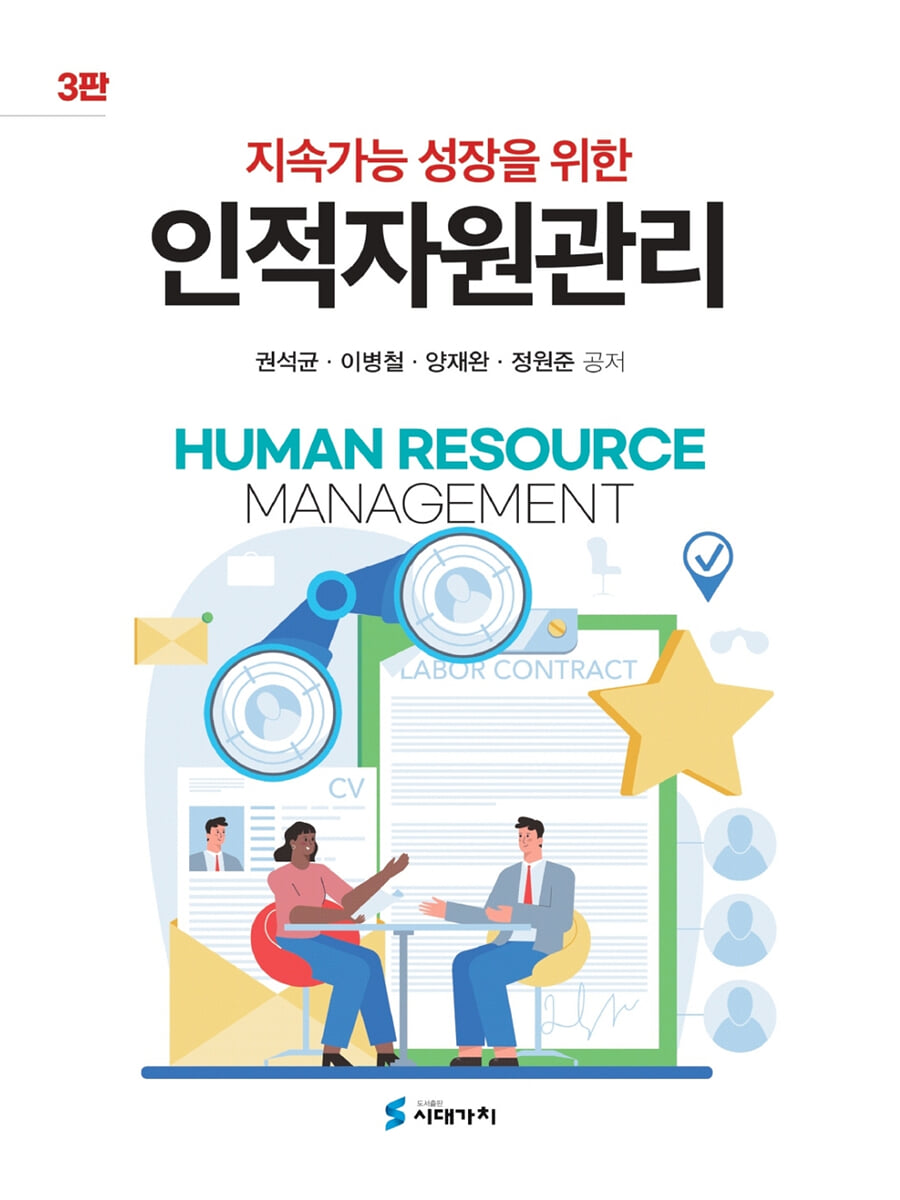 |
Description
Book Introduction
The past four years have witnessed and continue to witness significant changes, including the end of the COVID-19 pandemic, the rapid advancement of the Fourth Industrial Revolution, driven by the AI revolution, the proliferation of IT-based companies, and the emergence of neo-protectionism.
The content of these changes was introduced and their impact on human resource management was summarized.
In addition, we updated all data on labor market and employment trends that have changed over time and explained their impact on human resource management.
The content of these changes was introduced and their impact on human resource management was summarized.
In addition, we updated all data on labor market and employment trends that have changed over time and explained their impact on human resource management.
- You can preview some of the book's contents.
Preview
index
Part 1: Overview of Human Resource Management
Chapter 1 Human Resource Management and Personnel Environment
1.
The significance of human resource management
1.1 Are human resources important?
1.2 Human Resource Management in Successful Companies
1.3 Functional Role of Human Resource Management
2.
Human Resources Environment and New Challenges
2.1 Progress in Globalization and Human Resource Management
2.2 The Knowledge Information Revolution and Human Resource Management
2.3 Changes in the Stakeholder Environment and Human Resource Management
3.
The impact of changes in the labor market
3.1 Knowledge worker-centered labor market
3.2 The Advent of an Aging Society and Changes in Employment Conditions
3.3 Labor market flexibility and increasing non-regular employment
3.4 Human Resource Management for Increasing Diversity and Compliance
4.
The era of new employment relations
4.1 The End of Long-Term Employment and the Psychological Contract
4.2 Changes in the Characteristics of Employment Relationships
4.3 The need for a new personnel philosophy and personnel principles
References
Chapter 2: Evolution of Human Resource Management Systems
1.
Human Resource Management System
1.1 Structure of the Human Resource Management System
1.2 Four major activity systems of human resource management
1.3 Human Resource Management Foundation System
1.4 Human Resource Management Performance and Management Strategy
2.
Changes in human resource management systems
2.1 Changes in the personnel system due to organizational changes
2.2 Changes in human resource function activities
3.
The historical evolution of human resource management
3.1 Scientific management and ergonomic approach
3.2 Human Relations Movement and Behavioral Science Approach
3.3 Human Rights Movement and Open System Approach
3.4 Global Competition and Performance-Based Approach
3.5 The Advent of the New Economy and a Value Approach
4.
A new era of human resource management
4.1 Strategic Human Resource Management
4.2 Value-Oriented Human Resource Management
4.3 Participatory Human Resource Management
5.
Exploring Korean-style human resource management
5.1 A Historical Perspective on Human Resource Management in Korea
5.2 Korean Human Resource Management Model
References
Part 2: Human Resource Management for Strategy and Jobs
Chapter 3 Strategic Human Resource Management
1.
The Importance of Strategic Human Resource Management
1.1 Goals and Significance of Strategic Human Resource Management
1.2 Levels and relative contributions of human resource management
1.3 Related debates and components
2.
Human resource composition and suitability model
2.1 Human resource content and process structure
2.2 Context Alignment Model
3.
Fit between management strategy and human resources
3.1 Alignment of Management Strategy and Human Resources
3.2 Types of human resource composition
4.
Establishing a human resource plan
4.1 Significance of Human Resource Planning
4.2 Human Resources Demand Analysis
4.3 Human Resources Supply Analysis
References
Chapter 4 Job-Based Human Resource Management
1.
Job Management and Design
1.1 Importance and concept of job
1.2 Job Design
1.3 Design of working hours and locations
2.
Team system operation
2.1 Evolution and Characteristics of the Team System
2.2 Autonomous Management Team
2.3 Effective operation of the team system
3.
Job analysis
3.1 Significance and content of job analysis
3.2 Procedures and methods of job analysis
3.3 Duties and Legal Regulations
4.
Competency-based human resource management
4.1 Limitations of job-oriented thinking
4.2 Competency Concept and Competency Modeling
References
Part 3: Securing and Developing Human Resources
Chapter 5 Securing Human Resources
1.
Strategic Replenishment
2.
Mother's house
2.1 Strategic Recruitment Criteria
2.2 Internal and external recruitment
2.3 Recruitment activities and evaluation
3.
First step
3.1 Significance of selection
3.2 Selection Tools
3.3 Selection criteria for selection tools
3.4 Recruiting Talent for the New Era
4.
organizational socialization
References
Chapter 6 Human Resource Development
1.
Human Resource Development Strategy
1.1 Strategic Impact of Human Resource Development
1.2 Approaches to Human Resource Development
2.
Training and Development
2.1 Need Analysis
2.2 Training design process
2.3 Training Methods
2.4 Implementation of training
2.5 Effectiveness Evaluation
3.
Career Development
3.1 Definition of Career Development
3.2 Career Development Model and Career Planning
3.3 Changing Career Development Environment
3.4 New Issues in Career Development
3.5 Career development activities at the individual/organizational level
References
Part 4: Utilization and Compensation of Human Resources
Chapter 7 Performance Management and Personnel Evaluation
1.
Understanding Performance Management Systems
1.1 What is performance management?
1.2 Factors causing performance management failure and approaches
1.3 Strategic Approach to Performance Management
1.4 Performance Management and Competency-Based Management
2.
Implementation of personnel evaluation
2.1 Significance and Purpose of Personnel Evaluation
2.2 Selecting an effective performance evaluation method
2.3 Performance Evaluation Areas and Methods
3.
Understanding and utilizing evaluation results
3.1 Evaluation Errors
3.2 Use of Evaluation Results
4.
Changes in performance evaluation
4.1 Technological advancements and changes in performance evaluation
4.2 Reestablishing the direction and concept of performance evaluation
References
Chapter 8 Compensation Management and Motivation
1.
The significance and components of compensation management
1.1 Significance of compensation management
1.2 Principle of Compensation
1.3 Components of Compensation
2.
Compensation System Establishment Strategy
2.1 Establishment environment for compensation system
2.2 Strategic Goals of the Compensation System
2.3 Compensation Philosophy
2.4 Compensation Strategy
2.5 Organizational Life Cycle and Compensation
3.
Design of the reward system
3.1 Compensation System Design Process
3.2 Job Evaluation and Job Structure
3.3 Design of wage structure
4.
Wage type and variable performance-based pay
4.1 Wage Type
4.2 Variable (performance) pay
4.3 Wage Discrimination and Wage Dispersion
References
Chapter 9 Executive Compensation and Welfare
1.
Executive compensation
1.1 Understanding Executive Compensation
1.2 Management Compensation Management
1.3 Determinants of Executive Compensation
1.4 Issues Related to Executive Compensation
2.
Welfare 399
2.1 Understanding and Planning Welfare Benefits
2.2 Types of welfare systems
2.3 Welfare-related matters
References
Part 5: Effectiveness of Human Resource Management
Chapter 10 High-Performance Human Resource Management
1.
Understanding High-Performance Work Systems
1.1 What is a high-performance work system?
1.2 Composition of a high-performance work system
2.
The effects of high-performance work systems
3.
Implementation of a high-performance work system
References
Chapter 11: Employment Relations of Cooperation and Mutual Benefit
1. Understanding and theoretical basis of employment relationships
1.1 The concept and importance of employment relationships
1.2 Key theories and perspectives on employment relations
1.3 Subjects of the employment relationship: employer, worker, and state
1.4 Employment contract and psychological contract
2. Structure and actual operation of labor-management relations
2.1 Structure and Types of Labor-Management Relations
2.2 Collective Employment Relations: Trade Unions, Collective Bargaining, and Collective Agreements
2.3 Individual employment relationships: grievance handling, disciplinary action, dismissal, and discrimination.
3. Changes and qualitative improvements in modern employment relations
3.1 Changes in Employment Relationships: Non-regular Work, Platform Work, Digital Transformation, and AI Utilization
3.2 Quality of Employment Relationships: Trust, Participation, and Employee Voice
3.3 Conflict and Cooperation: Dispute Resolution and Win-Win Labor-Management Relations
References
Chapter 12 Global Human Resource Management
1.
Human Resource Management in a Global Environment
2.
Understanding the cultural environment
2.1 Definition of Culture
2.2 Hofstede's cross-cultural studies
2.3 GLOBE Project
3.
Expatriate Management
3.1 Global Management Stage and Dispatched Managers
3.2 The Role of Overseas Dispatch Managers
3.3 Selection of managers dispatched overseas
3.4 Management of the return process of managers dispatched overseas
4.
Global Human Resource Development
4.1 The Need and Characteristics of Global Human Resource Development
4.2 Global Virtual Team Training
4.3 Developing a Global Mindset
4.4 Development and Utilization of Global Leaders
5.
The Role of the Global Human Resources Department
References
Chapter 1 Human Resource Management and Personnel Environment
1.
The significance of human resource management
1.1 Are human resources important?
1.2 Human Resource Management in Successful Companies
1.3 Functional Role of Human Resource Management
2.
Human Resources Environment and New Challenges
2.1 Progress in Globalization and Human Resource Management
2.2 The Knowledge Information Revolution and Human Resource Management
2.3 Changes in the Stakeholder Environment and Human Resource Management
3.
The impact of changes in the labor market
3.1 Knowledge worker-centered labor market
3.2 The Advent of an Aging Society and Changes in Employment Conditions
3.3 Labor market flexibility and increasing non-regular employment
3.4 Human Resource Management for Increasing Diversity and Compliance
4.
The era of new employment relations
4.1 The End of Long-Term Employment and the Psychological Contract
4.2 Changes in the Characteristics of Employment Relationships
4.3 The need for a new personnel philosophy and personnel principles
References
Chapter 2: Evolution of Human Resource Management Systems
1.
Human Resource Management System
1.1 Structure of the Human Resource Management System
1.2 Four major activity systems of human resource management
1.3 Human Resource Management Foundation System
1.4 Human Resource Management Performance and Management Strategy
2.
Changes in human resource management systems
2.1 Changes in the personnel system due to organizational changes
2.2 Changes in human resource function activities
3.
The historical evolution of human resource management
3.1 Scientific management and ergonomic approach
3.2 Human Relations Movement and Behavioral Science Approach
3.3 Human Rights Movement and Open System Approach
3.4 Global Competition and Performance-Based Approach
3.5 The Advent of the New Economy and a Value Approach
4.
A new era of human resource management
4.1 Strategic Human Resource Management
4.2 Value-Oriented Human Resource Management
4.3 Participatory Human Resource Management
5.
Exploring Korean-style human resource management
5.1 A Historical Perspective on Human Resource Management in Korea
5.2 Korean Human Resource Management Model
References
Part 2: Human Resource Management for Strategy and Jobs
Chapter 3 Strategic Human Resource Management
1.
The Importance of Strategic Human Resource Management
1.1 Goals and Significance of Strategic Human Resource Management
1.2 Levels and relative contributions of human resource management
1.3 Related debates and components
2.
Human resource composition and suitability model
2.1 Human resource content and process structure
2.2 Context Alignment Model
3.
Fit between management strategy and human resources
3.1 Alignment of Management Strategy and Human Resources
3.2 Types of human resource composition
4.
Establishing a human resource plan
4.1 Significance of Human Resource Planning
4.2 Human Resources Demand Analysis
4.3 Human Resources Supply Analysis
References
Chapter 4 Job-Based Human Resource Management
1.
Job Management and Design
1.1 Importance and concept of job
1.2 Job Design
1.3 Design of working hours and locations
2.
Team system operation
2.1 Evolution and Characteristics of the Team System
2.2 Autonomous Management Team
2.3 Effective operation of the team system
3.
Job analysis
3.1 Significance and content of job analysis
3.2 Procedures and methods of job analysis
3.3 Duties and Legal Regulations
4.
Competency-based human resource management
4.1 Limitations of job-oriented thinking
4.2 Competency Concept and Competency Modeling
References
Part 3: Securing and Developing Human Resources
Chapter 5 Securing Human Resources
1.
Strategic Replenishment
2.
Mother's house
2.1 Strategic Recruitment Criteria
2.2 Internal and external recruitment
2.3 Recruitment activities and evaluation
3.
First step
3.1 Significance of selection
3.2 Selection Tools
3.3 Selection criteria for selection tools
3.4 Recruiting Talent for the New Era
4.
organizational socialization
References
Chapter 6 Human Resource Development
1.
Human Resource Development Strategy
1.1 Strategic Impact of Human Resource Development
1.2 Approaches to Human Resource Development
2.
Training and Development
2.1 Need Analysis
2.2 Training design process
2.3 Training Methods
2.4 Implementation of training
2.5 Effectiveness Evaluation
3.
Career Development
3.1 Definition of Career Development
3.2 Career Development Model and Career Planning
3.3 Changing Career Development Environment
3.4 New Issues in Career Development
3.5 Career development activities at the individual/organizational level
References
Part 4: Utilization and Compensation of Human Resources
Chapter 7 Performance Management and Personnel Evaluation
1.
Understanding Performance Management Systems
1.1 What is performance management?
1.2 Factors causing performance management failure and approaches
1.3 Strategic Approach to Performance Management
1.4 Performance Management and Competency-Based Management
2.
Implementation of personnel evaluation
2.1 Significance and Purpose of Personnel Evaluation
2.2 Selecting an effective performance evaluation method
2.3 Performance Evaluation Areas and Methods
3.
Understanding and utilizing evaluation results
3.1 Evaluation Errors
3.2 Use of Evaluation Results
4.
Changes in performance evaluation
4.1 Technological advancements and changes in performance evaluation
4.2 Reestablishing the direction and concept of performance evaluation
References
Chapter 8 Compensation Management and Motivation
1.
The significance and components of compensation management
1.1 Significance of compensation management
1.2 Principle of Compensation
1.3 Components of Compensation
2.
Compensation System Establishment Strategy
2.1 Establishment environment for compensation system
2.2 Strategic Goals of the Compensation System
2.3 Compensation Philosophy
2.4 Compensation Strategy
2.5 Organizational Life Cycle and Compensation
3.
Design of the reward system
3.1 Compensation System Design Process
3.2 Job Evaluation and Job Structure
3.3 Design of wage structure
4.
Wage type and variable performance-based pay
4.1 Wage Type
4.2 Variable (performance) pay
4.3 Wage Discrimination and Wage Dispersion
References
Chapter 9 Executive Compensation and Welfare
1.
Executive compensation
1.1 Understanding Executive Compensation
1.2 Management Compensation Management
1.3 Determinants of Executive Compensation
1.4 Issues Related to Executive Compensation
2.
Welfare 399
2.1 Understanding and Planning Welfare Benefits
2.2 Types of welfare systems
2.3 Welfare-related matters
References
Part 5: Effectiveness of Human Resource Management
Chapter 10 High-Performance Human Resource Management
1.
Understanding High-Performance Work Systems
1.1 What is a high-performance work system?
1.2 Composition of a high-performance work system
2.
The effects of high-performance work systems
3.
Implementation of a high-performance work system
References
Chapter 11: Employment Relations of Cooperation and Mutual Benefit
1. Understanding and theoretical basis of employment relationships
1.1 The concept and importance of employment relationships
1.2 Key theories and perspectives on employment relations
1.3 Subjects of the employment relationship: employer, worker, and state
1.4 Employment contract and psychological contract
2. Structure and actual operation of labor-management relations
2.1 Structure and Types of Labor-Management Relations
2.2 Collective Employment Relations: Trade Unions, Collective Bargaining, and Collective Agreements
2.3 Individual employment relationships: grievance handling, disciplinary action, dismissal, and discrimination.
3. Changes and qualitative improvements in modern employment relations
3.1 Changes in Employment Relationships: Non-regular Work, Platform Work, Digital Transformation, and AI Utilization
3.2 Quality of Employment Relationships: Trust, Participation, and Employee Voice
3.3 Conflict and Cooperation: Dispute Resolution and Win-Win Labor-Management Relations
References
Chapter 12 Global Human Resource Management
1.
Human Resource Management in a Global Environment
2.
Understanding the cultural environment
2.1 Definition of Culture
2.2 Hofstede's cross-cultural studies
2.3 GLOBE Project
3.
Expatriate Management
3.1 Global Management Stage and Dispatched Managers
3.2 The Role of Overseas Dispatch Managers
3.3 Selection of managers dispatched overseas
3.4 Management of the return process of managers dispatched overseas
4.
Global Human Resource Development
4.1 The Need and Characteristics of Global Human Resource Development
4.2 Global Virtual Team Training
4.3 Developing a Global Mindset
4.4 Development and Utilization of Global Leaders
5.
The Role of the Global Human Resources Department
References
Publisher's Review
Preface to the 3rd edition
Eight years after the first edition of this book was published and four years after the second edition, the revised third edition has been published.
The past four years have witnessed and continue to witness significant changes, including the end of the COVID-19 pandemic, the rapid advancement of the Fourth Industrial Revolution, driven by the AI revolution, the proliferation of IT-based companies, and the emergence of neo-protectionism.
The content of these changes was introduced and their impact on human resource management was summarized.
In addition, we updated all data on labor market and employment trends that have changed over time and explained their impact on human resource management.
The biggest change in this revised edition is that the writing staff has been strengthened by bringing in new co-authors.
Professor Jeong Won-jun, newly appointed professor at Soongsil University, is a rising star in the field of human resources and labor-management relations as a young scholar.
The new composition of the writing staff has made this revised edition even richer.
I look forward to creating a more coherent book as 'One Team' in the future.
Meanwhile, in terms of the book's structure, a new chapter, 'Employment Relationships of Mutual Prosperity and Cooperation,' was added to cover labor-management relations and employee relations that were not previously covered in this book.
The new chapter is located in Chapter 11 as the second task of ‘Challenges of Human Resource Management in Part 5.’
The existing 'Chapter 11 Global Human Resource Management' has been moved to Chapter 12, making a total of 12 chapters.
Accordingly, the book's length increased by about 25 pages.
Although the academic burden on students has increased somewhat over the past semester, I hope that they will be able to study a broader range of human resource management topics and enjoy their studies even more.
The main contents revised in Part 1 include changes in the personnel environment, changes in working conditions due to the rapidly approaching AI revolution, and the debate over the decline of globalization due to the recent trend of neo-protectionism.
We have updated information on changes in the working population structure that will occur as we enter a super-aged society in 2025, as well as various employment and labor market-related statistics.
Part 2 adds recent research trends in strategic human resource management and revises the book by removing outdated cases.
There are no special changes in traditional job analysis techniques.
In Part 3, Chapter 5 on securing human resources was revised to a somewhat greater extent.
First, we added examples of major domestic companies in strategic recruitment to provide a more realistic explanation.
Additionally, the strategic differences between external and internal recruitment were compared and explained.
In recruitment, we updated all trends in the talent profiles of domestic companies.
In addition, there were detailed revisions, such as summarizing and reinforcing the recruitment method.
In Chapter 6, the human resource development strategy was strengthened and some of the contents were revised.
And the changes resulting from the increase in female workforce in career development were explained.
Chapter 7 of Part 4 includes additional content on OKR-based performance management and ESG-based management performance, which are being aggressively introduced in industrial settings recently.
Chapter 8 updates relevant statistics, including the minimum hourly wage and the current status of corporate wage system adoption, and explains the shortage of AI-related personnel.
Chapter 9 updates statistics on total CEO compensation by country and links the compensation of executives in the United States and Korea with employee compensation to strengthen practical implications.
Labor statistics on welfare benefits have also been updated.
In Part 5, as mentioned earlier, Chapter 11 on employment relationships of mutual benefit and cooperation was added.
Chapter 11 goes beyond explaining traditional theories and laws and systems of employment relations to comprehensively address the triangular relationship between labor, management, and the government, the latest labor market issues, actual field cases, and the modern values of employment relations, such as coexistence and cooperation based on trust and participation.
Through this, we designed the course to enable readers studying human resource management to critically analyze real-world problems beyond theory and develop practical capabilities to proactively respond to the changing employment environment.
In Chapter 12, Global Human Resource Management, some old domestic and international cases were deleted, and the overseas production cases of Hyundai and Kia Motors and SKC America were revised.
As explained above, significant revisions have been made to the content and structure of this book.
However, the purpose and perspective of writing this book, as well as its core content and argument, remain unchanged.
This is well described in the preface to the first edition.
We hope that the unique appearance of this book, which sets it apart from other textbooks, will continue to retain its significance even in this changing era.
I would like to express my gratitude to Mr. Kim Gwang-beom, CEO of Sidaegachi Publishing, and his staff for their assistance in revising this book during difficult times.
August 2025
All authors
Eight years after the first edition of this book was published and four years after the second edition, the revised third edition has been published.
The past four years have witnessed and continue to witness significant changes, including the end of the COVID-19 pandemic, the rapid advancement of the Fourth Industrial Revolution, driven by the AI revolution, the proliferation of IT-based companies, and the emergence of neo-protectionism.
The content of these changes was introduced and their impact on human resource management was summarized.
In addition, we updated all data on labor market and employment trends that have changed over time and explained their impact on human resource management.
The biggest change in this revised edition is that the writing staff has been strengthened by bringing in new co-authors.
Professor Jeong Won-jun, newly appointed professor at Soongsil University, is a rising star in the field of human resources and labor-management relations as a young scholar.
The new composition of the writing staff has made this revised edition even richer.
I look forward to creating a more coherent book as 'One Team' in the future.
Meanwhile, in terms of the book's structure, a new chapter, 'Employment Relationships of Mutual Prosperity and Cooperation,' was added to cover labor-management relations and employee relations that were not previously covered in this book.
The new chapter is located in Chapter 11 as the second task of ‘Challenges of Human Resource Management in Part 5.’
The existing 'Chapter 11 Global Human Resource Management' has been moved to Chapter 12, making a total of 12 chapters.
Accordingly, the book's length increased by about 25 pages.
Although the academic burden on students has increased somewhat over the past semester, I hope that they will be able to study a broader range of human resource management topics and enjoy their studies even more.
The main contents revised in Part 1 include changes in the personnel environment, changes in working conditions due to the rapidly approaching AI revolution, and the debate over the decline of globalization due to the recent trend of neo-protectionism.
We have updated information on changes in the working population structure that will occur as we enter a super-aged society in 2025, as well as various employment and labor market-related statistics.
Part 2 adds recent research trends in strategic human resource management and revises the book by removing outdated cases.
There are no special changes in traditional job analysis techniques.
In Part 3, Chapter 5 on securing human resources was revised to a somewhat greater extent.
First, we added examples of major domestic companies in strategic recruitment to provide a more realistic explanation.
Additionally, the strategic differences between external and internal recruitment were compared and explained.
In recruitment, we updated all trends in the talent profiles of domestic companies.
In addition, there were detailed revisions, such as summarizing and reinforcing the recruitment method.
In Chapter 6, the human resource development strategy was strengthened and some of the contents were revised.
And the changes resulting from the increase in female workforce in career development were explained.
Chapter 7 of Part 4 includes additional content on OKR-based performance management and ESG-based management performance, which are being aggressively introduced in industrial settings recently.
Chapter 8 updates relevant statistics, including the minimum hourly wage and the current status of corporate wage system adoption, and explains the shortage of AI-related personnel.
Chapter 9 updates statistics on total CEO compensation by country and links the compensation of executives in the United States and Korea with employee compensation to strengthen practical implications.
Labor statistics on welfare benefits have also been updated.
In Part 5, as mentioned earlier, Chapter 11 on employment relationships of mutual benefit and cooperation was added.
Chapter 11 goes beyond explaining traditional theories and laws and systems of employment relations to comprehensively address the triangular relationship between labor, management, and the government, the latest labor market issues, actual field cases, and the modern values of employment relations, such as coexistence and cooperation based on trust and participation.
Through this, we designed the course to enable readers studying human resource management to critically analyze real-world problems beyond theory and develop practical capabilities to proactively respond to the changing employment environment.
In Chapter 12, Global Human Resource Management, some old domestic and international cases were deleted, and the overseas production cases of Hyundai and Kia Motors and SKC America were revised.
As explained above, significant revisions have been made to the content and structure of this book.
However, the purpose and perspective of writing this book, as well as its core content and argument, remain unchanged.
This is well described in the preface to the first edition.
We hope that the unique appearance of this book, which sets it apart from other textbooks, will continue to retain its significance even in this changing era.
I would like to express my gratitude to Mr. Kim Gwang-beom, CEO of Sidaegachi Publishing, and his staff for their assistance in revising this book during difficult times.
August 2025
All authors
GOODS SPECIFICS
- Date of issue: September 1, 2025
- Page count, weight, size: 544 pages | 188*257*35mm
- ISBN13: 9791199338937
- ISBN10: 1199338931
You may also like
카테고리
korean


korean

![GQ KOREA Mark (Monthly): December [2025]](http://librairie.coreenne.fr/cdn/shop/files/8ef265dbbfbf186523ed75ba7319009d.jpg?v=1765340328&width=3840)


