

Infant and Toddler Language Education
 |
Description
Book Introduction
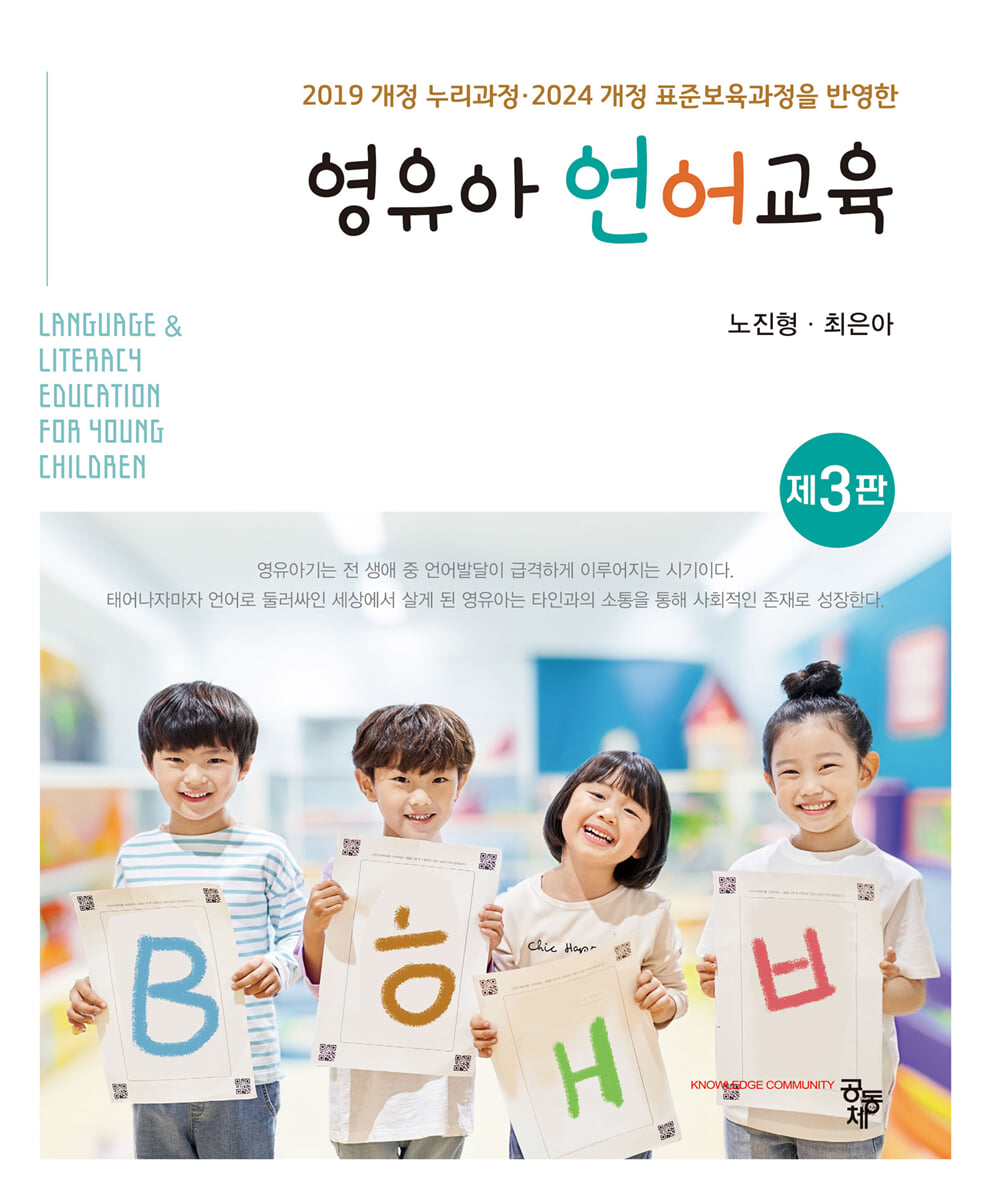
Infancy and early childhood is a period in life when language development occurs rapidly.
Infants and toddlers, who live in a world surrounded by language from the moment they are born, grow into social beings through communication with others.
During this process, basic language skills and attitudes are learned, and language habits and attitudes developed during this period will have a lifelong impact.
Despite the importance of language development, teachers and prospective teachers still face many difficulties in the methods and content of language instruction for infants and toddlers.
The authors of this book, with many years of experience in early childhood education and teaching, have felt regret about the difficulties faced by teachers in early childhood education and the current state of language education for infants and toddlers.
In the midst of this, with the announcement of the '2019 Revised Nuri Curriculum' and the '2024 Revised Standard Childcare Curriculum', early childhood education fields are emphasizing that infants and young children experience the joy of using language and meaningful learning within it.
Accordingly, the authors wrote this book based on the shared belief that teacher training is needed to teach language to infants and toddlers in accordance with the national curriculum.
In particular, the third edition added examples of language activities of young children that take place in early childhood education settings to help prospective early childhood teachers majoring in early childhood education understand the field.
In addition, the contents of the 2022 revised elementary school Korean language curriculum were added to allow for consideration of educational support measures for early childhood education.
Infants and toddlers, who live in a world surrounded by language from the moment they are born, grow into social beings through communication with others.
During this process, basic language skills and attitudes are learned, and language habits and attitudes developed during this period will have a lifelong impact.
Despite the importance of language development, teachers and prospective teachers still face many difficulties in the methods and content of language instruction for infants and toddlers.
The authors of this book, with many years of experience in early childhood education and teaching, have felt regret about the difficulties faced by teachers in early childhood education and the current state of language education for infants and toddlers.
In the midst of this, with the announcement of the '2019 Revised Nuri Curriculum' and the '2024 Revised Standard Childcare Curriculum', early childhood education fields are emphasizing that infants and young children experience the joy of using language and meaningful learning within it.
Accordingly, the authors wrote this book based on the shared belief that teacher training is needed to teach language to infants and toddlers in accordance with the national curriculum.
In particular, the third edition added examples of language activities of young children that take place in early childhood education settings to help prospective early childhood teachers majoring in early childhood education understand the field.
In addition, the contents of the 2022 revised elementary school Korean language curriculum were added to allow for consideration of educational support measures for early childhood education.
index
Part 1: Understanding Language Teaching in Infants and Toddlers
Chapter 1: The Basics of Language 13
1.
Origins of Language 13
2.
Characteristics of Language 16
3.
Functions of Language 21
Chapter 2: The Structure of Language 31
1.
The Basic Elements of Language 31
2.
35 Components of Language
3.
Forms of Language Activity 42
Part 2: Language Development
Chapter 3: Language Development Theory 47
1.
Behaviorist Theory 47
2.
Nativist Theory 55
3.
Interactionist Theory 62
Chapter 4: Spoken Language Development 77
1.
Listening Development 77
2.
Speech Development 81
Chapter 5: Written Language Development 101
1.
Infant and Toddler Literacy Development 101
2.
Reading Development 107
3.
Writing Development 115
Part 3: Language Teaching for Infants and Toddlers
Chapter 6: Goals and Contents of Language Education for Infants and Toddlers 125
1.
Goal 126 in the Communication Area
2.
Content categories and content of the communication domain 128
3.
2022 Revised Elementary School Korean Language Curriculum 145
Chapter 7: Approaches to Early Childhood Language Education 151
1.
Sign-Centric Approach 151
2.
Meaning-Centered Approach 155
3.
Balanced Approach 160
Chapter 8: Language Form Map 169
1.
Spoken Language Map 169
2.
Written Language Map 177
Chapter 9: Language Component Map 191
1.
Phonological Awareness Map 191
2.
Vocabulary Map 198
3.
Syntax Map 202
4.
Narrative Map 205
Chapter 10: Language Teaching in Everyday Life and the Teacher's Role 215
1.
Interactions to Support Language Development 215
2.
The Teacher's Role in Supporting Language Development 222
3.
229 Cases of Language Support in Everyday Life
Chapter 11: Configuring the Environment for Language Maps 233
1.
Basic Principles of Environmental Configuration 233
2.
Setting Up an Environment for Infants 237
3.
Setting Up an Environment for Toddlers 243
4.
Case Study 249: Environmental Support for Language Teaching in Infants and Toddlers
Chapter 12: Assessing Infant and Toddler Language Development 257
1.
Purpose and Direction of Infant and Toddler Language Development Assessment 257
2.
Methods for Assessing Language Development in Infants and Toddlers 259
3.
Infant and Toddler Language Environment Assessment 270
Reference 273
Chapter 1: The Basics of Language 13
1.
Origins of Language 13
2.
Characteristics of Language 16
3.
Functions of Language 21
Chapter 2: The Structure of Language 31
1.
The Basic Elements of Language 31
2.
35 Components of Language
3.
Forms of Language Activity 42
Part 2: Language Development
Chapter 3: Language Development Theory 47
1.
Behaviorist Theory 47
2.
Nativist Theory 55
3.
Interactionist Theory 62
Chapter 4: Spoken Language Development 77
1.
Listening Development 77
2.
Speech Development 81
Chapter 5: Written Language Development 101
1.
Infant and Toddler Literacy Development 101
2.
Reading Development 107
3.
Writing Development 115
Part 3: Language Teaching for Infants and Toddlers
Chapter 6: Goals and Contents of Language Education for Infants and Toddlers 125
1.
Goal 126 in the Communication Area
2.
Content categories and content of the communication domain 128
3.
2022 Revised Elementary School Korean Language Curriculum 145
Chapter 7: Approaches to Early Childhood Language Education 151
1.
Sign-Centric Approach 151
2.
Meaning-Centered Approach 155
3.
Balanced Approach 160
Chapter 8: Language Form Map 169
1.
Spoken Language Map 169
2.
Written Language Map 177
Chapter 9: Language Component Map 191
1.
Phonological Awareness Map 191
2.
Vocabulary Map 198
3.
Syntax Map 202
4.
Narrative Map 205
Chapter 10: Language Teaching in Everyday Life and the Teacher's Role 215
1.
Interactions to Support Language Development 215
2.
The Teacher's Role in Supporting Language Development 222
3.
229 Cases of Language Support in Everyday Life
Chapter 11: Configuring the Environment for Language Maps 233
1.
Basic Principles of Environmental Configuration 233
2.
Setting Up an Environment for Infants 237
3.
Setting Up an Environment for Toddlers 243
4.
Case Study 249: Environmental Support for Language Teaching in Infants and Toddlers
Chapter 12: Assessing Infant and Toddler Language Development 257
1.
Purpose and Direction of Infant and Toddler Language Development Assessment 257
2.
Methods for Assessing Language Development in Infants and Toddlers 259
3.
Infant and Toddler Language Environment Assessment 270
Reference 273
GOODS SPECIFICS
- Date of issue: August 25, 2025
- Page count, weight, size: 280 pages | 190*230*20mm
- ISBN13: 9791167259790
- ISBN10: 1167259793
You may also like
카테고리
korean


korean

![ELLE 엘르 스페셜 에디션 A형 : 12월 [2025]](http://librairie.coreenne.fr/cdn/shop/files/b8e27a3de6c9538896439686c6b0e8fb.jpg?v=1766436872&width=3840)


