

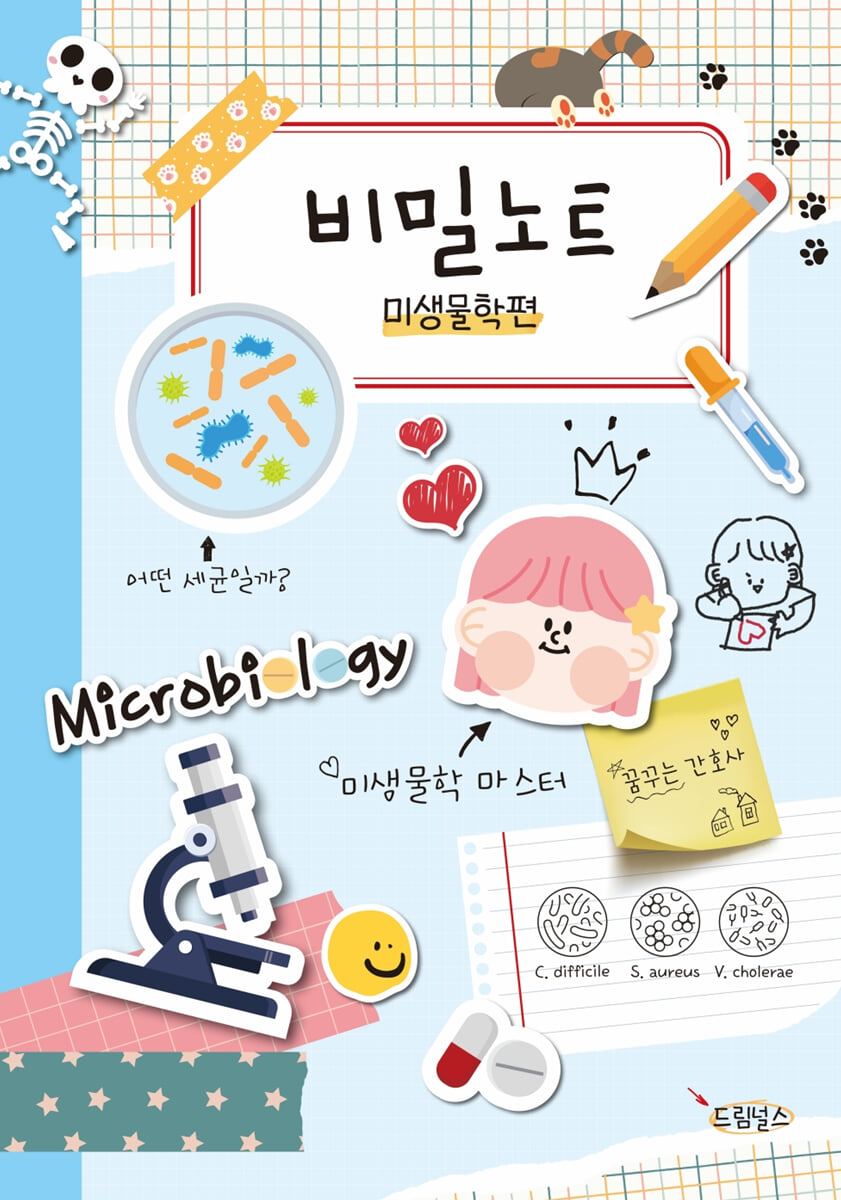
Secret Note Microbiology Edition
 |
Description
Book Introduction
From nursing students to new nurses,
"Secret Notes": A ray of light in your daunting studies
· Focused on topics that nursing students are actually curious about
· The author is a professor of clinical pathology, enhancing his expertise!
· Increase comprehension with illustrations tailored to the reader's eye level!
· From the basics of your major to essential clinical information!
· Explains difficult and in-depth microbiology in an easy-to-understand, conversational manner.
"Secret Notes": A ray of light in your daunting studies
· Focused on topics that nursing students are actually curious about
· The author is a professor of clinical pathology, enhancing his expertise!
· Increase comprehension with illustrations tailored to the reader's eye level!
· From the basics of your major to essential clinical information!
· Explains difficult and in-depth microbiology in an easy-to-understand, conversational manner.
index
Part 1.
A look into microbes
1.
Discovery of microorganisms
2.
Classification of microorganisms
3.
Eukaryotic and prokaryotic cells
4.
Microorganisms and Infections
5.
Nursing Microbiology
Part 2.
infectious microorganisms
1.
germ
2.
virus
3.
fungi
Part 3.
Immunity and infection prevention
1.
Definition of immunity
2.
innate immune response
3.
acquired immune response
4.
allergy
5.
vaccine
Part 4.
Infectious disease treatment and hospital-acquired infections
1.
Antibacterial agents
2.
Antimicrobial resistant bacteria
3.
healthcare-associated infections
4.
Major causes of healthcare-associated infections
5.
Disinfection and sterilization
6.
Infection control
Part 5.
bacterial infection
1.
Gram-positive cocci
1) Staphylococcus aureus
2) Streptococci
2.
Gram-positive rods
1) Clostridium species
2) Bacillus species
3.
intestinal bacteria
1) Salmonella species
2) Escherichia coli
4.
Gram-negative rods
1) Shigella species
2) Vibrio species
3) Yersinia pestis
5.
Other bacteria
1) Mycobacterium tuberculosis
2) Mycobacterium leprae
3) Treponema pallidum
Part 6.
viral infection
1.
enveloped DNA virus
1) Poxvirus
2) Herpesvirus
3) Varicella-zoster virus
4) Cytomegalovirus
2.
non-enveloped DNA virus
1) Adenovirus
2) Human papilloma virus
3.
enveloped RNA virus
1) Measles virus
2) Mumps virus
3) Influenza virus
4) Human parainfluenza virus
5) Respiratory syncytial virus
6) Rabies virus
7) Hantavirus
8) Japanese encephalitis virus
9) Rubella virus
4.
non-enveloped RNA virus
1) Rotavirus
2) Poliovirus
3) Coxsackievirus
4) Rhinovirus
5.
hepatitis virus
1) Hepatitis A virus
2) Hepatitis B virus
3) Hepatitis C virus
4) Hepatitis D virus
5) Hepatitis E virus
Part 7.
fungal infections
1.
dermatophytes
2.
Candida albicans
3.
Aspergillus
4.
Cryptococcus
A look into microbes
1.
Discovery of microorganisms
2.
Classification of microorganisms
3.
Eukaryotic and prokaryotic cells
4.
Microorganisms and Infections
5.
Nursing Microbiology
Part 2.
infectious microorganisms
1.
germ
2.
virus
3.
fungi
Part 3.
Immunity and infection prevention
1.
Definition of immunity
2.
innate immune response
3.
acquired immune response
4.
allergy
5.
vaccine
Part 4.
Infectious disease treatment and hospital-acquired infections
1.
Antibacterial agents
2.
Antimicrobial resistant bacteria
3.
healthcare-associated infections
4.
Major causes of healthcare-associated infections
5.
Disinfection and sterilization
6.
Infection control
Part 5.
bacterial infection
1.
Gram-positive cocci
1) Staphylococcus aureus
2) Streptococci
2.
Gram-positive rods
1) Clostridium species
2) Bacillus species
3.
intestinal bacteria
1) Salmonella species
2) Escherichia coli
4.
Gram-negative rods
1) Shigella species
2) Vibrio species
3) Yersinia pestis
5.
Other bacteria
1) Mycobacterium tuberculosis
2) Mycobacterium leprae
3) Treponema pallidum
Part 6.
viral infection
1.
enveloped DNA virus
1) Poxvirus
2) Herpesvirus
3) Varicella-zoster virus
4) Cytomegalovirus
2.
non-enveloped DNA virus
1) Adenovirus
2) Human papilloma virus
3.
enveloped RNA virus
1) Measles virus
2) Mumps virus
3) Influenza virus
4) Human parainfluenza virus
5) Respiratory syncytial virus
6) Rabies virus
7) Hantavirus
8) Japanese encephalitis virus
9) Rubella virus
4.
non-enveloped RNA virus
1) Rotavirus
2) Poliovirus
3) Coxsackievirus
4) Rhinovirus
5.
hepatitis virus
1) Hepatitis A virus
2) Hepatitis B virus
3) Hepatitis C virus
4) Hepatitis D virus
5) Hepatitis E virus
Part 7.
fungal infections
1.
dermatophytes
2.
Candida albicans
3.
Aspergillus
4.
Cryptococcus
Detailed image

Publisher's Review
I recommend this in this situation.
Nursing students who find microbiology difficult to study among the basic subjects of their major
Nursing students who want to study in depth the infectiousness and treatment of each type of microorganism
· Prospective nursing students who wish to study basic nursing major subjects in advance
Nurses who want to study microbiology to gain basic knowledge about infection control
Nursing students who find microbiology difficult to study among the basic subjects of their major
Nursing students who want to study in depth the infectiousness and treatment of each type of microorganism
· Prospective nursing students who wish to study basic nursing major subjects in advance
Nurses who want to study microbiology to gain basic knowledge about infection control
GOODS SPECIFICS
- Date of issue: August 18, 2025
- Page count, weight, size: 212 pages | 172*245*20mm
- ISBN13: 9791194436218
- ISBN10: 1194436218
You may also like
카테고리
korean


korean

![ELLE 엘르 스페셜 에디션 A형 : 12월 [2025]](http://librairie.coreenne.fr/cdn/shop/files/b8e27a3de6c9538896439686c6b0e8fb.jpg?v=1766436872&width=3840)


