

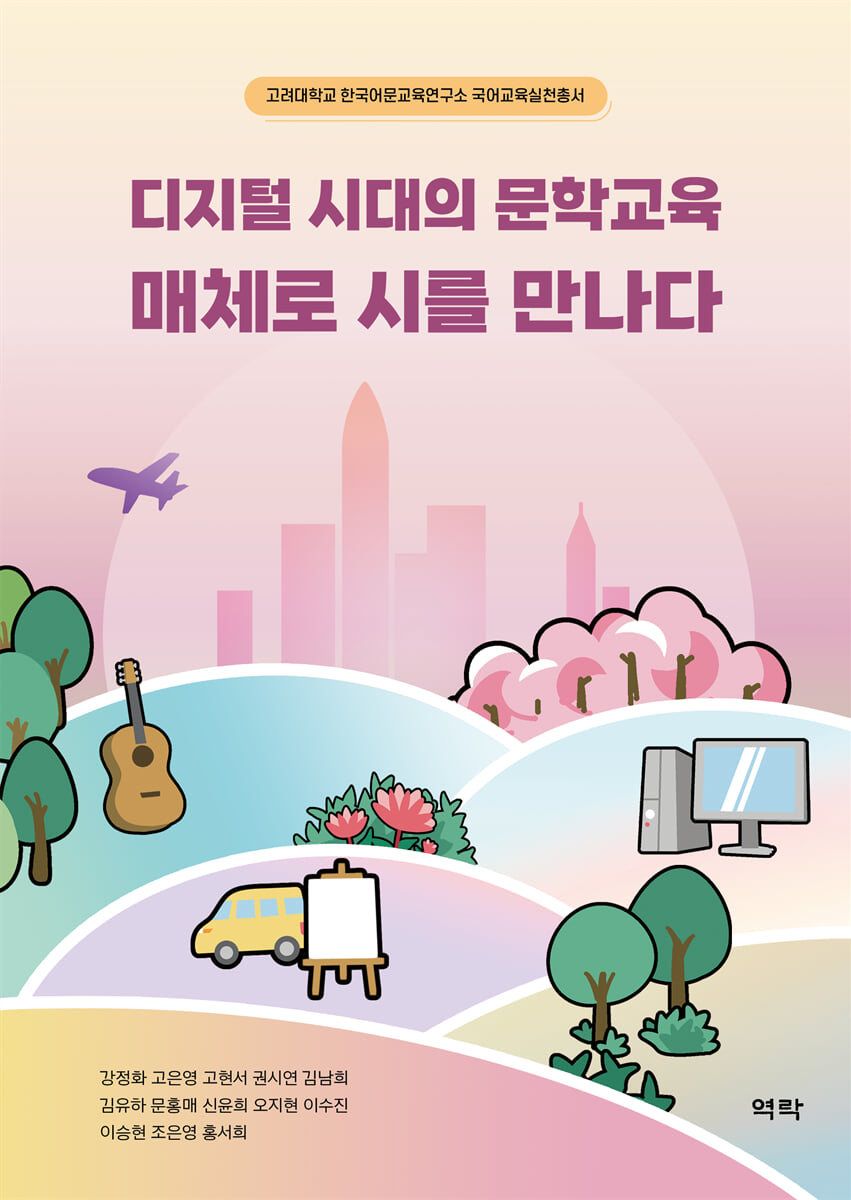
Encountering Poetry as a Literary Education Medium in the Digital Age
 |
Description
Book Introduction
"Meeting Poetry as a Literary Education Medium in the Digital Age" is largely composed of two parts.
The first is to suggest ways to teach poetry using various media.
We aim to provide concrete examples for students to enjoy and explore poetry by connecting poetry education with various media such as song lyrics, rap, conversation, webtoons, poetry picture books, and videos.
And the second is to discuss the possibilities of poetry education in future society and education.
We aim to propose new approaches through poetry, ranging from poetry creation using digital devices such as Dekasi and Multipoem, to topics that those living in the 'here and now' inevitably face, such as science fiction and ecological literature.
And at the end of each chapter, a class operation and evaluation plan is provided, designed to be used in the field.
The first is to suggest ways to teach poetry using various media.
We aim to provide concrete examples for students to enjoy and explore poetry by connecting poetry education with various media such as song lyrics, rap, conversation, webtoons, poetry picture books, and videos.
And the second is to discuss the possibilities of poetry education in future society and education.
We aim to propose new approaches through poetry, ranging from poetry creation using digital devices such as Dekasi and Multipoem, to topics that those living in the 'here and now' inevitably face, such as science fiction and ecological literature.
And at the end of each chapter, a class operation and evaluation plan is provided, designed to be used in the field.
index
Ⅰ.
Poetry through media
1.
Sing a poem
1) Rhyme in poetry education
2) Poetry and Popular Songs: Finding Beauty in Repetition
3) Poetry and Rap: Confessional Poetry, the Encounter of Yun Dong-ju's Poetry and Rap
[Poetry Class Ins and Outs]
Learning poetic expression and rhythm through popular songs
Transcription of a youth poetry collection
2.
Draw a poem
1) Poetry education and image utilization
2) Poetry and Painting: Visible Poetry, Speaking Painting
3) Poetry and Comics: The Encounter of Lyricism and Narrative
[Poetry Class Ins and Outs]
Using poetry picture books
Prescribing poetry
3.
Play the poem
1) Use of poetry education and video techniques
2) Poetry and Video: Poetry Education for the Digital Native Generation
3) Poetry and Drama: The combination of poetic and dramatic elements.
[Poetry Class Ins and Outs]
Bridging the Emotional Gap Using Contemporary Media
Ⅱ.
Future society and poetry
1.
The poetry we make
1) Poems written with ChatGPT
2) My own poetry song using Suno
3) Digital Lens and Poetry Eye
[Poetry Class Ins and Outs]
The potential of multi-poems that transcend the boundaries of poetry
2.
A future made with poetry
1) Science fiction that awakens the imagination, poetry that speaks of the future
2) Ecological sensitivity felt through the language of green and poetry
3) Anti-war, peace and poetry
[Poetry Class Ins and Outs]
Reading poetry together, where the gaze lingers
Poetry through media
1.
Sing a poem
1) Rhyme in poetry education
2) Poetry and Popular Songs: Finding Beauty in Repetition
3) Poetry and Rap: Confessional Poetry, the Encounter of Yun Dong-ju's Poetry and Rap
[Poetry Class Ins and Outs]
Learning poetic expression and rhythm through popular songs
Transcription of a youth poetry collection
2.
Draw a poem
1) Poetry education and image utilization
2) Poetry and Painting: Visible Poetry, Speaking Painting
3) Poetry and Comics: The Encounter of Lyricism and Narrative
[Poetry Class Ins and Outs]
Using poetry picture books
Prescribing poetry
3.
Play the poem
1) Use of poetry education and video techniques
2) Poetry and Video: Poetry Education for the Digital Native Generation
3) Poetry and Drama: The combination of poetic and dramatic elements.
[Poetry Class Ins and Outs]
Bridging the Emotional Gap Using Contemporary Media
Ⅱ.
Future society and poetry
1.
The poetry we make
1) Poems written with ChatGPT
2) My own poetry song using Suno
3) Digital Lens and Poetry Eye
[Poetry Class Ins and Outs]
The potential of multi-poems that transcend the boundaries of poetry
2.
A future made with poetry
1) Science fiction that awakens the imagination, poetry that speaks of the future
2) Ecological sensitivity felt through the language of green and poetry
3) Anti-war, peace and poetry
[Poetry Class Ins and Outs]
Reading poetry together, where the gaze lingers
Publisher's Review
Compared to the 2015 revised curriculum, the most notable change in the 2022 revised Korean language curriculum is the creation of a new 'media' section.
Previously, the sub-areas of the Korean language subject were five: 'Listening/Speaking, Reading, Writing, Grammar, and Literature,' but with the addition of 'Media' in the 2022 revised Korean language subject curriculum, the sub-areas were expanded to a total of six.
Of course, ‘media’ has been continuously addressed in Korean language education in the past.
However, we should note that this is the first time that 'media' has been included as a sub-domain of the Korean language.
The establishment of a new medium acknowledges the changes in Korean language education and foreshadows the potential for future changes.
While recognizing the importance of media and the need for poetry education utilizing media, the authors of this book were most concerned about the need to be able to reveal the essence of poetry as a linguistic art.
We have put a lot of thought into achieving the paradoxical goal of further revealing the beauty of poetic language through the medium without being overshadowed by the light of the medium itself.
I wrote with the hope that the colors of poetry would not fade in the face of the allure of the medium, and that the beauty of poetic language as a linguistic art could be fully revealed.
The power of language lies in expanding our thinking.
Because the power to make us think can be found in language.
Reading black letters on a white background and creating your own memories, images, and videos within them demonstrates the wonders of language.
The experience becomes entirely unique to the reader, and it is a profound experience that is fundamentally different from the momentary stimulation provided by short video content.
This book is divided into two main parts.
The first is to suggest ways to teach poetry using various media.
We aim to provide concrete examples for students to enjoy and explore poetry by connecting poetry education with various media, such as song lyrics, rap, conversation, webtoons, poetry picture books, and videos.
And the second is to discuss the possibilities of poetry education in future society and education.
We aim to propose new ways to approach poetry, from creating poetry using digital devices like Dekasi and Multipoem, to topics that those living in the "here and now" inevitably face, such as science fiction and ecological literature.
And at the end of each chapter, we provide a lesson operation and evaluation plan designed to be used in the field.
Previously, the sub-areas of the Korean language subject were five: 'Listening/Speaking, Reading, Writing, Grammar, and Literature,' but with the addition of 'Media' in the 2022 revised Korean language subject curriculum, the sub-areas were expanded to a total of six.
Of course, ‘media’ has been continuously addressed in Korean language education in the past.
However, we should note that this is the first time that 'media' has been included as a sub-domain of the Korean language.
The establishment of a new medium acknowledges the changes in Korean language education and foreshadows the potential for future changes.
While recognizing the importance of media and the need for poetry education utilizing media, the authors of this book were most concerned about the need to be able to reveal the essence of poetry as a linguistic art.
We have put a lot of thought into achieving the paradoxical goal of further revealing the beauty of poetic language through the medium without being overshadowed by the light of the medium itself.
I wrote with the hope that the colors of poetry would not fade in the face of the allure of the medium, and that the beauty of poetic language as a linguistic art could be fully revealed.
The power of language lies in expanding our thinking.
Because the power to make us think can be found in language.
Reading black letters on a white background and creating your own memories, images, and videos within them demonstrates the wonders of language.
The experience becomes entirely unique to the reader, and it is a profound experience that is fundamentally different from the momentary stimulation provided by short video content.
This book is divided into two main parts.
The first is to suggest ways to teach poetry using various media.
We aim to provide concrete examples for students to enjoy and explore poetry by connecting poetry education with various media, such as song lyrics, rap, conversation, webtoons, poetry picture books, and videos.
And the second is to discuss the possibilities of poetry education in future society and education.
We aim to propose new ways to approach poetry, from creating poetry using digital devices like Dekasi and Multipoem, to topics that those living in the "here and now" inevitably face, such as science fiction and ecological literature.
And at the end of each chapter, we provide a lesson operation and evaluation plan designed to be used in the field.
GOODS SPECIFICS
- Date of issue: August 22, 2025
- Page count, weight, size: 352 pages | 176*248*15mm
- ISBN13: 9791173961045
You may also like
카테고리
korean


korean

![ELLE 엘르 스페셜 에디션 A형 : 12월 [2025]](http://librairie.coreenne.fr/cdn/shop/files/b8e27a3de6c9538896439686c6b0e8fb.jpg?v=1766436872&width=3840)


