

Havruta class story
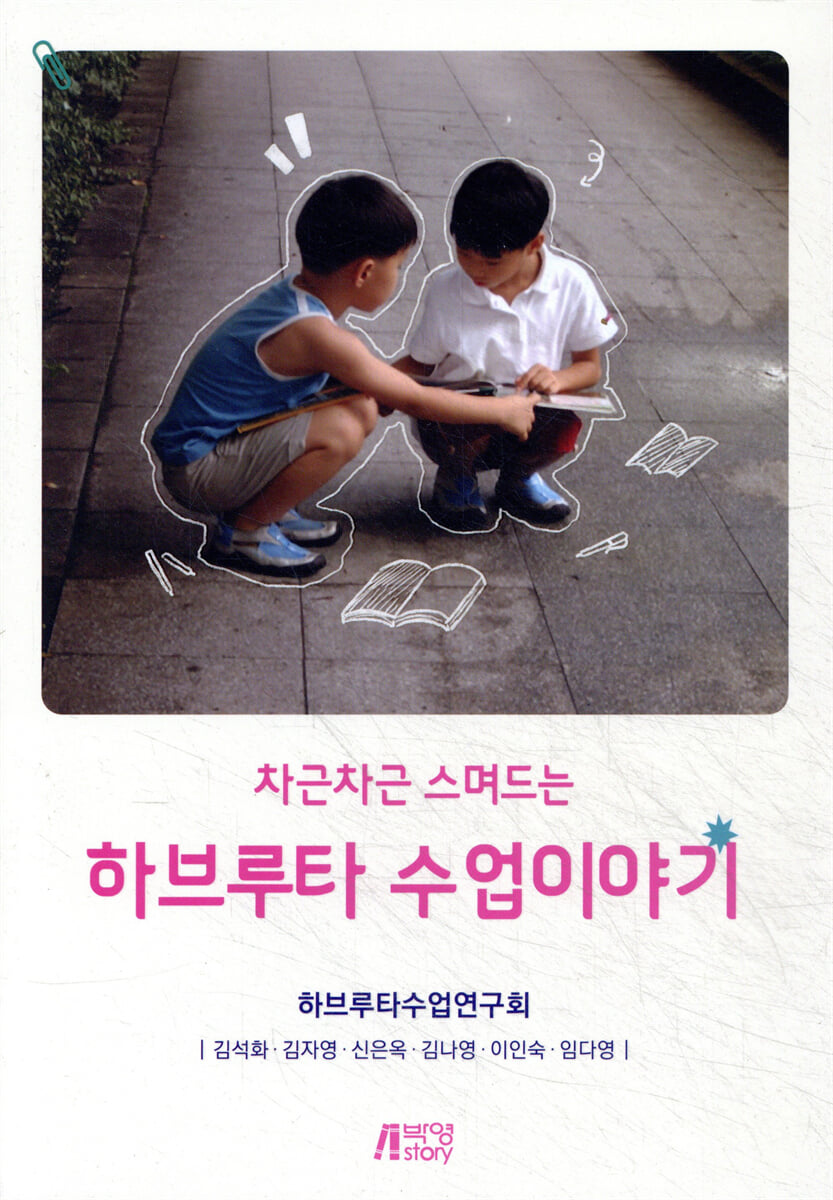 |
Description
Book Introduction
We live in an age where even AI programs are advertised, where we never let go of our phones, where non-face-to-face interactions are the norm, and where the entire world communicates through real-time networks.
At the same time, it is also an age of loneliness and isolation that requires a ‘Minister of Loneliness.’
In a world where even family conversations are always focused on their phones, classrooms that allow people to meet face-to-face without their phones are a welcome sight.
So, are we really having face-to-face interactions in the classroom? Are we actually having face-to-face conversations? That's also difficult to guarantee.
This is because classes that are mostly based on textbooks, TV screens, workbooks, or teacher explanations are no different.
Some students endure class time for a 10-minute break.
To chat with friends.
Havruta brings that chatter into the classroom.
Encourages meaningful conversation.
The classroom is noisy.
I can't tell if it's break time or study time.
However, the students' faces are turned towards their speaking friend and they listen to what their friend says.
Sometimes they raise their voices as they try to coordinate their opinions, and sometimes they try to persuade each other in a soft voice.
It is a moment when I feel effective as a teacher, seeing my students' potential explode.
At the same time, it is also an age of loneliness and isolation that requires a ‘Minister of Loneliness.’
In a world where even family conversations are always focused on their phones, classrooms that allow people to meet face-to-face without their phones are a welcome sight.
So, are we really having face-to-face interactions in the classroom? Are we actually having face-to-face conversations? That's also difficult to guarantee.
This is because classes that are mostly based on textbooks, TV screens, workbooks, or teacher explanations are no different.
Some students endure class time for a 10-minute break.
To chat with friends.
Havruta brings that chatter into the classroom.
Encourages meaningful conversation.
The classroom is noisy.
I can't tell if it's break time or study time.
However, the students' faces are turned towards their speaking friend and they listen to what their friend says.
Sometimes they raise their voices as they try to coordinate their opinions, and sometimes they try to persuade each other in a soft voice.
It is a moment when I feel effective as a teacher, seeing my students' potential explode.
- You can preview some of the book's contents.
Preview
index
Prologue 7
Part 01 Havruta, How to Start?
1. Havruta, how do I get started? 12
2. Welcome Class 16: Getting to Know Havruta
Part 02 Five Steps to Havruta
1 Listen - Think - Meet - Share - Connect 28
2 Listen - Think - Meet - Share - Connect 40
3 Listen - Think - Meet - Share - Connect 58
4 Listen - Think - Meet - Share - Connect 67
5 Listen - Think - Meet - Share - Connect 73
6. Climb the Havruta Stairs at 'Deulsaengmannayeon' 82
Part 03: A True Taste of Havruta Classes
1 Read one movie per semester 88
2 'A Philosophy Class: Exploring Life Through My Story' - TED Talk Project 99
3 Delicious Morning Reading with Listening 109
Havruta Math Lesson 113 with 4 Routines
5 Drawing a Map to Protect Your Safety Lesson 122
6 Making a Happy Class Song 130
7 I'm a poet! 141
8 Picture Books From Havruta to AI Forums 148
Epilogue 157
Part 01 Havruta, How to Start?
1. Havruta, how do I get started? 12
2. Welcome Class 16: Getting to Know Havruta
Part 02 Five Steps to Havruta
1 Listen - Think - Meet - Share - Connect 28
2 Listen - Think - Meet - Share - Connect 40
3 Listen - Think - Meet - Share - Connect 58
4 Listen - Think - Meet - Share - Connect 67
5 Listen - Think - Meet - Share - Connect 73
6. Climb the Havruta Stairs at 'Deulsaengmannayeon' 82
Part 03: A True Taste of Havruta Classes
1 Read one movie per semester 88
2 'A Philosophy Class: Exploring Life Through My Story' - TED Talk Project 99
3 Delicious Morning Reading with Listening 109
Havruta Math Lesson 113 with 4 Routines
5 Drawing a Map to Protect Your Safety Lesson 122
6 Making a Happy Class Song 130
7 I'm a poet! 141
8 Picture Books From Havruta to AI Forums 148
Epilogue 157
Publisher's Review
preface
Again, with Havruta
We live in an age where even AI programs are advertised, where we never let go of our phones, where non-face-to-face interactions are the norm, and where the entire world communicates through real-time networks.
At the same time, it is also an age of loneliness and isolation that requires a ‘Minister of Loneliness.’
In a world where even family conversations are always focused on their phones, classrooms that allow people to meet face-to-face without their phones are a welcome sight.
So, are we really having face-to-face interactions in the classroom? Are we actually having face-to-face conversations? That's also difficult to guarantee.
This is because classes that are mostly based on textbooks, TV screens, workbooks, or teacher explanations are no different.
Some students endure class time for a 10-minute break.
To chat with friends.
Havruta brings that chatter into the classroom.
Encourages meaningful conversation.
The classroom is noisy.
I can't tell if it's break time or study time.
However, the students' faces are turned towards their speaking friend and they listen to what their friend says.
Sometimes they raise their voices as they try to coordinate their opinions, and sometimes they try to persuade each other in a soft voice.
It is a moment when I feel effective as a teacher, seeing my students' potential explode.
The curriculum and textbooks incorporate a lot of questions and conversations.
I subjectively think it is the influence of Havruta, which I have studied and practiced for over ten years.
However, I still believe that we need to boldly omit the pace in order to provide students with in-depth study, study that connects to life, and the joy of lifelong learning.
If there is something to learn (學), but not enough time to acquire it (習), it will be difficult to expect the joy of learning.
When the role of Tak (to peck with a beak, to help learning) in Jultakdongsi (?啄同時) is expanded to include not only the teacher but also a friend, the joy of growing together is greater.
Although Havruta is a way to learn with friends, many people think that the barrier to entry is high.
Many teachers try havruta and find themselves frustrated.
There are teachers like that here.
These are people who failed, but did not give up and continued to find solutions, talking together, and finding a way.
It's really good, but I researched and put it into practice with the thought of how to lower the barrier to entry.
It is up to the readers to walk this path.
I invite readers with the hope that this will be a path that no one has ever tried, but no one has tried only once.
On the threshold of hot summer
Kim Seok-hwa
Again, with Havruta
We live in an age where even AI programs are advertised, where we never let go of our phones, where non-face-to-face interactions are the norm, and where the entire world communicates through real-time networks.
At the same time, it is also an age of loneliness and isolation that requires a ‘Minister of Loneliness.’
In a world where even family conversations are always focused on their phones, classrooms that allow people to meet face-to-face without their phones are a welcome sight.
So, are we really having face-to-face interactions in the classroom? Are we actually having face-to-face conversations? That's also difficult to guarantee.
This is because classes that are mostly based on textbooks, TV screens, workbooks, or teacher explanations are no different.
Some students endure class time for a 10-minute break.
To chat with friends.
Havruta brings that chatter into the classroom.
Encourages meaningful conversation.
The classroom is noisy.
I can't tell if it's break time or study time.
However, the students' faces are turned towards their speaking friend and they listen to what their friend says.
Sometimes they raise their voices as they try to coordinate their opinions, and sometimes they try to persuade each other in a soft voice.
It is a moment when I feel effective as a teacher, seeing my students' potential explode.
The curriculum and textbooks incorporate a lot of questions and conversations.
I subjectively think it is the influence of Havruta, which I have studied and practiced for over ten years.
However, I still believe that we need to boldly omit the pace in order to provide students with in-depth study, study that connects to life, and the joy of lifelong learning.
If there is something to learn (學), but not enough time to acquire it (習), it will be difficult to expect the joy of learning.
When the role of Tak (to peck with a beak, to help learning) in Jultakdongsi (?啄同時) is expanded to include not only the teacher but also a friend, the joy of growing together is greater.
Although Havruta is a way to learn with friends, many people think that the barrier to entry is high.
Many teachers try havruta and find themselves frustrated.
There are teachers like that here.
These are people who failed, but did not give up and continued to find solutions, talking together, and finding a way.
It's really good, but I researched and put it into practice with the thought of how to lower the barrier to entry.
It is up to the readers to walk this path.
I invite readers with the hope that this will be a path that no one has ever tried, but no one has tried only once.
On the threshold of hot summer
Kim Seok-hwa
GOODS SPECIFICS
- Date of issue: August 15, 2025
- Page count, weight, size: 168 pages | 176*248*20mm
- ISBN13: 9791172791292
- ISBN10: 1172791295
You may also like
카테고리
korean


korean

![ELLE 엘르 스페셜 에디션 A형 : 12월 [2025]](http://librairie.coreenne.fr/cdn/shop/files/b8e27a3de6c9538896439686c6b0e8fb.jpg?v=1766436872&width=3840)


