

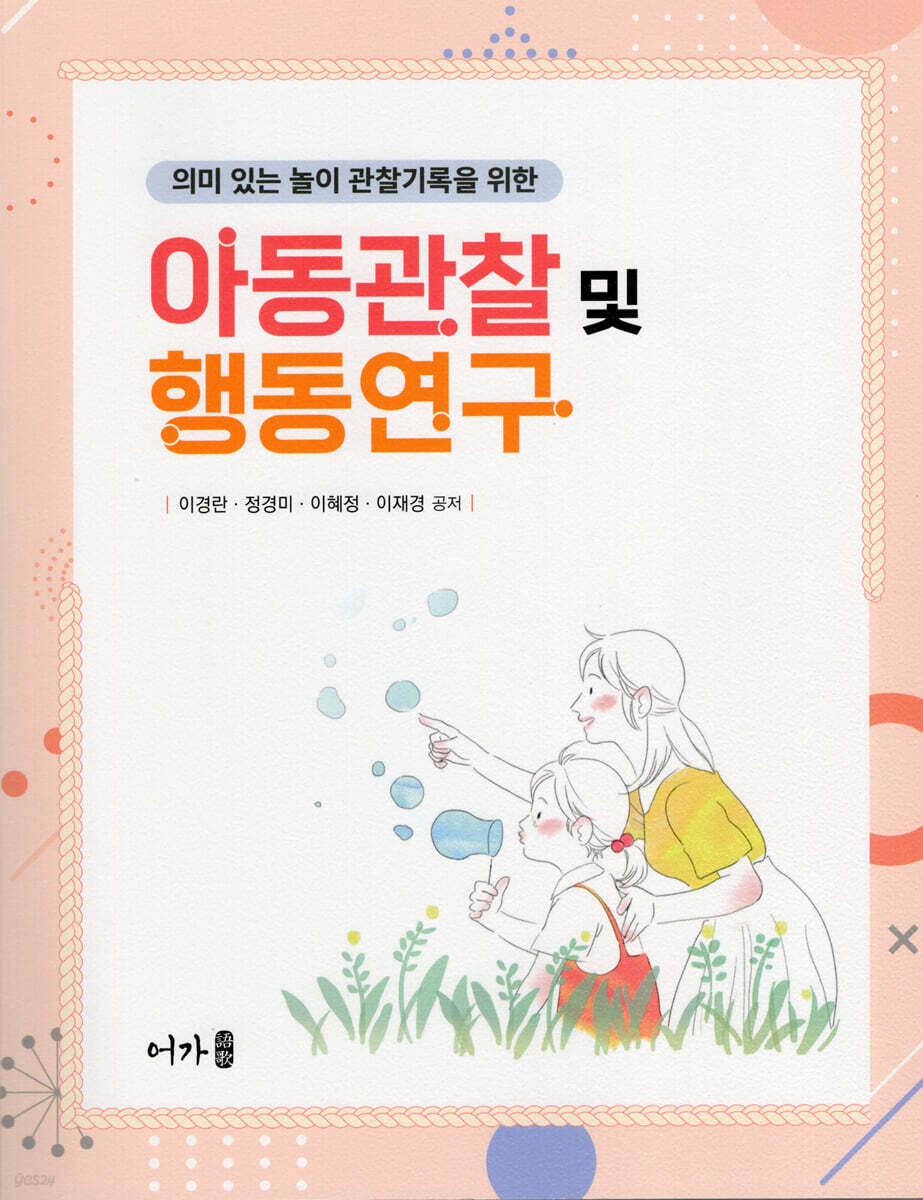
Child observation and behavioral research for meaningful play observation records
 |
Description
Book Introduction
Each chapter is interspersed with case studies and practice problems.
In some chapters, practice problems are presented right from the beginning, while in other chapters, they are placed right in the middle of the content.
This book is written in a collaborative format between the author and the reader.
Rather than a structure where the reader passively receives the textbook content, this is a format where the reader and the author 'learn' together, so explanations, examples, and practice problems are arranged according to the purpose and content to be conveyed.
In some chapters, practice problems are presented right from the beginning, while in other chapters, they are placed right in the middle of the content.
This book is written in a collaborative format between the author and the reader.
Rather than a structure where the reader passively receives the textbook content, this is a format where the reader and the author 'learn' together, so explanations, examples, and practice problems are arranged according to the purpose and content to be conveyed.
index
Part 1: Foundations of Child Observation and Behavioral Research
Chapter 1: Understanding Child Observation and Behavioral Research
1.
Definition of observation
2.
The necessity and purpose of child observation
3.
History of Observation
Chapter 2: The Process of Child Observation and Behavioral Research
1.
Observation type
2.
Observation procedure
3.
Observational recording media
4.
Observation error
Chapter 3 Understanding Infant and Toddler Development
1.
Understanding Infant and Toddler Development
2.
Physical and motor development of infants and toddlers
3.
Cognitive development in infants and toddlers
4.
Emotional development of infants and toddlers
5.
Infant and toddler temperament
6.
Social development in infants and toddlers
Part 2: Types of Child Observation and Behavioral Research
Chapter 4 Types of Child Observation
1.
Descriptive observation
2.
categorical observations
Chapter 5 Sample Recording Method
1.
Definition and Characteristics
2.
Observation Guidelines
3.
Pros and Cons
Chapter 6 Anecdotal Recording Method
1.
Definition and Characteristics
2.
Observation Guidelines
3.
Pros and Cons
Chapter 7 ABC Event Sampling
1.
Definition and Characteristics
2.
Observation Guidelines
3.
Pros and Cons
Chapter 8: Frequency Event Sampling
1.
Definition and Characteristics
2.
Observation Guidelines
3.
Pros and Cons
Chapter 9 Time Sampling Method
1.
Definition and Characteristics
2.
Observation Guidelines
3.
Pros and Cons
Chapter 10: Action List Method
1.
Definition and Characteristics
2.
Observation Guidelines
3.
Pros and Cons
Chapter 11 Rating Scale Method
1.
Definition and Characteristics
2.
Observation Guidelines
3.
Pros and Cons
Part 3: Practice of Child Observation and Behavioral Research
Chapter 12 Observations and Records from a Perspective
1.
Observation of composure
2.
Documenting the creation of meaning
3.
Observing and Recording Play as Learning
Chapter 13: Observing and Recording Everyday Moments
1.
How to document everyday moments
2.
Examples of documenting everyday moments
Chapter 14: Case Studies of Observing and Recording Play Sequentially
1.
Three different stories about soil
2.
A story filled with the teacher's concerns
References
Chapter 1: Understanding Child Observation and Behavioral Research
1.
Definition of observation
2.
The necessity and purpose of child observation
3.
History of Observation
Chapter 2: The Process of Child Observation and Behavioral Research
1.
Observation type
2.
Observation procedure
3.
Observational recording media
4.
Observation error
Chapter 3 Understanding Infant and Toddler Development
1.
Understanding Infant and Toddler Development
2.
Physical and motor development of infants and toddlers
3.
Cognitive development in infants and toddlers
4.
Emotional development of infants and toddlers
5.
Infant and toddler temperament
6.
Social development in infants and toddlers
Part 2: Types of Child Observation and Behavioral Research
Chapter 4 Types of Child Observation
1.
Descriptive observation
2.
categorical observations
Chapter 5 Sample Recording Method
1.
Definition and Characteristics
2.
Observation Guidelines
3.
Pros and Cons
Chapter 6 Anecdotal Recording Method
1.
Definition and Characteristics
2.
Observation Guidelines
3.
Pros and Cons
Chapter 7 ABC Event Sampling
1.
Definition and Characteristics
2.
Observation Guidelines
3.
Pros and Cons
Chapter 8: Frequency Event Sampling
1.
Definition and Characteristics
2.
Observation Guidelines
3.
Pros and Cons
Chapter 9 Time Sampling Method
1.
Definition and Characteristics
2.
Observation Guidelines
3.
Pros and Cons
Chapter 10: Action List Method
1.
Definition and Characteristics
2.
Observation Guidelines
3.
Pros and Cons
Chapter 11 Rating Scale Method
1.
Definition and Characteristics
2.
Observation Guidelines
3.
Pros and Cons
Part 3: Practice of Child Observation and Behavioral Research
Chapter 12 Observations and Records from a Perspective
1.
Observation of composure
2.
Documenting the creation of meaning
3.
Observing and Recording Play as Learning
Chapter 13: Observing and Recording Everyday Moments
1.
How to document everyday moments
2.
Examples of documenting everyday moments
Chapter 14: Case Studies of Observing and Recording Play Sequentially
1.
Three different stories about soil
2.
A story filled with the teacher's concerns
References
Publisher's Review
Observations and records should focus on philosophy rather than improving technical skills.
As a teacher, it is very important how you approach children.
'How far should we trust the abilities of infants and toddlers?'
Observation records are the process of answering questions you ask yourself, such as, "How much do you believe in yourself and your children?", "What is education?", and "What kind of teacher do you want to be?"
Observation records clearly provide a glimpse into the lives of children, but they also include the philosophy and life of the teacher who recorded them.
Early childhood educators are adults who have a huge impact on the lives of very small creatures.
It is very important to be very careful about what you infiltrate into a person's life.
We must consider our beliefs about early childhood education, respect for humanity, hope for life, and the pursuit of happiness within the community.
So, teaching is a profession given by heaven.
I hope that all prospective early childhood teachers will experience the joy of learning through this textbook, as they gain an interesting glimpse into the strategies children use to navigate their lives.
Each chapter is interspersed with case studies and practice problems.
In some chapters, practice problems are presented right from the beginning, while in other chapters, they are placed right in the middle of the content.
This book is written in a collaborative format between the author and the reader.
Rather than a structure where the reader passively receives the textbook content, this is a format where the reader and the author 'learn' together, so explanations, examples, and practice problems are arranged according to the purpose and content to be conveyed.
As with observation records, this textbook containing the contents also follows the same pattern.
So, as you turn each page, it can be confusing or exciting.
One of the difficulties that field teachers face in observation is figuring out what to observe and what to focus on in that behavior.
Every time that happens, I tell them, “The answer is with you, teacher.
“What the teacher found through objective observation is correct, and the writings the teacher wrote down are the best,” he said.
Because the observation records of the teacher who did his best today are in themselves the best descriptions of the children's lives.
Tomorrow may be the best again, but at least for today, it is.
The contents of this textbook will also be like that.
We have truly poured our knowledge and capabilities into this until today.
And I took courage.
I hope that all prospective early childhood teachers who review the textbook will feel free to share their opinions with the author.
Education begins with a willingness to communicate, so communication between authors and readers will serve as a valuable foundation for nurturing excellent early childhood teachers.
As a teacher, it is very important how you approach children.
'How far should we trust the abilities of infants and toddlers?'
Observation records are the process of answering questions you ask yourself, such as, "How much do you believe in yourself and your children?", "What is education?", and "What kind of teacher do you want to be?"
Observation records clearly provide a glimpse into the lives of children, but they also include the philosophy and life of the teacher who recorded them.
Early childhood educators are adults who have a huge impact on the lives of very small creatures.
It is very important to be very careful about what you infiltrate into a person's life.
We must consider our beliefs about early childhood education, respect for humanity, hope for life, and the pursuit of happiness within the community.
So, teaching is a profession given by heaven.
I hope that all prospective early childhood teachers will experience the joy of learning through this textbook, as they gain an interesting glimpse into the strategies children use to navigate their lives.
Each chapter is interspersed with case studies and practice problems.
In some chapters, practice problems are presented right from the beginning, while in other chapters, they are placed right in the middle of the content.
This book is written in a collaborative format between the author and the reader.
Rather than a structure where the reader passively receives the textbook content, this is a format where the reader and the author 'learn' together, so explanations, examples, and practice problems are arranged according to the purpose and content to be conveyed.
As with observation records, this textbook containing the contents also follows the same pattern.
So, as you turn each page, it can be confusing or exciting.
One of the difficulties that field teachers face in observation is figuring out what to observe and what to focus on in that behavior.
Every time that happens, I tell them, “The answer is with you, teacher.
“What the teacher found through objective observation is correct, and the writings the teacher wrote down are the best,” he said.
Because the observation records of the teacher who did his best today are in themselves the best descriptions of the children's lives.
Tomorrow may be the best again, but at least for today, it is.
The contents of this textbook will also be like that.
We have truly poured our knowledge and capabilities into this until today.
And I took courage.
I hope that all prospective early childhood teachers who review the textbook will feel free to share their opinions with the author.
Education begins with a willingness to communicate, so communication between authors and readers will serve as a valuable foundation for nurturing excellent early childhood teachers.
GOODS SPECIFICS
- Date of issue: July 24, 2025
- Page count, weight, size: 277 pages | 187*240*20mm
- ISBN13: 9791170751793
- ISBN10: 1170751792
You may also like
카테고리
korean


korean

![GQ KOREA Mark (Monthly): December [2025]](http://librairie.coreenne.fr/cdn/shop/files/8ef265dbbfbf186523ed75ba7319009d.jpg?v=1765340328&width=3840)


