

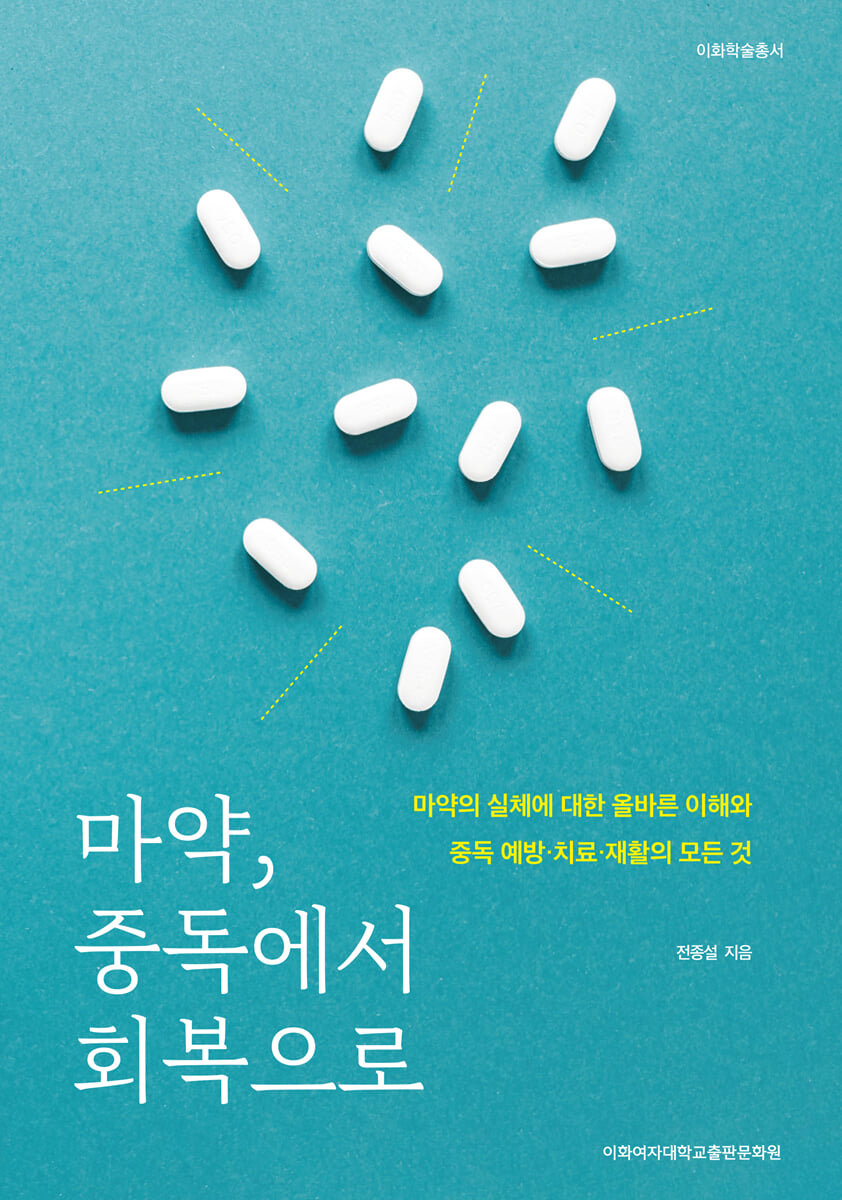
From Drug Addiction to Recovery
 |
Description
Book Introduction
“Drug addiction is not an individual problem,
“This is a challenge that our society must solve together!”
As a 'disease requiring treatment', not a subject of punishment!
A comprehensive guide offering practical solutions for recovery.
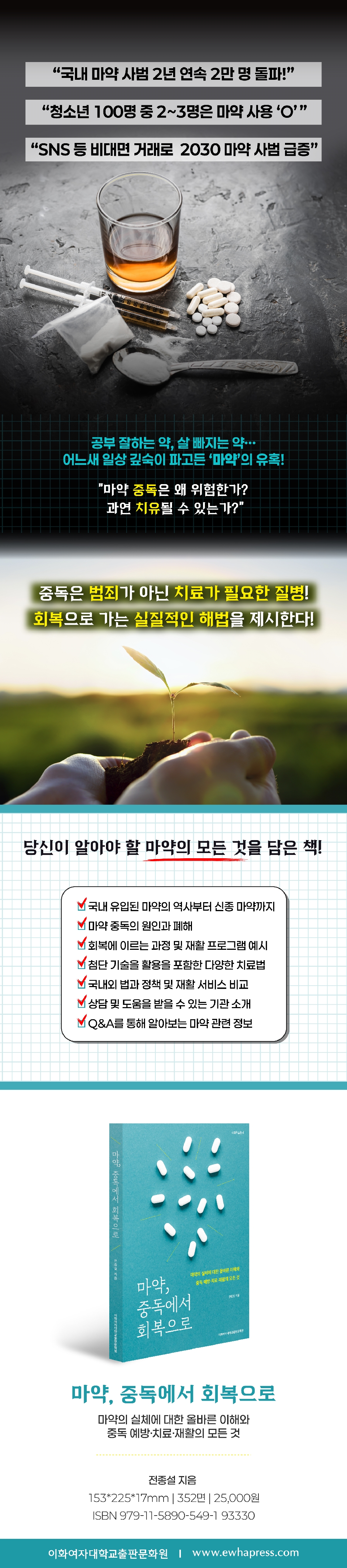
The number of domestic drug offenders has exceeded 20,000 for the past two consecutive years.
Of these, 60% were young people in their 20s and 30s, and this proportion is expected to increase further due to non-face-to-face transactions through social media, the dark web, and cryptocurrencies.
Additionally, according to the '2024 Drug Crime White Paper' published by the Supreme Prosecutors' Office, the number of teenage drug offenders, which was only 30 in 2005, soared to an all-time high of 1,477 in 2023.
These figures demonstrate the severity of the drug problem and the urgent need to address it.
As the age at which people begin using drugs is getting younger, it is more important than ever to have a proper understanding of the reality of drugs and to provide preventative education.
This book provides an opportunity for those who have simply viewed drugs as an object of curiosity to realize and be alert to the frightening disease that drug addiction is.
Furthermore, it encompasses the historical context surrounding drugs, the types and characteristics of drugs, the causes and types of addiction, various treatment and rehabilitation programs for recovery, and even domestic and international laws and policies, all in one volume, making it easy for anyone to grasp specialized yet comprehensive knowledge on the drug issue at a glance.
It is a particularly useful guide for addicts and their families, as it provides a variety of specific and practical treatment and recovery methods.
The author maintains the perspective that drug addiction is not simply an individual's deviation, but rather a social and policy issue that our entire society must address together.
Rather than branding addicts as criminals and increasing the level of punishment, it is believed that only by “changing the perception of seeing addicts as objects of treatment and rehabilitation” can we find an effective and sustainable solution to the drug problem.
Based on this perspective, the author introduces various recovery methods in this book and compares and analyzes domestic and international treatment and rehabilitation services and policies.
Furthermore, it emphasizes the need for an integrated control tower organization encompassing addiction research, treatment and rehabilitation, and prevention to more effectively manage the domestic drug addiction problem, while expanding infrastructure to ensure that drug addicts receive proper treatment and establishing a system to train and manage addiction treatment professionals at the national level.
This proposal is a culmination of the author's practical and policy insights, having studied addiction for a long time and actively serving as a member of several related organizations, including the National Center for Mental Health's Addiction and Mental Health Council and the Korea Anti-Drug Movement Headquarters.
This book, which presents a comprehensive approach to finding practical solutions, will help us explore from various perspectives the efforts needed at the community level to protect future generations from drugs and create a better society.
“This is a challenge that our society must solve together!”
As a 'disease requiring treatment', not a subject of punishment!
A comprehensive guide offering practical solutions for recovery.
The number of domestic drug offenders has exceeded 20,000 for the past two consecutive years.
Of these, 60% were young people in their 20s and 30s, and this proportion is expected to increase further due to non-face-to-face transactions through social media, the dark web, and cryptocurrencies.
Additionally, according to the '2024 Drug Crime White Paper' published by the Supreme Prosecutors' Office, the number of teenage drug offenders, which was only 30 in 2005, soared to an all-time high of 1,477 in 2023.
These figures demonstrate the severity of the drug problem and the urgent need to address it.
As the age at which people begin using drugs is getting younger, it is more important than ever to have a proper understanding of the reality of drugs and to provide preventative education.
This book provides an opportunity for those who have simply viewed drugs as an object of curiosity to realize and be alert to the frightening disease that drug addiction is.
Furthermore, it encompasses the historical context surrounding drugs, the types and characteristics of drugs, the causes and types of addiction, various treatment and rehabilitation programs for recovery, and even domestic and international laws and policies, all in one volume, making it easy for anyone to grasp specialized yet comprehensive knowledge on the drug issue at a glance.
It is a particularly useful guide for addicts and their families, as it provides a variety of specific and practical treatment and recovery methods.
The author maintains the perspective that drug addiction is not simply an individual's deviation, but rather a social and policy issue that our entire society must address together.
Rather than branding addicts as criminals and increasing the level of punishment, it is believed that only by “changing the perception of seeing addicts as objects of treatment and rehabilitation” can we find an effective and sustainable solution to the drug problem.
Based on this perspective, the author introduces various recovery methods in this book and compares and analyzes domestic and international treatment and rehabilitation services and policies.
Furthermore, it emphasizes the need for an integrated control tower organization encompassing addiction research, treatment and rehabilitation, and prevention to more effectively manage the domestic drug addiction problem, while expanding infrastructure to ensure that drug addicts receive proper treatment and establishing a system to train and manage addiction treatment professionals at the national level.
This proposal is a culmination of the author's practical and policy insights, having studied addiction for a long time and actively serving as a member of several related organizations, including the National Center for Mental Health's Addiction and Mental Health Council and the Korea Anti-Drug Movement Headquarters.
This book, which presents a comprehensive approach to finding practical solutions, will help us explore from various perspectives the efforts needed at the community level to protect future generations from drugs and create a better society.
index
Preface: Drugs: A Story for the Beginning of Recovery, Not the End
Part 1.
Understanding Drugs
Chapter 1.
Drugs in our history
1.
Drugs before liberation
2.
Drugs after liberation
Chapter 2.
Current State of Drug Use
1.
Current status of drug use
2.
Drug-related crime status
Chapter 3.
Types and characteristics of narcotics
1.
Definition and Classification of Narcotics
2.
Major drugs
3.
psychotropic drugs
4.
cannabis
5.
New narcotics and temporary narcotics
Part 2.
Understanding Drug Addiction
Chapter 1.
Defining Drug Addiction and Understanding the Brain
1.
Definition of drug addiction
2.
Drug addiction and the brain
Chapter 2.
Causes of drug addiction
1.
psychobiological factors
2.
social factors
3.
demographic factors
Chapter 3.
Theories related to drug addiction
1.
disease model
2.
moral model
3.
Psychodynamic model
4.
cognitive-behavioral model
5.
sociocultural model
6.
Integrated model
Chapter 4.
The harm of drug addiction
1.
personal harm
2.
Family and interpersonal harm
3.
social harm
Chapter 5.
Targeted Drug Addiction Problems: Unique Risks and Challenges for Vulnerable Groups
1.
Youth and Young Adults
2.
female
3.
Other targets
Chapter 6.
Drug addiction and coexisting disorders
1.
Depressive and anxiety disorders
2.
schizophrenia
3.
eating disorders
4.
post-traumatic stress disorder
5.
bipolar disorder
6.
childhood mental disorders
7.
Treatment of comorbid conditions
Part 3.
Drug Addiction and Recovery
Chapter 1.
Definition and Stages of Recovery
1.
Definition of recovery
2.
Stages of Recovery
Chapter 2.
Circumstances and plans
1.
Concept and characteristics of circumstances
2.
Initial consultation and screening
3.
Initial assessment and planning
Chapter 3.
Treatment and Rehabilitation
1.
Level of treatment and type of treatment
2.
Main approaches to drug addiction treatment
3.
Digital innovation and cutting-edge technologies in drug addiction treatment and rehabilitation
4.
Holistic Interventions for Recovery: From Physical Activity to Art and Spirituality
Chapter 4.
Case Management
1.
Concept and Understanding of Case Management
2.
The Need for Addiction Case Management
3.
Principles of Addiction Case Management
4.
The process of addiction case management
Chapter 5.
relapse
1.
Definition and factors of relapse
2.
The process of relapse
3.
Relapse prevention and response
Chapter 6.
Drug Addiction and the Role of Practitioners
1.
Core Competencies of Addiction Practitioners
2.
multidisciplinary approach
3.
recovery counselor
Part 4.
Drug addiction treatment and rehabilitation services and policies
Chapter 1.
Domestic drug addiction treatment and rehabilitation services
1.
Addiction Management Integrated Support Center
2.
Drug addiction treatment and protection facility
3.
One Step Center with the Korea Anti-Drug Movement Headquarters
4.
National Forensic Hospital (formerly Gongju Treatment and Detention Center)
5.
Narcotics Anonymous Korea (NA Korea)
6.
community rehabilitation facilities
Chapter 2.
Major organizations related to drug addiction services overseas
1.
U.S. Substance Abuse and Mental Health Services Administration
2.
National Institute on Drug Abuse
3.
Canadian Centre on Substance Use and Addiction
4.
Singapore National Addiction Management Service
Chapter 3.
Drug-Related Laws and Policies
1.
Domestic laws and policies
2.
Foreign Laws and Policies
Conclusion: For a Better Future: Current Challenges and Future Tasks
References
Search
Part 1.
Understanding Drugs
Chapter 1.
Drugs in our history
1.
Drugs before liberation
2.
Drugs after liberation
Chapter 2.
Current State of Drug Use
1.
Current status of drug use
2.
Drug-related crime status
Chapter 3.
Types and characteristics of narcotics
1.
Definition and Classification of Narcotics
2.
Major drugs
3.
psychotropic drugs
4.
cannabis
5.
New narcotics and temporary narcotics
Part 2.
Understanding Drug Addiction
Chapter 1.
Defining Drug Addiction and Understanding the Brain
1.
Definition of drug addiction
2.
Drug addiction and the brain
Chapter 2.
Causes of drug addiction
1.
psychobiological factors
2.
social factors
3.
demographic factors
Chapter 3.
Theories related to drug addiction
1.
disease model
2.
moral model
3.
Psychodynamic model
4.
cognitive-behavioral model
5.
sociocultural model
6.
Integrated model
Chapter 4.
The harm of drug addiction
1.
personal harm
2.
Family and interpersonal harm
3.
social harm
Chapter 5.
Targeted Drug Addiction Problems: Unique Risks and Challenges for Vulnerable Groups
1.
Youth and Young Adults
2.
female
3.
Other targets
Chapter 6.
Drug addiction and coexisting disorders
1.
Depressive and anxiety disorders
2.
schizophrenia
3.
eating disorders
4.
post-traumatic stress disorder
5.
bipolar disorder
6.
childhood mental disorders
7.
Treatment of comorbid conditions
Part 3.
Drug Addiction and Recovery
Chapter 1.
Definition and Stages of Recovery
1.
Definition of recovery
2.
Stages of Recovery
Chapter 2.
Circumstances and plans
1.
Concept and characteristics of circumstances
2.
Initial consultation and screening
3.
Initial assessment and planning
Chapter 3.
Treatment and Rehabilitation
1.
Level of treatment and type of treatment
2.
Main approaches to drug addiction treatment
3.
Digital innovation and cutting-edge technologies in drug addiction treatment and rehabilitation
4.
Holistic Interventions for Recovery: From Physical Activity to Art and Spirituality
Chapter 4.
Case Management
1.
Concept and Understanding of Case Management
2.
The Need for Addiction Case Management
3.
Principles of Addiction Case Management
4.
The process of addiction case management
Chapter 5.
relapse
1.
Definition and factors of relapse
2.
The process of relapse
3.
Relapse prevention and response
Chapter 6.
Drug Addiction and the Role of Practitioners
1.
Core Competencies of Addiction Practitioners
2.
multidisciplinary approach
3.
recovery counselor
Part 4.
Drug addiction treatment and rehabilitation services and policies
Chapter 1.
Domestic drug addiction treatment and rehabilitation services
1.
Addiction Management Integrated Support Center
2.
Drug addiction treatment and protection facility
3.
One Step Center with the Korea Anti-Drug Movement Headquarters
4.
National Forensic Hospital (formerly Gongju Treatment and Detention Center)
5.
Narcotics Anonymous Korea (NA Korea)
6.
community rehabilitation facilities
Chapter 2.
Major organizations related to drug addiction services overseas
1.
U.S. Substance Abuse and Mental Health Services Administration
2.
National Institute on Drug Abuse
3.
Canadian Centre on Substance Use and Addiction
4.
Singapore National Addiction Management Service
Chapter 3.
Drug-Related Laws and Policies
1.
Domestic laws and policies
2.
Foreign Laws and Policies
Conclusion: For a Better Future: Current Challenges and Future Tasks
References
Search
Detailed image
Publisher's Review
This book consists of 4 parts and 18 chapters.
Part 1, 'Understanding Drugs', provides a general overview of drugs.
Chapter 1 examines the history of drugs entering the country, starting from before and after liberation, and Chapter 2 examines the current state of drug use in Korea.
Chapter 3 clarifies the definition and classification of narcotics and explains the characteristics and effects of major narcotics, psychotropic drugs, and cannabis.
Part 2, "Understanding Drug Addiction," provides comprehensive information about drug addiction.
Chapter 4 first examines the definition of drug addiction and explores its effects on the brain.
Chapter 5 analyzes the various causes of drug addiction by dividing them into psychobiological, social, and demographic factors.
Chapter 6 introduces several theoretical models that explain the mechanisms of addiction, and Chapter 7 details the harmful effects of drug addiction on individuals, families, interpersonal relationships, and society.
Chapter 8 also highlights the problem of drug addiction among vulnerable groups, including youth, women, North Korean defectors, and sexual minorities.
Finally, Chapter 9 provides an opportunity to comprehensively understand the complexity and multifaceted nature of drug addiction by examining mental illnesses that commonly accompany drug addiction, such as depression, schizophrenia, and post-traumatic stress disorder.
Part 3, "Drug Addiction and Recovery," introduces important concepts to understand as you move from drug addiction to recovery.
Because the ultimate goal of drug addiction treatment can be said to be the recovery of addicts, Chapter 10 first examines the definition of recovery and then explains the stages of change that lead to recovery.
Next, in Chapter 11, we will look at the concept and method of assessment, one of the core processes in drug addiction treatment, and how to establish a treatment plan based on the assessment results.
Chapter 12 focuses on treatment and rehabilitation, describing the levels and types of treatment from a continuum of perspectives to promote long-term recovery for drug addicts, and examining in detail the main approaches to drug addiction treatment.
It also introduces a variety of holistic intervention methods, including those utilizing cutting-edge technologies, as well as those involving the body, art, and spirituality.
Chapter 13 examines the concepts, principles, and processes of case management for drug addicts necessary for addiction treatment.
Chapter 14 covers the definition and process of relapse, as well as relapse prevention and coping strategies.
Chapter 15 explores the role of practitioners in significantly influencing the recovery of addicts.
We introduce the core competencies required of them, the role of multidisciplinary experts, and the role of recovery counselors, which is emphasized differently from other fields.
Part 4, "Drug Addiction Treatment? Rehabilitation Services and Policies," examines practical efforts to prevent, treat, and rehabilitate drug addiction.
Chapter 16 introduces the various services provided by domestic drug addiction treatment and rehabilitation institutions, and Chapter 17 examines major overseas drug addiction service institutions.
This allows us to understand the specific intervention methods and their effects in the field.
The final 18 chapters explore policy strategies for effective prevention and intervention.
We review domestic drug-related laws and policies and compare and analyze them with major overseas policy cases.
Based on this analysis, the concluding remarks identify the current status of Korea's drug policy and suggest future challenges and directions for development.
Part 1, 'Understanding Drugs', provides a general overview of drugs.
Chapter 1 examines the history of drugs entering the country, starting from before and after liberation, and Chapter 2 examines the current state of drug use in Korea.
Chapter 3 clarifies the definition and classification of narcotics and explains the characteristics and effects of major narcotics, psychotropic drugs, and cannabis.
Part 2, "Understanding Drug Addiction," provides comprehensive information about drug addiction.
Chapter 4 first examines the definition of drug addiction and explores its effects on the brain.
Chapter 5 analyzes the various causes of drug addiction by dividing them into psychobiological, social, and demographic factors.
Chapter 6 introduces several theoretical models that explain the mechanisms of addiction, and Chapter 7 details the harmful effects of drug addiction on individuals, families, interpersonal relationships, and society.
Chapter 8 also highlights the problem of drug addiction among vulnerable groups, including youth, women, North Korean defectors, and sexual minorities.
Finally, Chapter 9 provides an opportunity to comprehensively understand the complexity and multifaceted nature of drug addiction by examining mental illnesses that commonly accompany drug addiction, such as depression, schizophrenia, and post-traumatic stress disorder.
Part 3, "Drug Addiction and Recovery," introduces important concepts to understand as you move from drug addiction to recovery.
Because the ultimate goal of drug addiction treatment can be said to be the recovery of addicts, Chapter 10 first examines the definition of recovery and then explains the stages of change that lead to recovery.
Next, in Chapter 11, we will look at the concept and method of assessment, one of the core processes in drug addiction treatment, and how to establish a treatment plan based on the assessment results.
Chapter 12 focuses on treatment and rehabilitation, describing the levels and types of treatment from a continuum of perspectives to promote long-term recovery for drug addicts, and examining in detail the main approaches to drug addiction treatment.
It also introduces a variety of holistic intervention methods, including those utilizing cutting-edge technologies, as well as those involving the body, art, and spirituality.
Chapter 13 examines the concepts, principles, and processes of case management for drug addicts necessary for addiction treatment.
Chapter 14 covers the definition and process of relapse, as well as relapse prevention and coping strategies.
Chapter 15 explores the role of practitioners in significantly influencing the recovery of addicts.
We introduce the core competencies required of them, the role of multidisciplinary experts, and the role of recovery counselors, which is emphasized differently from other fields.
Part 4, "Drug Addiction Treatment? Rehabilitation Services and Policies," examines practical efforts to prevent, treat, and rehabilitate drug addiction.
Chapter 16 introduces the various services provided by domestic drug addiction treatment and rehabilitation institutions, and Chapter 17 examines major overseas drug addiction service institutions.
This allows us to understand the specific intervention methods and their effects in the field.
The final 18 chapters explore policy strategies for effective prevention and intervention.
We review domestic drug-related laws and policies and compare and analyze them with major overseas policy cases.
Based on this analysis, the concluding remarks identify the current status of Korea's drug policy and suggest future challenges and directions for development.
GOODS SPECIFICS
- Date of issue: July 18, 2025
- Page count, weight, size: 352 pages | 153*225*17mm
- ISBN13: 9791158905491
- ISBN10: 1158905491
You may also like
카테고리
korean


korean

![ELLE 엘르 스페셜 에디션 A형 : 12월 [2025]](http://librairie.coreenne.fr/cdn/shop/files/b8e27a3de6c9538896439686c6b0e8fb.jpg?v=1766436872&width=3840)


