

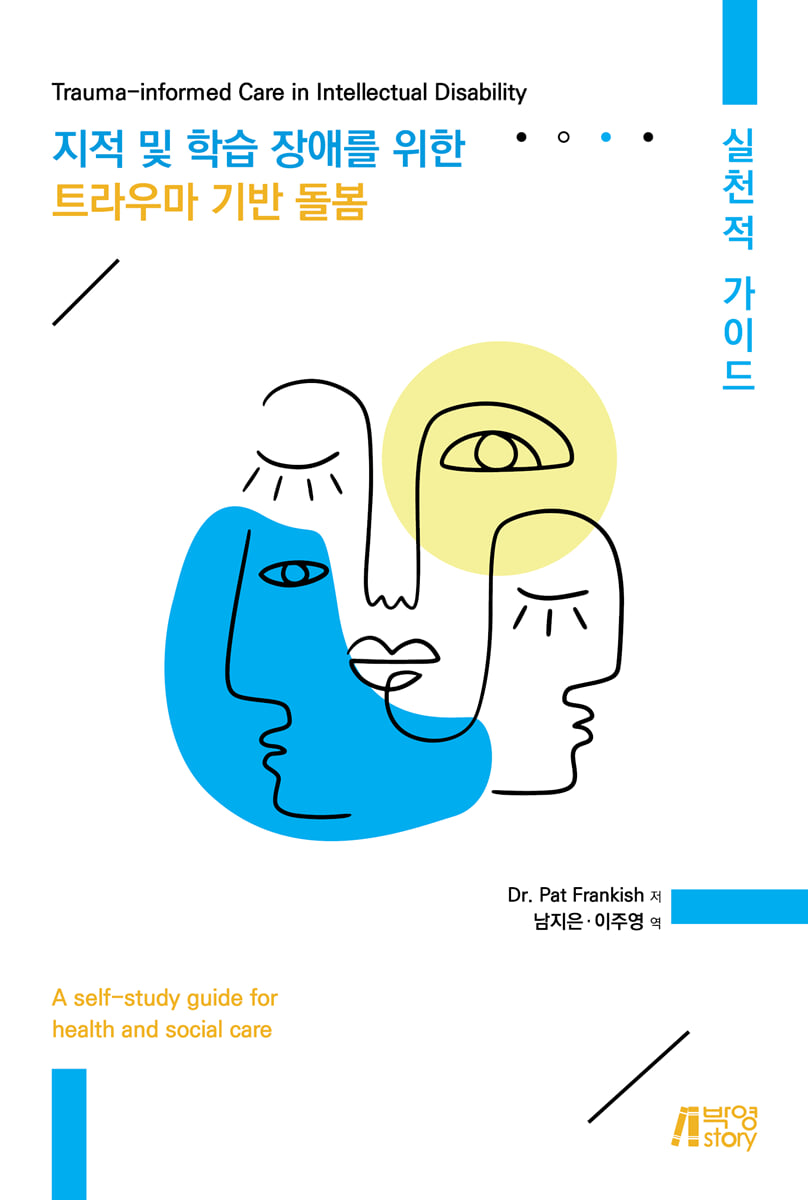
Trauma-Informed Care for Intellectual and Learning Disabilities
 |
Description
Book Introduction
This trauma-informed care guide is written for practitioners supporting people with intellectual disability (ID).
Recent studies have found that the incidence and prevalence of trauma is very high among people with intellectual disabilities.
Some of these causes are related to physical restraint or separation from familiar people, while others stem from traumatic experiences in childhood.
This book focuses particularly on the impact of early traumatic experiences.
Recent studies have found that the incidence and prevalence of trauma is very high among people with intellectual disabilities.
Some of these causes are related to physical restraint or separation from familiar people, while others stem from traumatic experiences in childhood.
This book focuses particularly on the impact of early traumatic experiences.
index
Chapter 01
Infant Development and Emotional Health 1
: Donald Winnicott's research
Chapter 02
Attachment and Secure Base 23
: John Bowlby's research
Chapter 03
From Biological Birth to Psychological Birth 43
: Studies on Margaret Mahler
Chapter 04
Discovering the Unconscious 69
: The work of Sigmund Freud
Chapter 05
The Importance of Early Development 77
: Melanie Klein's perspective
Chapter 06
Trauma and its Impact on Relationships 85
: Research by Wilfred Bion and David Malan
Chapter 07
Disability Issues Understood by Valerie Sinason 95
Chapter 08
Observation and Intervention 111
: Using the FAIT tool
Infant Development and Emotional Health 1
: Donald Winnicott's research
Chapter 02
Attachment and Secure Base 23
: John Bowlby's research
Chapter 03
From Biological Birth to Psychological Birth 43
: Studies on Margaret Mahler
Chapter 04
Discovering the Unconscious 69
: The work of Sigmund Freud
Chapter 05
The Importance of Early Development 77
: Melanie Klein's perspective
Chapter 06
Trauma and its Impact on Relationships 85
: Research by Wilfred Bion and David Malan
Chapter 07
Disability Issues Understood by Valerie Sinason 95
Chapter 08
Observation and Intervention 111
: Using the FAIT tool
Publisher's Review
introduction
This trauma-informed care guide is written for practitioners supporting people with intellectual disability (ID).
Recent studies have found that the incidence and prevalence of trauma is very high among people with intellectual disabilities.
Some of these causes are related to physical restraint or separation from familiar people, while others stem from traumatic experiences in childhood.
This book focuses particularly on the impact of early traumatic experiences.
For a long time, people with intellectual disabilities who have experienced trauma have had limited access to treatment because psychotherapy is not effective.
But we now know that this assumption is not true, and efforts are being made to correct it.
However, opportunities for individual psychotherapy remain limited, so a key goal of this guide is to help practitioners apply therapeutic approaches in their practice.
This guide is designed for self-study by individuals and teams and covers content equivalent to the UK National Vocational Qualification (NVQ) Level 2.
It also forms the basis for the official training courses offered by Frankish Training (www.frankishtraining.co.uk).
This book explains the core concepts of trauma-informed care and draws on the theoretical positions of leading scholars who have conducted important research in the fields of psychotherapy and disability studies.
The ultimate goal is to help practitioners supporting people with intellectual disabilities plan and implement interventions more systematically.
STOP AND THINK
This guide includes a 'STOP AND THINK' section to help practitioners and teams apply the book's content to their own experiences.
Additionally, Chapter 10 addresses when and how to appropriately intervene to address emotional difficulties experienced by individuals.
This guide is most effective when used in conjunction with the Frankish Assessment of the Impact of Trauma in Intellectual Disability (FAIT, 2019).
More information about the tool can be found on our website.
FAIT is a tool that assesses the emotional development level of an individual experiencing emotional distress, helping to provide appropriate interventions tailored to the individual's condition.
By assessing where a person is stuck in their emotional development, we can estimate when they experienced trauma.
Based on this, we can explore the events that caused the trauma and determine the therapeutic approach that is most appropriate for the individual.
For example, for a child who experienced trauma around age 2, it is often related to the time a sibling was born.
As younger siblings develop further, existing trauma may become more severe, resulting in aggressive behavior toward younger siblings or mothers, which may lead to referrals to support services.
In these cases, it is important to understand that the child may need nurturing at a functionally younger age.
While appropriate care can enable emotional development and the realization of potential, without it, there is a significant risk of more negative development, including increased violence, restricted freedom, and further traumatic experiences.
In these cases, the research of Bowlby (1998) and Winnicott (1964) is useful in designing interventions.
As another example, consider a young woman referred for severe self-harming behavior and extreme mood swings that appear to have no cause.
If we evaluate her emotional development level, it is highly likely that her emotional age remains below the age of two.
In this case, Melanie Klein's (1998) 'Depressive Position' theory is helpful in understanding this condition and planning appropriate intervention.
People identified as pre-individuation in the FAIT assessment always need the presence of a trustworthy significant other.
Any further therapeutic interventions should be decided based on a theoretical basis appropriate to the subject's condition.
This trauma-informed care guide is written for practitioners supporting people with intellectual disability (ID).
Recent studies have found that the incidence and prevalence of trauma is very high among people with intellectual disabilities.
Some of these causes are related to physical restraint or separation from familiar people, while others stem from traumatic experiences in childhood.
This book focuses particularly on the impact of early traumatic experiences.
For a long time, people with intellectual disabilities who have experienced trauma have had limited access to treatment because psychotherapy is not effective.
But we now know that this assumption is not true, and efforts are being made to correct it.
However, opportunities for individual psychotherapy remain limited, so a key goal of this guide is to help practitioners apply therapeutic approaches in their practice.
This guide is designed for self-study by individuals and teams and covers content equivalent to the UK National Vocational Qualification (NVQ) Level 2.
It also forms the basis for the official training courses offered by Frankish Training (www.frankishtraining.co.uk).
This book explains the core concepts of trauma-informed care and draws on the theoretical positions of leading scholars who have conducted important research in the fields of psychotherapy and disability studies.
The ultimate goal is to help practitioners supporting people with intellectual disabilities plan and implement interventions more systematically.
STOP AND THINK
This guide includes a 'STOP AND THINK' section to help practitioners and teams apply the book's content to their own experiences.
Additionally, Chapter 10 addresses when and how to appropriately intervene to address emotional difficulties experienced by individuals.
This guide is most effective when used in conjunction with the Frankish Assessment of the Impact of Trauma in Intellectual Disability (FAIT, 2019).
More information about the tool can be found on our website.
FAIT is a tool that assesses the emotional development level of an individual experiencing emotional distress, helping to provide appropriate interventions tailored to the individual's condition.
By assessing where a person is stuck in their emotional development, we can estimate when they experienced trauma.
Based on this, we can explore the events that caused the trauma and determine the therapeutic approach that is most appropriate for the individual.
For example, for a child who experienced trauma around age 2, it is often related to the time a sibling was born.
As younger siblings develop further, existing trauma may become more severe, resulting in aggressive behavior toward younger siblings or mothers, which may lead to referrals to support services.
In these cases, it is important to understand that the child may need nurturing at a functionally younger age.
While appropriate care can enable emotional development and the realization of potential, without it, there is a significant risk of more negative development, including increased violence, restricted freedom, and further traumatic experiences.
In these cases, the research of Bowlby (1998) and Winnicott (1964) is useful in designing interventions.
As another example, consider a young woman referred for severe self-harming behavior and extreme mood swings that appear to have no cause.
If we evaluate her emotional development level, it is highly likely that her emotional age remains below the age of two.
In this case, Melanie Klein's (1998) 'Depressive Position' theory is helpful in understanding this condition and planning appropriate intervention.
People identified as pre-individuation in the FAIT assessment always need the presence of a trustworthy significant other.
Any further therapeutic interventions should be decided based on a theoretical basis appropriate to the subject's condition.
GOODS SPECIFICS
- Date of issue: April 15, 2025
- Page count, weight, size: 144 pages | 153*224*20mm
- ISBN13: 9791172791247
- ISBN10: 1172791244
You may also like
카테고리
korean


korean

![ELLE 엘르 스페셜 에디션 A형 : 12월 [2025]](http://librairie.coreenne.fr/cdn/shop/files/b8e27a3de6c9538896439686c6b0e8fb.jpg?v=1766436872&width=3840)


