

Basic General Chemistry
 |
Description
Book Introduction
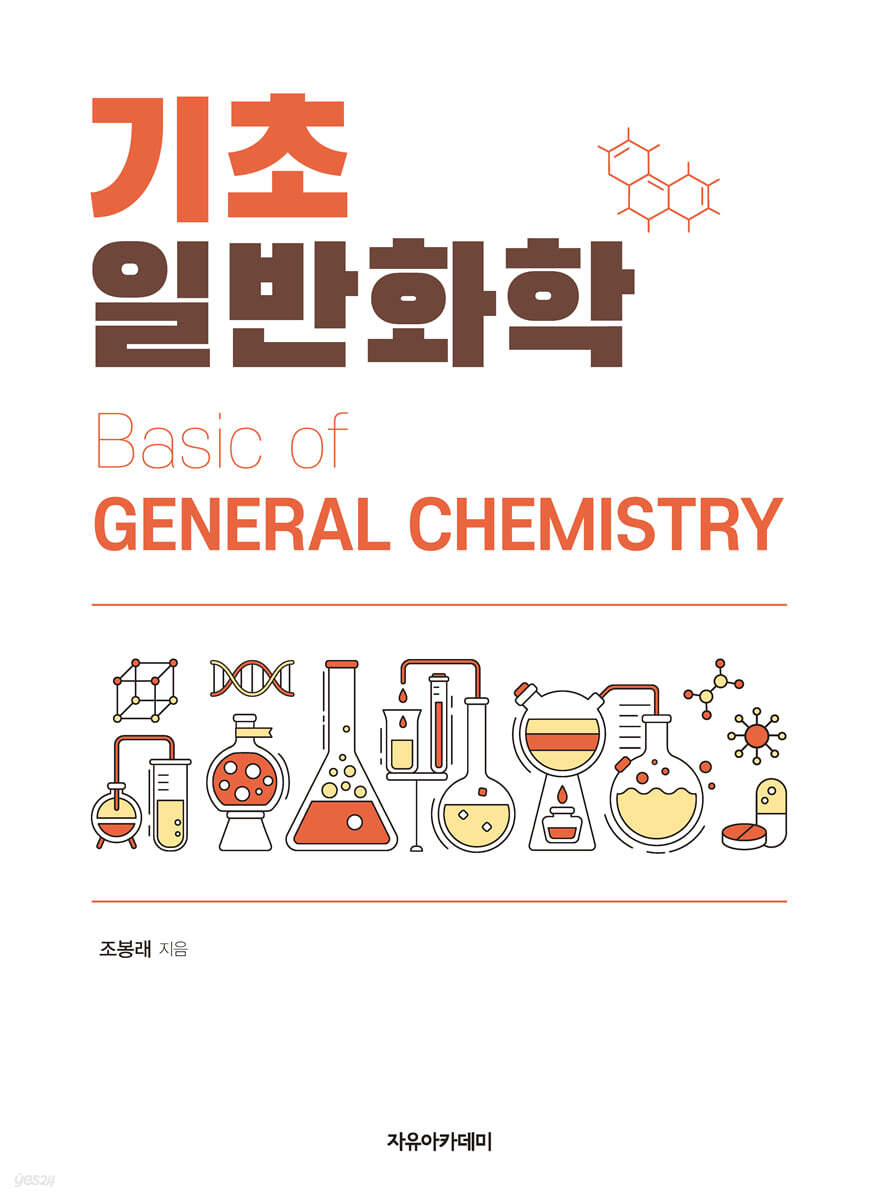
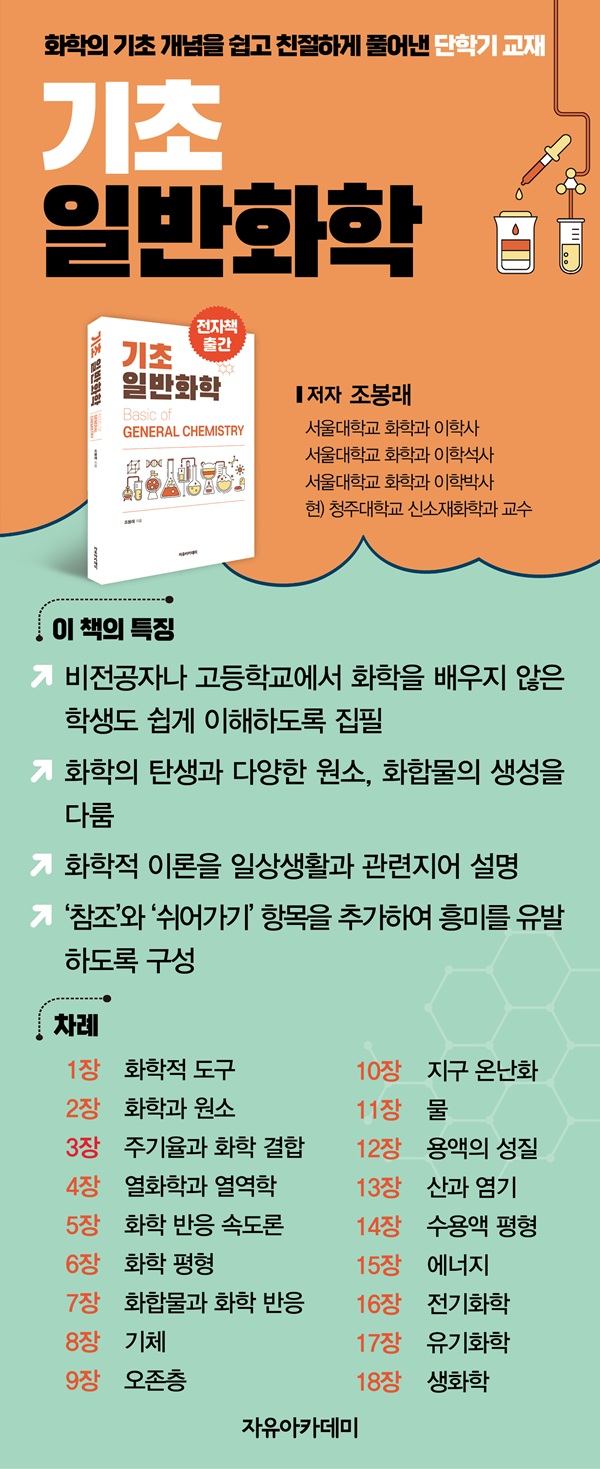
『Basic General Chemistry』 deals with the birth of chemistry, how various elements were created, and how these elements combine to form various compounds.
It also explains chemical theory by relating it to phenomena that can be easily observed in everyday life.
We also introduce information related to chemical products widely used in daily life.
Each chapter contains problems related to the main content, and 'Reference' and 'Break' sections have been added to stimulate students' interest and facilitate understanding.
The nomenclature of compounds in this book is based on the organic compound nomenclature and inorganic compound nomenclature published by the Korean Chemical Society.
It also explains chemical theory by relating it to phenomena that can be easily observed in everyday life.
We also introduce information related to chemical products widely used in daily life.
Each chapter contains problems related to the main content, and 'Reference' and 'Break' sections have been added to stimulate students' interest and facilitate understanding.
The nomenclature of compounds in this book is based on the organic compound nomenclature and inorganic compound nomenclature published by the Korean Chemical Society.
- You can preview some of the book's contents.
Preview
index
Chapter 1 Chemical Tools
1.1 Scientific Method
1.2 Measurement
Chapter 2 Chemistry and Elements
2.1 Creation of the Universe
2.2 Structure of atoms
2.3 The World of Elementary Particles
2.4 Forces in nature
2.5 Evolution of stars
2.6 The Establishment of Modern Chemistry
Chapter 3: Periodic Law and Chemical Bonding
3.1 The Birth of the Periodic Table
3.2 Periodicity of elements
3.3 Chemical bonding
Chapter 4 Thermochemistry and Thermodynamics
4.1 What is energy?
4.2 Temperature
4.3 Laws of Thermodynamics
4.4 Gibbs free energy
4.5 Exothermic and endothermic reactions
4.6 Hess's law
Chapter 5 Chemical Reaction Kinetics
5.1 Chemical reaction rates
5.2 Integral Rate Law
Chapter 6 Chemical Equilibrium
6.1 Chemical equilibrium
Chapter 7 Compounds and Chemical Reactions
7.1 Classification of substances
7.2 Naming of compounds
7.3 Chemical reaction equation
7.4 Stoichiometry
Chapter 8 Gas
8.1 Composition of the atmosphere
8.2 Properties of gases
8.3 Air pollutants
8.4 Smog
Chapter 9: The Ozone Layer
9.1 Ozone
9.2 Duality of Light
9.3 UV protection
9.4 Ozone layer destruction
9.5 Countermeasures against ozone layer destruction and alternative materials
Chapter 10 Global Warming
10.1 Molecular Model
10.2 Molecular Vibration and the Greenhouse Effect
10.3 Greenhouse gases
10.4 Impact of the greenhouse effect and countermeasures
Chapter 11 Water
11.1 Properties of water
11.2 Forces between molecules
11.3 Water distribution
11.4 Water and Life
Chapter 12 Properties of Solutions
12.1 Solution
12.2 Generality
Chapter 13 Acids and Bases
13.1 Properties of acids and bases
13.2 Acid and Base Concepts
13.3 Strength of acids and bases
13.4 Causes and Damage of Acid Rain
13.5 Countermeasures against acid rain
Chapter 14 Aqueous Solution Equilibrium
14.1 Neutralization reaction
14.2 Common ion effect
14.3 Buffer solution
Chapter 15 Energy
15.1 Nuclear Energy
Chapter 16 Electrochemistry
16.1 Oxidation-reduction reactions
16.2 Electrochemistry
16.3 Batteries and Lead-Acid Batteries
16.4 Hydrogen
16.5 Hydrogen Fuel Cell
16.6 Photovoltaic cells
Chapter 17 Organic Chemistry
17.1 Carbon compounds
17.2 Aromatic hydrocarbons
17.3 Hydrocarbon derivatives
17.4 Chiral and Achiral
17.5 Polymer
17.6 Medicines
Chapter 18 Biochemistry
18.1 DNA, the genetic material
18.2 Flow of genetic information
18.3 Protein
18.4 DNA recombination
18.5 Gene introduction
18.6 Polymerase chain reaction
18.7 Genome Library
18.8 Gene Chip
18.9 Nuclear Transplantation Technology
18.10 Human Genome Project
Search 5
1.1 Scientific Method
1.2 Measurement
Chapter 2 Chemistry and Elements
2.1 Creation of the Universe
2.2 Structure of atoms
2.3 The World of Elementary Particles
2.4 Forces in nature
2.5 Evolution of stars
2.6 The Establishment of Modern Chemistry
Chapter 3: Periodic Law and Chemical Bonding
3.1 The Birth of the Periodic Table
3.2 Periodicity of elements
3.3 Chemical bonding
Chapter 4 Thermochemistry and Thermodynamics
4.1 What is energy?
4.2 Temperature
4.3 Laws of Thermodynamics
4.4 Gibbs free energy
4.5 Exothermic and endothermic reactions
4.6 Hess's law
Chapter 5 Chemical Reaction Kinetics
5.1 Chemical reaction rates
5.2 Integral Rate Law
Chapter 6 Chemical Equilibrium
6.1 Chemical equilibrium
Chapter 7 Compounds and Chemical Reactions
7.1 Classification of substances
7.2 Naming of compounds
7.3 Chemical reaction equation
7.4 Stoichiometry
Chapter 8 Gas
8.1 Composition of the atmosphere
8.2 Properties of gases
8.3 Air pollutants
8.4 Smog
Chapter 9: The Ozone Layer
9.1 Ozone
9.2 Duality of Light
9.3 UV protection
9.4 Ozone layer destruction
9.5 Countermeasures against ozone layer destruction and alternative materials
Chapter 10 Global Warming
10.1 Molecular Model
10.2 Molecular Vibration and the Greenhouse Effect
10.3 Greenhouse gases
10.4 Impact of the greenhouse effect and countermeasures
Chapter 11 Water
11.1 Properties of water
11.2 Forces between molecules
11.3 Water distribution
11.4 Water and Life
Chapter 12 Properties of Solutions
12.1 Solution
12.2 Generality
Chapter 13 Acids and Bases
13.1 Properties of acids and bases
13.2 Acid and Base Concepts
13.3 Strength of acids and bases
13.4 Causes and Damage of Acid Rain
13.5 Countermeasures against acid rain
Chapter 14 Aqueous Solution Equilibrium
14.1 Neutralization reaction
14.2 Common ion effect
14.3 Buffer solution
Chapter 15 Energy
15.1 Nuclear Energy
Chapter 16 Electrochemistry
16.1 Oxidation-reduction reactions
16.2 Electrochemistry
16.3 Batteries and Lead-Acid Batteries
16.4 Hydrogen
16.5 Hydrogen Fuel Cell
16.6 Photovoltaic cells
Chapter 17 Organic Chemistry
17.1 Carbon compounds
17.2 Aromatic hydrocarbons
17.3 Hydrocarbon derivatives
17.4 Chiral and Achiral
17.5 Polymer
17.6 Medicines
Chapter 18 Biochemistry
18.1 DNA, the genetic material
18.2 Flow of genetic information
18.3 Protein
18.4 DNA recombination
18.5 Gene introduction
18.6 Polymerase chain reaction
18.7 Genome Library
18.8 Gene Chip
18.9 Nuclear Transplantation Technology
18.10 Human Genome Project
Search 5
Detailed image
Publisher's Review
Recently, with the introduction of autonomous majors at many universities and students who did not study chemistry in high school now taking general chemistry courses, both students and instructors are complaining about the difficulties.
Accordingly, the author, who has been teaching chemistry at a university for a long time, felt a strong need for a chemistry book that could briefly introduce the overall content of general chemistry, and thus wrote 『Basic General Chemistry』.
We hope that this will be of great help in imparting basic chemistry knowledge to students who find chemistry difficult.
This book deals with the birth of chemistry, how various elements were created, and how these elements combine to form various compounds.
It also explains chemical theory by relating it to phenomena that can be easily observed in everyday life.
We also introduce information related to chemical products widely used in daily life.
In each chapter, problems related to the main content are placed, and 'Reference' and 'Break' sections are added to stimulate students' interest and make it easier to understand.
The nomenclature of compounds in this book is based on the organic compound nomenclature and inorganic compound nomenclature published by the Korean Chemical Society.
While it is impossible to cover all aspects of chemistry in one book, it would be a great reward if readers could broaden their understanding of chemistry and solidify their fundamental knowledge through this book.
On the one hand, because I tried to write this book in an easy and concise manner, there may be instances where I failed to properly convey the meaning.
We look forward to your continued support. If there are any revisions after publication, please refer to the Free Academy website (www.freeaca.com) for any updates.
Accordingly, the author, who has been teaching chemistry at a university for a long time, felt a strong need for a chemistry book that could briefly introduce the overall content of general chemistry, and thus wrote 『Basic General Chemistry』.
We hope that this will be of great help in imparting basic chemistry knowledge to students who find chemistry difficult.
This book deals with the birth of chemistry, how various elements were created, and how these elements combine to form various compounds.
It also explains chemical theory by relating it to phenomena that can be easily observed in everyday life.
We also introduce information related to chemical products widely used in daily life.
In each chapter, problems related to the main content are placed, and 'Reference' and 'Break' sections are added to stimulate students' interest and make it easier to understand.
The nomenclature of compounds in this book is based on the organic compound nomenclature and inorganic compound nomenclature published by the Korean Chemical Society.
While it is impossible to cover all aspects of chemistry in one book, it would be a great reward if readers could broaden their understanding of chemistry and solidify their fundamental knowledge through this book.
On the one hand, because I tried to write this book in an easy and concise manner, there may be instances where I failed to properly convey the meaning.
We look forward to your continued support. If there are any revisions after publication, please refer to the Free Academy website (www.freeaca.com) for any updates.
GOODS SPECIFICS
- Date of issue: August 30, 2025
- Page count, weight, size: 366 pages | 188*257*17mm
- ISBN13: 9791158087227
- ISBN10: 1158087225
You may also like
카테고리
korean


korean

![ELLE 엘르 스페셜 에디션 A형 : 12월 [2025]](http://librairie.coreenne.fr/cdn/shop/files/b8e27a3de6c9538896439686c6b0e8fb.jpg?v=1766436872&width=3840)


