

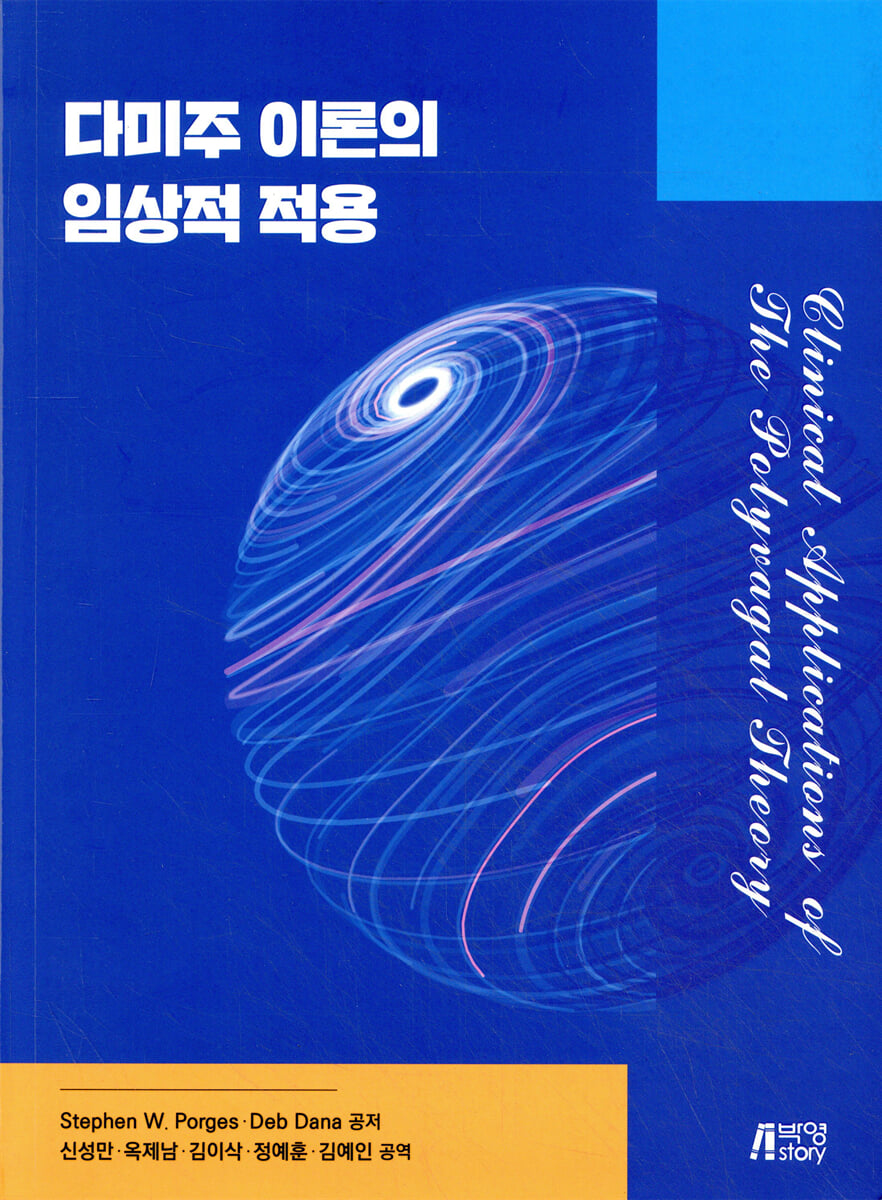
Clinical Application of the Polyvagal Theory
 |
Description
Book Introduction
In 1994, neuroscientist Stephen Porges proposed a groundbreaking theory linking human physiological responses to social behavior.
This theory goes beyond simple psychological phenomena to explain how the body's physiological mechanisms shape our emotions, relationships, and survival strategies.
The existing autonomic nervous system model was limited to a dichotomous model of the sympathetic nervous system responding in fight-or-flight mode and the parasympathetic nervous system responding in rest-and-digest mode, but Porges discovered that the vagus nerve, which is the core of the parasympathetic nervous system, is composed of the independent dorsal vagus nerve and the ventral vagus nerve, and that each is responsible for different survival strategies depending on the developmental stage.
This hierarchical structure, which extends from the ventral vagus nerve to the sympathetic nerve and then to the dorsal vagus nerve, has shown that humans switch strategies in the following order when responding to threats: social engagement, fight/flight, and shutdown.
This theory goes beyond simple psychological phenomena to explain how the body's physiological mechanisms shape our emotions, relationships, and survival strategies.
The existing autonomic nervous system model was limited to a dichotomous model of the sympathetic nervous system responding in fight-or-flight mode and the parasympathetic nervous system responding in rest-and-digest mode, but Porges discovered that the vagus nerve, which is the core of the parasympathetic nervous system, is composed of the independent dorsal vagus nerve and the ventral vagus nerve, and that each is responsible for different survival strategies depending on the developmental stage.
This hierarchical structure, which extends from the ventral vagus nerve to the sympathetic nerve and then to the dorsal vagus nerve, has shown that humans switch strategies in the following order when responding to threats: social engagement, fight/flight, and shutdown.
- You can preview some of the book's contents.
Preview
index
About the Author x
Translator's Preface xviii
introduction.
Why the Damiju Theory is Welcomed by Therapists 1
Stephen W.
Porges
Part 1: Introduction of the Multi-Age Theory to Trauma Therapy 9
Chapter 1.
Damiju Theory and Trauma 10
Peter A.
Levine
Chapter 2.
Understanding and Treating Developmental Trauma: Safety and Reciprocity as Proposed by Polyvagal Theory 35
Bessel van der Kolk
Chapter 3.
Damiju Theory and Sensorimotor Psychotherapy 42
Pat Ogden
Chapter 4.
Introduction to the Theory of the Damiju 59
Stephen W.
Porges
Safety as a Key to Part 2 Treatment 79
Chapter 5.
Safety is the cure 80
Bonnie Badenoch
Chapter 6.
Providing “Deep” Safety for Children Who Have Experienced Abuse: For Traumatized Children and Adolescents
Application of Polyvagal Theory in Therapy 96
Joe Tucci, Angela Weller, and Janise Mitchell
Chapter 7.
Therapeutic Presence and Polyvagal Theory: Principles and Practice for Effective Therapeutic Relationships 114
Shari M.
Geller
Chapter 8.
Collaborating from a Multi-America Theory Perspective: The Doctor-Patient Relationship 135
George Thompson
Chapter 9.
Theory of Damiju, which emphasizes the importance of nursing 160
Moira Theede
Chapter 10.
Engaging the Mammalian Autonomic Nervous System: Staying, Rhythm, and Touch 179
Alan Theede
Part 3: Therapeutic Approaches and Clinical Applications 195
Chapter 11.
Damiju Playlab: Helping Therapists Talk to Patients About Damiju Theory 196
Deb Dana and Deb Grant
Chapter 12.
Dance Movement Therapy Based on the Multi-Age Theory for Trauma Survivors: Roots, Rhythm, and Reciprocity 219
Amber Gray
Chapter 13.
Theraplay therapy based on the Multi-Area System: Combining social engagement, play, and nurturing to provide safety, regulation, and
Building Resilience 241
Sandra Lindaman and Jukka Makela
Chapter 14.
When Pediatric Medical Trauma Presents as Asperger Syndrome: A Polyvagal Theory Explanation and Therapeutic Play 264
Stuart Daniel, Angie Masters, and Kieran Donovan
Chapter 15.
Energy Psychology, Polyvagal Theory, and Trauma Therapy 285
Robert Schwarz
Chapter 16.
Trauma Severity: Similarities Between the SPIM 30 and Polyvagal Theory 301
Ralf Vogt
Chapter 17.
Treating Aviation Fear: A Polyvagal Theory Perspective 320
Tom Bunn
Chapter 18.
Grief Through the Perspective of Polyamory Theory: Humanizing Clinical Responses to Loss 336
Candyce Ossefort-Russell
Chapter 19.
Damiju Theory, Poetry, and PTSD: A Portrait of the Poet as a Trauma Therapist Can See 362
Gary Whited
Part 4 Applications in Medicine 381
Chapter 20.
Neonatal Intensive Care Units and the Multivagal Theory: Strengthening the Safety Circuit 382
Marilyn Sanders
Chapter 21.
Stroke Recovery Case 402: A Look at It Through the Perspective of the Damiju Theory
Deb Dana
Chapter 22.
Born with Heart Disease: The Clinical Implications of the Polyvagal Theory 424
Liza Morton
Search 444
Translator's Preface xviii
introduction.
Why the Damiju Theory is Welcomed by Therapists 1
Stephen W.
Porges
Part 1: Introduction of the Multi-Age Theory to Trauma Therapy 9
Chapter 1.
Damiju Theory and Trauma 10
Peter A.
Levine
Chapter 2.
Understanding and Treating Developmental Trauma: Safety and Reciprocity as Proposed by Polyvagal Theory 35
Bessel van der Kolk
Chapter 3.
Damiju Theory and Sensorimotor Psychotherapy 42
Pat Ogden
Chapter 4.
Introduction to the Theory of the Damiju 59
Stephen W.
Porges
Safety as a Key to Part 2 Treatment 79
Chapter 5.
Safety is the cure 80
Bonnie Badenoch
Chapter 6.
Providing “Deep” Safety for Children Who Have Experienced Abuse: For Traumatized Children and Adolescents
Application of Polyvagal Theory in Therapy 96
Joe Tucci, Angela Weller, and Janise Mitchell
Chapter 7.
Therapeutic Presence and Polyvagal Theory: Principles and Practice for Effective Therapeutic Relationships 114
Shari M.
Geller
Chapter 8.
Collaborating from a Multi-America Theory Perspective: The Doctor-Patient Relationship 135
George Thompson
Chapter 9.
Theory of Damiju, which emphasizes the importance of nursing 160
Moira Theede
Chapter 10.
Engaging the Mammalian Autonomic Nervous System: Staying, Rhythm, and Touch 179
Alan Theede
Part 3: Therapeutic Approaches and Clinical Applications 195
Chapter 11.
Damiju Playlab: Helping Therapists Talk to Patients About Damiju Theory 196
Deb Dana and Deb Grant
Chapter 12.
Dance Movement Therapy Based on the Multi-Age Theory for Trauma Survivors: Roots, Rhythm, and Reciprocity 219
Amber Gray
Chapter 13.
Theraplay therapy based on the Multi-Area System: Combining social engagement, play, and nurturing to provide safety, regulation, and
Building Resilience 241
Sandra Lindaman and Jukka Makela
Chapter 14.
When Pediatric Medical Trauma Presents as Asperger Syndrome: A Polyvagal Theory Explanation and Therapeutic Play 264
Stuart Daniel, Angie Masters, and Kieran Donovan
Chapter 15.
Energy Psychology, Polyvagal Theory, and Trauma Therapy 285
Robert Schwarz
Chapter 16.
Trauma Severity: Similarities Between the SPIM 30 and Polyvagal Theory 301
Ralf Vogt
Chapter 17.
Treating Aviation Fear: A Polyvagal Theory Perspective 320
Tom Bunn
Chapter 18.
Grief Through the Perspective of Polyamory Theory: Humanizing Clinical Responses to Loss 336
Candyce Ossefort-Russell
Chapter 19.
Damiju Theory, Poetry, and PTSD: A Portrait of the Poet as a Trauma Therapist Can See 362
Gary Whited
Part 4 Applications in Medicine 381
Chapter 20.
Neonatal Intensive Care Units and the Multivagal Theory: Strengthening the Safety Circuit 382
Marilyn Sanders
Chapter 21.
Stroke Recovery Case 402: A Look at It Through the Perspective of the Damiju Theory
Deb Dana
Chapter 22.
Born with Heart Disease: The Clinical Implications of the Polyvagal Theory 424
Liza Morton
Search 444
Publisher's Review
Translator's Preface
In 1994, neuroscientist Stephen Porges proposed a groundbreaking theory linking human physiological responses to social behavior.
This theory goes beyond simple psychological phenomena to explain how the body's physiological mechanisms shape our emotions, relationships, and survival strategies.
The existing autonomic nervous system model was limited to a dichotomous model of the sympathetic nervous system responding in fight-or-flight mode and the parasympathetic nervous system responding in rest-and-digest mode, but Porges discovered that the vagus nerve, which is the core of the parasympathetic nervous system, is composed of the independent dorsal vagus nerve and the ventral vagus nerve, and that each is responsible for different survival strategies depending on the developmental stage.
This hierarchical structure, which extends from the ventral vagus nerve to the sympathetic nerve and then to the dorsal vagus nerve, has shown that humans switch strategies in the following order when responding to threats: social engagement, fight/flight, and shutdown.
One of the core concepts of polydactyly theory, along with hierarchical adaptive strategies, is that the body senses whether the environment is safe or not without conscious thought.
Neuroception mechanisms regulate our responses through heart rate, breathing, and facial expressions even before we perceive a threat.
Activation of the ventral vagus nerve through a familiar voice or gentle eye contact calms the body, whereas sudden noises or hostile situations arouse the sympathetic nervous system and the dorsal vagus nerve.
This theory revolutionized the field of trauma treatment by moving beyond the traditional symptom management approach and emphasizing the restoration of a sense of safety as the starting point of treatment.
When trauma survivors remain in a state of hyperarousal, treatment techniques that prioritize breathing control and forming stable relationships over verbal interventions have been developed, and are described by Bessel van der Kolk and Peter A.
Levine) and became the basis of somatic experiencing therapy.
The insights of this polytheistic theory are becoming increasingly important in modern society today.
Recent advances in digital technology, artificial intelligence, and changes in social relationships are posing new challenges to human security and social connection.
According to a recently published report, the most active area of ChatGPT use worldwide is in psychotherapy and counseling.
While some are hastily predicting that artificial intelligence could replace psychological counseling, this actually serves as further proof that members of modern society desperately need psychological support and emotional connection.
In reality, it is not easy to find someone who responds immediately and consistently to an individual's psychological and relational needs, not only in everyday human relationships but also in professional counseling settings.
As a result, satisfaction with real relationships is decreasing, and dependence on virtual relationships is gradually increasing.
According to the polyamorous theory, this relational disconnection and emotional dissatisfaction can gradually lead to immobilization or reptilian responses in highly stressful environments.
These physiological responses weaken the function of the ventral vagus nerve, leaving the individual in a state of chronic anxiety and tension, unable to fully experience a sense of security.
This is similar to drinking seawater to quench your thirst, only to have your thirst worsen.
By understanding this vicious cycle from the perspective of the theory of polyamory and applying it to clinical settings, we can more systematically explain why modern people are vulnerable to anxiety, depression, and trauma.
At its core are the core tasks of ‘the desire for a sense of security’ and ‘restoring a system of social participation through genuine social connection.’
Through these insights, this book will lead counselors to deeply consider how to build relationships with clients and what steps and strategies to use to proceed with intervention.
I would also like to express my gratitude to Park Young Story CEO Noh Hyun and the editorial staff for their great help in publishing this excellent book.
late spring 2025
At the Pohang Laboratory
Translator Representative Shin Seong-man
In 1994, neuroscientist Stephen Porges proposed a groundbreaking theory linking human physiological responses to social behavior.
This theory goes beyond simple psychological phenomena to explain how the body's physiological mechanisms shape our emotions, relationships, and survival strategies.
The existing autonomic nervous system model was limited to a dichotomous model of the sympathetic nervous system responding in fight-or-flight mode and the parasympathetic nervous system responding in rest-and-digest mode, but Porges discovered that the vagus nerve, which is the core of the parasympathetic nervous system, is composed of the independent dorsal vagus nerve and the ventral vagus nerve, and that each is responsible for different survival strategies depending on the developmental stage.
This hierarchical structure, which extends from the ventral vagus nerve to the sympathetic nerve and then to the dorsal vagus nerve, has shown that humans switch strategies in the following order when responding to threats: social engagement, fight/flight, and shutdown.
One of the core concepts of polydactyly theory, along with hierarchical adaptive strategies, is that the body senses whether the environment is safe or not without conscious thought.
Neuroception mechanisms regulate our responses through heart rate, breathing, and facial expressions even before we perceive a threat.
Activation of the ventral vagus nerve through a familiar voice or gentle eye contact calms the body, whereas sudden noises or hostile situations arouse the sympathetic nervous system and the dorsal vagus nerve.
This theory revolutionized the field of trauma treatment by moving beyond the traditional symptom management approach and emphasizing the restoration of a sense of safety as the starting point of treatment.
When trauma survivors remain in a state of hyperarousal, treatment techniques that prioritize breathing control and forming stable relationships over verbal interventions have been developed, and are described by Bessel van der Kolk and Peter A.
Levine) and became the basis of somatic experiencing therapy.
The insights of this polytheistic theory are becoming increasingly important in modern society today.
Recent advances in digital technology, artificial intelligence, and changes in social relationships are posing new challenges to human security and social connection.
According to a recently published report, the most active area of ChatGPT use worldwide is in psychotherapy and counseling.
While some are hastily predicting that artificial intelligence could replace psychological counseling, this actually serves as further proof that members of modern society desperately need psychological support and emotional connection.
In reality, it is not easy to find someone who responds immediately and consistently to an individual's psychological and relational needs, not only in everyday human relationships but also in professional counseling settings.
As a result, satisfaction with real relationships is decreasing, and dependence on virtual relationships is gradually increasing.
According to the polyamorous theory, this relational disconnection and emotional dissatisfaction can gradually lead to immobilization or reptilian responses in highly stressful environments.
These physiological responses weaken the function of the ventral vagus nerve, leaving the individual in a state of chronic anxiety and tension, unable to fully experience a sense of security.
This is similar to drinking seawater to quench your thirst, only to have your thirst worsen.
By understanding this vicious cycle from the perspective of the theory of polyamory and applying it to clinical settings, we can more systematically explain why modern people are vulnerable to anxiety, depression, and trauma.
At its core are the core tasks of ‘the desire for a sense of security’ and ‘restoring a system of social participation through genuine social connection.’
Through these insights, this book will lead counselors to deeply consider how to build relationships with clients and what steps and strategies to use to proceed with intervention.
I would also like to express my gratitude to Park Young Story CEO Noh Hyun and the editorial staff for their great help in publishing this excellent book.
late spring 2025
At the Pohang Laboratory
Translator Representative Shin Seong-man
GOODS SPECIFICS
- Date of issue: June 20, 2025
- Page count, weight, size: 484 pages | 188*257*30mm
- ISBN13: 9791172790783
- ISBN10: 1172790787
You may also like
카테고리
korean


korean

![ELLE 엘르 스페셜 에디션 A형 : 12월 [2025]](http://librairie.coreenne.fr/cdn/shop/files/b8e27a3de6c9538896439686c6b0e8fb.jpg?v=1766436872&width=3840)


