

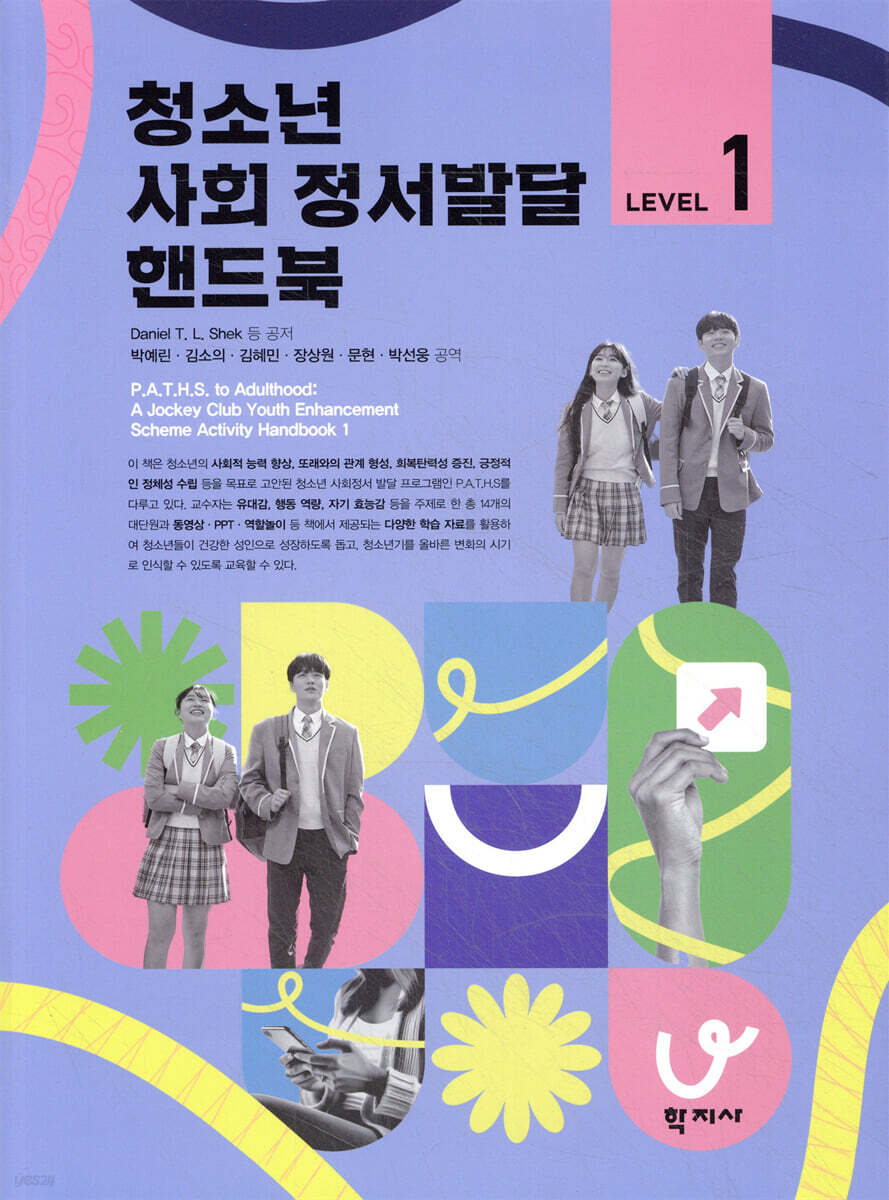
Adolescent Social-Emotional Development Handbook Level 1
 |
Description
Book Introduction
This book covers PATHS, a youth social-emotional development program designed to improve adolescents' social skills, build relationships with peers, increase resilience, and establish a positive identity.
Teachers can utilize the 14 chapters on topics such as bonding, behavioral competency, and self-efficacy, as well as the various learning materials provided in the book, such as videos, PPTs, and role-playing, to help adolescents grow into healthy adults and educate them to recognize adolescence as a time of positive change.
This book focuses on helping adolescents develop important skills such as emotional regulation, moral character, self-determination, and resilience.
It also helps young people develop self-efficacy and a sense of connection with others, enabling them to function as positive members of society.
Teachers can utilize the 14 chapters on topics such as bonding, behavioral competency, and self-efficacy, as well as the various learning materials provided in the book, such as videos, PPTs, and role-playing, to help adolescents grow into healthy adults and educate them to recognize adolescence as a time of positive change.
This book focuses on helping adolescents develop important skills such as emotional regulation, moral character, self-determination, and resilience.
It also helps young people develop self-efficacy and a sense of connection with others, enabling them to function as positive members of society.
index
Translator's Preface
Recommendation
Author's Preface
Grand Finale 1: Bonding
Unit 1: Becoming a Friend and a Teacher
Unit 2: The Power of Character
Unit 3: Finding Friends Who Are Important to Me
Unit 4: A Journey Together
Unit 2 Social Competence
Unit 1: Korea and Me
Unit 2: Shining the Light of Korea
Chapter 3: Emotional Competence
Unit 1: Emotional Dictionary
Unit 2: Understanding and Expressing True Emotions
Unit 4 Cognitive Competence
Unit 1: The Brain: The Human Software
Unit 2: Love Found Online
Unit 5 Behavioral Competencies
Unit 1: Will it help me?
Unit 2 How to say
Chapter 6: Moral Competence
Unit 1 Who Should Board First?
Unit 2 On the same bus
Unit 7 Self-Efficacy
Unit 1: My Abilities and Self-Efficacy
Unit 2 Yes, I can do it
Unit 3: Applause for Me
Unit 4: SMART Ways to Achieve Your Goals
Chapter 8 Prosocial Norms
Section 1: Establishing Rules
Unit 2 When in Rome, do as the Romans do.
Chapter 9: Resilience
Unit 1 There Was Such a Time
Unit 2: The Lost Wallet
Unit 3: Masters of the Martial Arts World
Unit 4: Conflict in the Classroom
Chapter 10 Self-Determination
Unit 1 Autonomy Certificate
Unit 2: Wise Choices
Unit 3: The Dream Train
Unit 4: My Multiple Intelligences
Chapter 11 Spirituality
Unit 1 What I like best is
Unit 2 Under One Roof
Chapter 12: A Clear and Positive Identity
Unit 1 If I Could Make Rules
Unit 2: Knowing Myself and Knowing Others
Unit 3 I'm proud of myself
Unit 4: Sharing Thoughts and Experiences
Chapter 13: Belief in the Future
Unit 1: Good or Bad
Unit 2: The Compass of Life
Unit 14 Prosocial Engagement
Unit 1: What is Community Activity?
Unit 2: Rejecting Misbehavior
Unit 3: Community Activities in Schools
Unit 4: Community Activities for Society
Appendix: Author's Preface (English)
Recommendation
Author's Preface
Grand Finale 1: Bonding
Unit 1: Becoming a Friend and a Teacher
Unit 2: The Power of Character
Unit 3: Finding Friends Who Are Important to Me
Unit 4: A Journey Together
Unit 2 Social Competence
Unit 1: Korea and Me
Unit 2: Shining the Light of Korea
Chapter 3: Emotional Competence
Unit 1: Emotional Dictionary
Unit 2: Understanding and Expressing True Emotions
Unit 4 Cognitive Competence
Unit 1: The Brain: The Human Software
Unit 2: Love Found Online
Unit 5 Behavioral Competencies
Unit 1: Will it help me?
Unit 2 How to say
Chapter 6: Moral Competence
Unit 1 Who Should Board First?
Unit 2 On the same bus
Unit 7 Self-Efficacy
Unit 1: My Abilities and Self-Efficacy
Unit 2 Yes, I can do it
Unit 3: Applause for Me
Unit 4: SMART Ways to Achieve Your Goals
Chapter 8 Prosocial Norms
Section 1: Establishing Rules
Unit 2 When in Rome, do as the Romans do.
Chapter 9: Resilience
Unit 1 There Was Such a Time
Unit 2: The Lost Wallet
Unit 3: Masters of the Martial Arts World
Unit 4: Conflict in the Classroom
Chapter 10 Self-Determination
Unit 1 Autonomy Certificate
Unit 2: Wise Choices
Unit 3: The Dream Train
Unit 4: My Multiple Intelligences
Chapter 11 Spirituality
Unit 1 What I like best is
Unit 2 Under One Roof
Chapter 12: A Clear and Positive Identity
Unit 1 If I Could Make Rules
Unit 2: Knowing Myself and Knowing Others
Unit 3 I'm proud of myself
Unit 4: Sharing Thoughts and Experiences
Chapter 13: Belief in the Future
Unit 1: Good or Bad
Unit 2: The Compass of Life
Unit 14 Prosocial Engagement
Unit 1: What is Community Activity?
Unit 2: Rejecting Misbehavior
Unit 3: Community Activities in Schools
Unit 4: Community Activities for Society
Appendix: Author's Preface (English)
Detailed image

Publisher's Review
This book emphasizes personal development and social responsibility, offering ways to develop diverse competencies, increase self-efficacy, and drive positive social change.
Each unit addresses specific methods needed to develop personal, emotional, cognitive, moral, and social competencies.
The first chapter, Bonding, emphasizes the role of friends and teachers as important elements in interpersonal relationships, and deals with how to find true friends and grow together.
Social competency explores how individuals define themselves within society and how they can contribute to the Republic of Korea and society.
Emotional competency covers how to recognize and express emotions, emphasizing the importance of genuine emotional understanding and communication.
In cognitive capacity, the brain is likened to human software, explaining that emotional communication is possible even online.
Behavioral competencies provide effective communication and behavioral strategies that can help in critical moments, while moral competencies address moral judgment and social responsibility, explaining how individuals and society can live together.
The self-efficacy chapter covers how to gain confidence and achieve goals, and presents practical methods for achieving goals, such as through SMART goal setting.
Prosocial norms address the importance of following social rules and how to uphold them in various situations.
Resilience addresses how to recover and grow from difficult situations, and offers strategies for conflict resolution and internal growth.
Self-determination explains how to strengthen personal autonomy and determine the direction of one's life through wise choices.
The Spirituality chapter addresses the inner worth and spiritual growth of an individual, offering ways to find oneself and understand what one loves.
Clear and Positive Identity deals with understanding the self positively and how to further establish oneself in relationships with others.
Finally, Belief in the Future explores beliefs and goal-setting methods for a positive future, providing direction for life.
Prosocial engagement addresses community activities and social responsibility, and suggests ways to encourage positive participation and behavior both inside and outside of school.
This book offers readers a path to further self-development through self-reflection and, furthermore, provides content that helps them live a socially responsible life.
Each unit addresses specific methods needed to develop personal, emotional, cognitive, moral, and social competencies.
The first chapter, Bonding, emphasizes the role of friends and teachers as important elements in interpersonal relationships, and deals with how to find true friends and grow together.
Social competency explores how individuals define themselves within society and how they can contribute to the Republic of Korea and society.
Emotional competency covers how to recognize and express emotions, emphasizing the importance of genuine emotional understanding and communication.
In cognitive capacity, the brain is likened to human software, explaining that emotional communication is possible even online.
Behavioral competencies provide effective communication and behavioral strategies that can help in critical moments, while moral competencies address moral judgment and social responsibility, explaining how individuals and society can live together.
The self-efficacy chapter covers how to gain confidence and achieve goals, and presents practical methods for achieving goals, such as through SMART goal setting.
Prosocial norms address the importance of following social rules and how to uphold them in various situations.
Resilience addresses how to recover and grow from difficult situations, and offers strategies for conflict resolution and internal growth.
Self-determination explains how to strengthen personal autonomy and determine the direction of one's life through wise choices.
The Spirituality chapter addresses the inner worth and spiritual growth of an individual, offering ways to find oneself and understand what one loves.
Clear and Positive Identity deals with understanding the self positively and how to further establish oneself in relationships with others.
Finally, Belief in the Future explores beliefs and goal-setting methods for a positive future, providing direction for life.
Prosocial engagement addresses community activities and social responsibility, and suggests ways to encourage positive participation and behavior both inside and outside of school.
This book offers readers a path to further self-development through self-reflection and, furthermore, provides content that helps them live a socially responsible life.
GOODS SPECIFICS
- Date of issue: June 15, 2025
- Format: Paperback book binding method guide
- Page count, weight, size: 392 pages | 188*257*25mm
- ISBN13: 9788999734366
- ISBN10: 8999734366
You may also like
카테고리
korean


korean

![ELLE 엘르 스페셜 에디션 A형 : 12월 [2025]](http://librairie.coreenne.fr/cdn/shop/files/b8e27a3de6c9538896439686c6b0e8fb.jpg?v=1766436872&width=3840)


