

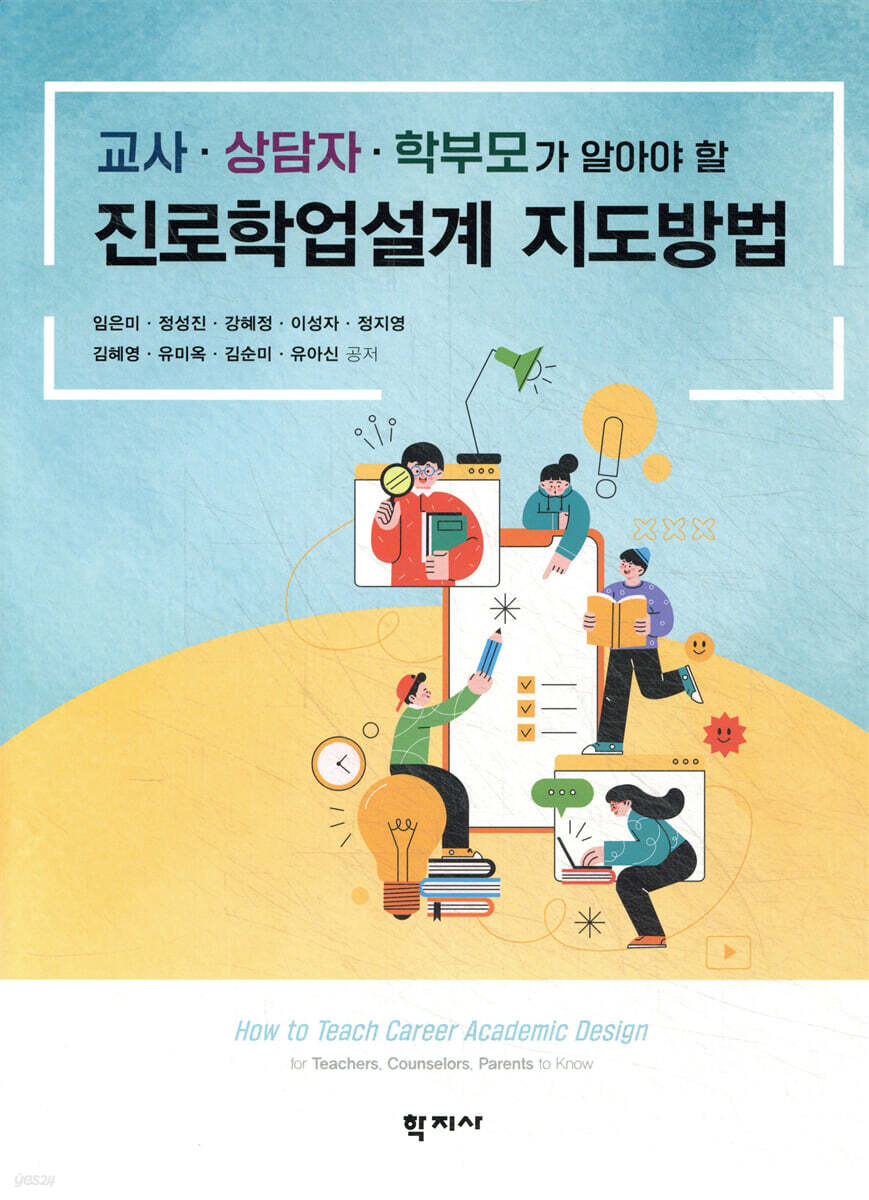
Career and Academic Design Guidance Method
 |
Description
Book Introduction
"Career and Academic Planning Guidance Method" is designed to provide teachers, parents, and counselors with answers to the questions of what to know and how to approach students to help them develop the "career and academic planning capabilities" of high school students today.
index
preface
Part 1: Introduction to Career and Academic Planning
Chapter 1: The Necessity of Career and Academic Planning
1.
Changes in future society and education
2.
Linking career and academics
3.
Goals of Career and Academic Planning
Chapter 2: The Foundation of Career and Academic Planning: Understanding the Growing Self
1.
interest
2.
aptitude
3.
personality
4.
Professional values
5.
lifestyle
6.
Health, Appearance, Disability
Chapter 3: Principles of Career and Academic Planning
1.
Principle of initiative
2.
Principle of Reflection
3.
Principles of meaning making
4.
Principles of Finding Relevance
5.
Principles of Learning
Chapter 4: Diagnosis of Student Career Status
1.
Diagnosis considering the student's career development status
2.
Diagnosis based on the student's career maturity
Part 2: Practical Guide to Career and Academic Planning
Chapter 5: Career Guidance for Students with Apathy
1.
Explore your interests in everyday life and connect them to your career.
2.
Exploring career interests using job verbs
3.
Career Exploration Using Generative AI Services
Chapter 6 Career Guidance for Students Undecided on a Career Path: Students Who Provided a Job Title
1.
Changes in the world of work and promising future jobs
2.
Exploring and utilizing job information
3.
Career Information Exploration Practice
Chapter 7 Career Guidance for Students Undecided on a Career Path: Students Who Present a Job (Work)
1.
Understanding the job
2.
Job Analysis and Job Competency Exploration
3.
Practice in career selection through job information
Chapter 8 Career Guidance for Students Undecided on a Career Path: Students Who Have Indicated a Department (Major) of Interest
1.
Understanding the department (major)
2.
How to find information on your department (major) of interest
3.
Forecasting the prospects of departments of interest (majors) according to social changes
Chapter 9 Career Guidance for Students Deciding on Career Paths
1.
Check the factors that determine career path
2.
Review the career decision process
3.
Understanding and Overcoming Career Barriers
Chapter 10 Career and Academic Planning Guidance
1.
Exploring Hope University's Major Curriculum
2.
High school subject selection
Part 3: A Beginning for Career and Academic Planning
Chapter 11 Career Portfolio
1.
The concept and composition of a career portfolio
2.
Preparing a career portfolio
3.
Creating a career portfolio
Chapter 12 Learning Strategies
1.
Learning strategy method
2.
Academic failure trauma
Part 4: The Roles of Teachers, Counselors, and Parents
Chapter 13: The Role of Teachers and Counselors
1.
The Role of Teachers in the High School Credit System
2.
The Role of a Career Counselor
Chapter 14: The Role of Parents
1.
Parents who help foster career motivation
2.
Parents who help their children make career decisions
3.
Parents who wisely deal with career conflicts
supplement
References
Search
Part 1: Introduction to Career and Academic Planning
Chapter 1: The Necessity of Career and Academic Planning
1.
Changes in future society and education
2.
Linking career and academics
3.
Goals of Career and Academic Planning
Chapter 2: The Foundation of Career and Academic Planning: Understanding the Growing Self
1.
interest
2.
aptitude
3.
personality
4.
Professional values
5.
lifestyle
6.
Health, Appearance, Disability
Chapter 3: Principles of Career and Academic Planning
1.
Principle of initiative
2.
Principle of Reflection
3.
Principles of meaning making
4.
Principles of Finding Relevance
5.
Principles of Learning
Chapter 4: Diagnosis of Student Career Status
1.
Diagnosis considering the student's career development status
2.
Diagnosis based on the student's career maturity
Part 2: Practical Guide to Career and Academic Planning
Chapter 5: Career Guidance for Students with Apathy
1.
Explore your interests in everyday life and connect them to your career.
2.
Exploring career interests using job verbs
3.
Career Exploration Using Generative AI Services
Chapter 6 Career Guidance for Students Undecided on a Career Path: Students Who Provided a Job Title
1.
Changes in the world of work and promising future jobs
2.
Exploring and utilizing job information
3.
Career Information Exploration Practice
Chapter 7 Career Guidance for Students Undecided on a Career Path: Students Who Present a Job (Work)
1.
Understanding the job
2.
Job Analysis and Job Competency Exploration
3.
Practice in career selection through job information
Chapter 8 Career Guidance for Students Undecided on a Career Path: Students Who Have Indicated a Department (Major) of Interest
1.
Understanding the department (major)
2.
How to find information on your department (major) of interest
3.
Forecasting the prospects of departments of interest (majors) according to social changes
Chapter 9 Career Guidance for Students Deciding on Career Paths
1.
Check the factors that determine career path
2.
Review the career decision process
3.
Understanding and Overcoming Career Barriers
Chapter 10 Career and Academic Planning Guidance
1.
Exploring Hope University's Major Curriculum
2.
High school subject selection
Part 3: A Beginning for Career and Academic Planning
Chapter 11 Career Portfolio
1.
The concept and composition of a career portfolio
2.
Preparing a career portfolio
3.
Creating a career portfolio
Chapter 12 Learning Strategies
1.
Learning strategy method
2.
Academic failure trauma
Part 4: The Roles of Teachers, Counselors, and Parents
Chapter 13: The Role of Teachers and Counselors
1.
The Role of Teachers in the High School Credit System
2.
The Role of a Career Counselor
Chapter 14: The Role of Parents
1.
Parents who help foster career motivation
2.
Parents who help their children make career decisions
3.
Parents who wisely deal with career conflicts
supplement
References
Search
Publisher's Review
This book is intended to provide teachers, parents, and counselors with answers to the questions of what they need to know and how they should approach students to help them develop the "career and academic planning capabilities" of today's high school students.
To this end, the content was structured as follows:
Part 1 presents the necessity, foundation, principles, and diagnosis methods for students' career development of career planning capabilities in four chapters.
It explains why career and academic planning skills are necessary, what foundations and principles must be understood to develop them, and how to view students from the perspective of career development.
In Part 2, guidance methods to develop students' career and academic planning capabilities are introduced in six chapters, divided into six stages of career development.
Chapter 5 is career guidance for students who are not interested in career development and are unmotivated; Chapter 6 is career guidance for students who are undecided about their careers and have only a vague idea of the name of their desired occupation; Chapter 7 is career guidance for students who are undecided about their careers but have a vague idea of what they want to do (job); Chapter 8 is career guidance for students who are undecided about their careers and say that they have found a department (major) they are interested in; Chapter 9 is career guidance for students who have tentatively decided on a career; and Chapter 10 is career and academic design guidance for students who believe that they have decided on a career.
Part 3 presents a method for designing a career portfolio, which is one of the main outcomes of career and academic design capabilities, and also introduces, in two chapters, a plan to help students choose subjects and lead school life proactively as self-directed learners in line with their own career and academic design.
Part 4 presents the roles of teachers, parents, and counselors, who are sensitive to students' needs and provide assistance while their career and academic planning abilities grow, in two chapters.
To this end, the content was structured as follows:
Part 1 presents the necessity, foundation, principles, and diagnosis methods for students' career development of career planning capabilities in four chapters.
It explains why career and academic planning skills are necessary, what foundations and principles must be understood to develop them, and how to view students from the perspective of career development.
In Part 2, guidance methods to develop students' career and academic planning capabilities are introduced in six chapters, divided into six stages of career development.
Chapter 5 is career guidance for students who are not interested in career development and are unmotivated; Chapter 6 is career guidance for students who are undecided about their careers and have only a vague idea of the name of their desired occupation; Chapter 7 is career guidance for students who are undecided about their careers but have a vague idea of what they want to do (job); Chapter 8 is career guidance for students who are undecided about their careers and say that they have found a department (major) they are interested in; Chapter 9 is career guidance for students who have tentatively decided on a career; and Chapter 10 is career and academic design guidance for students who believe that they have decided on a career.
Part 3 presents a method for designing a career portfolio, which is one of the main outcomes of career and academic design capabilities, and also introduces, in two chapters, a plan to help students choose subjects and lead school life proactively as self-directed learners in line with their own career and academic design.
Part 4 presents the roles of teachers, parents, and counselors, who are sensitive to students' needs and provide assistance while their career and academic planning abilities grow, in two chapters.
GOODS SPECIFICS
- Date of issue: April 30, 2025
- Format: Paperback book binding method guide
- Page count, weight, size: 336 pages | 188*255*13mm
- ISBN13: 9788999734083
You may also like
카테고리
korean


korean

![ELLE 엘르 스페셜 에디션 A형 : 12월 [2025]](http://librairie.coreenne.fr/cdn/shop/files/b8e27a3de6c9538896439686c6b0e8fb.jpg?v=1766436872&width=3840)


