

Meridian and acupoint anatomy
 |
Description
Book Introduction
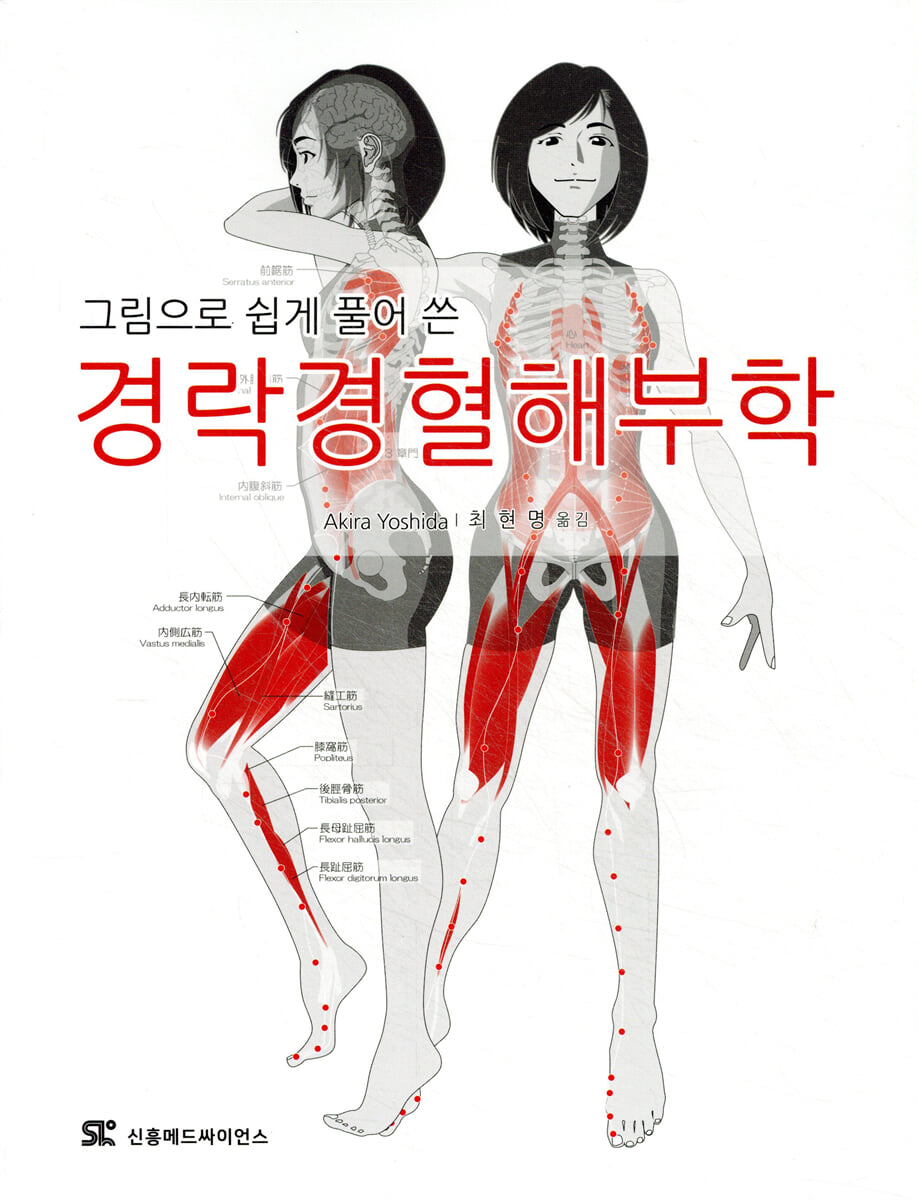
A convergence of clinically relevant Oriental medicine theory and modern medicine, this comprehensive overview of acupuncture points along meridians and acupoints offers a fresh understanding and comprehensive treatment plan! Drawing on the author's extensive clinical experience, extensive anatomy education, and the fundamental principles of diagnosis and treatment, this study explores how the Huangdi Neijing integrates and interacts with the human anatomy of modern medicine, applying it to practice.
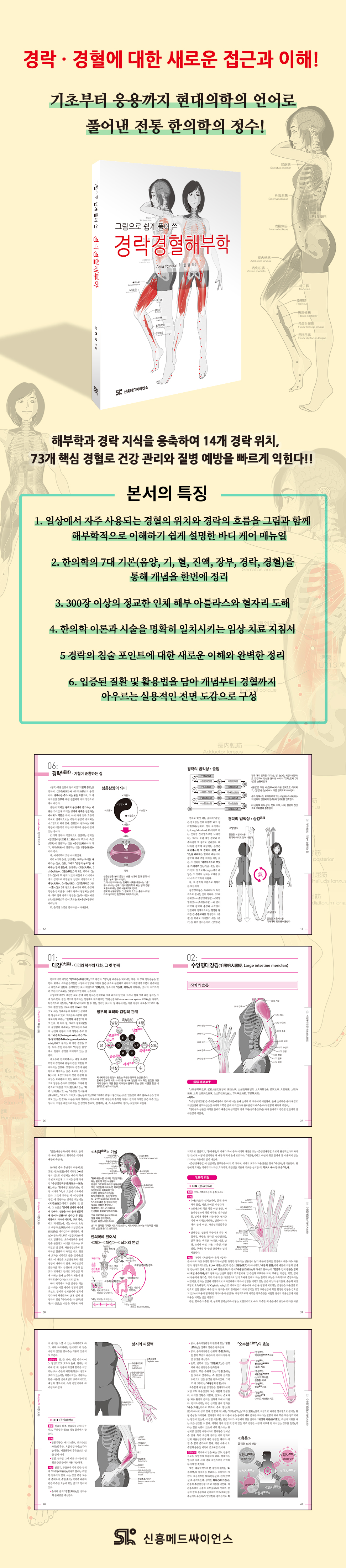
1.
This book begins with the Yellow Emperor's Classic of Internal Medicine and is organized into the eight major channels of the body.
2.
We share information and understanding about qi and blood, yin and yang, body fluids, organs (viscera), meridians, and meridian muscles.
3.
It corresponds to the anatomical basis of connections and is combined with acupuncture points such as the lungs, large intestine, stomach, spleen, heart, small intestine, bladder, kidney, pericardium, triple burner, gallbladder, liver, and eight meridians.
4.
It responds to invisible meridians and acupuncture points through organs, muscles, bones, etc.
5.
We diagnose and treat mental and physical illnesses by connecting the perspectives of Oriental medicine and modern medicine.
A completely new explanation!, proven and effective treatment application methods This is a more accurate and practical comprehensive anatomical atlas, from the concept of disease to acupuncture.
From the basics to applications, check out the atlas of meridian and acupuncture points in Oriental medicine, written in a new language of modern medicine!
1.
This book begins with the Yellow Emperor's Classic of Internal Medicine and is organized into the eight major channels of the body.
2.
We share information and understanding about qi and blood, yin and yang, body fluids, organs (viscera), meridians, and meridian muscles.
3.
It corresponds to the anatomical basis of connections and is combined with acupuncture points such as the lungs, large intestine, stomach, spleen, heart, small intestine, bladder, kidney, pericardium, triple burner, gallbladder, liver, and eight meridians.
4.
It responds to invisible meridians and acupuncture points through organs, muscles, bones, etc.
5.
We diagnose and treat mental and physical illnesses by connecting the perspectives of Oriental medicine and modern medicine.
A completely new explanation!, proven and effective treatment application methods This is a more accurate and practical comprehensive anatomical atlas, from the concept of disease to acupuncture.
From the basics to applications, check out the atlas of meridian and acupuncture points in Oriental medicine, written in a new language of modern medicine!
- You can preview some of the book's contents.
Preview
index
Introduction: The Basics of Oriental Medicine
01: Theory of Yin and Yang - What cannot exist as one ·····························································2
02: Qi (氣) - The force that sustains homeostasis ·················································································4
03: Blood - The Water of Life ················································································································7
04: Jinyeok (津液) - Running water does not rot ····································································8
05: Organs - Yin and Yang in the Body ···································································································· 10
06: Meridians - Paths through which Qi and Blood Circulate ·········································································· 12
07: Muscle Movements - Movements Engraved in Muscles ······································································ 15
08: My Opinion - What does bedding approach? ········································································· 17
Chapter 01 Lungs
01: Lungs - Regulator of the Autonomic Nervous System ················································································· 20
02: Hand Taiyin Lung Meridian ············································································ 22
LU01〈Central Office〉 25 LU07〈Yeolgyeol〉 26 LU09〈Taeyeon〉 28
03: Hand Yangmyeonggyeonggeun ··········································································· 31
Chapter 02 Large Intestine
01: Large Intestine - A Dialogue Between the Head and the Abdomen, Part 1 ······································································· 36
02: 수양명대장경(手陽明大腸經, Large intestine meridian) ····································· 37
LI04〈Hapgok〉 39 LI11〈Gokji〉 40 LI20〈Influence〉 45
03: Hand Yangmyeonggyeonggeun ········································· 46
Chapter 03 Stomach
01: Stomach - The Sea of the Five Internal Organs and Six Bowels ······················································································ 50
02: Stomach meridian ··················································································································· 51
ST04〈Ground Warehouse〉 52 ST08〈Head Wicker〉 54 ST12〈Missing Basin〉 57
ST25〈Cheonchu (Heavenly Pillar)〉 59 ST30〈Gi-chung (Energy Shock)〉 60 ST34〈Yang-gu (Liang Hill)〉 62
ST36〈Three Lies of Foot〉 64 ST40〈Fenglong〉 65 ST44〈Inner Court〉 67
03: Foot Yangming Meridian Muscle ···································································································· 68
ST07〈Lower pipe〉 70
Chapter 04 Spleen
01: Spleen - All organs, real and empty ·························································································· 74
02: Spleen meridian ···················································· 76
SP04〈Gongsun〉 77 SP06〈Sam-eum-gyo〉 80 SP09〈Yinling Spring〉 81
03: Foot Taiyin Muscle ···································································································· 85
SP21〈Big Bag〉 86
Chapter 05 Heart
01: Heart - Where is the Heart?····················································· 90
02: Heart meridian·············································································································································································· 92
HT05〈Tongri (通里)〉 95 HT07〈Sinmun (神門)〉 96
03: Susopenis Muscle······················································································ 97
Chapter 06 Small Intestine
01: Small Intestine - Dialogue Between the Head and the Abdomen, Part 2 ······················································ 100
02: Small intestine meridian ·························································· 102
SI03〈Succession〉 103 SI06〈Nurturing Old Age〉 105 SI09〈Shoulder Chastity〉 106
SI11〈Cheonjong(天宗)〉 106 SI16〈Cheonchang(天?)〉 109
03: Hand Taeyang Meridian Muscle ··················································································· 111
Chapter 07 Bladder
01: Bladder - Growth Path ··················································································· 114
02: Bladder meridian... 116
BL01〈Bright Eyes〉 117 BL02〈Bamboo〉 117 BL10〈Heavenly Pillar〉 119
BL12〈Wind Gate〉 123 BL13~28〈Back Acupoint〉 124 BL13〈Lung Acupoint〉 126
BL15〈Heart Yu〉 127 BL18〈Liver Yu〉 127 BL20〈Spleen Yu〉 128
BL23〈Shinsu (腎兪)〉 128 BL43〈Gohwang (膏?)〉 129 BL51〈Hwangmun (? Gate)〉 131
BL53〈Pohwang(胞?)〉 132 BL40〈Weijung(委中)〉 134 BL58〈Biyang(飛揚)〉 135
BL60〈Kunlun〉 137 BL62〈Shenmaek〉 138 BL67〈Jieum〉 140
03: Foot Taeyang Meridian Muscle ··················································································· 14
Chapter 08 Kidney
01: Kidney - The Root of Life, the Basis of Life ········································ 146
02: Kidney meridian ··························································································· 150
KI01〈Yongcheon(湧泉)〉 151 KI06〈Delicious Sea〉 153 KI16〈Hwangsu(?兪)〉 158
03: Foot Shao Yin Jing Muscle ······································································································ 160
Chapter 09 Heartpo
01: Periphery (心包) - The organ where joy is nurtured ···················································································· 164
02: Pericardium meridian ······················································ 166
PC06〈Inner Hall〉 168 PC08〈Roh Palace〉 170
03: The Hand-Heart-Maintaining Muscle ································································································ 171
Chapter 10 Three seconds (三焦)
01: The Three Burners - Those at the Boundary ·················································································· 174
02: Triple Energizer meridian ·············································· 177
TE03〈Middle and Lower Levels〉 179 TE05〈External Gate〉 179 TE15〈Heaven?〉 182
TE17 〈風〉 184 TE21 〈Reading Gate〉185
03: Hand Shaoyang Meridian Muscle ······································································································ 1
Chapter 11 Gallbladder
01: Gallbladder - The Fire of the Middle Right ···················································································· 190
02: 족소양담경(足少陽膽經, Gallbladder meridian) ··············································· 192
TGB03〈Sangwan (上關)〉 194 GB12〈Wangol (完骨)〉 195 GB20〈Pungji (風池)〉 197
GB26〈Daemaek (帶脈)〉 200 GB29〈Geolyo (居?)〉 202 GB30〈Hwando (環跳)〉 203
GB34〈Yangneungcheon (陽陵泉)〉 205 GB39〈Hyunjong (懸鍾)〉 207 GB41〈Jogimeup (足臨泣)〉 208
03: Foot Shaoyang Jinggeun (足少陽經筋) ································································································ 211
Chapter 12 Liver
01: Liver - Logistics of the Wisdom General ··················································································· 216
02: Liver meridian ······································································································································ 218
LR03〈Taechung〉 220 LR08〈Gokcheon〉 221 LR09〈Eumpo〉 221
03: Foot urethra muscle ··················································································· 226
Chapter 13 The eight vital organs
01: The Eight Extraordinary Meridians - The Embryology of Meridians ································································· 229
02: 임맥(任脈, Conception Vessel) ········································································· 232
CV04〈Gwanwon(關元)〉 234 CV12〈Jungwan(中脘)〉 235 CV17〈Danjung(?中)〉 237
03: Governor Vessel ··············································································································· 239
GV09〈Jiyang (至陽)〉 241 GV14〈Daechu (大椎)〉 243 GV20〈Baekhoe (百會)〉 244
01: Theory of Yin and Yang - What cannot exist as one ·····························································2
02: Qi (氣) - The force that sustains homeostasis ·················································································4
03: Blood - The Water of Life ················································································································7
04: Jinyeok (津液) - Running water does not rot ····································································8
05: Organs - Yin and Yang in the Body ···································································································· 10
06: Meridians - Paths through which Qi and Blood Circulate ·········································································· 12
07: Muscle Movements - Movements Engraved in Muscles ······································································ 15
08: My Opinion - What does bedding approach? ········································································· 17
Chapter 01 Lungs
01: Lungs - Regulator of the Autonomic Nervous System ················································································· 20
02: Hand Taiyin Lung Meridian ············································································ 22
LU01〈Central Office〉 25 LU07〈Yeolgyeol〉 26 LU09〈Taeyeon〉 28
03: Hand Yangmyeonggyeonggeun ··········································································· 31
Chapter 02 Large Intestine
01: Large Intestine - A Dialogue Between the Head and the Abdomen, Part 1 ······································································· 36
02: 수양명대장경(手陽明大腸經, Large intestine meridian) ····································· 37
LI04〈Hapgok〉 39 LI11〈Gokji〉 40 LI20〈Influence〉 45
03: Hand Yangmyeonggyeonggeun ········································· 46
Chapter 03 Stomach
01: Stomach - The Sea of the Five Internal Organs and Six Bowels ······················································································ 50
02: Stomach meridian ··················································································································· 51
ST04〈Ground Warehouse〉 52 ST08〈Head Wicker〉 54 ST12〈Missing Basin〉 57
ST25〈Cheonchu (Heavenly Pillar)〉 59 ST30〈Gi-chung (Energy Shock)〉 60 ST34〈Yang-gu (Liang Hill)〉 62
ST36〈Three Lies of Foot〉 64 ST40〈Fenglong〉 65 ST44〈Inner Court〉 67
03: Foot Yangming Meridian Muscle ···································································································· 68
ST07〈Lower pipe〉 70
Chapter 04 Spleen
01: Spleen - All organs, real and empty ·························································································· 74
02: Spleen meridian ···················································· 76
SP04〈Gongsun〉 77 SP06〈Sam-eum-gyo〉 80 SP09〈Yinling Spring〉 81
03: Foot Taiyin Muscle ···································································································· 85
SP21〈Big Bag〉 86
Chapter 05 Heart
01: Heart - Where is the Heart?····················································· 90
02: Heart meridian·············································································································································································· 92
HT05〈Tongri (通里)〉 95 HT07〈Sinmun (神門)〉 96
03: Susopenis Muscle······················································································ 97
Chapter 06 Small Intestine
01: Small Intestine - Dialogue Between the Head and the Abdomen, Part 2 ······················································ 100
02: Small intestine meridian ·························································· 102
SI03〈Succession〉 103 SI06〈Nurturing Old Age〉 105 SI09〈Shoulder Chastity〉 106
SI11〈Cheonjong(天宗)〉 106 SI16〈Cheonchang(天?)〉 109
03: Hand Taeyang Meridian Muscle ··················································································· 111
Chapter 07 Bladder
01: Bladder - Growth Path ··················································································· 114
02: Bladder meridian... 116
BL01〈Bright Eyes〉 117 BL02〈Bamboo〉 117 BL10〈Heavenly Pillar〉 119
BL12〈Wind Gate〉 123 BL13~28〈Back Acupoint〉 124 BL13〈Lung Acupoint〉 126
BL15〈Heart Yu〉 127 BL18〈Liver Yu〉 127 BL20〈Spleen Yu〉 128
BL23〈Shinsu (腎兪)〉 128 BL43〈Gohwang (膏?)〉 129 BL51〈Hwangmun (? Gate)〉 131
BL53〈Pohwang(胞?)〉 132 BL40〈Weijung(委中)〉 134 BL58〈Biyang(飛揚)〉 135
BL60〈Kunlun〉 137 BL62〈Shenmaek〉 138 BL67〈Jieum〉 140
03: Foot Taeyang Meridian Muscle ··················································································· 14
Chapter 08 Kidney
01: Kidney - The Root of Life, the Basis of Life ········································ 146
02: Kidney meridian ··························································································· 150
KI01〈Yongcheon(湧泉)〉 151 KI06〈Delicious Sea〉 153 KI16〈Hwangsu(?兪)〉 158
03: Foot Shao Yin Jing Muscle ······································································································ 160
Chapter 09 Heartpo
01: Periphery (心包) - The organ where joy is nurtured ···················································································· 164
02: Pericardium meridian ······················································ 166
PC06〈Inner Hall〉 168 PC08〈Roh Palace〉 170
03: The Hand-Heart-Maintaining Muscle ································································································ 171
Chapter 10 Three seconds (三焦)
01: The Three Burners - Those at the Boundary ·················································································· 174
02: Triple Energizer meridian ·············································· 177
TE03〈Middle and Lower Levels〉 179 TE05〈External Gate〉 179 TE15〈Heaven?〉 182
TE17 〈風〉 184 TE21 〈Reading Gate〉185
03: Hand Shaoyang Meridian Muscle ······································································································ 1
Chapter 11 Gallbladder
01: Gallbladder - The Fire of the Middle Right ···················································································· 190
02: 족소양담경(足少陽膽經, Gallbladder meridian) ··············································· 192
TGB03〈Sangwan (上關)〉 194 GB12〈Wangol (完骨)〉 195 GB20〈Pungji (風池)〉 197
GB26〈Daemaek (帶脈)〉 200 GB29〈Geolyo (居?)〉 202 GB30〈Hwando (環跳)〉 203
GB34〈Yangneungcheon (陽陵泉)〉 205 GB39〈Hyunjong (懸鍾)〉 207 GB41〈Jogimeup (足臨泣)〉 208
03: Foot Shaoyang Jinggeun (足少陽經筋) ································································································ 211
Chapter 12 Liver
01: Liver - Logistics of the Wisdom General ··················································································· 216
02: Liver meridian ······································································································································ 218
LR03〈Taechung〉 220 LR08〈Gokcheon〉 221 LR09〈Eumpo〉 221
03: Foot urethra muscle ··················································································· 226
Chapter 13 The eight vital organs
01: The Eight Extraordinary Meridians - The Embryology of Meridians ································································· 229
02: 임맥(任脈, Conception Vessel) ········································································· 232
CV04〈Gwanwon(關元)〉 234 CV12〈Jungwan(中脘)〉 235 CV17〈Danjung(?中)〉 237
03: Governor Vessel ··············································································································· 239
GV09〈Jiyang (至陽)〉 241 GV14〈Daechu (大椎)〉 243 GV20〈Baekhoe (百會)〉 244
Detailed image
Publisher's Review
Oriental medicine has reached the modern era through a long history spanning thousands of years.
Traditional Korean medicine, which began with the Yellow Emperor's Classic of Internal Medicine and Shang Han Lun, has seen the emergence of numerous outstanding physicians over the years, and each of these physicians has developed traditional Korean medicine and established new theories, enriching its content.
The development of Oriental medicine has grown explosively in modern times.
Advances in botany are clearly establishing the origins of medicinal herbs, and advances in pharmacology are revealing where the effects of prescriptions come from and what pharmacological ingredients are at work.
In addition, active surgical approaches through Chuna and exercise therapy, and acupuncture, including moxibustion and moxibustion, are also developing rapidly.
The increase in anatomical knowledge has brought about great advancements in the field of acupuncture and moxibustion in Oriental medicine, and the pace of advancement has accelerated significantly since the ruling legalizing the use of ultrasound by Oriental medical doctors.
Acupuncture points derived from ancient experiences are now closer to precise points through ultrasound, and there are moments when we can clearly understand why our ancestors chose those points.
At moments like these, I feel the joy of being a doctor of Oriental medicine.
Even if a Korean medicine doctor from just 50-60 years ago were to travel back in time to the year 2025, he or she would be shocked.
At this point, Professor Akira Yoshida's 'Meridian Anatomy Explained in Easy Pictures (Original title: ?解 經絡と解剖?)' can be said to be a very interesting and necessary book.
This book interprets traditional meridian theory, based on rumors and yeongchu, in modern anatomical language.
The book has considerable academic depth and is filled with the author's unique ideas, providing many hints to those who have studied and pondered Oriental medicine.
The book is rich in explanations of oriental medical theories, meridians, acupuncture points, and each acupuncture point. In particular, the diagrams at the end of each chapter depicting the movements of the acupuncture points corresponding to each meridian fully reveal the author's unique perspective.
I've written and translated several books, and translating this one was so much fun, and there were so many parts that I couldn't help but admire, so I didn't even realize how much time had passed.
I sincerely hope that this translation will be helpful to those who are interested in or studying Oriental medicine, as well as those working in the Oriental medicine industry.
Lastly, I would like to express my deepest gratitude to Director Kyung-hyuk Su and Director Yong-sik Yoon, who have always taught me much despite my shortcomings and have taken the time to help me with my corrections.
Traditional Korean medicine, which began with the Yellow Emperor's Classic of Internal Medicine and Shang Han Lun, has seen the emergence of numerous outstanding physicians over the years, and each of these physicians has developed traditional Korean medicine and established new theories, enriching its content.
The development of Oriental medicine has grown explosively in modern times.
Advances in botany are clearly establishing the origins of medicinal herbs, and advances in pharmacology are revealing where the effects of prescriptions come from and what pharmacological ingredients are at work.
In addition, active surgical approaches through Chuna and exercise therapy, and acupuncture, including moxibustion and moxibustion, are also developing rapidly.
The increase in anatomical knowledge has brought about great advancements in the field of acupuncture and moxibustion in Oriental medicine, and the pace of advancement has accelerated significantly since the ruling legalizing the use of ultrasound by Oriental medical doctors.
Acupuncture points derived from ancient experiences are now closer to precise points through ultrasound, and there are moments when we can clearly understand why our ancestors chose those points.
At moments like these, I feel the joy of being a doctor of Oriental medicine.
Even if a Korean medicine doctor from just 50-60 years ago were to travel back in time to the year 2025, he or she would be shocked.
At this point, Professor Akira Yoshida's 'Meridian Anatomy Explained in Easy Pictures (Original title: ?解 經絡と解剖?)' can be said to be a very interesting and necessary book.
This book interprets traditional meridian theory, based on rumors and yeongchu, in modern anatomical language.
The book has considerable academic depth and is filled with the author's unique ideas, providing many hints to those who have studied and pondered Oriental medicine.
The book is rich in explanations of oriental medical theories, meridians, acupuncture points, and each acupuncture point. In particular, the diagrams at the end of each chapter depicting the movements of the acupuncture points corresponding to each meridian fully reveal the author's unique perspective.
I've written and translated several books, and translating this one was so much fun, and there were so many parts that I couldn't help but admire, so I didn't even realize how much time had passed.
I sincerely hope that this translation will be helpful to those who are interested in or studying Oriental medicine, as well as those working in the Oriental medicine industry.
Lastly, I would like to express my deepest gratitude to Director Kyung-hyuk Su and Director Yong-sik Yoon, who have always taught me much despite my shortcomings and have taken the time to help me with my corrections.
GOODS SPECIFICS
- Date of issue: April 25, 2025
- Page count, weight, size: 272 pages | 215*280*20mm
- ISBN13: 9788964980897
- ISBN10: 8964980891
You may also like
카테고리
korean


korean

![GQ KOREA Mark (Monthly): December [2025]](http://librairie.coreenne.fr/cdn/shop/files/8ef265dbbfbf186523ed75ba7319009d.jpg?v=1765340328&width=3840)


