

Emotional Stories Workbook to Develop Social Skills
 |
Description
Book Introduction
The ability to manage emotions well is not simply a matter of mood regulation; it is the most important foundation for a child to form relationships with others, communicate with the world, and lead a healthy life.
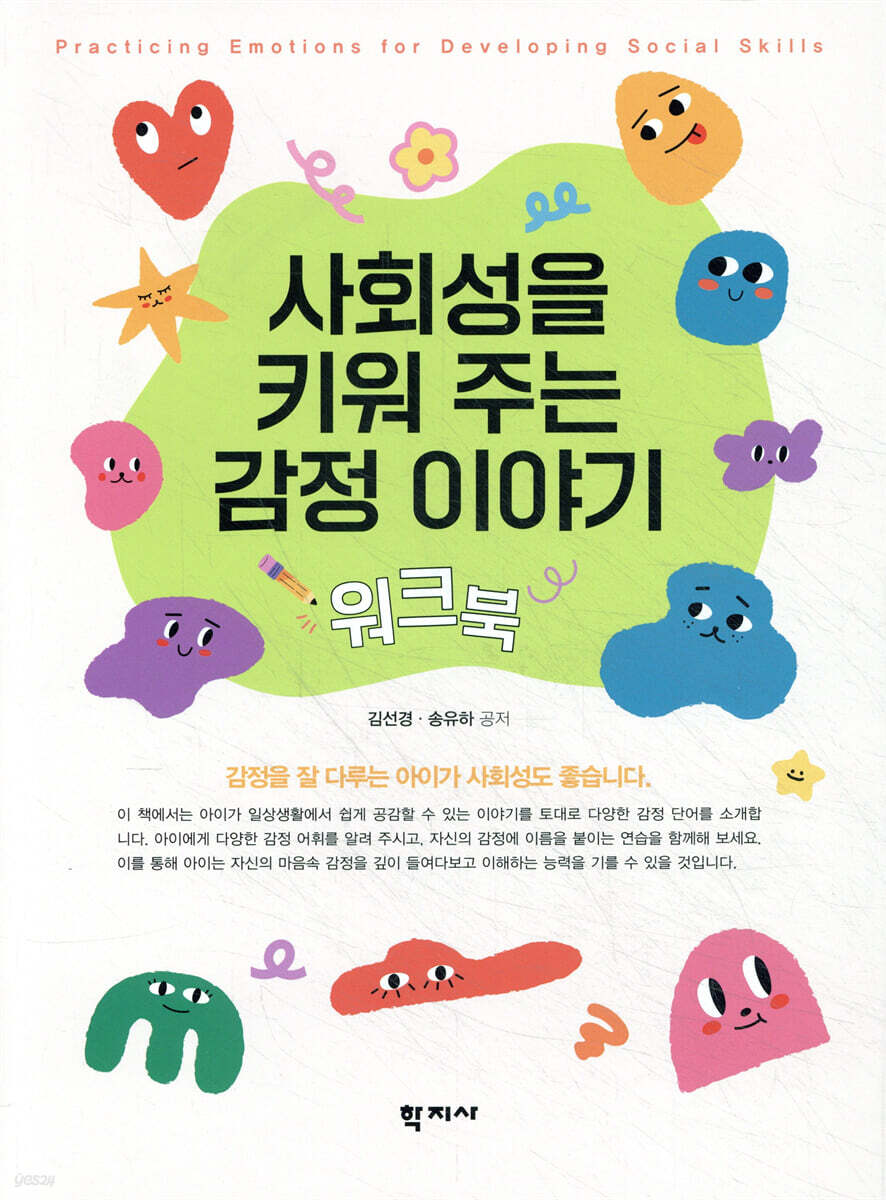
The "Emotional Story Workbook that Develops Social Skills" is an emotional development guide that helps children develop the ability to understand, express, and regulate their emotions.
The "Emotional Story Workbook that Develops Social Skills" is an emotional development guide that helps children develop the ability to understand, express, and regulate their emotions.
index
preface
Chapter 1 Simple Emotions
Chapter 2: Differentiated Emotions
1.
happy feelings
2.
sad feelings
3.
angry feelings
4.
fearful feelings
5.
Practice problems
Chapter 3: Complex Emotions
Chapter 4: Emotion Regulation
Chapter 5: Emotional Diary
Chapter 1 Simple Emotions
Chapter 2: Differentiated Emotions
1.
happy feelings
2.
sad feelings
3.
angry feelings
4.
fearful feelings
5.
Practice problems
Chapter 3: Complex Emotions
Chapter 4: Emotion Regulation
Chapter 5: Emotional Diary
Detailed image
.jpg)
Publisher's Review
A child who understands emotions eventually grows into a child who understands people well.
Practicing speaking your mind is the first step toward sociality.
The ability to manage emotions effectively is not simply a matter of mood regulation; it is the most important foundation for a child to build relationships with others, communicate with the world, and lead a healthy life.
The "Emotional Story Workbook that Develops Social Skills" is an emotional development guide that helps children develop the ability to understand, express, and regulate their emotions.
As children grow and experience complex and varied emotions, they need to be able to put those feelings into words to truly understand themselves.
I thought I was angry because I didn't know how to feel, but in fact, I was lonely, and the sadness hidden behind the irritation.
The vocabulary to accurately read and express emotions like this is key to developing a child's self-understanding and social skills.
This book expands children's language through relatable stories and various emotional words from everyday life, and guides them to slowly look into their own emotions through writing an emotional diary.
The book provides a rich vocabulary of emotions, from basic emotions like joy, sadness, anger, and fear to more specialized emotions like jealousy, regret, and excitement.
Encourage children to name their own emotions, find reasons for them, and write them down.
It connects emotional expression to real life through a systematic structure such as finding sentences that express emotions correctly, writing an emotional diary, and practicing emotional expression according to situation.
This book was co-written by Kim Seon-gyeong (Director of Ewha Sociality Research Institute) and Song Yu-ha (Researcher at Ewha Womans University Child Development Center), co-authors of “Thinking Skills Training to Develop Sociality.”
The two authors have accumulated extensive clinical experience and educational practice in the fields of child developmental disabilities and special education, and have incorporated their expertise in guiding children with emotional difficulties into this book.
Rather than simply 'guiding' children's emotions, it focuses on helping children express and deal with their own emotions.
If you want to look into your child's mind a little more often, start writing a page or two with this book today.
It is structured so that parents and teachers can read and practice together, so anyone can easily begin emotional education.
A child who is good at understanding emotions will eventually grow into a child who is good at understanding both himself and others.
This book is the starting point.
Practicing speaking your mind is the first step toward sociality.
The ability to manage emotions effectively is not simply a matter of mood regulation; it is the most important foundation for a child to build relationships with others, communicate with the world, and lead a healthy life.
The "Emotional Story Workbook that Develops Social Skills" is an emotional development guide that helps children develop the ability to understand, express, and regulate their emotions.
As children grow and experience complex and varied emotions, they need to be able to put those feelings into words to truly understand themselves.
I thought I was angry because I didn't know how to feel, but in fact, I was lonely, and the sadness hidden behind the irritation.
The vocabulary to accurately read and express emotions like this is key to developing a child's self-understanding and social skills.
This book expands children's language through relatable stories and various emotional words from everyday life, and guides them to slowly look into their own emotions through writing an emotional diary.
The book provides a rich vocabulary of emotions, from basic emotions like joy, sadness, anger, and fear to more specialized emotions like jealousy, regret, and excitement.
Encourage children to name their own emotions, find reasons for them, and write them down.
It connects emotional expression to real life through a systematic structure such as finding sentences that express emotions correctly, writing an emotional diary, and practicing emotional expression according to situation.
This book was co-written by Kim Seon-gyeong (Director of Ewha Sociality Research Institute) and Song Yu-ha (Researcher at Ewha Womans University Child Development Center), co-authors of “Thinking Skills Training to Develop Sociality.”
The two authors have accumulated extensive clinical experience and educational practice in the fields of child developmental disabilities and special education, and have incorporated their expertise in guiding children with emotional difficulties into this book.
Rather than simply 'guiding' children's emotions, it focuses on helping children express and deal with their own emotions.
If you want to look into your child's mind a little more often, start writing a page or two with this book today.
It is structured so that parents and teachers can read and practice together, so anyone can easily begin emotional education.
A child who is good at understanding emotions will eventually grow into a child who is good at understanding both himself and others.
This book is the starting point.
GOODS SPECIFICS
- Date of issue: April 20, 2025
- Format: Paperback book binding method guide
- Page count, weight, size: 240 pages | 188*255*12mm
- ISBN13: 9788999733697
You may also like
카테고리
korean


korean

![ELLE 엘르 스페셜 에디션 A형 : 12월 [2025]](http://librairie.coreenne.fr/cdn/shop/files/b8e27a3de6c9538896439686c6b0e8fb.jpg?v=1766436872&width=3840)


