

intersubjective object relations theory
 |
Description
Book Introduction
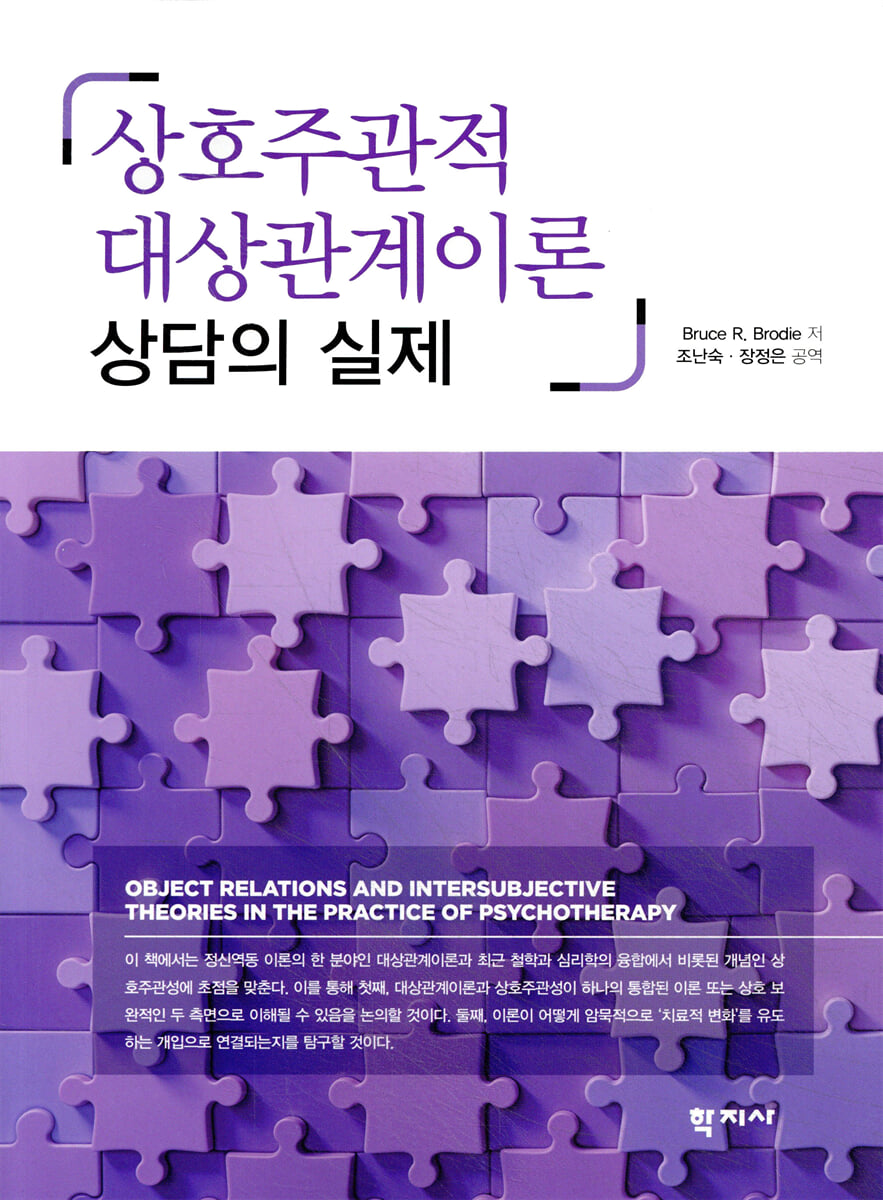
『Intersubjective Object Relations Theory』, based on object relations theory and the concept of intersubjectivity, provides an in-depth explanation of how psychological change and healing occur between clients and counselors in counseling settings.
Based on the theories of Klein, Winnicott, Fairbairn, and others, this book specifically addresses from a clinical perspective how dynamics such as transference, empathy, and identification operate in a counseling relationship and serve as therapeutic resources.
In particular, this book goes beyond theory and provides practical insights that can be applied in actual counseling settings.
It will be an important guide for clinicians studying or practicing psychoanalytic counseling.
Based on the theories of Klein, Winnicott, Fairbairn, and others, this book specifically addresses from a clinical perspective how dynamics such as transference, empathy, and identification operate in a counseling relationship and serve as therapeutic resources.
In particular, this book goes beyond theory and provides practical insights that can be applied in actual counseling settings.
It will be an important guide for clinicians studying or practicing psychoanalytic counseling.
index
Translator's Preface
Author's Preface
introduction
Part 1: The Psychological Birth of Infants
Chapter 1: A Hugging Environment
So what is it?
The role of identification
So what is it?
The essence of treatment
Chapter 2: The Mother's Mirror Reflection Role
So what is it?
Chapter 3 Mother-Infant Unit
So what is it?
Winnicott, learning, and intersubjectivity
Chapter 4 Potential Space and Transitional Objects
Potential space filled with play
Potential space filled with clutter
Potential space filled with magnetism
Potential space filled with transitional objects and phenomena
So what is it?
Potential space filled with symbols
Potential space filled with psychotherapy
Potential space and drugs
Part 2: Editing Division Site and Internal Object
Chapter 5: The Site of Editing Division: Splitting and the "As if" Thinking
The Logic of Division I: The Cancellation of History
The Logic of Division II: Denial of Responsibility
Split Logic III: Self-Experience as Object
Split Logic IV: Rigid Thinking
The Logic of Division V: Belief in a Just World
Split Logic VI: Emotions That Make Sense and Emotions That Don't
Split Logic VII: Omnipotence and Magic vs. Power and Freedom
Divisive Logic VIII: The Absence of Compassion
The Logic of Division: Summary
Chapter 6: Editing Division Site: Object Relations Unit
transition
Reversal
So what is it?
Chapter 7: Stable Personality Structure at the Site of Editing Splits
Chapter 8 Resistance and Attachment to Bad Objects
Source of resistance
Part 3: Depression, Intersubjectivity, and the Discovery of the External Object
Chapter 9: The Psychological 'Third Person'
Inner third party
Co-created third party
intersubjective third party entity
Chapter 10 Projective Identification and the Submissive Third Person
Chapter 11: Use of Objects and Destruction of Objects
Chapter 12 Interpretation
Interpretation as perception
Chapter 13: Transition
Chapter 14 Mourning
Chapter 15 Identification
Chapter 16: The Struggle with Depression: The False Self
Winnicott's 'true self' and 'false self' functions
So what is it?
So how can we access the inaccessible?
Working with Your False Self - Dream Analysis
References
Search
Author's Preface
introduction
Part 1: The Psychological Birth of Infants
Chapter 1: A Hugging Environment
So what is it?
The role of identification
So what is it?
The essence of treatment
Chapter 2: The Mother's Mirror Reflection Role
So what is it?
Chapter 3 Mother-Infant Unit
So what is it?
Winnicott, learning, and intersubjectivity
Chapter 4 Potential Space and Transitional Objects
Potential space filled with play
Potential space filled with clutter
Potential space filled with magnetism
Potential space filled with transitional objects and phenomena
So what is it?
Potential space filled with symbols
Potential space filled with psychotherapy
Potential space and drugs
Part 2: Editing Division Site and Internal Object
Chapter 5: The Site of Editing Division: Splitting and the "As if" Thinking
The Logic of Division I: The Cancellation of History
The Logic of Division II: Denial of Responsibility
Split Logic III: Self-Experience as Object
Split Logic IV: Rigid Thinking
The Logic of Division V: Belief in a Just World
Split Logic VI: Emotions That Make Sense and Emotions That Don't
Split Logic VII: Omnipotence and Magic vs. Power and Freedom
Divisive Logic VIII: The Absence of Compassion
The Logic of Division: Summary
Chapter 6: Editing Division Site: Object Relations Unit
transition
Reversal
So what is it?
Chapter 7: Stable Personality Structure at the Site of Editing Splits
Chapter 8 Resistance and Attachment to Bad Objects
Source of resistance
Part 3: Depression, Intersubjectivity, and the Discovery of the External Object
Chapter 9: The Psychological 'Third Person'
Inner third party
Co-created third party
intersubjective third party entity
Chapter 10 Projective Identification and the Submissive Third Person
Chapter 11: Use of Objects and Destruction of Objects
Chapter 12 Interpretation
Interpretation as perception
Chapter 13: Transition
Chapter 14 Mourning
Chapter 15 Identification
Chapter 16: The Struggle with Depression: The False Self
Winnicott's 'true self' and 'false self' functions
So what is it?
So how can we access the inaccessible?
Working with Your False Self - Dream Analysis
References
Search
GOODS SPECIFICS
- Date of issue: February 25, 2025
- Format: Paperback book binding method guide
- Page count, weight, size: 392 pages | 173*235*16mm
- ISBN13: 9788999733345
- ISBN10: 8999733343
You may also like
카테고리
korean


korean

![ELLE 엘르 스페셜 에디션 A형 : 12월 [2025]](http://librairie.coreenne.fr/cdn/shop/files/b8e27a3de6c9538896439686c6b0e8fb.jpg?v=1766436872&width=3840)


