

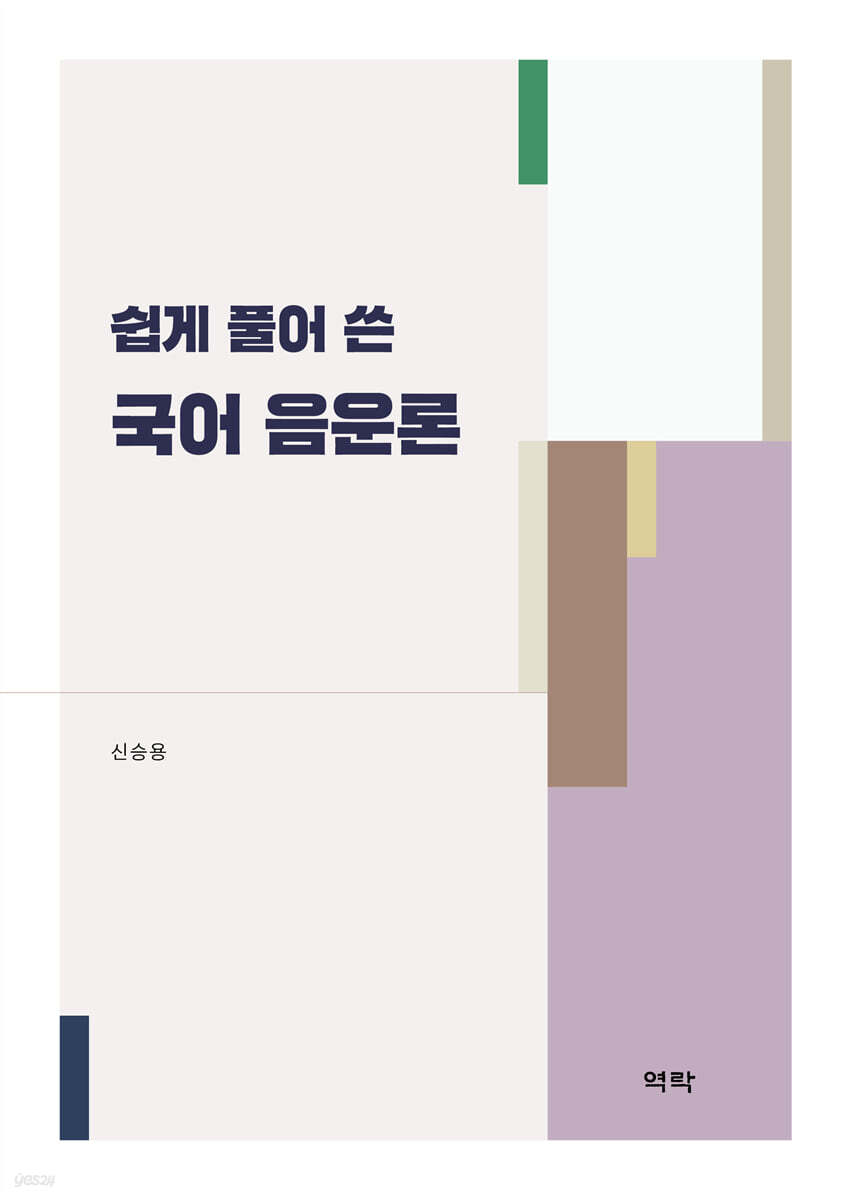
Korean phonology explained simply
 |
Description
Book Introduction
Phonology is the study of phoneme changes in spoken speech for communication.
Even if it is a sound that comes out through the voice, sounds that we do not recognize are not the subject of phonological research.
Additionally, sounds unrelated to communication, such as moans and yawns, are not the subject of phonological research.
So, as a subject of phonological study, the sound is basically the sound that we can distinguish among the sounds produced for communication.
One of the main and core tasks in phonology is to study the conditions and environments under which phonetic changes occur, the processes through which they occur, and why they occur.
Most students find grammar difficult, and within the grammar area, phonology is almost always the most difficult.
So, I kept in mind throughout the writing process that I wanted to be able to approach students in a more accessible and friendly way, and I tried to explain things in a way that was easy to understand and friendly.
In this context, I tried to describe it in a way that draws conclusions inductively by exploring linguistic data rather than deductively, whenever possible.
Even if it is a sound that comes out through the voice, sounds that we do not recognize are not the subject of phonological research.
Additionally, sounds unrelated to communication, such as moans and yawns, are not the subject of phonological research.
So, as a subject of phonological study, the sound is basically the sound that we can distinguish among the sounds produced for communication.
One of the main and core tasks in phonology is to study the conditions and environments under which phonetic changes occur, the processes through which they occur, and why they occur.
Most students find grammar difficult, and within the grammar area, phonology is almost always the most difficult.
So, I kept in mind throughout the writing process that I wanted to be able to approach students in a more accessible and friendly way, and I tried to explain things in a way that was easy to understand and friendly.
In this context, I tried to describe it in a way that draws conclusions inductively by exploring linguistic data rather than deductively, whenever possible.
index
Chapter 1 Phonology and Phonemes
1.1.
Object of phonological research
1.2.
Phonetics and Phonology, Phonetics and Phonology
1.3.
Phonetics and Hangul consonants, International Phonetic Alphabet
1.4.
Criteria for determining whether a sound is a phoneme or not
1.5.
Basal and superficial types
1.6.
Base and notation
Chapter 2 Phonemes and Phonological Systems
2.1.
Sound classification criteria
2.2.
Consonant system and classification of consonants
2.3.
Vowel system and classification of vowels
2.4.
Semivowels and diphthongs
2.5.
Nonsegmental phonemes (suprasegmental phonemes)
Chapter 3 Replacement
3.1.
Classification of replacement and replacement
3.2.
Replaceable and heteromorphic
3.3.
Synchronic and diachronic replacement
3.4.
Irregular stems and plural bases
Chapter 4: Syllable Structure Constraints and Replacement
4.1.
Syllable structure and distribution constraints
4.2.
Replacement due to the non-destruction of syllable-final consonants
4.3.
The order of the fire and the sound
Chapter 5 Substitution
5.1.
Zhonghua (the rule for the final sound of a syllable)
5.2.
fairytale
5.3.
Semivowelization (activation)
5.4.
lenition
5.5.
/ㄹ/ → /ㄴ/ replacement (nasalization of /ㄹ/)
5.6.
fricativeization
5.7.
Initial consonant rule
5.8.
/ㅗ/ → /ㅜ/ replacement
Chapter 6 Addition
6.1.
Add /n/
6.2.
Addition of semivowels
6.3.
Adding a sash
Chapter 7 Elimination
7.1.
/ㄹ/ eliminated
7.2.
/ㅡ/ Eliminated
7.3.
/ㅎ/ Eliminated
7.4.
Semivowel dropout
7.5.
Simplification of consonant clusters
7.6.
/ㅏ, ㅓ/ dropout (dropout of same vowel)
Chapter 8 Summary
8.1.
/ㅎ/ contraction (aspirated sound)
8.2.
vowel contraction
1.1.
Object of phonological research
1.2.
Phonetics and Phonology, Phonetics and Phonology
1.3.
Phonetics and Hangul consonants, International Phonetic Alphabet
1.4.
Criteria for determining whether a sound is a phoneme or not
1.5.
Basal and superficial types
1.6.
Base and notation
Chapter 2 Phonemes and Phonological Systems
2.1.
Sound classification criteria
2.2.
Consonant system and classification of consonants
2.3.
Vowel system and classification of vowels
2.4.
Semivowels and diphthongs
2.5.
Nonsegmental phonemes (suprasegmental phonemes)
Chapter 3 Replacement
3.1.
Classification of replacement and replacement
3.2.
Replaceable and heteromorphic
3.3.
Synchronic and diachronic replacement
3.4.
Irregular stems and plural bases
Chapter 4: Syllable Structure Constraints and Replacement
4.1.
Syllable structure and distribution constraints
4.2.
Replacement due to the non-destruction of syllable-final consonants
4.3.
The order of the fire and the sound
Chapter 5 Substitution
5.1.
Zhonghua (the rule for the final sound of a syllable)
5.2.
fairytale
5.3.
Semivowelization (activation)
5.4.
lenition
5.5.
/ㄹ/ → /ㄴ/ replacement (nasalization of /ㄹ/)
5.6.
fricativeization
5.7.
Initial consonant rule
5.8.
/ㅗ/ → /ㅜ/ replacement
Chapter 6 Addition
6.1.
Add /n/
6.2.
Addition of semivowels
6.3.
Adding a sash
Chapter 7 Elimination
7.1.
/ㄹ/ eliminated
7.2.
/ㅡ/ Eliminated
7.3.
/ㅎ/ Eliminated
7.4.
Semivowel dropout
7.5.
Simplification of consonant clusters
7.6.
/ㅏ, ㅓ/ dropout (dropout of same vowel)
Chapter 8 Summary
8.1.
/ㅎ/ contraction (aspirated sound)
8.2.
vowel contraction
GOODS SPECIFICS
- Date of issue: November 1, 2024
- Page count, weight, size: 264 pages | 176*248*14mm
- ISBN13: 9791167428783
You may also like
카테고리
korean


korean

![GQ KOREA Mark (Monthly): December [2025]](http://librairie.coreenne.fr/cdn/shop/files/8ef265dbbfbf186523ed75ba7319009d.jpg?v=1765340328&width=3840)


