

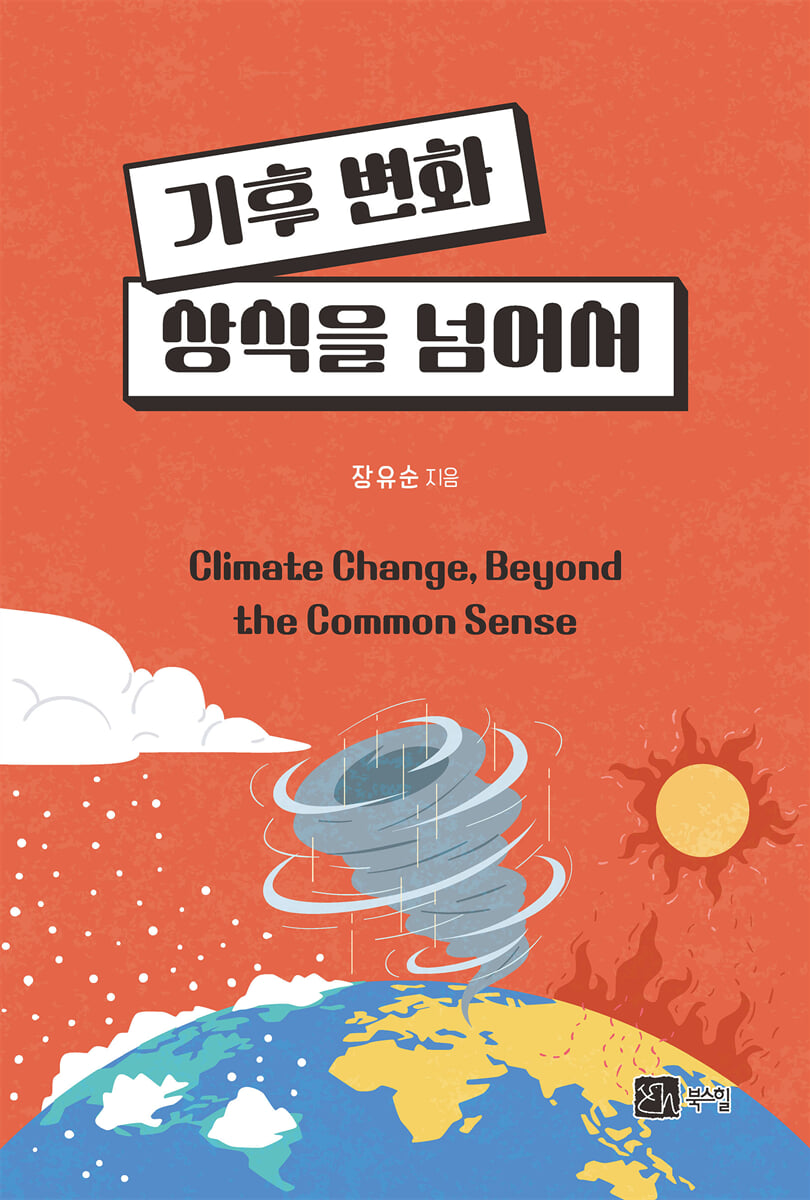
Climate change, beyond common sense
 |
Description
Book Introduction
Climate change is now beyond common sense.
When understanding scientific principles
We, living in the 21st century, know better than anyone else the severity of climate change.
Even in the news and everyday conversations, talk about climate change is a constant presence.
Even young children can naturally say things like, "Global warming is a big problem" and "We need to reduce carbon emissions."
In this context, few people question the severity of climate change, but when asked about its causes or scientific principles, few can confidently answer.
Reflecting this reality, the author calls for an understanding of the scientific principles of climate change through “Climate Change, Beyond Common Sense.”
This book goes beyond simple common sense and guides readers to gain in-depth knowledge of climate change through important scientific concepts such as the greenhouse effect.
The author emphasizes that climate change is not simply an abstract concept seen in the news, but is shaped by scientific principles and complex interactions, and hopes that readers will understand the scientific background through this book.
When understanding scientific principles
We, living in the 21st century, know better than anyone else the severity of climate change.
Even in the news and everyday conversations, talk about climate change is a constant presence.
Even young children can naturally say things like, "Global warming is a big problem" and "We need to reduce carbon emissions."
In this context, few people question the severity of climate change, but when asked about its causes or scientific principles, few can confidently answer.
Reflecting this reality, the author calls for an understanding of the scientific principles of climate change through “Climate Change, Beyond Common Sense.”
This book goes beyond simple common sense and guides readers to gain in-depth knowledge of climate change through important scientific concepts such as the greenhouse effect.
The author emphasizes that climate change is not simply an abstract concept seen in the news, but is shaped by scientific principles and complex interactions, and hopes that readers will understand the scientific background through this book.
- You can preview some of the book's contents.
Preview
index
Author's Preface
1.
Why we need to go beyond common sense
- I learn because I don't need to
- How to learn well
2.
Earth system, weather and climate, fluctuations and changes
- Earth system
- Weather and climate
- Climate change and climate variability
3.
Climate proxy data
- Recent Ice Age
- Climate proxy data
- Standardization method
4.
past climate changes
- Geological era
- Temperature changes over geological time
- Solar constant
- Younger Dryas and conveyor belt circulation
- Fluctuations and moving averages over the past 100 years
5.
Causes of climate change
-Natural and artificial causes
- Solar radiation energy
- Movement of the plate
- Changes in atmospheric components
6.
Earth's Safety Device: Feedback Theory
- What is feedback?
- Positive feedback vs. negative feedback
- Climate change feedback
- Quantify feedback
- Gaia theory
- Amplification of light imbalance in the feedback process
1.
Why we need to go beyond common sense
- I learn because I don't need to
- How to learn well
2.
Earth system, weather and climate, fluctuations and changes
- Earth system
- Weather and climate
- Climate change and climate variability
3.
Climate proxy data
- Recent Ice Age
- Climate proxy data
- Standardization method
4.
past climate changes
- Geological era
- Temperature changes over geological time
- Solar constant
- Younger Dryas and conveyor belt circulation
- Fluctuations and moving averages over the past 100 years
5.
Causes of climate change
-Natural and artificial causes
- Solar radiation energy
- Movement of the plate
- Changes in atmospheric components
6.
Earth's Safety Device: Feedback Theory
- What is feedback?
- Positive feedback vs. negative feedback
- Climate change feedback
- Quantify feedback
- Gaia theory
- Amplification of light imbalance in the feedback process
Publisher's Review
Understanding the Earth system is essential
To fundamentally understand climate change, it is essential to understand the Earth system as a whole.
The Earth is composed of the atmosphere, the lithosphere, the hydrosphere, and the biosphere, and the interactions among these directly affect the climate.
This book clearly explains the Earth's complex systems and how their interactions affect climate.
For example, the process by which the Earth receives energy from the Sun and re-radiates it maintains radiative balance, and this concept is linked to the greenhouse effect.
Moreover, the climate fluctuations and changes occurring within the Earth system are more important because each region does not exist independently but is interdependent.
Moreover, this book clearly distinguishes between climate and weather, helping readers to accurately understand the concepts of climate variability and change.
Weather refers to the state of the atmosphere at a specific time and place, which has short-term variability.
Climate, on the other hand, refers to the accumulation of these weather factors over a long period of time, and refers to changes over a period of at least 10 years.
These differences between climate and weather are important factors in understanding the concepts of climate variability and change.
Past climate as seen through climate proxy data
To understand the scientific principles of climate change, it is important to know about past climate changes.
Climate proxy data plays a crucial role in understanding past climates.
This book details methods for estimating past climate fluctuations using oxygen isotope ratios found in things like night rings, glacial drillings, and coral shells.
For example, the ratio of oxygen isotopes contained in glaciers can be used to indirectly estimate the climate of that period, and changes in sea surface temperature can be determined through data contained in coral shells.
This will enable readers to clearly understand the scientific basis of climate change.
The book also details how scientists studying climate change use climate proxy data to reconstruct past climates and use these data to predict future climates.
Scientists' work to reconstruct the climate of thousands or tens of thousands of years ago is a highly precise and complex process that allows us to better understand current and future climate change.
Climate change: connecting Earth's past and future
The Earth's climate has been constantly changing throughout geologic time.
Over the past several hundred million years, the Earth has experienced several ice ages and interglacial periods, and the era we are currently living in is one of them.
This book explains how Earth's climate has changed and what impact these changes have had over the course of geologic time.
For example, we currently live in an interglacial period, and understanding past climate fluctuations and their causes is also important for predicting future climate change.
Through this book, the author seeks to convey the historical background of climate change to readers.
In particular, the history of climate change through geologic time provides us with important lessons for the future.
Past climate change is key to understanding present and future climate change, which can provide clues to how we should respond to it.
To fundamentally understand climate change, it is essential to understand the Earth system as a whole.
The Earth is composed of the atmosphere, the lithosphere, the hydrosphere, and the biosphere, and the interactions among these directly affect the climate.
This book clearly explains the Earth's complex systems and how their interactions affect climate.
For example, the process by which the Earth receives energy from the Sun and re-radiates it maintains radiative balance, and this concept is linked to the greenhouse effect.
Moreover, the climate fluctuations and changes occurring within the Earth system are more important because each region does not exist independently but is interdependent.
Moreover, this book clearly distinguishes between climate and weather, helping readers to accurately understand the concepts of climate variability and change.
Weather refers to the state of the atmosphere at a specific time and place, which has short-term variability.
Climate, on the other hand, refers to the accumulation of these weather factors over a long period of time, and refers to changes over a period of at least 10 years.
These differences between climate and weather are important factors in understanding the concepts of climate variability and change.
Past climate as seen through climate proxy data
To understand the scientific principles of climate change, it is important to know about past climate changes.
Climate proxy data plays a crucial role in understanding past climates.
This book details methods for estimating past climate fluctuations using oxygen isotope ratios found in things like night rings, glacial drillings, and coral shells.
For example, the ratio of oxygen isotopes contained in glaciers can be used to indirectly estimate the climate of that period, and changes in sea surface temperature can be determined through data contained in coral shells.
This will enable readers to clearly understand the scientific basis of climate change.
The book also details how scientists studying climate change use climate proxy data to reconstruct past climates and use these data to predict future climates.
Scientists' work to reconstruct the climate of thousands or tens of thousands of years ago is a highly precise and complex process that allows us to better understand current and future climate change.
Climate change: connecting Earth's past and future
The Earth's climate has been constantly changing throughout geologic time.
Over the past several hundred million years, the Earth has experienced several ice ages and interglacial periods, and the era we are currently living in is one of them.
This book explains how Earth's climate has changed and what impact these changes have had over the course of geologic time.
For example, we currently live in an interglacial period, and understanding past climate fluctuations and their causes is also important for predicting future climate change.
Through this book, the author seeks to convey the historical background of climate change to readers.
In particular, the history of climate change through geologic time provides us with important lessons for the future.
Past climate change is key to understanding present and future climate change, which can provide clues to how we should respond to it.
GOODS SPECIFICS
- Date of issue: September 5, 2024
- Format: Paperback book binding method guide
- Page count, weight, size: 208 pages | 152*225*20mm
- ISBN13: 9791159716270
You may also like
카테고리
korean


korean

![ELLE 엘르 스페셜 에디션 A형 : 12월 [2025]](http://librairie.coreenne.fr/cdn/shop/files/b8e27a3de6c9538896439686c6b0e8fb.jpg?v=1766436872&width=3840)


