

Sociology of Education
 |
Description
Book Introduction
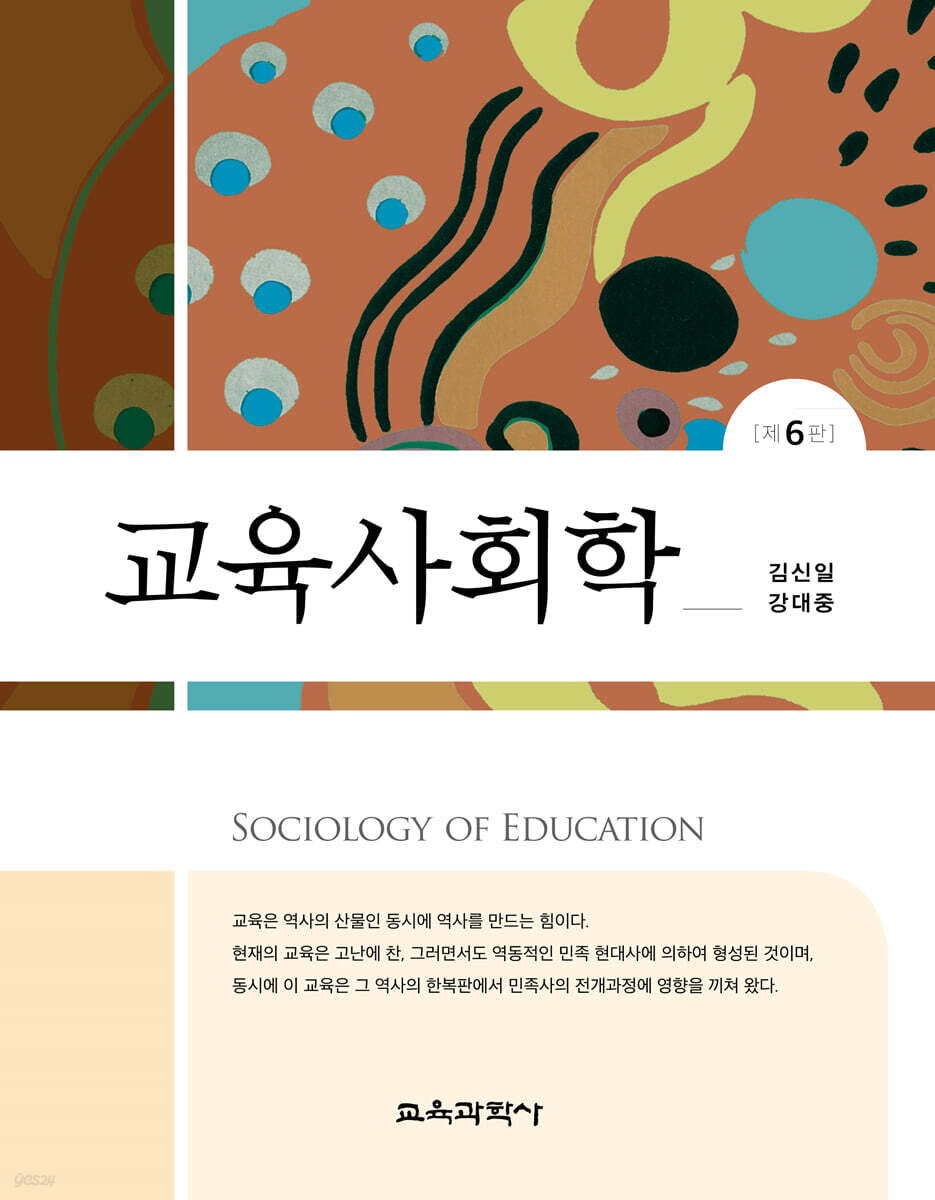
Education is both a product of history and a force that creates history.
Current education has been shaped by the arduous yet dynamic modern history of our nation, and at the same time, this education has influenced the development of national history at the very heart of that history.
This book examines education from a sociological perspective.
We are comparing and examining various perspectives on pedagogy as it is created within historical and social contexts, and analyzing various educational issues such as educational reality, pedagogical challenges, and student selection.
Current education has been shaped by the arduous yet dynamic modern history of our nation, and at the same time, this education has influenced the development of national history at the very heart of that history.
This book examines education from a sociological perspective.
We are comparing and examining various perspectives on pedagogy as it is created within historical and social contexts, and analyzing various educational issues such as educational reality, pedagogical challenges, and student selection.
index
◈ Preface to the 6th Edition 3
Part 1 Education and Society
Introduction The Sociality of Education… … … … … … … … … … … … … … … … … … … … … 21
Chapter 1: The Development of the Sociology of Education… … … … … … … … … … … … … … … … … … … 27
1.
The Development of Korean Educational Sociology 31
1) The Origins of 'Educational Sociology' _ 31
2) 'School and Community' _ 34
3) The Resurrection of 'Educational Sociology' _ 37
2.
Developments in the United States and Europe 43
1) Early days _ 43
2) Expanding sociological research on schools _ 46
3) Emergence of Research on Educational Content _ 52
Chapter 2 Competing Theories… … … … … … … … … … … … … … … … … … … … … 61
1.
Functionalist Educational Theory 67
1) Functionalism _ 67
2) Durkheim's Explanation of Education _ 70
3) Parsons's explanation of education _ 75
4) Succession of Functional Theory _ 79
2.
Conflict Theory of Education 81
1) Conflict Theory _ 81
2) Marx's Explanation of Education _ 91
3) Bowles and Gintis's Reproduction Theory _ 93
4) Inheritance of Reproduction Theory _ 96
5) Comparison of Functional Theory and Conflict Theory _ 100
3.
Interpretive Approaches to Education 102
1) Interpretive Theory _ 102
2) Description of Education _ 106
3) Limitations of the Interpretive Approach _ 113
4.
Towards a New Theory 117
Part 2: Changes in the Education System
Chapter 3: Formation and Expansion of the Education System… … … … … … … … … … … … … … 125
1.
The Emergence of the National Education System and Its Characteristics 129
1) Modern State and National Education System _ 129
2) The nature of the national education system: universality and uniformity _ 136
2.
The School-Based Education System's Unrest 139
1) Innovation within the school system _ 139
2) Reform movement of the school-based system _ 141
3.
The Emergence of Lifelong Education 147
1) The Concept of Lifelong Education _ 147
2) Direction of lifelong education _ 150
Chapter 4: The Evolution of the Korean Education System… … … … … … … … … … … … … … … 157
1.
Introduction of the Modern School System 161
1) Education before the Enlightenment Period _ 161
2) Education in the Enlightenment Period _ 164
2.
Japanese colonial period 167
1) Colonial Education _ 167
2) Educational Independence Struggle _ 170
3.
Education System under Division 173
1) Education during the US Military Government _ 174
2) Establishment and Development of the National Education System _ 175
3) Some Features and Changes _ 181
4) Educational Reform _ 186
Chapter 5: Expansion of School Education and Its Causes… … … … … … … … … … … … … … … 193
1.
Expansion of school education 197
1) International Trends _ 197
2) School Expansion in Korea _ 202
2.
Reasons for the Increase in Academic Achievement 205
1) Learning Needs Theory _ 206
2) Technical Function Theory _ 211
3) Marxist Theory _ 216
4) Status Competition Theory _ 220
5) National Integration Theory _ 228
3.
Discussion 231
Part 3: The Social Function of Education
Chapter 6 Social Equality and Education… … … … … … … … … … … … … … … … … … … 243
1.
Social Class and Social Mobility 247
2.
Functions of Education 252
1) Equalization Theory _ 253
2) Unequal Reproduction Theory _ 259
3) Irrelationship Theory _ 264
3.
Discussion 269
Chapter 7: Educational Equality… … … … … … … … … … … … … … … … … … … … … … 273
1.
Distribution of Educational Opportunities and Determinants 277
1) Measurement of educational opportunity distribution _ 278
2) Distribution Structure _ 283
3) Determinants of educational opportunity distribution _ 290
2.
The Development of Educational Equality Theory 294
1) Permissive Equality of Educational Opportunity _ 298
2) Guaranteed equality of educational opportunity _ 301
3) Equality of educational conditions _ 303
4) Equality of Educational Outcomes _ 304
5) Educational Equality through Social Reform _ 306
3.
Educational Equality Policy 307
1) The Phased Nature of Educational Equality Policy _ 307
2) Summary of the Debate on Social Equality in Education _ 310
Chapter 8 Educational Selection and Examination… … … … … … … … … … … … … … … … … … … … … 315
1.
Student Flow and Selection 319
1) Student Flow 319
2) Training Stage and Selection 322
2.
Admission Selection 329
1) Elementary and secondary schools _ 329
2) University _ 332
3) Characteristics of Korean Educational Selection _ 337
3.
Test Function 345
1) The educational function of tests _ 347
2) The Social Function of Testing _ 353
Chapter 9 Academic Achievement and the Gap… … … … … … … … … … … … … … … … … … … … 361
1.
Components of Academic Achievement 365
2.
Determinants of Academic Achievement 369
1) Personal factors _ 369
2) School Factors _ 371
3) Family Factors _ 373
4) Community _ 374
5) Private Education _ 376
3.
The effect of improving academic achievement in schools 380
1) Class and school size _ 381
2) School educational conditions _ 385
3) Group formation _ 387
4) Teacher Abilities and Activities _ 389
5) School Culture _ 391
4.
Academic Achievement Gaps and Their Causes 393
1) Intelligence _ 394
2) Family background _ 396
3) Region _ 399
4) Gender Gap _ 402
Chapter 10 The Social Nature of the Curriculum… … … … … … … … … … … … … … 407
1.
Curriculum Sociology 411
2.
Socialization and Standard Curriculum Theory 417
1) Socialization function _ 417
2) Economic system maintenance function _ 421
3.
Dominance Structure and Reproduction Theory 424
1) Dominant Culture _ 424
2) Cultural Imperialism _ 429
3) Reproduction Theory _ 432
4.
Cultural Conflict and Post-Reproduction Theory 439
1) Resistance Theory _ 441
2) Relative Autonomy Theory _ 446
Part 4: Challenges and Prospects of Educational Sociology
Chapter 11: Expanding the Discourse of Sociology of Education… … … … … … … … … … … … … … 455
1.
Globalization 459
1) Characteristics of Globalization _ 460
2) Changes and Challenges in Education _ 462
2.
Feminism 467
1) Feminist Perspectives _ 468
2) Educational Situation and Tasks _ 473
3.
Learning Society 478
1) Expansion of lifelong learning activities _ 479
2) Changes in Learning Activity Management _ 482
3) Changes in the Education System and Society _ 487
Chapter 12: The Reality of Education and the Challenges of Pedagogy… … … … … … … … … … … … … 493
1.
Reflection and Introspection 497
1) Remnants of Colonial Education _ 497
2) Developmental Education Theory _ 507
3) The Educational Reality of Division _ 511
2.
The New Reality of Education 515
1) The Essence of Education _ 517
2) Right to Education _ 519
3) Right to learn _ 520
4) Democratization of Education: The Completion of Democracy _ 523
3.
Seeking a New Educational Paradigm 526
1) The nature of education _ 526
2) A New Paradigm in Education _ 531
◈ References 541
◈ Search 591
Part 1 Education and Society
Introduction The Sociality of Education… … … … … … … … … … … … … … … … … … … … … 21
Chapter 1: The Development of the Sociology of Education… … … … … … … … … … … … … … … … … … … 27
1.
The Development of Korean Educational Sociology 31
1) The Origins of 'Educational Sociology' _ 31
2) 'School and Community' _ 34
3) The Resurrection of 'Educational Sociology' _ 37
2.
Developments in the United States and Europe 43
1) Early days _ 43
2) Expanding sociological research on schools _ 46
3) Emergence of Research on Educational Content _ 52
Chapter 2 Competing Theories… … … … … … … … … … … … … … … … … … … … … 61
1.
Functionalist Educational Theory 67
1) Functionalism _ 67
2) Durkheim's Explanation of Education _ 70
3) Parsons's explanation of education _ 75
4) Succession of Functional Theory _ 79
2.
Conflict Theory of Education 81
1) Conflict Theory _ 81
2) Marx's Explanation of Education _ 91
3) Bowles and Gintis's Reproduction Theory _ 93
4) Inheritance of Reproduction Theory _ 96
5) Comparison of Functional Theory and Conflict Theory _ 100
3.
Interpretive Approaches to Education 102
1) Interpretive Theory _ 102
2) Description of Education _ 106
3) Limitations of the Interpretive Approach _ 113
4.
Towards a New Theory 117
Part 2: Changes in the Education System
Chapter 3: Formation and Expansion of the Education System… … … … … … … … … … … … … … 125
1.
The Emergence of the National Education System and Its Characteristics 129
1) Modern State and National Education System _ 129
2) The nature of the national education system: universality and uniformity _ 136
2.
The School-Based Education System's Unrest 139
1) Innovation within the school system _ 139
2) Reform movement of the school-based system _ 141
3.
The Emergence of Lifelong Education 147
1) The Concept of Lifelong Education _ 147
2) Direction of lifelong education _ 150
Chapter 4: The Evolution of the Korean Education System… … … … … … … … … … … … … … … 157
1.
Introduction of the Modern School System 161
1) Education before the Enlightenment Period _ 161
2) Education in the Enlightenment Period _ 164
2.
Japanese colonial period 167
1) Colonial Education _ 167
2) Educational Independence Struggle _ 170
3.
Education System under Division 173
1) Education during the US Military Government _ 174
2) Establishment and Development of the National Education System _ 175
3) Some Features and Changes _ 181
4) Educational Reform _ 186
Chapter 5: Expansion of School Education and Its Causes… … … … … … … … … … … … … … … 193
1.
Expansion of school education 197
1) International Trends _ 197
2) School Expansion in Korea _ 202
2.
Reasons for the Increase in Academic Achievement 205
1) Learning Needs Theory _ 206
2) Technical Function Theory _ 211
3) Marxist Theory _ 216
4) Status Competition Theory _ 220
5) National Integration Theory _ 228
3.
Discussion 231
Part 3: The Social Function of Education
Chapter 6 Social Equality and Education… … … … … … … … … … … … … … … … … … … 243
1.
Social Class and Social Mobility 247
2.
Functions of Education 252
1) Equalization Theory _ 253
2) Unequal Reproduction Theory _ 259
3) Irrelationship Theory _ 264
3.
Discussion 269
Chapter 7: Educational Equality… … … … … … … … … … … … … … … … … … … … … … 273
1.
Distribution of Educational Opportunities and Determinants 277
1) Measurement of educational opportunity distribution _ 278
2) Distribution Structure _ 283
3) Determinants of educational opportunity distribution _ 290
2.
The Development of Educational Equality Theory 294
1) Permissive Equality of Educational Opportunity _ 298
2) Guaranteed equality of educational opportunity _ 301
3) Equality of educational conditions _ 303
4) Equality of Educational Outcomes _ 304
5) Educational Equality through Social Reform _ 306
3.
Educational Equality Policy 307
1) The Phased Nature of Educational Equality Policy _ 307
2) Summary of the Debate on Social Equality in Education _ 310
Chapter 8 Educational Selection and Examination… … … … … … … … … … … … … … … … … … … … … 315
1.
Student Flow and Selection 319
1) Student Flow 319
2) Training Stage and Selection 322
2.
Admission Selection 329
1) Elementary and secondary schools _ 329
2) University _ 332
3) Characteristics of Korean Educational Selection _ 337
3.
Test Function 345
1) The educational function of tests _ 347
2) The Social Function of Testing _ 353
Chapter 9 Academic Achievement and the Gap… … … … … … … … … … … … … … … … … … … … 361
1.
Components of Academic Achievement 365
2.
Determinants of Academic Achievement 369
1) Personal factors _ 369
2) School Factors _ 371
3) Family Factors _ 373
4) Community _ 374
5) Private Education _ 376
3.
The effect of improving academic achievement in schools 380
1) Class and school size _ 381
2) School educational conditions _ 385
3) Group formation _ 387
4) Teacher Abilities and Activities _ 389
5) School Culture _ 391
4.
Academic Achievement Gaps and Their Causes 393
1) Intelligence _ 394
2) Family background _ 396
3) Region _ 399
4) Gender Gap _ 402
Chapter 10 The Social Nature of the Curriculum… … … … … … … … … … … … … … 407
1.
Curriculum Sociology 411
2.
Socialization and Standard Curriculum Theory 417
1) Socialization function _ 417
2) Economic system maintenance function _ 421
3.
Dominance Structure and Reproduction Theory 424
1) Dominant Culture _ 424
2) Cultural Imperialism _ 429
3) Reproduction Theory _ 432
4.
Cultural Conflict and Post-Reproduction Theory 439
1) Resistance Theory _ 441
2) Relative Autonomy Theory _ 446
Part 4: Challenges and Prospects of Educational Sociology
Chapter 11: Expanding the Discourse of Sociology of Education… … … … … … … … … … … … … … 455
1.
Globalization 459
1) Characteristics of Globalization _ 460
2) Changes and Challenges in Education _ 462
2.
Feminism 467
1) Feminist Perspectives _ 468
2) Educational Situation and Tasks _ 473
3.
Learning Society 478
1) Expansion of lifelong learning activities _ 479
2) Changes in Learning Activity Management _ 482
3) Changes in the Education System and Society _ 487
Chapter 12: The Reality of Education and the Challenges of Pedagogy… … … … … … … … … … … … … 493
1.
Reflection and Introspection 497
1) Remnants of Colonial Education _ 497
2) Developmental Education Theory _ 507
3) The Educational Reality of Division _ 511
2.
The New Reality of Education 515
1) The Essence of Education _ 517
2) Right to Education _ 519
3) Right to learn _ 520
4) Democratization of Education: The Completion of Democracy _ 523
3.
Seeking a New Educational Paradigm 526
1) The nature of education _ 526
2) A New Paradigm in Education _ 531
◈ References 541
◈ Search 591
GOODS SPECIFICS
- Publication date: February 28, 2022
- Page count, weight, size: 604 pages | 176*248*35mm
- ISBN13: 9788925416731
- ISBN10: 8925416735
You may also like
카테고리
korean


korean

![ELLE 엘르 스페셜 에디션 A형 : 12월 [2025]](http://librairie.coreenne.fr/cdn/shop/files/b8e27a3de6c9538896439686c6b0e8fb.jpg?v=1766436872&width=3840)


