

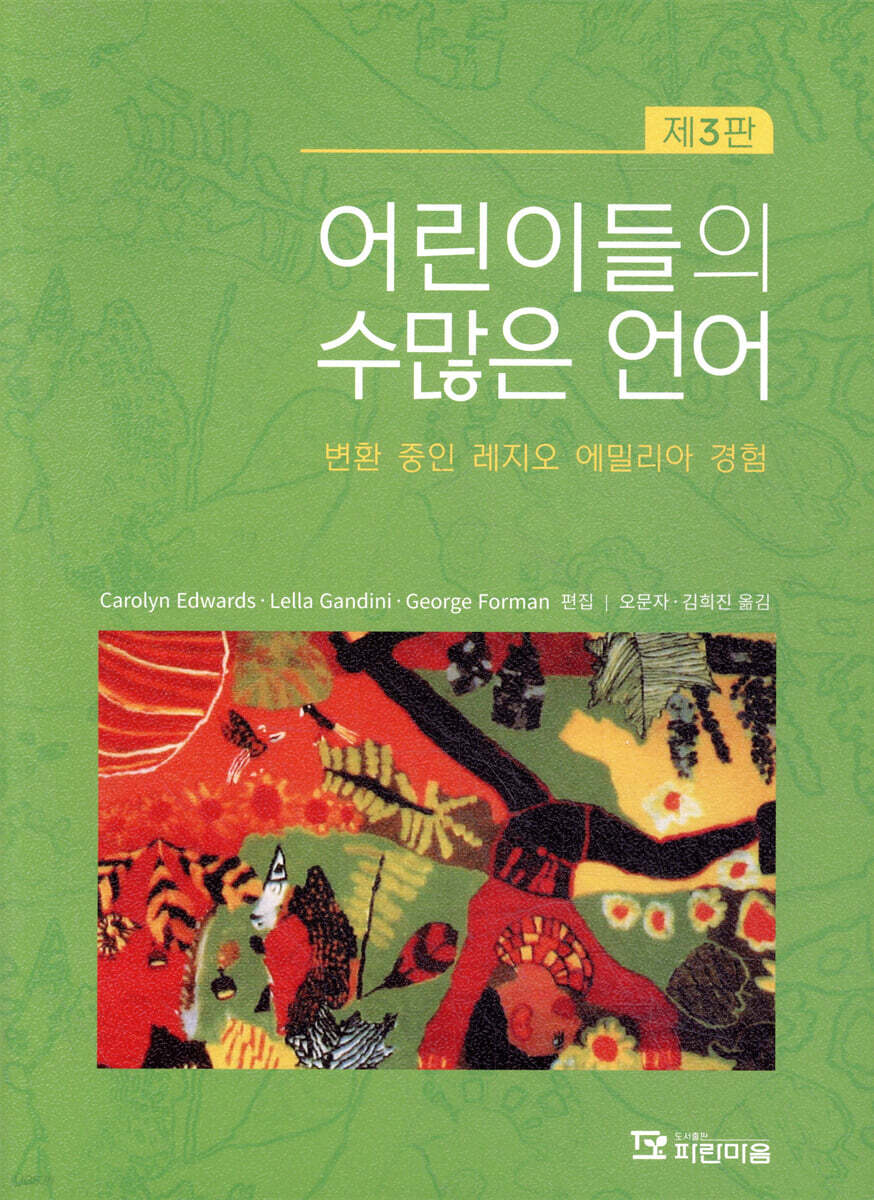
The many languages of children
 |
Description
index
Acknowledgements
Participants
Preface / Howard Gardner
Introduction / Legion: A City Full of Politeness, Curiosity, and Imagination
Jerome Bruner
Translator's Preface
Part 1 Starting Point
No way, there are a hundred!
Loris Malaguzzi
Chapter 1: Introduction: Background and Starting Point
Carolyn Edwards
Lella Gandini
George Forman
Reggio Emilia Experience
Unique cities and regions
The broader context of Italian early childhood education
Inspiration for the exhibition
The necessity of this book
Authors and the chapters they wrote
The historical context of the Legion experience
Chapter 2.
History, Ideas, and Fundamentals: An Interview with Loris Malaguzzi
Lella Gandini
When we heard the news
Part 1 History
Part 2 Philosophy
Part 3 Basic Principles
Part 4 Teacher
Part 5: Images of Early Childhood
Part 6 Learning Theory
Part 7: From Theory to Practice
Part 8 Appropriate Expectations
conclusion
Chapter 3.
Malaguzzi's Story, Other Stories, and Respect for Children
David Hawkins
Amazing stories and encounters
Other Stories: The Development of Progressive Education in Europe and the United States
Civic consciousness: serious membership in the community
Parallel Theory with the United States: Project-Based Learning
Moving from simply loving children to respecting them
Chapter 4.
Our responsibility to children and their communities
Graziano Delrio
Chapter 5.
Reggio Emilia: A Changing City
Sandra Piccinini
Claudia Giudici
rapidly growing city
A New Institution for a Changing City
Redefining the city's responsibility to its youngest citizens
Istitutizione
In conclusion
Chapter 6.
Microprojects and Macropolicies: Learning through Relationships
Peter Moss
Local experience, global influence
The Current Situation: Growing Services, Growing Standardization
Reggio Emilia: A Regional Project for Democratic Experimentalism
Micro and macro
Reasonable Agreement for Early Childhood Education and Care or Modus Vivendi
Part 2: Teaching and Learning through Relationships
Chapter 7.
Parental Involvement in School Management: An Interview with Sergio Spazzuari
Lella Gandini
Chapter 8.
Education Coordination Team and Professional Development
Paola Cagliari
Tiziana Filippini
Elena Giacopini
Simona Bonilauri
Deanna Margini
Education Coordination Team
Dealing with 'pivotal' situations encountered on a daily basis
Working with teachers on observation and documentation
Promoting partnerships between teachers and families
Promoting multicultural thinking in schools
Working together to promote professional development
conclusion
Chapter 9.
Teacher and Learner, Partner and Guide: The Teacher's Role
Carolyn Edwards
Defining the Teacher's Role in Reggio Emilia
Spiral learning and shared control
The special challenges of the teacher's role
A method of extended mutual criticism and self-reflection
Examples of teacher behavior
conclusion
Chapter 10.
Observational Teachers: Observation as a Reciprocal Tool for Professional Development
Lella Gandini
Chapter 11.
Inclusive society
Ivana Soncini
Differences Between Children: Creating Complex Educational Contexts
Discernment and Referral: Strengthening Relationships Between Services
A common type of disability within our system: Every child is exceptional.
The transition process: a long and gradual entry
Partnering with Families: Exchanging Images of Children
Classroom Organization and Community: Friends Beginning to Dream of the Future
Children's Myriad Languages: Expanding Their Language Palette
Social Constructivism: Children Demonstrating Their Own Approach to Life
Professional Development: Improving Teachers' Vision
Interlude story
From Message to Writing: The Literacy Experience
Part 3: Record-keeping as an integrated process of observation, reflection, and communication
Chapter 12.
Educational Documentation: Practices for Negotiation and Democracy
Gunilla Dahlberg
The power of educational documentation
Educational documentation as a way to challenge dominant discourse
Educational Documentation as a Risky Challenge
Open Forum
Chapter 13.
The Education of Listening: A Perspective on Listening from Reggio Emilia
Carlina Rinaldi
Listening and Finding Meaning
What is listening?
Children as listening beings
Teachers as Listeners: The Process of Documentation
Teachers as Evaluators: The Process of Formative Assessment
Teachers as Researchers: Education as Life
Chapter 14.
Negotiative learning through design, documentation, and discourse
George Forman
Brenda Fyfe
Three Elements of Negotiative Learning
Paths to Greater Understanding
Summary of design, documentation, and discourse systems
Chapter 15.
The relationship between documentation and evaluation
Brenda Fyfe
Formative assessment and documentation
Could the reality of assessment limit children's exploration of meaning?
Collecting, organizing, and interpreting records for documentation at the end and during the educational experience.
Integrate documentation into your daily reality
Finding and organizing time for collaborative reflection and analysis of learning
Interactive Expectations and Dialogue with Children: A Basis for Assessing Self and Groups
conclusion
Part 4: The Concept and Evolution of Children's Numerous Languages
Chapter 16.
Is beauty a way of knowing?
Margie Cooper
Chapter 17.
Atelier: A Conversation with Vea Vecchi
Lella Gandini
Chapter 18.
Connecting through places of care and learning
Lella Gandini
Education and Architecture
An educational and caring space
Chapter 19.
Digital media used in Reggio Emilia
George Forman
Digital Media and Children
Digital Media and Teachers
Chapter 20.
Loris Malaguzzi International Center
Carlina Rinaldi
Sandra Piccinini
The Birth of an Idea
Architectural and cultural projects of the International Center
Loris Malaguzzi International Center: Meta Project
Part 5 Conclusion
Chapter 21.
Final Thoughts and Helpful Teaching Strategies
Carolyn Edwards
Lella Gandini
George Forman
The value of collaboration and communication
The pursuit of interdisciplinary studies
New questions and directions
Guidance Strategies for Professors
A Dictionary of Terms Used by Reggio Emilia Educators
Additional information
Source of diagram
Participants
Preface / Howard Gardner
Introduction / Legion: A City Full of Politeness, Curiosity, and Imagination
Jerome Bruner
Translator's Preface
Part 1 Starting Point
No way, there are a hundred!
Loris Malaguzzi
Chapter 1: Introduction: Background and Starting Point
Carolyn Edwards
Lella Gandini
George Forman
Reggio Emilia Experience
Unique cities and regions
The broader context of Italian early childhood education
Inspiration for the exhibition
The necessity of this book
Authors and the chapters they wrote
The historical context of the Legion experience
Chapter 2.
History, Ideas, and Fundamentals: An Interview with Loris Malaguzzi
Lella Gandini
When we heard the news
Part 1 History
Part 2 Philosophy
Part 3 Basic Principles
Part 4 Teacher
Part 5: Images of Early Childhood
Part 6 Learning Theory
Part 7: From Theory to Practice
Part 8 Appropriate Expectations
conclusion
Chapter 3.
Malaguzzi's Story, Other Stories, and Respect for Children
David Hawkins
Amazing stories and encounters
Other Stories: The Development of Progressive Education in Europe and the United States
Civic consciousness: serious membership in the community
Parallel Theory with the United States: Project-Based Learning
Moving from simply loving children to respecting them
Chapter 4.
Our responsibility to children and their communities
Graziano Delrio
Chapter 5.
Reggio Emilia: A Changing City
Sandra Piccinini
Claudia Giudici
rapidly growing city
A New Institution for a Changing City
Redefining the city's responsibility to its youngest citizens
Istitutizione
In conclusion
Chapter 6.
Microprojects and Macropolicies: Learning through Relationships
Peter Moss
Local experience, global influence
The Current Situation: Growing Services, Growing Standardization
Reggio Emilia: A Regional Project for Democratic Experimentalism
Micro and macro
Reasonable Agreement for Early Childhood Education and Care or Modus Vivendi
Part 2: Teaching and Learning through Relationships
Chapter 7.
Parental Involvement in School Management: An Interview with Sergio Spazzuari
Lella Gandini
Chapter 8.
Education Coordination Team and Professional Development
Paola Cagliari
Tiziana Filippini
Elena Giacopini
Simona Bonilauri
Deanna Margini
Education Coordination Team
Dealing with 'pivotal' situations encountered on a daily basis
Working with teachers on observation and documentation
Promoting partnerships between teachers and families
Promoting multicultural thinking in schools
Working together to promote professional development
conclusion
Chapter 9.
Teacher and Learner, Partner and Guide: The Teacher's Role
Carolyn Edwards
Defining the Teacher's Role in Reggio Emilia
Spiral learning and shared control
The special challenges of the teacher's role
A method of extended mutual criticism and self-reflection
Examples of teacher behavior
conclusion
Chapter 10.
Observational Teachers: Observation as a Reciprocal Tool for Professional Development
Lella Gandini
Chapter 11.
Inclusive society
Ivana Soncini
Differences Between Children: Creating Complex Educational Contexts
Discernment and Referral: Strengthening Relationships Between Services
A common type of disability within our system: Every child is exceptional.
The transition process: a long and gradual entry
Partnering with Families: Exchanging Images of Children
Classroom Organization and Community: Friends Beginning to Dream of the Future
Children's Myriad Languages: Expanding Their Language Palette
Social Constructivism: Children Demonstrating Their Own Approach to Life
Professional Development: Improving Teachers' Vision
Interlude story
From Message to Writing: The Literacy Experience
Part 3: Record-keeping as an integrated process of observation, reflection, and communication
Chapter 12.
Educational Documentation: Practices for Negotiation and Democracy
Gunilla Dahlberg
The power of educational documentation
Educational documentation as a way to challenge dominant discourse
Educational Documentation as a Risky Challenge
Open Forum
Chapter 13.
The Education of Listening: A Perspective on Listening from Reggio Emilia
Carlina Rinaldi
Listening and Finding Meaning
What is listening?
Children as listening beings
Teachers as Listeners: The Process of Documentation
Teachers as Evaluators: The Process of Formative Assessment
Teachers as Researchers: Education as Life
Chapter 14.
Negotiative learning through design, documentation, and discourse
George Forman
Brenda Fyfe
Three Elements of Negotiative Learning
Paths to Greater Understanding
Summary of design, documentation, and discourse systems
Chapter 15.
The relationship between documentation and evaluation
Brenda Fyfe
Formative assessment and documentation
Could the reality of assessment limit children's exploration of meaning?
Collecting, organizing, and interpreting records for documentation at the end and during the educational experience.
Integrate documentation into your daily reality
Finding and organizing time for collaborative reflection and analysis of learning
Interactive Expectations and Dialogue with Children: A Basis for Assessing Self and Groups
conclusion
Part 4: The Concept and Evolution of Children's Numerous Languages
Chapter 16.
Is beauty a way of knowing?
Margie Cooper
Chapter 17.
Atelier: A Conversation with Vea Vecchi
Lella Gandini
Chapter 18.
Connecting through places of care and learning
Lella Gandini
Education and Architecture
An educational and caring space
Chapter 19.
Digital media used in Reggio Emilia
George Forman
Digital Media and Children
Digital Media and Teachers
Chapter 20.
Loris Malaguzzi International Center
Carlina Rinaldi
Sandra Piccinini
The Birth of an Idea
Architectural and cultural projects of the International Center
Loris Malaguzzi International Center: Meta Project
Part 5 Conclusion
Chapter 21.
Final Thoughts and Helpful Teaching Strategies
Carolyn Edwards
Lella Gandini
George Forman
The value of collaboration and communication
The pursuit of interdisciplinary studies
New questions and directions
Guidance Strategies for Professors
A Dictionary of Terms Used by Reggio Emilia Educators
Additional information
Source of diagram
Publisher's Review
Given the practical demands of the revised Nuri Curriculum and the accumulated experience of implementing the Legion principles in Korea over the past 25 years, we are prepared to accept new proposals with greater sensitivity and enrichment.
Now, field teachers can no longer just stick to pre-prepared activities and lesson plans.
At this point, we expect teachers to recognize the overall direction of our education and childcare and actively participate in its implementation.
Fortunately, the authors of this book, the Legion educators, do not preach educational philosophy or principles using difficult terms that are divorced from practice, nor do they approach them as something sacred.
Through the content of this third edition, we will be able to reflect on our own practices and refine and develop our educational perspectives by encountering writings and conversations from practitioners with clear educational values, brimming with their experiences and case studies.
It will also be an opportunity to rediscover and understand Legion education, something you thought you already knew.
Now, field teachers can no longer just stick to pre-prepared activities and lesson plans.
At this point, we expect teachers to recognize the overall direction of our education and childcare and actively participate in its implementation.
Fortunately, the authors of this book, the Legion educators, do not preach educational philosophy or principles using difficult terms that are divorced from practice, nor do they approach them as something sacred.
Through the content of this third edition, we will be able to reflect on our own practices and refine and develop our educational perspectives by encountering writings and conversations from practitioners with clear educational values, brimming with their experiences and case studies.
It will also be an opportunity to rediscover and understand Legion education, something you thought you already knew.
GOODS SPECIFICS
- Publication date: December 17, 2020
- Page count, weight, size: 497 pages | 1,044g | 188*257*30mm
- ISBN13: 9791190935104
- ISBN10: 1190935104
You may also like
카테고리
korean


korean

![ELLE 엘르 스페셜 에디션 A형 : 12월 [2025]](http://librairie.coreenne.fr/cdn/shop/files/b8e27a3de6c9538896439686c6b0e8fb.jpg?v=1766436872&width=3840)


