

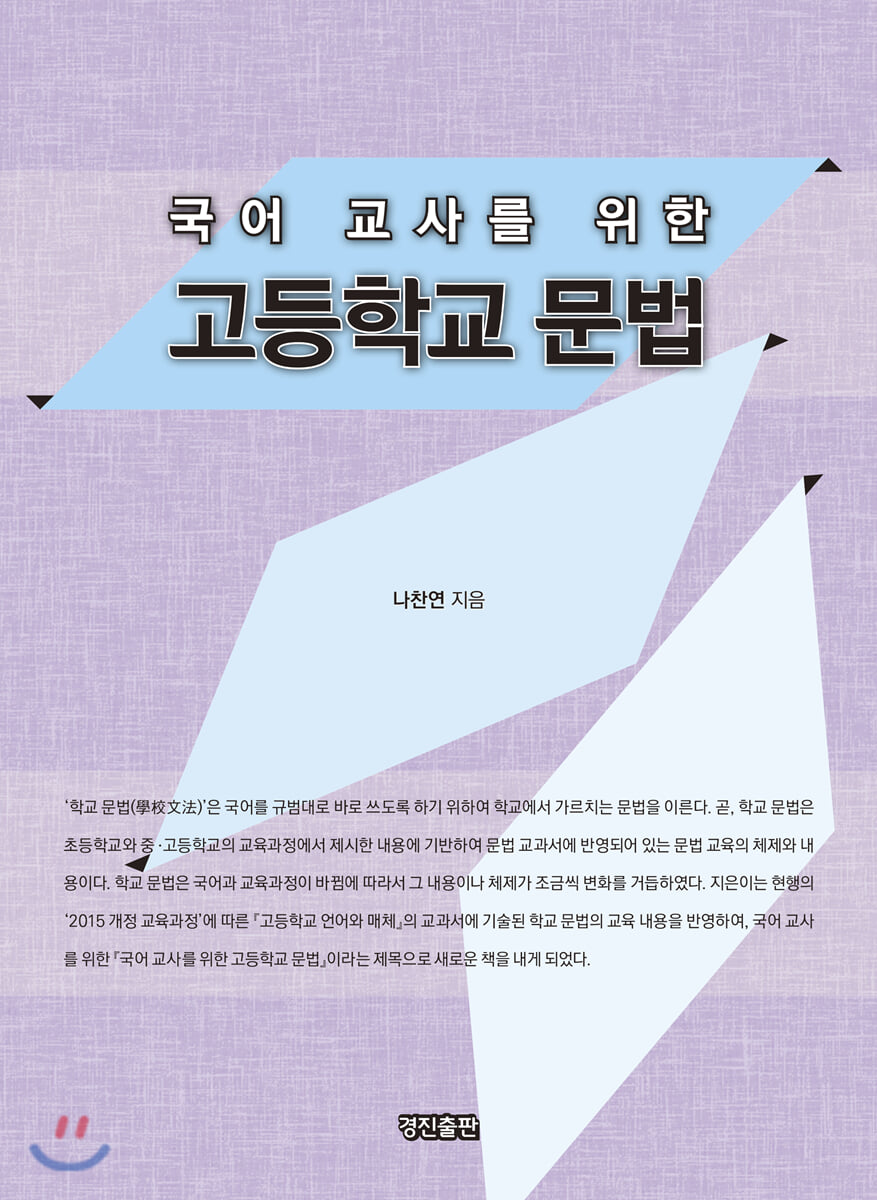
High School Grammar for Korean Teachers
 |
Description
Book Introduction
This book is a guidebook that introduces the grammar content of the "Language and Media" textbook according to the "2015 Revised Korean Language Curriculum" to Korean language teachers in middle and high schools.
Through this book, you can gain a deeper understanding of the contents of school grammar and effectively teach school grammar to students.
Through this book, you can gain a deeper understanding of the contents of school grammar and effectively teach school grammar to students.
- You can preview some of the book's contents.
Preview
index
Part 1 Language and the Korean Language
Chapter 1 Characteristics of Language
1.1.
symbolic characteristics
1.2.
Accidents? Social? Cultural characteristics
Chapter 2 Characteristics of the Korean Language
2.1.
Phonological characteristics
2.2.
Characteristics of vocabulary
2.3.
Characteristics of grammar
2.4.
Characteristics of Hwayong
Part 2: Phonological System and Phonological Change
Chapter 1: The Phonological System
1.1.
vocal organs
1.2.
Voice and phonology
1.3.
Phonological system
Chapter 2: Changes in Phonemes
2.1.
replacement of sounds
2.2.
Dropping of sounds
2.3.
Addition of sounds
2.4.
Phonetic contraction
2.5.
Overlapping phonetic changes
Part 3 Words
Chapter 1 Morphemes and Words
1.1.
morpheme
1.2.
word
Chapter 2 Parts of Speech
2.1.
Classification of parts of speech
2.2.
Noun
2.3.
Relationship words
2.4.
Verb
2.5.
Modifier
2.6.
Independence speech
Chapter 3: The Structure of Words
3.1.
The texture of words
3.2.
compound word
3.3.
derivatives
3.4.
Overlapping of compound words and derivatives
3.5.
remount
Chapter 4: Meaning Relationships of Words
4.1.
The concept of meaning
4.2.
semantic relationships of words
Part 4 Sentences and Discourse
Chapter 1 Sentence Structure and Grammar Elements
1.1.
Sentence structure
1.2.
Sentence structure
1.3.
Grammar elements
Chapter 2 Discourse and Context
2.1.
The concept of discourse
2.2.
Context of discourse
Part 5: Linguistic Norms
Chapter 1 Standard Language Regulations
1.1.
Standard language circumstances principles
1.2.
Standard pronunciation
Chapter 2 Korean Spelling
2.1.
Characteristics of Korean spelling
2.2.
Principles of Korean spelling
2.3.
Overview of Korean Spelling Rules
Chapter 3: Foreign Word Spelling
3.1.
Basic principles of foreign language transcription
3.2.
List of foreign word notations
3.3.
Principles for writing foreign names of people and places
Chapter 4 Romanization of the Korean Language
4.1.
Evolution of the Romanization of the Korean Language
4.2.
Explanation of the Romanization Rules for the Korean Language
Part 6: Changes in the Korean Language
Chapter 1 Ancient Korean
1.1.
Lazarus notation of proper nouns
1.2.
Lee Du
1.3.
Hyangchal
1.4.
Gugyeol
Chapter 2 Middle Korean
2.1.
Characteristics of phonetics and notation
2.2.
Features of grammar
2.3.
Vocabulary features
Chapter 3 Modern Korean
3.1.
Characteristics of phonetics and notation
3.2.
Features of grammar
3.3.
Features of vocabulary and meaning
References
Chapter 1 Characteristics of Language
1.1.
symbolic characteristics
1.2.
Accidents? Social? Cultural characteristics
Chapter 2 Characteristics of the Korean Language
2.1.
Phonological characteristics
2.2.
Characteristics of vocabulary
2.3.
Characteristics of grammar
2.4.
Characteristics of Hwayong
Part 2: Phonological System and Phonological Change
Chapter 1: The Phonological System
1.1.
vocal organs
1.2.
Voice and phonology
1.3.
Phonological system
Chapter 2: Changes in Phonemes
2.1.
replacement of sounds
2.2.
Dropping of sounds
2.3.
Addition of sounds
2.4.
Phonetic contraction
2.5.
Overlapping phonetic changes
Part 3 Words
Chapter 1 Morphemes and Words
1.1.
morpheme
1.2.
word
Chapter 2 Parts of Speech
2.1.
Classification of parts of speech
2.2.
Noun
2.3.
Relationship words
2.4.
Verb
2.5.
Modifier
2.6.
Independence speech
Chapter 3: The Structure of Words
3.1.
The texture of words
3.2.
compound word
3.3.
derivatives
3.4.
Overlapping of compound words and derivatives
3.5.
remount
Chapter 4: Meaning Relationships of Words
4.1.
The concept of meaning
4.2.
semantic relationships of words
Part 4 Sentences and Discourse
Chapter 1 Sentence Structure and Grammar Elements
1.1.
Sentence structure
1.2.
Sentence structure
1.3.
Grammar elements
Chapter 2 Discourse and Context
2.1.
The concept of discourse
2.2.
Context of discourse
Part 5: Linguistic Norms
Chapter 1 Standard Language Regulations
1.1.
Standard language circumstances principles
1.2.
Standard pronunciation
Chapter 2 Korean Spelling
2.1.
Characteristics of Korean spelling
2.2.
Principles of Korean spelling
2.3.
Overview of Korean Spelling Rules
Chapter 3: Foreign Word Spelling
3.1.
Basic principles of foreign language transcription
3.2.
List of foreign word notations
3.3.
Principles for writing foreign names of people and places
Chapter 4 Romanization of the Korean Language
4.1.
Evolution of the Romanization of the Korean Language
4.2.
Explanation of the Romanization Rules for the Korean Language
Part 6: Changes in the Korean Language
Chapter 1 Ancient Korean
1.1.
Lazarus notation of proper nouns
1.2.
Lee Du
1.3.
Hyangchal
1.4.
Gugyeol
Chapter 2 Middle Korean
2.1.
Characteristics of phonetics and notation
2.2.
Features of grammar
2.3.
Vocabulary features
Chapter 3 Modern Korean
3.1.
Characteristics of phonetics and notation
3.2.
Features of grammar
3.3.
Features of vocabulary and meaning
References
Publisher's Review
A guide for middle and high school Korean language teachers introducing the grammar content of the "Language and Media" textbook based on the "2015 Revised Korean Language Curriculum."
This book is a guidebook that introduces the grammar content of the “Language and Media” textbook according to the “2015 Revised Korean Language Curriculum” to Korean language teachers in middle and high schools.
Through this book, you can gain a deeper understanding of the contents of school grammar and effectively teach school grammar to students.
'School grammar' is the grammar taught in schools so that elementary, middle, and high school students can use the Korean language in a standard manner according to the nationally established curriculum.
Soon, school grammar is the system and content of grammar education reflected in grammar textbooks based on the contents presented in the elementary, middle, and high school curriculum.
School grammar has undergone slight changes in its content and structure as the Korean language curriculum has changed.
The author has published a new book titled “High School Grammar for Korean Language Teachers” that reflects the educational content of school grammar described in the textbook “High School Language and Media” according to the current “2015 Revised Curriculum.”
This book is a guidebook that comprehensively introduces the grammar contents of the [Language and Media] textbook according to the '2015 Revised Korean Language Curriculum' to Korean language teachers in middle and high schools.
Through this book, Korean language teachers can gain a deeper understanding of the content of school grammar and effectively teach school grammar to middle and high school students.
This book is structured according to the content system described in the ‘High School Language and Media’ of the 2015 Revised Curriculum.
Soon, the school grammar contents such as Part 1 Language and the Korean Language, Part 2 Phonetic System and Phonetic Change, Part 3 Words, Part 4 Sentences and Discourse, Part 5 Language Norms, and Part 6 Changes in the Korean Language were covered.
In particular, Part 6 contains the contents of school grammar related to ancient Korean, medieval Korean, and modern Korean, and here, the contents are described with attention to the characteristics of each period in the history of the Korean language.
This book describes its contents in the following way:
First, the grammar terms and content structure used in this book follow those described in “High School Language and Media” according to the “2015 Revised Curriculum.”
Second, in order to maintain the basic intention of introducing the contents of school grammar in an easy-to-understand manner, the author did not reveal his personal views.
Third, theories that are not included in the school grammar but are already recognized in academia are described separately in text boxes.
Fourth, the content related to ‘Changes in the Korean Language’ in Part 6 includes all the content from the approved textbook for ‘High School Language and Media’ (2019), and adds theories on the history of the Korean language widely used in academia.
This book is a guidebook that introduces the grammar content of the “Language and Media” textbook according to the “2015 Revised Korean Language Curriculum” to Korean language teachers in middle and high schools.
Through this book, you can gain a deeper understanding of the contents of school grammar and effectively teach school grammar to students.
'School grammar' is the grammar taught in schools so that elementary, middle, and high school students can use the Korean language in a standard manner according to the nationally established curriculum.
Soon, school grammar is the system and content of grammar education reflected in grammar textbooks based on the contents presented in the elementary, middle, and high school curriculum.
School grammar has undergone slight changes in its content and structure as the Korean language curriculum has changed.
The author has published a new book titled “High School Grammar for Korean Language Teachers” that reflects the educational content of school grammar described in the textbook “High School Language and Media” according to the current “2015 Revised Curriculum.”
This book is a guidebook that comprehensively introduces the grammar contents of the [Language and Media] textbook according to the '2015 Revised Korean Language Curriculum' to Korean language teachers in middle and high schools.
Through this book, Korean language teachers can gain a deeper understanding of the content of school grammar and effectively teach school grammar to middle and high school students.
This book is structured according to the content system described in the ‘High School Language and Media’ of the 2015 Revised Curriculum.
Soon, the school grammar contents such as Part 1 Language and the Korean Language, Part 2 Phonetic System and Phonetic Change, Part 3 Words, Part 4 Sentences and Discourse, Part 5 Language Norms, and Part 6 Changes in the Korean Language were covered.
In particular, Part 6 contains the contents of school grammar related to ancient Korean, medieval Korean, and modern Korean, and here, the contents are described with attention to the characteristics of each period in the history of the Korean language.
This book describes its contents in the following way:
First, the grammar terms and content structure used in this book follow those described in “High School Language and Media” according to the “2015 Revised Curriculum.”
Second, in order to maintain the basic intention of introducing the contents of school grammar in an easy-to-understand manner, the author did not reveal his personal views.
Third, theories that are not included in the school grammar but are already recognized in academia are described separately in text boxes.
Fourth, the content related to ‘Changes in the Korean Language’ in Part 6 includes all the content from the approved textbook for ‘High School Language and Media’ (2019), and adds theories on the history of the Korean language widely used in academia.
GOODS SPECIFICS
- Date of issue: February 1, 2020
- Page count, weight, size: 404 pages | 842g | 188*257*30mm
- ISBN13: 9788959967216
- ISBN10: 8959967211
You may also like
카테고리
korean


korean

![ELLE 엘르 A형 (여성월간) : 1월 [2026]](http://librairie.coreenne.fr/cdn/shop/files/3b70e1cf77cf67d6da56e0eb041901e8.jpg?v=1767265322&width=3840)


