

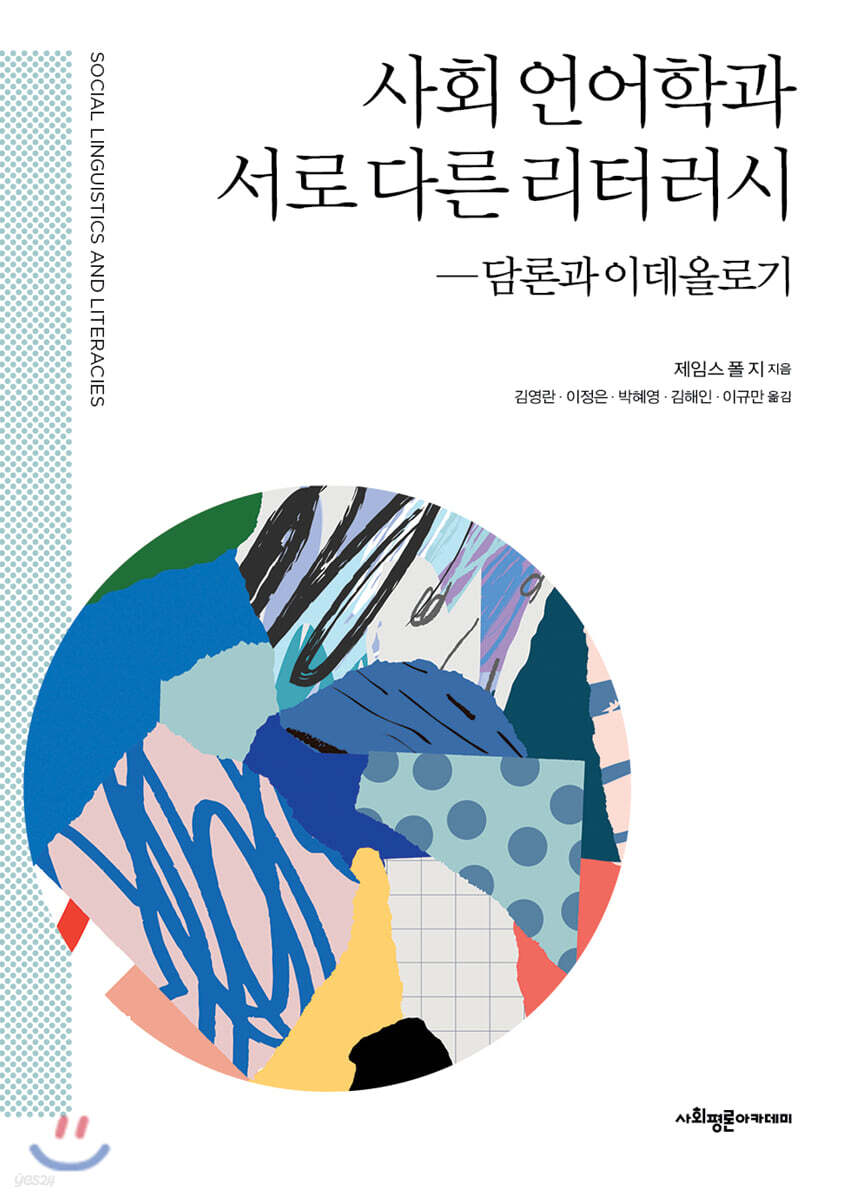
Sociolinguistics and Different Literacies
 |
Description
Book Introduction
An individual's literacy cannot be separated from society.
Any social group has its own unique discourse—ways of reading and writing, ways of speaking and acting, and a set of beliefs and values—that influences the language use of its members.
People in different social groups perceive the same text or speech in different ways.
Another person has multiple identities because he or she belongs to multiple social groups.
So literacy is always ‘different literacy.’
By analyzing everyday discourse—such as warning labels on medicine bottles, interview responses, and classroom conversations—this book demonstrates how the same text is read differently depending on sociocultural context and how personal identity manifests in the text.
This allows us to understand literacy, which only reveals its true meaning within a social context.
Any social group has its own unique discourse—ways of reading and writing, ways of speaking and acting, and a set of beliefs and values—that influences the language use of its members.
People in different social groups perceive the same text or speech in different ways.
Another person has multiple identities because he or she belongs to multiple social groups.
So literacy is always ‘different literacy.’
By analyzing everyday discourse—such as warning labels on medicine bottles, interview responses, and classroom conversations—this book demonstrates how the same text is read differently depending on sociocultural context and how personal identity manifests in the text.
This allows us to understand literacy, which only reveals its true meaning within a social context.
- You can preview some of the book's contents.
Preview
index
Translator's Preface 5
Introduction 12
Chapter 1: Ideology 19
Ideology│Marx and 'False Consciousness'│Experience vs. Theory: An Example│Implicit vs. Explicit Theories│The Linguist's Theory│Bad English Theory│Implicit and Explicit Theories, Primary and Secondary Theories│Back to Ideology
Chapter 2 Meaning 43
What does 'meaning' mean? │ Democracy
Chapter 3: The Literacy Crisis 51
Literacy and Politics│Some Facts About Literacy│A Case Study
Chapter 4: Literacy as Social Practice 72
New Literacy Studies│Discussion on the Perspective on Literacy as a Social Practice│The Problem of Aspirin Disease
Chapter 5: The Great Divergence of Orality and Literacy 85
Literacy │ The Primitive and the Civilized │ Concrete Science vs. Abstract Science: Documenting the Difference Between Primitive and Civilized │ Literacy: The Great Divergence │ Literacy as 'Taming the Wild Mind' │ Orality and Literacy as Two Different Worlds │ Not Literacy vs. Orality, Integration vs. Intervention │ Literacy: An Ideological Model
Chapter 6: The Myth of Literacy and the History of Literacy 102
The Myth of Literacy│Plato│Religion and Literacy
Chapter 7: The Role of Literacy and Paulo Freire 115
Literacy, 'Higher Cognitive Abilities' and Schools | Scribner and Cole | Schools and Professions | Prairie and Liberative Literacy
Chapter 8: New Literacy Studies 133
Different Worldviews Replace the Contrast of Orality and Literacy│Diverse Ways of Speaking│Unequal Childhoods: Two Models of Child Rearing│Conclusion
Chapter 9: Social Language, Situational Meaning, and Cultural Models 148
Language and Social Languages│Heteronyms│Similarity in the 'Eye of the Beholder'│Meaning│Cultural Models/Reflected Worlds
Chapter 10: Cultural Models in Practice/The Reflected World 172
Parents│Self-Judgment and Actual Behavior│Dominant Myths│Education
Chapter 11 Discourse Analysis 187
Introduction│Language Variation Revealing Social Identity│A Case Study of Discourse Analysis in Argumentation
Chapter 12 Discourse Analysis: Stories at School 210
Discourse Analysis of the Story and Its Context│Comprehensive Meaning of the Text│Why Leona's Story Fails in School
Chapter 13: Discourse and Different Literacies 242
New Literacy Studies│A Case Study on Language Use and Human Types│Discourse│Becoming a 'True Indian'│Discourse Again│Discourse in Law School
Chapter 14: More Discussion on Discourse 269
Acquisition and Learning│Literacy and Discourse│Copy
Chapter 15: Language, Individuals, and Discourse 289
Language in Discourse│Language at Home and School│Discourse of Boundaries│Discourse, Individuals, and Performance
Chapter 16: Discourse, Individual, and Performance 309
Chapter 17: Science and the Living World 331
Science and the Living World│Birds and the Brain
Conclusion 345
Reference 358
Search 376
Introduction 12
Chapter 1: Ideology 19
Ideology│Marx and 'False Consciousness'│Experience vs. Theory: An Example│Implicit vs. Explicit Theories│The Linguist's Theory│Bad English Theory│Implicit and Explicit Theories, Primary and Secondary Theories│Back to Ideology
Chapter 2 Meaning 43
What does 'meaning' mean? │ Democracy
Chapter 3: The Literacy Crisis 51
Literacy and Politics│Some Facts About Literacy│A Case Study
Chapter 4: Literacy as Social Practice 72
New Literacy Studies│Discussion on the Perspective on Literacy as a Social Practice│The Problem of Aspirin Disease
Chapter 5: The Great Divergence of Orality and Literacy 85
Literacy │ The Primitive and the Civilized │ Concrete Science vs. Abstract Science: Documenting the Difference Between Primitive and Civilized │ Literacy: The Great Divergence │ Literacy as 'Taming the Wild Mind' │ Orality and Literacy as Two Different Worlds │ Not Literacy vs. Orality, Integration vs. Intervention │ Literacy: An Ideological Model
Chapter 6: The Myth of Literacy and the History of Literacy 102
The Myth of Literacy│Plato│Religion and Literacy
Chapter 7: The Role of Literacy and Paulo Freire 115
Literacy, 'Higher Cognitive Abilities' and Schools | Scribner and Cole | Schools and Professions | Prairie and Liberative Literacy
Chapter 8: New Literacy Studies 133
Different Worldviews Replace the Contrast of Orality and Literacy│Diverse Ways of Speaking│Unequal Childhoods: Two Models of Child Rearing│Conclusion
Chapter 9: Social Language, Situational Meaning, and Cultural Models 148
Language and Social Languages│Heteronyms│Similarity in the 'Eye of the Beholder'│Meaning│Cultural Models/Reflected Worlds
Chapter 10: Cultural Models in Practice/The Reflected World 172
Parents│Self-Judgment and Actual Behavior│Dominant Myths│Education
Chapter 11 Discourse Analysis 187
Introduction│Language Variation Revealing Social Identity│A Case Study of Discourse Analysis in Argumentation
Chapter 12 Discourse Analysis: Stories at School 210
Discourse Analysis of the Story and Its Context│Comprehensive Meaning of the Text│Why Leona's Story Fails in School
Chapter 13: Discourse and Different Literacies 242
New Literacy Studies│A Case Study on Language Use and Human Types│Discourse│Becoming a 'True Indian'│Discourse Again│Discourse in Law School
Chapter 14: More Discussion on Discourse 269
Acquisition and Learning│Literacy and Discourse│Copy
Chapter 15: Language, Individuals, and Discourse 289
Language in Discourse│Language at Home and School│Discourse of Boundaries│Discourse, Individuals, and Performance
Chapter 16: Discourse, Individual, and Performance 309
Chapter 17: Science and the Living World 331
Science and the Living World│Birds and the Brain
Conclusion 345
Reference 358
Search 376
Publisher's Review
A representative introductory book leading the new literacy research
In 1990, when the first edition of this book was published, the prevailing view was that literacy was a personal thing that happened inside one's head.
In this book, James Paul Gee, a leading American sociolinguist, presented the view that literacy must be understood within a social context.
Research conducted from this sociolinguistic perspective was called ‘new literacy research’ because it was a new paradigm at the time.
New literacy research has now become a fully fledged field of study, and this book has become a sought-after introductory text for those studying literacy as a social language.
Through the book, we can confirm the problems with the cognitive perspective on literacy and the need for a sociocultural approach.
'Different literacies' by different people
An individual's literacy cannot be explained separately from society.
To explain that literacy is closely related to society, the author presents the English word 'discourse' as a distinction between 'discourse' starting with a lowercase d and 'discourse' starting with a capital D.
According to the author's definition, 'discourse' refers to the individual speech or writing used by an individual, whereas 'discourse' encompasses the unique ways in which a social group reads and writes, speaks and acts, and makes value judgments and believes.
Every social group has its own discourse.
And because an individual belongs to multiple groups and is influenced by the unique discourse of each group, when using language, he or she follows the language usage style of the discourse to which he or she belongs.
Therefore, literacy reveals who a person is and what he or she does, in other words, what his or her identity is.
Everyone's literacy varies depending on their identity and discourse.
Therefore, literacy is always ‘literacies’ or ‘different literacies’.
Literacy that reveals its true meaning only in a social context
In this book, we analyze various discourses to understand the aspects of discourse that influenced them.
The warnings on aspirin bottles reflect the pharmaceutical company's values.
The story a seven-year-old child tells in class incorporates the oral traditions of the child's community.
African-American, working-class, and upper-class students read the same text and interpret it differently.
By analyzing everyday discourse commonly encountered around us, the author shows how literacy varies depending on an individual's sociocultural background.
This allows us to understand that literacy only has true meaning within a social context.
A book for literacy research and education that is consistent with social justice
This book reminds literacy researchers and educators of the importance of a sociocultural perspective.
Interpreting words and understanding sentence structure alone cannot fully understand the meaning of a text or improve literacy skills.
A story told by a seven-year-old child is an interesting text with profound meaning for those studying oral culture, but in school, it is treated as an inappropriate story because of its grammatical errors and unclear subject matter.
The reason why minority students in law school fail to keep up is not because they lack literacy skills, but because they are unfamiliar with the competitive discourse conventions of law school.
Studying or teaching literacy without considering these points excludes anyone who does not fit into the mainstream discourse.
Therefore, for fair literacy research and education, we must always pay conscious attention to discourse.
This book will serve as a theoretical foundation for anyone considering ethical and critical literacy research and education.
In 1990, when the first edition of this book was published, the prevailing view was that literacy was a personal thing that happened inside one's head.
In this book, James Paul Gee, a leading American sociolinguist, presented the view that literacy must be understood within a social context.
Research conducted from this sociolinguistic perspective was called ‘new literacy research’ because it was a new paradigm at the time.
New literacy research has now become a fully fledged field of study, and this book has become a sought-after introductory text for those studying literacy as a social language.
Through the book, we can confirm the problems with the cognitive perspective on literacy and the need for a sociocultural approach.
'Different literacies' by different people
An individual's literacy cannot be explained separately from society.
To explain that literacy is closely related to society, the author presents the English word 'discourse' as a distinction between 'discourse' starting with a lowercase d and 'discourse' starting with a capital D.
According to the author's definition, 'discourse' refers to the individual speech or writing used by an individual, whereas 'discourse' encompasses the unique ways in which a social group reads and writes, speaks and acts, and makes value judgments and believes.
Every social group has its own discourse.
And because an individual belongs to multiple groups and is influenced by the unique discourse of each group, when using language, he or she follows the language usage style of the discourse to which he or she belongs.
Therefore, literacy reveals who a person is and what he or she does, in other words, what his or her identity is.
Everyone's literacy varies depending on their identity and discourse.
Therefore, literacy is always ‘literacies’ or ‘different literacies’.
Literacy that reveals its true meaning only in a social context
In this book, we analyze various discourses to understand the aspects of discourse that influenced them.
The warnings on aspirin bottles reflect the pharmaceutical company's values.
The story a seven-year-old child tells in class incorporates the oral traditions of the child's community.
African-American, working-class, and upper-class students read the same text and interpret it differently.
By analyzing everyday discourse commonly encountered around us, the author shows how literacy varies depending on an individual's sociocultural background.
This allows us to understand that literacy only has true meaning within a social context.
A book for literacy research and education that is consistent with social justice
This book reminds literacy researchers and educators of the importance of a sociocultural perspective.
Interpreting words and understanding sentence structure alone cannot fully understand the meaning of a text or improve literacy skills.
A story told by a seven-year-old child is an interesting text with profound meaning for those studying oral culture, but in school, it is treated as an inappropriate story because of its grammatical errors and unclear subject matter.
The reason why minority students in law school fail to keep up is not because they lack literacy skills, but because they are unfamiliar with the competitive discourse conventions of law school.
Studying or teaching literacy without considering these points excludes anyone who does not fit into the mainstream discourse.
Therefore, for fair literacy research and education, we must always pay conscious attention to discourse.
This book will serve as a theoretical foundation for anyone considering ethical and critical literacy research and education.
GOODS SPECIFICS
- Publication date: November 4, 2019
- Page count, weight, size: 380 pages | 634g | 165*235*30mm
- ISBN13: 9791189946005
- ISBN10: 1189946009
You may also like
카테고리
korean


korean

![ELLE 엘르 스페셜 에디션 A형 : 12월 [2025]](http://librairie.coreenne.fr/cdn/shop/files/b8e27a3de6c9538896439686c6b0e8fb.jpg?v=1766436872&width=3840)


