

Electronic conquest
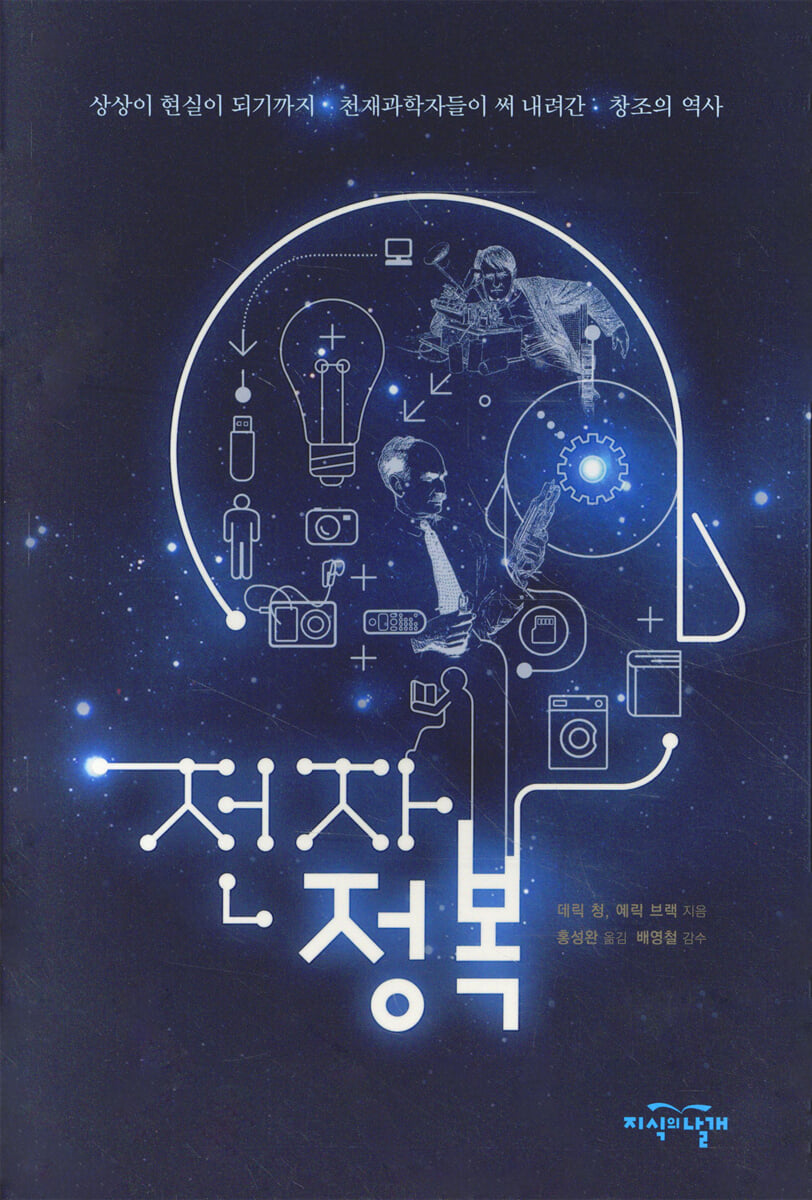 |
Description
Book Introduction
Static electricity, discovered by a Greek villager about 3,000 years ago, remained a mere 'magical phenomenon' for a long time.
This magic was rediscovered in China two thousand years later and was put to useful use in many fields, including the compass.
However, the 'electron', which was the main principle of the compass, did not receive much attention and no further research was conducted.
The stage for the former shifted again to Europe, where the 'scientific way of thinking' brought about by the Renaissance played a significant role.
Numerous scientists have studied electrons, discovered new phenomena, and updated their knowledge every day.
This magic was rediscovered in China two thousand years later and was put to useful use in many fields, including the compass.
However, the 'electron', which was the main principle of the compass, did not receive much attention and no further research was conducted.
The stage for the former shifted again to Europe, where the 'scientific way of thinking' brought about by the Renaissance played a significant role.
Numerous scientists have studied electrons, discovered new phenomena, and updated their knowledge every day.
- You can preview some of the book's contents.
Preview
index
Part 1: The Electromagnetic Age
Knowledge base/telegraph/telephone/wireless telegraphy/lighting and electrification
Part 2: The Age of Vacuum Electronics
Flow of electric current in a vacuum/Control of electron flow/Radio/Television/Radar/Computer
Part 3: The Age of Solid-State Electronics
Semiconductors/ The Birth of the Transistor/ The Beginning of the Electronics Industry/ The Dawn of Silicon Valley/ Integrated Circuits and Chips/ The Blossoming of Chip Technology/ The Evolution of the Electronics Industry/ LEDs, Fiber Optics, and Liquid Crystal Displays/ The Information Age and Beyond
Knowledge base/telegraph/telephone/wireless telegraphy/lighting and electrification
Part 2: The Age of Vacuum Electronics
Flow of electric current in a vacuum/Control of electron flow/Radio/Television/Radar/Computer
Part 3: The Age of Solid-State Electronics
Semiconductors/ The Birth of the Transistor/ The Beginning of the Electronics Industry/ The Dawn of Silicon Valley/ Integrated Circuits and Chips/ The Blossoming of Chip Technology/ The Evolution of the Electronics Industry/ LEDs, Fiber Optics, and Liquid Crystal Displays/ The Information Age and Beyond
Into the book
Faraday was a man who devoted his entire research life to electromagnetism.
Although he was the director of the Royal Institution and one of the world's most renowned scientists, he lived in a shabby apartment with his wife in the attic of the institute.
It was where Faraday had lived since his days as a poor apprentice bookbinder and laboratory assistant.
His motto, “Work, complete, publish,” symbolizes the spirit of a true scientist who seeks truth in nature and shares it with the public.
Faraday never applied for a patent for his research, even though it would have brought him financial wealth.
Instead, he willingly shared the fruits of his research over a long period of time for the benefit of all mankind.
- Page 47 (Faraday, the appearance of a master)
On February 24, 1876, Hubbard secretly arranged for Bell to travel to Washington, D.C., for an illegal meeting with a patent examiner.
Bell learned of the idea of converting sound signals into electric currents from Gray's application shown to him by the examiner, and with the examiner's permission, he was able to add a new claim, unrelated to the title, to the margin of the application he had already submitted, which concerned the invention of "a means for producing undulating currents by means of a variable electrical resistor."
This idea, which was copied directly from Gray's application and theory, later turned out to be the most crucial technology in the invention of the telephone.
However, no connection could be found with the rest of Bell's original application.
…Bell, who had secured the patent, immediately returned to the laboratory and began to focus on Gray's idea of using a variable resistor based on an acid solution.
- Page 88 (voice transmitted over wires)
Hubbard offered to sell Bell's telephone patents to William Orton, president of Western Union, for $100,000.
Orton had the company's top technical experts review Bell's telephone technology, and all of them advised against buying it.
The opinion was that the sound quality was extremely poor and crude, and that it would ultimately be nothing more than a toy.
Moreover, the question was whether there was any need to develop a talking phone when the company already possessed the most advanced telegraph technology in existence.
This type of reaction to external technology is still common today, especially in large, well-known companies.
The tendency to cling to existing systems and internal conflicting interests hinder objective perspectives and decision-making.
- Page 90 (Development of the Telephone Business)
As a proud, authoritarian engineer and a stubborn businessman, Edison's instinctive reaction was to fight back.
Edison launched a massive public campaign to attack and disparage Westinghouse and AC power.
The legendary 'War of the Currents' had begun.
Edison considered high-voltage power lines in urban areas to be extremely dangerous.
He held a press conference to highlight the potential lethal dangers of alternating current and, to dramatically demonstrate the fact, electrocuted a stray dog with high-voltage alternating current in front of everyone.
But when he failed to provoke a public outcry, he sought out larger animals, electrocuting a horse and then a rabid elephant at the zoo.
Still dissatisfied, Edison ignored the advice of those around him that this absurd act had gone too far and designed an execution machine that could execute criminals with high-voltage alternating current, which he maliciously named the "Westinghouse-style execution."
Today we call this the electric chair.
- Pages 133-134 (AC-DC War)
As the business grew, legal battles over patent rights arose again.
History always repeats itself.
As with the telegraph, telephone, television, and radio, the role and ownership of the invention of the computer have also been controversial.
Credit for the invention of the digital computer goes to the man who deserves it: John Atanasoff.
Although Atanasov eventually regained the honors he deserved, he never enjoyed the financial benefits he deserved throughout his life.
Although he was the first to invent a computer, he did not file a patent application, so the court declared the patent available to anyone.
This ruling had a profound impact on the rapid growth of the computer industry by ensuring that no individual or company developing a computer product would have to worry about patent infringement.
- Page 247 (Fundamentals of Computer Architecture)
If Beckman had just accepted the eight men's offer, they would have stayed at Shockley Semiconductor Laboratories, and the lab might have become the largest and most successful semiconductor company in the world.
And Northern California would never have become a hotbed of entrepreneurial activity.
Likewise, if Rock had not met Sherman Fairchild at that critical moment and secured investment in his venture, the eight men would have gone their separate ways, and Silicon Valley as we know it today would not exist.
It's simply amazing to think how much life is shaped by such coincidences and opportunities.
- Pages 324-325 (Shockley and the Eight Traitors)
To survive in this extremely competitive and differentiated environment, you have to be agile and flexible.
It also had to have its own unique competitive advantage.
Intel was no exception, but fortunately, its executives cast off the blinders of the past and humbly accepted reality.
The reality was that despite its historical market dominance, Intel would not remain the global leader in DRAM for long.
The simple truth of international trade did not allow it.
In contrast, the microprocessor sector was confident that they could lead the market.
This is because Intel has more experience and know-how in this field than any other company.
In addition, the market for PCs and advanced 'smart' products with built-in microprocessors was growing rapidly.
This market seemed secure, especially considering the numerous barriers to entry that potential competitors would face: complex designs, rapidly evolving hardware, software, and system application technical requirements, and the need for sophisticated strategies to build multifaceted, collaborative relationships with customers.
What Intel put forward was not the strengths they had in the past.
Rather, it was a newly acquired ability to adapt technically to market changes and to transform oneself to appropriately target newly growing markets.
Intel was not only a semiconductor manufacturer, but also a cutting-edge systems company with extensive expertise in computer architecture.
Their overwhelming dominance in this field gave them control over most of the market and even gave them pricing power.
Intel's decision in 1986 to shift its focus from DRAM to microprocessors was not really a concession.
It was a strategy to find a new, more profitable and stronger foundation for long-term business.
Within a few years of that decision, Intel began growing rapidly again and regained its title as the world's largest semiconductor company.
- Pages 385-386 (Competitors from Asia)
Although he was the director of the Royal Institution and one of the world's most renowned scientists, he lived in a shabby apartment with his wife in the attic of the institute.
It was where Faraday had lived since his days as a poor apprentice bookbinder and laboratory assistant.
His motto, “Work, complete, publish,” symbolizes the spirit of a true scientist who seeks truth in nature and shares it with the public.
Faraday never applied for a patent for his research, even though it would have brought him financial wealth.
Instead, he willingly shared the fruits of his research over a long period of time for the benefit of all mankind.
- Page 47 (Faraday, the appearance of a master)
On February 24, 1876, Hubbard secretly arranged for Bell to travel to Washington, D.C., for an illegal meeting with a patent examiner.
Bell learned of the idea of converting sound signals into electric currents from Gray's application shown to him by the examiner, and with the examiner's permission, he was able to add a new claim, unrelated to the title, to the margin of the application he had already submitted, which concerned the invention of "a means for producing undulating currents by means of a variable electrical resistor."
This idea, which was copied directly from Gray's application and theory, later turned out to be the most crucial technology in the invention of the telephone.
However, no connection could be found with the rest of Bell's original application.
…Bell, who had secured the patent, immediately returned to the laboratory and began to focus on Gray's idea of using a variable resistor based on an acid solution.
- Page 88 (voice transmitted over wires)
Hubbard offered to sell Bell's telephone patents to William Orton, president of Western Union, for $100,000.
Orton had the company's top technical experts review Bell's telephone technology, and all of them advised against buying it.
The opinion was that the sound quality was extremely poor and crude, and that it would ultimately be nothing more than a toy.
Moreover, the question was whether there was any need to develop a talking phone when the company already possessed the most advanced telegraph technology in existence.
This type of reaction to external technology is still common today, especially in large, well-known companies.
The tendency to cling to existing systems and internal conflicting interests hinder objective perspectives and decision-making.
- Page 90 (Development of the Telephone Business)
As a proud, authoritarian engineer and a stubborn businessman, Edison's instinctive reaction was to fight back.
Edison launched a massive public campaign to attack and disparage Westinghouse and AC power.
The legendary 'War of the Currents' had begun.
Edison considered high-voltage power lines in urban areas to be extremely dangerous.
He held a press conference to highlight the potential lethal dangers of alternating current and, to dramatically demonstrate the fact, electrocuted a stray dog with high-voltage alternating current in front of everyone.
But when he failed to provoke a public outcry, he sought out larger animals, electrocuting a horse and then a rabid elephant at the zoo.
Still dissatisfied, Edison ignored the advice of those around him that this absurd act had gone too far and designed an execution machine that could execute criminals with high-voltage alternating current, which he maliciously named the "Westinghouse-style execution."
Today we call this the electric chair.
- Pages 133-134 (AC-DC War)
As the business grew, legal battles over patent rights arose again.
History always repeats itself.
As with the telegraph, telephone, television, and radio, the role and ownership of the invention of the computer have also been controversial.
Credit for the invention of the digital computer goes to the man who deserves it: John Atanasoff.
Although Atanasov eventually regained the honors he deserved, he never enjoyed the financial benefits he deserved throughout his life.
Although he was the first to invent a computer, he did not file a patent application, so the court declared the patent available to anyone.
This ruling had a profound impact on the rapid growth of the computer industry by ensuring that no individual or company developing a computer product would have to worry about patent infringement.
- Page 247 (Fundamentals of Computer Architecture)
If Beckman had just accepted the eight men's offer, they would have stayed at Shockley Semiconductor Laboratories, and the lab might have become the largest and most successful semiconductor company in the world.
And Northern California would never have become a hotbed of entrepreneurial activity.
Likewise, if Rock had not met Sherman Fairchild at that critical moment and secured investment in his venture, the eight men would have gone their separate ways, and Silicon Valley as we know it today would not exist.
It's simply amazing to think how much life is shaped by such coincidences and opportunities.
- Pages 324-325 (Shockley and the Eight Traitors)
To survive in this extremely competitive and differentiated environment, you have to be agile and flexible.
It also had to have its own unique competitive advantage.
Intel was no exception, but fortunately, its executives cast off the blinders of the past and humbly accepted reality.
The reality was that despite its historical market dominance, Intel would not remain the global leader in DRAM for long.
The simple truth of international trade did not allow it.
In contrast, the microprocessor sector was confident that they could lead the market.
This is because Intel has more experience and know-how in this field than any other company.
In addition, the market for PCs and advanced 'smart' products with built-in microprocessors was growing rapidly.
This market seemed secure, especially considering the numerous barriers to entry that potential competitors would face: complex designs, rapidly evolving hardware, software, and system application technical requirements, and the need for sophisticated strategies to build multifaceted, collaborative relationships with customers.
What Intel put forward was not the strengths they had in the past.
Rather, it was a newly acquired ability to adapt technically to market changes and to transform oneself to appropriately target newly growing markets.
Intel was not only a semiconductor manufacturer, but also a cutting-edge systems company with extensive expertise in computer architecture.
Their overwhelming dominance in this field gave them control over most of the market and even gave them pricing power.
Intel's decision in 1986 to shift its focus from DRAM to microprocessors was not really a concession.
It was a strategy to find a new, more profitable and stronger foundation for long-term business.
Within a few years of that decision, Intel began growing rapidly again and regained its title as the world's largest semiconductor company.
- Pages 385-386 (Competitors from Asia)
___From the text
Publisher's Review
From Edison's light bulb to Jobs' iPhone,
The full story of electronics that revolutionized human life.
Winner of the Golden Bookmark Award, given to the best science textbook in China, Taiwan, and Hong Kong.
Re-export to the United States, the home of electronics!
Static electricity, discovered by a Greek villager about 3,000 years ago, remained a mere 'magical phenomenon' for a long time.
This magic was rediscovered in China two thousand years later and was put to useful use in many fields, including the compass.
However, the 'electron', which was the main principle of the compass, did not receive much attention and no further research was conducted.
The stage for the former shifted again to Europe, where the 'scientific way of thinking' brought about by the Renaissance played a significant role.
Numerous scientists have studied electrons, discovered new phenomena, and updated their knowledge every day.
Countless things that were once only imaginable have become reality, industries utilizing electronics have developed, and the public has been able to enjoy the benefits of electronics at increasingly lower costs.
World War II was a decisive turning point in the establishment of electronics as a powerful industry.
Since then, during the Cold War, electronic engineering has enjoyed tremendous growth, receiving full support from both financial resources and human resources. The fruits of this growth are now evident in all the conveniences that surround our lives.
Electronics has conquered human imagination at a dazzling pace, and its boundless development is ongoing.
Why e-conquest now?
The success and sacrifice of countless researchers followed the path of persistently delving into invisible electronic phenomena and creating a massive social system.
In a labyrinthine and uncertain situation, the footsteps of scientists armed with the "will to think" and "creative failure" paved the way, and countless derived paths came together to create the vast and complex modern society.
In other words, electronics is the most radical advancement in human history and a core technology that drives modern society.
Above all, it is undoubtedly a very attractive field for anyone who dreams of progress and development, as it is the clearest key to determining the direction of the future.
This book provides important points for understanding the social system that was formed quietly but quickly, like the properties of electrons.
The trials and errors and secrets of success experienced by the geniuses, paranoiacs, and visionaries who ushered in the age of electronics serve as invaluable lessons for us today. Understanding the development of these tightly interconnected technologies and the historical circumstances that made them possible will empower us to understand the present.
Moreover, in the competitive arena where humans and technology intertwine, we can discover the subtle differences that determine success and failure, and by observing the butterfly effects they exert on a macro level, we can gain insight into the future in uncertain times.
Dreaming of an era of living technology
― A grand story about technology, people, and business.
This book is a reflection on the 'cold' era of electronics, brought about by the 'hot' passion of humans.
Paradoxically, the era of the most cool-headed and mechanical electronics began through the unwavering passion and challenges of these unique scientists.
As technology was applied to human life, a fierce competition for technological dominance unfolded among astute capitalists, and this competition gave birth to the most influential industries in history.
The struggles of the nearly 100 scientists featured in this book reveal the principles and processes of technology's creation, as well as the transition to other technologies.
The greatest strength of this book is that reading brief biographies about them can help you gain understanding and confidence in science and technology.
It is also full of 'best practices' that leading companies have experienced in the field, providing crucial inspiration to modern entrepreneurs and those preparing for society.
It is also of some interest to note that aspects of the modern corporate culture, such as monopolies, aggressive mergers and acquisitions, intellectual property disputes, and the tyranny of large corporations, already existed in the past.
The author's sharp critical awareness can be seen especially in the episode about genius scientists who met tragic ends due to the tyranny of large corporations, and the author urges us to move forward into the 'age of living technology' that this book aims for.
1.
Electronic Conquest, what kind of book is it?
① Prometheus with a human face
Reading the stories of geniuses who have conquered humanity's imagination one after another is a primary source of interest, and seeing their vulnerable, human faces is a secondary source of interest.
This book does not praise the perfect achievements of geniuses who have illuminated human life.
While presenting them with a somewhat cynical eye for their indecisiveness, sometimes cowardice, and terribly paranoid nature at every moment, it also brings to the stage the ill-fated geniuses who have disappeared into the back pages of history, examining both the light and shadow of an era.
② A popular science book told through stories
Rather than dryly explaining difficult theories, it allows readers to access knowledge naturally, as if reading a storybook, by unraveling their specialized fields through stories of time, space, and characters.
In this book, the author unfolds the history of electronics through a wide variety of figures and cases, which not only expands the readership but also broadens the scope of readers' understanding and common sense.
This was possible because the author, an expert with a long history in this field, compiled the results of meticulous research and study.
Furthermore, by exploring the history of electronic conquest in a chronological manner, tracing events, figures, and economic, social, and cultural trends, we can understand not only the act of technological development but also its social, economic, and cultural impact.
③ Read in one breath with short, firm breaths.
Important inventions and researchers are introduced in similar amounts for each topic.
This method of examining a single topic historically has the advantage of allowing us to examine the development of science and technology over time.
Additionally, you can fully understand each specialized and specific content before moving on to the next topic, and the topics are tightly intertwined, allowing for a coherent reading experience.
④ The knowledge of an electronics expert and the sensibility of a young journalist
In a word, it is a well-written book.
The arrangement and combination of numerous pieces of information, the analytical power that permeates them, and the appropriate placement of interesting reading material possess a level of perfection that only a master in this field can achieve, and the connection with the public was secured with the sensibility of a young journalist who majored in English literature.
⑤ Internationally Verified Content… Published in Chinese and then exported back to the US, the home of electronics.
The original version of this book was published in Chinese in Taiwan in 2011 and won the prestigious Golden Bookmark Prize in the Greater China region. (This award is given to the best popular science book in Chinese published in Taiwan, Hong Kong, and China from 2009 to 2011, and there were over 400 nominees at the time.) An English version was published in 2014 with updated and enriched content, and this translation is based on this book.
The full story of electronics that revolutionized human life.
Winner of the Golden Bookmark Award, given to the best science textbook in China, Taiwan, and Hong Kong.
Re-export to the United States, the home of electronics!
Static electricity, discovered by a Greek villager about 3,000 years ago, remained a mere 'magical phenomenon' for a long time.
This magic was rediscovered in China two thousand years later and was put to useful use in many fields, including the compass.
However, the 'electron', which was the main principle of the compass, did not receive much attention and no further research was conducted.
The stage for the former shifted again to Europe, where the 'scientific way of thinking' brought about by the Renaissance played a significant role.
Numerous scientists have studied electrons, discovered new phenomena, and updated their knowledge every day.
Countless things that were once only imaginable have become reality, industries utilizing electronics have developed, and the public has been able to enjoy the benefits of electronics at increasingly lower costs.
World War II was a decisive turning point in the establishment of electronics as a powerful industry.
Since then, during the Cold War, electronic engineering has enjoyed tremendous growth, receiving full support from both financial resources and human resources. The fruits of this growth are now evident in all the conveniences that surround our lives.
Electronics has conquered human imagination at a dazzling pace, and its boundless development is ongoing.
Why e-conquest now?
The success and sacrifice of countless researchers followed the path of persistently delving into invisible electronic phenomena and creating a massive social system.
In a labyrinthine and uncertain situation, the footsteps of scientists armed with the "will to think" and "creative failure" paved the way, and countless derived paths came together to create the vast and complex modern society.
In other words, electronics is the most radical advancement in human history and a core technology that drives modern society.
Above all, it is undoubtedly a very attractive field for anyone who dreams of progress and development, as it is the clearest key to determining the direction of the future.
This book provides important points for understanding the social system that was formed quietly but quickly, like the properties of electrons.
The trials and errors and secrets of success experienced by the geniuses, paranoiacs, and visionaries who ushered in the age of electronics serve as invaluable lessons for us today. Understanding the development of these tightly interconnected technologies and the historical circumstances that made them possible will empower us to understand the present.
Moreover, in the competitive arena where humans and technology intertwine, we can discover the subtle differences that determine success and failure, and by observing the butterfly effects they exert on a macro level, we can gain insight into the future in uncertain times.
Dreaming of an era of living technology
― A grand story about technology, people, and business.
This book is a reflection on the 'cold' era of electronics, brought about by the 'hot' passion of humans.
Paradoxically, the era of the most cool-headed and mechanical electronics began through the unwavering passion and challenges of these unique scientists.
As technology was applied to human life, a fierce competition for technological dominance unfolded among astute capitalists, and this competition gave birth to the most influential industries in history.
The struggles of the nearly 100 scientists featured in this book reveal the principles and processes of technology's creation, as well as the transition to other technologies.
The greatest strength of this book is that reading brief biographies about them can help you gain understanding and confidence in science and technology.
It is also full of 'best practices' that leading companies have experienced in the field, providing crucial inspiration to modern entrepreneurs and those preparing for society.
It is also of some interest to note that aspects of the modern corporate culture, such as monopolies, aggressive mergers and acquisitions, intellectual property disputes, and the tyranny of large corporations, already existed in the past.
The author's sharp critical awareness can be seen especially in the episode about genius scientists who met tragic ends due to the tyranny of large corporations, and the author urges us to move forward into the 'age of living technology' that this book aims for.
1.
Electronic Conquest, what kind of book is it?
① Prometheus with a human face
Reading the stories of geniuses who have conquered humanity's imagination one after another is a primary source of interest, and seeing their vulnerable, human faces is a secondary source of interest.
This book does not praise the perfect achievements of geniuses who have illuminated human life.
While presenting them with a somewhat cynical eye for their indecisiveness, sometimes cowardice, and terribly paranoid nature at every moment, it also brings to the stage the ill-fated geniuses who have disappeared into the back pages of history, examining both the light and shadow of an era.
② A popular science book told through stories
Rather than dryly explaining difficult theories, it allows readers to access knowledge naturally, as if reading a storybook, by unraveling their specialized fields through stories of time, space, and characters.
In this book, the author unfolds the history of electronics through a wide variety of figures and cases, which not only expands the readership but also broadens the scope of readers' understanding and common sense.
This was possible because the author, an expert with a long history in this field, compiled the results of meticulous research and study.
Furthermore, by exploring the history of electronic conquest in a chronological manner, tracing events, figures, and economic, social, and cultural trends, we can understand not only the act of technological development but also its social, economic, and cultural impact.
③ Read in one breath with short, firm breaths.
Important inventions and researchers are introduced in similar amounts for each topic.
This method of examining a single topic historically has the advantage of allowing us to examine the development of science and technology over time.
Additionally, you can fully understand each specialized and specific content before moving on to the next topic, and the topics are tightly intertwined, allowing for a coherent reading experience.
④ The knowledge of an electronics expert and the sensibility of a young journalist
In a word, it is a well-written book.
The arrangement and combination of numerous pieces of information, the analytical power that permeates them, and the appropriate placement of interesting reading material possess a level of perfection that only a master in this field can achieve, and the connection with the public was secured with the sensibility of a young journalist who majored in English literature.
⑤ Internationally Verified Content… Published in Chinese and then exported back to the US, the home of electronics.
The original version of this book was published in Chinese in Taiwan in 2011 and won the prestigious Golden Bookmark Prize in the Greater China region. (This award is given to the best popular science book in Chinese published in Taiwan, Hong Kong, and China from 2009 to 2011, and there were over 400 nominees at the time.) An English version was published in 2014 with updated and enriched content, and this translation is based on this book.
GOODS SPECIFICS
- Date of issue: September 20, 2015
- Page count, weight, size: 468 pages | 675g | 153*224*22mm
- ISBN13: 9788920930720
- ISBN10: 8920930724
You may also like
카테고리
korean


korean

![ELLE 엘르 A형 (여성월간) : 1월 [2026]](http://librairie.coreenne.fr/cdn/shop/files/3b70e1cf77cf67d6da56e0eb041901e8.jpg?v=1767265322&width=3840)


