

Introduction to Taxonomy
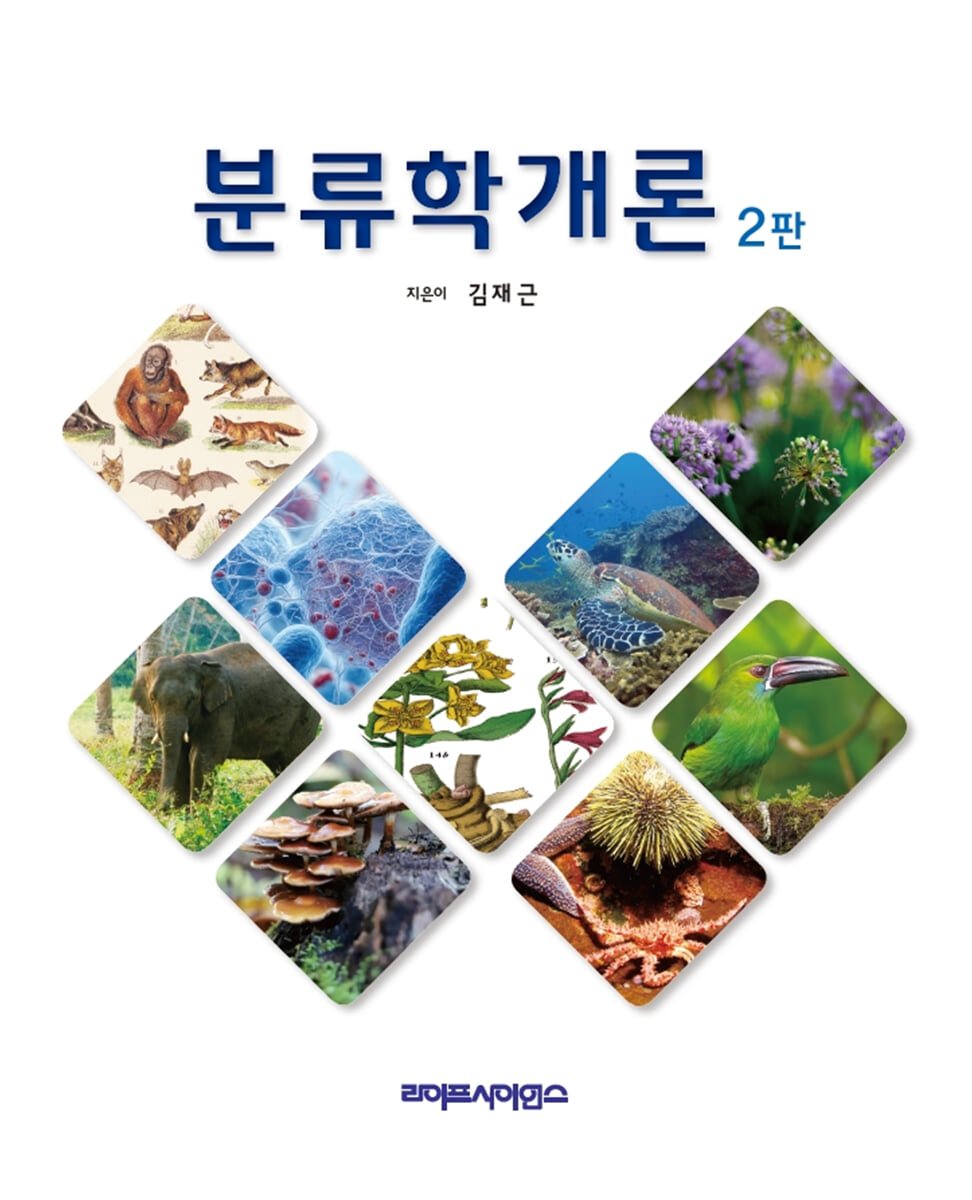 |
Description
index
Table of Contents
Part 1: General Introduction: Theory of Taxonomy 1
Chapter 1: What is Taxonomy? 3
Chapter 2 Recognition of Classification Traits 13
Chapter 3 Naming: Nomenclature 23
Chapter 4: Flocking: Classification 43
Chapter 5: Finding the Lineage of Living Things 51
Chapter 6: Developments in Biological Taxonomy 71
Chapter 7: Earth's Chronology: The Emergence of Various Lifeforms 91
Part 2: General Introduction: Biodiversity 105
Chapter 8: Bacteria, Archaea, and Viruses 109
Chapter 9 Eukaryotic Domain: Protista, Fungi, and Lichens 119
Chapter 10: Eukaryotic Domain: Kingdom Plantae 139
Chapter 11: Eukaryotic Domain: Kingdom Animalia 185
Reference 232
Appendix: Example of a Taxonomy Experiment Focusing on Plants (for Semester 1) 235
Search 277
Part 1: General Introduction: Theory of Taxonomy 1
Chapter 1: What is Taxonomy? 3
1.1 Why Organize: The Purpose of Classification 3
Computer File Management 4
Clothes 4
Sample 5
Biology 5
1.2 What is needed for organization: 6 components of classification
1.3 Taxonomy: The study of collating and organizing 7
1.4 Errors in Teaching Taxonomy 8
Try it 8
Learn more 8
Thinking 9
Reference 10
Chapter 2 Recognition of Classification Traits 13
2.1 Characteristics of Living Things 14
2.2 Characteristics used in animal classification 14
Level 14 of the Animal Body System
Symmetry 14
Levels of Animal Development: Development of Animal Body Plan 16
The Fate of Won-gu 17
Segmentation 18
Other traits 18
2.3 Characters used in plant classification 19
Morphological traits 19
Anatomical traits 20
Breeding Method 21
Other traits 21
Chapter 3 Naming: Nomenclature 23
3.1 How to Name a Person 23
3.2 Naming Living Things 24
3.3 Nomenclature 24
The Need for Scientific Names 24
Nomenclature of Living Things 24
What is paper? 27
Composition of scientific names 30
Change of name 31
Author's Citation 32
Confirmation of the name 32
3.4 Setting the Reference Sample 33
3.5 New Announcement 33
3.6 International Code of Nomenclature 34
International Code of Zoological Nomenclature (ICZN) 34
International Code of Nomenclature for Algae, Fungi, and Plants (ICN) 34
Try it 35
Learn more 39
Thinking 41
Chapter 4: Flocking: Classification 43
4.1 How to group: Criteria for classification 44
4.2 Classification Stages (Classes) 45
4.3 Lookup Table 46
Try 50
Think 50
Chapter 5: Finding the Family Tree of Living Things 51
5.1 Trait Analysis for Phylogenetic Analysis 52
Trait Selection 52
Criteria for Homology and Analogy 53
Direction 53
5.2 Methodology I: Typical Analysis 54
Example 54 of a typical trait analysis
5.3 Methodology II: Boundary Analysis 56
Assumption 56 of Boundary Analysis
Determination of Primitive and Derived Types of Character States 57
1st Criteria 57
Secondary Criteria 59
60. Preparation of a cladogram (cladogram)
5.4 Methodology III: Molecular Phylogenetics 62
Distance Law 62
Unweighted average combined 62
Neighborhood Connection Act 63
Discrete Method 63
Maximum Savings Method 63
Maximum likelihood method 65
Bayesian Inference 66
Try it 67
Learn more 69
Problem 70
Chapter 6: Developments in Biological Taxonomy 71
6.1 Development of Biological Classification Systems 71
Second-tier system 71
Three-Level System 72
2nd Empire 4th System 72
Five-Level System 72
Six-Level System 72
3-station system 74
3-station, 6-level system 75
Seven-Level System 75
Our country's biological classification system 75
Biological classification system 75
6.2 Evolution of the Biological Tree 78
6.3 Current phylogenetic tree 83
Universal Tree of Life 84
Phylogenetic tree of organisms belonging to the bacterial phylum 84
Phylogenetic tree of organisms belonging to the Archaebacteria genus 85
Organisms belonging to the Eukaryotes domain are in the phylogenetic tree 86
Phylogenetic tree of organisms belonging to the kingdom Fungi 87
Phylogenetic tree of organisms belonging to the plant kingdom (terrestrial plants) 87
Phylogenetic tree of creatures belonging to the animal kingdom 87
Thinking 90
Chapter 7: Earth's Chronology: The Emergence of Various Lifeforms 91
7.1 The Birth of the Earth 92
7.2 Precambrian 92
The Birth of Life 92
The Origin and Evolution of Prokaryotes: Bacteria and Archaea 95
The Birth of Eukaryotes: 2.2 Billion Years Ago 96
7.3 Paleozoic Era 98
Cambrian (542 million years ago): The Great Explosion of Marine Animals 98
Ordovician (488 million years ago): Plants colonize land 98
Silurian (444 million years ago):
Diversification of Early Vascular Plants 99
Devonian (416 million years ago): Diversification of bony fishes, emergence of tetrapods and insects 99
Carboniferous (359 million years ago): The proliferation of ferns, the emergence of seed plants and reptiles 99
Permian (299 million years ago): 100 Mass Extinctions
7.4 Mesozoic Era 100
Triassic Period (251 million years ago): The rise of conifers and ferns, the emergence of birds, and the mass extinction of 100 species.
Jurassic (200 million years ago): Gymnosperms dominate, diverse dinosaurs appear 100
Cretaceous (146 million years ago): Appearance of flowering plants, mass extinction of 100 species
7.5 Cenozoic Era 101
Tertiary Period (65.5 million years ago): Radiation of Insects and Mammals, Origin of Primates 101
Quaternary Period (1.8 million years ago): Repeated Ice Ages 101
Learn More 101
Thinking 103
Summary 104
Part 2: General Introduction: Biodiversity 105
Chapter 8 Bacteria, Archaea, and Viruses 109
8.1 Domain Bacteria 109
Characteristics of Bacteria 110
111 Key Characteristics Used in Bacterial Taxonomy
Classification of Bacteria 111
Proteobacteria 111
Chlamydia 112
Spirochete 112
Gram-positive bacteria 112
Cyanobacteria 113
8.2 Domain Archaea 113
Creonomyces 113
Euryarchaeota 114
8.3 Viruses 115
Learn more 117
Chapter 9 Eukaryotic Domain: Protista, Fungi, and Lichens 119
9.1 Kingdom Protista 121
Excavata 122
Diplomonads 123
Parabasal retention (Parabasala) 123
Euglenozoa 123
Alveolata 124
Dinoflagellate 124
P.
Apicomplexa) 124
Ciliates (P.
Ciliophora) 124
Stramenopila 125
Diatoms (D.
Bacillariophyta, Diatoms; stone horse) 125
Brown algae (D.
Phaeophyta) 125
P.
Rhizopoda) 126
Amoebic flagellates 126
Foraminifera 126
Radiolaria 126
Amoebozoa 126
Amoeba 126
Parasitic amoeba 126
Slime molds 126
Red algae (D.
Rhodophyta) 127
Green algae (D.
Chlorophyta) 128
9.2 Kingdom Fungi 129
Cryptomycetes and
Microsporidians 131
D.
Chytridiomycota) 131
D.
Zoopagomycota) 131
D.
Mucoromycota) 131
Basidiomycetes (D.
Basidiomycota) 132
Ascomycetes (D.
Ascomycota) 132
9.3 Lichens 135
Learn more 137
Chapter 10: Kingdom Plantae 139
10.1 Bryophytes (Nonvascular Plants) 140
Seonryumun (D.
Bryophyta) 141
Taeryumun (D.
Hepatophyta) 142
D.
Anthocerotophyta) 142
10.2 Vascular Plants 142
Lineamun (D.
Rhyniophyta) 143
Lycopodium (D.
Lycopodiophyta) 144
D.
Pteridophyta) 145
D.
Equisetophyta) 145
D.
Psilotophyta) 145
D.
Polypodiophyta) 146
D.
Pinophyta) 149
Ginkgo tree river (C.
Ginkgoopsida) 150
Pine River (C.
Pinopsida) 151
C.
Cycadopsida) 152
D.
Magnoliophyta) 155
Angiosperm External Morphology and Terminology 157
Magnolia River (C.
Magnoliopsida) 165
Lily River (C.
Liliopsida) 176
Learn more 182
Check 183
Chapter 11: Eukaryotic Domain: Animalia 185
11.1 Sponges (P.
Porifera) 187
11.2 Cnidaria (P.
Cnidaria) 188
Hydrazoa (C.
Hydrozoa) 189
C.
Scyphozoa) 189
Coralliformes (C.
Anthozoa) 189
11.3 Platyhelminths (P.
Platyhelminthes) 189
Wachunggang (C.
Turbellaria) 190
C.
Trematoda) 190
Jo Chung-gang (C.
Cestoda) 190
11.4 Nematoda (P.
Nematoda) 192
11.5 Mollusca (P.
Mollusca) 192
C.
Gastropoda) 192
Bivalves (C.
Bivalvia) 195
Cephalopods (C.
Cephalopoda) 195
11.6 Annular worms (P.
Annelida) 198
Damogang (C.
Polychaeta) 198
C.
Oligochaeta) 198
Leech class (C.
Hirudinea) 200
11.7 Arthropoda (P.
Arthropoda) 200
Subphylum of the subfamily of the genus ...
Chelicerata) 201
C.
Arachnida) 201
Daziamun (SP.
Myriapoda) 201
C.
Chilopoda) 201
Songgigang (C.
Diplopoda) 202
Hexagonal subfamily (SP.
Hexapoda) 202
Insecta (C.
Insecta) 204
Crustacea (SP.
Crustacea) 207
11.8 Echinodermata (P.
Echinodermata) 211
C.
Asteroidea) 211
Sea urchin (C.
Echinoidea) 212
C.
Holothuroidea) 212
11.9 Chordata (P.
Chordata) 213
Subphylum of the genus Scutellaria (SP.
Urochordata) 213
Subphylum of the cephalochordate (SP.
Cephalochordata) 213
Vertebrates (SP.
Vertebrata) 213
Muaksanggang (SC.
Agnatha) 213
Evil spirits (SC.
Gnathostomata) 213
SC.
Tetrapoda) 216
Summary 230
Reference 232
supplement:
Example of a Taxonomy Experiment Focusing on Plants (for Semester 1) 235
Week 1 Experiment Introduction 236
Week 2: How to Name Plants? Observation and Identification 240
Week 3: Observation of Yuihwaseo 244
Week 4: Observation and identification of gymnosperms and construction of phylogenetic trees using DNA sequences 248
Week 5: Observing Flowers and Identifying Families Using a Keyword: Observing Flowers 253
Week 6 Field Trip 1: Observing Plants in the Schoolyard 1 255
Week 7: Observing Rosaceae Plants and Creating a Key List 256
Week 10: Creating Phylogenetic Trees Using Computer Classification Programs 258
Week 11: Observation and Identification of Fagaceae Plants 271
Week 13: Observation of Grasses and Cyperaceae Plants 273
Week 14: Observation of Asteraceae Plants: Comparison of the Asteraceae and Asteraceae Subfamilies 275
Search 277
Part 1: General Introduction: Theory of Taxonomy 1
Chapter 1: What is Taxonomy? 3
Chapter 2 Recognition of Classification Traits 13
Chapter 3 Naming: Nomenclature 23
Chapter 4: Flocking: Classification 43
Chapter 5: Finding the Lineage of Living Things 51
Chapter 6: Developments in Biological Taxonomy 71
Chapter 7: Earth's Chronology: The Emergence of Various Lifeforms 91
Part 2: General Introduction: Biodiversity 105
Chapter 8: Bacteria, Archaea, and Viruses 109
Chapter 9 Eukaryotic Domain: Protista, Fungi, and Lichens 119
Chapter 10: Eukaryotic Domain: Kingdom Plantae 139
Chapter 11: Eukaryotic Domain: Kingdom Animalia 185
Reference 232
Appendix: Example of a Taxonomy Experiment Focusing on Plants (for Semester 1) 235
Search 277
Part 1: General Introduction: Theory of Taxonomy 1
Chapter 1: What is Taxonomy? 3
1.1 Why Organize: The Purpose of Classification 3
Computer File Management 4
Clothes 4
Sample 5
Biology 5
1.2 What is needed for organization: 6 components of classification
1.3 Taxonomy: The study of collating and organizing 7
1.4 Errors in Teaching Taxonomy 8
Try it 8
Learn more 8
Thinking 9
Reference 10
Chapter 2 Recognition of Classification Traits 13
2.1 Characteristics of Living Things 14
2.2 Characteristics used in animal classification 14
Level 14 of the Animal Body System
Symmetry 14
Levels of Animal Development: Development of Animal Body Plan 16
The Fate of Won-gu 17
Segmentation 18
Other traits 18
2.3 Characters used in plant classification 19
Morphological traits 19
Anatomical traits 20
Breeding Method 21
Other traits 21
Chapter 3 Naming: Nomenclature 23
3.1 How to Name a Person 23
3.2 Naming Living Things 24
3.3 Nomenclature 24
The Need for Scientific Names 24
Nomenclature of Living Things 24
What is paper? 27
Composition of scientific names 30
Change of name 31
Author's Citation 32
Confirmation of the name 32
3.4 Setting the Reference Sample 33
3.5 New Announcement 33
3.6 International Code of Nomenclature 34
International Code of Zoological Nomenclature (ICZN) 34
International Code of Nomenclature for Algae, Fungi, and Plants (ICN) 34
Try it 35
Learn more 39
Thinking 41
Chapter 4: Flocking: Classification 43
4.1 How to group: Criteria for classification 44
4.2 Classification Stages (Classes) 45
4.3 Lookup Table 46
Try 50
Think 50
Chapter 5: Finding the Family Tree of Living Things 51
5.1 Trait Analysis for Phylogenetic Analysis 52
Trait Selection 52
Criteria for Homology and Analogy 53
Direction 53
5.2 Methodology I: Typical Analysis 54
Example 54 of a typical trait analysis
5.3 Methodology II: Boundary Analysis 56
Assumption 56 of Boundary Analysis
Determination of Primitive and Derived Types of Character States 57
1st Criteria 57
Secondary Criteria 59
60. Preparation of a cladogram (cladogram)
5.4 Methodology III: Molecular Phylogenetics 62
Distance Law 62
Unweighted average combined 62
Neighborhood Connection Act 63
Discrete Method 63
Maximum Savings Method 63
Maximum likelihood method 65
Bayesian Inference 66
Try it 67
Learn more 69
Problem 70
Chapter 6: Developments in Biological Taxonomy 71
6.1 Development of Biological Classification Systems 71
Second-tier system 71
Three-Level System 72
2nd Empire 4th System 72
Five-Level System 72
Six-Level System 72
3-station system 74
3-station, 6-level system 75
Seven-Level System 75
Our country's biological classification system 75
Biological classification system 75
6.2 Evolution of the Biological Tree 78
6.3 Current phylogenetic tree 83
Universal Tree of Life 84
Phylogenetic tree of organisms belonging to the bacterial phylum 84
Phylogenetic tree of organisms belonging to the Archaebacteria genus 85
Organisms belonging to the Eukaryotes domain are in the phylogenetic tree 86
Phylogenetic tree of organisms belonging to the kingdom Fungi 87
Phylogenetic tree of organisms belonging to the plant kingdom (terrestrial plants) 87
Phylogenetic tree of creatures belonging to the animal kingdom 87
Thinking 90
Chapter 7: Earth's Chronology: The Emergence of Various Lifeforms 91
7.1 The Birth of the Earth 92
7.2 Precambrian 92
The Birth of Life 92
The Origin and Evolution of Prokaryotes: Bacteria and Archaea 95
The Birth of Eukaryotes: 2.2 Billion Years Ago 96
7.3 Paleozoic Era 98
Cambrian (542 million years ago): The Great Explosion of Marine Animals 98
Ordovician (488 million years ago): Plants colonize land 98
Silurian (444 million years ago):
Diversification of Early Vascular Plants 99
Devonian (416 million years ago): Diversification of bony fishes, emergence of tetrapods and insects 99
Carboniferous (359 million years ago): The proliferation of ferns, the emergence of seed plants and reptiles 99
Permian (299 million years ago): 100 Mass Extinctions
7.4 Mesozoic Era 100
Triassic Period (251 million years ago): The rise of conifers and ferns, the emergence of birds, and the mass extinction of 100 species.
Jurassic (200 million years ago): Gymnosperms dominate, diverse dinosaurs appear 100
Cretaceous (146 million years ago): Appearance of flowering plants, mass extinction of 100 species
7.5 Cenozoic Era 101
Tertiary Period (65.5 million years ago): Radiation of Insects and Mammals, Origin of Primates 101
Quaternary Period (1.8 million years ago): Repeated Ice Ages 101
Learn More 101
Thinking 103
Summary 104
Part 2: General Introduction: Biodiversity 105
Chapter 8 Bacteria, Archaea, and Viruses 109
8.1 Domain Bacteria 109
Characteristics of Bacteria 110
111 Key Characteristics Used in Bacterial Taxonomy
Classification of Bacteria 111
Proteobacteria 111
Chlamydia 112
Spirochete 112
Gram-positive bacteria 112
Cyanobacteria 113
8.2 Domain Archaea 113
Creonomyces 113
Euryarchaeota 114
8.3 Viruses 115
Learn more 117
Chapter 9 Eukaryotic Domain: Protista, Fungi, and Lichens 119
9.1 Kingdom Protista 121
Excavata 122
Diplomonads 123
Parabasal retention (Parabasala) 123
Euglenozoa 123
Alveolata 124
Dinoflagellate 124
P.
Apicomplexa) 124
Ciliates (P.
Ciliophora) 124
Stramenopila 125
Diatoms (D.
Bacillariophyta, Diatoms; stone horse) 125
Brown algae (D.
Phaeophyta) 125
P.
Rhizopoda) 126
Amoebic flagellates 126
Foraminifera 126
Radiolaria 126
Amoebozoa 126
Amoeba 126
Parasitic amoeba 126
Slime molds 126
Red algae (D.
Rhodophyta) 127
Green algae (D.
Chlorophyta) 128
9.2 Kingdom Fungi 129
Cryptomycetes and
Microsporidians 131
D.
Chytridiomycota) 131
D.
Zoopagomycota) 131
D.
Mucoromycota) 131
Basidiomycetes (D.
Basidiomycota) 132
Ascomycetes (D.
Ascomycota) 132
9.3 Lichens 135
Learn more 137
Chapter 10: Kingdom Plantae 139
10.1 Bryophytes (Nonvascular Plants) 140
Seonryumun (D.
Bryophyta) 141
Taeryumun (D.
Hepatophyta) 142
D.
Anthocerotophyta) 142
10.2 Vascular Plants 142
Lineamun (D.
Rhyniophyta) 143
Lycopodium (D.
Lycopodiophyta) 144
D.
Pteridophyta) 145
D.
Equisetophyta) 145
D.
Psilotophyta) 145
D.
Polypodiophyta) 146
D.
Pinophyta) 149
Ginkgo tree river (C.
Ginkgoopsida) 150
Pine River (C.
Pinopsida) 151
C.
Cycadopsida) 152
D.
Magnoliophyta) 155
Angiosperm External Morphology and Terminology 157
Magnolia River (C.
Magnoliopsida) 165
Lily River (C.
Liliopsida) 176
Learn more 182
Check 183
Chapter 11: Eukaryotic Domain: Animalia 185
11.1 Sponges (P.
Porifera) 187
11.2 Cnidaria (P.
Cnidaria) 188
Hydrazoa (C.
Hydrozoa) 189
C.
Scyphozoa) 189
Coralliformes (C.
Anthozoa) 189
11.3 Platyhelminths (P.
Platyhelminthes) 189
Wachunggang (C.
Turbellaria) 190
C.
Trematoda) 190
Jo Chung-gang (C.
Cestoda) 190
11.4 Nematoda (P.
Nematoda) 192
11.5 Mollusca (P.
Mollusca) 192
C.
Gastropoda) 192
Bivalves (C.
Bivalvia) 195
Cephalopods (C.
Cephalopoda) 195
11.6 Annular worms (P.
Annelida) 198
Damogang (C.
Polychaeta) 198
C.
Oligochaeta) 198
Leech class (C.
Hirudinea) 200
11.7 Arthropoda (P.
Arthropoda) 200
Subphylum of the subfamily of the genus ...
Chelicerata) 201
C.
Arachnida) 201
Daziamun (SP.
Myriapoda) 201
C.
Chilopoda) 201
Songgigang (C.
Diplopoda) 202
Hexagonal subfamily (SP.
Hexapoda) 202
Insecta (C.
Insecta) 204
Crustacea (SP.
Crustacea) 207
11.8 Echinodermata (P.
Echinodermata) 211
C.
Asteroidea) 211
Sea urchin (C.
Echinoidea) 212
C.
Holothuroidea) 212
11.9 Chordata (P.
Chordata) 213
Subphylum of the genus Scutellaria (SP.
Urochordata) 213
Subphylum of the cephalochordate (SP.
Cephalochordata) 213
Vertebrates (SP.
Vertebrata) 213
Muaksanggang (SC.
Agnatha) 213
Evil spirits (SC.
Gnathostomata) 213
SC.
Tetrapoda) 216
Summary 230
Reference 232
supplement:
Example of a Taxonomy Experiment Focusing on Plants (for Semester 1) 235
Week 1 Experiment Introduction 236
Week 2: How to Name Plants? Observation and Identification 240
Week 3: Observation of Yuihwaseo 244
Week 4: Observation and identification of gymnosperms and construction of phylogenetic trees using DNA sequences 248
Week 5: Observing Flowers and Identifying Families Using a Keyword: Observing Flowers 253
Week 6 Field Trip 1: Observing Plants in the Schoolyard 1 255
Week 7: Observing Rosaceae Plants and Creating a Key List 256
Week 10: Creating Phylogenetic Trees Using Computer Classification Programs 258
Week 11: Observation and Identification of Fagaceae Plants 271
Week 13: Observation of Grasses and Cyperaceae Plants 273
Week 14: Observation of Asteraceae Plants: Comparison of the Asteraceae and Asteraceae Subfamilies 275
Search 277
GOODS SPECIFICS
- Date of issue: February 1, 2026
- Page count, weight, size: 296 pages | 225*275*20mm
- ISBN13: 9788961544795
- ISBN10: 8961544799
You may also like
카테고리
korean


korean

![ELLE 엘르 A형 (여성월간) : 1월 [2026]](http://librairie.coreenne.fr/cdn/shop/files/3b70e1cf77cf67d6da56e0eb041901e8.jpg?v=1767265322&width=3840)


