

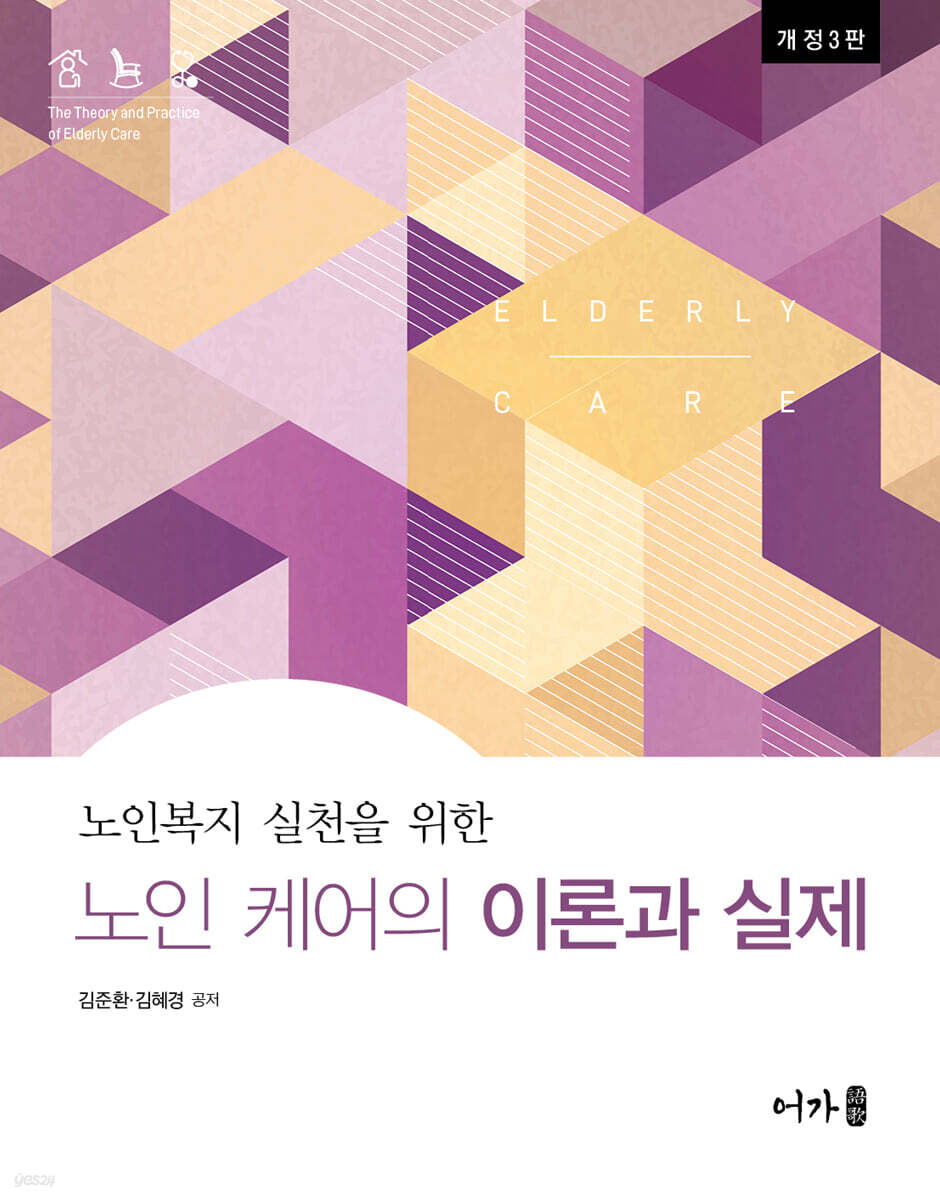
Theory and Practice of Elderly Care
 |
Description
Book Introduction
In an aging society, care for the elderly requires a much wider range of services than just clinical diagnosis or treatment.
A national support system is needed to meet these diverse care needs.
In other words, a public system is needed that supports not only daily life support and disease treatment, but also the purchase of medical assistive devices, the cost of renovating senior housing facilities, and rehabilitation education to restore functions so that people can extend their social lives.
In response to the issue of elderly care in an aging society, Korea has been providing long-term care services for the elderly since July 2008.
With the implementation of the long-term care insurance system for the elderly, home care services such as visiting nursing, day and night care, and short-term care, as well as nursing facilities, are being greatly expanded.
Therefore, the training of new professional care personnel who will be responsible for care services in these facilities in the future has emerged as an important task, and specialized care training must be systematically introduced and implemented.
This textbook was written to meet these needs and provide the basic and specialized knowledge necessary for elderly care.
In order to cultivate elderly care professionals equipped with theoretical knowledge and practical skills in elderly welfare, we have strived to create a textbook that focuses on specific field practice by organizing essential content that must be learned and mastered.
This book was developed in two major directions.
Part 1 covers the basic theories and knowledge of elderly care.
Specifically, these include the environment for elderly care, understanding of the elderly as care recipients, care by location and team care, end-of-life care, care for the elderly with dementia, elderly care and care management, etc.
Part 2 covers the practical, specific care techniques of elderly care.
This is a basic skill in the care field and includes communication methods, observation methods and contents, recording and reporting, etc.
That is, it includes things related to observation, hygiene, eating, excretion, cleanliness, bathing, and first aid for the subject.
This textbook can be used as a textbook to provide basic professional knowledge on care in social welfare majors, and it can also be useful as a reference for workers at elderly care facilities and home care workers.
A national support system is needed to meet these diverse care needs.
In other words, a public system is needed that supports not only daily life support and disease treatment, but also the purchase of medical assistive devices, the cost of renovating senior housing facilities, and rehabilitation education to restore functions so that people can extend their social lives.
In response to the issue of elderly care in an aging society, Korea has been providing long-term care services for the elderly since July 2008.
With the implementation of the long-term care insurance system for the elderly, home care services such as visiting nursing, day and night care, and short-term care, as well as nursing facilities, are being greatly expanded.
Therefore, the training of new professional care personnel who will be responsible for care services in these facilities in the future has emerged as an important task, and specialized care training must be systematically introduced and implemented.
This textbook was written to meet these needs and provide the basic and specialized knowledge necessary for elderly care.
In order to cultivate elderly care professionals equipped with theoretical knowledge and practical skills in elderly welfare, we have strived to create a textbook that focuses on specific field practice by organizing essential content that must be learned and mastered.
This book was developed in two major directions.
Part 1 covers the basic theories and knowledge of elderly care.
Specifically, these include the environment for elderly care, understanding of the elderly as care recipients, care by location and team care, end-of-life care, care for the elderly with dementia, elderly care and care management, etc.
Part 2 covers the practical, specific care techniques of elderly care.
This is a basic skill in the care field and includes communication methods, observation methods and contents, recording and reporting, etc.
That is, it includes things related to observation, hygiene, eating, excretion, cleanliness, bathing, and first aid for the subject.
This textbook can be used as a textbook to provide basic professional knowledge on care in social welfare majors, and it can also be useful as a reference for workers at elderly care facilities and home care workers.
index
PART 1: Understanding the Basics of Elder Care
CHAPTER 01 Environment of Elderly Care
1.
Progress in an aging society
2.
Decrease in family support function
3.
Increasing and diversifying care needs
4.
Long-term care insurance for the elderly
CHAPTER 02 Ethics, Principles, and Practice Structure of Elderly Care
1.
The concept of elderly care
2.
The philosophy of elderly care
3.
Ethics in Elder Care
4.
Principles of Elderly Care
5.
Structure of Elderly Care Practice
CHAPTER 03 Understanding the Elderly as a Care Recipient
1.
The concept of health
2.
Independent living
3.
Life (environment)
4.
Subject characteristics
CHAPTER 04 Site-Specific Care and Team Care
1.
home care
2.
Facility Care
3.
Types of senior welfare facilities
4.
Team Care Approach
CHAPTER 05 End-of-Life Care
1.
The meaning of terminal care
2.
Understanding Death
3.
The Reality of End-of-Life Care
4.
How to care for terminally ill patients
CHAPTER 06 Care for Elderly People with Dementia
1.
Definition and prevalence of dementia
2.
Causes and Types of Dementia
3.
Symptoms of dementia
4.
Course and prognosis of dementia
5.
Prevention, diagnosis, and treatment of dementia
6.
Care for dementia patients
CHAPTER 07 Care Management: Case Management
1.
The concept of care management
2.
The need and function of care management
3.
Purpose and Components of Care Management
4.
Care Management Process
5.
Care Management and Care Manager
PART 02 The Reality of Elderly Care
CHAPTER 08 Basic Care Techniques
1.
Features of care technology
2.
Basic posture of a caregiver
3.
Understanding and Methods of Communication
4.
Method and content of observation
5.
Records and Reports
CHAPTER 09 Observing the Subject's Physical Changes and Health Condition
1.
Observation of daily life
2.
Basic observation to check health status
3.
Observation and measurement of health status
4.
complexion and expression
5.
skin
6.
time
7.
ear
8.
nutritional status
CHAPTER 10 PERSONAL HYGIENE CARE
1.
Oral care
2.
bath
3.
Washing your hair
4.
Perineum care
5.
Skin and Hygiene Care
CHAPTER 11 Nutrition, Diet, and Excretory Care
1.
Nutritional management for the elderly
2.
Meal care
3.
Excretion care
CHAPTER 12 Bedsore Care
1.
People requiring pressure ulcer management
2.
Pressure ulcer classification and stages
3.
Common sites of bedsores
4.
Prevention of bedsores
5.
Bedsore Care
CHAPTER 13 Position Changes and Transfer Care
1.
Posture management
2.
Types of positions
3.
Posture on a chair
4.
Mobile care
5.
Correct physical posture of the caregiver
CHAPTER 14 SAFETY MANAGEMENT
1.
Factors affecting safety
2.
Safety management in bed
3.
Safety management during meals
4.
Safety in the bathroom
5.
Safety management while on the move
6.
Safety management due to sensory loss
7.
Safety management based on aggressive emotions
CHAPTER 15 FIRST AID MANAGEMENT
1.
How to respond in an emergency
2.
First aid
References
CHAPTER 01 Environment of Elderly Care
1.
Progress in an aging society
2.
Decrease in family support function
3.
Increasing and diversifying care needs
4.
Long-term care insurance for the elderly
CHAPTER 02 Ethics, Principles, and Practice Structure of Elderly Care
1.
The concept of elderly care
2.
The philosophy of elderly care
3.
Ethics in Elder Care
4.
Principles of Elderly Care
5.
Structure of Elderly Care Practice
CHAPTER 03 Understanding the Elderly as a Care Recipient
1.
The concept of health
2.
Independent living
3.
Life (environment)
4.
Subject characteristics
CHAPTER 04 Site-Specific Care and Team Care
1.
home care
2.
Facility Care
3.
Types of senior welfare facilities
4.
Team Care Approach
CHAPTER 05 End-of-Life Care
1.
The meaning of terminal care
2.
Understanding Death
3.
The Reality of End-of-Life Care
4.
How to care for terminally ill patients
CHAPTER 06 Care for Elderly People with Dementia
1.
Definition and prevalence of dementia
2.
Causes and Types of Dementia
3.
Symptoms of dementia
4.
Course and prognosis of dementia
5.
Prevention, diagnosis, and treatment of dementia
6.
Care for dementia patients
CHAPTER 07 Care Management: Case Management
1.
The concept of care management
2.
The need and function of care management
3.
Purpose and Components of Care Management
4.
Care Management Process
5.
Care Management and Care Manager
PART 02 The Reality of Elderly Care
CHAPTER 08 Basic Care Techniques
1.
Features of care technology
2.
Basic posture of a caregiver
3.
Understanding and Methods of Communication
4.
Method and content of observation
5.
Records and Reports
CHAPTER 09 Observing the Subject's Physical Changes and Health Condition
1.
Observation of daily life
2.
Basic observation to check health status
3.
Observation and measurement of health status
4.
complexion and expression
5.
skin
6.
time
7.
ear
8.
nutritional status
CHAPTER 10 PERSONAL HYGIENE CARE
1.
Oral care
2.
bath
3.
Washing your hair
4.
Perineum care
5.
Skin and Hygiene Care
CHAPTER 11 Nutrition, Diet, and Excretory Care
1.
Nutritional management for the elderly
2.
Meal care
3.
Excretion care
CHAPTER 12 Bedsore Care
1.
People requiring pressure ulcer management
2.
Pressure ulcer classification and stages
3.
Common sites of bedsores
4.
Prevention of bedsores
5.
Bedsore Care
CHAPTER 13 Position Changes and Transfer Care
1.
Posture management
2.
Types of positions
3.
Posture on a chair
4.
Mobile care
5.
Correct physical posture of the caregiver
CHAPTER 14 SAFETY MANAGEMENT
1.
Factors affecting safety
2.
Safety management in bed
3.
Safety management during meals
4.
Safety in the bathroom
5.
Safety management while on the move
6.
Safety management due to sensory loss
7.
Safety management based on aggressive emotions
CHAPTER 15 FIRST AID MANAGEMENT
1.
How to respond in an emergency
2.
First aid
References
GOODS SPECIFICS
- Date of issue: August 30, 2025
- Page count, weight, size: 320 pages | 188*240*30mm
- ISBN13: 9791170751977
- ISBN10: 1170751970
You may also like
카테고리
korean


korean

![ELLE 엘르 A형 (여성월간) : 1월 [2026]](http://librairie.coreenne.fr/cdn/shop/files/3b70e1cf77cf67d6da56e0eb041901e8.jpg?v=1767265322&width=3840)


