

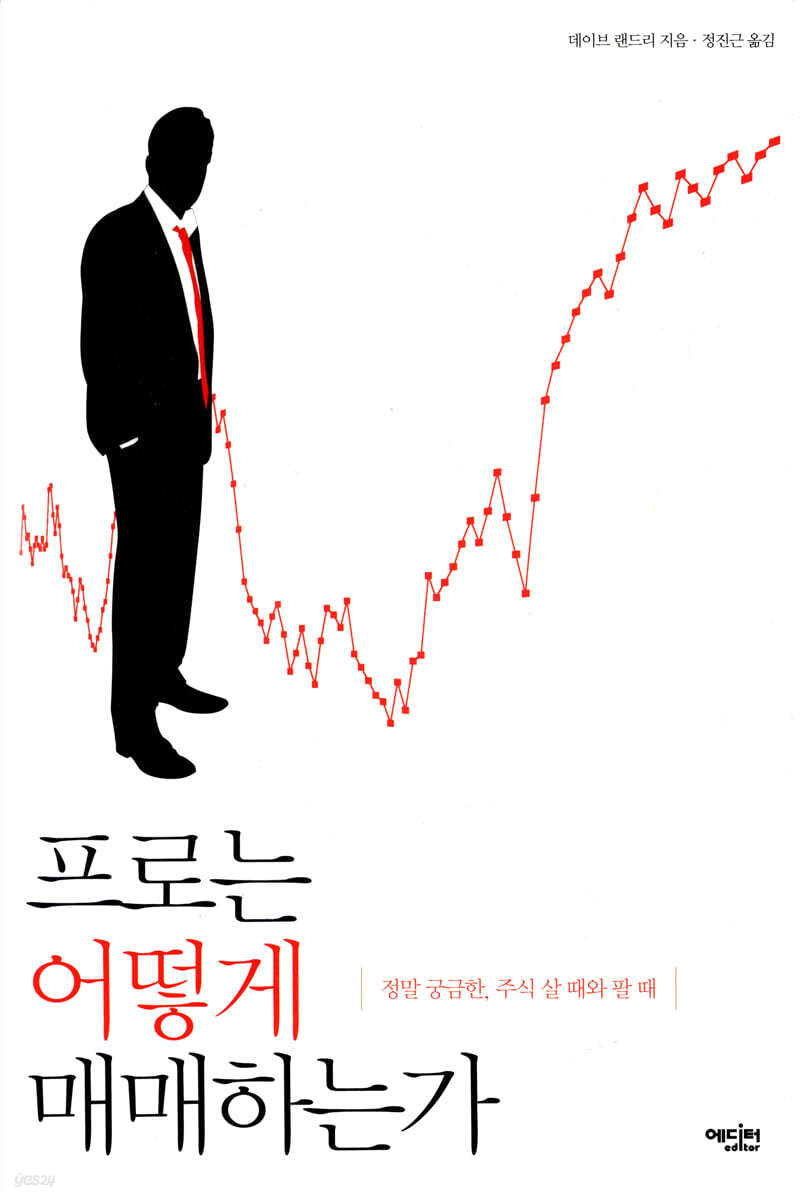
How Pros Trade
 |
Description
Book Introduction
The trading know-how of a professional who has consistently generated profits for over 20 years!
A professional trader who has consistently generated profits in the stock market for over 20 years is offering expert trading know-how, including the most frequently asked questions by individual investors, such as "when to buy and sell stocks."
Filled with wisdom and insights from the author's real-life experiences, this book is divided into two main parts.
The first part is for beginners and begins by critiquing the common sayings used in the stock market.
They question whether it's true that the market eventually rises in the long run, as advertised, whether corporate value actually helps with stock investing, and whether the so-called experts' buy recommendations can truly be trusted.
If the common adages don't hold true, how should you invest in stocks? The author explains that charts are your guide and trends are your friend.
It also tells you that, above all, you must not lose money, and that you are your own worst enemy.
The second part is for investors who want to move to the advanced level.
It includes patterns that help you quickly detect trends, methods for selecting good stocks, and advanced techniques that help you avoid bad moves, minimize losses when the market is down, and join the ranks of winners.
A professional trader who has consistently generated profits in the stock market for over 20 years is offering expert trading know-how, including the most frequently asked questions by individual investors, such as "when to buy and sell stocks."
Filled with wisdom and insights from the author's real-life experiences, this book is divided into two main parts.
The first part is for beginners and begins by critiquing the common sayings used in the stock market.
They question whether it's true that the market eventually rises in the long run, as advertised, whether corporate value actually helps with stock investing, and whether the so-called experts' buy recommendations can truly be trusted.
If the common adages don't hold true, how should you invest in stocks? The author explains that charts are your guide and trends are your friend.
It also tells you that, above all, you must not lose money, and that you are your own worst enemy.
The second part is for investors who want to move to the advanced level.
It includes patterns that help you quickly detect trends, methods for selecting good stocks, and advanced techniques that help you avoid bad moves, minimize losses when the market is down, and join the ranks of winners.
- You can preview some of the book's contents.
Preview
index
Introduction/ An easy and complete guide to stock investing!
Part 1, Step 1
Chapter 1: A Change in Perspective on the Stock Market
Market Misconception 1: Markets always rise in the long run.
Market Myth 2: Experts Can Know Exactly When the Market Will Rise
Market Misconception 3: Investing in companies with good corporate value can yield profits.
Market Misconception #4: Buy Low, Sell High
Market Myth 5: Buy stocks of companies with good dividend yields.
Market Misconception 6: If you take profits, you will never go broke.
Market Misconception 7: There is a reason why the market goes up or down.
Market Misconception #8: A valuation loss is just a valuation loss.
Market Misconception 9: Technical Analysis Is Just Nonsense
10 Misconceptions About the Market The Market Is Always Fine
Market Misconception 11: There's Always a Stock Going Up Somewhere
Market Misconception 12: Selling is the Root of All Evil
Market Truth #1: Stock prices fall faster than they rise.
Market Truth #2: The Market is Driven by Emotions
Market Truth 3: Don't Try to Trade Based on Information
Market Truth #4: Riding the Wave Is a Fast Track to Bankruptcy
Market Truth 5: There's No Holy Grail in Trading
Market Truth 6: The Smarter You Are, the Harder It Is to Succeed in Stocks
Market Truth 7: You Have to Study It Yourself
Market Truth 8: Even Experts and Institutional Investors Can Be Wrong
If it's so easy, why doesn't everyone do it?
Chapter 2: Reading the Market's Mind with Technical Analysis
Understanding Bar Charts
Example: Stock price of the fictional company Belle
New news about Belle
The rise and fall of actual company stock prices
Chapter 3: Trade for both short-term and long-term profits.
Trade for both short-term and long-term profits.
What is trading?
Advantages of Selling
Trading with the trend
Recognizing trends
Trends are your friends
Trend identification patterns
Rising highs and rising lows
Sustainability
Individual chart patterns
moving average
inclination
Separation
Using multiple moving averages
Trends must be clearly discernible.
Stock Market: What Floats Your Boat
Industry: Birds of a feather
What is a rollback?
Example of a rebound phenomenon
Special retracement patterns
Trend Knockout
Application of the pattern
Reversal pattern of a continuing trend
Application of the pattern
Moving average touch and reversal pattern
Application of the pattern
Concluding Chapter 3
Surprise Quiz
Chapter 4: Trading on a Rollback
Trading pullbacks in a trending market
strong trend
Recovery period
width of reversion
Enter
Set a stop loss to limit losses
Realize some profits
Tracking stop loss
Chapter 5: Managing Profits and Losses
Managing Losses: Why Trading Is Unfair
1~2% principle
The Importance of Stop-Loss to Limit Losses
Stop loss too short
Stop loss too loose
Appropriate stop loss
Sometimes the best offense is the best defense
Managing Profits: Use Trailing Stop-Loss to Trade with the Money the Market Gives You
Chapter 6 Psychological Problems
Psychological issues in trading
There is no trading strategy that cannot make money in virtual trading.
The 3M's that exist in the psychological problems of trading
Fund Management
Trading strategy
In theory, theory and reality are the same, but in reality, that is not necessarily the case.
emotion
Checklist for Psychological Problems
Chapter 7 Ordering
Choosing a securities firm
Place an order
Concluding Part 1
A Look Back at Beginner Investors
Part 2: Moving to the Advanced Level
Chapter 8: Treasure Hunt: Spotting Big Trends
Trading volume
stock price
Volatility
Characteristics of trends
Check related stocks and industry indices
Analyze every day
Applying top-down analysis to bottom-up
Create your own list of tradable stocks
Search for rollback
Analyzing newly listed stocks
Analyzing the Top 100 Stocks of Interest
Industry Analysis
Analysis of the relative strength of industry indices
Analyzing Listed Index Funds
Keeping market analysis simple
Seeing the big picture means seeing the forest.
Chapter 9: Spotting New Trends Early
Trading using trend reversal patterns
First stab pattern
Application of the pattern
First crossover pattern after stock price divergence
Application of the pattern
Bow tie cross pattern
Application of the pattern
Chapter 10: Things You Must Know
Don't over-manage
How to avoid over-micromanaging
Chapter 11 Advanced Trading and Money Management
Advanced techniques
Improving Fund Management and Position Management
Chapter 12 Putting It All Together
Use everything together
Additional remarks
Chapter 13 Conclusion
Start small and increase gradually.
Translator's Note
Part 1, Step 1
Chapter 1: A Change in Perspective on the Stock Market
Market Misconception 1: Markets always rise in the long run.
Market Myth 2: Experts Can Know Exactly When the Market Will Rise
Market Misconception 3: Investing in companies with good corporate value can yield profits.
Market Misconception #4: Buy Low, Sell High
Market Myth 5: Buy stocks of companies with good dividend yields.
Market Misconception 6: If you take profits, you will never go broke.
Market Misconception 7: There is a reason why the market goes up or down.
Market Misconception #8: A valuation loss is just a valuation loss.
Market Misconception 9: Technical Analysis Is Just Nonsense
10 Misconceptions About the Market The Market Is Always Fine
Market Misconception 11: There's Always a Stock Going Up Somewhere
Market Misconception 12: Selling is the Root of All Evil
Market Truth #1: Stock prices fall faster than they rise.
Market Truth #2: The Market is Driven by Emotions
Market Truth 3: Don't Try to Trade Based on Information
Market Truth #4: Riding the Wave Is a Fast Track to Bankruptcy
Market Truth 5: There's No Holy Grail in Trading
Market Truth 6: The Smarter You Are, the Harder It Is to Succeed in Stocks
Market Truth 7: You Have to Study It Yourself
Market Truth 8: Even Experts and Institutional Investors Can Be Wrong
If it's so easy, why doesn't everyone do it?
Chapter 2: Reading the Market's Mind with Technical Analysis
Understanding Bar Charts
Example: Stock price of the fictional company Belle
New news about Belle
The rise and fall of actual company stock prices
Chapter 3: Trade for both short-term and long-term profits.
Trade for both short-term and long-term profits.
What is trading?
Advantages of Selling
Trading with the trend
Recognizing trends
Trends are your friends
Trend identification patterns
Rising highs and rising lows
Sustainability
Individual chart patterns
moving average
inclination
Separation
Using multiple moving averages
Trends must be clearly discernible.
Stock Market: What Floats Your Boat
Industry: Birds of a feather
What is a rollback?
Example of a rebound phenomenon
Special retracement patterns
Trend Knockout
Application of the pattern
Reversal pattern of a continuing trend
Application of the pattern
Moving average touch and reversal pattern
Application of the pattern
Concluding Chapter 3
Surprise Quiz
Chapter 4: Trading on a Rollback
Trading pullbacks in a trending market
strong trend
Recovery period
width of reversion
Enter
Set a stop loss to limit losses
Realize some profits
Tracking stop loss
Chapter 5: Managing Profits and Losses
Managing Losses: Why Trading Is Unfair
1~2% principle
The Importance of Stop-Loss to Limit Losses
Stop loss too short
Stop loss too loose
Appropriate stop loss
Sometimes the best offense is the best defense
Managing Profits: Use Trailing Stop-Loss to Trade with the Money the Market Gives You
Chapter 6 Psychological Problems
Psychological issues in trading
There is no trading strategy that cannot make money in virtual trading.
The 3M's that exist in the psychological problems of trading
Fund Management
Trading strategy
In theory, theory and reality are the same, but in reality, that is not necessarily the case.
emotion
Checklist for Psychological Problems
Chapter 7 Ordering
Choosing a securities firm
Place an order
Concluding Part 1
A Look Back at Beginner Investors
Part 2: Moving to the Advanced Level
Chapter 8: Treasure Hunt: Spotting Big Trends
Trading volume
stock price
Volatility
Characteristics of trends
Check related stocks and industry indices
Analyze every day
Applying top-down analysis to bottom-up
Create your own list of tradable stocks
Search for rollback
Analyzing newly listed stocks
Analyzing the Top 100 Stocks of Interest
Industry Analysis
Analysis of the relative strength of industry indices
Analyzing Listed Index Funds
Keeping market analysis simple
Seeing the big picture means seeing the forest.
Chapter 9: Spotting New Trends Early
Trading using trend reversal patterns
First stab pattern
Application of the pattern
First crossover pattern after stock price divergence
Application of the pattern
Bow tie cross pattern
Application of the pattern
Chapter 10: Things You Must Know
Don't over-manage
How to avoid over-micromanaging
Chapter 11 Advanced Trading and Money Management
Advanced techniques
Improving Fund Management and Position Management
Chapter 12 Putting It All Together
Use everything together
Additional remarks
Chapter 13 Conclusion
Start small and increase gradually.
Translator's Note
Into the book
You may know the old stock market adage, "buy low, sell high."
The problem here is that no one knows when the "bottom" will be, and even if a stock is trading at a very low price in a continuing downtrend, it can fall further from that low price.
Buying stocks at the bottom is a strategy often used by losers.
It is much better to buy stocks at a high price and sell them at an even higher price.
---From "Market Misconception 4: Buy at the low, sell at the high"
"If you take profits, you'll never go bankrupt." Wow! This explains why so many people go bankrupt through stock investing.
After making a lot of small profits, they lose everything they have made with one or two big losses.
There is an old adage in the market:
"Eat like a bird, don't poop like an elephant." This is a warning not to take countless small profits and then suffer a huge loss all at once.
---From "6 Misconceptions About the Market: If you take profits, you will never go bankrupt"
There is no such thing as the "Holy Grail of Trading" as people who sell trading strategies or systems talk about.
The only thing I can guarantee you is that you will always lose money in stocks.
What I'm suggesting is that by respecting trends and consistently managing risk, you can mitigate such losses and position yourself for long-term success.
---From "The Truth About the Market 5: There is no Holy Grail in Trading"
Even the most renowned oil tycoons in history suffered significant losses from betting on international oil prices, so what about novice investors? The conclusion is simple.
You must learn to believe what you see in front of you now, not what you want to believe.
If you let the market make all the decisions, you will stay in the market when you are right and stay out when you are wrong.
The most important thing is that by doing so, you avoid falling into the emotional trap of imposing your will on the market.
---From "The Truth About the Market 8: Even Experts and Institutional Investors Can Be Wrong"
Most people love sales.
If a stock looked good even at $50, $40 will feel like a huge 'sale.'
If that stock drops to $30, it looks like a real bargain sale.
Because of this human nature of searching for bargains, people try to fight the trend.
Such people not only do not give up even when the stock price is crashing and plummeting, but they even make additional purchases.
But this kind of water riding is just a shortcut to increasing losses.
---From "If it's so easy, why doesn't everyone do it?"
Stock price fluctuations often have no direct correlation with news.
Stocks move not based on reality, but on people's perception of reality.
To make money in stocks, all you have to do is get the stock price to move in the direction you want.
There is no need to worry and react needlessly to the news.
---From "New News About Belle"
If long-term trading can yield big profits but carries too much risk, and short-term trading carries less risk but doesn't yield much, what kind of trading should you do? The answer is simple.
These two are not mutually exclusive choices.
Even if you're trading for short-term profits, why not hold onto some of your positions as long as the market moves in your favor? That way, you can enjoy the cake right away and keep some in the fridge.
---From "Trade for both short-term and long-term profits"
Above all, you need to understand the market you are trading in.
There are only three things a market can do: go up, go down, or move sideways.
If the market as a whole is rising, you should buy stocks.
If the market is falling, you should sell your stocks.
And if the market is moving sideways, you should not take any positions and just stay in cash.
---From "Trends are your friends"
Beginner traders often think that when they see a 10% loss, they need to make another 10% profit to recover that loss.
Unfortunately, that is not the answer.
To recover a 10% loss, you need to make at least 11.11% profit with the remaining assets to break even.
If the loss increases further, the rate of return required to recover it increases exponentially.
The problem here is that no one knows when the "bottom" will be, and even if a stock is trading at a very low price in a continuing downtrend, it can fall further from that low price.
Buying stocks at the bottom is a strategy often used by losers.
It is much better to buy stocks at a high price and sell them at an even higher price.
---From "Market Misconception 4: Buy at the low, sell at the high"
"If you take profits, you'll never go bankrupt." Wow! This explains why so many people go bankrupt through stock investing.
After making a lot of small profits, they lose everything they have made with one or two big losses.
There is an old adage in the market:
"Eat like a bird, don't poop like an elephant." This is a warning not to take countless small profits and then suffer a huge loss all at once.
---From "6 Misconceptions About the Market: If you take profits, you will never go bankrupt"
There is no such thing as the "Holy Grail of Trading" as people who sell trading strategies or systems talk about.
The only thing I can guarantee you is that you will always lose money in stocks.
What I'm suggesting is that by respecting trends and consistently managing risk, you can mitigate such losses and position yourself for long-term success.
---From "The Truth About the Market 5: There is no Holy Grail in Trading"
Even the most renowned oil tycoons in history suffered significant losses from betting on international oil prices, so what about novice investors? The conclusion is simple.
You must learn to believe what you see in front of you now, not what you want to believe.
If you let the market make all the decisions, you will stay in the market when you are right and stay out when you are wrong.
The most important thing is that by doing so, you avoid falling into the emotional trap of imposing your will on the market.
---From "The Truth About the Market 8: Even Experts and Institutional Investors Can Be Wrong"
Most people love sales.
If a stock looked good even at $50, $40 will feel like a huge 'sale.'
If that stock drops to $30, it looks like a real bargain sale.
Because of this human nature of searching for bargains, people try to fight the trend.
Such people not only do not give up even when the stock price is crashing and plummeting, but they even make additional purchases.
But this kind of water riding is just a shortcut to increasing losses.
---From "If it's so easy, why doesn't everyone do it?"
Stock price fluctuations often have no direct correlation with news.
Stocks move not based on reality, but on people's perception of reality.
To make money in stocks, all you have to do is get the stock price to move in the direction you want.
There is no need to worry and react needlessly to the news.
---From "New News About Belle"
If long-term trading can yield big profits but carries too much risk, and short-term trading carries less risk but doesn't yield much, what kind of trading should you do? The answer is simple.
These two are not mutually exclusive choices.
Even if you're trading for short-term profits, why not hold onto some of your positions as long as the market moves in your favor? That way, you can enjoy the cake right away and keep some in the fridge.
---From "Trade for both short-term and long-term profits"
Above all, you need to understand the market you are trading in.
There are only three things a market can do: go up, go down, or move sideways.
If the market as a whole is rising, you should buy stocks.
If the market is falling, you should sell your stocks.
And if the market is moving sideways, you should not take any positions and just stay in cash.
---From "Trends are your friends"
Beginner traders often think that when they see a 10% loss, they need to make another 10% profit to recover that loss.
Unfortunately, that is not the answer.
To recover a 10% loss, you need to make at least 11.11% profit with the remaining assets to break even.
If the loss increases further, the rate of return required to recover it increases exponentially.
---From "Managing Losses: Why Trading Is Unfair"
Publisher's Review
Trading know-how from a professional who has consistently generated profits for over 20 years
An easy and complete guide to stock investing!
A professional trader who has consistently generated profits in the stock market for over 20 years is offering expert trading know-how, including the most frequently asked questions by individual investors, such as "when to buy and sell stocks."
Filled with wisdom and insights from the author's real-life experiences, this book is divided into two main parts.
The first part is for beginners and begins by critiquing the common sayings used in the stock market.
They question whether it's true that the market eventually rises in the long run, as advertised, whether corporate value actually helps with stock investing, and whether the so-called experts' buy recommendations can truly be trusted.
If the common adages aren't true, how on earth should you invest in stocks? The author explains that charts are your guide and trends are your friend.
It also tells you that, above all, you must not lose money and that you are your own worst enemy.
The second part is for investors who want to move to the advanced level.
It includes patterns that help you quickly detect trends, methods for selecting good stocks, and advanced techniques that help you avoid bad moves, minimize losses when the market is down, and join the ranks of winners.
The highest rated book on Amazon investment!
This book doesn't just list general principles for successful stock investment, but rather uses stock charts to demonstrate the author's actual trading strategies.
It explains in detail how to read trends, when to enter the market once you have read the trend, and what money management strategy to establish before entering the market.
The author also provides detailed information on the stock selection techniques he uses for readers who are wondering which stocks to choose and trade among the numerous individual stocks in the stock market.
It reveals everything that novice investors really want to know, without hiding anything.
This book, rated the highest among Amazon's investment books, will teach you what it takes to thrive in the stock market and how to consistently make money like a professional investor.
An easy and complete guide to stock investing!
A professional trader who has consistently generated profits in the stock market for over 20 years is offering expert trading know-how, including the most frequently asked questions by individual investors, such as "when to buy and sell stocks."
Filled with wisdom and insights from the author's real-life experiences, this book is divided into two main parts.
The first part is for beginners and begins by critiquing the common sayings used in the stock market.
They question whether it's true that the market eventually rises in the long run, as advertised, whether corporate value actually helps with stock investing, and whether the so-called experts' buy recommendations can truly be trusted.
If the common adages aren't true, how on earth should you invest in stocks? The author explains that charts are your guide and trends are your friend.
It also tells you that, above all, you must not lose money and that you are your own worst enemy.
The second part is for investors who want to move to the advanced level.
It includes patterns that help you quickly detect trends, methods for selecting good stocks, and advanced techniques that help you avoid bad moves, minimize losses when the market is down, and join the ranks of winners.
The highest rated book on Amazon investment!
This book doesn't just list general principles for successful stock investment, but rather uses stock charts to demonstrate the author's actual trading strategies.
It explains in detail how to read trends, when to enter the market once you have read the trend, and what money management strategy to establish before entering the market.
The author also provides detailed information on the stock selection techniques he uses for readers who are wondering which stocks to choose and trade among the numerous individual stocks in the stock market.
It reveals everything that novice investors really want to know, without hiding anything.
This book, rated the highest among Amazon's investment books, will teach you what it takes to thrive in the stock market and how to consistently make money like a professional investor.
GOODS SPECIFICS
- Date of issue: October 10, 2012
- Page count, weight, size: 368 pages | 622g | 153*224*30mm
- ISBN13: 9788967440046
- ISBN10: 8967440049
You may also like
카테고리
korean


korean

![GQ KOREA Mark (Monthly): December [2025]](http://librairie.coreenne.fr/cdn/shop/files/8ef265dbbfbf186523ed75ba7319009d.jpg?v=1765340328&width=3840)


