

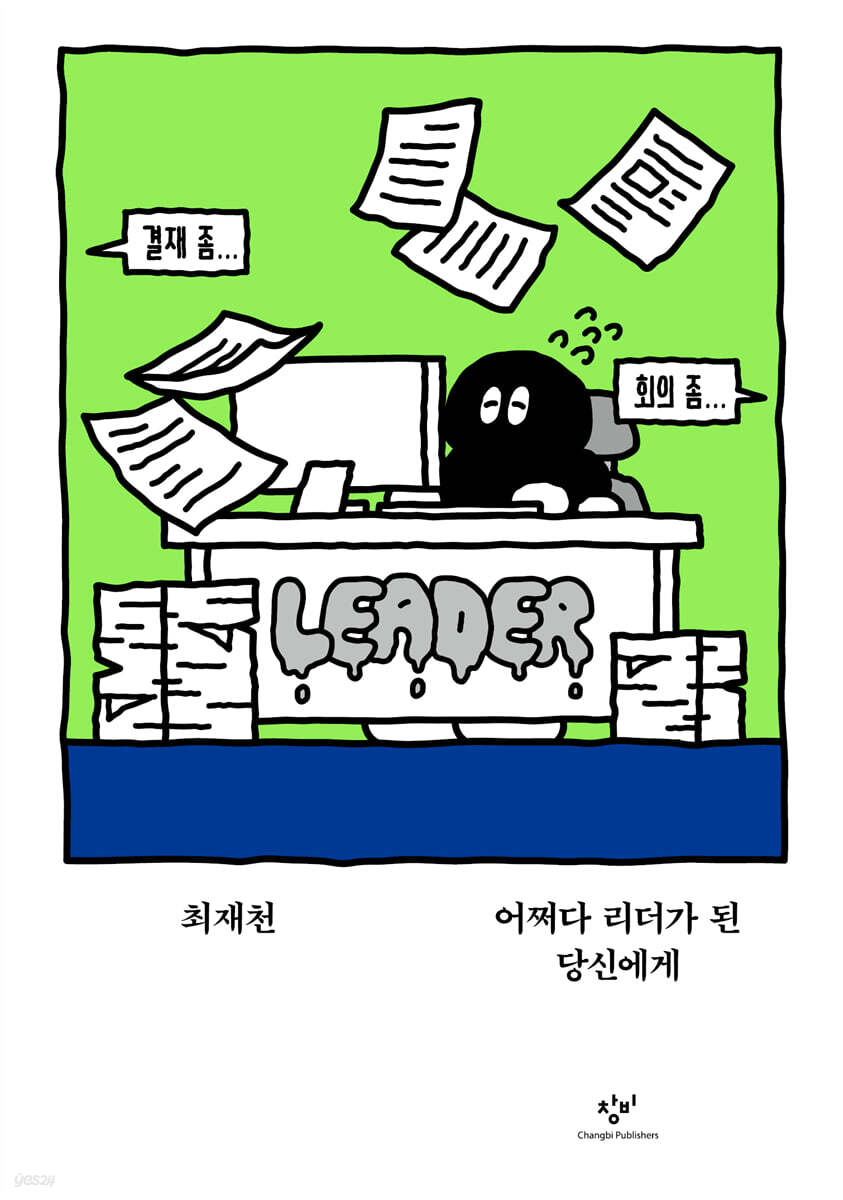
To you who became a leader by chance
 |
Description
Book Introduction
“I never thought I would become a leader…”
I'm worried because I'm not a natural leader
Communication Leadership Course for Everyone
Most of us become leaders by accident.
Many people point out that the MZ generation, who are reluctant to accept authoritarian leadership, avoid promotions and avoid becoming leaders. However, in reality, we are all leaders of organizations large and small, from small club leaders to team leaders.
Professor Choi Jae-cheon's new book, "To You Who Became a Leader by Chance," has been published and will serve as a reliable guide for those of us who suddenly became leaders one day but are still struggling to become better leaders.
The author has held various leadership roles, including co-representative of the Korean Federation for Environmental Movements and chairman of the Biodiversity Foundation, but he confesses that he did not receive systematic training from the beginning or was a natural leader.
However, as an ecologist, I have learned about nature's leadership and communication methods through observing animals that live in groups, such as ants and chimpanzees, for a long time.
What is the secret to the leadership of a queen ant who manages to run her organization smoothly without interfering with the minutiae of worker ants? What strategies do crickets employ to communicate effectively? The author shares examples of listening and deliberation, personally practiced as the director of the National Institute of Ecology and chair of the COVID-19 Daily Recovery Support Committee.
From how to communicate with team members, to how to be a humble and quiet leader, to how to be not only a great leader but also a good follower, he offers heartfelt advice as a senior leader who has experienced social life firsthand, blending diverse ecological knowledge and vivid experience.
I'm worried because I'm not a natural leader
Communication Leadership Course for Everyone
Most of us become leaders by accident.
Many people point out that the MZ generation, who are reluctant to accept authoritarian leadership, avoid promotions and avoid becoming leaders. However, in reality, we are all leaders of organizations large and small, from small club leaders to team leaders.
Professor Choi Jae-cheon's new book, "To You Who Became a Leader by Chance," has been published and will serve as a reliable guide for those of us who suddenly became leaders one day but are still struggling to become better leaders.
The author has held various leadership roles, including co-representative of the Korean Federation for Environmental Movements and chairman of the Biodiversity Foundation, but he confesses that he did not receive systematic training from the beginning or was a natural leader.
However, as an ecologist, I have learned about nature's leadership and communication methods through observing animals that live in groups, such as ants and chimpanzees, for a long time.
What is the secret to the leadership of a queen ant who manages to run her organization smoothly without interfering with the minutiae of worker ants? What strategies do crickets employ to communicate effectively? The author shares examples of listening and deliberation, personally practiced as the director of the National Institute of Ecology and chair of the COVID-19 Daily Recovery Support Committee.
From how to communicate with team members, to how to be a humble and quiet leader, to how to be not only a great leader but also a good follower, he offers heartfelt advice as a senior leader who has experienced social life firsthand, blending diverse ecological knowledge and vivid experience.
index
At the beginning of the book
To you who became a leader by chance
Queen Ant Leadership
Which leader should we choose?
A special experience as the director of the National Institute of Ecology
Communication is inherently extremely difficult.
You should listen without making a fuss
A candle of conscience that is needed in everyone's heart
Discussion, not debate
Why Diversity Matters
What is needed in times of transformation
Q&A
Sentences I want to remember
To you who became a leader by chance
Queen Ant Leadership
Which leader should we choose?
A special experience as the director of the National Institute of Ecology
Communication is inherently extremely difficult.
You should listen without making a fuss
A candle of conscience that is needed in everyone's heart
Discussion, not debate
Why Diversity Matters
What is needed in times of transformation
Q&A
Sentences I want to remember
Detailed image

Publisher's Review
An intellectual and a 'slightly different' adult of this era
Choi Jae-cheon's "Very Unique" Leadership Lecture
The author says that after observing nature for a long time, he gradually became a 'leadership skeptic'.
It is difficult to find a strong, charismatic leader (boss) in nature who can single-handedly direct, command, and evaluate right and wrong.
He says he learned a lot from the queen ant, who chose to provide the big picture but play her part behind the scenes.
This is because we observed that worker ants are experts in the ant society and do not interfere with every little thing, but rather trust and entrust many tasks to them.
The author says that the queen ant's leadership is the image of a leader who values the process and serves the members (server).
“I think the perfect leader is one who is not dogmatic.
I know how to trust and delegate.
“If you step back and provide support, it will be much more helpful for the various people in charge to work voluntarily and build collective intelligence.” (p. 19)
The author also describes this type of leadership as "sustainable leadership" or "embracing leadership," and to demonstrate the cooperation and communication necessary to realize it, he unfolds various stories from nature, such as the distribution of power in chimpanzee societies and the mating patterns of crickets.
The author also shares valuable lessons learned through trial and error, such as “Grit your teeth and listen” (page 37) and “Deliberate, not debate” (page 47).
“Don’t reign over others, reign over the crowd!”
A sincere message to the leaders of the new era
'Do I really have to be a leader?' 'Am I a good person to be a leader?' Many people are probably asking themselves these questions.
But most of us find ourselves becoming leaders one day.
The exception was the kings of Joseon, who received systematic royal education from an early age.
But aren't there few kings among them who are still recorded as saints today? The author reminds us of this point and inspires us (page 8). He offers advice, blending vivid personal experiences, to address the questions leaders face as they navigate their daily lives: how to become leaders who open a "forum for deliberation," what leaders of small organizations should do, how to deal with employees who repeatedly make mistakes.
All of these stories converge on the following sentence: If you are a leader, do not lord it over others, but be a leader who cries and laughs with the members (“Do not lord it over others, but lord it over the group” (p. 43)).
As we face the daunting question of "Why do our presidents keep failing?" after facing repeated impeachment challenges, let's delve into the kind of leadership the new era desires.
In particular, he expressed shock at the news that the presidential office of the Yoon Seok-yeol administration, which was impeached for attempting to reign arbitrarily by imposing illegal martial law, did not purchase a single book throughout the year, and asserted that “a leader must be a reader” (page 83).
Furthermore, for the first time in South Korean history, a Cabinet meeting chaired by the President was held in public, allowing the entire nation to witness the President and Cabinet members' discussions. He also expressed his sincere hope that this would serve as a catalyst for the spread of a "culture of deliberation" in Korea (page 51).
Choi Jae-cheon's "Very Unique" Leadership Lecture
The author says that after observing nature for a long time, he gradually became a 'leadership skeptic'.
It is difficult to find a strong, charismatic leader (boss) in nature who can single-handedly direct, command, and evaluate right and wrong.
He says he learned a lot from the queen ant, who chose to provide the big picture but play her part behind the scenes.
This is because we observed that worker ants are experts in the ant society and do not interfere with every little thing, but rather trust and entrust many tasks to them.
The author says that the queen ant's leadership is the image of a leader who values the process and serves the members (server).
“I think the perfect leader is one who is not dogmatic.
I know how to trust and delegate.
“If you step back and provide support, it will be much more helpful for the various people in charge to work voluntarily and build collective intelligence.” (p. 19)
The author also describes this type of leadership as "sustainable leadership" or "embracing leadership," and to demonstrate the cooperation and communication necessary to realize it, he unfolds various stories from nature, such as the distribution of power in chimpanzee societies and the mating patterns of crickets.
The author also shares valuable lessons learned through trial and error, such as “Grit your teeth and listen” (page 37) and “Deliberate, not debate” (page 47).
“Don’t reign over others, reign over the crowd!”
A sincere message to the leaders of the new era
'Do I really have to be a leader?' 'Am I a good person to be a leader?' Many people are probably asking themselves these questions.
But most of us find ourselves becoming leaders one day.
The exception was the kings of Joseon, who received systematic royal education from an early age.
But aren't there few kings among them who are still recorded as saints today? The author reminds us of this point and inspires us (page 8). He offers advice, blending vivid personal experiences, to address the questions leaders face as they navigate their daily lives: how to become leaders who open a "forum for deliberation," what leaders of small organizations should do, how to deal with employees who repeatedly make mistakes.
All of these stories converge on the following sentence: If you are a leader, do not lord it over others, but be a leader who cries and laughs with the members (“Do not lord it over others, but lord it over the group” (p. 43)).
As we face the daunting question of "Why do our presidents keep failing?" after facing repeated impeachment challenges, let's delve into the kind of leadership the new era desires.
In particular, he expressed shock at the news that the presidential office of the Yoon Seok-yeol administration, which was impeached for attempting to reign arbitrarily by imposing illegal martial law, did not purchase a single book throughout the year, and asserted that “a leader must be a reader” (page 83).
Furthermore, for the first time in South Korean history, a Cabinet meeting chaired by the President was held in public, allowing the entire nation to witness the President and Cabinet members' discussions. He also expressed his sincere hope that this would serve as a catalyst for the spread of a "culture of deliberation" in Korea (page 51).
GOODS SPECIFICS
- Date of issue: August 22, 2025
- Page count, weight, size: 100 pages | 146g | 128*182*10mm
- ISBN13: 9788936480929
You may also like
카테고리
korean


korean

![GQ KOREA Mark (Monthly): December [2025]](http://librairie.coreenne.fr/cdn/shop/files/8ef265dbbfbf186523ed75ba7319009d.jpg?v=1765340328&width=3840)


