

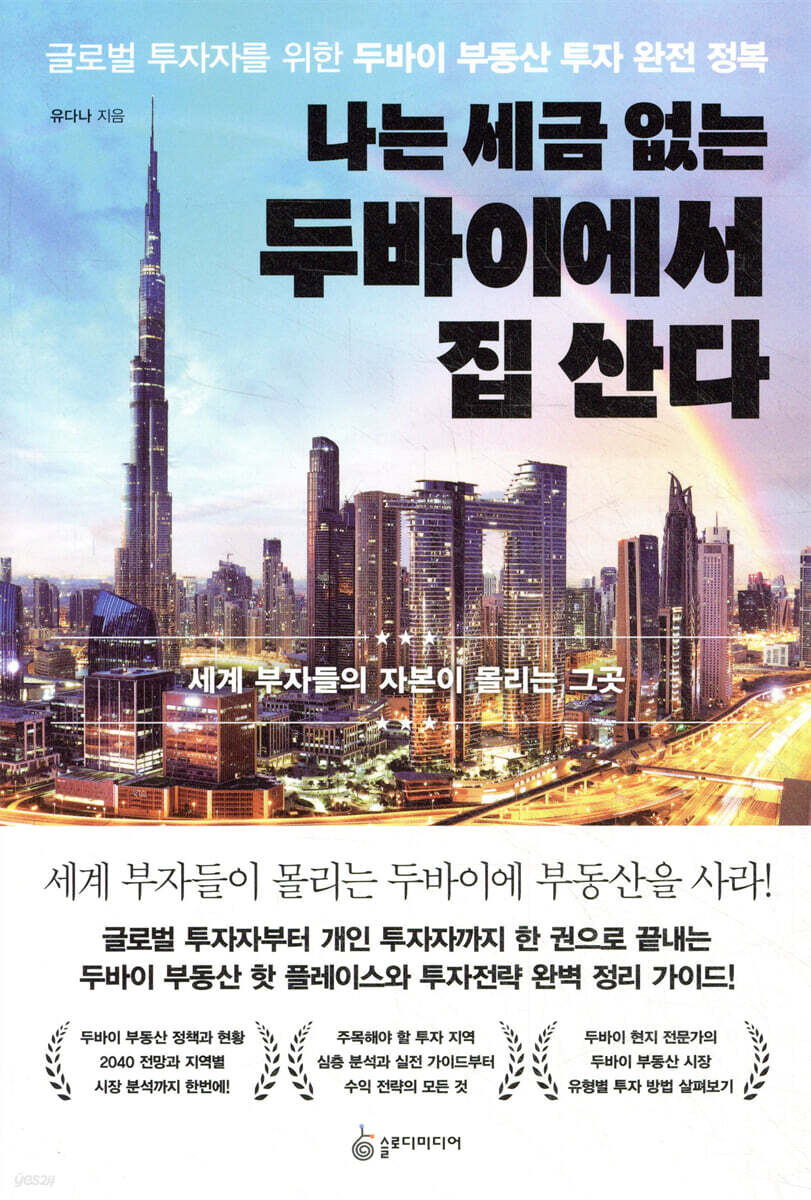
I buy a house in Dubai, where there is no tax.
 |
Description
Book Introduction
***** Dubai real estate policies and current status, 2040 outlook, and regional market analysis all in one place!
***** Everything from in-depth analysis and practical guidance on investment areas to profit strategies
***** Explore investment methods by type in Dubai's real estate market from a local Dubai expert.
Why Dubai Now and Where to Invest?
Buy real estate in Dubai, where the world's wealthy flock!
Real-life examples from local experts in Dubai
We provide clear answers based on field experience!
From global investors to individual investors, all in one book
A complete guide to Dubai's hottest real estate spots and investment strategies!
"Why are the world's wealthy flocking to Dubai?" With no income tax, capital gains tax, or inheritance tax, a high-end infrastructure, long-term visas and the ability for foreigners to own real estate, stability, and a global hub, Dubai is now a "cash kingdom" and a "land of opportunity."
This book is a practical checklist for investors concerned about where and how to place their assets amidst the changing international situation, and it also serves as a map that provides key information to those following the global flow of wealth, showing them in three dimensions why they should choose the city of Dubai now.
Anyone interested in Dubai should keep this book by their side and read it as a basic guide.
After understanding this city through this book and understanding its regional characteristics and investment strategies, I hope to one day tour Dubai myself and have a deeper conversation with you.
***** Everything from in-depth analysis and practical guidance on investment areas to profit strategies
***** Explore investment methods by type in Dubai's real estate market from a local Dubai expert.
Why Dubai Now and Where to Invest?
Buy real estate in Dubai, where the world's wealthy flock!
Real-life examples from local experts in Dubai
We provide clear answers based on field experience!
From global investors to individual investors, all in one book
A complete guide to Dubai's hottest real estate spots and investment strategies!
"Why are the world's wealthy flocking to Dubai?" With no income tax, capital gains tax, or inheritance tax, a high-end infrastructure, long-term visas and the ability for foreigners to own real estate, stability, and a global hub, Dubai is now a "cash kingdom" and a "land of opportunity."
This book is a practical checklist for investors concerned about where and how to place their assets amidst the changing international situation, and it also serves as a map that provides key information to those following the global flow of wealth, showing them in three dimensions why they should choose the city of Dubai now.
Anyone interested in Dubai should keep this book by their side and read it as a basic guide.
After understanding this city through this book and understanding its regional characteristics and investment strategies, I hope to one day tour Dubai myself and have a deeper conversation with you.
- You can preview some of the book's contents.
Preview
index
Recommendation · 4
Introduction · 7
PART 1: Knowing Dubai Makes You See Money: A Look Inside the City of Opportunity
01 Overview of the United Arab Emirates and Dubai · 17
Dubai's Strategic Location and Urban Characteristics · 18
The growth structure of the UAE economy by core sector (foreign investment/finance/technology/energy/tourism/capital) · 22
The Background of Emerging as a Global Investment Hub · 33
Population Structure and Foreign-Centric Business Environment · 38
02 Dubai, the City of Opportunity: Why Now is the Time to Start Investing in Real Estate · 43
Tax Benefits: Key Incentives for Attracting Global Investors · 45
Golden Visa and Global Residence Hub · 49
Why Dubai Real Estate Is Attractive: Yields and Value Growth: A Two-Way Killer · 52
Investment Stability Through Legal and Policy Infrastructure · 56
PART 2: Investors Who Read the Flow: A 20-Year Report on the Dubai Real Estate Market
03 Inflection Points in the Real Estate Market (2000-2025) · 63
The Rise, Rapid Growth, and Decline of Dubai's Real Estate Market (2000s) · 65
Recovery and Adjustment After the Global Financial Crisis (2010s) · 68
Russian Capital Inflow and Ultra-Sophistication (2021-2024) · 70
Dubai's Real Estate Market: A Quantitative Leap Forward, 2023-2024 · 72
04 The Power to Decipher the Market: Dubai Real Estate Trends and Strategies (2023-2025) · 76
Three Markets, Three Strategies: Luxury, Middle Class, Short-Term Rental, and Sustainability · 77
Dubai's Real Estate Market: Stability and Opportunity (2024-2025) · 81
Order in Volatility: Where's the Next Opportunity? · 84
2025: Coexistence of Risk and Opportunity · 85
PART 3: Where to Invest: Mastering Regions and Developers
05 "Who Built It" Determines Profitability: Key Developer Report · 93
Government-Led Developers: Stability and Scale of National Projects · 96
Private Master Developers: The Real Estate Value Created by Brands · 103
Niche developers and lifestyle brands · 116
Emerging Developers in Abu Dhabi, Sharjah, and Ras Al Khaimah · 119
Developer Strategy Changes and Investment Opportunities After 2025 · 121
06 "Where to Invest" Depends on Timing and Purpose: Regional Investment Guide · 124
Dubai's Six Phases of Urban Growth and the Topography of Investment Opportunities: Key Regions Based on Historical, Economic, and Policy Changes · 125
Analysis of Dubai's Key Investment Areas and Investment Case Studies · 135
Investor's Story · 221
07 Abu Dhabi, Sharjah, and Ras Al Khaimah Real Estate · 231
Abu Dhabi: Beyond the Political and Administrative Capital, a Global Investment Hub · 233
Ras Al Khaimah: A Quiet But Powerful Place for Investment Opportunities · 254
Sharjah: An Emerging Investment Hub with a Balance of Culture and Economy · 256
PART 4: A Map of the Future: Dubai 2040 and Infrastructure
08 Analysis of Dubai's 2040 City Master Plan · 265
Population Growth, Green Space Development, and Smart City Roadmap · 266
Analyzing Policy Changes Impacting Real Estate Values: How Urban Planning Drives the Real Estate Market · 270
Sustainability and ESG-Driven Investment Trends: The Standards of Value Are Changing · 271
09 The Investment Landscape Created by Infrastructure, Transportation, and Education · 273
Dubai Metro Expansion, Blue Line · 273
Etihad Rail Project: A Transport Revolution That Will Reshape Urban Structure · 275
Location is School District: The Barometer of Real Estate Value Driven by Education · 278
PART 5: A Practical Guide: The Successful Global Investor's Checklist
10 Buying Processes and Investment Strategies · 285
Foreign Investor Purchase Procedures · 285
Off-Plan vs. Completed Property Strategy · 288
Legal Considerations and Negotiation Points · 290
Off-Plan Mortgages and Financing Strategies · 293
11 Preparation Checklist for Foreign Investors · 298
Things to Prepare Before Buying Overseas Real Estate · 298
Overseas Real Estate Investment Procedures · 300
Tax Guide for Overseas Real Estate Investors: Korean Tax Reporting and Payment Obligations · 302
Conclusion: Now it's time to begin your story · 306
Appendix 1: Celebrities Who Live or Own Real Estate in Dubai · 308
Appendix 2: A Guide to Key Terms Every Dubai Real Estate Investor Needs to Know · 312
References · 316
Introduction · 7
PART 1: Knowing Dubai Makes You See Money: A Look Inside the City of Opportunity
01 Overview of the United Arab Emirates and Dubai · 17
Dubai's Strategic Location and Urban Characteristics · 18
The growth structure of the UAE economy by core sector (foreign investment/finance/technology/energy/tourism/capital) · 22
The Background of Emerging as a Global Investment Hub · 33
Population Structure and Foreign-Centric Business Environment · 38
02 Dubai, the City of Opportunity: Why Now is the Time to Start Investing in Real Estate · 43
Tax Benefits: Key Incentives for Attracting Global Investors · 45
Golden Visa and Global Residence Hub · 49
Why Dubai Real Estate Is Attractive: Yields and Value Growth: A Two-Way Killer · 52
Investment Stability Through Legal and Policy Infrastructure · 56
PART 2: Investors Who Read the Flow: A 20-Year Report on the Dubai Real Estate Market
03 Inflection Points in the Real Estate Market (2000-2025) · 63
The Rise, Rapid Growth, and Decline of Dubai's Real Estate Market (2000s) · 65
Recovery and Adjustment After the Global Financial Crisis (2010s) · 68
Russian Capital Inflow and Ultra-Sophistication (2021-2024) · 70
Dubai's Real Estate Market: A Quantitative Leap Forward, 2023-2024 · 72
04 The Power to Decipher the Market: Dubai Real Estate Trends and Strategies (2023-2025) · 76
Three Markets, Three Strategies: Luxury, Middle Class, Short-Term Rental, and Sustainability · 77
Dubai's Real Estate Market: Stability and Opportunity (2024-2025) · 81
Order in Volatility: Where's the Next Opportunity? · 84
2025: Coexistence of Risk and Opportunity · 85
PART 3: Where to Invest: Mastering Regions and Developers
05 "Who Built It" Determines Profitability: Key Developer Report · 93
Government-Led Developers: Stability and Scale of National Projects · 96
Private Master Developers: The Real Estate Value Created by Brands · 103
Niche developers and lifestyle brands · 116
Emerging Developers in Abu Dhabi, Sharjah, and Ras Al Khaimah · 119
Developer Strategy Changes and Investment Opportunities After 2025 · 121
06 "Where to Invest" Depends on Timing and Purpose: Regional Investment Guide · 124
Dubai's Six Phases of Urban Growth and the Topography of Investment Opportunities: Key Regions Based on Historical, Economic, and Policy Changes · 125
Analysis of Dubai's Key Investment Areas and Investment Case Studies · 135
Investor's Story · 221
07 Abu Dhabi, Sharjah, and Ras Al Khaimah Real Estate · 231
Abu Dhabi: Beyond the Political and Administrative Capital, a Global Investment Hub · 233
Ras Al Khaimah: A Quiet But Powerful Place for Investment Opportunities · 254
Sharjah: An Emerging Investment Hub with a Balance of Culture and Economy · 256
PART 4: A Map of the Future: Dubai 2040 and Infrastructure
08 Analysis of Dubai's 2040 City Master Plan · 265
Population Growth, Green Space Development, and Smart City Roadmap · 266
Analyzing Policy Changes Impacting Real Estate Values: How Urban Planning Drives the Real Estate Market · 270
Sustainability and ESG-Driven Investment Trends: The Standards of Value Are Changing · 271
09 The Investment Landscape Created by Infrastructure, Transportation, and Education · 273
Dubai Metro Expansion, Blue Line · 273
Etihad Rail Project: A Transport Revolution That Will Reshape Urban Structure · 275
Location is School District: The Barometer of Real Estate Value Driven by Education · 278
PART 5: A Practical Guide: The Successful Global Investor's Checklist
10 Buying Processes and Investment Strategies · 285
Foreign Investor Purchase Procedures · 285
Off-Plan vs. Completed Property Strategy · 288
Legal Considerations and Negotiation Points · 290
Off-Plan Mortgages and Financing Strategies · 293
11 Preparation Checklist for Foreign Investors · 298
Things to Prepare Before Buying Overseas Real Estate · 298
Overseas Real Estate Investment Procedures · 300
Tax Guide for Overseas Real Estate Investors: Korean Tax Reporting and Payment Obligations · 302
Conclusion: Now it's time to begin your story · 306
Appendix 1: Celebrities Who Live or Own Real Estate in Dubai · 308
Appendix 2: A Guide to Key Terms Every Dubai Real Estate Investor Needs to Know · 312
References · 316
Detailed image

Into the book
Those who have witnessed the UAE's transformation closely over the past several decades through energy, trade, logistics, and numerous investment projects share a common perspective.
Dubai is not just a city of real estate, but a place of opportunity where diverse industries and global capital are constantly flowing in and reorganizing, creating new opportunities.
Behind the glamour lies a complex regulatory environment, international dynamics, and constantly shifting market cycles. Without understanding this complex ecosystem, success in Dubai is impossible.
Despite being such a challenging market, it's clear why Dubai continues to attract global attention.
Because Dubai is a city unparalleled in its pace of change and scale of innovation, offering unimaginable opportunities to those who are prepared.
--- p.4~5
If not now, it may be later.
The reason is simple.
Because Dubai is a 'living investment destination' where capital, technology, and talent are actually flowing in even at this very moment.
From a geopolitical perspective, Dubai is well-positioned to connect to the Middle East, Africa, Southeast Asia, Europe, the Commonwealth of Independent States (CIS), and even South America.
In particular, with approximately 3 billion people living within a 4-hour flight from Dubai and 4 billion within an 8-hour flight, this means that the city has secured both expandability and accessibility to the global market.
As of 2025, the United Arab Emirates (UAE) is home to approximately 200 nationalities, representing more than 85 percent of the population.
This diverse mix of nationalities and cultures makes Dubai not just a place to live, but a hub for global business networks.
Investors can leverage this international network and geographic advantage to simultaneously consider expanding into neighboring countries.
--- p.17
Dubai's current status is a result of a combination of world-class air and maritime networks, robust infrastructure, and expat-friendly policies.
Strategic urban expansion and development strategies meticulously tailored to global demand have transformed Dubai into an "evolving city."
Dubai currently covers an area of approximately 4,110 square kilometers, but is still expanding.
The city's outskirts are being expanded through land reclamation, a prime example of which is Palm Jebel Ali.
This is not just a simple artificial island, but a strategic development site designed to concentrate high-end residential and tourist facilities along the coastline.
We have a structure that can accommodate both long-term residence and short-term rental needs, and we are targeting high-income global customers.
--- p.19
Climate also plays a significant role in Dubai's urban character and investment strategy.
Dubai has a typical desert climate, with summer temperatures exceeding 40 degrees Celsius, and some days reaching highs of 50 degrees Celsius.
But winter is completely different.
The average temperature is around 14 to 25 degrees Celsius, and the weather is mild and dry. The average annual rainfall is less than 100 millimeters, and the weather is mostly clear.
These climate conditions are particularly favorable for short-term rental properties, vacation properties, and developments near tourist destinations.
Rental yields are high and stable due to the structure where profits are concentrated as demand surges during the winter tourist season.
Dubai can now be understood not simply as a "growing city," but as a planned, expanding city that combines infrastructure, policies, capital, and technology.
If you accurately read the city's trends and invest proactively, real estate can become more than just an asset; it can become a strategy for securing the future.
--- p.21
The UAE is no longer remembered solely as an oil powerhouse. Having shifted away from its traditionally oil-dependent economy, the UAE is rapidly building a diversified economic ecosystem centered on non-oil sectors, including manufacturing, real estate, trade, logistics, and advanced technology.
This transformation is not a mere declaration; it is a tangible achievement, driven by government-led action and a strategy to attract global investment. According to a 2024 report released by the Central Bank of the UAE, real GDP growth reached 4 percent, projected to rise to 4.5 percent in 2025 and 5.5 percent in 2026. This indicator, demonstrating the resilience and scalability of the UAE economy, intuitively demonstrates why now is the right time to invest in Dubai.
Of particular note is the non-oil sector.
As of the second quarter of 2024, non-oil GDP grew by 4.8 percent year-on-year, and more than 75 percent of total GDP is currently generated by non-oil industries.
This can be interpreted to mean that the UAE has secured an economic structure that can grow without a single drop of oil.
Indeed, despite having virtually no oil reserves of its own, Dubai is emerging as a global economic hub combining finance, trade, real estate, tourism, and technology.
--- p.22
Dubai is evolving beyond a simple financial hub into a center of structural growth, attracting global capital, talent, and technology.
Behind these changes lies the government's strong commitment to strategically fostering the financial industry.
The first and most obvious strategy is deregulation and financial liberalization.
It guarantees 100 percent ownership to foreign investors, eliminates or maintains low corporate taxes, and concludes double taxation avoidance agreements with numerous countries, significantly reducing the tax burden.
Here, low energy costs are increasing business efficiency and making Dubai a practical hub for financial institutions and startups. The UAE government is particularly focused on attracting fintech, venture capital, and financial infrastructure, and this strategy is yielding tangible results.
As of 2024, venture capital investment has increased by 39 percent year-on-year, and global startups are choosing Dubai as a base for capital raising and initial public offerings (IPOs).
--- p.26
By 2030, the UAE plans to invest a total of AED 150-200 billion (approximately KRW 60-80 trillion) in energy transition, which is expected to create over 50,000 green jobs and reduce energy costs by over AED 100 billion.
These changes are also having a direct impact on the real estate market.
Strengthening green building standards, the spread of smart cities, and the development of green infrastructure are all factors that impact real estate values.
In particular, amidst the international trend of strengthening ESG (Environmental, Social, and Governance) standards, the UAE is recognized as a representative country that has systematically reflected energy transition in its urban master plans.
For global investors today, asset stability based on sustainability is emerging as a key consideration, not just short-term returns. The UAE is redesigning entire cities toward sustainability, and this trend is becoming a crucial foundation for providing investors with long-term asset value and stability beyond short-term profits.
--- p.30
“Why has Dubai become a city attracting global capital?” The answer to this question is complex yet clear.
The city of Dubai is no longer just one of the emirates of the UAE; it has established itself as a global city brand on par with Paris and New York.
Dubai has established itself as a hub for 21st-century global investment, securing unrivaled competitiveness in diverse sectors including finance, real estate, logistics, and tourism.
Strategic location, advanced infrastructure, business-friendly institutions, transparent market structure, and high investment returns are all key factors that make Dubai a global investment hub.
Dubai is located at the geopolitical crossroads of Europe, Asia, and Africa, offering global market connectivity and access to a population of approximately 4 billion.
As of 2024, Dubai International Airport will accommodate over 90 million passengers annually and offer direct flights to over 200 cities worldwide.
This is a practical indicator of Dubai's status as a hub city where the flow of talent, capital, and logistics is concentrated.
--- p.33
Why do global investors choose Dubai? Dubai is recognized by global investors as a city that offers stability, flexibility, and advanced infrastructure.
In particular, a stable investment environment, flexible visa policies (including the Golden Visa), strong legal protections for foreign investors, and a wide range of real estate products ranging from high-end to mid-range allow for diverse strategies tailored to specific investment objectives.
In addition, Dubai has world-class living infrastructure.
As of 2024, there are more than 10 international schools ranked in the top tier of the QS World University Rankings, providing an environment that meets global standards in healthcare, culture, and education.
These factors are becoming key foundations for making Dubai more than just an investment destination; it is a city where long-term residence and quality of life are considered.
Dubai boasts a stable economic and political structure, and its flexible visa system for long-term stays offers foreign investors attractive investment and residency opportunities.
The institutional foundation for 100 percent ownership of real estate by foreigners is in place, and the diverse portfolio of investable real estate products allows investors to develop strategies tailored to their individual portfolios.
--- p.37
The education and vocational training sectors are also noteworthy. The UAE positively evaluates Korea's systematic education system for its practicality and efficiency, and demand for vocational training, coding camps, and online learning platforms is growing.
The Korean side can build a long-term subscription-based revenue structure through partnerships with local educational institutions or government programs.
Eco-friendly energy and healthcare are areas where Korea's technological competitiveness can particularly shine. The UAE is pursuing large-scale renewable energy projects in line with its 2050 carbon neutrality goal, and collaboration with Korean companies in areas such as solar power, energy storage systems (ESS), and smart grids is highly likely.
At the same time, demand for medical tourism and remote medical care is increasing, allowing Korea's excellent medical infrastructure and technological prowess to lead to high-value-added services.
Today, Dubai has transformed itself from simply being a wealthy Middle Eastern city to a place with low taxes, open institutions, and substantial foreign ownership and management control.
In particular, the Golden Visa scheme offers a powerful incentive for foreign investors and highly skilled talent: a 10-year residency permit, ensuring both stability and sustainability.
--- p.41
Dubai is recognized as more than just a tourist destination or investment destination, but as a 'safe haven for protected assets'.
The entry of luxury brands clearly demonstrates this.
Luxury car brands like Mercedes-Benz and Bugatti are developing residence towers that bear their brand names, rather than simple showrooms.
This means that the wealthy, consumers, and global capital are all showing a willingness to settle in this city for the long term.
The medical and education sectors are also becoming more systematic.
While the number of international hospitals and prestigious schools remains limited, global medical groups are continuing to expand, and the number of families migrating for their children's education is steadily increasing.
Dubai's population influx is not simply an increase, but a 'qualitative change'.
The city is home to the largest number of millionaires from around the world, while there is a steady influx of skilled and service professionals from India, Pakistan, the Philippines, and CIS countries.
We've entered an era where everyone from the top 1 percent to the middle class and even service workers are choosing Dubai for different reasons.
--- p.44
There is no property tax or capital gains tax in Dubai.
In Korea, comprehensive real estate taxes and capital gains taxes applied to multiple homeowners pose significant restrictions on asset maintenance and disposal, but in Dubai, if you pay only the registration tax (4% Land Authority registration fee) upon initial acquisition, there is no separate property tax or capital gains tax thereafter.
Typically, the transaction fee is around 2 percent for both the buyer and seller, and is included in the real estate brokerage fee or government registration fee.
It is a structure that reduces the burden of complex tax reporting and accounting, and can increase actual investment returns.
First of all, there is no inheritance tax or gift tax in Dubai.
Since no taxes are levied on the transfer of assets between family members, inheritance and gifting of property are free and efficient.
Being able to transfer assets to your children tax-free is a huge advantage for long-term asset management and intergenerational wealth transfer.
--- p.47
The Golden Visa system introduced by the UAE is more than just a long-term visa; it is a powerful system that makes Dubai a city where you can live and invest.
In particular, investors who own real estate worth more than AED 2 million (approximately KRW 800 million) can obtain a 10-year residency qualification, thereby securing a stable living foundation without visa renewals, family accompaniment, or residency restrictions.
The core of this system is ‘investor-centric’.
Even without a local sponsor, foreign investors can engage in independent economic activities and reside in the country, and maintain their lifestyle by bringing along spouses, children, and even domestic helpers.
Additionally, Golden Visa holders can enjoy various preferential benefits in luxury shopping, education, and medical services within the UAE through the 'Esaad Card'.
Especially in cities like Dubai, where global corporations, startups, and high-income earners gather, this system serves as an "asset stabilization tool" rather than a simple right of residence.
--- p.49
Dubai's real estate market has ample potential for long-term growth beyond short-term surges.
As of 2025, the projected real estate price increase rate is 5-8 percent on average, and in prime areas, it is possible that prices will increase by more than 10 percent.
A notable change is that, with the expansion of areas where foreigners can own real estate starting in 2025, global investments will be available in a wider range of locations than before.
The villa and townhouse market continues to experience a supply shortage, which is likely to lead to accelerated price increases in this segment in the coming years.
In particular, as the influx of foreigners seeking long-term residence continues to increase, demand based on actual demand is expected to continue.
Meanwhile, for short-term investors, a strategic approach to profit-taking is crucial, while for long-term investors, now is still considered a valid entry point compared to the low.
There is also the possibility of short-term price adjustments or stabilization in some high-end regions after the second half of 2025. Therefore, investors need to conduct precise analysis and develop strategies based on market data.
--- p.55
If you view real estate as a long-term portfolio rather than a simple asset, there are few markets you can enter with as much confidence as Dubai.
And that confidence is built on a solid foundation of ‘law’ and ‘policy.’
With institutional innovations aimed at improving the business environment and attracting foreign investment, Dubai is becoming a more open and investment-friendly city.
Dubai is expected to continue to lead the future economic model as a global economic hub.
Dubai's Economic Agenda D33 aims to double its GDP by 2033 and become one of the world's top three business cities. To achieve this, the city is accelerating digital transformation, strengthening sustainability, and attracting more global investment.
Moreover, Dubai's real estate market, backed by economic stability and strong legal protections, provides a trustworthy environment for investors.
These factors are key factors that make Dubai an attractive, stable and sustainable real estate market.
--- p.58
In 2024, the Dubai real estate market recorded its most active transaction volumes and price growth in history.
The Dubai and UAE real estate markets will continue to show strong growth in 2025, attracting the attention of global investors.
Prime areas remain strong in both price and rent due to a lack of supply, while suburban areas are experiencing a sharper regional polarization as new supply expands.
Investment objectives are also diversifying, encompassing residence, rental income, and obtaining golden visas. Furthermore, the UAE remains a key investment destination for global asset portfolios, with legal and tax stability and investment-friendly policies maintained even after the introduction of corporate tax.
From now on, we will examine the gradual changes in the Dubai real estate market from the early 2000s to the present day, focusing on periods of price increase and turning points.
If you understand this flow, you will be able to more clearly judge when and how to move in the future.
--- p.64
Dubai's real estate market recorded a total of 129,000 transactions in 2023, an increase of approximately 30 percent year-on-year.
The total transaction value reached AED 40.98 billion (approximately KRW 16.392 trillion), recording a growth rate of 33.8 percent.
In particular, residential real estate showed an average price increase of 18.8 percent, with both apartments (18.33 percent) and villas (22.23 percent) showing strength.
It is noteworthy that high-priced real estate transactions worth over AED 10 million (approximately KRW 4 billion) increased by 48 percent year-on-year, demonstrating that global wealthy individuals perceive Dubai real estate as a stable asset.
This growth trend continued into 2024.
The total transaction volume reached 189,877 cases and the total transaction value reached AED 52.25 billion (approximately KRW 20.9 trillion), which are increases of 36.5 percent and 27.2 percent, respectively, renewing all-time highs.
Apartment transactions exceeded 140,000, while villa and townhouse transactions also exceeded 30,000.
Overall average property prices rose 20 percent, with residential properties seeing a 21.3 percent increase.
--- p.72
The off-plan market is structured to allow for installment payments and has low initial entry costs, making it suitable for medium- to long-term holding strategies.
It is particularly advantageous for investors considering portfolio diversification, as it allows for both appreciation in value up to the time of completion and long-term rental demand.
It is recommended to approach prime areas with stable prices, such as Palm Jumeirah, Downtown Dubai, and Business Bay, based on their holding value, while areas like JVC and Dubai South are better approached based on their growth potential.
With foreign investors now accounting for nearly 60 percent of the market, global investment demand is likely to continue alongside demand for residential housing, ensuring that upward price momentum remains intact.
As of January 2025, Dubai's real estate market continues to grow steadily.
According to a report by real estate consulting and research firm ValuStrat, Dubai's Property Price Index (VPI) stood at 204.2 points in January 2025, up 1.7 percent from the previous month and 27 percent from the same period last year.
This rise is seen as sustainable and solid growth rather than a short-term surge.
--- p.74
The Dubai real estate market in 2023-2024 was not a single market.
Different mechanisms are at work: high-end assets, middle-class real demand, and the short-term rental market. Investors need to view these three trends within a single, larger picture, each with its own distinct strategy.
Ultra-high net worth investors seeking stable asset values and brand premiums should consider a long-term portfolio strategy centered on Palm Jumeirah and branded residences. Mid-level investors seeking to secure rent-based cash flow should consider an off-plan investment and leasing strategy centered on real-demand areas such as JVC and Arjan. Short-term investors seeking quick cash turnover should consider a short-term leasing optimization strategy in areas such as Downtown Dubai or Dubai Marina.
As such, Dubai is not a market where ‘the same strategy works for everyone.’
The optimal location and strategy will vary depending on the investor's goals, fund size, and holding period.
Understanding the structure and reading the flow is essential to maximizing your profits in this multidimensional market.
--- p.80
Dubai in 2025 is closer to a period of 'rebalancing' than a 'period of adjustment'.
As the market continues to grow, the distinction between high-end assets and real-demand assets is becoming clearer.
Premium communities still offer high scarcity, while mid-priced, high-quality assets offer a structure that promises stable returns.
The future market will be an era where, rather than simply rising prices, it will be more important to consider "which region, what type of assets, and what strategy to use."
Investors in this era need to have a perspective that goes beyond simply riding the wave and reads the structure and develops strategies.
Dubai's next opportunity lies within this ongoing "orderly structural change."
--- p.85
Dubai Properties, established in 2004 under Dubai Holding, is a leading real estate developer with a strong focus on developing residential communities targeting middle-class and family-oriented demand.
Several projects have established themselves as assets that provide stable returns to both residents and long-term investors through location selection strategies focused on reasonable pricing and living infrastructure.
Its flagship project, Jumeirah Beach Residence (JBR), is a mixed-use community that combines beach access with open commercial spaces, hotels, and restaurants. It boasts a stable cash flow, with an average rental yield of 6-8 percent as of 2024.
--- p.99
What makes Dubai South's project more than just a new city development is that it envisions a self-sufficient future city model that integrates logistics, aviation, trade, and housing.
In particular, Al Maktoum International Airport is expected to be developed into a large-scale global hub capable of accommodating 260 million passengers annually by 2030, and the Dubai Logistics Corridor connected to it is expected to emerge as the largest supply chain hub in the Middle East.
Building on this foundation, Dubai South's residential and commercial assets are structured to sustain a steady influx of demand, are competitively priced compared to current prime locations, and are also rapidly developing infrastructure.
--- p.102
DAMAC Properties is a leading private developer operating in the Middle East and global markets. Founded in 1982 by Hussain Sajwani.
With its trendy design, brand-driven marketing strategy, and focus on developing high-end communities, it has established a unique position in Dubai's luxury residential market.
Damak's biggest differentiator is its strategy of collaborating with global luxury brands.
Through partnerships with Paramount Hotels, Fendi Casa, Cavalli, and de GRISOGONO, we are moving beyond simple luxury apartments to create a luxury lifestyle driven by brand experiences.
--- p.107
Imtiaz Developments, a mid-market luxury residential developer that combines sustainability with modern design, is establishing itself in the emerging residential enclave of Dubai Islands with projects such as The Cove and Sunset Bay 2.
Emphasizing eco-friendly materials and high-end community amenities, the brand pursues a strategy that targets both residential and investment demand.
Tiger Properties, which launched in Sharjah in 1976 and has since expanded to Dubai, offers affordable apartment projects targeting the mid- to low-end market.
In particular, thematic developments such as Red Square Moscow within JVC are appealing to Russian and Eastern European investors and expanding our international customer base.
--- p.117
As of 2025, more than 150 developers are actively operating in the UAE real estate market, and each developer's stability and development strategy significantly impact investment performance.
Investors should comprehensively consider the developer's financial soundness, completion history, and the project's location's future growth potential.
The following trends are prominent in the market recently:
First is the continued strength of luxury real estate.
Dubai is seeing a surge in the supply of high-end residential and commercial properties, led by luxury developers such as Damac, Omni Yat, and AHS, in collaboration with global luxury brands.
These projects, aimed at ultra-high-end buyers, are establishing Dubai as a global luxury real estate hub.
--- p.121
From 2009 to 2020, Dubai strategically focused on diversification and sustainable growth to achieve economic recovery and structural transformation following the global financial crisis.
In particular, we have successfully strengthened our city brand by hosting global events such as Expo 2020, and laid the foundation for new growth by restructuring our industries into tourism, technology, and logistics.
During this period, Dubai saw the completion of iconic infrastructure projects, significantly enhancing the city's standing.
In 2010, the world's tallest building, Burj Khalifa, was completed, and in the same year, the Dubai Metro, the Middle East's first driverless subway system, opened, leading to innovation in transportation infrastructure.
In terms of residential and community development, demand for housing has expanded to the city's outskirts with the development of new complexes such as Dubai Hills Estates, Damak Hills and Dubai South.
At the same time, Dubai has strengthened its competitiveness as a business hub, with the expansion of the Dubai Design District (d3) and the Dubai International Financial Centre (DIFC) contributing to its position as a free zone and innovation hub.
--- p.132
Here he emphasized one more thing.
Buying property in Dubai isn't something you can decide on after a single business trip or tour.
His rule was to visit the site in person at least 10 times, just like when he was working as a forest manager in Korea.
Dubai is a city where buildings that didn't exist yesterday are being built today.
He learned from experience that even the same building can have completely different views and values depending on what is built in front of it.
The air, atmosphere, and flow that cannot be felt through photos or model houses can only be seen through experiencing them firsthand.
He looks at Dubai, which is still under construction, and thinks.
No one knows how far this city will expand.
Perhaps that uncertainty itself is the city's greatest charm.
--- p.222
Investor Perspective: Average rental yields remain stable at around 5-6.5 percent, and commercial real estate transactions are expected to gradually recover after 2025, particularly in conjunction with the global interest rate decline. ADGM's expansion will not only drive office demand but also raise expectations of increased value for high-end residences.
For example, prime offices in Al Sila Tower are generating an annual rental yield of 6.5 percent, while two-bedroom units in Rosewood Residences are averaging AED 250,000 to 300,000 per year.
However, as the initial investment cost is high and the region is sensitive to global economic fluctuations, an approach that focuses on mid- to long-term value appreciation rather than short-term profits is effective.
--- p.249
If you are looking for high-yield short-term investments, the mid- to long-term rental income of the tourist-focused complexes on Yas Island are a good choice. If you are aiming for appreciation in value, the middle-class residential areas of Al Reem Island or Al Raha Beach are good choices. If you are looking to secure stability and brand value as a long-term asset, the luxury villas on Saadiyat Island or the ESG-based development projects in Masdar City are strong choices.
As of 2025, average rental yields in Abu Dhabi are estimated to be between 5 and 9 percent, with capital appreciation estimated at between 5 and 10 percent per year.
This is a very competitive profitability indicator compared to major cities in the Middle East and around the world.
But as with any market, risks also exist.
Oversupply in some high-end areas, uncertainty in global interest rates and raw material prices, and seasonal demand in tourism-focused areas are all variables that must be considered when investing.
Accordingly, investors need to design a multi-layered portfolio that reflects clear short-, medium-, and long-term goals and regional characteristics.
--- p.253
"Cities are the investment maps of the future." The Dubai 2040 City Master Plan, presented by the Dubai government, goes beyond simple urban planning and is a game changer that will fundamentally alter the future real estate market.
By 2040, Dubai is expected to grow into a city capable of housing 7.8 million people.
To address this, the government is promoting the development of low-density, high-quality housing, transit-oriented community design, and balanced redevelopment of existing city centers and outskirts.
The city's structure will be reorganized into five key hubs (Deira, Downtown, Dubai Marina, Expo City, and Jumeirah), each with specialized functions such as business, culture, tourism, education, and industry.
Green space and leisure space will be doubled, and the network of bike paths and pedestrian paths connecting the city center will be significantly strengthened.
Public beach length will increase by 400 percent, and 60 percent of the city's land area will be made up of nature conservation areas and rural eco-zones.
These changes will dramatically improve the quality of life and elevate the city's 'livability' to the next level.
--- p.267
Dubai's 2040 City Master Plan is also directly influencing the direction of the real estate market.
The biggest changes are ‘reorganization of the central area’ and ‘decentralized development strategy.’
The value axis is shifting away from the downtown and marina centers, which were previously considered prime areas, to emerging hubs such as Expo City (formerly District 2020), Dubai Silicon Oasis, and Dubai South.
This is not a simple change in location, but a "strategic shift in value" based on comprehensive factors such as expanded transportation networks, industrial infrastructure clustering, and concentrated government policy investments.
For example, Expo City is attracting smart logistics, healthcare, education, and technology-based industries, driving mid- to long-term real estate demand, while Dubai South is being re-evaluated as a 'city of the future' in conjunction with the expansion of Al Maktoum International Airport and the development of Etihad Rail.
--- p.270
Now Dubai is embarking on another massive expansion of its transport infrastructure.
The Blue Line project, scheduled for completion in 2029, will run along Dubai's east-west axis, complementing existing routes and connecting new development areas.
The Blue Line connects key destinations including Dubai Creek Harbour, Festival City, Global Village, Rashidiya, Warka, Mirdif, Silicon Oasis, and Academic City.
With a total length of 30 kilometers and an expected daily population of 200,000, increasing to 320,000 in the long term, this project is not simply an expansion of the transportation network, but will become a catalyst for reorganizing the city's economic and population flows.
--- p.274
Dubai has one of the most advanced private education infrastructures in the Middle East.
There are nearly 300 international schools in operation, many of which offer a variety of curricula, including those from the United States, the United Kingdom, the IB, and France.
This educational ecosystem doesn't simply expand the options for families with children; it's also acting as a driving force behind real estate values in certain areas.
Although there is no clear 'school district' system in Dubai, areas with a concentration of major educational facilities are naturally recognized as high-end school districts.
In fact, areas surrounding prestigious international schools such as Dubai International Academy, Gems Wellington, Dubai College, and Repton are experiencing strong residential and rental demand, and are also maintaining strong asset value.
--- p.278
Dubai is one of the world's most open real estate markets to foreigners.
Since the introduction of the Freehold Act in 2002, foreigners have been able to own 100 percent of real estate within designated freehold areas.
This provides an ideal environment for global investors who consider not only simple rentals or investments, but also actual residence and asset preservation.
However, from the perspective of foreign investors, purchasing real estate in Dubai is not a simple 'purchase', but a 'process' that requires thorough procedures and strategies.
--- p.285
Investing in overseas real estate isn't simply about buying a house in a foreign country.
Because it is a complex process of moving and managing assets across completely different systems with different currencies, legal systems, taxes, and administrative procedures.
Especially when Korean residents purchase overseas real estate, failing to properly understand foreign exchange management regulations and tax procedures can result in the transaction itself being invalidated or subject to penalties and additional taxes.
Here, we systematically guide Koreans through the essential procedures, fund transfer regulations, and legal reporting requirements for investing in overseas real estate, including in Dubai.
Dubai is not just a city of real estate, but a place of opportunity where diverse industries and global capital are constantly flowing in and reorganizing, creating new opportunities.
Behind the glamour lies a complex regulatory environment, international dynamics, and constantly shifting market cycles. Without understanding this complex ecosystem, success in Dubai is impossible.
Despite being such a challenging market, it's clear why Dubai continues to attract global attention.
Because Dubai is a city unparalleled in its pace of change and scale of innovation, offering unimaginable opportunities to those who are prepared.
--- p.4~5
If not now, it may be later.
The reason is simple.
Because Dubai is a 'living investment destination' where capital, technology, and talent are actually flowing in even at this very moment.
From a geopolitical perspective, Dubai is well-positioned to connect to the Middle East, Africa, Southeast Asia, Europe, the Commonwealth of Independent States (CIS), and even South America.
In particular, with approximately 3 billion people living within a 4-hour flight from Dubai and 4 billion within an 8-hour flight, this means that the city has secured both expandability and accessibility to the global market.
As of 2025, the United Arab Emirates (UAE) is home to approximately 200 nationalities, representing more than 85 percent of the population.
This diverse mix of nationalities and cultures makes Dubai not just a place to live, but a hub for global business networks.
Investors can leverage this international network and geographic advantage to simultaneously consider expanding into neighboring countries.
--- p.17
Dubai's current status is a result of a combination of world-class air and maritime networks, robust infrastructure, and expat-friendly policies.
Strategic urban expansion and development strategies meticulously tailored to global demand have transformed Dubai into an "evolving city."
Dubai currently covers an area of approximately 4,110 square kilometers, but is still expanding.
The city's outskirts are being expanded through land reclamation, a prime example of which is Palm Jebel Ali.
This is not just a simple artificial island, but a strategic development site designed to concentrate high-end residential and tourist facilities along the coastline.
We have a structure that can accommodate both long-term residence and short-term rental needs, and we are targeting high-income global customers.
--- p.19
Climate also plays a significant role in Dubai's urban character and investment strategy.
Dubai has a typical desert climate, with summer temperatures exceeding 40 degrees Celsius, and some days reaching highs of 50 degrees Celsius.
But winter is completely different.
The average temperature is around 14 to 25 degrees Celsius, and the weather is mild and dry. The average annual rainfall is less than 100 millimeters, and the weather is mostly clear.
These climate conditions are particularly favorable for short-term rental properties, vacation properties, and developments near tourist destinations.
Rental yields are high and stable due to the structure where profits are concentrated as demand surges during the winter tourist season.
Dubai can now be understood not simply as a "growing city," but as a planned, expanding city that combines infrastructure, policies, capital, and technology.
If you accurately read the city's trends and invest proactively, real estate can become more than just an asset; it can become a strategy for securing the future.
--- p.21
The UAE is no longer remembered solely as an oil powerhouse. Having shifted away from its traditionally oil-dependent economy, the UAE is rapidly building a diversified economic ecosystem centered on non-oil sectors, including manufacturing, real estate, trade, logistics, and advanced technology.
This transformation is not a mere declaration; it is a tangible achievement, driven by government-led action and a strategy to attract global investment. According to a 2024 report released by the Central Bank of the UAE, real GDP growth reached 4 percent, projected to rise to 4.5 percent in 2025 and 5.5 percent in 2026. This indicator, demonstrating the resilience and scalability of the UAE economy, intuitively demonstrates why now is the right time to invest in Dubai.
Of particular note is the non-oil sector.
As of the second quarter of 2024, non-oil GDP grew by 4.8 percent year-on-year, and more than 75 percent of total GDP is currently generated by non-oil industries.
This can be interpreted to mean that the UAE has secured an economic structure that can grow without a single drop of oil.
Indeed, despite having virtually no oil reserves of its own, Dubai is emerging as a global economic hub combining finance, trade, real estate, tourism, and technology.
--- p.22
Dubai is evolving beyond a simple financial hub into a center of structural growth, attracting global capital, talent, and technology.
Behind these changes lies the government's strong commitment to strategically fostering the financial industry.
The first and most obvious strategy is deregulation and financial liberalization.
It guarantees 100 percent ownership to foreign investors, eliminates or maintains low corporate taxes, and concludes double taxation avoidance agreements with numerous countries, significantly reducing the tax burden.
Here, low energy costs are increasing business efficiency and making Dubai a practical hub for financial institutions and startups. The UAE government is particularly focused on attracting fintech, venture capital, and financial infrastructure, and this strategy is yielding tangible results.
As of 2024, venture capital investment has increased by 39 percent year-on-year, and global startups are choosing Dubai as a base for capital raising and initial public offerings (IPOs).
--- p.26
By 2030, the UAE plans to invest a total of AED 150-200 billion (approximately KRW 60-80 trillion) in energy transition, which is expected to create over 50,000 green jobs and reduce energy costs by over AED 100 billion.
These changes are also having a direct impact on the real estate market.
Strengthening green building standards, the spread of smart cities, and the development of green infrastructure are all factors that impact real estate values.
In particular, amidst the international trend of strengthening ESG (Environmental, Social, and Governance) standards, the UAE is recognized as a representative country that has systematically reflected energy transition in its urban master plans.
For global investors today, asset stability based on sustainability is emerging as a key consideration, not just short-term returns. The UAE is redesigning entire cities toward sustainability, and this trend is becoming a crucial foundation for providing investors with long-term asset value and stability beyond short-term profits.
--- p.30
“Why has Dubai become a city attracting global capital?” The answer to this question is complex yet clear.
The city of Dubai is no longer just one of the emirates of the UAE; it has established itself as a global city brand on par with Paris and New York.
Dubai has established itself as a hub for 21st-century global investment, securing unrivaled competitiveness in diverse sectors including finance, real estate, logistics, and tourism.
Strategic location, advanced infrastructure, business-friendly institutions, transparent market structure, and high investment returns are all key factors that make Dubai a global investment hub.
Dubai is located at the geopolitical crossroads of Europe, Asia, and Africa, offering global market connectivity and access to a population of approximately 4 billion.
As of 2024, Dubai International Airport will accommodate over 90 million passengers annually and offer direct flights to over 200 cities worldwide.
This is a practical indicator of Dubai's status as a hub city where the flow of talent, capital, and logistics is concentrated.
--- p.33
Why do global investors choose Dubai? Dubai is recognized by global investors as a city that offers stability, flexibility, and advanced infrastructure.
In particular, a stable investment environment, flexible visa policies (including the Golden Visa), strong legal protections for foreign investors, and a wide range of real estate products ranging from high-end to mid-range allow for diverse strategies tailored to specific investment objectives.
In addition, Dubai has world-class living infrastructure.
As of 2024, there are more than 10 international schools ranked in the top tier of the QS World University Rankings, providing an environment that meets global standards in healthcare, culture, and education.
These factors are becoming key foundations for making Dubai more than just an investment destination; it is a city where long-term residence and quality of life are considered.
Dubai boasts a stable economic and political structure, and its flexible visa system for long-term stays offers foreign investors attractive investment and residency opportunities.
The institutional foundation for 100 percent ownership of real estate by foreigners is in place, and the diverse portfolio of investable real estate products allows investors to develop strategies tailored to their individual portfolios.
--- p.37
The education and vocational training sectors are also noteworthy. The UAE positively evaluates Korea's systematic education system for its practicality and efficiency, and demand for vocational training, coding camps, and online learning platforms is growing.
The Korean side can build a long-term subscription-based revenue structure through partnerships with local educational institutions or government programs.
Eco-friendly energy and healthcare are areas where Korea's technological competitiveness can particularly shine. The UAE is pursuing large-scale renewable energy projects in line with its 2050 carbon neutrality goal, and collaboration with Korean companies in areas such as solar power, energy storage systems (ESS), and smart grids is highly likely.
At the same time, demand for medical tourism and remote medical care is increasing, allowing Korea's excellent medical infrastructure and technological prowess to lead to high-value-added services.
Today, Dubai has transformed itself from simply being a wealthy Middle Eastern city to a place with low taxes, open institutions, and substantial foreign ownership and management control.
In particular, the Golden Visa scheme offers a powerful incentive for foreign investors and highly skilled talent: a 10-year residency permit, ensuring both stability and sustainability.
--- p.41
Dubai is recognized as more than just a tourist destination or investment destination, but as a 'safe haven for protected assets'.
The entry of luxury brands clearly demonstrates this.
Luxury car brands like Mercedes-Benz and Bugatti are developing residence towers that bear their brand names, rather than simple showrooms.
This means that the wealthy, consumers, and global capital are all showing a willingness to settle in this city for the long term.
The medical and education sectors are also becoming more systematic.
While the number of international hospitals and prestigious schools remains limited, global medical groups are continuing to expand, and the number of families migrating for their children's education is steadily increasing.
Dubai's population influx is not simply an increase, but a 'qualitative change'.
The city is home to the largest number of millionaires from around the world, while there is a steady influx of skilled and service professionals from India, Pakistan, the Philippines, and CIS countries.
We've entered an era where everyone from the top 1 percent to the middle class and even service workers are choosing Dubai for different reasons.
--- p.44
There is no property tax or capital gains tax in Dubai.
In Korea, comprehensive real estate taxes and capital gains taxes applied to multiple homeowners pose significant restrictions on asset maintenance and disposal, but in Dubai, if you pay only the registration tax (4% Land Authority registration fee) upon initial acquisition, there is no separate property tax or capital gains tax thereafter.
Typically, the transaction fee is around 2 percent for both the buyer and seller, and is included in the real estate brokerage fee or government registration fee.
It is a structure that reduces the burden of complex tax reporting and accounting, and can increase actual investment returns.
First of all, there is no inheritance tax or gift tax in Dubai.
Since no taxes are levied on the transfer of assets between family members, inheritance and gifting of property are free and efficient.
Being able to transfer assets to your children tax-free is a huge advantage for long-term asset management and intergenerational wealth transfer.
--- p.47
The Golden Visa system introduced by the UAE is more than just a long-term visa; it is a powerful system that makes Dubai a city where you can live and invest.
In particular, investors who own real estate worth more than AED 2 million (approximately KRW 800 million) can obtain a 10-year residency qualification, thereby securing a stable living foundation without visa renewals, family accompaniment, or residency restrictions.
The core of this system is ‘investor-centric’.
Even without a local sponsor, foreign investors can engage in independent economic activities and reside in the country, and maintain their lifestyle by bringing along spouses, children, and even domestic helpers.
Additionally, Golden Visa holders can enjoy various preferential benefits in luxury shopping, education, and medical services within the UAE through the 'Esaad Card'.
Especially in cities like Dubai, where global corporations, startups, and high-income earners gather, this system serves as an "asset stabilization tool" rather than a simple right of residence.
--- p.49
Dubai's real estate market has ample potential for long-term growth beyond short-term surges.
As of 2025, the projected real estate price increase rate is 5-8 percent on average, and in prime areas, it is possible that prices will increase by more than 10 percent.
A notable change is that, with the expansion of areas where foreigners can own real estate starting in 2025, global investments will be available in a wider range of locations than before.
The villa and townhouse market continues to experience a supply shortage, which is likely to lead to accelerated price increases in this segment in the coming years.
In particular, as the influx of foreigners seeking long-term residence continues to increase, demand based on actual demand is expected to continue.
Meanwhile, for short-term investors, a strategic approach to profit-taking is crucial, while for long-term investors, now is still considered a valid entry point compared to the low.
There is also the possibility of short-term price adjustments or stabilization in some high-end regions after the second half of 2025. Therefore, investors need to conduct precise analysis and develop strategies based on market data.
--- p.55
If you view real estate as a long-term portfolio rather than a simple asset, there are few markets you can enter with as much confidence as Dubai.
And that confidence is built on a solid foundation of ‘law’ and ‘policy.’
With institutional innovations aimed at improving the business environment and attracting foreign investment, Dubai is becoming a more open and investment-friendly city.
Dubai is expected to continue to lead the future economic model as a global economic hub.
Dubai's Economic Agenda D33 aims to double its GDP by 2033 and become one of the world's top three business cities. To achieve this, the city is accelerating digital transformation, strengthening sustainability, and attracting more global investment.
Moreover, Dubai's real estate market, backed by economic stability and strong legal protections, provides a trustworthy environment for investors.
These factors are key factors that make Dubai an attractive, stable and sustainable real estate market.
--- p.58
In 2024, the Dubai real estate market recorded its most active transaction volumes and price growth in history.
The Dubai and UAE real estate markets will continue to show strong growth in 2025, attracting the attention of global investors.
Prime areas remain strong in both price and rent due to a lack of supply, while suburban areas are experiencing a sharper regional polarization as new supply expands.
Investment objectives are also diversifying, encompassing residence, rental income, and obtaining golden visas. Furthermore, the UAE remains a key investment destination for global asset portfolios, with legal and tax stability and investment-friendly policies maintained even after the introduction of corporate tax.
From now on, we will examine the gradual changes in the Dubai real estate market from the early 2000s to the present day, focusing on periods of price increase and turning points.
If you understand this flow, you will be able to more clearly judge when and how to move in the future.
--- p.64
Dubai's real estate market recorded a total of 129,000 transactions in 2023, an increase of approximately 30 percent year-on-year.
The total transaction value reached AED 40.98 billion (approximately KRW 16.392 trillion), recording a growth rate of 33.8 percent.
In particular, residential real estate showed an average price increase of 18.8 percent, with both apartments (18.33 percent) and villas (22.23 percent) showing strength.
It is noteworthy that high-priced real estate transactions worth over AED 10 million (approximately KRW 4 billion) increased by 48 percent year-on-year, demonstrating that global wealthy individuals perceive Dubai real estate as a stable asset.
This growth trend continued into 2024.
The total transaction volume reached 189,877 cases and the total transaction value reached AED 52.25 billion (approximately KRW 20.9 trillion), which are increases of 36.5 percent and 27.2 percent, respectively, renewing all-time highs.
Apartment transactions exceeded 140,000, while villa and townhouse transactions also exceeded 30,000.
Overall average property prices rose 20 percent, with residential properties seeing a 21.3 percent increase.
--- p.72
The off-plan market is structured to allow for installment payments and has low initial entry costs, making it suitable for medium- to long-term holding strategies.
It is particularly advantageous for investors considering portfolio diversification, as it allows for both appreciation in value up to the time of completion and long-term rental demand.
It is recommended to approach prime areas with stable prices, such as Palm Jumeirah, Downtown Dubai, and Business Bay, based on their holding value, while areas like JVC and Dubai South are better approached based on their growth potential.
With foreign investors now accounting for nearly 60 percent of the market, global investment demand is likely to continue alongside demand for residential housing, ensuring that upward price momentum remains intact.
As of January 2025, Dubai's real estate market continues to grow steadily.
According to a report by real estate consulting and research firm ValuStrat, Dubai's Property Price Index (VPI) stood at 204.2 points in January 2025, up 1.7 percent from the previous month and 27 percent from the same period last year.
This rise is seen as sustainable and solid growth rather than a short-term surge.
--- p.74
The Dubai real estate market in 2023-2024 was not a single market.
Different mechanisms are at work: high-end assets, middle-class real demand, and the short-term rental market. Investors need to view these three trends within a single, larger picture, each with its own distinct strategy.
Ultra-high net worth investors seeking stable asset values and brand premiums should consider a long-term portfolio strategy centered on Palm Jumeirah and branded residences. Mid-level investors seeking to secure rent-based cash flow should consider an off-plan investment and leasing strategy centered on real-demand areas such as JVC and Arjan. Short-term investors seeking quick cash turnover should consider a short-term leasing optimization strategy in areas such as Downtown Dubai or Dubai Marina.
As such, Dubai is not a market where ‘the same strategy works for everyone.’
The optimal location and strategy will vary depending on the investor's goals, fund size, and holding period.
Understanding the structure and reading the flow is essential to maximizing your profits in this multidimensional market.
--- p.80
Dubai in 2025 is closer to a period of 'rebalancing' than a 'period of adjustment'.
As the market continues to grow, the distinction between high-end assets and real-demand assets is becoming clearer.
Premium communities still offer high scarcity, while mid-priced, high-quality assets offer a structure that promises stable returns.
The future market will be an era where, rather than simply rising prices, it will be more important to consider "which region, what type of assets, and what strategy to use."
Investors in this era need to have a perspective that goes beyond simply riding the wave and reads the structure and develops strategies.
Dubai's next opportunity lies within this ongoing "orderly structural change."
--- p.85
Dubai Properties, established in 2004 under Dubai Holding, is a leading real estate developer with a strong focus on developing residential communities targeting middle-class and family-oriented demand.
Several projects have established themselves as assets that provide stable returns to both residents and long-term investors through location selection strategies focused on reasonable pricing and living infrastructure.
Its flagship project, Jumeirah Beach Residence (JBR), is a mixed-use community that combines beach access with open commercial spaces, hotels, and restaurants. It boasts a stable cash flow, with an average rental yield of 6-8 percent as of 2024.
--- p.99
What makes Dubai South's project more than just a new city development is that it envisions a self-sufficient future city model that integrates logistics, aviation, trade, and housing.
In particular, Al Maktoum International Airport is expected to be developed into a large-scale global hub capable of accommodating 260 million passengers annually by 2030, and the Dubai Logistics Corridor connected to it is expected to emerge as the largest supply chain hub in the Middle East.
Building on this foundation, Dubai South's residential and commercial assets are structured to sustain a steady influx of demand, are competitively priced compared to current prime locations, and are also rapidly developing infrastructure.
--- p.102
DAMAC Properties is a leading private developer operating in the Middle East and global markets. Founded in 1982 by Hussain Sajwani.
With its trendy design, brand-driven marketing strategy, and focus on developing high-end communities, it has established a unique position in Dubai's luxury residential market.
Damak's biggest differentiator is its strategy of collaborating with global luxury brands.
Through partnerships with Paramount Hotels, Fendi Casa, Cavalli, and de GRISOGONO, we are moving beyond simple luxury apartments to create a luxury lifestyle driven by brand experiences.
--- p.107
Imtiaz Developments, a mid-market luxury residential developer that combines sustainability with modern design, is establishing itself in the emerging residential enclave of Dubai Islands with projects such as The Cove and Sunset Bay 2.
Emphasizing eco-friendly materials and high-end community amenities, the brand pursues a strategy that targets both residential and investment demand.
Tiger Properties, which launched in Sharjah in 1976 and has since expanded to Dubai, offers affordable apartment projects targeting the mid- to low-end market.
In particular, thematic developments such as Red Square Moscow within JVC are appealing to Russian and Eastern European investors and expanding our international customer base.
--- p.117
As of 2025, more than 150 developers are actively operating in the UAE real estate market, and each developer's stability and development strategy significantly impact investment performance.
Investors should comprehensively consider the developer's financial soundness, completion history, and the project's location's future growth potential.
The following trends are prominent in the market recently:
First is the continued strength of luxury real estate.
Dubai is seeing a surge in the supply of high-end residential and commercial properties, led by luxury developers such as Damac, Omni Yat, and AHS, in collaboration with global luxury brands.
These projects, aimed at ultra-high-end buyers, are establishing Dubai as a global luxury real estate hub.
--- p.121
From 2009 to 2020, Dubai strategically focused on diversification and sustainable growth to achieve economic recovery and structural transformation following the global financial crisis.
In particular, we have successfully strengthened our city brand by hosting global events such as Expo 2020, and laid the foundation for new growth by restructuring our industries into tourism, technology, and logistics.
During this period, Dubai saw the completion of iconic infrastructure projects, significantly enhancing the city's standing.
In 2010, the world's tallest building, Burj Khalifa, was completed, and in the same year, the Dubai Metro, the Middle East's first driverless subway system, opened, leading to innovation in transportation infrastructure.
In terms of residential and community development, demand for housing has expanded to the city's outskirts with the development of new complexes such as Dubai Hills Estates, Damak Hills and Dubai South.
At the same time, Dubai has strengthened its competitiveness as a business hub, with the expansion of the Dubai Design District (d3) and the Dubai International Financial Centre (DIFC) contributing to its position as a free zone and innovation hub.
--- p.132
Here he emphasized one more thing.
Buying property in Dubai isn't something you can decide on after a single business trip or tour.
His rule was to visit the site in person at least 10 times, just like when he was working as a forest manager in Korea.
Dubai is a city where buildings that didn't exist yesterday are being built today.
He learned from experience that even the same building can have completely different views and values depending on what is built in front of it.
The air, atmosphere, and flow that cannot be felt through photos or model houses can only be seen through experiencing them firsthand.
He looks at Dubai, which is still under construction, and thinks.
No one knows how far this city will expand.
Perhaps that uncertainty itself is the city's greatest charm.
--- p.222
Investor Perspective: Average rental yields remain stable at around 5-6.5 percent, and commercial real estate transactions are expected to gradually recover after 2025, particularly in conjunction with the global interest rate decline. ADGM's expansion will not only drive office demand but also raise expectations of increased value for high-end residences.
For example, prime offices in Al Sila Tower are generating an annual rental yield of 6.5 percent, while two-bedroom units in Rosewood Residences are averaging AED 250,000 to 300,000 per year.
However, as the initial investment cost is high and the region is sensitive to global economic fluctuations, an approach that focuses on mid- to long-term value appreciation rather than short-term profits is effective.
--- p.249
If you are looking for high-yield short-term investments, the mid- to long-term rental income of the tourist-focused complexes on Yas Island are a good choice. If you are aiming for appreciation in value, the middle-class residential areas of Al Reem Island or Al Raha Beach are good choices. If you are looking to secure stability and brand value as a long-term asset, the luxury villas on Saadiyat Island or the ESG-based development projects in Masdar City are strong choices.
As of 2025, average rental yields in Abu Dhabi are estimated to be between 5 and 9 percent, with capital appreciation estimated at between 5 and 10 percent per year.
This is a very competitive profitability indicator compared to major cities in the Middle East and around the world.
But as with any market, risks also exist.
Oversupply in some high-end areas, uncertainty in global interest rates and raw material prices, and seasonal demand in tourism-focused areas are all variables that must be considered when investing.
Accordingly, investors need to design a multi-layered portfolio that reflects clear short-, medium-, and long-term goals and regional characteristics.
--- p.253
"Cities are the investment maps of the future." The Dubai 2040 City Master Plan, presented by the Dubai government, goes beyond simple urban planning and is a game changer that will fundamentally alter the future real estate market.
By 2040, Dubai is expected to grow into a city capable of housing 7.8 million people.
To address this, the government is promoting the development of low-density, high-quality housing, transit-oriented community design, and balanced redevelopment of existing city centers and outskirts.
The city's structure will be reorganized into five key hubs (Deira, Downtown, Dubai Marina, Expo City, and Jumeirah), each with specialized functions such as business, culture, tourism, education, and industry.
Green space and leisure space will be doubled, and the network of bike paths and pedestrian paths connecting the city center will be significantly strengthened.
Public beach length will increase by 400 percent, and 60 percent of the city's land area will be made up of nature conservation areas and rural eco-zones.
These changes will dramatically improve the quality of life and elevate the city's 'livability' to the next level.
--- p.267
Dubai's 2040 City Master Plan is also directly influencing the direction of the real estate market.
The biggest changes are ‘reorganization of the central area’ and ‘decentralized development strategy.’
The value axis is shifting away from the downtown and marina centers, which were previously considered prime areas, to emerging hubs such as Expo City (formerly District 2020), Dubai Silicon Oasis, and Dubai South.
This is not a simple change in location, but a "strategic shift in value" based on comprehensive factors such as expanded transportation networks, industrial infrastructure clustering, and concentrated government policy investments.
For example, Expo City is attracting smart logistics, healthcare, education, and technology-based industries, driving mid- to long-term real estate demand, while Dubai South is being re-evaluated as a 'city of the future' in conjunction with the expansion of Al Maktoum International Airport and the development of Etihad Rail.
--- p.270
Now Dubai is embarking on another massive expansion of its transport infrastructure.
The Blue Line project, scheduled for completion in 2029, will run along Dubai's east-west axis, complementing existing routes and connecting new development areas.
The Blue Line connects key destinations including Dubai Creek Harbour, Festival City, Global Village, Rashidiya, Warka, Mirdif, Silicon Oasis, and Academic City.
With a total length of 30 kilometers and an expected daily population of 200,000, increasing to 320,000 in the long term, this project is not simply an expansion of the transportation network, but will become a catalyst for reorganizing the city's economic and population flows.
--- p.274
Dubai has one of the most advanced private education infrastructures in the Middle East.
There are nearly 300 international schools in operation, many of which offer a variety of curricula, including those from the United States, the United Kingdom, the IB, and France.
This educational ecosystem doesn't simply expand the options for families with children; it's also acting as a driving force behind real estate values in certain areas.
Although there is no clear 'school district' system in Dubai, areas with a concentration of major educational facilities are naturally recognized as high-end school districts.
In fact, areas surrounding prestigious international schools such as Dubai International Academy, Gems Wellington, Dubai College, and Repton are experiencing strong residential and rental demand, and are also maintaining strong asset value.
--- p.278
Dubai is one of the world's most open real estate markets to foreigners.
Since the introduction of the Freehold Act in 2002, foreigners have been able to own 100 percent of real estate within designated freehold areas.
This provides an ideal environment for global investors who consider not only simple rentals or investments, but also actual residence and asset preservation.
However, from the perspective of foreign investors, purchasing real estate in Dubai is not a simple 'purchase', but a 'process' that requires thorough procedures and strategies.
--- p.285
Investing in overseas real estate isn't simply about buying a house in a foreign country.
Because it is a complex process of moving and managing assets across completely different systems with different currencies, legal systems, taxes, and administrative procedures.
Especially when Korean residents purchase overseas real estate, failing to properly understand foreign exchange management regulations and tax procedures can result in the transaction itself being invalidated or subject to penalties and additional taxes.
Here, we systematically guide Koreans through the essential procedures, fund transfer regulations, and legal reporting requirements for investing in overseas real estate, including in Dubai.
--- p.298
Publisher's Review
“A city where the world’s wealthy flock,
“The Secret of Dubai Real Estate”
Why are global wealthy people buying homes in Dubai?
Celebrities and wealthy individuals around the world, including David Beckham, Michael Schumacher, Madonna, Lindsay Lohan, Tiger Woods, and Ronaldo, are now buying real estate in Dubai.
It is now emerging as a new haven for the global wealthy.
Why is Dubai so popular? Its zero taxes—0% income tax, 0% capital gains tax, and 0% inheritance tax—make it highly attractive to both individual investors and businesses.
Corporate tax is also low, and it is attracting attention as an international business hub.
Foreigners are also allowed to invest in real estate.
In free zones, foreigners can also own 100% of real estate.
It is popular among global asset owners who prefer real assets.
With world-class infrastructure, airports, and communications, it is growing rapidly as a global hub centered around UAE Airlines.
Dubai, where “the richer you are, the more you seek out countries with no taxes,” is a “legal tax haven” for the world’s wealthy.
Why do global investors choose Dubai? Dubai is recognized by global investors as a city that offers stability, flexibility, and advanced infrastructure.
In particular, there is a stable investment environment and a flexible residency system that allows long-term stays with a 10-year golden visa.
It is popular with high net worth individuals, global investors, experts, and entrepreneurs.
Additionally, strong legal protections for foreign investors and a wide range of real estate products, from high-end to mid-range, allow for a variety of strategies to suit different investment objectives.
It is emerging as a new haven for the world's wealthy.
Why Dubai Now and Where to Invest?
This book explores investment methods for each type of Dubai real estate market from a local Dubai expert!
- Analysis of policies and current status of the Dubai real estate market
Dubai Real Estate Outlook 2040 and 20-Year Report
- In-depth analysis of investment areas and developers to watch
- From Dubai's practical profit strategies to a practical checklist
“The Secret of Dubai Real Estate”
Why are global wealthy people buying homes in Dubai?
Celebrities and wealthy individuals around the world, including David Beckham, Michael Schumacher, Madonna, Lindsay Lohan, Tiger Woods, and Ronaldo, are now buying real estate in Dubai.
It is now emerging as a new haven for the global wealthy.
Why is Dubai so popular? Its zero taxes—0% income tax, 0% capital gains tax, and 0% inheritance tax—make it highly attractive to both individual investors and businesses.
Corporate tax is also low, and it is attracting attention as an international business hub.
Foreigners are also allowed to invest in real estate.
In free zones, foreigners can also own 100% of real estate.
It is popular among global asset owners who prefer real assets.
With world-class infrastructure, airports, and communications, it is growing rapidly as a global hub centered around UAE Airlines.
Dubai, where “the richer you are, the more you seek out countries with no taxes,” is a “legal tax haven” for the world’s wealthy.
Why do global investors choose Dubai? Dubai is recognized by global investors as a city that offers stability, flexibility, and advanced infrastructure.
In particular, there is a stable investment environment and a flexible residency system that allows long-term stays with a 10-year golden visa.
It is popular with high net worth individuals, global investors, experts, and entrepreneurs.
Additionally, strong legal protections for foreign investors and a wide range of real estate products, from high-end to mid-range, allow for a variety of strategies to suit different investment objectives.
It is emerging as a new haven for the world's wealthy.
Why Dubai Now and Where to Invest?
This book explores investment methods for each type of Dubai real estate market from a local Dubai expert!
- Analysis of policies and current status of the Dubai real estate market
Dubai Real Estate Outlook 2040 and 20-Year Report
- In-depth analysis of investment areas and developers to watch
- From Dubai's practical profit strategies to a practical checklist
GOODS SPECIFICS
- Date of issue: August 10, 2025
- Page count, weight, size: 316 pages | 152*225*30mm
- ISBN13: 9791167852724
- ISBN10: 1167852729
You may also like
카테고리
korean


korean

![GQ KOREA Mark (Monthly): December [2025]](http://librairie.coreenne.fr/cdn/shop/files/8ef265dbbfbf186523ed75ba7319009d.jpg?v=1765340328&width=3840)


