

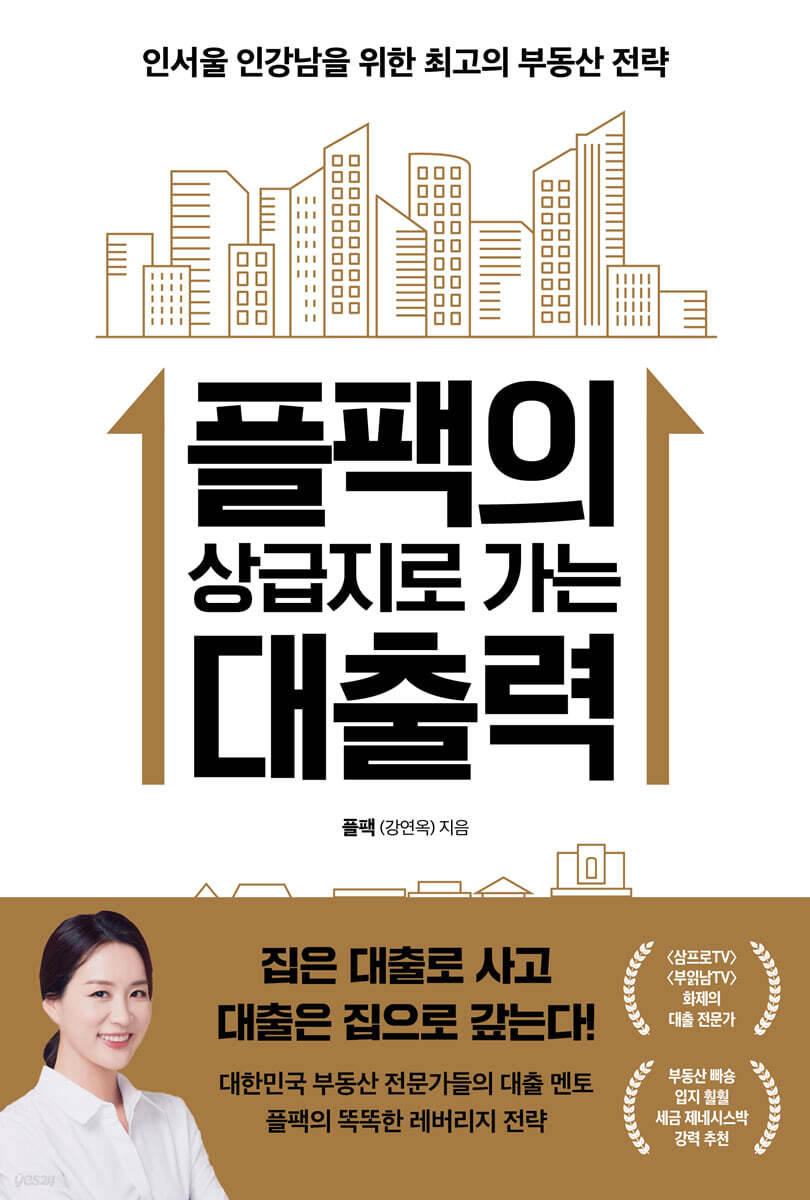
High power to reach the upper level of the pack
 |
Description
Book Introduction
The fastest way to move to a higher level is
It's not about money, it's about power!
Sampro TV, Bureadnam TV, Salaryman Rich TV
Hot topic loan expert
Recognized by real estate experts in Korea
Loan Mentor Ppack says
How to get to Seoul and Gangnam with high power!
People often think that to become rich or to move up a class, you need to have money.
But what is actually needed is not money, but ‘high power’.
Even with the same assets, age, and conditions, some people buy a house in Gangnam, while others remain homeless for the rest of their lives.
What makes the difference is the 'power to handle loans', or the power of leverage.
A loan mentor recognized by Korea's top real estate experts, Ppack calls the ability to effectively utilize loans "great power," and explains how to increase assets and move to a higher-end location through loans.
In particular, it emphasizes eliminating vague fears about loans and actively utilizing the financial system.
It also explains how the gap between those who are good at using loans and those who are not leads to a wealth gap, and introduces various lending techniques and examples that readers can directly utilize.
Of course, even if you know the importance of using loans, it's not easy to take on the risk of borrowing.
This book guides you through the safest and most effective way to grow your wealth through loans.
The author of "The Power of Going to the Upper Level of the P-Pack" has written this book on the most effective way to use loans, based on the knowledge and numerous practical experiences he has accumulated while working as a banker.
As you read the book, you'll quickly understand why he's considered Korea's top real estate lending expert and why so many people praise him on YouTube and in lectures.
You will also be able to naturally learn the fastest and easiest way to get to the upper level.
It's not about money, it's about power!
Sampro TV, Bureadnam TV, Salaryman Rich TV
Hot topic loan expert
Recognized by real estate experts in Korea
Loan Mentor Ppack says
How to get to Seoul and Gangnam with high power!
People often think that to become rich or to move up a class, you need to have money.
But what is actually needed is not money, but ‘high power’.
Even with the same assets, age, and conditions, some people buy a house in Gangnam, while others remain homeless for the rest of their lives.
What makes the difference is the 'power to handle loans', or the power of leverage.
A loan mentor recognized by Korea's top real estate experts, Ppack calls the ability to effectively utilize loans "great power," and explains how to increase assets and move to a higher-end location through loans.
In particular, it emphasizes eliminating vague fears about loans and actively utilizing the financial system.
It also explains how the gap between those who are good at using loans and those who are not leads to a wealth gap, and introduces various lending techniques and examples that readers can directly utilize.
Of course, even if you know the importance of using loans, it's not easy to take on the risk of borrowing.
This book guides you through the safest and most effective way to grow your wealth through loans.
The author of "The Power of Going to the Upper Level of the P-Pack" has written this book on the most effective way to use loans, based on the knowledge and numerous practical experiences he has accumulated while working as a banker.
As you read the book, you'll quickly understand why he's considered Korea's top real estate lending expert and why so many people praise him on YouTube and in lectures.
You will also be able to naturally learn the fastest and easiest way to get to the upper level.
- You can preview some of the book's contents.
Preview
index
Recommendation: To become rich, you need borrowing power, not money.
Prologue: The Secret to Growing Wealth from a Brokeback: High Power
Part 1: High-Power Mindset
Chapter 1: The Shortcut to 1% Wealth: Build Your Lending Power
01 What is high power?
02 Add lending power to your location.
03 How the Top 1% of Wealthy Use Loans
Chapter 2: Loans are not for repayment, but for use.
01 The Secret to Interest-Free Loans: Create a Principal and Interest Account
02 Analyze the market situation closely and respond accordingly.
03 Loans are strictly strategic.
Part 2 High-Power Warm-up
Chapter 3 Types of Loans and Basic Terminology
01 Building basic physical strength for high-powered work
02 Find a bank that will lend to me.
03 Loan-related costs and terms
Chapter 4: Mastering LTV, DTI, DSR, and Stress DSR
01 LTV based on collateral, DTI based on repayment ability
02 DTI's spicy version, DSR
03 To respond wisely to the DSR of each car
04 The Strongest Regulation, Stress DSR
Chapter 5: Finding Your Optimal Lending Strategy
01 Loan Strategy Based on Income
02 Secrets to Maintaining a High Credit Score
03 Credit Loans: From Optimal Utilization to Precautions
04 If you have no income, consider these loans.
05 Interest Rate Strategy: How to Lower Your Loan Interest Rate
06 The Relationship Between the Bank of Korea's Base Rate Policy and Loan Regulations
07 Finding the Right Loan Repayment Method for You
Let's grow wealth with Part 3's full-fledged training.
Chapter 6: Strategies for the Homeless: Seize the Market's Opportunities
01 Using the Jeonse System
02 Types of rental deposit loans: Policy-backed loans and bank-backed loans
03 Housing Loans: Policy Fund Loans and Bank-Funded Loans
04 How to Use Policy Fund Loans
05 How to Use Bank Loans
06 Top Secret Strategy for Pre-Loan and Post-Loan
07 Can the 'loan first, mortgage later' technique still be used?
08 Subscription: How to Get the Most Cost-Effective New Home in South Korea
09 Various ways to pay the remaining subscription amount
10 Cases of Successful First-Time Home Purchases Through Lending
Chapter 7: One-Home Owner Strategy: Actively Utilize Jeonse Loans and Swapping
01 How to Use a Lease Loan for Homeowners
02 Mortgage Loans: Purchase Loans and Living Stabilization Loans
03 How to Buy a House with a Living Stability Fund Loan
04 Alternative housing investment for single-home owners using relocation loans
05 Switching using the auction deposit loan
Chapter 8: Multi-Homeowner Strategies: Grow Your Wealth by Exploiting Various Cases
01 Officetel Investment
02 How to Get a Good Commercial Loan
03 How to maximize your loan limit with a trust loan
04 The Secret to Business Loans That Break Through DSR
05 Everything About Real Estate Corporate Loans
06 Investment breakthrough for multi-homeowners: real estate agents
07 Secrets to Getting a Loan with Land Mortgage
08 Government subsidies and policy loans
09. Real estate loan that covers taxes and loans at the same time
Epilogue: Let's bloom at our own pace
Free loan consultation for readers of this book
Prologue: The Secret to Growing Wealth from a Brokeback: High Power
Part 1: High-Power Mindset
Chapter 1: The Shortcut to 1% Wealth: Build Your Lending Power
01 What is high power?
02 Add lending power to your location.
03 How the Top 1% of Wealthy Use Loans
Chapter 2: Loans are not for repayment, but for use.
01 The Secret to Interest-Free Loans: Create a Principal and Interest Account
02 Analyze the market situation closely and respond accordingly.
03 Loans are strictly strategic.
Part 2 High-Power Warm-up
Chapter 3 Types of Loans and Basic Terminology
01 Building basic physical strength for high-powered work
02 Find a bank that will lend to me.
03 Loan-related costs and terms
Chapter 4: Mastering LTV, DTI, DSR, and Stress DSR
01 LTV based on collateral, DTI based on repayment ability
02 DTI's spicy version, DSR
03 To respond wisely to the DSR of each car
04 The Strongest Regulation, Stress DSR
Chapter 5: Finding Your Optimal Lending Strategy
01 Loan Strategy Based on Income
02 Secrets to Maintaining a High Credit Score
03 Credit Loans: From Optimal Utilization to Precautions
04 If you have no income, consider these loans.
05 Interest Rate Strategy: How to Lower Your Loan Interest Rate
06 The Relationship Between the Bank of Korea's Base Rate Policy and Loan Regulations
07 Finding the Right Loan Repayment Method for You
Let's grow wealth with Part 3's full-fledged training.
Chapter 6: Strategies for the Homeless: Seize the Market's Opportunities
01 Using the Jeonse System
02 Types of rental deposit loans: Policy-backed loans and bank-backed loans
03 Housing Loans: Policy Fund Loans and Bank-Funded Loans
04 How to Use Policy Fund Loans
05 How to Use Bank Loans
06 Top Secret Strategy for Pre-Loan and Post-Loan
07 Can the 'loan first, mortgage later' technique still be used?
08 Subscription: How to Get the Most Cost-Effective New Home in South Korea
09 Various ways to pay the remaining subscription amount
10 Cases of Successful First-Time Home Purchases Through Lending
Chapter 7: One-Home Owner Strategy: Actively Utilize Jeonse Loans and Swapping
01 How to Use a Lease Loan for Homeowners
02 Mortgage Loans: Purchase Loans and Living Stabilization Loans
03 How to Buy a House with a Living Stability Fund Loan
04 Alternative housing investment for single-home owners using relocation loans
05 Switching using the auction deposit loan
Chapter 8: Multi-Homeowner Strategies: Grow Your Wealth by Exploiting Various Cases
01 Officetel Investment
02 How to Get a Good Commercial Loan
03 How to maximize your loan limit with a trust loan
04 The Secret to Business Loans That Break Through DSR
05 Everything About Real Estate Corporate Loans
06 Investment breakthrough for multi-homeowners: real estate agents
07 Secrets to Getting a Loan with Land Mortgage
08 Government subsidies and policy loans
09. Real estate loan that covers taxes and loans at the same time
Epilogue: Let's bloom at our own pace
Free loan consultation for readers of this book
Detailed image

Into the book
Lending power is not simply the act of borrowing money.
Rather, it refers to the use of banks as a way to make money and as an economic wisdom to grow assets.
In other words, if the debt I used served as a stepping stone to increase my assets, then I have borrowing power.
For example, if you borrow just 100 million won more, you can buy an apartment in a prime location in Gangnam District 3 and make a big profit. However, if you are afraid of that 100 million won loan and just buy a Class C apartment in Gyeonggi Province with the capital you have, then you do not have the borrowing power.
Also, if you have given up on buying a home or have not been able to move on to other investments because you were unable to take out a loan, you have no borrowing power.
For example, let's say that if you've successfully used the 200 million won deposit as a rental deposit loan, you can take out an additional credit loan to purchase your own home.
However, if you had to give up on buying a house after receiving a bank notice that you would no longer be able to get another loan because you received part of your jeonse deposit as a credit loan instead of a jeonse deposit loan, it is not because you lacked capital, but because you actually lacked lending power.
--- From "Chapter 1: Build Your Lending Power: A Shortcut to 1% Wealth"
In the era of DSR, it is important to strategically plan the order in which you take out loans, especially when taking out credit loans and other loans together.
In conclusion, it is better to take out a loan that does not look at the DSR last.
Even if you have a lot of existing loans, this loan will pass because they won't look at your DSR.
So, which should you pursue first: a home mortgage loan or a credit loan? It depends on whether the home mortgage loan considers the DSR or not.
Typically, a general bank mortgage loan looks at the DSR, so you should get it before a credit loan.
If you have a short-term credit loan, your other loan limits will be reduced. If you take out a credit loan with a low DSR first, you may not be able to secure a home mortgage loan in the future. Therefore, you should first take out a home mortgage loan as needed and then take out a credit loan to cover your remaining DSR.
--- From "Chapter 4 Mastering LTV, DTI, DSR, and Stress DSR"
Korea Housing Finance Corporation's jeonse loan is the only loan among guarantee institutions that can be used even when the lessor is a corporation or foreigner.
For houses with a high loan amount compared to the appraised value, such as multi-family homes or multi-unit dwellings, or unregistered houses, the bank may also execute the loan at its discretion.
When processing a loan, the guarantee fee is low and the process is relatively simple, so it is preferred by landlords, tenants, and bankers because it is less of a burden.
In practice, after the first jeonse loan is executed, there are few cases where the maintenance of the move-in is confirmed, so even if the move-in is temporarily withdrawn, there is an advantage in that it is not immediately recovered like the jeonse loan from Seoul Guarantee Insurance or Housing & Urban Guarantee Corporation.
--- From "Chapter 6: Strategies for the Homeless: Seize the Opportunities the Market Offers"
Are bridging loans considered purchase funds or living expenses loans? To cut to the chase, bridging loans are actually purchase funds.
This is because it is a loan that is executed before the registration is issued.
Therefore, since the interim loan is not subject to the additional purchase prohibition agreement, you can continue to invest in housing in the future.
However, there was a student who asked if it was possible to buy a house by taking out a bridging loan.
The bank that I signed an agreement with for the interim loan that I was executing had me sign a contract prohibiting additional purchases.
What should I do in this case?
Group loans, such as interim loans, relocation loans, and balance loans, must follow the regulations of the bank with which the implementing company has an agreement.
Even though the bridging loan is originally a purchase loan and allows you to buy a house later, you should not buy a house if it is prohibited in your contract.
Because your own contract takes precedence.
So, while you should be aware of the basic banking regulations, don't forget that your own agreement takes precedence.
--- From "Chapter 7 One-Home Owner Strategy: Actively Utilize Jeonse Loans and Switching"
If you remodel an open commercial building into a sectioned commercial building, you may be able to get a loan, so I recommend that you take out a commercial business loan and refinance your existing credit loan.
Since there was originally a plan to remodel the open commercial building, I remodeled it into a structure that would allow for a loan and received a loan, which allowed me to pay off my existing personal credit loan.
Then, the personal DSR came back to life, and I was able to make full use of the revived DSR and even switch.
He is using the remaining LTV to borrow money from a business loan and use it as working capital, while also significantly expanding his business and increasing his business income.
Rather, it refers to the use of banks as a way to make money and as an economic wisdom to grow assets.
In other words, if the debt I used served as a stepping stone to increase my assets, then I have borrowing power.
For example, if you borrow just 100 million won more, you can buy an apartment in a prime location in Gangnam District 3 and make a big profit. However, if you are afraid of that 100 million won loan and just buy a Class C apartment in Gyeonggi Province with the capital you have, then you do not have the borrowing power.
Also, if you have given up on buying a home or have not been able to move on to other investments because you were unable to take out a loan, you have no borrowing power.
For example, let's say that if you've successfully used the 200 million won deposit as a rental deposit loan, you can take out an additional credit loan to purchase your own home.
However, if you had to give up on buying a house after receiving a bank notice that you would no longer be able to get another loan because you received part of your jeonse deposit as a credit loan instead of a jeonse deposit loan, it is not because you lacked capital, but because you actually lacked lending power.
--- From "Chapter 1: Build Your Lending Power: A Shortcut to 1% Wealth"
In the era of DSR, it is important to strategically plan the order in which you take out loans, especially when taking out credit loans and other loans together.
In conclusion, it is better to take out a loan that does not look at the DSR last.
Even if you have a lot of existing loans, this loan will pass because they won't look at your DSR.
So, which should you pursue first: a home mortgage loan or a credit loan? It depends on whether the home mortgage loan considers the DSR or not.
Typically, a general bank mortgage loan looks at the DSR, so you should get it before a credit loan.
If you have a short-term credit loan, your other loan limits will be reduced. If you take out a credit loan with a low DSR first, you may not be able to secure a home mortgage loan in the future. Therefore, you should first take out a home mortgage loan as needed and then take out a credit loan to cover your remaining DSR.
--- From "Chapter 4 Mastering LTV, DTI, DSR, and Stress DSR"
Korea Housing Finance Corporation's jeonse loan is the only loan among guarantee institutions that can be used even when the lessor is a corporation or foreigner.
For houses with a high loan amount compared to the appraised value, such as multi-family homes or multi-unit dwellings, or unregistered houses, the bank may also execute the loan at its discretion.
When processing a loan, the guarantee fee is low and the process is relatively simple, so it is preferred by landlords, tenants, and bankers because it is less of a burden.
In practice, after the first jeonse loan is executed, there are few cases where the maintenance of the move-in is confirmed, so even if the move-in is temporarily withdrawn, there is an advantage in that it is not immediately recovered like the jeonse loan from Seoul Guarantee Insurance or Housing & Urban Guarantee Corporation.
--- From "Chapter 6: Strategies for the Homeless: Seize the Opportunities the Market Offers"
Are bridging loans considered purchase funds or living expenses loans? To cut to the chase, bridging loans are actually purchase funds.
This is because it is a loan that is executed before the registration is issued.
Therefore, since the interim loan is not subject to the additional purchase prohibition agreement, you can continue to invest in housing in the future.
However, there was a student who asked if it was possible to buy a house by taking out a bridging loan.
The bank that I signed an agreement with for the interim loan that I was executing had me sign a contract prohibiting additional purchases.
What should I do in this case?
Group loans, such as interim loans, relocation loans, and balance loans, must follow the regulations of the bank with which the implementing company has an agreement.
Even though the bridging loan is originally a purchase loan and allows you to buy a house later, you should not buy a house if it is prohibited in your contract.
Because your own contract takes precedence.
So, while you should be aware of the basic banking regulations, don't forget that your own agreement takes precedence.
--- From "Chapter 7 One-Home Owner Strategy: Actively Utilize Jeonse Loans and Switching"
If you remodel an open commercial building into a sectioned commercial building, you may be able to get a loan, so I recommend that you take out a commercial business loan and refinance your existing credit loan.
Since there was originally a plan to remodel the open commercial building, I remodeled it into a structure that would allow for a loan and received a loan, which allowed me to pay off my existing personal credit loan.
Then, the personal DSR came back to life, and I was able to make full use of the revived DSR and even switch.
He is using the remaining LTV to borrow money from a business loan and use it as working capital, while also significantly expanding his business and increasing his business income.
--- From "Chapter 8 Multi-Home Owner Strategies: Increase Your Wealth by Utilizing Various Cases"
Publisher's Review
Buy a house with a loan and pay off the loan with the house!
A comprehensive list of strategies you can use based on your housing stock, location, and salary.
The greatest strength of this book is that it doesn't simply list information and methods for obtaining loans; it also presents strategies for leveraging these resources to maximize your wealth.
While books on lending typically focus on financial products and credit management, this book simultaneously covers how to analyze real estate locations and strategies for leveraging lending to move into upmarket locations.
The author presents a variety of proven strategies to help you turn debt into an opportunity rather than a burden.
For example, it contains concrete methods that can be immediately applied in practice, such as the "loan first, mortgage later" strategy that combines optimal loans while reducing initial investment, how to overcome DSR regulations by utilizing business loans, and how to minimize interest burden by utilizing policy funds loans.
It also points out the pros and cons of each product and the optimal combination for each situation.
It also explains how to combine "location" and "capital power," the most important factors in real estate investment, and suggests ways to go beyond simply finding a good property and secure a good location by utilizing loans.
It also covers in detail how to improve your credit score, strategies to minimize loan interest, and how to use a "principal and interest account" to reduce the burden of loan repayment, showing you how to go beyond just getting a loan and use it to increase your assets.
What sets this book apart from other real estate investment books is its explanation of how to leverage these restrictions to increase wealth, especially in a world where lending regulations are being strengthened.
Another strength of this book is its diverse case studies.
It covers a wide range of cases, from cases where real investors used loans to accumulate wealth to cases where they suffered losses due to misuse of loans, helping readers avoid mistakes in real-world situations.
In particular, through 'cases of moving to a higher-class area using loans,' we analyze cases such as jumping from Gyeonggi-do to a new apartment in Seoul and changing the living radius from a local area to the metropolitan area, and specifically suggest the optimal loan strategy for each situation.
We present both success and failure cases, detailing the things to watch out for and mistakes to avoid when using loans.
I want to go to the upper level as quickly as possible
A must-read for Korean real estate investors
This book is not just a simple lending guide.
This is a must-have financial strategy book for anyone seeking success in South Korea's real estate market, and an essential guide to climbing the ladder of wealth.
Many people view loans negatively, viewing them as mere debt. However, the author emphasizes in this book that loans are a powerful weapon for growing assets, and that the ability to utilize them, known as "great power," determines the path to wealth.
In the real estate market, it's not just those with a lot of cash who win, but those who know how to use their loans strategically who ultimately gain greater wealth.
In a world where financial and real estate markets are constantly changing, it is essential for individuals to acquire financial knowledge on their own and utilize it properly.
However, most people do not properly research loans, relying on fragmented information on the Internet or relying solely on the advice of bank advisors.
This book systematically organizes everything from basic lending concepts to advanced strategies, empowering readers to leverage their own financial resources.
In Korea's real estate market, it is no longer possible to purchase a home through savings alone.
Only those who know how to leverage credit can move to higher-end areas, secure better real estate, and increase their wealth.
This book is a must-read not only for real estate investors, but also for first-time homebuyers, those struggling with loan misuse, and anyone seeking to properly understand finance.
If you don't know how to use your loans strategically, you'll regret it years later when real estate prices have risen.
However, by developing your borrowing power through this book, anyone will have the opportunity to leverage finance to rapidly increase their assets.
If you're not afraid of borrowing, but rather want to make it work for you and quantum-jump your assets, this book is a must-read.
A comprehensive list of strategies you can use based on your housing stock, location, and salary.
The greatest strength of this book is that it doesn't simply list information and methods for obtaining loans; it also presents strategies for leveraging these resources to maximize your wealth.
While books on lending typically focus on financial products and credit management, this book simultaneously covers how to analyze real estate locations and strategies for leveraging lending to move into upmarket locations.
The author presents a variety of proven strategies to help you turn debt into an opportunity rather than a burden.
For example, it contains concrete methods that can be immediately applied in practice, such as the "loan first, mortgage later" strategy that combines optimal loans while reducing initial investment, how to overcome DSR regulations by utilizing business loans, and how to minimize interest burden by utilizing policy funds loans.
It also points out the pros and cons of each product and the optimal combination for each situation.
It also explains how to combine "location" and "capital power," the most important factors in real estate investment, and suggests ways to go beyond simply finding a good property and secure a good location by utilizing loans.
It also covers in detail how to improve your credit score, strategies to minimize loan interest, and how to use a "principal and interest account" to reduce the burden of loan repayment, showing you how to go beyond just getting a loan and use it to increase your assets.
What sets this book apart from other real estate investment books is its explanation of how to leverage these restrictions to increase wealth, especially in a world where lending regulations are being strengthened.
Another strength of this book is its diverse case studies.
It covers a wide range of cases, from cases where real investors used loans to accumulate wealth to cases where they suffered losses due to misuse of loans, helping readers avoid mistakes in real-world situations.
In particular, through 'cases of moving to a higher-class area using loans,' we analyze cases such as jumping from Gyeonggi-do to a new apartment in Seoul and changing the living radius from a local area to the metropolitan area, and specifically suggest the optimal loan strategy for each situation.
We present both success and failure cases, detailing the things to watch out for and mistakes to avoid when using loans.
I want to go to the upper level as quickly as possible
A must-read for Korean real estate investors
This book is not just a simple lending guide.
This is a must-have financial strategy book for anyone seeking success in South Korea's real estate market, and an essential guide to climbing the ladder of wealth.
Many people view loans negatively, viewing them as mere debt. However, the author emphasizes in this book that loans are a powerful weapon for growing assets, and that the ability to utilize them, known as "great power," determines the path to wealth.
In the real estate market, it's not just those with a lot of cash who win, but those who know how to use their loans strategically who ultimately gain greater wealth.
In a world where financial and real estate markets are constantly changing, it is essential for individuals to acquire financial knowledge on their own and utilize it properly.
However, most people do not properly research loans, relying on fragmented information on the Internet or relying solely on the advice of bank advisors.
This book systematically organizes everything from basic lending concepts to advanced strategies, empowering readers to leverage their own financial resources.
In Korea's real estate market, it is no longer possible to purchase a home through savings alone.
Only those who know how to leverage credit can move to higher-end areas, secure better real estate, and increase their wealth.
This book is a must-read not only for real estate investors, but also for first-time homebuyers, those struggling with loan misuse, and anyone seeking to properly understand finance.
If you don't know how to use your loans strategically, you'll regret it years later when real estate prices have risen.
However, by developing your borrowing power through this book, anyone will have the opportunity to leverage finance to rapidly increase their assets.
If you're not afraid of borrowing, but rather want to make it work for you and quantum-jump your assets, this book is a must-read.
GOODS SPECIFICS
- Date of issue: March 5, 2025
- Page count, weight, size: 338 pages | 632g | 152*225*19mm
- ISBN13: 9788947501453
- ISBN10: 894750145X
You may also like
카테고리
korean


korean

![GQ KOREA Mark (Monthly): December [2025]](http://librairie.coreenne.fr/cdn/shop/files/8ef265dbbfbf186523ed75ba7319009d.jpg?v=1765340328&width=3840)


