

Teamwork Reboot
 |
Description
Book Introduction
A good team is not luck, it's design, training, and selection.
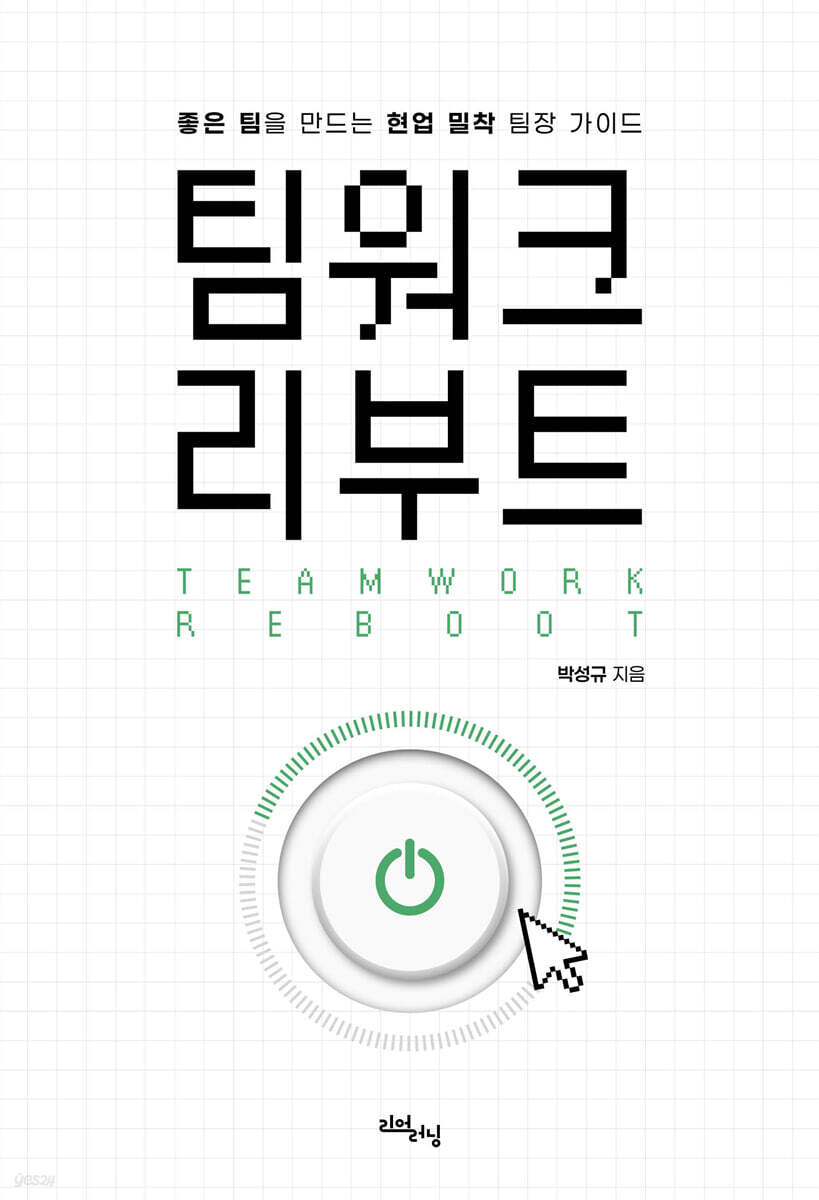
"Teamwork Reboot" is not an abstract leadership theory, but rather views the real-world problems of prolonged meetings, lack of results, and mounting dissatisfaction as a "systemic error in the team," and proposes a "redesign of the team structure" as the solution, rather than individual passion.
It also reminds us that changing teams is not about adding something new, but about stopping what is unnecessary and returning to the essence.
Listen well, speak clearly, share transparently, and provide timely feedback—these simple yet powerful principles can revitalize your team.
This book is a practical leadership guide for leaders and a guide for team members on how to work together, providing realistic guidance for anyone who wants to build a great team on their own.
"Teamwork Reboot" is not an abstract leadership theory, but rather views the real-world problems of prolonged meetings, lack of results, and mounting dissatisfaction as a "systemic error in the team," and proposes a "redesign of the team structure" as the solution, rather than individual passion.
It also reminds us that changing teams is not about adding something new, but about stopping what is unnecessary and returning to the essence.
Listen well, speak clearly, share transparently, and provide timely feedback—these simple yet powerful principles can revitalize your team.
This book is a practical leadership guide for leaders and a guide for team members on how to work together, providing realistic guidance for anyone who wants to build a great team on their own.
- You can preview some of the book's contents.
Preview
index
prolog
Part 1.
Understanding a good team
Chapter 1.
What is a team?
Chapter 2.
What makes a good team?
Chapter 3.
Research on Effective Teams
Chapter 4.
The Core of a Good Team: Teamwork
Chapter 5.
X-perspective and Y-perspective
Part 2.
The art of building a good team
Chapter 1.
Teamwork isn't easy
Chapter 2.
Teamwork Skill #0: Empathetic Communication
Chapter 3.
Teamwork Skill #1: Feedback
Chapter 4.
Teamwork Skill #2: Responding to Conflict
Chapter 5.
Teamwork Skill #3: Team Decision Making
Chapter 6.
Teamwork Skill #4 Team Meeting
Part 3.
Building a good team
Chapter 1.
It's hard to build a good team
Chapter 2.
Good Team Member Guide
Chapter 3.
A Good Team Leader's Guide
Chapter 4.
Getting Feedback as a Leader
Chapter 5.
Creating a Team Culture
Chapter 6.
Team alignment in one direction
Chapter 7.
Team Performance Management
Chapter 8.
1:1 meeting
Chapter 9.
Team Ground Rules Setting
Chapter 10.
Team Conflict Mediation
Epilogue
Part 1.
Understanding a good team
Chapter 1.
What is a team?
Chapter 2.
What makes a good team?
Chapter 3.
Research on Effective Teams
Chapter 4.
The Core of a Good Team: Teamwork
Chapter 5.
X-perspective and Y-perspective
Part 2.
The art of building a good team
Chapter 1.
Teamwork isn't easy
Chapter 2.
Teamwork Skill #0: Empathetic Communication
Chapter 3.
Teamwork Skill #1: Feedback
Chapter 4.
Teamwork Skill #2: Responding to Conflict
Chapter 5.
Teamwork Skill #3: Team Decision Making
Chapter 6.
Teamwork Skill #4 Team Meeting
Part 3.
Building a good team
Chapter 1.
It's hard to build a good team
Chapter 2.
Good Team Member Guide
Chapter 3.
A Good Team Leader's Guide
Chapter 4.
Getting Feedback as a Leader
Chapter 5.
Creating a Team Culture
Chapter 6.
Team alignment in one direction
Chapter 7.
Team Performance Management
Chapter 8.
1:1 meeting
Chapter 9.
Team Ground Rules Setting
Chapter 10.
Team Conflict Mediation
Epilogue
Detailed image

Into the book
▲However, these days, it is not easy to talk about followership based on such vertical relationships.
Now we need to approach it from a different paradigm.
Rather than followership, it makes more sense to talk about fundamental tipping.
If teamwork is well-executed, followership may no longer need to be discussed.
--- p.38
▲Teamwork is the attitude and dedication of team members to achieve the team's purpose or goal.
So good teamwork is about focusing and concentrating on the team doing well.
Also, until the team's decision-making process, we should fully discuss our opinions with each other, but once a decision is made, even if we don't like it or agree with it, we should commit to the team's decision to achieve the team's goals.
--- p.39
▲The most crucial question is: Will you see your colleagues as people who "don't like to work" or as people who "want to do a good job?"
If you encounter a situation where a team member or colleague falls short of your expectations, it might be helpful to ask yourself this question and consider how you view your colleague.
--- p.45
▲Ultimately, the reason good communication is difficult is not because we are different.
Being different is the basic starting condition for starting a team.
So the difference is that communication is necessary, not the cause.
The problem is not the difference itself, but the wrong way of talking that is the fundamental problem.
--- p.50
▲The important thing is not to agree with the other person's feelings and desires, but to understand and acknowledge that 'that's what the other person feels and expects.'
--- p.61
▲The first thing to consider when giving feedback is that feedback is not facts but each person's opinion.
In many cases, especially in cases where there is a strong hierarchical relationship, it is difficult to accept the boss's feedback as truth.
Even when giving feedback, the boss conveys it in the form of, "This is a fact."
Of course, if you have a lot of experience, and things are simple and predictable, you will be able to make an interpretation that is closer to the truth.
But still, feedback is opinion.
--- p.70
▲ So, what does it mean to receive feedback effectively? Receiving feedback effectively means understanding the other person's perspective and expectations before deciding what to do.
More specifically, 'receiving feedback well' means properly understanding the other person's intentions regarding how they interpret what happened in the past and what they would like to do in the future based on that interpretation.
--- p.76
▲We need to re-establish the basic premise of the ‘me’ who receives feedback.
We must admit that we are not perfect beings.
Anyone can make mistakes or errors, and sometimes we may be the cause or part of the cause of a problem.
Even so, we are fundamentally decent people.
It is rather illogical to define it in black and white.
There are countless numbers between 0 and 1.
It's reasonable to assume that we are somewhere between 0 and 1.
We must avoid black and white thinking.
--- p.85
▲The most difficult time when giving feedback is when someone doesn't agree with the feedback I gave.
It's heartbreaking to hear the answer, 'I don't think so.'
Anger can lead to an attack on the other person or a hasty escape.
In times like these, it's important to clarify what you disagree with.
It is also helpful to utilize the feedback model in these cases.
--- p.97
▲What we want is the positive function of conflict.
How we deal with our differences can lead to growth, development, and quality relationships through conflict.
Now we need to approach it from a different paradigm.
Rather than followership, it makes more sense to talk about fundamental tipping.
If teamwork is well-executed, followership may no longer need to be discussed.
--- p.38
▲Teamwork is the attitude and dedication of team members to achieve the team's purpose or goal.
So good teamwork is about focusing and concentrating on the team doing well.
Also, until the team's decision-making process, we should fully discuss our opinions with each other, but once a decision is made, even if we don't like it or agree with it, we should commit to the team's decision to achieve the team's goals.
--- p.39
▲The most crucial question is: Will you see your colleagues as people who "don't like to work" or as people who "want to do a good job?"
If you encounter a situation where a team member or colleague falls short of your expectations, it might be helpful to ask yourself this question and consider how you view your colleague.
--- p.45
▲Ultimately, the reason good communication is difficult is not because we are different.
Being different is the basic starting condition for starting a team.
So the difference is that communication is necessary, not the cause.
The problem is not the difference itself, but the wrong way of talking that is the fundamental problem.
--- p.50
▲The important thing is not to agree with the other person's feelings and desires, but to understand and acknowledge that 'that's what the other person feels and expects.'
--- p.61
▲The first thing to consider when giving feedback is that feedback is not facts but each person's opinion.
In many cases, especially in cases where there is a strong hierarchical relationship, it is difficult to accept the boss's feedback as truth.
Even when giving feedback, the boss conveys it in the form of, "This is a fact."
Of course, if you have a lot of experience, and things are simple and predictable, you will be able to make an interpretation that is closer to the truth.
But still, feedback is opinion.
--- p.70
▲ So, what does it mean to receive feedback effectively? Receiving feedback effectively means understanding the other person's perspective and expectations before deciding what to do.
More specifically, 'receiving feedback well' means properly understanding the other person's intentions regarding how they interpret what happened in the past and what they would like to do in the future based on that interpretation.
--- p.76
▲We need to re-establish the basic premise of the ‘me’ who receives feedback.
We must admit that we are not perfect beings.
Anyone can make mistakes or errors, and sometimes we may be the cause or part of the cause of a problem.
Even so, we are fundamentally decent people.
It is rather illogical to define it in black and white.
There are countless numbers between 0 and 1.
It's reasonable to assume that we are somewhere between 0 and 1.
We must avoid black and white thinking.
--- p.85
▲The most difficult time when giving feedback is when someone doesn't agree with the feedback I gave.
It's heartbreaking to hear the answer, 'I don't think so.'
Anger can lead to an attack on the other person or a hasty escape.
In times like these, it's important to clarify what you disagree with.
It is also helpful to utilize the feedback model in these cases.
--- p.97
▲What we want is the positive function of conflict.
How we deal with our differences can lead to growth, development, and quality relationships through conflict.
--- p.103
Publisher's Review
A good team is not lucky.
It is design, training, and choice.
Teamwork Reboot is a book that brings back this simple but easily forgotten fact.
It's not just a simple team management manual, it's a 'reboot manual' that gets your team working again.
These days, the hot topic for companies and organizations is 'team' rather than 'individual'.
But teamwork is still an area that relies on intuition.
Relationships between people, communication gaps, and distribution of responsibilities cannot be solved by any one formula.
This is where Teamwork Reboot becomes interesting.
Rather than abstract leadership discourse, the author explores what a "good team" is through scenes recurring in everyday work settings.
Why meetings take so long, why there's so much work to do but no results, why we can't speak up even though we're building up complaints.
The author views these problems as a 'system error' in the team.
And the way to fix that error, he says, is not through individual passion, but by 'redesigning the team structure.'
The first part of the book covers the purpose and foundation of the team.
It begins with the question, “Why does our team exist?” and walks us through the process of establishing a direction that all members can share.
A team with unclear goals easily becomes tired, and the leader's judgment is shaken.
The author emphasizes that clearly establishing team rules and roles is the starting point of leadership.
It is impressive to hear that a team leader is not someone who distributes work, but someone who constantly interprets the team's purpose.
The second part goes into the real operational issues.
It specifically addresses practical issues that every leader faces, such as meetings, schedule management, decision-making, and work flow.
Instead of the common advice to "keep meetings short," the author offers the insight that "meetings should be about aligning meaning, not exchanging information."
This one sentence alone changes the nature of the meeting.
The third part is about team culture.
Topics include psychological safety, trust, feedback, and conflict management.
The author asserts that 'a team without conflict is actually unhealthy.'
The more you avoid uncomfortable conversations, the deeper the rift in your relationship becomes.
Ultimately, trust is built on honest conversations rather than good feelings.
The explanation goes on to say that what a team leader needs when delegating authority is not control, but trust, and that trust grows from specific feedback and a consistent attitude.
The title of “Teamwork Reboot”, “Reboot,” clearly captures the essence of this book.
Changing teams is not about adding something new, but about stopping what is unnecessary and returning to the essence.
The author says not to be afraid of that 'process of initialization'.
When a system breaks down, all it takes is the courage to hit the restart button.
For both team leaders and team members, this book serves as a guide to finding that button together.
Teamwork Reboot doesn't present a picture of an ideal organization.
Instead, it shows 'small principles' that can work again even in the complexities of reality.
The principles are not grand.
Listen well, speak clearly, share transparently, and provide timely feedback.
But when you consistently practice these simple principles, your team will come back to life.
This book is a good leadership book for team leaders to read, and at the same time, it is a book on relationships that team members need as well.
In an era that emphasizes only individual growth, it is meaningful in that it asks a new question about 'how to work together.'
Good teams don't come naturally.
But it can be created.
Teamwork Reboot provides a realistic map for that process.
It is design, training, and choice.
Teamwork Reboot is a book that brings back this simple but easily forgotten fact.
It's not just a simple team management manual, it's a 'reboot manual' that gets your team working again.
These days, the hot topic for companies and organizations is 'team' rather than 'individual'.
But teamwork is still an area that relies on intuition.
Relationships between people, communication gaps, and distribution of responsibilities cannot be solved by any one formula.
This is where Teamwork Reboot becomes interesting.
Rather than abstract leadership discourse, the author explores what a "good team" is through scenes recurring in everyday work settings.
Why meetings take so long, why there's so much work to do but no results, why we can't speak up even though we're building up complaints.
The author views these problems as a 'system error' in the team.
And the way to fix that error, he says, is not through individual passion, but by 'redesigning the team structure.'
The first part of the book covers the purpose and foundation of the team.
It begins with the question, “Why does our team exist?” and walks us through the process of establishing a direction that all members can share.
A team with unclear goals easily becomes tired, and the leader's judgment is shaken.
The author emphasizes that clearly establishing team rules and roles is the starting point of leadership.
It is impressive to hear that a team leader is not someone who distributes work, but someone who constantly interprets the team's purpose.
The second part goes into the real operational issues.
It specifically addresses practical issues that every leader faces, such as meetings, schedule management, decision-making, and work flow.
Instead of the common advice to "keep meetings short," the author offers the insight that "meetings should be about aligning meaning, not exchanging information."
This one sentence alone changes the nature of the meeting.
The third part is about team culture.
Topics include psychological safety, trust, feedback, and conflict management.
The author asserts that 'a team without conflict is actually unhealthy.'
The more you avoid uncomfortable conversations, the deeper the rift in your relationship becomes.
Ultimately, trust is built on honest conversations rather than good feelings.
The explanation goes on to say that what a team leader needs when delegating authority is not control, but trust, and that trust grows from specific feedback and a consistent attitude.
The title of “Teamwork Reboot”, “Reboot,” clearly captures the essence of this book.
Changing teams is not about adding something new, but about stopping what is unnecessary and returning to the essence.
The author says not to be afraid of that 'process of initialization'.
When a system breaks down, all it takes is the courage to hit the restart button.
For both team leaders and team members, this book serves as a guide to finding that button together.
Teamwork Reboot doesn't present a picture of an ideal organization.
Instead, it shows 'small principles' that can work again even in the complexities of reality.
The principles are not grand.
Listen well, speak clearly, share transparently, and provide timely feedback.
But when you consistently practice these simple principles, your team will come back to life.
This book is a good leadership book for team leaders to read, and at the same time, it is a book on relationships that team members need as well.
In an era that emphasizes only individual growth, it is meaningful in that it asks a new question about 'how to work together.'
Good teams don't come naturally.
But it can be created.
Teamwork Reboot provides a realistic map for that process.
GOODS SPECIFICS
- Date of issue: October 20, 2025
- Page count, weight, size: 283 pages | 140*205*20mm
- ISBN13: 9791199158467
- ISBN10: 1199158461
You may also like
카테고리
korean


korean

![GQ KOREA Mark (Monthly): December [2025]](http://librairie.coreenne.fr/cdn/shop/files/8ef265dbbfbf186523ed75ba7319009d.jpg?v=1765340328&width=3840)


