

Design for everyone
 |
Description
Book Introduction
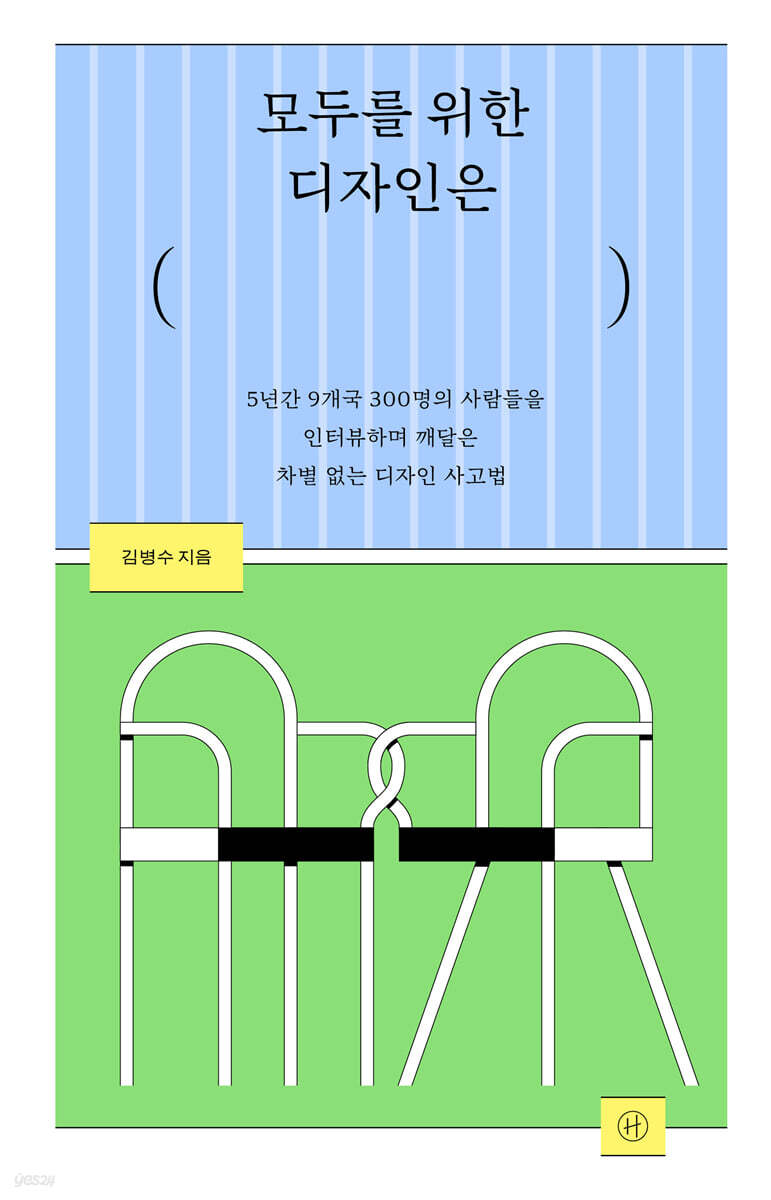
The design is
It is not for ‘beautiful and convenient discrimination’!
★★★
A must-read for planners, designers, and marketers who dream of development for all.
Professor Ga Hyun-wook of the KAIST Department of Convergence Studies
Professor Kim Joo-yeon of the Department of Industrial Design at Hongik University
Highly recommended by Professor Lee Jang-seop of the Department of Design at Seoul National University
Usually, design aims to be ‘more beautiful’ and ‘more convenient’.
But what if these beautiful and convenient things are completely out of reach for some people? If a child with a disability can't visit a museum, and an elderly person hesitantly waiting for a delivery app screen must give up on ordering, then who are those beautiful and convenient things for? We use things every day, and we go somewhere.
However, spaces, systems, and products that are taken for granted as open are still inconvenient, impossible, and excluded for some.
Who is at the center of design? This book revisits the "reference point" through the voices of people with diverse sensibilities, including people with disabilities, children, the elderly, people with ADHD, panic disorder, dyslexia, and refugees.
Over a period of five years, the author interviewed over 300 experts and stakeholders from nine countries: Korea, Japan, the United States, the United Kingdom, the Netherlands, Finland, Sweden, Ukraine, and India.
We explore spaces, products, and services we encounter in our daily lives, such as museums, playgrounds, libraries, national parks, and various applications, and seek ways to realize "design that does not exclude."
《Design for All》 contains non-discriminatory design thinking and practice processes for people with different bodies and lives, such as children with developmental disabilities, visually impaired parents raising children, wheelchair users, residents of a village for the elderly with dementia, and designers with dyslexia.
Specific examples from each country illustrate how social communities—whether corporate or institutional, or individual citizens—can work together to create "incomplete hospitality."
It is not for ‘beautiful and convenient discrimination’!
★★★
A must-read for planners, designers, and marketers who dream of development for all.
Professor Ga Hyun-wook of the KAIST Department of Convergence Studies
Professor Kim Joo-yeon of the Department of Industrial Design at Hongik University
Highly recommended by Professor Lee Jang-seop of the Department of Design at Seoul National University
Usually, design aims to be ‘more beautiful’ and ‘more convenient’.
But what if these beautiful and convenient things are completely out of reach for some people? If a child with a disability can't visit a museum, and an elderly person hesitantly waiting for a delivery app screen must give up on ordering, then who are those beautiful and convenient things for? We use things every day, and we go somewhere.
However, spaces, systems, and products that are taken for granted as open are still inconvenient, impossible, and excluded for some.
Who is at the center of design? This book revisits the "reference point" through the voices of people with diverse sensibilities, including people with disabilities, children, the elderly, people with ADHD, panic disorder, dyslexia, and refugees.
Over a period of five years, the author interviewed over 300 experts and stakeholders from nine countries: Korea, Japan, the United States, the United Kingdom, the Netherlands, Finland, Sweden, Ukraine, and India.
We explore spaces, products, and services we encounter in our daily lives, such as museums, playgrounds, libraries, national parks, and various applications, and seek ways to realize "design that does not exclude."
《Design for All》 contains non-discriminatory design thinking and practice processes for people with different bodies and lives, such as children with developmental disabilities, visually impaired parents raising children, wheelchair users, residents of a village for the elderly with dementia, and designers with dyslexia.
Specific examples from each country illustrate how social communities—whether corporate or institutional, or individual citizens—can work together to create "incomplete hospitality."
- You can preview some of the book's contents.
Preview
index
Recommendation
prolog
Chapter 1: Standards | Reviewing Product and Service Standards
Intro The Wrong Driver and the Right Driver
1. Standard for a standing person
2 Expand, change, or remove reference points
3 Product Evolution and Inclusive Innovation
4 From designer-centered to user-centered
Chapter 2: Hidden | Not everything is revealed on the surface.
Intro Beyond the physical realm to the mental realm
1. A design without visualization is like a buried design.
2 Designed for panic disorder and concentration recovery
3 Trauma-Informed Design and Psychological Recovery
4 Hidden Disabilities: Design Elements That Consider Dyslexia
5 Connecting Design and Defspace
6 Ways to Increase Social Accessibility through Hospitality
Chapter 3 Participation | From Results-Oriented to Process-Oriented
Intro Participation and Inaccurate Assumptions
1 Participatory design that reduces the gap with reality
2 Observation and Participation in Creating User-Centered Design
3 Don't blindly trust the guide's figures
Process Economy Applied to 4 Cities
5 Beyond the perspective of charity and benefit
Chapter 4: Commonality | Discovering Commonalities in Differences
Intro Commonalities and Extensibility
1 The most common design for seniors with dementia
2 Inclusive Community Design Lessons from the Selbo Project
3 Play space for everyone
4. Shifts in Older Users' Mental Models and Design Approaches
Chapter 5: Options and Freewill | The Ultimate Goal of Inclusive Design
Intro The feeling of being alive
1 How a Disabled Couple Raises Children
2. Ensuring Choice Creates an Inclusive User Experience
3 Information awareness is directly linked to survival.
4 Design for Human Dignity
Americas
Image source and location
prolog
Chapter 1: Standards | Reviewing Product and Service Standards
Intro The Wrong Driver and the Right Driver
1. Standard for a standing person
2 Expand, change, or remove reference points
3 Product Evolution and Inclusive Innovation
4 From designer-centered to user-centered
Chapter 2: Hidden | Not everything is revealed on the surface.
Intro Beyond the physical realm to the mental realm
1. A design without visualization is like a buried design.
2 Designed for panic disorder and concentration recovery
3 Trauma-Informed Design and Psychological Recovery
4 Hidden Disabilities: Design Elements That Consider Dyslexia
5 Connecting Design and Defspace
6 Ways to Increase Social Accessibility through Hospitality
Chapter 3 Participation | From Results-Oriented to Process-Oriented
Intro Participation and Inaccurate Assumptions
1 Participatory design that reduces the gap with reality
2 Observation and Participation in Creating User-Centered Design
3 Don't blindly trust the guide's figures
Process Economy Applied to 4 Cities
5 Beyond the perspective of charity and benefit
Chapter 4: Commonality | Discovering Commonalities in Differences
Intro Commonalities and Extensibility
1 The most common design for seniors with dementia
2 Inclusive Community Design Lessons from the Selbo Project
3 Play space for everyone
4. Shifts in Older Users' Mental Models and Design Approaches
Chapter 5: Options and Freewill | The Ultimate Goal of Inclusive Design
Intro The feeling of being alive
1 How a Disabled Couple Raises Children
2. Ensuring Choice Creates an Inclusive User Experience
3 Information awareness is directly linked to survival.
4 Design for Human Dignity
Americas
Image source and location
Detailed image

Into the book
Changing the reference point can be said to be a change of perspective.
By changing our perspective, we ultimately provide more useful and inclusive solutions to more people.
I'd like to introduce the kitchen of Karen Brett Meyer, an architect and former Obama administration accessibility advisor who was interviewed on the topic of safety in 2022.
He is also the president of Seattle-based Studio Pacifica.
For him, who has been using a wheelchair for over 40 years due to osteogenesis imperfecta, the kitchen is an important space where he spends time with his family.
(…) Brett Meyer created a kitchen that took into account the movement, height, and knee interference of wheelchair users.
The bottom of the sink is left empty so that it can be used up close while in a wheelchair.
I also purchased an oven door that opens from right to left instead of top to bottom, so I can use it without interfering with my knees.
It was designed to go beyond what is needed for independent use by people with disabilities and even take into consideration the movement patterns of family members or assistants who live with people with disabilities.
By changing the standards that were only for standing people to the perspective of wheelchair users, it became a space that could be used by both able-bodied and disabled people.
--- From "Expanding, Changing, and Removing Reference Points"
In the summer of 2024, I interviewed three staff members from the Ishikawa Prefectural Library.
The key question in the interview was, "What did you focus on most when aiming for a library for all?"
In this meeting, I learned new facts that I had not been able to find in press reports.
It was saying, “Don’t trust the guide’s figures too much.”
The guide mentioned here is Ishikawa Prefecture's barrier-free guideline.
Barrier-free literally means removing barriers.
(…) So, what does it mean to distrust these official guides? Are you saying you don't trust Ishikawa Prefecture's barrier-free guides because they're formal or inadequate? Mr. Sakai of the Management Department gave me a striking answer to my question.
“The answer is found only on-site.” This means that while we basically follow the guidelines, we ultimately find the answer on-site after conducting numerous tests.
The information in the guide is referenced, but there is room for adaptation to suit the local situation.
By changing our perspective, we ultimately provide more useful and inclusive solutions to more people.
I'd like to introduce the kitchen of Karen Brett Meyer, an architect and former Obama administration accessibility advisor who was interviewed on the topic of safety in 2022.
He is also the president of Seattle-based Studio Pacifica.
For him, who has been using a wheelchair for over 40 years due to osteogenesis imperfecta, the kitchen is an important space where he spends time with his family.
(…) Brett Meyer created a kitchen that took into account the movement, height, and knee interference of wheelchair users.
The bottom of the sink is left empty so that it can be used up close while in a wheelchair.
I also purchased an oven door that opens from right to left instead of top to bottom, so I can use it without interfering with my knees.
It was designed to go beyond what is needed for independent use by people with disabilities and even take into consideration the movement patterns of family members or assistants who live with people with disabilities.
By changing the standards that were only for standing people to the perspective of wheelchair users, it became a space that could be used by both able-bodied and disabled people.
--- From "Expanding, Changing, and Removing Reference Points"
In the summer of 2024, I interviewed three staff members from the Ishikawa Prefectural Library.
The key question in the interview was, "What did you focus on most when aiming for a library for all?"
In this meeting, I learned new facts that I had not been able to find in press reports.
It was saying, “Don’t trust the guide’s figures too much.”
The guide mentioned here is Ishikawa Prefecture's barrier-free guideline.
Barrier-free literally means removing barriers.
(…) So, what does it mean to distrust these official guides? Are you saying you don't trust Ishikawa Prefecture's barrier-free guides because they're formal or inadequate? Mr. Sakai of the Management Department gave me a striking answer to my question.
“The answer is found only on-site.” This means that while we basically follow the guidelines, we ultimately find the answer on-site after conducting numerous tests.
The information in the guide is referenced, but there is room for adaptation to suit the local situation.
--- From "Don't blindly trust the guide's figures"
Publisher's Review
Non-discriminatory space, services and products
How to design and implement?
Accessibility is not a matter of technology, but of life and dignity.
Author Kim Byung-soo, who worked as a designer at Samsung Electronics and studied social entrepreneurship in London, has been researching user experiences that have been previously neglected, such as those of people with disabilities and the elderly, through the 'MSV Social Impact Series' published in 2020.
He proposes design thinking for everyone:
ㆍExpand, remove, and change the reference point.
ㆍProceed with the project together with the user.
ㆍStart gradually from what you can do.
ㆍDo not fit every problem into a digital solution.
ㆍRemember the essence of free will and the realization of choice.
The Glazer Children's Museum in the United States aims to be a place where children with disabilities can experience a "best day," not just a "day they just got through."
The Ishikawa Prefectural Library in Japan was designed with accessibility in mind from the design stage, with consideration given to various types of users, including wheelchair users, people with hemiplegia, and the visually impaired.
A school for the visually impaired in India built to help students perceive space using their senses of touch, hearing, and smell.
The Dutch village of Hogebeek, where elderly people living with cognitive impairment are not 'housed' in a facility, but rather spend their daily lives as 'residents'.
A shelter in Ukraine that seeks to preserve human dignity by creating spaces for psychological stability and social interaction even in the midst of war.
It's not easy to achieve a product that meets the needs of multiple stakeholders while also incorporating everyone's perspective, including those responsible for maintaining and upkeep of a product or space.
But from the experience of failure and barriers, new questions begin to arise:
"Why can't that person be used?" "What can we change?" This book is the story of people who answered those questions and changed the world.
Changes made with each update
- Inclusive design is a 'process' that we create together.
Efforts to actively collect and reflect the opinions of the parties involved as much as possible will lead to 'gradually' better results.
Attitude is more important than perfection.
This is because accessibility is not achieved all at once, but rather is created through continuous updates.
The author says, “There is a huge difference between places where there are results derived through this process and places where there are not.”
The interviewees he met tell vivid stories from the field, such as the following, in libraries, parks, and the everyday spaces in which we live.
“Accessible design isn’t just about granting access; it’s about positively enriching someone’s life.”
“I don’t blindly trust the numbers from barrier-free guides.
The answer can only be found on the spot.”
“Now we don’t even have to mention the word accessibility in meetings.
Because it is the default.”
Hospitality is not completed with a certification mark.
Inclusive design is not a correct answer, but rather an attempt to continuously refine and supplement it, like a 'living thing' that the entire society nurtures together.
The moment you close Design for All, you will ask:
“Who can’t write what I’m writing now?”
How to design and implement?
Accessibility is not a matter of technology, but of life and dignity.
Author Kim Byung-soo, who worked as a designer at Samsung Electronics and studied social entrepreneurship in London, has been researching user experiences that have been previously neglected, such as those of people with disabilities and the elderly, through the 'MSV Social Impact Series' published in 2020.
He proposes design thinking for everyone:
ㆍExpand, remove, and change the reference point.
ㆍProceed with the project together with the user.
ㆍStart gradually from what you can do.
ㆍDo not fit every problem into a digital solution.
ㆍRemember the essence of free will and the realization of choice.
The Glazer Children's Museum in the United States aims to be a place where children with disabilities can experience a "best day," not just a "day they just got through."
The Ishikawa Prefectural Library in Japan was designed with accessibility in mind from the design stage, with consideration given to various types of users, including wheelchair users, people with hemiplegia, and the visually impaired.
A school for the visually impaired in India built to help students perceive space using their senses of touch, hearing, and smell.
The Dutch village of Hogebeek, where elderly people living with cognitive impairment are not 'housed' in a facility, but rather spend their daily lives as 'residents'.
A shelter in Ukraine that seeks to preserve human dignity by creating spaces for psychological stability and social interaction even in the midst of war.
It's not easy to achieve a product that meets the needs of multiple stakeholders while also incorporating everyone's perspective, including those responsible for maintaining and upkeep of a product or space.
But from the experience of failure and barriers, new questions begin to arise:
"Why can't that person be used?" "What can we change?" This book is the story of people who answered those questions and changed the world.
Changes made with each update
- Inclusive design is a 'process' that we create together.
Efforts to actively collect and reflect the opinions of the parties involved as much as possible will lead to 'gradually' better results.
Attitude is more important than perfection.
This is because accessibility is not achieved all at once, but rather is created through continuous updates.
The author says, “There is a huge difference between places where there are results derived through this process and places where there are not.”
The interviewees he met tell vivid stories from the field, such as the following, in libraries, parks, and the everyday spaces in which we live.
“Accessible design isn’t just about granting access; it’s about positively enriching someone’s life.”
“I don’t blindly trust the numbers from barrier-free guides.
The answer can only be found on the spot.”
“Now we don’t even have to mention the word accessibility in meetings.
Because it is the default.”
Hospitality is not completed with a certification mark.
Inclusive design is not a correct answer, but rather an attempt to continuously refine and supplement it, like a 'living thing' that the entire society nurtures together.
The moment you close Design for All, you will ask:
“Who can’t write what I’m writing now?”
GOODS SPECIFICS
- Date of issue: September 29, 2025
- Page count, weight, size: 296 pages | 374g | 135*210*18mm
- ISBN13: 9791170873815
- ISBN10: 1170873812
You may also like
카테고리
korean


korean

![GQ KOREA Mark (Monthly): December [2025]](http://librairie.coreenne.fr/cdn/shop/files/8ef265dbbfbf186523ed75ba7319009d.jpg?v=1765340328&width=3840)


