

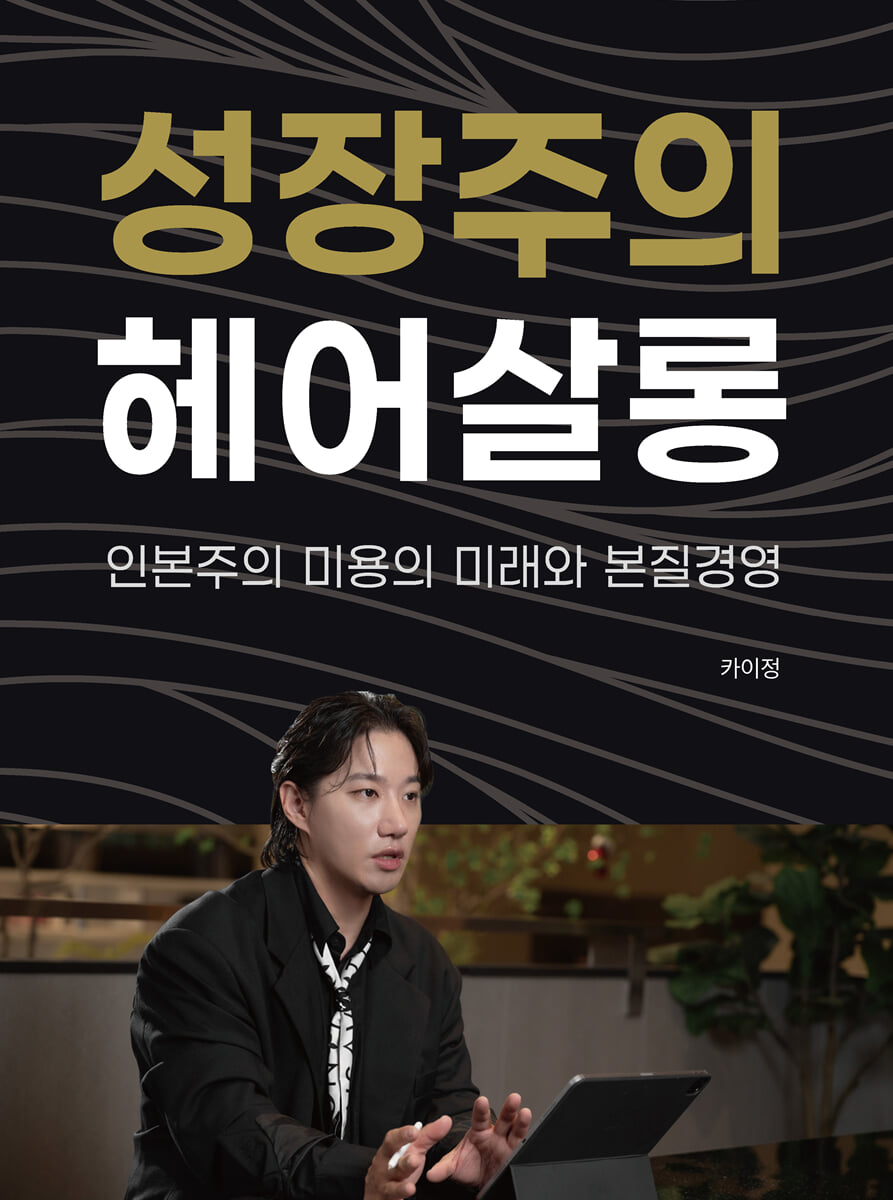
Growth-oriented hair salon
 |
Description
Book Introduction
People, not technology,
Asking about the essence of management
This book goes beyond the existing technology-centric beauty industry and proposes humanistic beauty and essential management based on "people-centered," "love and respect," and "companion philosophy."
Beyond management focused on mere technology or sales, it speaks to the core values of internal growth and self-realization for both customers and designers, as well as the formation of a warm community culture within the organization.
Kaijung Hair's 3,000% growth story demonstrates the practice of humanistic philosophy, a brand strategy centered on the "charm of humanity," and the result of sincere communication and empathy.
Ultimately, what is more important than technology is 'people', and it is emphasized that customers feel moved through emotional satisfaction and genuine relationships.
This book offers profound insights and practical strategies not only to those in the beauty industry, but also to all organizations contemplating "people-centered management," suggesting a direction for true growth.
Asking about the essence of management
This book goes beyond the existing technology-centric beauty industry and proposes humanistic beauty and essential management based on "people-centered," "love and respect," and "companion philosophy."
Beyond management focused on mere technology or sales, it speaks to the core values of internal growth and self-realization for both customers and designers, as well as the formation of a warm community culture within the organization.
Kaijung Hair's 3,000% growth story demonstrates the practice of humanistic philosophy, a brand strategy centered on the "charm of humanity," and the result of sincere communication and empathy.
Ultimately, what is more important than technology is 'people', and it is emphasized that customers feel moved through emotional satisfaction and genuine relationships.
This book offers profound insights and practical strategies not only to those in the beauty industry, but also to all organizations contemplating "people-centered management," suggesting a direction for true growth.
- You can preview some of the book's contents.
Preview
index
[Prologue: A True Story of Growth Begins with People, Love, and Companionship]
· All essence begins with people.
· The changing relationship between customers and designers
· The secret to Kai Jeong Hair's 3000% growth, and the "human growth" we discovered.
A question that opens a new era of beauty
The Future of Hair Salons: Beyond "Business" to "Essential Management"
· The Fourth Industrial Revolution, the MZ Generation, and the Age of the Super Gap
[Part 01 Humanistic Beauty: Change Begins with People and Love]
Chapter 1.
Hair Business: Asking the Essentials
· The foundation of beauty is “I want to be beautiful and happy.”
· The Limits of the Technology-Centered Era and the Beginning of the Human-Centered Era
Designers and customers who become “companions”
· Self-actualization and beauty: Helping customers find their true selves.
· Why “human growth” is more important than “money”
· Goals of experience design and customer experience
· Goals of space design and standards for customer satisfaction
Chapter 2.
People are the brand
· Growing a brand is all about “human charm.”
· The designer's character, personality, and consistent kindness
Five things an “attractive person” must have
Word of mouth is more powerful than marketing.
· The designer the times want: Fairness × Justice × Affection
Chapter 3.
A salon culture that grows with love and respect
· Growth through pain vs. growth through love
· The "companion" philosophy that overcomes generational conflict
· Going Together, Going Far: Building Essential Companionship
· From crew to designer, designer to team leader, team leader to owner
· A virtuous cycle of learning, sharing, and education
Chapter 4.
The Future Created by “Humanistic Beauty”
· The past 10 years and the next 10 years
· Changing customer needs: From “value for money” to “value for money”
· Move the “heart,” not the “need.”
· Why does Generation MZ want more human appeal?
· Fair and just business that starts with people
[Part 02 Essential Management: A Management Philosophy Driven by Growth, Not Sales]
Chapter 5.
Drawing the “Big Picture” of the Beauty Business
· Status of the Korean beauty industry since 2020
· How to Draw a Vision: "Who are our customers?" · 10x Growth Roadmap: Specific Goals and Journey
· Core values that designers, crews, and owners must share
· Harmonizing the "super gap" strategy and "slow growth"
· To achieve essential management, managers must change first.
Chapter 6.
People-Centered Productivity: Working with "Companions"
· Selling “design and satisfaction” rather than “selling technology”
· Fairness × Justice × Transparency: The Workplace That Generation MZ Wants
· One-person management: Each designer is the company's representative.
· Self-directed growth: A culture where everyone becomes an "owner."
· Performance-oriented, but recognizing “human achievements” beyond mere money.
Chapter 7.
The essential question for business owners: “Where is our salon headed?”
· Beyond the commercial district: "The problem isn't the commercial district, it's attitude."
· Analyze internal metrics (posting, reviews, and repeat visits)
· Data Management: Improve your salon with evidence, not intuition.
· Overcoming crisis is not a choice, but growth.
Breaking the “discount race” trap that hinders growth
Chapter 8.
The Essence of Branding and Marketing
In an era of polarization, why is "branding" creating a huge gap?
· Marketing is not all about social media: offline × local × reviews × trust
· The essential way to make customers become “fans”
· Change the unit price standard to a signature menu
· Promotions that grow with "value" rather than "discount"
[Part 03 Field Practice: Creating a Super-Gap Strategy with People × Technology × Service]
Chapter 9.
Break away from simple A→B consumption and create freshness and difference.
· Differentiating 'personalization' in the three stages of consultation, treatment, and completion.
· Design menu composition that combines cost-effectiveness and convenience.
· Captivating customers with “tactile experiences” such as spa × care × therapy
Customer Reviews and Testimonials: A Communication Channel, Not Just Promotion
· Follow-up that gives you a reason to come back again
Chapter 10.
Customer Management and Return Visit System
· “Long-term satisfaction” rather than “one-time visit”
· Specific questions and suggestions to encourage repeat visits
· Fully utilize CRM and reservation systems
· Apply customer analysis through CRM to actual sales, unit price, and number of customers.
· Quantify and visualize customer responses and use them for branding.
Chapter 11.
Designer Growth System
· "People grow through love" - the essence of field education
· Improving practical skills through technical and mental training in parallel.
· Beginner × Intermediate × Advanced skill system: Fast speed vs. high quality
· The process is as important as the result: The principles of feedback meetings
· Three ways to gain insight: learn, experience, and teach.
Chapter 12.
Salon internal processes and manuals
· Detailed description of the entire process, including open-close, shampoo-spa, cut-color, etc.
· Communication between colleagues: Managing the 'sound' and atmosphere in the store
· 3 Steps to Complaint Response: Report → Compensation Offer → Prevention of Recurrence
· How to Manage Perennial Hit Menus vs. Seasonal Renewal Menus
· Increase efficiency with simple and clear principles (simple × simple × clear × consistent)
[Part 04 The Future of Beauty: Essential Management, Completed Together as "Companions"]
Chapter 13.
How to Renovate an Old Salon
· Let's change ourselves: A shift in management awareness
· Before marketing × sales, “growth of the group (employees/colleagues)” comes first.
· Basics check: Attitude × Cleanliness × Trend sensitivity
· Reset the balance between unit price and number of customers
· A new leap forward with fairness and justice
Chapter 14.
Things to keep in mind when starting a new salon
· Branding Design: Clearly State Your "Reason for Existence"
· Price setting: Consider the pros and cons to avoid regrets
· Open Red Event Strategy: Period, Discount Rate, and Purpose
· Build customer base first, then increase sales.
· Promotion × Marketing Step-by-Step Operation: “Free → Small Amount → Concentrated Investment”
Chapter 15.
Sustainable growth and constitutional improvement
· Yearly price increases vs. quality upgrades
· Old menu vs. renewed menu: Maintain × Delete × Add Criteria
· Capturing inbound keywords gives you a competitive edge.
· How you respond to complaints will determine your salon's future.
· Improving the system to build “people” rather than “numbers”
[Part 05: Kai Jeong's Management Philosophy: People, Love, and Business Expansion]
Chapter 16.
Essential Management Marketing Strategy: How to Deliver Intangible Value
· From 4P to 7P: Expanding into “Service Marketing”
· Brand differentiation through essential management: 'Authenticity' is key.
· Linking value propositions and marketing messages
Community Management: Creating Fandom: "Spontaneous Promotion" Created by People and Love
Chapter 17.
Data-Driven Salon Management: "People Insights," Not Sales
Customer Data in the Digital Age: Understanding Segmental Needs
Big Data × CRM × Mining: How to Use It Ideally for Beauty Salons
Customer experience metrics that turn the “invisible” into numbers.
From the marketing funnel to the customer journey
Interpreting data from a "customer growth" perspective rather than a sales expansion perspective
Chapter 18.
Salon Management by the Numbers: Everything You Need to Know About Customer Engagement, Visit Frequency, and Average Price
Why Hair Salon Businesses Need to Manage Data
From Intuition to Verification: A Systematic Approach to the Beauty Business
· Calendar analysis and working hours setting
· Quarterly goal setting and data management
· Active Customer Metrics: Who Should You Analyze?
· Linkage between visit cycle and average revenue per user (ARPU)
· Number of Customers and New vs. Returning Customers: Balance between the 'Total Market' and the 'Internal Market'
· Utilizing regression analysis and covariance
- “Practical Case Study”: Salon A’s Growth Roadmap
- Comprehensive Simulation: Scenario Planning Through “Numbers”
- Number-Based Management Strategy: Processing and Organizational Culture
- Precautions when applying in practice
· 'Future Beauty Management' where people × numbers × values meet
[Epilogue: The Story of Kai Jeong Hair and the Next Decade]
Constant change and innovation, but the unchanging “essence”
A true 'companionship' where designers and customers grow together.
· The miracle brought about by respect, love, and affection for people
· How “People-Centered Beauty” Changes the World
· The Ultimate Essence of Management: "People Grow Through Love"
Glossary of terms
· All essence begins with people.
· The changing relationship between customers and designers
· The secret to Kai Jeong Hair's 3000% growth, and the "human growth" we discovered.
A question that opens a new era of beauty
The Future of Hair Salons: Beyond "Business" to "Essential Management"
· The Fourth Industrial Revolution, the MZ Generation, and the Age of the Super Gap
[Part 01 Humanistic Beauty: Change Begins with People and Love]
Chapter 1.
Hair Business: Asking the Essentials
· The foundation of beauty is “I want to be beautiful and happy.”
· The Limits of the Technology-Centered Era and the Beginning of the Human-Centered Era
Designers and customers who become “companions”
· Self-actualization and beauty: Helping customers find their true selves.
· Why “human growth” is more important than “money”
· Goals of experience design and customer experience
· Goals of space design and standards for customer satisfaction
Chapter 2.
People are the brand
· Growing a brand is all about “human charm.”
· The designer's character, personality, and consistent kindness
Five things an “attractive person” must have
Word of mouth is more powerful than marketing.
· The designer the times want: Fairness × Justice × Affection
Chapter 3.
A salon culture that grows with love and respect
· Growth through pain vs. growth through love
· The "companion" philosophy that overcomes generational conflict
· Going Together, Going Far: Building Essential Companionship
· From crew to designer, designer to team leader, team leader to owner
· A virtuous cycle of learning, sharing, and education
Chapter 4.
The Future Created by “Humanistic Beauty”
· The past 10 years and the next 10 years
· Changing customer needs: From “value for money” to “value for money”
· Move the “heart,” not the “need.”
· Why does Generation MZ want more human appeal?
· Fair and just business that starts with people
[Part 02 Essential Management: A Management Philosophy Driven by Growth, Not Sales]
Chapter 5.
Drawing the “Big Picture” of the Beauty Business
· Status of the Korean beauty industry since 2020
· How to Draw a Vision: "Who are our customers?" · 10x Growth Roadmap: Specific Goals and Journey
· Core values that designers, crews, and owners must share
· Harmonizing the "super gap" strategy and "slow growth"
· To achieve essential management, managers must change first.
Chapter 6.
People-Centered Productivity: Working with "Companions"
· Selling “design and satisfaction” rather than “selling technology”
· Fairness × Justice × Transparency: The Workplace That Generation MZ Wants
· One-person management: Each designer is the company's representative.
· Self-directed growth: A culture where everyone becomes an "owner."
· Performance-oriented, but recognizing “human achievements” beyond mere money.
Chapter 7.
The essential question for business owners: “Where is our salon headed?”
· Beyond the commercial district: "The problem isn't the commercial district, it's attitude."
· Analyze internal metrics (posting, reviews, and repeat visits)
· Data Management: Improve your salon with evidence, not intuition.
· Overcoming crisis is not a choice, but growth.
Breaking the “discount race” trap that hinders growth
Chapter 8.
The Essence of Branding and Marketing
In an era of polarization, why is "branding" creating a huge gap?
· Marketing is not all about social media: offline × local × reviews × trust
· The essential way to make customers become “fans”
· Change the unit price standard to a signature menu
· Promotions that grow with "value" rather than "discount"
[Part 03 Field Practice: Creating a Super-Gap Strategy with People × Technology × Service]
Chapter 9.
Break away from simple A→B consumption and create freshness and difference.
· Differentiating 'personalization' in the three stages of consultation, treatment, and completion.
· Design menu composition that combines cost-effectiveness and convenience.
· Captivating customers with “tactile experiences” such as spa × care × therapy
Customer Reviews and Testimonials: A Communication Channel, Not Just Promotion
· Follow-up that gives you a reason to come back again
Chapter 10.
Customer Management and Return Visit System
· “Long-term satisfaction” rather than “one-time visit”
· Specific questions and suggestions to encourage repeat visits
· Fully utilize CRM and reservation systems
· Apply customer analysis through CRM to actual sales, unit price, and number of customers.
· Quantify and visualize customer responses and use them for branding.
Chapter 11.
Designer Growth System
· "People grow through love" - the essence of field education
· Improving practical skills through technical and mental training in parallel.
· Beginner × Intermediate × Advanced skill system: Fast speed vs. high quality
· The process is as important as the result: The principles of feedback meetings
· Three ways to gain insight: learn, experience, and teach.
Chapter 12.
Salon internal processes and manuals
· Detailed description of the entire process, including open-close, shampoo-spa, cut-color, etc.
· Communication between colleagues: Managing the 'sound' and atmosphere in the store
· 3 Steps to Complaint Response: Report → Compensation Offer → Prevention of Recurrence
· How to Manage Perennial Hit Menus vs. Seasonal Renewal Menus
· Increase efficiency with simple and clear principles (simple × simple × clear × consistent)
[Part 04 The Future of Beauty: Essential Management, Completed Together as "Companions"]
Chapter 13.
How to Renovate an Old Salon
· Let's change ourselves: A shift in management awareness
· Before marketing × sales, “growth of the group (employees/colleagues)” comes first.
· Basics check: Attitude × Cleanliness × Trend sensitivity
· Reset the balance between unit price and number of customers
· A new leap forward with fairness and justice
Chapter 14.
Things to keep in mind when starting a new salon
· Branding Design: Clearly State Your "Reason for Existence"
· Price setting: Consider the pros and cons to avoid regrets
· Open Red Event Strategy: Period, Discount Rate, and Purpose
· Build customer base first, then increase sales.
· Promotion × Marketing Step-by-Step Operation: “Free → Small Amount → Concentrated Investment”
Chapter 15.
Sustainable growth and constitutional improvement
· Yearly price increases vs. quality upgrades
· Old menu vs. renewed menu: Maintain × Delete × Add Criteria
· Capturing inbound keywords gives you a competitive edge.
· How you respond to complaints will determine your salon's future.
· Improving the system to build “people” rather than “numbers”
[Part 05: Kai Jeong's Management Philosophy: People, Love, and Business Expansion]
Chapter 16.
Essential Management Marketing Strategy: How to Deliver Intangible Value
· From 4P to 7P: Expanding into “Service Marketing”
· Brand differentiation through essential management: 'Authenticity' is key.
· Linking value propositions and marketing messages
Community Management: Creating Fandom: "Spontaneous Promotion" Created by People and Love
Chapter 17.
Data-Driven Salon Management: "People Insights," Not Sales
Customer Data in the Digital Age: Understanding Segmental Needs
Big Data × CRM × Mining: How to Use It Ideally for Beauty Salons
Customer experience metrics that turn the “invisible” into numbers.
From the marketing funnel to the customer journey
Interpreting data from a "customer growth" perspective rather than a sales expansion perspective
Chapter 18.
Salon Management by the Numbers: Everything You Need to Know About Customer Engagement, Visit Frequency, and Average Price
Why Hair Salon Businesses Need to Manage Data
From Intuition to Verification: A Systematic Approach to the Beauty Business
· Calendar analysis and working hours setting
· Quarterly goal setting and data management
· Active Customer Metrics: Who Should You Analyze?
· Linkage between visit cycle and average revenue per user (ARPU)
· Number of Customers and New vs. Returning Customers: Balance between the 'Total Market' and the 'Internal Market'
· Utilizing regression analysis and covariance
- “Practical Case Study”: Salon A’s Growth Roadmap
- Comprehensive Simulation: Scenario Planning Through “Numbers”
- Number-Based Management Strategy: Processing and Organizational Culture
- Precautions when applying in practice
· 'Future Beauty Management' where people × numbers × values meet
[Epilogue: The Story of Kai Jeong Hair and the Next Decade]
Constant change and innovation, but the unchanging “essence”
A true 'companionship' where designers and customers grow together.
· The miracle brought about by respect, love, and affection for people
· How “People-Centered Beauty” Changes the World
· The Ultimate Essence of Management: "People Grow Through Love"
Glossary of terms
Into the book
“All phenomena and experiences in the world originate from the existence of humanity.
The products we encounter every day, the services we experience, the spaces we inhabit, and the human relationships we form are all products of human needs, desires, emotions, and thoughts.
The fact that all essence originates from people also applies equally to corporate management and organizational operations.
No matter how advanced the technology and sophisticated the systems introduced, they ultimately find meaning in human relationships, and their true value is realized through trust and communication with customers, employees, and society as a whole.
For a company to achieve sustainable growth, it must practice a management philosophy based on a deep understanding and respect for people, rather than focusing on short-term performance like simple sales or profits.
The essence of beauty, centering on people “All phenomena and experiences in the world originate from the existence of humanity… The fact that all essence originates from people equally applies to corporate management and organizational operations.
No matter how advanced the technology and sophisticated the systems introduced, they all ultimately find meaning in their relationships with people.
“True value is realized through trust and communication with customers, employees, and society as a whole.”
The identity of a designer, beyond a technician, to a companion. “From the first meeting with the customer to the aftercare after the procedure, every process is being transformed into an opportunity for genuine communication with the customer. Through this, designers are being reborn as ‘emotional companions’ who understand the customer’s emotions, rather than simply technicians.
“Customers want to be respected as individuals, not just consumers, and they seek emotional comfort and relaxation through communication with designers.”
A management strategy that prioritizes people over sales “When running a salon, the most important thing is not the short-term sales graph, but the process of creating customers and employees who will be with you for the long term, and myself growing.
Customer trust, employee psychological stability, and managerial leadership development—three things that cannot be measured in numbers—when complemented, a salon is not easily shaken by any market changes.
“If you practice people-centered management like this, sales growth, which is reflected in the numbers, will naturally follow.”
Growth Created by a True Feedback Culture “Feedback meetings should not be a simple evaluation session, but an opportunity to discover each other’s strengths and think together about how to provide better service in the future.
Today's feedback meeting is a time for all of us to grow together. It's a time to share our experiences and be honest about what went well and what needs improvement."
The essence of a brand is people “More important than technology and glamour is a heart for people.
And that ultimately becomes a huge driving force that changes not only the beauty industry but our entire lives.
This is precisely why human-centered beauty is changing the world, and why we must continue to move forward tirelessly.
“I hope that beauty that prioritizes people will live and breathe, anytime, anywhere, and that we can open up a future created by humanistic beauty together.”
“The time that Kaijung Hair has walked has been one of constant change and innovation, but at its core, there has always been an unwavering essence.
It started out as a small salon with just a few designers and crew.
To survive in an unstable environment and competition, we thought about how to improve ourselves every day and implemented new attempts without hesitation.
As a result, our customer base grew, and at the same time, we were able to discover potential we didn't know we had.
In fact, we didn't have a grand mission or vision from the beginning.
While sales goals and store expansion were important, I delved into the core of my work to answer the question: why am I doing this?
We thought about why people come to salons, what they expect, and what designers and crews really need from the customers and colleagues they meet every day.
“In the end, the answer was humans.”
The products we encounter every day, the services we experience, the spaces we inhabit, and the human relationships we form are all products of human needs, desires, emotions, and thoughts.
The fact that all essence originates from people also applies equally to corporate management and organizational operations.
No matter how advanced the technology and sophisticated the systems introduced, they ultimately find meaning in human relationships, and their true value is realized through trust and communication with customers, employees, and society as a whole.
For a company to achieve sustainable growth, it must practice a management philosophy based on a deep understanding and respect for people, rather than focusing on short-term performance like simple sales or profits.
The essence of beauty, centering on people “All phenomena and experiences in the world originate from the existence of humanity… The fact that all essence originates from people equally applies to corporate management and organizational operations.
No matter how advanced the technology and sophisticated the systems introduced, they all ultimately find meaning in their relationships with people.
“True value is realized through trust and communication with customers, employees, and society as a whole.”
The identity of a designer, beyond a technician, to a companion. “From the first meeting with the customer to the aftercare after the procedure, every process is being transformed into an opportunity for genuine communication with the customer. Through this, designers are being reborn as ‘emotional companions’ who understand the customer’s emotions, rather than simply technicians.
“Customers want to be respected as individuals, not just consumers, and they seek emotional comfort and relaxation through communication with designers.”
A management strategy that prioritizes people over sales “When running a salon, the most important thing is not the short-term sales graph, but the process of creating customers and employees who will be with you for the long term, and myself growing.
Customer trust, employee psychological stability, and managerial leadership development—three things that cannot be measured in numbers—when complemented, a salon is not easily shaken by any market changes.
“If you practice people-centered management like this, sales growth, which is reflected in the numbers, will naturally follow.”
Growth Created by a True Feedback Culture “Feedback meetings should not be a simple evaluation session, but an opportunity to discover each other’s strengths and think together about how to provide better service in the future.
Today's feedback meeting is a time for all of us to grow together. It's a time to share our experiences and be honest about what went well and what needs improvement."
The essence of a brand is people “More important than technology and glamour is a heart for people.
And that ultimately becomes a huge driving force that changes not only the beauty industry but our entire lives.
This is precisely why human-centered beauty is changing the world, and why we must continue to move forward tirelessly.
“I hope that beauty that prioritizes people will live and breathe, anytime, anywhere, and that we can open up a future created by humanistic beauty together.”
“The time that Kaijung Hair has walked has been one of constant change and innovation, but at its core, there has always been an unwavering essence.
It started out as a small salon with just a few designers and crew.
To survive in an unstable environment and competition, we thought about how to improve ourselves every day and implemented new attempts without hesitation.
As a result, our customer base grew, and at the same time, we were able to discover potential we didn't know we had.
In fact, we didn't have a grand mission or vision from the beginning.
While sales goals and store expansion were important, I delved into the core of my work to answer the question: why am I doing this?
We thought about why people come to salons, what they expect, and what designers and crews really need from the customers and colleagues they meet every day.
“In the end, the answer was humans.”
--- From the text
Publisher's Review
People, Not Technology: Asking the Essence of Management
The days when the success or failure of a salon depended on the superiority of beauty techniques are over.
Today's customers want more than just a simple procedure.
They want to feel respected and find comfort and inspiration in genuine communication with designers.
《Growth Hair Salon》 is a book that responds to the demands of this changing era.
This book, which emphasizes 'people' over 'technology' and 'essence' over 'speed', shifts the focus of the beauty industry to 'human growth.'
This book is based on the real-life management case of Kaijung Hair, which achieved 3,000% growth. It is not a simple management book, but contains practical strategies created through a "people-centered philosophy" and "empathy-based leadership."
How do we create a structure where customers, designers, and managers can grow together? The answer, he says, begins not with technology or trends, but with respect, love, and genuine relationships toward people.
From prologue to epilogue, this book meticulously unravels the journey of a single hairdresser, growing alongside countless designers, customers, and managers.
The message that 'a designer should not be someone who cuts the client's hair, but a companion who comforts the heart' is not limited to the beauty industry.
It provides insights to leaders and organizations across all industries who are considering “people-centered management.”
"Growth-Oriented Hair Salon - The Future and Essential Management of Humanistic Beauty" is recommended to the following readers:
- A manager who considers 'people-centered management' that goes beyond customer-centered management.
- Entrepreneurs who want to create a sustainable brand
- Organizational leaders who want to create a humane team culture
- All professionals who want to achieve true growth starting from the basics
Now, management is not a battle of technology, but a battle of philosophy.
If 'people' are at the center of that philosophy, that organization can rise again in any crisis.
That is the power of essential management that “Growth Hair Salon” talks about.
The days when the success or failure of a salon depended on the superiority of beauty techniques are over.
Today's customers want more than just a simple procedure.
They want to feel respected and find comfort and inspiration in genuine communication with designers.
《Growth Hair Salon》 is a book that responds to the demands of this changing era.
This book, which emphasizes 'people' over 'technology' and 'essence' over 'speed', shifts the focus of the beauty industry to 'human growth.'
This book is based on the real-life management case of Kaijung Hair, which achieved 3,000% growth. It is not a simple management book, but contains practical strategies created through a "people-centered philosophy" and "empathy-based leadership."
How do we create a structure where customers, designers, and managers can grow together? The answer, he says, begins not with technology or trends, but with respect, love, and genuine relationships toward people.
From prologue to epilogue, this book meticulously unravels the journey of a single hairdresser, growing alongside countless designers, customers, and managers.
The message that 'a designer should not be someone who cuts the client's hair, but a companion who comforts the heart' is not limited to the beauty industry.
It provides insights to leaders and organizations across all industries who are considering “people-centered management.”
"Growth-Oriented Hair Salon - The Future and Essential Management of Humanistic Beauty" is recommended to the following readers:
- A manager who considers 'people-centered management' that goes beyond customer-centered management.
- Entrepreneurs who want to create a sustainable brand
- Organizational leaders who want to create a humane team culture
- All professionals who want to achieve true growth starting from the basics
Now, management is not a battle of technology, but a battle of philosophy.
If 'people' are at the center of that philosophy, that organization can rise again in any crisis.
That is the power of essential management that “Growth Hair Salon” talks about.
GOODS SPECIFICS
- Date of issue: June 15, 2025
- Page count, weight, size: 482 pages | 190*257*30mm
- ISBN13: 9791164000463
- ISBN10: 1164000462
You may also like
카테고리
korean


korean

![GQ KOREA Mark (Monthly): December [2025]](http://librairie.coreenne.fr/cdn/shop/files/8ef265dbbfbf186523ed75ba7319009d.jpg?v=1765340328&width=3840)


