

Principles of Investment
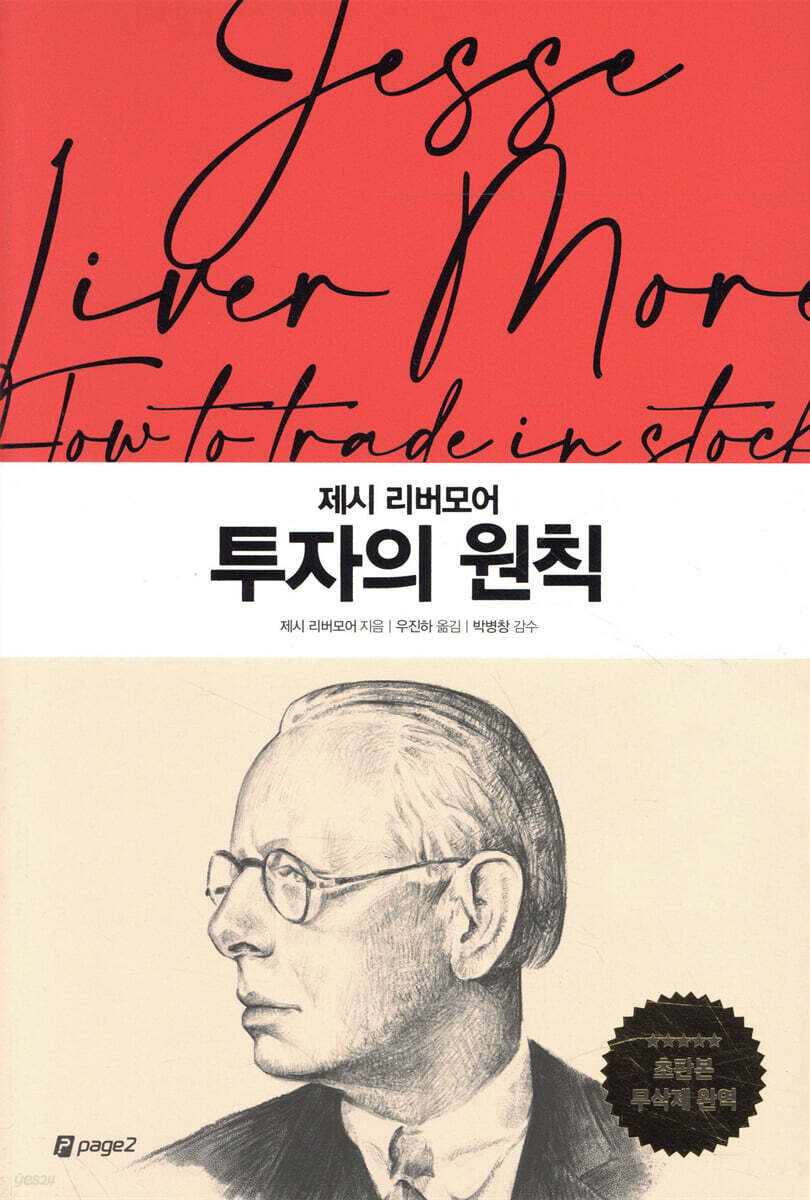 |
Description
Book Introduction
"Heroes of Wall Street" Series 01: The Complete Encounter with the Master's Masterpiece Complete translation of the first edition without any edits The father of trend trading, the big bear of Wall Street The individual investor who made the most money in a single day in world history The first legendary investor introduced in the "Heroes of Wall Street" series is Jesse Livermore, known as the "Father of Trend Trading" and the "Big Bear of Wall Street," who was incredibly adept at reading market trends. It is the most complete of the classics of investment, and is the only book he left behind during his lifetime, 『Jesse Livermore's Principles of Investment』. In particular, Livermore's stock price chart included in the first edition in 1940 can be seen in the appendix. This will give us a glimpse into Livermore's struggle to read the market. We also introduce Livermore in 『Jesse Livermore's Investment Techniques』, a compilation of interviews with Livermore by Richard Wyckoff, a successful investor at the time and publisher and editor of Wall Street Magazine, and in Ken Fisher's 『100 Giants Who Shook the Market』. This book will provide readers with a three-dimensional understanding of Livermore and his investment principles, and will be of great help in establishing their own investment principles. |
- You can preview some of the book's contents.
Preview
index
Reviewer's note
Recommendation
introduction
Part 1: Jesse Livermore's Principles of Investment
Chapter 1: The Adventure of Speculation
Chapter 2: Understanding Stock Price Trends
Chapter 3: Follow the Leader
Chapter 4 Money in My Hand
Chapter 5: Opportunities for Wealth, Turning Points
Chapter 6: The Million Dollar Mistake
Chapter 7: $3 million in revenue
Part 2: Jesse Livermore's Investing Skills
Chapter 8: Livermore's Conversation with Wall Street Magazine
Chapter 9: Livermore's Attitude to Investment
Chapter 10 Livermore and James R.
What Keen has in common
Chapter 11: Livermore and the Stock Market
Chapter 12: The Trading Methods of Successful Speculators
Chapter 13: Secure Funds
Chapter 14: Livermore's Picks
Chapter 15: The Key to Pyramiding
Chapter 16: Livermore Confronts the Market
Part 3: Interpreting Jesse Livermore's Principles of Investment
Chapter 17: How were Wall Street's heroes born?
Chapter 18: How to Read the Market
Chapter 19: Livermore's Five Principles
Chapter 20: Being Good at Trading
Appendix_ Jesse Livermore's Key Market Analysis
Livermore Market Key Analysis Stock Price Chart and Description
Jesse Livermore's Chronology
Recommendation
introduction
Part 1: Jesse Livermore's Principles of Investment
Chapter 1: The Adventure of Speculation
Chapter 2: Understanding Stock Price Trends
Chapter 3: Follow the Leader
Chapter 4 Money in My Hand
Chapter 5: Opportunities for Wealth, Turning Points
Chapter 6: The Million Dollar Mistake
Chapter 7: $3 million in revenue
Part 2: Jesse Livermore's Investing Skills
Chapter 8: Livermore's Conversation with Wall Street Magazine
Chapter 9: Livermore's Attitude to Investment
Chapter 10 Livermore and James R.
What Keen has in common
Chapter 11: Livermore and the Stock Market
Chapter 12: The Trading Methods of Successful Speculators
Chapter 13: Secure Funds
Chapter 14: Livermore's Picks
Chapter 15: The Key to Pyramiding
Chapter 16: Livermore Confronts the Market
Part 3: Interpreting Jesse Livermore's Principles of Investment
Chapter 17: How were Wall Street's heroes born?
Chapter 18: How to Read the Market
Chapter 19: Livermore's Five Principles
Chapter 20: Being Good at Trading
Appendix_ Jesse Livermore's Key Market Analysis
Livermore Market Key Analysis Stock Price Chart and Description
Jesse Livermore's Chronology
Detailed image
.jpg)
Into the book
Speculation is very similar to gambling.
Every time I bet money, I want to win that much money.
Whenever a board is opened, I want to be a part of every board.
That's our human nature to engage in games.
Although to varying degrees, we all have this similar weakness, and for investors and speculators, it is their most feared enemy.
If you cannot overcome this weakness, you will end up suffering great losses.
--- p.26
Likewise, you should never buy a stock just because its price has fallen too far from its previous level.
If the stock price has fallen that much, there must be a reason for it.
Even if the current price level of the stock seems low, you should still consider it to be selling at an excessively high price compared to its real value.
--- p.35
But here, based on my experience, I ended up doing something I shouldn't have done.
They placed orders at specific prices even before the market opened.
With temptation clouding my judgment, I placed a buy order for 5 million bushels at $1.61.
It was 3 cents lower than the previous day's closing price.
As the market opened, prices ranged between $1.61 and $1.54.
I muttered like this.
“It can’t be helped since you broke a rule that shouldn’t be broken.”
--- p.100
In a recent interview with Wall Street Magazine, Livermore said:
“You can never succeed in the stock market without mastering the basics of economics and thoroughly understanding the financial status, history, production capacity, and state of the industry of interest of the company you are interested in.
Also, there is no royal road in the stock market.
“To be successful, you must first research and study.”
--- p.125
Jesse Livermore learned these rules in his youth, frequenting private exchanges.
Although he could trade stocks on the exchange with only a small deposit, he reportedly lost all of that small deposit and wrote down in detail the reasons why his judgment was wrong.
These early experiences taught him both the merits and the necessity of reducing losses.
Although I sometimes strayed from my principles like many others, I was able to learn lessons that I will never forget until the day I die.
--- pp.158~159
Ken Fisher says Livermore employed a three-stage undefeated strategy in the 1930s.
First, take a buy or sell position on a large scale.
Second, spread the word around.
Third, they sell it to the blind, unsolicited thugs who follow them.
In 1925, when he was trying to recoup $3 million in losses from grain trading, he secretly commanded a force that drove one stock from $19 to $74 in less than a year.
Although Jesse Livermore's speculative techniques were said to be flawed, it is undeniable that he achieved great success when he read trends and traded according to his own investment principles.
--- p.193
“Correctly interpreting the prices and information conveyed through stock price charts is my life’s calling, my vocation, and my favorite thing to do.
There is no prize for solving this riddle, but acting on the solution will reward you with money.
The penalty for neglecting to interpret information is bankruptcy.
Unfortunately, I have also experienced bankruptcy a few times.
“I have lost money when I have broken my own principles, and I have made money when I have kept them.”
Every time I bet money, I want to win that much money.
Whenever a board is opened, I want to be a part of every board.
That's our human nature to engage in games.
Although to varying degrees, we all have this similar weakness, and for investors and speculators, it is their most feared enemy.
If you cannot overcome this weakness, you will end up suffering great losses.
--- p.26
Likewise, you should never buy a stock just because its price has fallen too far from its previous level.
If the stock price has fallen that much, there must be a reason for it.
Even if the current price level of the stock seems low, you should still consider it to be selling at an excessively high price compared to its real value.
--- p.35
But here, based on my experience, I ended up doing something I shouldn't have done.
They placed orders at specific prices even before the market opened.
With temptation clouding my judgment, I placed a buy order for 5 million bushels at $1.61.
It was 3 cents lower than the previous day's closing price.
As the market opened, prices ranged between $1.61 and $1.54.
I muttered like this.
“It can’t be helped since you broke a rule that shouldn’t be broken.”
--- p.100
In a recent interview with Wall Street Magazine, Livermore said:
“You can never succeed in the stock market without mastering the basics of economics and thoroughly understanding the financial status, history, production capacity, and state of the industry of interest of the company you are interested in.
Also, there is no royal road in the stock market.
“To be successful, you must first research and study.”
--- p.125
Jesse Livermore learned these rules in his youth, frequenting private exchanges.
Although he could trade stocks on the exchange with only a small deposit, he reportedly lost all of that small deposit and wrote down in detail the reasons why his judgment was wrong.
These early experiences taught him both the merits and the necessity of reducing losses.
Although I sometimes strayed from my principles like many others, I was able to learn lessons that I will never forget until the day I die.
--- pp.158~159
Ken Fisher says Livermore employed a three-stage undefeated strategy in the 1930s.
First, take a buy or sell position on a large scale.
Second, spread the word around.
Third, they sell it to the blind, unsolicited thugs who follow them.
In 1925, when he was trying to recoup $3 million in losses from grain trading, he secretly commanded a force that drove one stock from $19 to $74 in less than a year.
Although Jesse Livermore's speculative techniques were said to be flawed, it is undeniable that he achieved great success when he read trends and traded according to his own investment principles.
--- p.193
“Correctly interpreting the prices and information conveyed through stock price charts is my life’s calling, my vocation, and my favorite thing to do.
There is no prize for solving this riddle, but acting on the solution will reward you with money.
The penalty for neglecting to interpret information is bankruptcy.
Unfortunately, I have also experienced bankruptcy a few times.
“I have lost money when I have broken my own principles, and I have made money when I have kept them.”
--- pp.212~213
Publisher's Review
Amazon Investments' best-selling
2 million "Sampro TV" strongly recommended books
A must-read for analysts worldwide
The only book Jesse Livermore ever wrote!
“Nothing changes on Wall Street.
“The reason the stock market doesn’t change even when everything else changes is because human nature never changes.”
_ Jesse Livermore
The individual investor who made the most money in a single day in world history
Even after 100 years, his rate of return has not been surpassed!
The world's most widely read investment classic is "How to Trade in Stocks," the only book written by Jesse Livermore, known as the "Father of Trend Trading" and the "Big Bear of Wall Street."
The reason it is called a classic among investment classics is because Livermore included his own investment philosophy and principles, which he established over a period of approximately 50 years of experience in the market, from the time he began investing at the age of 15 until his own death.
Livermore achieved an unprecedented record in world history as an individual investor by earning $100 million (about 2 trillion won in current currency) in profit during the Wall Street Crash of 1929.
He quickly amassed wealth by continuously buying leading stocks during bull markets and profiting from short selling during bear markets, a technique known as momentum trading. This book is called a textbook on momentum trading.
Jesse Livermore, who once said, "People's opinions are often wrong, but the market is never wrong," invested patiently, reading market trends rather than other people's opinions.
Just as there are values that remain unchanged even after 100 years, his investment principles guide investors on the fastest path to successful investing.
The fastest shortcut to success
Follow the path of the master
Livermore began investing in private exchanges at the age of 15, boasting high returns that earned him the nickname "Bread Boy," and had made $10,000 in profits by the age of 20.
But when he moved to Wall Street in New York, he experienced his first bankruptcy.
Although the situation was fully anticipated, the failure was due to a failure to properly understand the differences between the systems of private exchanges and the New York Stock Exchange.
He made a successful comeback on a private exchange.
By establishing his own investment principles and remaining steadfast in the face of market volatility, he earned $3 million in profits.
Despite this, he listened to the stories of those around him and invested, losing $1 million in the cotton and wheat futures markets.
Livermore experienced a crisis so severe that he almost went bankrupt when he broke his own principles, but conversely, he was able to achieve high returns whenever he adhered to his established investment principles.
He included both the principles of his successful investments and the factors that led to his failures in "Jesse Livermore's Principles of Investment."
Additionally, the appendix of this book contains a copy of Livermore's stock price chart that was included in the first edition in 1940.
Although the stock market of 100 years ago was different from today, we can see that stock prices continue to move in a certain pattern.
Now, the legendary investment secrets are all revealed.
Readers just have to follow the same path he took to success.
“Many people try, but not all of them succeed.
“The reason Livermore was able to succeed was because he established and adhered to his own principles.”
_ Richard Wyckoff
How were Wall Street's heroes born?
Interpreting Livermore's Investment Principles in Three Dimensions
To better understand Jesse Livermore's investment principles, this book includes the writings of Richard Wyckoff, a successful investor and journalist who enjoyed immense wealth in the 1900s.
Wyckoff, the publisher and editor of Wall Street Magazine, published Jesse Livermore's Methods of Trading in Stocks, a collection of interviews he conducted with Jesse Livermore dating back to the 1920s.
You can learn not only about Livermore's self-proclaimed investment principles, but also how he established and maintained them, and his attitude and mindset toward the market.
In Part 3, we will also look at Jesse Livermore, as discussed by Ken Fisher, son of growth stock investment guru Philip Fisher and developer of the market forecasting method called the Price-to-Sales Ratio (PSR).
Ken Fisher presents Livermore as a "failed speculator."
Just as we 'compare' to understand things or phenomena, when we try to understand someone, we look at them from various angles through the stories of many different people, not just one person.
This book compares Jesse Livermore's own philosophy and principles, as written by him, with Livermore's perspective as seen by Wyckoff, a successful investor and journalist at the time, and even Ken Fisher, a modern-day figure.
Additionally, the book's quality was enhanced by the meticulous review of Park Byeong-chang, author of the mega-bestseller, "Park Byeong-chang's Money-Calling Trading Techniques."
Through this book, readers will learn how to establish investment principles and approach investing in a market where it is impossible to predict even an inch ahead.
2 million "Sampro TV" strongly recommended books
A must-read for analysts worldwide
The only book Jesse Livermore ever wrote!
“Nothing changes on Wall Street.
“The reason the stock market doesn’t change even when everything else changes is because human nature never changes.”
_ Jesse Livermore
The individual investor who made the most money in a single day in world history
Even after 100 years, his rate of return has not been surpassed!
The world's most widely read investment classic is "How to Trade in Stocks," the only book written by Jesse Livermore, known as the "Father of Trend Trading" and the "Big Bear of Wall Street."
The reason it is called a classic among investment classics is because Livermore included his own investment philosophy and principles, which he established over a period of approximately 50 years of experience in the market, from the time he began investing at the age of 15 until his own death.
Livermore achieved an unprecedented record in world history as an individual investor by earning $100 million (about 2 trillion won in current currency) in profit during the Wall Street Crash of 1929.
He quickly amassed wealth by continuously buying leading stocks during bull markets and profiting from short selling during bear markets, a technique known as momentum trading. This book is called a textbook on momentum trading.
Jesse Livermore, who once said, "People's opinions are often wrong, but the market is never wrong," invested patiently, reading market trends rather than other people's opinions.
Just as there are values that remain unchanged even after 100 years, his investment principles guide investors on the fastest path to successful investing.
The fastest shortcut to success
Follow the path of the master
Livermore began investing in private exchanges at the age of 15, boasting high returns that earned him the nickname "Bread Boy," and had made $10,000 in profits by the age of 20.
But when he moved to Wall Street in New York, he experienced his first bankruptcy.
Although the situation was fully anticipated, the failure was due to a failure to properly understand the differences between the systems of private exchanges and the New York Stock Exchange.
He made a successful comeback on a private exchange.
By establishing his own investment principles and remaining steadfast in the face of market volatility, he earned $3 million in profits.
Despite this, he listened to the stories of those around him and invested, losing $1 million in the cotton and wheat futures markets.
Livermore experienced a crisis so severe that he almost went bankrupt when he broke his own principles, but conversely, he was able to achieve high returns whenever he adhered to his established investment principles.
He included both the principles of his successful investments and the factors that led to his failures in "Jesse Livermore's Principles of Investment."
Additionally, the appendix of this book contains a copy of Livermore's stock price chart that was included in the first edition in 1940.
Although the stock market of 100 years ago was different from today, we can see that stock prices continue to move in a certain pattern.
Now, the legendary investment secrets are all revealed.
Readers just have to follow the same path he took to success.
“Many people try, but not all of them succeed.
“The reason Livermore was able to succeed was because he established and adhered to his own principles.”
_ Richard Wyckoff
How were Wall Street's heroes born?
Interpreting Livermore's Investment Principles in Three Dimensions
To better understand Jesse Livermore's investment principles, this book includes the writings of Richard Wyckoff, a successful investor and journalist who enjoyed immense wealth in the 1900s.
Wyckoff, the publisher and editor of Wall Street Magazine, published Jesse Livermore's Methods of Trading in Stocks, a collection of interviews he conducted with Jesse Livermore dating back to the 1920s.
You can learn not only about Livermore's self-proclaimed investment principles, but also how he established and maintained them, and his attitude and mindset toward the market.
In Part 3, we will also look at Jesse Livermore, as discussed by Ken Fisher, son of growth stock investment guru Philip Fisher and developer of the market forecasting method called the Price-to-Sales Ratio (PSR).
Ken Fisher presents Livermore as a "failed speculator."
Just as we 'compare' to understand things or phenomena, when we try to understand someone, we look at them from various angles through the stories of many different people, not just one person.
This book compares Jesse Livermore's own philosophy and principles, as written by him, with Livermore's perspective as seen by Wyckoff, a successful investor and journalist at the time, and even Ken Fisher, a modern-day figure.
Additionally, the book's quality was enhanced by the meticulous review of Park Byeong-chang, author of the mega-bestseller, "Park Byeong-chang's Money-Calling Trading Techniques."
Through this book, readers will learn how to establish investment principles and approach investing in a market where it is impossible to predict even an inch ahead.
GOODS SPECIFICS
- Publication date: September 20, 2022
- Page count, weight, size: 304 pages | 536g | 153*225*17mm
- ISBN13: 9791190977777
- ISBN10: 119097777X
You may also like
카테고리
korean


korean

![GQ KOREA Mark (Monthly): December [2025]](http://librairie.coreenne.fr/cdn/shop/files/8ef265dbbfbf186523ed75ba7319009d.jpg?v=1765340328&width=3840)


