

History of financial speculation
 |
Description
Book Introduction
If you look at the history of bubble economies, you can see patterns and opportunities to make money.
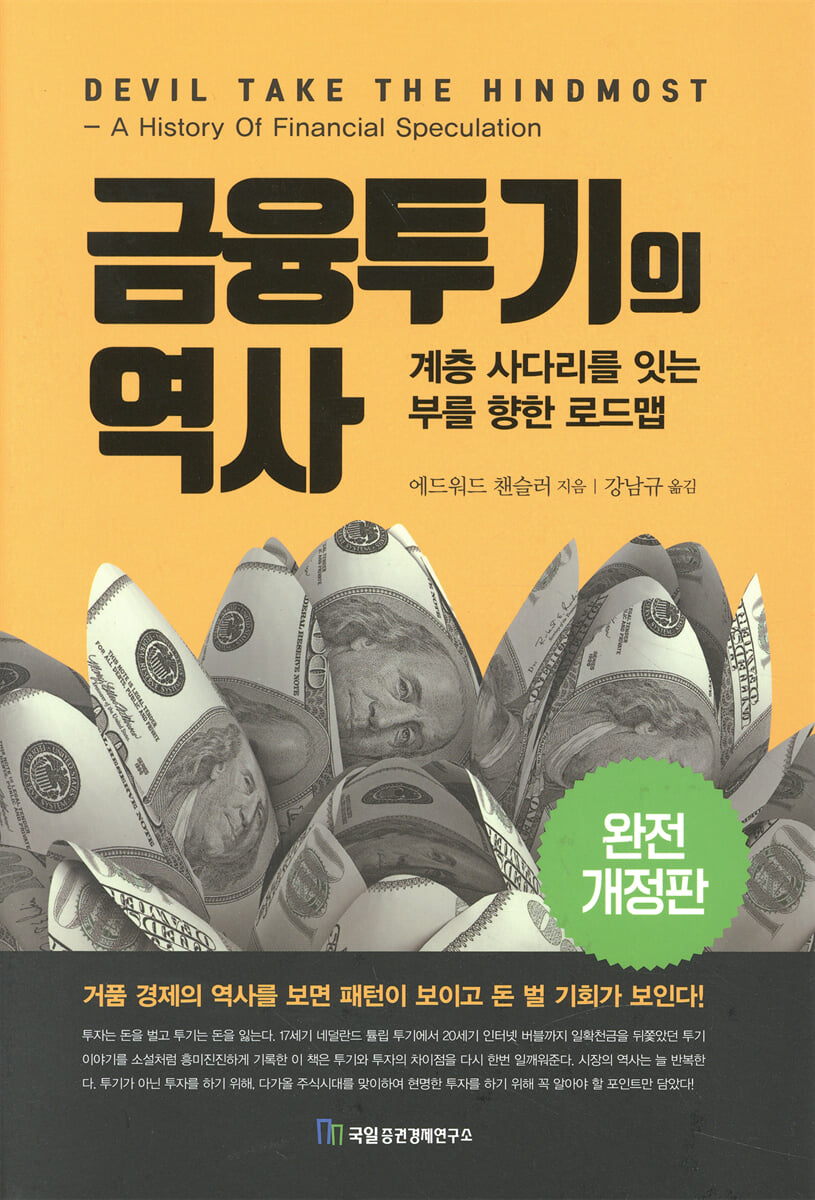
"A History of Financial Speculation" is a fascinating, novel-like account of speculation in pursuit of quick fortunes, from the 17th-century Dutch tulip mania to the 20th-century Internet bubble.
By examining the history of financial speculation, reconstructed based on abundant data, you can gain insight into the distinction between speculation and investment, and furthermore, the context of finance.
Market history always repeats itself.
To invest, not speculate, we've included only the essential points you need to know to make wise investments in the coming stock market era.
For those of us who have suffered greatly from real estate speculation and the stock market bubble in the past, this book warns us not to make the same mistakes in the new stock market craze of 2020 and guides us on the path to becoming wise investors.
This book, which explains the global speculative psychology to readers who are looking at the domestic and global stock markets, will help them develop a sound investment perspective on global companies.
"A History of Financial Speculation" is a fascinating, novel-like account of speculation in pursuit of quick fortunes, from the 17th-century Dutch tulip mania to the 20th-century Internet bubble.
By examining the history of financial speculation, reconstructed based on abundant data, you can gain insight into the distinction between speculation and investment, and furthermore, the context of finance.
Market history always repeats itself.
To invest, not speculate, we've included only the essential points you need to know to make wise investments in the coming stock market era.
For those of us who have suffered greatly from real estate speculation and the stock market bubble in the past, this book warns us not to make the same mistakes in the new stock market craze of 2020 and guides us on the path to becoming wise investors.
This book, which explains the global speculative psychology to readers who are looking at the domestic and global stock markets, will help them develop a sound investment perspective on global companies.
- You can preview some of the book's contents.
Preview
index
Recommendation
Author's Preface
1.
A World Made of Bubbles: The Origins of Financial Bubbles
2.
The boom in the establishment of joint-stock companies in the 1690s
3.
South Sea Conspiracy
4.
Emerging Market Speculation in the 1820s
5.
The railroad bubble of 1845
6.
Speculation in the American era of plutocracy
7.
The End of a New Era: The Great Depression of 1929 and Its Aftermath
8.
Cowboy Capitalism: After Bretton Woods
9.
Kamikaze Capitalism: Japan's Bubble Economy
10.
Epilogue: Economists Defending Speculation
Translator's Note
References
Search
Detailed image

Into the book
* How can we distinguish between speculation and gambling?
Just as bad investments are speculation, bad speculation can be seen as gambling.
American financier Bernard Baruch was forced to leave JP Morgan after he said to Pierpont Morgan, the founder of the firm, that "there is no investment that is not risky, and there is no investment that is not a gamble."
It is almost impossible to distinguish the psychological differences between speculation and gambling.
Both are addictive habits that involve the desire to acquire money, acting in a money-intoxicated manner, or suppressing emotions.
Speculation involves greed and fear.
Even George Soros, who is called the 'god' of the financial market, confessed that his amazing returns were due to a deep-rooted inferiority complex within him.
Fyodor Dostoevsky, who was a gambling addict, also said, "To win at roulette, you have to be very stupid and simple, and you have to control yourself and not get excited at any moment."
--- Author's Preface
* The first written account of the stock markets in Western Europe is Joseph Penso de la Vega's "Chaos".
This book was first published in Amsterdam, Netherlands in 1688, and records the conversations between merchants and shareholders in the form of a dialogue.
In this book, Vega vividly portrays the psychology of speculators by describing the stock market as a mental hospital.
The stock market is full of strange superstitions and participants behave erratically.
Their actions are influenced by a drive, such as an obsession.
And he declares, "Speculation is a game for fools."
--- p.34∼35
* Is there a better use of time than studying stock market history? And is there anything more rewarding than learning the secrets of sudden, sudden surges in stock prices that occur overnight on a spring day? Is there anything more helpful for building wealth than the investment tips of someone who made a fortune on Exchange Alley? Absolutely not.
The best way to invest is to follow your hopes and fears.
It is right to hesitate timidly when others are excited and running wild, and to enjoy the pleasure of living secretly when others are selling out.
--- p.85∼86
* Psychologist Festinger said that crowds can tolerate the stress of cognitive dissonance as long as the pain is not greater than the reward.
In securities terms, this means that investors endure the stress of cognitive dissonance until the fear of loss exceeds the greed for profit.
But the fateful moment arrived on September 3, 1929.
On this day, the Dow Jones Industrial Average finally hit its highest point of the year, and just a day later, on September 4, the drums of a crash began to sound.
Investment advisor Roger Babson warned of an imminent stock market crash at the annual American Business Conference held that day.
"Factories will close...
The vicious cycle will repeat itself, and the result will be a severe economic depression, he said.
His warning sparked a huge backlash from advocates of the new era.
The clichés were so cliche-ridden that one newspaper even called Babson a "herald of loss."
There was even a newspaper claiming that he was a 'patient suffering from a neurotic state of anticipation of impending doom'.
Brokers also chimed in, pointing out that Babson had said the same thing two years earlier.
Just as bad investments are speculation, bad speculation can be seen as gambling.
American financier Bernard Baruch was forced to leave JP Morgan after he said to Pierpont Morgan, the founder of the firm, that "there is no investment that is not risky, and there is no investment that is not a gamble."
It is almost impossible to distinguish the psychological differences between speculation and gambling.
Both are addictive habits that involve the desire to acquire money, acting in a money-intoxicated manner, or suppressing emotions.
Speculation involves greed and fear.
Even George Soros, who is called the 'god' of the financial market, confessed that his amazing returns were due to a deep-rooted inferiority complex within him.
Fyodor Dostoevsky, who was a gambling addict, also said, "To win at roulette, you have to be very stupid and simple, and you have to control yourself and not get excited at any moment."
--- Author's Preface
* The first written account of the stock markets in Western Europe is Joseph Penso de la Vega's "Chaos".
This book was first published in Amsterdam, Netherlands in 1688, and records the conversations between merchants and shareholders in the form of a dialogue.
In this book, Vega vividly portrays the psychology of speculators by describing the stock market as a mental hospital.
The stock market is full of strange superstitions and participants behave erratically.
Their actions are influenced by a drive, such as an obsession.
And he declares, "Speculation is a game for fools."
--- p.34∼35
* Is there a better use of time than studying stock market history? And is there anything more rewarding than learning the secrets of sudden, sudden surges in stock prices that occur overnight on a spring day? Is there anything more helpful for building wealth than the investment tips of someone who made a fortune on Exchange Alley? Absolutely not.
The best way to invest is to follow your hopes and fears.
It is right to hesitate timidly when others are excited and running wild, and to enjoy the pleasure of living secretly when others are selling out.
--- p.85∼86
* Psychologist Festinger said that crowds can tolerate the stress of cognitive dissonance as long as the pain is not greater than the reward.
In securities terms, this means that investors endure the stress of cognitive dissonance until the fear of loss exceeds the greed for profit.
But the fateful moment arrived on September 3, 1929.
On this day, the Dow Jones Industrial Average finally hit its highest point of the year, and just a day later, on September 4, the drums of a crash began to sound.
Investment advisor Roger Babson warned of an imminent stock market crash at the annual American Business Conference held that day.
"Factories will close...
The vicious cycle will repeat itself, and the result will be a severe economic depression, he said.
His warning sparked a huge backlash from advocates of the new era.
The clichés were so cliche-ridden that one newspaper even called Babson a "herald of loss."
There was even a newspaper claiming that he was a 'patient suffering from a neurotic state of anticipation of impending doom'.
Brokers also chimed in, pointing out that Babson had said the same thing two years earlier.
--- p.331∼332
Publisher's Review
It is said that 3 trillion won of liquidity has been released into the market.
With real estate being squeezed, investors' eyes are turning to stocks.
Experts predicted that stocks would plummet as the economic recovery was delayed due to the coronavirus pandemic, but retail investors are taking advantage of the crisis and flocking to the stock market.
But blind investing is risky.
So how should you invest in stocks? Looking at past history can help you understand the present and even predict the future.
“The History of Financial Speculation” introduces the history of the stock market bubble in the past.
From the Dutch tulip mania of the 17th century to the internet bubble that swept the world in the 21st century, it focuses on speculation that occurred in the countries that led the global economy at the time.
Understanding 'speculative psychology' is essential for investing.
By understanding the psychology of those who speculated rather than invested through the history of bubbles, we can avoid making the same mistakes.
Edward Chancellor vividly describes the speculative behavior of world-famous figures, from Daniel Defoe and Benjamin Disraeli to Ivan Buski and Hillary Clinton.
Tracing the origins of speculation, it goes back to the Roman era.
It then analyzes and explains in an easy and interesting way the characteristic speculative behaviors of each era, including the Dutch tulip speculation of the 1630s, the establishment of stock companies in the 1690s, the railroad bubble following the bond speculation of the 1820s, the history of speculation in the United States and the Great Depression, and the Japanese bubble economy.
This book makes us realize that financial speculation is not simply a thing of the past or a part of history, but rather a future history that continues even today.
If you don't know about stocks and follow what others do, it becomes speculation.
So how do we make investments rather than speculate?
The answer can also be found in the history of bubbles.
Because history repeats itself.
By looking at past history, we can understand the current stock market and even predict its future! This is why it's important to understand the past history of the stock market.
"A History of Financial Speculation" is a must-read for scholars majoring in economics, finance, financial management, sociology, and history; those working in the financial industry, including banking, securities, and insurance; those working in capital market-related institutions; and public officials formulating economic and financial policies.
"A History of Financial Speculation" will serve as a roadmap for ordinary individual investors seeking to make wise investments at the forefront of investment, helping them climb the social ladder and pursue wealth.
With real estate being squeezed, investors' eyes are turning to stocks.
Experts predicted that stocks would plummet as the economic recovery was delayed due to the coronavirus pandemic, but retail investors are taking advantage of the crisis and flocking to the stock market.
But blind investing is risky.
So how should you invest in stocks? Looking at past history can help you understand the present and even predict the future.
“The History of Financial Speculation” introduces the history of the stock market bubble in the past.
From the Dutch tulip mania of the 17th century to the internet bubble that swept the world in the 21st century, it focuses on speculation that occurred in the countries that led the global economy at the time.
Understanding 'speculative psychology' is essential for investing.
By understanding the psychology of those who speculated rather than invested through the history of bubbles, we can avoid making the same mistakes.
Edward Chancellor vividly describes the speculative behavior of world-famous figures, from Daniel Defoe and Benjamin Disraeli to Ivan Buski and Hillary Clinton.
Tracing the origins of speculation, it goes back to the Roman era.
It then analyzes and explains in an easy and interesting way the characteristic speculative behaviors of each era, including the Dutch tulip speculation of the 1630s, the establishment of stock companies in the 1690s, the railroad bubble following the bond speculation of the 1820s, the history of speculation in the United States and the Great Depression, and the Japanese bubble economy.
This book makes us realize that financial speculation is not simply a thing of the past or a part of history, but rather a future history that continues even today.
If you don't know about stocks and follow what others do, it becomes speculation.
So how do we make investments rather than speculate?
The answer can also be found in the history of bubbles.
Because history repeats itself.
By looking at past history, we can understand the current stock market and even predict its future! This is why it's important to understand the past history of the stock market.
"A History of Financial Speculation" is a must-read for scholars majoring in economics, finance, financial management, sociology, and history; those working in the financial industry, including banking, securities, and insurance; those working in capital market-related institutions; and public officials formulating economic and financial policies.
"A History of Financial Speculation" will serve as a roadmap for ordinary individual investors seeking to make wise investments at the forefront of investment, helping them climb the social ladder and pursue wealth.
GOODS SPECIFICS
- Publication date: October 25, 2021
- Format: Hardcover book binding method guide
- Page count, weight, size: 532 pages | 874g | 153*225*35mm
- ISBN13: 9788957821848
- ISBN10: 8957821848
You may also like
카테고리
korean


korean

![GQ KOREA Mark (Monthly): December [2025]](http://librairie.coreenne.fr/cdn/shop/files/8ef265dbbfbf186523ed75ba7319009d.jpg?v=1765340328&width=3840)


