

Adventures in Management
 |
Description
Book Introduction
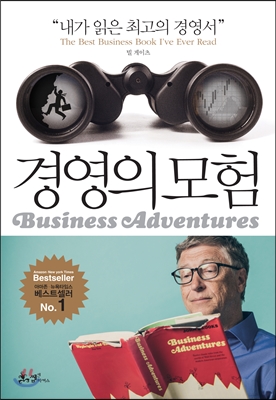
A classic management book, republished after 43 years, with Bill Gates recommending it on his website and in the Wall Street Journal as “the best management book I’ve ever read.” 《Adventures in Management》 is a book that deeply examines the essence of a company that does not change over time and the nature of humans who live fiercely within the corporate ecosystem. Major American media outlets praised the book as “A Business Classic” and wrote that it is “a classic that not only business leaders but also anyone working in business must read.” The thrilling story of those who never stopped their adventure in search of immortal values, even in the face of reckless challenges and irreversible failures, unfolds without pause. 《Adventures in Management》 reminds us that the principles for running a strong business and creating value remain unchanged. As it became known that the person who first lent Bill Gates a copy of "Business Adventures" was none other than Warren Buffett, known as the "investment genius," the book earned the nickname "Billionaire's Bible," and immediately rose to the top of the Amazon and New York Times bestseller lists immediately after its publication. |
- You can preview some of the book's contents.
Preview
index
Adventures in Management
Reviewer's note
1 The Fate of the Edsel
Perfect system, prepared to fail
2. Who are these taxes for?
A Tax Adventure Where Fraud and Hypocrisy Run Wild
3 The moment when private information turns into money
Human Nature Regarding Wealth
4 Hands that Move the Stock Market
A danger that can strike anyone at any time
5 Xerox Xerox Xerox Xerox
How far does corporate responsibility extend?
6. Finding Good Customers
Profits first or customers first?
7 Companies that interpret the same words differently
Collusion, Lies, and Obvious Communication Mistakes
8 Last corner
A country bumpkin's challenge to Wall Street
9 What is the essence of an entrepreneur?
Success is a bonus for those who grasp the essence.
10 Shareholders' Season
How do shareholders and companies coexist?
11 You Don't Know Until You Bite
Secrets and information leak out everywhere.
12 Pound Rescue Operation
Why did the world cooperate to save the pound?
Search
Reviewer's note
1 The Fate of the Edsel
Perfect system, prepared to fail
2. Who are these taxes for?
A Tax Adventure Where Fraud and Hypocrisy Run Wild
3 The moment when private information turns into money
Human Nature Regarding Wealth
4 Hands that Move the Stock Market
A danger that can strike anyone at any time
5 Xerox Xerox Xerox Xerox
How far does corporate responsibility extend?
6. Finding Good Customers
Profits first or customers first?
7 Companies that interpret the same words differently
Collusion, Lies, and Obvious Communication Mistakes
8 Last corner
A country bumpkin's challenge to Wall Street
9 What is the essence of an entrepreneur?
Success is a bonus for those who grasp the essence.
10 Shareholders' Season
How do shareholders and companies coexist?
11 You Don't Know Until You Bite
Secrets and information leak out everywhere.
12 Pound Rescue Operation
Why did the world cooperate to save the pound?
Search
Into the book
Adventures in Management
The various episodes and case studies included in this book are so familiar that it's hard to believe they deal with events that occurred nearly half a century ago.
Why is this? First, because the subject matter the author deals with isn't simply events from bygone history, but issues we constantly face today.
In particular, the topics covered in chapters on corporate management and organization (growth, innovation, entrepreneurship, communication, intellectual property protection) are still core management issues that frequently appear in the media.
Macroeconomic issues such as exchange rates and income taxes are also very important issues that cannot be overlooked in our country's current economic reality.
Here, readers will discover the true value of John Brooks as a professional journalist, skillfully using numerous sources and interviews to recreate the objectivity and individuality of each event and person.
His extensive interviews, detailed situational descriptions, and insightful perspectives that allow him to see the overall context are truly astounding.
- From the reviewer's note (Professor Lee Dong-gi, Seoul National University Business School)
Unless you are an indigenous person living in the remotest parts of the rainforest, there are few people who have not heard of that disastrous failure.
To be precise, after two years, two months, and 15 days, Ford had sold only 109,466 Edsels.
Hundreds, if not thousands, of those cars were likely bought by Ford executives, dealers, salespeople, advertising and public relations staff, assembly line workers, and others with a personal stake in the Edsel's success.
The 109,466 units represented less than 1% of all passenger cars sold in the United States during the same period.
Finally, on November 19, 1959, Ford permanently halted Edsel production, with an estimated loss of approximately $350 million, according to external estimates.
How could this have happened? How could a company with everything—money, experience, and a sophisticated brain—make such a colossal mistake? (...) While Ford, like most people, was silent about keeping a detailed record of its mistakes, I began to investigate what I could do about the Edsel's failure.
As a result, I have come to believe that what we know is only a part of the whole truth.
- Chapter 1: The Fate of the Edsel (pp. 18-19)
Author David Bazlen argues that the economic impact of this tax is so far-reaching that it creates two distinctly different kinds of American currency: pre-tax and post-tax.
In any case, no business has ever been created or any business activity carried out for even a single day without serious and sufficient consideration of income tax.
Moreover, while it is rare to find someone in any income bracket who doesn't at least occasionally think about income tax, some who don't end up losing their wealth, reputation, or both.
An American was surprised to find a brass plaque attached to a donation box for the renovation of St. Mark's Basilica in the faraway land of Venice that read, "Deductible from U.S. income tax."
Chapter 2: For Whom Are Taxes for? (Page 99)
The Xerox story, condensed and summarized—a lonely inventor working in a crude laboratory, a small, family-oriented company, repeated early setbacks, reliance on the patent system, a trademark based on ancient Greek, and finally a glorious triumph that proved the superiority of the free enterprise system—sounds like a tired tale, even a 19th-century tale.
But Xerox has a different story.
In demonstrating responsibility not only to shareholders, employees, and customers but also to society as a whole, Xerox acted in a manner diametrically opposed to most 19th-century corporations.
In this respect, Xerox was nothing short of the vanguard of 20th-century business.
Wilson said, “Set your goals high, have ambitions that are almost impossible to achieve, and give people the confidence that they can achieve them.
“These are as important as the balance sheet, if not more so,” he once said, and other Xerox executives have often emphasized that the “Xerox spirit” is not a matter of emphasizing “human values” themselves, but rather a means to an end.
- Chapter 5 Xerox Xerox Xerox Xerox (pp. 249-150)
But perhaps the problem isn't just technology, it's culture, and it also has to do with the loss of personal identity that comes from working in huge organizations.
(...) Let us assume this purely as a hypothesis.
Suppose a company owner instructs his employees to follow antitrust laws, but he has trouble communicating with himself and is unsure whether he wants the instructions to be followed or not.
If his instructions are not followed, the resulting price fixing will fatten the company's coffers.
If his instructions are followed, he will have done the right thing.
In the former case, he is not personally involved in the bad, while in the latter case, he is involved in the good, playing a good role in the good.
So what do the company owners have to lose?
Chapter 7: Companies that Interpret the Same Words Differently (Page 351)
The various episodes and case studies included in this book are so familiar that it's hard to believe they deal with events that occurred nearly half a century ago.
Why is this? First, because the subject matter the author deals with isn't simply events from bygone history, but issues we constantly face today.
In particular, the topics covered in chapters on corporate management and organization (growth, innovation, entrepreneurship, communication, intellectual property protection) are still core management issues that frequently appear in the media.
Macroeconomic issues such as exchange rates and income taxes are also very important issues that cannot be overlooked in our country's current economic reality.
Here, readers will discover the true value of John Brooks as a professional journalist, skillfully using numerous sources and interviews to recreate the objectivity and individuality of each event and person.
His extensive interviews, detailed situational descriptions, and insightful perspectives that allow him to see the overall context are truly astounding.
- From the reviewer's note (Professor Lee Dong-gi, Seoul National University Business School)
Unless you are an indigenous person living in the remotest parts of the rainforest, there are few people who have not heard of that disastrous failure.
To be precise, after two years, two months, and 15 days, Ford had sold only 109,466 Edsels.
Hundreds, if not thousands, of those cars were likely bought by Ford executives, dealers, salespeople, advertising and public relations staff, assembly line workers, and others with a personal stake in the Edsel's success.
The 109,466 units represented less than 1% of all passenger cars sold in the United States during the same period.
Finally, on November 19, 1959, Ford permanently halted Edsel production, with an estimated loss of approximately $350 million, according to external estimates.
How could this have happened? How could a company with everything—money, experience, and a sophisticated brain—make such a colossal mistake? (...) While Ford, like most people, was silent about keeping a detailed record of its mistakes, I began to investigate what I could do about the Edsel's failure.
As a result, I have come to believe that what we know is only a part of the whole truth.
- Chapter 1: The Fate of the Edsel (pp. 18-19)
Author David Bazlen argues that the economic impact of this tax is so far-reaching that it creates two distinctly different kinds of American currency: pre-tax and post-tax.
In any case, no business has ever been created or any business activity carried out for even a single day without serious and sufficient consideration of income tax.
Moreover, while it is rare to find someone in any income bracket who doesn't at least occasionally think about income tax, some who don't end up losing their wealth, reputation, or both.
An American was surprised to find a brass plaque attached to a donation box for the renovation of St. Mark's Basilica in the faraway land of Venice that read, "Deductible from U.S. income tax."
Chapter 2: For Whom Are Taxes for? (Page 99)
The Xerox story, condensed and summarized—a lonely inventor working in a crude laboratory, a small, family-oriented company, repeated early setbacks, reliance on the patent system, a trademark based on ancient Greek, and finally a glorious triumph that proved the superiority of the free enterprise system—sounds like a tired tale, even a 19th-century tale.
But Xerox has a different story.
In demonstrating responsibility not only to shareholders, employees, and customers but also to society as a whole, Xerox acted in a manner diametrically opposed to most 19th-century corporations.
In this respect, Xerox was nothing short of the vanguard of 20th-century business.
Wilson said, “Set your goals high, have ambitions that are almost impossible to achieve, and give people the confidence that they can achieve them.
“These are as important as the balance sheet, if not more so,” he once said, and other Xerox executives have often emphasized that the “Xerox spirit” is not a matter of emphasizing “human values” themselves, but rather a means to an end.
- Chapter 5 Xerox Xerox Xerox Xerox (pp. 249-150)
But perhaps the problem isn't just technology, it's culture, and it also has to do with the loss of personal identity that comes from working in huge organizations.
(...) Let us assume this purely as a hypothesis.
Suppose a company owner instructs his employees to follow antitrust laws, but he has trouble communicating with himself and is unsure whether he wants the instructions to be followed or not.
If his instructions are not followed, the resulting price fixing will fatten the company's coffers.
If his instructions are followed, he will have done the right thing.
In the former case, he is not personally involved in the bad, while in the latter case, he is involved in the good, playing a good role in the good.
So what do the company owners have to lose?
Chapter 7: Companies that Interpret the Same Words Differently (Page 351)
--- From the text
Publisher's Review
Adventures in Management
“The best business book I’ve ever read.” - Bill Gates
Even in the midst of reckless challenges toward success and irreversible failures,
The history of those who never stopped their adventure in search of immortal values.
Warren Buffett recommended it to Bill Gates
A book recommended by Bill Gates to readers around the world!
1969.
A book was published.
The book, titled “Business Adventures,” was written by John Brooks, a financial journalist for The New Yorker, whose writing on business and finance had already been praised by many media outlets as “overwhelmingly excellent.”
Adventures in Management also included the essays that earned John Brooks the Gerald Loeb Award, given to the most distinguished journalist in business and finance.
The New York Times said, “He was a remarkable writer.
“He was a gifted storyteller and a truly extraordinary person, possessing a special talent for condensing and explaining characters in simple, clear stories or sentences,” he said.
1991.
It was not long after Bill Gates met Warren Buffett.
Bill Gates asked Warren Buffett, known as the "Oracle of Omaha" and the "investment genius," if he could recommend his favorite business book.
Warren Buffett said it without hesitation.
“It’s John Brooks’s “Adventures in Management.”
“Send me this book.” In fact, until then, Bill Gates was unfamiliar with the name John Brooks, let alone “Adventures in Management.”
Summer 2014.
Bill Gates contributed an article titled “The Best Business Book I’ve Ever Read” to his website and the Wall Street Journal.
Bill Gates said, “More than 20 years after I borrowed it from Warren Buffett and more than 40 years after its first edition, ‘Adventures in Management’ remains the best business book I have ever read.
“John Brooks is still my favorite business author,” he said.
Bill Gates went into great detail about why the contents of this book still have timeless value, and especially praised "Xerox Xerox Xerox Xerox" as worthy of being inducted into the Journalism Hall of Fame.
Bill Gates even formed a team to help republish Business Adventures and track down the son of John Brooks, the copyright owner, ultimately reviving the book after 43 years.
As stories like these spread, “Adventures in Management” quickly rose to the top of the Amazon and New York Times bestseller lists upon its publication in the United States, beating out French economist Thomas Piketty’s “Capital in the Twenty-First Century” and other popular novels.
The classic management book that made Bill Gates who he is today!
Records of success and frustration that add value as time passes.
"Adventures in Management" delves into not only the fascinating stories deeply etched in the history of management—the stock market, taxes, new product development, corporate collaboration—but also the symbolic events surrounding the inherent spirit of entrepreneurship and the seemingly intractable challenges of internal corporate communication.
The 12 episodes included in the book are broadly divided into three themes.
Part 5 presents detailed case studies of Ford Motor Company's new car development project, the birth of Xerox, an innovative company, the essence of entrepreneurship, communication issues in corporate organizations, trade secret protection laws, and human resources management, symbolically illustrating important issues surrounding corporations and their impact even today.
The other five episodes deal with stock market-related topics, including rapid stock price fluctuations, insider trading using insider information, investor protection issues, stock price manipulation, and vivid voices from shareholder meetings, revealing the human greed and frustration surrounding capital.
The two stories, which cover the sharply contested arguments surrounding income tax and the international cooperation surrounding the devaluation of the pound, are closely related to current macroeconomic policy issues in Korea.
The author skillfully unfolds the colorful aspects of business that have remained unchanged through the ages, including the dramatic story of the launch of the Edsel, the car that went down in the history of Ford Motor Company as the worst failure in history, the reflective lesson on corporate social responsibility and true entrepreneurship shown by Xerox, and the exciting story of a country entrepreneur's courageous fight against (but miserably defeated by) the New York Stock Exchange on Wall Street.
Bill Gates said, “The content of this book is not valid because it is old, but because it is old.
“John Brooks’ book is really about human nature, and that’s why it’s timeless,” he explains.
In the tumultuous history of business, where people take reckless risks toward success and are repeatedly frustrated by irreversible failures, what remains in the end is not money, power, or fame.
It was the remarkable example of countless individuals who, when faced with a crisis, came together to find solutions, or who, instead of being preoccupied with immediate gain, tried to remain faithful to the responsibilities and duties given to them.
That's why the author identifies and presents landmarks we can refer to, even in the historical failures of individuals or large corporations.
For example, the story of Ford Motor Company's Edsel announces that an era has arrived in which failures can possess a certain grandeur that successful people can never know, and the problem of communication between superiors and subordinates, which arose in the General Electric price-fixing scandal, naturally moves to the fundamental problem of communication with oneself.
An adventure to discover the essence of business and human nature.
A classic read that delivers absolute pleasure: The Adventures of Management
The New York Times said the book's true value lies in understanding historical patterns, adding:
“John Brooks chronicled the triumphs and travails of companies like Xerox, General Electric, and Ford.
His writings on business are full of social, literary, and artistic references, and of wit.”
The twelve stories of management adventures contained in this book are woven from the author's extensive research and vivid interviews with countless individuals who were present at the scenes of these incidents and accidents. As you carefully follow these stories, you'll soon find yourself stepping beyond the confines of management and into the realms of literature, art, history, and society.
Another value of "Adventures in Management" as a classic lies in its continuity and expandability.
The reason it still feels so vivid today, even after all this time, is because each story has a perfect balance of depth and breadth.
Therefore, even if you are not a seasoned manager with specialized knowledge or someone currently working in the business field, perhaps because of that, this book will provide you with unexpected enjoyment.
The theme that "Adventures in Management," a history of business's glory and hardships, seeks to convey to us today is clear.
The way a company manages and creates value is not through money or performance, but through 'people' and numerous 'human relationships' that are realized 'wonderfully and beautifully'.
In doing so, this book reminds us that the principles for running a strong business and creating value have not changed, and will not change.
“The best business book I’ve ever read.” - Bill Gates
Even in the midst of reckless challenges toward success and irreversible failures,
The history of those who never stopped their adventure in search of immortal values.
Warren Buffett recommended it to Bill Gates
A book recommended by Bill Gates to readers around the world!
1969.
A book was published.
The book, titled “Business Adventures,” was written by John Brooks, a financial journalist for The New Yorker, whose writing on business and finance had already been praised by many media outlets as “overwhelmingly excellent.”
Adventures in Management also included the essays that earned John Brooks the Gerald Loeb Award, given to the most distinguished journalist in business and finance.
The New York Times said, “He was a remarkable writer.
“He was a gifted storyteller and a truly extraordinary person, possessing a special talent for condensing and explaining characters in simple, clear stories or sentences,” he said.
1991.
It was not long after Bill Gates met Warren Buffett.
Bill Gates asked Warren Buffett, known as the "Oracle of Omaha" and the "investment genius," if he could recommend his favorite business book.
Warren Buffett said it without hesitation.
“It’s John Brooks’s “Adventures in Management.”
“Send me this book.” In fact, until then, Bill Gates was unfamiliar with the name John Brooks, let alone “Adventures in Management.”
Summer 2014.
Bill Gates contributed an article titled “The Best Business Book I’ve Ever Read” to his website and the Wall Street Journal.
Bill Gates said, “More than 20 years after I borrowed it from Warren Buffett and more than 40 years after its first edition, ‘Adventures in Management’ remains the best business book I have ever read.
“John Brooks is still my favorite business author,” he said.
Bill Gates went into great detail about why the contents of this book still have timeless value, and especially praised "Xerox Xerox Xerox Xerox" as worthy of being inducted into the Journalism Hall of Fame.
Bill Gates even formed a team to help republish Business Adventures and track down the son of John Brooks, the copyright owner, ultimately reviving the book after 43 years.
As stories like these spread, “Adventures in Management” quickly rose to the top of the Amazon and New York Times bestseller lists upon its publication in the United States, beating out French economist Thomas Piketty’s “Capital in the Twenty-First Century” and other popular novels.
The classic management book that made Bill Gates who he is today!
Records of success and frustration that add value as time passes.
"Adventures in Management" delves into not only the fascinating stories deeply etched in the history of management—the stock market, taxes, new product development, corporate collaboration—but also the symbolic events surrounding the inherent spirit of entrepreneurship and the seemingly intractable challenges of internal corporate communication.
The 12 episodes included in the book are broadly divided into three themes.
Part 5 presents detailed case studies of Ford Motor Company's new car development project, the birth of Xerox, an innovative company, the essence of entrepreneurship, communication issues in corporate organizations, trade secret protection laws, and human resources management, symbolically illustrating important issues surrounding corporations and their impact even today.
The other five episodes deal with stock market-related topics, including rapid stock price fluctuations, insider trading using insider information, investor protection issues, stock price manipulation, and vivid voices from shareholder meetings, revealing the human greed and frustration surrounding capital.
The two stories, which cover the sharply contested arguments surrounding income tax and the international cooperation surrounding the devaluation of the pound, are closely related to current macroeconomic policy issues in Korea.
The author skillfully unfolds the colorful aspects of business that have remained unchanged through the ages, including the dramatic story of the launch of the Edsel, the car that went down in the history of Ford Motor Company as the worst failure in history, the reflective lesson on corporate social responsibility and true entrepreneurship shown by Xerox, and the exciting story of a country entrepreneur's courageous fight against (but miserably defeated by) the New York Stock Exchange on Wall Street.
Bill Gates said, “The content of this book is not valid because it is old, but because it is old.
“John Brooks’ book is really about human nature, and that’s why it’s timeless,” he explains.
In the tumultuous history of business, where people take reckless risks toward success and are repeatedly frustrated by irreversible failures, what remains in the end is not money, power, or fame.
It was the remarkable example of countless individuals who, when faced with a crisis, came together to find solutions, or who, instead of being preoccupied with immediate gain, tried to remain faithful to the responsibilities and duties given to them.
That's why the author identifies and presents landmarks we can refer to, even in the historical failures of individuals or large corporations.
For example, the story of Ford Motor Company's Edsel announces that an era has arrived in which failures can possess a certain grandeur that successful people can never know, and the problem of communication between superiors and subordinates, which arose in the General Electric price-fixing scandal, naturally moves to the fundamental problem of communication with oneself.
An adventure to discover the essence of business and human nature.
A classic read that delivers absolute pleasure: The Adventures of Management
The New York Times said the book's true value lies in understanding historical patterns, adding:
“John Brooks chronicled the triumphs and travails of companies like Xerox, General Electric, and Ford.
His writings on business are full of social, literary, and artistic references, and of wit.”
The twelve stories of management adventures contained in this book are woven from the author's extensive research and vivid interviews with countless individuals who were present at the scenes of these incidents and accidents. As you carefully follow these stories, you'll soon find yourself stepping beyond the confines of management and into the realms of literature, art, history, and society.
Another value of "Adventures in Management" as a classic lies in its continuity and expandability.
The reason it still feels so vivid today, even after all this time, is because each story has a perfect balance of depth and breadth.
Therefore, even if you are not a seasoned manager with specialized knowledge or someone currently working in the business field, perhaps because of that, this book will provide you with unexpected enjoyment.
The theme that "Adventures in Management," a history of business's glory and hardships, seeks to convey to us today is clear.
The way a company manages and creates value is not through money or performance, but through 'people' and numerous 'human relationships' that are realized 'wonderfully and beautifully'.
In doing so, this book reminds us that the principles for running a strong business and creating value have not changed, and will not change.
GOODS SPECIFICS
- Date of issue: March 9, 2015
- Page count, weight, size: 612 pages | 857g | 152*223*35mm
- ISBN13: 9788965702450
- ISBN10: 8965702453
You may also like
카테고리
korean


korean

![GQ KOREA Mark (Monthly): December [2025]](http://librairie.coreenne.fr/cdn/shop/files/8ef265dbbfbf186523ed75ba7319009d.jpg?v=1765340328&width=3840)


