

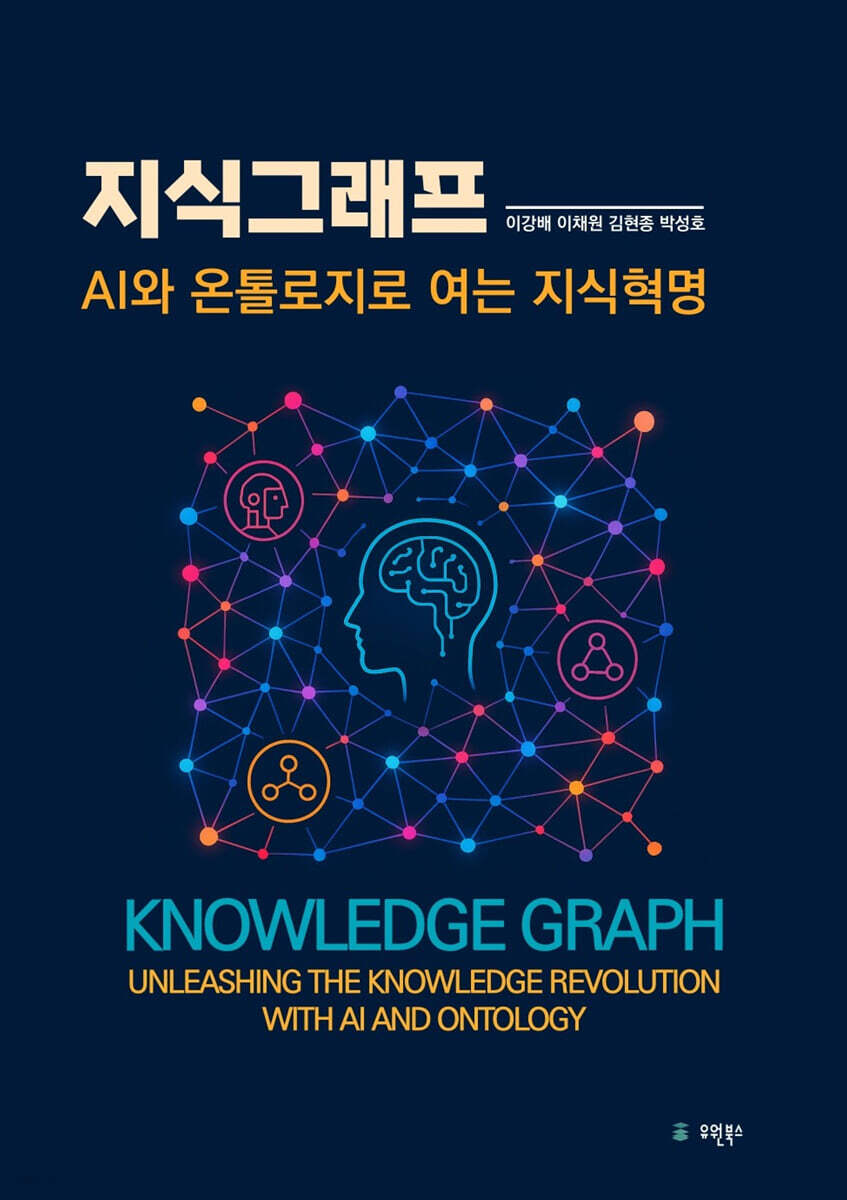
Knowledge Graph: A Knowledge Revolution Driven by AI and Ontology
 |
Description
Book Introduction
"A core tool for trusted AI and strategic organizational operations - Unlock your data with the knowledge graph and prepare for the future."
“In the era of digital transformation, organizations can no longer simply store their data.
This book presents how to leverage knowledge graphs to connect disparate data and transform it into a strategic asset.
From ontology-based design to integration with LLM and hybrid RAG, we cover practical implementation strategies through global case studies, including those from Palantir. In the AI era, what's needed is not simply data, but "trustworthy knowledge."
“Now, design the future of your organization with a knowledge graph.”
“In the era of digital transformation, organizations can no longer simply store their data.
This book presents how to leverage knowledge graphs to connect disparate data and transform it into a strategic asset.
From ontology-based design to integration with LLM and hybrid RAG, we cover practical implementation strategies through global case studies, including those from Palantir. In the AI era, what's needed is not simply data, but "trustworthy knowledge."
“Now, design the future of your organization with a knowledge graph.”
- You can preview some of the book's contents.
Preview
index
Chapter 1.
About Knowledge Graph
1.1 What is a Knowledge Graph? 10
1.2 Artificial Intelligence and Knowledge Graphs 16
1.3 Giant Language Models and Knowledge Graphs 20
Chapter 2.
Utilizing knowledge graphs
2.1 Google: The Beginning of a New Search Engine 29
2.2 Amazon: Connecting Your Tastes 38
2.3 Intuit: Managing Invisible Risks 53
2.4 Palantir: Turning Dispersed Knowledge into Strategy 59
2.5 Knowledge Graphs: The Secret Weapon of Business 63
2.6 Knowledge Graphs for Knowledge Management 69
Chapter 3.
Ontology: A Blueprint for Knowledge Graphs
3.1 The Concept of Ontology 76
3.2 Utilizing Ontology 79
3.3 Building an Ontology 81
3.4 Example of Ontology Construction: Ontology 84 for 'Performance/Exhibition Services'
3.5 Ontology Editing and Management Tools 108
Chapter 4.
Knowledge Graph Lifecycle: The Process of Building and Managing a Knowledge Graph
4.1 Data Collection and Preprocessing 118
4.2 Building a Knowledge Graph 120
4.3 Knowledge Graph Storage and Hosting 133
4.4 Knowledge Graph Management and Curation 146
4.5 Knowledge Graph Utilization and Inference 159
Chapter 5.
System architecture for utilizing knowledge graphs
5.1 Search Engine Using Knowledge Graphs 173
5.2 RAG 176
5.3 Knowledge Graphs in Recommender Systems 178
5.4 Fraud Detection 183
Chapter 6.
The Value of Knowledge Graphs: The Future and Prospects
6.1 Why are knowledge graphs attracting attention? 189
6.2 Diffusion in Markets and Industries 191
6.3 Complementarity between LLM and Knowledge Graphs 194
6.4 The Future of Knowledge Graphs: A Leap Forward to Core Technologies 195
About Knowledge Graph
1.1 What is a Knowledge Graph? 10
1.2 Artificial Intelligence and Knowledge Graphs 16
1.3 Giant Language Models and Knowledge Graphs 20
Chapter 2.
Utilizing knowledge graphs
2.1 Google: The Beginning of a New Search Engine 29
2.2 Amazon: Connecting Your Tastes 38
2.3 Intuit: Managing Invisible Risks 53
2.4 Palantir: Turning Dispersed Knowledge into Strategy 59
2.5 Knowledge Graphs: The Secret Weapon of Business 63
2.6 Knowledge Graphs for Knowledge Management 69
Chapter 3.
Ontology: A Blueprint for Knowledge Graphs
3.1 The Concept of Ontology 76
3.2 Utilizing Ontology 79
3.3 Building an Ontology 81
3.4 Example of Ontology Construction: Ontology 84 for 'Performance/Exhibition Services'
3.5 Ontology Editing and Management Tools 108
Chapter 4.
Knowledge Graph Lifecycle: The Process of Building and Managing a Knowledge Graph
4.1 Data Collection and Preprocessing 118
4.2 Building a Knowledge Graph 120
4.3 Knowledge Graph Storage and Hosting 133
4.4 Knowledge Graph Management and Curation 146
4.5 Knowledge Graph Utilization and Inference 159
Chapter 5.
System architecture for utilizing knowledge graphs
5.1 Search Engine Using Knowledge Graphs 173
5.2 RAG 176
5.3 Knowledge Graphs in Recommender Systems 178
5.4 Fraud Detection 183
Chapter 6.
The Value of Knowledge Graphs: The Future and Prospects
6.1 Why are knowledge graphs attracting attention? 189
6.2 Diffusion in Markets and Industries 191
6.3 Complementarity between LLM and Knowledge Graphs 194
6.4 The Future of Knowledge Graphs: A Leap Forward to Core Technologies 195
Publisher's Review
Beyond Palantir, Paving the Way for Korean Knowledge Innovation
Digital transformation is no longer a choice, it's a matter of survival.
The era of simply collecting and analyzing vast amounts of data is over. Now, we need to organize and connect data based on "meaning," enabling us to make practical, knowledge-based decisions.
It is at this very point that the Knowledge Graph comes into play.
This book analyzes and illustrates cases of companies around the world that are achieving strategic leaps forward by leveraging knowledge graphs, even at this very moment.
For example, Palantir has been playing a key role in countering terrorism, predicting the spread of infectious diseases, managing disasters, and designing policies through its knowledge graph-based analytics and strategic support systems, working with the U.S. Department of Defense, the CIA, the Centers for Disease Control and Prevention (CDC), and the White House.
Palantir's case demonstrates the value of the knowledge graph as a knowledge infrastructure that determines the strategic capabilities of nations and organizations, not just a technical issue.
We aim to provide a practical path for domestic companies to take the lead in creating a "Korean Palantir."
The core goal of this book is to enable you to build a strategic support system that connects, structures, and infers enterprise-wide knowledge, rather than simply visualizing data or displaying it on a dashboard.
This book aims to answer the following questions for leaders, practitioners, CIOs (Chief Information Officers), and CKOs (Chief Knowledge Officers) driving digital transformation within companies, as well as digital managers, policy planners, and those considering data-driven administrative innovation within public institutions:
● How can we transform the vast amount of data collected and the various documents piled up somewhere into ‘meaningful knowledge’?
● How does a knowledge graph combined with a large language model (LLM) change corporate strategy, policy processes, and administrative services?
● Is a knowledge-based strategy platform like the Korean Palantir possible in Korea?
This book also aims to serve as a bridge between academia and practice by systematically conveying the basic concepts, construction methods, and application cases of knowledge graphs and ontologies to students studying artificial intelligence, natural language processing (NLP), and hybrid RAG (Retrieval-Augmented Generation) in graduate school.
The book is structured as follows:
Chapter 1 examines the concept of knowledge graphs and their relationship with AI and LLM.
Chapter 2 covers implementation cases from major companies and organizations such as Google, Amazon, and Palantir.
Chapter 3 describes the concept and design method of ontology.
Chapter 4 describes the life cycle of a knowledge graph, from data collection to inference utilization.
Chapter 5 covers technical architectures such as recommendation systems, search engines, and hybrid RAGs.
Chapter 6 looks into the future value of knowledge graphs.
This book goes beyond simply introducing technology; it's a practical guide to transforming an organization's knowledge structure and making policies, strategies, and services more intelligent.
Beyond Palantir, I hope this will be the first step toward collaboratively exploring how to design and implement a knowledge infrastructure tailored to our organization, regardless of whether it's private or public.
Spring 2025
Written by Lee Kang-bae on behalf of the author
Digital transformation is no longer a choice, it's a matter of survival.
The era of simply collecting and analyzing vast amounts of data is over. Now, we need to organize and connect data based on "meaning," enabling us to make practical, knowledge-based decisions.
It is at this very point that the Knowledge Graph comes into play.
This book analyzes and illustrates cases of companies around the world that are achieving strategic leaps forward by leveraging knowledge graphs, even at this very moment.
For example, Palantir has been playing a key role in countering terrorism, predicting the spread of infectious diseases, managing disasters, and designing policies through its knowledge graph-based analytics and strategic support systems, working with the U.S. Department of Defense, the CIA, the Centers for Disease Control and Prevention (CDC), and the White House.
Palantir's case demonstrates the value of the knowledge graph as a knowledge infrastructure that determines the strategic capabilities of nations and organizations, not just a technical issue.
We aim to provide a practical path for domestic companies to take the lead in creating a "Korean Palantir."
The core goal of this book is to enable you to build a strategic support system that connects, structures, and infers enterprise-wide knowledge, rather than simply visualizing data or displaying it on a dashboard.
This book aims to answer the following questions for leaders, practitioners, CIOs (Chief Information Officers), and CKOs (Chief Knowledge Officers) driving digital transformation within companies, as well as digital managers, policy planners, and those considering data-driven administrative innovation within public institutions:
● How can we transform the vast amount of data collected and the various documents piled up somewhere into ‘meaningful knowledge’?
● How does a knowledge graph combined with a large language model (LLM) change corporate strategy, policy processes, and administrative services?
● Is a knowledge-based strategy platform like the Korean Palantir possible in Korea?
This book also aims to serve as a bridge between academia and practice by systematically conveying the basic concepts, construction methods, and application cases of knowledge graphs and ontologies to students studying artificial intelligence, natural language processing (NLP), and hybrid RAG (Retrieval-Augmented Generation) in graduate school.
The book is structured as follows:
Chapter 1 examines the concept of knowledge graphs and their relationship with AI and LLM.
Chapter 2 covers implementation cases from major companies and organizations such as Google, Amazon, and Palantir.
Chapter 3 describes the concept and design method of ontology.
Chapter 4 describes the life cycle of a knowledge graph, from data collection to inference utilization.
Chapter 5 covers technical architectures such as recommendation systems, search engines, and hybrid RAGs.
Chapter 6 looks into the future value of knowledge graphs.
This book goes beyond simply introducing technology; it's a practical guide to transforming an organization's knowledge structure and making policies, strategies, and services more intelligent.
Beyond Palantir, I hope this will be the first step toward collaboratively exploring how to design and implement a knowledge infrastructure tailored to our organization, regardless of whether it's private or public.
Spring 2025
Written by Lee Kang-bae on behalf of the author
GOODS SPECIFICS
- Date of issue: June 20, 2025
- Format: Paperback book binding method guide
- Page count, weight, size: 200 pages | 400g | 173*246*10mm
- ISBN13: 9791162882122
- ISBN10: 1162882123
You may also like
카테고리
korean


korean

![GQ KOREA Mark (Monthly): December [2025]](http://librairie.coreenne.fr/cdn/shop/files/8ef265dbbfbf186523ed75ba7319009d.jpg?v=1765340328&width=3840)


