

Dementia liberation
 |
Description
Book Introduction
“We don’t know dementia yet!”
South Korea's super-aging society is expected to have 3 million dementia patients by 2050.
A must-read for conquering aging and dementia!
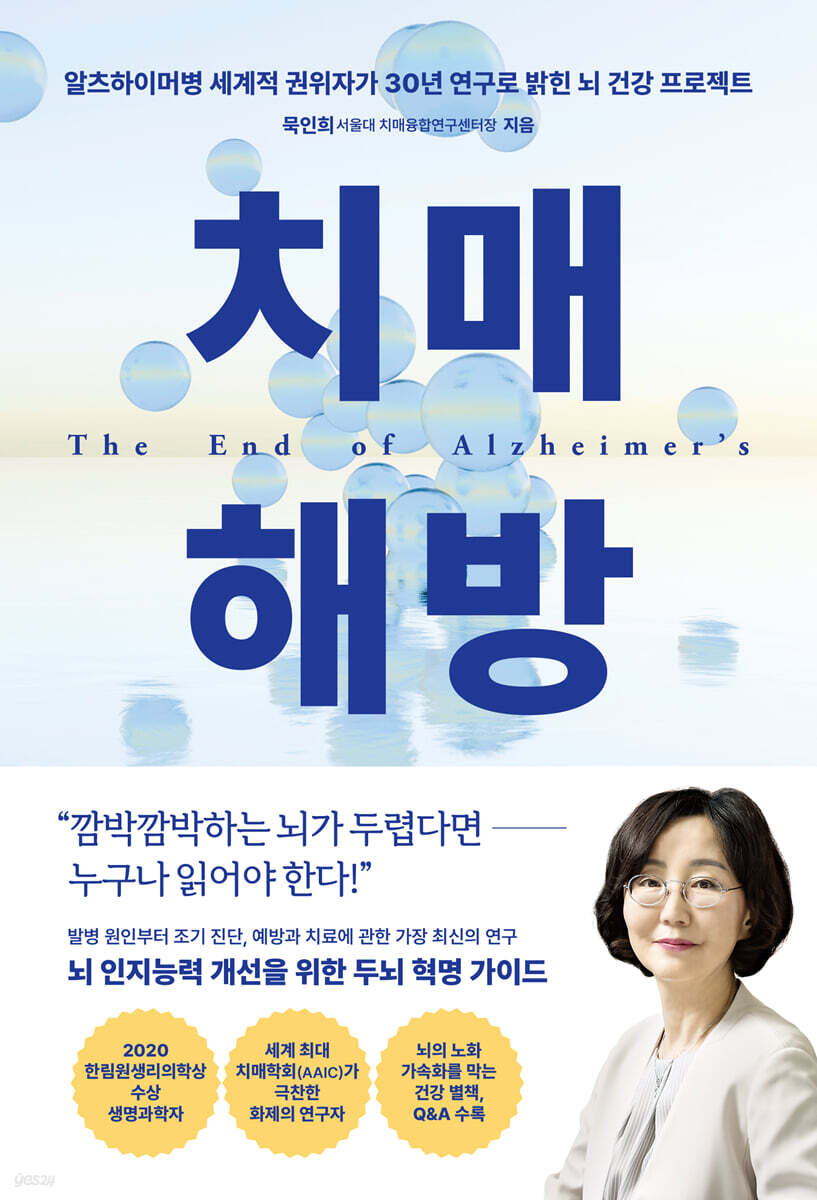
Professor Muk In-hee, a world-renowned medical scientist who has been exploring Alzheimer's disease for over 30 years and director of the Seoul National University Dementia Convergence Research Center, has published his first popular book, "Dementia Liberation," which contains the latest research, scientific insights, and practical solutions on the causes, early diagnosis, prevention, and treatment of dementia.
Korea, which has rapidly entered a super-aged society, must now prepare to face an era in which the number of dementia patients will reach 3 million by 2050.
How much do we truly know about this disease? Commonly known as "dementia," this brain disease that causes cognitive decline has no single cause, symptoms, or treatment.
We still don't really know much about this terrifying disease that causes people to lose their memories and even their families' normal daily lives.
The moment her family member was diagnosed with dementia, author Professor Mook In-hee questioned, “Why are we so helpless in the face of this disease?” and began researching the causes, improvements, and treatments.
This book contains the complex mechanisms of dementia and the most effective practical methodologies he has uncovered through 30 years of research.
He says, "Early diagnosis is key to the success or failure of dementia treatment," and shows that cutting-edge technologies, such as biomarker technology that detects dementia-related substances through blood tests and brain MRI analysis using artificial intelligence, are already upon us.
Furthermore, in terms of prevention, it persuasively explains that dementia is not determined by genes alone, and that healthy eating habits, regular exercise, sufficient sleep, and active social activities have a significant impact on its onset.
In particular, healthy habits that develop 'cognitive reserve', which strengthens the brain's cognitive function, can be a strong shield.
On the treatment side, we also introduce various approaches that are ushering in a new era of treatment, such as FDA-approved amyloid beta-removing antibody treatments, digital therapeutics utilizing smartphone apps or games, and research on the 'gut-brain axis' that studies the connection between gut health and brain health.
Beyond simple medical information, "Dementia Liberation" helps people with dementia and their families overcome their fears and offers science-based prevention and treatment strategies.
Dementia is no longer an inevitable fate, but rather a disease that can be sufficiently prepared for and combated through early diagnosis and active prevention.
I can confidently say that this book is the one and only must-read for conquering old age and dementia!
South Korea's super-aging society is expected to have 3 million dementia patients by 2050.
A must-read for conquering aging and dementia!
Professor Muk In-hee, a world-renowned medical scientist who has been exploring Alzheimer's disease for over 30 years and director of the Seoul National University Dementia Convergence Research Center, has published his first popular book, "Dementia Liberation," which contains the latest research, scientific insights, and practical solutions on the causes, early diagnosis, prevention, and treatment of dementia.
Korea, which has rapidly entered a super-aged society, must now prepare to face an era in which the number of dementia patients will reach 3 million by 2050.
How much do we truly know about this disease? Commonly known as "dementia," this brain disease that causes cognitive decline has no single cause, symptoms, or treatment.
We still don't really know much about this terrifying disease that causes people to lose their memories and even their families' normal daily lives.
The moment her family member was diagnosed with dementia, author Professor Mook In-hee questioned, “Why are we so helpless in the face of this disease?” and began researching the causes, improvements, and treatments.
This book contains the complex mechanisms of dementia and the most effective practical methodologies he has uncovered through 30 years of research.
He says, "Early diagnosis is key to the success or failure of dementia treatment," and shows that cutting-edge technologies, such as biomarker technology that detects dementia-related substances through blood tests and brain MRI analysis using artificial intelligence, are already upon us.
Furthermore, in terms of prevention, it persuasively explains that dementia is not determined by genes alone, and that healthy eating habits, regular exercise, sufficient sleep, and active social activities have a significant impact on its onset.
In particular, healthy habits that develop 'cognitive reserve', which strengthens the brain's cognitive function, can be a strong shield.
On the treatment side, we also introduce various approaches that are ushering in a new era of treatment, such as FDA-approved amyloid beta-removing antibody treatments, digital therapeutics utilizing smartphone apps or games, and research on the 'gut-brain axis' that studies the connection between gut health and brain health.
Beyond simple medical information, "Dementia Liberation" helps people with dementia and their families overcome their fears and offers science-based prevention and treatment strategies.
Dementia is no longer an inevitable fate, but rather a disease that can be sufficiently prepared for and combated through early diagnosis and active prevention.
I can confidently say that this book is the one and only must-read for conquering old age and dementia!
- You can preview some of the book's contents.
Preview
index
Introduction_ Beyond the Fear of Dementia: A Journey to Prevention and Treatment
Key terms in this book
Checklist_ Blinking, suspecting dementia?
Chapter 1: Dementia: The Truth We Didn't Know
The true face of dementia that you don't know until you face it
Misconceptions about dementia
Same Symptoms, Different Outcomes: The Different Causes of Dementia
Alzheimer's disease, which accounts for 70% of dementia
The Three Keys to Dementia Freedom: Early Diagnosis, Prevention and Management, and Treatment
Chapter 2: Early Diagnosis: Protect the Golden Time for Dementia Detection
The golden time that determines the success or failure of dementia treatment
Causes of dementia in the body that we don't know about
Alzheimer's: How to Diagnose and Diagnose
Prevent dementia progression after early diagnosis
[Health Special] Creating Lifestyle Habits to Prevent Accelerated Dementia
How far has early diagnosis technology progressed?
Chapter 3 Treatment: Creating a Dementia-Resistant Brain
Can Alzheimer's disease be cured?
Complete Dementia Freedom: From Drugs to Digital Therapeutics
Everything You Want to Know About Dementia Treatment
Digital Therapeutics: A New Frontier in Dementia Treatment
A miracle cure doesn't have to be a drug.
Chapter 4: Prevention: Build Brain Muscle for a Dementia-Free Centenarian Life
Aging is not destiny: Can dementia be prevented?
The Lancet Report: Dementia Prevention Methods Based on Life Cycle
Cognitive reserve: the key to freedom from dementia
[Health Special] Celebrities with Outstanding Cognitive Ability
[Health Special] Various Activities to Enhance Cognitive Ability
A Dementia-Free Korea: The Miracle of Dementia Liberation
Concluding Remarks: Overcoming Dementia: A New Era of Hope Begins
Q&A_ Dementia, Ask Anything
Americas
Key terms in this book
Checklist_ Blinking, suspecting dementia?
Chapter 1: Dementia: The Truth We Didn't Know
The true face of dementia that you don't know until you face it
Misconceptions about dementia
Same Symptoms, Different Outcomes: The Different Causes of Dementia
Alzheimer's disease, which accounts for 70% of dementia
The Three Keys to Dementia Freedom: Early Diagnosis, Prevention and Management, and Treatment
Chapter 2: Early Diagnosis: Protect the Golden Time for Dementia Detection
The golden time that determines the success or failure of dementia treatment
Causes of dementia in the body that we don't know about
Alzheimer's: How to Diagnose and Diagnose
Prevent dementia progression after early diagnosis
[Health Special] Creating Lifestyle Habits to Prevent Accelerated Dementia
How far has early diagnosis technology progressed?
Chapter 3 Treatment: Creating a Dementia-Resistant Brain
Can Alzheimer's disease be cured?
Complete Dementia Freedom: From Drugs to Digital Therapeutics
Everything You Want to Know About Dementia Treatment
Digital Therapeutics: A New Frontier in Dementia Treatment
A miracle cure doesn't have to be a drug.
Chapter 4: Prevention: Build Brain Muscle for a Dementia-Free Centenarian Life
Aging is not destiny: Can dementia be prevented?
The Lancet Report: Dementia Prevention Methods Based on Life Cycle
Cognitive reserve: the key to freedom from dementia
[Health Special] Celebrities with Outstanding Cognitive Ability
[Health Special] Various Activities to Enhance Cognitive Ability
A Dementia-Free Korea: The Miracle of Dementia Liberation
Concluding Remarks: Overcoming Dementia: A New Era of Hope Begins
Q&A_ Dementia, Ask Anything
Americas
Detailed image

Into the book
When one day we suddenly encounter an unfamiliar face in the mirror, or when we can't remember a name and a familiar place suddenly feels unfamiliar, we are often overcome with anxiety that it might not be simple forgetfulness but a sign of dementia.
Perhaps many people have felt this fear.
This book was written for the countless people who live each day in such fear.
--- From "Introduction | Beyond the Fear of Dementia, a Journey to Prevention and Treatment"
In the case of Alzheimer's disease, the number of deaths from this disease is increasing at a staggering rate, increasing by 247% compared to 2012.
This shows that dementia is increasingly emerging as a social problem and is a serious disease that can no longer be overlooked as a natural process of old age.
--- From "The Real Face of Dementia You Don't Know Until You Face It"
The biggest differences between amnesia and Alzheimer's disease are the extent to which it affects daily life, the extent of the memories forgotten, and the ability to recognize one's condition.
Depending on the degree of memory loss, forgetfulness may not significantly interfere with daily life, whereas Alzheimer's disease can cause serious difficulties in daily life.
--- From "Things You Don't Know About Dementia"
Currently, most patients only seek medical attention when their symptoms become severe enough to interfere with their daily lives.
Since the disease has already progressed considerably, the treatment effect is bound to be limited.
The average time when patients or their families recognize symptoms and seek medical attention is about 15 years after the onset of the disease.
The patient's judgment is clouded and it seems dangerous to be alone, so he visits the hospital, but by this time the disease has already progressed significantly.
--- From "Golden Time: The Key to Success or Failure in Dementia Treatment"
At the individual level, effective strategies to slow the progression of dementia focus on improving brain health in a multifaceted way.
First, consistently engaging in cognitively stimulating activities such as reading, learning, and acquiring new skills by utilizing the brain's ability to change, or brain plasticity, helps strengthen brain neural network connections and maintain cognitive function.
Additionally, regular exercise can slow the progression of dementia by increasing cerebral blood flow and promoting neurogenesis, while maintaining a healthy diet with antioxidant and anti-inflammatory effects can reduce brain cell damage and slow brain aging.
--- From "Prevent Acceleration of Dementia After Early Diagnosis"
Cognitive therapy, art therapy, psychotherapy, music therapy, exercise therapy, and social activity therapy have been proven effective through numerous studies and contribute to improving the quality of life of dementia patients.
Dementia treatment requires a multifaceted approach tailored to the patient's condition, and the best treatment results can be expected when non-pharmacological treatments are combined with pharmacological treatments.
--- From "A Miracle Cure Doesn't Have to Be a Drug"
Dementia is a disease in which cognitive functions such as memory, language ability, and judgment decline as brain cells are gradually damaged by neurodegenerative diseases such as Alzheimer's disease.
Alzheimer's disease progresses as pathological changes, such as amyloid plaques or tau protein accumulation, occur in the brain.
However, even among people with the same level of pathology, the timing and severity of symptoms can vary greatly from person to person.
The factor that explains this difference is cognitive reserve.
People with high cognitive reserve tend to have symptoms that appear late or progress mildly even when pathological changes occur.
--- From "Cognitive Reserve, the Key to Dementia Liberation"
The biggest difference between dementia and simple amnesia is the ability to react to external stimuli and to recognize oneself.
If you react to external stimuli and recognize that you have a problem, it is most likely due to forgetfulness.
However, if the person does not respond to external stimuli and does not recognize the problem, dementia may need to be suspected.
Perhaps many people have felt this fear.
This book was written for the countless people who live each day in such fear.
--- From "Introduction | Beyond the Fear of Dementia, a Journey to Prevention and Treatment"
In the case of Alzheimer's disease, the number of deaths from this disease is increasing at a staggering rate, increasing by 247% compared to 2012.
This shows that dementia is increasingly emerging as a social problem and is a serious disease that can no longer be overlooked as a natural process of old age.
--- From "The Real Face of Dementia You Don't Know Until You Face It"
The biggest differences between amnesia and Alzheimer's disease are the extent to which it affects daily life, the extent of the memories forgotten, and the ability to recognize one's condition.
Depending on the degree of memory loss, forgetfulness may not significantly interfere with daily life, whereas Alzheimer's disease can cause serious difficulties in daily life.
--- From "Things You Don't Know About Dementia"
Currently, most patients only seek medical attention when their symptoms become severe enough to interfere with their daily lives.
Since the disease has already progressed considerably, the treatment effect is bound to be limited.
The average time when patients or their families recognize symptoms and seek medical attention is about 15 years after the onset of the disease.
The patient's judgment is clouded and it seems dangerous to be alone, so he visits the hospital, but by this time the disease has already progressed significantly.
--- From "Golden Time: The Key to Success or Failure in Dementia Treatment"
At the individual level, effective strategies to slow the progression of dementia focus on improving brain health in a multifaceted way.
First, consistently engaging in cognitively stimulating activities such as reading, learning, and acquiring new skills by utilizing the brain's ability to change, or brain plasticity, helps strengthen brain neural network connections and maintain cognitive function.
Additionally, regular exercise can slow the progression of dementia by increasing cerebral blood flow and promoting neurogenesis, while maintaining a healthy diet with antioxidant and anti-inflammatory effects can reduce brain cell damage and slow brain aging.
--- From "Prevent Acceleration of Dementia After Early Diagnosis"
Cognitive therapy, art therapy, psychotherapy, music therapy, exercise therapy, and social activity therapy have been proven effective through numerous studies and contribute to improving the quality of life of dementia patients.
Dementia treatment requires a multifaceted approach tailored to the patient's condition, and the best treatment results can be expected when non-pharmacological treatments are combined with pharmacological treatments.
--- From "A Miracle Cure Doesn't Have to Be a Drug"
Dementia is a disease in which cognitive functions such as memory, language ability, and judgment decline as brain cells are gradually damaged by neurodegenerative diseases such as Alzheimer's disease.
Alzheimer's disease progresses as pathological changes, such as amyloid plaques or tau protein accumulation, occur in the brain.
However, even among people with the same level of pathology, the timing and severity of symptoms can vary greatly from person to person.
The factor that explains this difference is cognitive reserve.
People with high cognitive reserve tend to have symptoms that appear late or progress mildly even when pathological changes occur.
--- From "Cognitive Reserve, the Key to Dementia Liberation"
The biggest difference between dementia and simple amnesia is the ability to react to external stimuli and to recognize oneself.
If you react to external stimuli and recognize that you have a problem, it is most likely due to forgetfulness.
However, if the person does not respond to external stimuli and does not recognize the problem, dementia may need to be suspected.
--- From "Q&A Dementia, Ask Anything"
Publisher's Review
In the age of centenarians, the most powerful weapon against the fear of dementia is "Dementia Liberation."
Dementia can't take your brain away.
Professor Mook In-hee, a world authority on Alzheimer's disease, wrote "Dementia Liberation" amidst the gloomy outlook that Korea has already entered a super-aged society and that the number of dementia patients will reach approximately 3 million by 2050.
Particularly noteworthy is the statistic that the mortality rate from Alzheimer's disease increased by a whopping 247% over the 10 years from 2012 to 2022.
This clearly shows that dementia is an urgent problem that must be addressed by the entire nation and society, not just by individuals and families.
The author wanted to provide a correct understanding of dementia and provide science-based hope not only to dementia patients, but also to their family members who care for them and to all those who fear dementia.
Early diagnosis to protect the golden time for dementia
Dementia is a disease that progresses quietly in the brain long before symptoms appear, so early diagnosis is crucial for the success or failure of treatment.
Simply put, dementia is a progressive disease in which brain nerve cells are gradually damaged.
With the conventional method of diagnosing after symptoms appear, it is often already too late.
Early detection and appropriate management can slow disease progression and improve the quality of life for patients and their families.
“Dementia Liberation” repeatedly emphasizes the importance of early diagnosis as the first step in overcoming dementia.
It goes beyond the conventional perception that dementia is an incurable disease and delivers a positive message to readers by emphasizing that it is a disease that can be sufficiently managed and combated through early diagnosis and prevention.
In particular, the importance of early diagnosis is growing as the latest treatments, such as amyloid beta removal antibody treatments, are more effective in the early stages than in the more severe stages.
Chapter 2, “Early Diagnosis: Protect the Golden Time for Dementia Detection,” emphasizes that with the latest advancements in science and technology, methods for early detection of dementia are already within our reach.
Biomarker technology through blood tests is simple and cost-effective compared to existing expensive tests, and artificial intelligence (AI)-based MRI image analysis plays a revolutionary role in accurately diagnosing brain atrophy and vascular changes, thereby predicting the possibility of dementia onset.
Considering the characteristics of dementia, which involves not only simple memory loss but also a widespread decline in brain function, early diagnosis is the most effective way to combat dementia.
A new treatment that creates a 'dementia-resistant brain'
Beyond the vague despair surrounding dementia, the book presents innovative treatments currently under development as evidence of hope.
Chapter 3, “Treatment: Creating a Brain That Resists Dementia,” details innovative treatments that break conventional wisdom.
Drugs such as aducanumab and recanemab, which were recently approved by the U.S. Food and Drug Administration (FDA) to remove amyloid beta, focus on slowing the fundamental progression of the disease by directly removing amyloid beta plaques, the toxic proteins that build up in the brain.
Digital therapeutics, which utilize smartphone apps, games, and virtual reality (VR), train cognitive functions and continuously monitor patient conditions to provide personalized treatment.
This may help strengthen connections between nerve cells, maximize the effectiveness of drug treatments, and minimize side effects.
Additionally, various non-pharmacological treatments, such as cognitive therapy, art therapy, music therapy, and psychotherapy, promote neuroplasticity in the brain and alleviate behavioral and psychological symptoms, thereby contributing to improving quality of life.
The latest dementia treatment is moving toward 'personalized treatment' that combines pharmacological and non-pharmacological approaches.
The power of cognitive reserve to overcome dementia
One of the core messages of ‘Dementia Liberation’ is ‘cognitive reserve.’
Cognitive reserve can be said to be the brain's strength, the ability to maintain cognitive function despite brain damage or aging.
In Chapter 4, “Prevention: Developing Brain Muscles for a Dementia-Free 100-Year-Old Era,” the author emphasizes that this cognitive reserve can be developed through healthy lifestyle habits.
The book presents various lifestyle habits necessary to develop cognitive abilities.
First, it is a balanced diet.
A healthy diet with antioxidant and anti-inflammatory properties can reduce brain cell damage and slow brain aging.
Second, regular exercise.
Regular exercise can slow the progression of dementia by increasing cerebral blood flow and promoting neurogenesis.
In particular, people who exercise regularly were found to have a risk of developing dementia that was about 40% lower than those who did not.
Third, get enough sleep.
Quality sleep helps remove waste products from the brain, and it is important to get 7 to 8 hours of sufficient sleep.
People who sleep less than six hours a night have a 30% higher risk of developing dementia than those who sleep less.
Finally, there is continuous cognitive stimulation and social activity.
The authors say that consistently engaging in cognitively stimulating activities like reading, learning, and acquiring new skills helps strengthen neural connections in the brain and maintain cognitive function.
Additionally, active social interaction constantly stimulates the brain, reduces loneliness and depression, and helps improve cognitive function.
Can Alzheimer's disease be cured?
How can dementia be prevented?
Towards a true 'dementia liberation' and to eliminate misunderstandings surrounding dementia.
This book is divided into four parts.
Chapter 1, "Dementia: The Truth We Didn't Know," dispels public misconceptions about dementia and promotes a correct understanding.
Chapter 2 covers the importance of cutting-edge early diagnosis technologies, including biomarker technology and artificial intelligence-powered MRI analysis.
Chapter 3 introduces innovative treatments, including amyloid beta-removing antibody treatments and digital therapeutics approved by the US FDA.
Chapter 4 presents preventive strategies that can be implemented in everyday life, such as healthy eating habits, exercise, sleep, and social activities, and emphasizes the importance of 'cognitive reserve'.
The author stated in the book, “I have become convinced that overcoming dementia is not possible with science and medicine alone, but only when the entire society works together.” He expressed his hope that readers will see dementia not as something to be feared, but as a problem to be challenged and overcome together.
Can Alzheimer's disease be cured? How can dementia be prevented? Hoping to overcome the misconceptions surrounding dementia and achieve true freedom from it, the author is dedicated day and night to developing diagnostic and treatment technologies tailored to Koreans, with the goal of "delaying the onset of dementia by five years and reducing the annual increase in dementia cases by 50%."
His first popular book, Dementia Liberation, will deliver a science-based message of hope to those with dementia, their families, and all those who fear the disease!
Dementia can't take your brain away.
Professor Mook In-hee, a world authority on Alzheimer's disease, wrote "Dementia Liberation" amidst the gloomy outlook that Korea has already entered a super-aged society and that the number of dementia patients will reach approximately 3 million by 2050.
Particularly noteworthy is the statistic that the mortality rate from Alzheimer's disease increased by a whopping 247% over the 10 years from 2012 to 2022.
This clearly shows that dementia is an urgent problem that must be addressed by the entire nation and society, not just by individuals and families.
The author wanted to provide a correct understanding of dementia and provide science-based hope not only to dementia patients, but also to their family members who care for them and to all those who fear dementia.
Early diagnosis to protect the golden time for dementia
Dementia is a disease that progresses quietly in the brain long before symptoms appear, so early diagnosis is crucial for the success or failure of treatment.
Simply put, dementia is a progressive disease in which brain nerve cells are gradually damaged.
With the conventional method of diagnosing after symptoms appear, it is often already too late.
Early detection and appropriate management can slow disease progression and improve the quality of life for patients and their families.
“Dementia Liberation” repeatedly emphasizes the importance of early diagnosis as the first step in overcoming dementia.
It goes beyond the conventional perception that dementia is an incurable disease and delivers a positive message to readers by emphasizing that it is a disease that can be sufficiently managed and combated through early diagnosis and prevention.
In particular, the importance of early diagnosis is growing as the latest treatments, such as amyloid beta removal antibody treatments, are more effective in the early stages than in the more severe stages.
Chapter 2, “Early Diagnosis: Protect the Golden Time for Dementia Detection,” emphasizes that with the latest advancements in science and technology, methods for early detection of dementia are already within our reach.
Biomarker technology through blood tests is simple and cost-effective compared to existing expensive tests, and artificial intelligence (AI)-based MRI image analysis plays a revolutionary role in accurately diagnosing brain atrophy and vascular changes, thereby predicting the possibility of dementia onset.
Considering the characteristics of dementia, which involves not only simple memory loss but also a widespread decline in brain function, early diagnosis is the most effective way to combat dementia.
A new treatment that creates a 'dementia-resistant brain'
Beyond the vague despair surrounding dementia, the book presents innovative treatments currently under development as evidence of hope.
Chapter 3, “Treatment: Creating a Brain That Resists Dementia,” details innovative treatments that break conventional wisdom.
Drugs such as aducanumab and recanemab, which were recently approved by the U.S. Food and Drug Administration (FDA) to remove amyloid beta, focus on slowing the fundamental progression of the disease by directly removing amyloid beta plaques, the toxic proteins that build up in the brain.
Digital therapeutics, which utilize smartphone apps, games, and virtual reality (VR), train cognitive functions and continuously monitor patient conditions to provide personalized treatment.
This may help strengthen connections between nerve cells, maximize the effectiveness of drug treatments, and minimize side effects.
Additionally, various non-pharmacological treatments, such as cognitive therapy, art therapy, music therapy, and psychotherapy, promote neuroplasticity in the brain and alleviate behavioral and psychological symptoms, thereby contributing to improving quality of life.
The latest dementia treatment is moving toward 'personalized treatment' that combines pharmacological and non-pharmacological approaches.
The power of cognitive reserve to overcome dementia
One of the core messages of ‘Dementia Liberation’ is ‘cognitive reserve.’
Cognitive reserve can be said to be the brain's strength, the ability to maintain cognitive function despite brain damage or aging.
In Chapter 4, “Prevention: Developing Brain Muscles for a Dementia-Free 100-Year-Old Era,” the author emphasizes that this cognitive reserve can be developed through healthy lifestyle habits.
The book presents various lifestyle habits necessary to develop cognitive abilities.
First, it is a balanced diet.
A healthy diet with antioxidant and anti-inflammatory properties can reduce brain cell damage and slow brain aging.
Second, regular exercise.
Regular exercise can slow the progression of dementia by increasing cerebral blood flow and promoting neurogenesis.
In particular, people who exercise regularly were found to have a risk of developing dementia that was about 40% lower than those who did not.
Third, get enough sleep.
Quality sleep helps remove waste products from the brain, and it is important to get 7 to 8 hours of sufficient sleep.
People who sleep less than six hours a night have a 30% higher risk of developing dementia than those who sleep less.
Finally, there is continuous cognitive stimulation and social activity.
The authors say that consistently engaging in cognitively stimulating activities like reading, learning, and acquiring new skills helps strengthen neural connections in the brain and maintain cognitive function.
Additionally, active social interaction constantly stimulates the brain, reduces loneliness and depression, and helps improve cognitive function.
Can Alzheimer's disease be cured?
How can dementia be prevented?
Towards a true 'dementia liberation' and to eliminate misunderstandings surrounding dementia.
This book is divided into four parts.
Chapter 1, "Dementia: The Truth We Didn't Know," dispels public misconceptions about dementia and promotes a correct understanding.
Chapter 2 covers the importance of cutting-edge early diagnosis technologies, including biomarker technology and artificial intelligence-powered MRI analysis.
Chapter 3 introduces innovative treatments, including amyloid beta-removing antibody treatments and digital therapeutics approved by the US FDA.
Chapter 4 presents preventive strategies that can be implemented in everyday life, such as healthy eating habits, exercise, sleep, and social activities, and emphasizes the importance of 'cognitive reserve'.
The author stated in the book, “I have become convinced that overcoming dementia is not possible with science and medicine alone, but only when the entire society works together.” He expressed his hope that readers will see dementia not as something to be feared, but as a problem to be challenged and overcome together.
Can Alzheimer's disease be cured? How can dementia be prevented? Hoping to overcome the misconceptions surrounding dementia and achieve true freedom from it, the author is dedicated day and night to developing diagnostic and treatment technologies tailored to Koreans, with the goal of "delaying the onset of dementia by five years and reducing the annual increase in dementia cases by 50%."
His first popular book, Dementia Liberation, will deliver a science-based message of hope to those with dementia, their families, and all those who fear the disease!
GOODS SPECIFICS
- Date of issue: September 25, 2025
- Page count, weight, size: 264 pages | 143*210*20mm
- ISBN13: 9791173575006
- ISBN10: 1173575006
You may also like
카테고리
korean


korean

![ELLE 엘르 스페셜 에디션 A형 : 12월 [2025]](http://librairie.coreenne.fr/cdn/shop/files/b8e27a3de6c9538896439686c6b0e8fb.jpg?v=1766436872&width=3840)


