

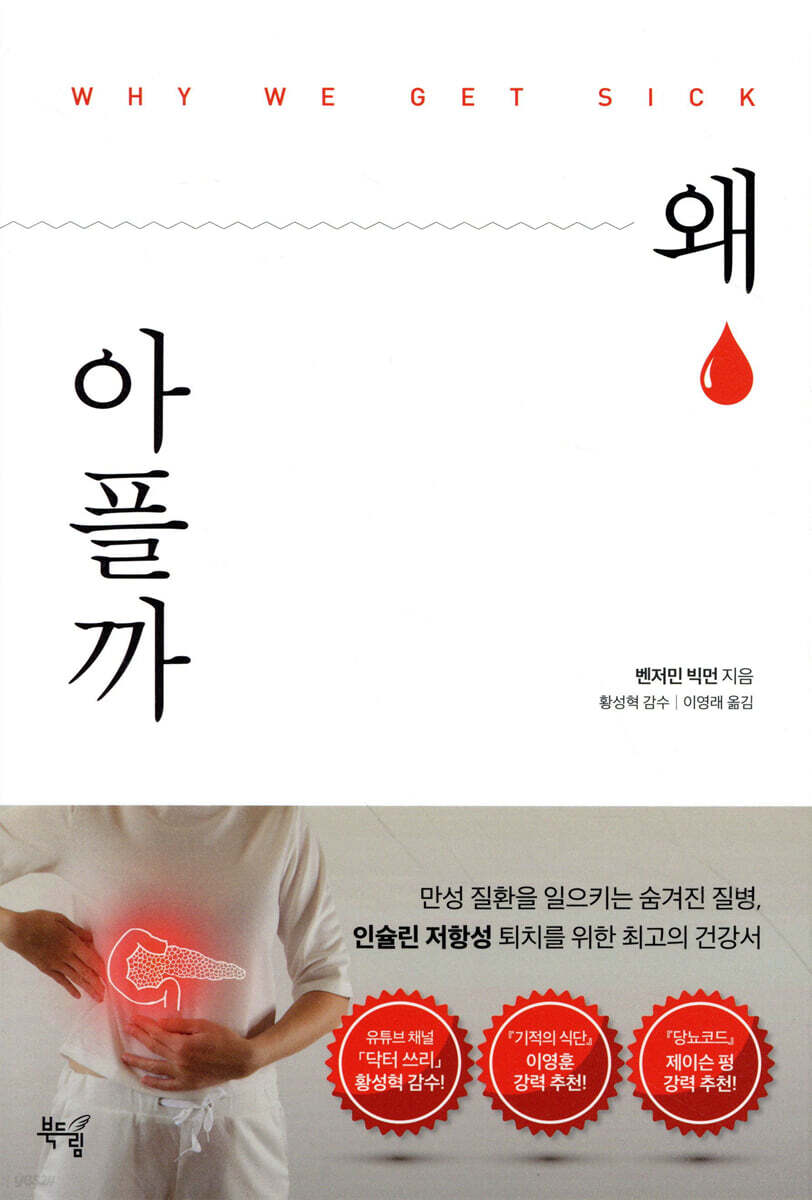
Why does it hurt
 |
Description
Book Introduction
“Why am I sick?” Heart disease, cancer, cerebrovascular disease, Alzheimer's disease, diabetes. The common cause of all these diseases is ‘insulin resistance.’ How can we combat this unfamiliar disease? Dr. Benjamin Bigman, a nephrologist and insulin expert, reveals the easiest and most reliable secret to overcoming this devastating epidemic! Do you feel lethargic and achy even without any health issues? Can't remember the last time you woke up feeling refreshed? Do you feel like you're gaining weight even though you're not eating? Do you have a family member diagnosed with diabetes? If any of these apply to you, you may already be insulin resistant, even if your health screening results don't indicate a risk for diabetes! Insulin resistance is a disease caused by decades of lifestyle habits. Your insulin resistance is slowly worsening without you even knowing it! Open "Why Do I Get Sick?" right now! You'll discover surprising information that will improve your health and quality of life. |
- You can preview some of the book's contents.
Preview
index
Recommendation 4
Reviewer's Note 8
Heading 10
Preview 14
PART 1: What is insulin resistance and why does it matter?
Chapter 1
What is insulin resistance?
What is Insulin? - 30
Insulin affects every cell in the body - 31
What is insulin resistance? - 32
Why the focus on glucose rather than insulin? - 33
Chapter 2
cardiovascular disease
High blood pressure - 40
Insulin resistance causes sodium and water retention - 41
Insulin resistance thickens blood vessel walls - 42
Insulin resistance interferes with vasodilation - 43
Insulin resistance constricts blood vessels - 44
Insulin resistance causes dyslipidemia - 45
Atherosclerosis - 48
Insulin resistance activates inflammation - 49
Cardiomyopathy - 50
Chapter 3
Brain and nerve diseases
New Understanding of Alzheimer's Disease - 54
Vascular Dementia - 58
Parkinson's disease - 59
Migraine? 61
Neuropathy - 61
Chapter 4
reproductive function
Insulin and Female Reproduction - 64
Gestational Diabetes - 66
Preeclampsia (preeclampsia) - 67
Overweight or underweight newborns - 68
Insufficient supply of breast milk - 70
Polycystic Ovary Syndrome - 71
Problems with Infertility Treatment - 73
Insulin and Male Reproduction - 74
Sperm production - 75
Erectile Dysfunction - 75
Insulin and Puberty? 76
Overnutrition and Early Puberty - 78
Chapter 5
cancer
Breast cancer - 84
Prostate cancer - 85
Colon Cancer - 87
Chapter 6
Aging, skin, muscles, bones
Insulin Resistance and Skin - 90
Acanthosis nigricans - 90
Rat Milk - 91
Psoriasis - 92
Acne - 92
Insulin and Muscle - 93
Muscle loss - 94
Fibromyalgia - 95
Insulin, Bones, and Joints - 96
Bone mass loss - 97
Osteoarthritis - 98
Gout - 100
Chapter 7
digestive system and kidneys
Insulin and Digestion - 102
Gastroesophageal Reflux Disease - 102
Gastroparesis - 103
Insulin and the Liver - 105
Hyperlipidemia - 106
Nonalcoholic fatty liver disease - 107
Insulin and the Gallbladder - 109
Gallstones - 110
Insulin and the Kidney - 112
Kidney Stones - 112
Renal failure - 113
Chapter 8
Metabolic syndrome and obesity
The Complex Relationship Between Obesity and Insulin Resistance - 117
Why do we gain weight? - 118
PART 2: Why Does Insulin Resistance Occur?
Chapter 9
How Age and Genetics Affect Insulin
Genetics - 125
Nationality - 126
Age - 128
Aging and Hormonal Changes in Women - 129
Male Aging and Hormonal Changes - 130
Chapter 10
Hormones that cause insulin resistance
Too much insulin causes insulin resistance - 131
Stress Hormones: Epinephrine and Cortisol - 135
Thyroid hormones? 137
Chapter 11
Obesity and Insulin Resistance Revisited
Location Matters - 140
Fat cell size matters - 143
Ectopic obesity - 147
Fatty liver (fatty liver) - 148
Fatty pancreas (fatty pancreas) - 148
Fat-rich muscle - 149
Chapter 12
Inflammation and oxidative stress
Inflammation - 152
Obesity Again - 152
Oxidative stress - 154
Chapter 13
Living environments that increase insulin resistance
Breathing - 156
Air Pollution - 157
Cigarette Smoke - 158
Food - 160
Monosodium glutamate (MSG) - 161
Petrochemicals - 161
Pesticides - 162
Sweetener - 163
Lipopolysaccharide - 165
Too little salt intake - 166
Kia - 167
Daily Activities - 168
Sleep - 168
A sedentary lifestyle - 170
PART 3 How Can You Beat Insulin Resistance?
Chapter 14
Get Moving! The Importance of Physical Activity
Appropriate physical activity is important - 175
Cardio and Weight Training - 177
Exercise intensity - 179
Chapter 15
Eat Smart! The Evidence on Food
Calorie restriction - 184
Dietary fiber - 187
Intermittent Fasting or Time-Restricted Eating - 190
Circadian Rhythms and Dawn Phenomenon - 194
Carbohydrate restriction - 196
Carbohydrate intake and insulin resistance - 197
Quality and quantity of carbohydrates - 200
Glucose Intolerance - 202
Saturated and polyunsaturated fats - 204
Oxidative Stress and Inflammation - 206
Ketogenic diet - 206
Ketosis vs. Ketoacidosis - 208
Ketone Supplements - 209
Weight Control - 210
Other Benefits of Carbohydrate Restriction - 212
Blood cholesterol - 212
Blood pressure - 213
Polycystic Ovary Syndrome - 214
Low testosterone - 214
Alzheimer's disease - 214
Parkinson's disease - 215
Migraine - 216
Heartburn - 216
Skin - 217
Aging - 217
Chapter 16
Typical solutions: drug therapy and surgery
Bariatric Surgery - 219
Chapter 17
Lifestyle that improves insulin resistance
Understanding the Current Situation - 225
Goals vary depending on your starting point - 229
Exercises to Increase Insulin Sensitivity - 230
What Types of Exercise Should I Do? - 230
How often, how long, and when should you exercise? - 233
How Intensity Should Your Exercise Be? - 234
Diet to Keep Insulin Low - 235
Limit Carbs - 235
Prioritize Protein - 242
Fill with fat - 245
Micronutrients and Vitamins - 247
Take advantage of fasting - 250
Other Advice - 251
Meal Ideas - 252
Breakfast - 252
Lunch - 253
Dinner - 253
Dessert - 254
Appendix A Sample Daily Workout Plan - 256
Appendix B Recommended Food List - 260
Conclusion - 264
References - 266
Reference Book - 303
Reviewer's Note 8
Heading 10
Preview 14
PART 1: What is insulin resistance and why does it matter?
Chapter 1
What is insulin resistance?
What is Insulin? - 30
Insulin affects every cell in the body - 31
What is insulin resistance? - 32
Why the focus on glucose rather than insulin? - 33
Chapter 2
cardiovascular disease
High blood pressure - 40
Insulin resistance causes sodium and water retention - 41
Insulin resistance thickens blood vessel walls - 42
Insulin resistance interferes with vasodilation - 43
Insulin resistance constricts blood vessels - 44
Insulin resistance causes dyslipidemia - 45
Atherosclerosis - 48
Insulin resistance activates inflammation - 49
Cardiomyopathy - 50
Chapter 3
Brain and nerve diseases
New Understanding of Alzheimer's Disease - 54
Vascular Dementia - 58
Parkinson's disease - 59
Migraine? 61
Neuropathy - 61
Chapter 4
reproductive function
Insulin and Female Reproduction - 64
Gestational Diabetes - 66
Preeclampsia (preeclampsia) - 67
Overweight or underweight newborns - 68
Insufficient supply of breast milk - 70
Polycystic Ovary Syndrome - 71
Problems with Infertility Treatment - 73
Insulin and Male Reproduction - 74
Sperm production - 75
Erectile Dysfunction - 75
Insulin and Puberty? 76
Overnutrition and Early Puberty - 78
Chapter 5
cancer
Breast cancer - 84
Prostate cancer - 85
Colon Cancer - 87
Chapter 6
Aging, skin, muscles, bones
Insulin Resistance and Skin - 90
Acanthosis nigricans - 90
Rat Milk - 91
Psoriasis - 92
Acne - 92
Insulin and Muscle - 93
Muscle loss - 94
Fibromyalgia - 95
Insulin, Bones, and Joints - 96
Bone mass loss - 97
Osteoarthritis - 98
Gout - 100
Chapter 7
digestive system and kidneys
Insulin and Digestion - 102
Gastroesophageal Reflux Disease - 102
Gastroparesis - 103
Insulin and the Liver - 105
Hyperlipidemia - 106
Nonalcoholic fatty liver disease - 107
Insulin and the Gallbladder - 109
Gallstones - 110
Insulin and the Kidney - 112
Kidney Stones - 112
Renal failure - 113
Chapter 8
Metabolic syndrome and obesity
The Complex Relationship Between Obesity and Insulin Resistance - 117
Why do we gain weight? - 118
PART 2: Why Does Insulin Resistance Occur?
Chapter 9
How Age and Genetics Affect Insulin
Genetics - 125
Nationality - 126
Age - 128
Aging and Hormonal Changes in Women - 129
Male Aging and Hormonal Changes - 130
Chapter 10
Hormones that cause insulin resistance
Too much insulin causes insulin resistance - 131
Stress Hormones: Epinephrine and Cortisol - 135
Thyroid hormones? 137
Chapter 11
Obesity and Insulin Resistance Revisited
Location Matters - 140
Fat cell size matters - 143
Ectopic obesity - 147
Fatty liver (fatty liver) - 148
Fatty pancreas (fatty pancreas) - 148
Fat-rich muscle - 149
Chapter 12
Inflammation and oxidative stress
Inflammation - 152
Obesity Again - 152
Oxidative stress - 154
Chapter 13
Living environments that increase insulin resistance
Breathing - 156
Air Pollution - 157
Cigarette Smoke - 158
Food - 160
Monosodium glutamate (MSG) - 161
Petrochemicals - 161
Pesticides - 162
Sweetener - 163
Lipopolysaccharide - 165
Too little salt intake - 166
Kia - 167
Daily Activities - 168
Sleep - 168
A sedentary lifestyle - 170
PART 3 How Can You Beat Insulin Resistance?
Chapter 14
Get Moving! The Importance of Physical Activity
Appropriate physical activity is important - 175
Cardio and Weight Training - 177
Exercise intensity - 179
Chapter 15
Eat Smart! The Evidence on Food
Calorie restriction - 184
Dietary fiber - 187
Intermittent Fasting or Time-Restricted Eating - 190
Circadian Rhythms and Dawn Phenomenon - 194
Carbohydrate restriction - 196
Carbohydrate intake and insulin resistance - 197
Quality and quantity of carbohydrates - 200
Glucose Intolerance - 202
Saturated and polyunsaturated fats - 204
Oxidative Stress and Inflammation - 206
Ketogenic diet - 206
Ketosis vs. Ketoacidosis - 208
Ketone Supplements - 209
Weight Control - 210
Other Benefits of Carbohydrate Restriction - 212
Blood cholesterol - 212
Blood pressure - 213
Polycystic Ovary Syndrome - 214
Low testosterone - 214
Alzheimer's disease - 214
Parkinson's disease - 215
Migraine - 216
Heartburn - 216
Skin - 217
Aging - 217
Chapter 16
Typical solutions: drug therapy and surgery
Bariatric Surgery - 219
Chapter 17
Lifestyle that improves insulin resistance
Understanding the Current Situation - 225
Goals vary depending on your starting point - 229
Exercises to Increase Insulin Sensitivity - 230
What Types of Exercise Should I Do? - 230
How often, how long, and when should you exercise? - 233
How Intensity Should Your Exercise Be? - 234
Diet to Keep Insulin Low - 235
Limit Carbs - 235
Prioritize Protein - 242
Fill with fat - 245
Micronutrients and Vitamins - 247
Take advantage of fasting - 250
Other Advice - 251
Meal Ideas - 252
Breakfast - 252
Lunch - 253
Dinner - 253
Dessert - 254
Appendix A Sample Daily Workout Plan - 256
Appendix B Recommended Food List - 260
Conclusion - 264
References - 266
Reference Book - 303
Detailed image
.jpg)
Into the book
In addition to aging factors, insulin-resistant people also have greater muscle protein breakdown than insulin-sensitive people of the same age.
In other words, people with insulin resistance have difficulty maintaining muscle mass, let alone promoting muscle growth.
--- p.96
What's important is that insulin resistance not only affects actual smokers, but also increases insulin resistance in others through secondhand smoke.
In fact, research in our lab has confirmed that secondhand smoke alone produces ceramides.
It is highly likely that this bad fat called ceramide is one of the main drivers of insulin resistance induced by smoking.
--- p.159
It goes without saying that MSG increases insulin.
When people are given MSG orally, their insulin response to a glucose load is increased.
15 One gram of MSG (the maximum daily intake allowed across Asia) increases the risk of developing insulin resistance by 14 percent.
--- p.161
One of the negative effects of sleep deprivation is the pronounced changes in the endocrine system.
Hormones are changing.
In particular, even just one week of sleep deprivation can increase insulin resistance by about 30 percent compared to a week of normal sleep.
--- p.169
While many people may not think that sitting too long is particularly dangerous, it actually significantly increases insulin resistance.
There is some very interesting research on this.
They compared people who were made to sit for two hours before a meal with those who were able to get up and then sit down.
People who remained seated had a postprandial blood sugar response that was about 45 percent higher.
A simple solution to mitigate the damaging effects of sitting on insulin resistance is to change your posture briefly (for about two minutes) every 20 minutes or so.
For example, simply stretching your body occasionally or tensing your muscles for a few seconds can go a long way toward reducing your risk.
In other words, people with insulin resistance have difficulty maintaining muscle mass, let alone promoting muscle growth.
--- p.96
What's important is that insulin resistance not only affects actual smokers, but also increases insulin resistance in others through secondhand smoke.
In fact, research in our lab has confirmed that secondhand smoke alone produces ceramides.
It is highly likely that this bad fat called ceramide is one of the main drivers of insulin resistance induced by smoking.
--- p.159
It goes without saying that MSG increases insulin.
When people are given MSG orally, their insulin response to a glucose load is increased.
15 One gram of MSG (the maximum daily intake allowed across Asia) increases the risk of developing insulin resistance by 14 percent.
--- p.161
One of the negative effects of sleep deprivation is the pronounced changes in the endocrine system.
Hormones are changing.
In particular, even just one week of sleep deprivation can increase insulin resistance by about 30 percent compared to a week of normal sleep.
--- p.169
While many people may not think that sitting too long is particularly dangerous, it actually significantly increases insulin resistance.
There is some very interesting research on this.
They compared people who were made to sit for two hours before a meal with those who were able to get up and then sit down.
People who remained seated had a postprandial blood sugar response that was about 45 percent higher.
A simple solution to mitigate the damaging effects of sitting on insulin resistance is to change your posture briefly (for about two minutes) every 20 minutes or so.
For example, simply stretching your body occasionally or tensing your muscles for a few seconds can go a long way toward reducing your risk.
--- p.171
Publisher's Review
Hidden diseases that cause chronic illness,
The Best Health Books to Fight Insulin Resistance
As of 1900, the three leading causes of death were lung infections (pneumonia and influenza), tuberculosis, and gastrointestinal infections.
In 1900, the answer to the question “Why do we get sick?” would have been “infectious diseases.”
However, thanks to improvements in environmental hygiene and advances in medicine, these infectious diseases no longer pose a significant threat to humanity.
Today, the answer to the question, “Why do we get sick?” has changed completely.
This is because five of the seven leading causes of death in the human race (heart disease, cancer, cerebrovascular disease, Alzheimer's disease, and diabetes) are linked to chronic metabolic diseases.
Moreover, these diseases have been on the rise over the past few decades.
The question, “Why do humans get sick?” begins here.
Why do these diseases threaten human health and life in the modern era? Surprisingly, research reveals that these diseases can be traced back to a single root cause: insulin resistance and hyperinsulinemia.
Although all chronic diseases involve different causes and factors, it is becoming clear that type 2 diabetes, a classic condition of hyperinsulinemia and insulin resistance, is the most common cause.
Well then, let me ask you one more question.
“Why do insulin resistance and hyperinsulinemia occur?” To cut to the chase, the cause is excessive intake of ‘sugar.’
With the abundance of readily available and affordable foods, including rice, bread, noodles, various snacks, drinks, processed sugars, and seasonings, human sugar intake has increased exponentially.
This excessive sugar causes insulin resistance and hyperinsulinemia, which causes metabolic problems and causes various diseases to attack the human body.
There have been quite a few books published dealing with the health problems caused by excessive sugar intake.
However, "Why Do We Get Sick" stands out as the first book to focus on the problem of insulin resistance and hyperinsulinemia caused by sugar intake.
Dr. Benjamin Bigman, a nephrologist and expert on insulin resistance, has compiled and analyzed a remarkable amount of research to shed light on the stark reality of insulin's impact on our bodies.
What makes this book special is that he has unraveled his extensive knowledge of the secrets of insulin in a sharp yet accessible manner.
"Why Does It Hurt?" also offers a clear solution to the insulin problem, one that is not based on surgery or medication, but on the diet and lifestyle of ordinary people.
This doesn't mean you should run or cut down on calories.
Dr. Benjamin Bigman offers a thorough, physiologically sound approach to planning smart, eating smart, and exercising smart.
This will allow us to understand more accurately the relationship between food and health, and between food and diet.
This book is ▲Part 1.
What is insulin resistance and why is it important? ▲Part 2.
Why does insulin resistance occur in the first place? ▲Part 3.
How to Beat Insulin Resistance is divided into three parts.
Considering the various levels of readers, such as understanding insulin resistance and experience with diet, the book is structured so that readers can acquire information according to their own awareness and purpose, starting with Part 1, which explains basic knowledge, or starting with Part 3, which contains practical methods.
Another special thing about this book is that not a single one of the numerous contents in this book is the author's personal opinion or assertion.
The information contained in this book is based on research conducted in hundreds of laboratories and hospitals around the world over the past 100 years since the problem of insulin resistance began to be studied.
It contains only scientifically proven facts through sufficient research and peer review.
Insulin resistance, carbohydrate restriction, and saturated fat intake are still often dismissed as “claims” or “theories that have not been objectively proven” because they directly contradict previously accepted health wisdom.
However, Dr. Bigman's "Why Do We Get Sick" provides numerous scientific evidences to support the claims about the problems of excessive carbohydrate intake and the dangers of insulin resistance, confirming the need for a new perspective on human health and disease.
"Why Do We Get Sick" covers everything from the characteristics of insulin resistance, which affects all body tissues and cells, including blood sugar, and is a powerful cause of various diseases, threatening human health from the very foundation, to the various diseases it causes in each body tissue and organ, and even simple and easy diets and exercise methods that solve fundamental health problems. It will be a milestone that suggests a new path for health and diet.
★ Easily explains what insulin is, what role it plays in our body, and what causes insulin resistance.
★ By proving the relationship between insulin resistance and serious diseases that threaten the lives of modern people, it provides accurate diagnosis and treatment methods.
★ By accurately elucidating the relationship between carbohydrates and insulin, we present a new standard for a healthy diet.
★ We present the easiest way to overcome insulin resistance through lifestyle changes, from diet and exercise to improving your living environment.
The Best Health Books to Fight Insulin Resistance
As of 1900, the three leading causes of death were lung infections (pneumonia and influenza), tuberculosis, and gastrointestinal infections.
In 1900, the answer to the question “Why do we get sick?” would have been “infectious diseases.”
However, thanks to improvements in environmental hygiene and advances in medicine, these infectious diseases no longer pose a significant threat to humanity.
Today, the answer to the question, “Why do we get sick?” has changed completely.
This is because five of the seven leading causes of death in the human race (heart disease, cancer, cerebrovascular disease, Alzheimer's disease, and diabetes) are linked to chronic metabolic diseases.
Moreover, these diseases have been on the rise over the past few decades.
The question, “Why do humans get sick?” begins here.
Why do these diseases threaten human health and life in the modern era? Surprisingly, research reveals that these diseases can be traced back to a single root cause: insulin resistance and hyperinsulinemia.
Although all chronic diseases involve different causes and factors, it is becoming clear that type 2 diabetes, a classic condition of hyperinsulinemia and insulin resistance, is the most common cause.
Well then, let me ask you one more question.
“Why do insulin resistance and hyperinsulinemia occur?” To cut to the chase, the cause is excessive intake of ‘sugar.’
With the abundance of readily available and affordable foods, including rice, bread, noodles, various snacks, drinks, processed sugars, and seasonings, human sugar intake has increased exponentially.
This excessive sugar causes insulin resistance and hyperinsulinemia, which causes metabolic problems and causes various diseases to attack the human body.
There have been quite a few books published dealing with the health problems caused by excessive sugar intake.
However, "Why Do We Get Sick" stands out as the first book to focus on the problem of insulin resistance and hyperinsulinemia caused by sugar intake.
Dr. Benjamin Bigman, a nephrologist and expert on insulin resistance, has compiled and analyzed a remarkable amount of research to shed light on the stark reality of insulin's impact on our bodies.
What makes this book special is that he has unraveled his extensive knowledge of the secrets of insulin in a sharp yet accessible manner.
"Why Does It Hurt?" also offers a clear solution to the insulin problem, one that is not based on surgery or medication, but on the diet and lifestyle of ordinary people.
This doesn't mean you should run or cut down on calories.
Dr. Benjamin Bigman offers a thorough, physiologically sound approach to planning smart, eating smart, and exercising smart.
This will allow us to understand more accurately the relationship between food and health, and between food and diet.
This book is ▲Part 1.
What is insulin resistance and why is it important? ▲Part 2.
Why does insulin resistance occur in the first place? ▲Part 3.
How to Beat Insulin Resistance is divided into three parts.
Considering the various levels of readers, such as understanding insulin resistance and experience with diet, the book is structured so that readers can acquire information according to their own awareness and purpose, starting with Part 1, which explains basic knowledge, or starting with Part 3, which contains practical methods.
Another special thing about this book is that not a single one of the numerous contents in this book is the author's personal opinion or assertion.
The information contained in this book is based on research conducted in hundreds of laboratories and hospitals around the world over the past 100 years since the problem of insulin resistance began to be studied.
It contains only scientifically proven facts through sufficient research and peer review.
Insulin resistance, carbohydrate restriction, and saturated fat intake are still often dismissed as “claims” or “theories that have not been objectively proven” because they directly contradict previously accepted health wisdom.
However, Dr. Bigman's "Why Do We Get Sick" provides numerous scientific evidences to support the claims about the problems of excessive carbohydrate intake and the dangers of insulin resistance, confirming the need for a new perspective on human health and disease.
"Why Do We Get Sick" covers everything from the characteristics of insulin resistance, which affects all body tissues and cells, including blood sugar, and is a powerful cause of various diseases, threatening human health from the very foundation, to the various diseases it causes in each body tissue and organ, and even simple and easy diets and exercise methods that solve fundamental health problems. It will be a milestone that suggests a new path for health and diet.
★ Easily explains what insulin is, what role it plays in our body, and what causes insulin resistance.
★ By proving the relationship between insulin resistance and serious diseases that threaten the lives of modern people, it provides accurate diagnosis and treatment methods.
★ By accurately elucidating the relationship between carbohydrates and insulin, we present a new standard for a healthy diet.
★ We present the easiest way to overcome insulin resistance through lifestyle changes, from diet and exercise to improving your living environment.
GOODS SPECIFICS
- Date of issue: January 27, 2022
- Page count, weight, size: 304 pages | 550g | 152*225*20mm
- ISBN13: 9791191509199
- ISBN10: 1191509192
You may also like
카테고리
korean


korean

![GQ KOREA Mark (Monthly): December [2025]](http://librairie.coreenne.fr/cdn/shop/files/8ef265dbbfbf186523ed75ba7319009d.jpg?v=1765340328&width=3840)


