

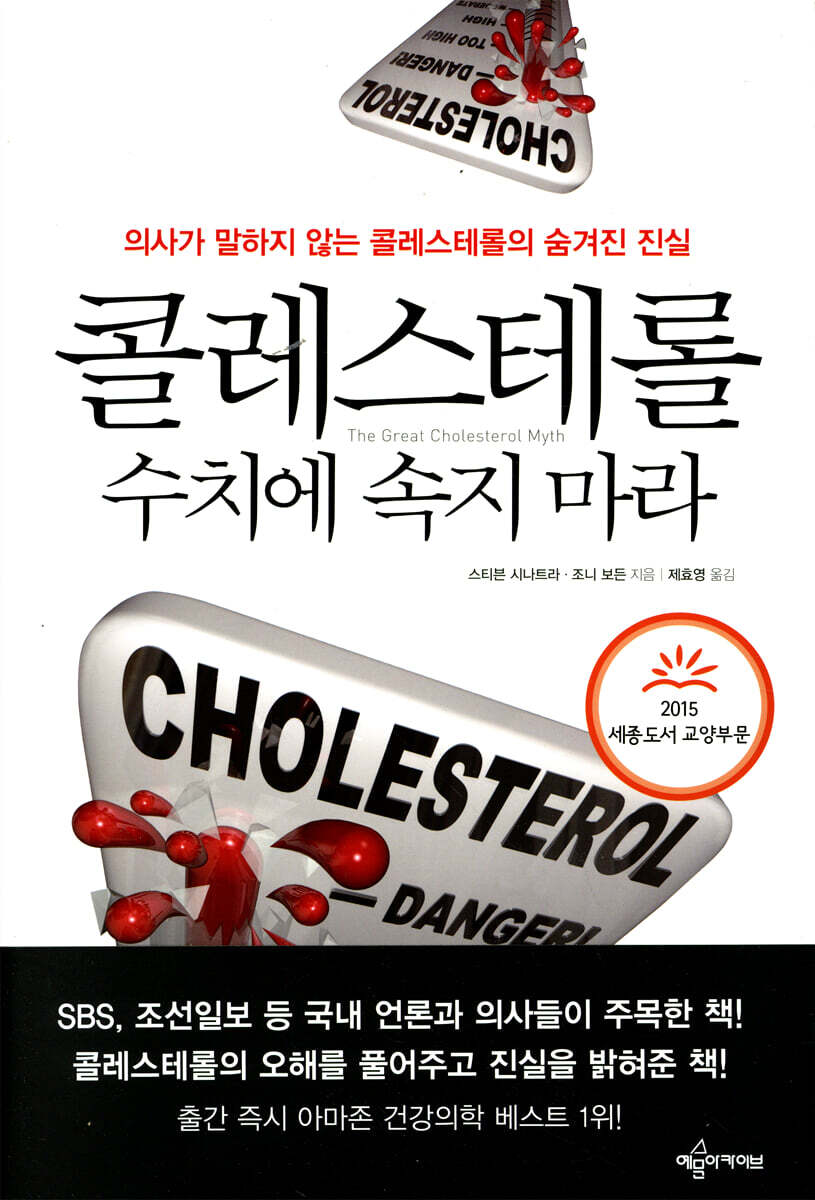
Don't be fooled by cholesterol numbers
 |
Description
Book Introduction
When you have solid knowledge, you don't have to tremble in fear.
The 'real' way to protect my health and my heart
This book is a definitive account of the stigma attached to cholesterol, a substance we firmly believe we must eliminate from our bodies as much as possible. It is also a guide explaining how common beliefs about health and disease, and the misinformation we consider "common sense," are extremely dangerous to our health.
If you follow the authors' detailed explanations step by step, you will understand why you should not just try to lower your cholesterol without knowing the exact reason.
You will also be able to make efforts to prevent the accumulation of cholesterol, which is truly harmful to your health, in your body, and you will be able to intelligently distinguish which types of fat to eat and which to avoid.
When you gain solid knowledge, you don't have to live in fear of things that are just rumors and have no substance.
Even Dr. George Mann, who participated in the Framingham Heart Study, the most widely cited evidence by cholesterol proponents, said the claim that diet and heart health are linked is "the biggest fraud in the history of medicine."
Isn't it time to break free from the deception that blinds us, identify the real 'enemy' of our health, and protect our precious bodies?
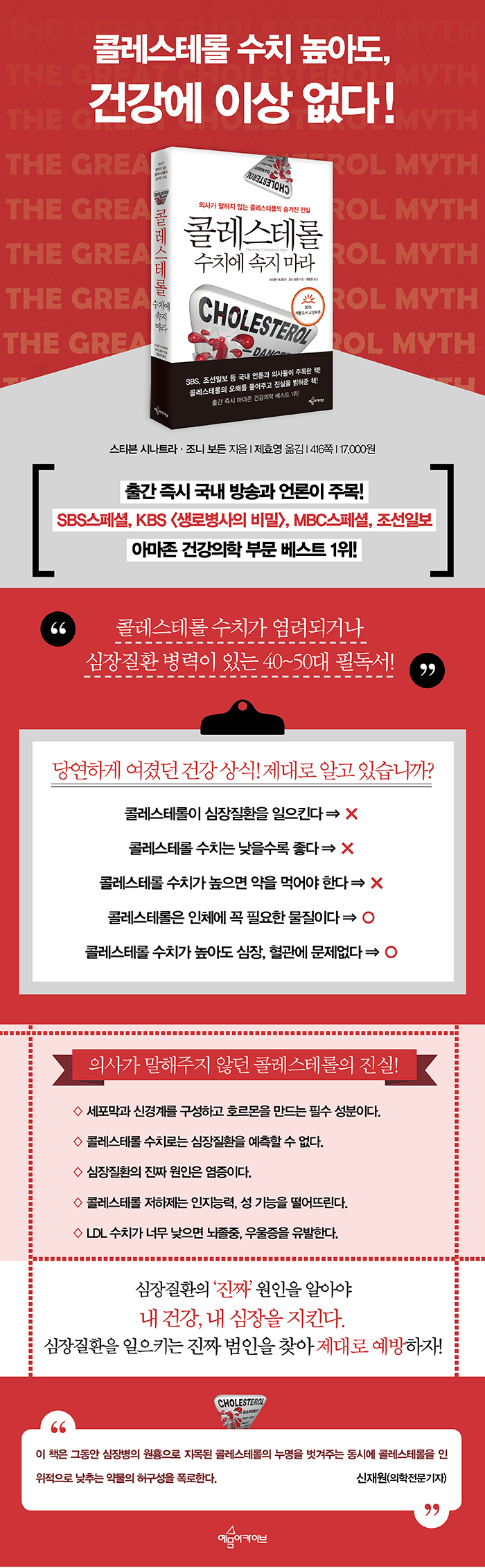
The conventional wisdom that cholesterol is the cause of heart disease and that high cholesterol levels are dangerous is wrong.
Cholesterol is a key component of cell walls and is an essential substance for the human body as it is involved in the production of various hormones.
Most of it is synthesized in the body, and only a small amount is consumed through food.
Therefore, lowering cholesterol with medication or a low-fat diet can cause far more harm than good, such as decreased cognitive ability and memory and sexual dysfunction.
Based on extensive research, this book debunks the myths surrounding cholesterol and identifies the real culprit that causes heart disease.
It also helps patients understand and judge the efficacy and side effects of cholesterol-lowering drugs, statins, that doctors and the pharmaceutical industry know about but remain silent about prescribing.
Through this book, readers will gain doctor-like information about smart diets and heart-healthy nutritional supplements to keep their hearts strong and healthy.
The 'real' way to protect my health and my heart
This book is a definitive account of the stigma attached to cholesterol, a substance we firmly believe we must eliminate from our bodies as much as possible. It is also a guide explaining how common beliefs about health and disease, and the misinformation we consider "common sense," are extremely dangerous to our health.
If you follow the authors' detailed explanations step by step, you will understand why you should not just try to lower your cholesterol without knowing the exact reason.
You will also be able to make efforts to prevent the accumulation of cholesterol, which is truly harmful to your health, in your body, and you will be able to intelligently distinguish which types of fat to eat and which to avoid.
When you gain solid knowledge, you don't have to live in fear of things that are just rumors and have no substance.
Even Dr. George Mann, who participated in the Framingham Heart Study, the most widely cited evidence by cholesterol proponents, said the claim that diet and heart health are linked is "the biggest fraud in the history of medicine."
Isn't it time to break free from the deception that blinds us, identify the real 'enemy' of our health, and protect our precious bodies?
The conventional wisdom that cholesterol is the cause of heart disease and that high cholesterol levels are dangerous is wrong.
Cholesterol is a key component of cell walls and is an essential substance for the human body as it is involved in the production of various hormones.
Most of it is synthesized in the body, and only a small amount is consumed through food.
Therefore, lowering cholesterol with medication or a low-fat diet can cause far more harm than good, such as decreased cognitive ability and memory and sexual dysfunction.
Based on extensive research, this book debunks the myths surrounding cholesterol and identifies the real culprit that causes heart disease.
It also helps patients understand and judge the efficacy and side effects of cholesterol-lowering drugs, statins, that doctors and the pharmaceutical industry know about but remain silent about prescribing.
Through this book, readers will gain doctor-like information about smart diets and heart-healthy nutritional supplements to keep their hearts strong and healthy.
- You can preview some of the book's contents.
Preview
index
Recommendation: Overturning the Stereotype of Cholesterol
Introduction _ Cholesterol is a non-existent disease
Chapter 1: Cholesterol Does Not Cause Heart Disease
Lies Surrounding Cholesterol
The Mediterranean diet reduces heart disease mortality
Remember this: Half of people with heart disease have normal cholesterol levels.
Chapter 2 Cholesterol is not harmful
Basic knowledge about cholesterol
The Myth of the Cholesterol Lie
The greatest fraud in medical history
It's important to know this! Many doctors in the United States disagree with the idea that cholesterol causes heart disease.
Chapter 3: Heart Disease Begins with Inflammation
The Real Cause of Heart Disease: Inflammation
Chronic inflammation without obvious symptoms
Oxidation causes inflammation
'Good' cholesterol, 'bad' cholesterol are outdated ideas.
The cause of heart disease is inflammation, the cause of inflammation is oxidation, and the cause of oxidation is smoking.
Just know this: Cholesterol is only a problem when it's oxidized.
Chapter 4: The Real Devil in Our Diet Is Sugar
Sugar, the culprit of heart disease!
Insulin, a hormone that causes fat accumulation
Insulin resistance promotes inflammatory responses and cardiovascular disease
Why You Must Cut Back on Sugar
Side effects of a low-fat diet
You should know this! The single most important dietary factor contributing to heart disease is sugar.
Chapter 5: Fat is not harmful
Misconceptions about fat
Saturated fat, branded the devil of diet
The fallacy of the fat theory that overturns common sense
Just know this: Saturated fat increases "good" cholesterol (HDL).
Chapter 6: Are you aware of the statin scam?
The untold side effects of statins
Statins that only lower cholesterol levels
The Hidden, Scary Truth About Statins
Why the efficacy of statins is misunderstood
Low cholesterol levels are a danger warning
You should know this: Statins impair brain function.
Chapter 7: The Heart Needs Supplements Too
The need for nutritional supplements
Coenzyme Q10: Fuel for Heart Energy
D-Ribose: The Body's Energy Component
L-Carnitine: A Powerful Antioxidant That Protects the Heart
Magnesium: A Great Stress Reliever
Niacin: Reduces bad cholesterol, increases good cholesterol
Vitamin E: Purchase as a 'mixed tocopherol' product
Omega-3: The Best Fat for Your Heart
Pantethine: Recommended for patients with high blood cholesterol levels.
Other necessary nutritional supplements
Factual evidence, academic journal [Advances in Cardiovascular Disease]
You really need to know this! Coenzyme Q10 is the "fuel" that creates energy for the heart.
Chapter 8: Stress is a Silent Killer
The Real Culprit Behind Frog Deaths: Stress
The double-sided stress hormone
The negative effects of stress on the human body
Stress hormones that help us cope with emergencies
Defenseless and stressed in the face of death
Thoughts and emotions that affect the heart
Stress that increases cholesterol levels
Remember this: Stress is the cause of every known disease.
Chapter 9: Building a Healthy Heart in Everyday Life
Cholesterol test: Total number NO, subtype OK in blood
Foods that save the heart, foods that ruin it
Foods to eat
How to Overcome Heart Disease Risk Factors
You must know this! Healthy foods, unhealthy foods
Translator's Note: A Clarification of the Cholesterol Injustice
Introduction _ Cholesterol is a non-existent disease
Chapter 1: Cholesterol Does Not Cause Heart Disease
Lies Surrounding Cholesterol
The Mediterranean diet reduces heart disease mortality
Remember this: Half of people with heart disease have normal cholesterol levels.
Chapter 2 Cholesterol is not harmful
Basic knowledge about cholesterol
The Myth of the Cholesterol Lie
The greatest fraud in medical history
It's important to know this! Many doctors in the United States disagree with the idea that cholesterol causes heart disease.
Chapter 3: Heart Disease Begins with Inflammation
The Real Cause of Heart Disease: Inflammation
Chronic inflammation without obvious symptoms
Oxidation causes inflammation
'Good' cholesterol, 'bad' cholesterol are outdated ideas.
The cause of heart disease is inflammation, the cause of inflammation is oxidation, and the cause of oxidation is smoking.
Just know this: Cholesterol is only a problem when it's oxidized.
Chapter 4: The Real Devil in Our Diet Is Sugar
Sugar, the culprit of heart disease!
Insulin, a hormone that causes fat accumulation
Insulin resistance promotes inflammatory responses and cardiovascular disease
Why You Must Cut Back on Sugar
Side effects of a low-fat diet
You should know this! The single most important dietary factor contributing to heart disease is sugar.
Chapter 5: Fat is not harmful
Misconceptions about fat
Saturated fat, branded the devil of diet
The fallacy of the fat theory that overturns common sense
Just know this: Saturated fat increases "good" cholesterol (HDL).
Chapter 6: Are you aware of the statin scam?
The untold side effects of statins
Statins that only lower cholesterol levels
The Hidden, Scary Truth About Statins
Why the efficacy of statins is misunderstood
Low cholesterol levels are a danger warning
You should know this: Statins impair brain function.
Chapter 7: The Heart Needs Supplements Too
The need for nutritional supplements
Coenzyme Q10: Fuel for Heart Energy
D-Ribose: The Body's Energy Component
L-Carnitine: A Powerful Antioxidant That Protects the Heart
Magnesium: A Great Stress Reliever
Niacin: Reduces bad cholesterol, increases good cholesterol
Vitamin E: Purchase as a 'mixed tocopherol' product
Omega-3: The Best Fat for Your Heart
Pantethine: Recommended for patients with high blood cholesterol levels.
Other necessary nutritional supplements
Factual evidence, academic journal [Advances in Cardiovascular Disease]
You really need to know this! Coenzyme Q10 is the "fuel" that creates energy for the heart.
Chapter 8: Stress is a Silent Killer
The Real Culprit Behind Frog Deaths: Stress
The double-sided stress hormone
The negative effects of stress on the human body
Stress hormones that help us cope with emergencies
Defenseless and stressed in the face of death
Thoughts and emotions that affect the heart
Stress that increases cholesterol levels
Remember this: Stress is the cause of every known disease.
Chapter 9: Building a Healthy Heart in Everyday Life
Cholesterol test: Total number NO, subtype OK in blood
Foods that save the heart, foods that ruin it
Foods to eat
How to Overcome Heart Disease Risk Factors
You must know this! Healthy foods, unhealthy foods
Translator's Note: A Clarification of the Cholesterol Injustice
Detailed image
Into the book
Both authors, through their respective careers, became skeptical of the cholesterol theory, and although they took different paths, they arrived at the same conclusion.
The idea is that cholesterol does not cause heart disease.
The most important thing is that our national obsession with lowering cholesterol will ultimately come at a significant cost.
Cholesterol has little to do with heart health, but by focusing our energy on this harmless molecule, we ignore the real cause of heart disease.
--- p.28
Statin drugs are anti-inflammatory drugs.
It is much more effective at reducing inflammation than at lowering cholesterol.
However, the risk of inflammation and heart disease can be significantly reduced through lifestyle changes such as natural nutritional supplements, improved diet, and stress management.
Above all, it does not cause the numerous side effects and adverse reactions that accompany lowering cholesterol with statin drugs.
--- pp.42-43
A study in Framingham, Massachusetts found that people who consumed higher amounts of saturated fat, cholesterol, and calories had lower serum cholesterol levels.
Our research team found that even among the groups with the highest cholesterol intake, saturated fat intake, and calorie intake, there were those who were very low in body weight and most physically active.
--- p.74
Cholesterol is also a weapon the body needs to fight infections.
When an infection occurs, total cholesterol levels in the blood rise, but HDL levels decrease, as they are depleted while fighting the infection.
One reason cholesterol is found in arteries damaged by inflammation is because cholesterol can fight toxins.
--- p.93
In a body that responds normally to insulin, insulin plays a role in suppressing inflammation, but in a body that has become insulin resistant, insulin is more likely to induce inflammation.
Moreover, insulin resistance can also cause heart disease, making things worse.
Insulin resistance also increases the risk of developing high blood pressure, diabetes, and obesity.
All are risk factors for cardiovascular disease.
To make matters worse, excessive insulin also increases the body's inflammatory response.
--- p.119
Low-fat, high-carbohydrate diets are very low in sugar.
Carbohydrates in the diet include vegetables, fruits, legumes, and very small amounts of brown rice.
Therefore, when a low-fat, high-carbohydrate diet is effective, it is because you eat less carbohydrates with a high glycemic index and much less fructose or sugar.
However, reducing saturated fat and cholesterol intake has no effect.
--- p.178
Given the following question, I wonder how many patients would volunteer for treatment with statins:
“There are expensive drugs that can cause serious side effects, and if you take them for three to five years,
It can reduce the risk of developing cardiovascular disease by 1.4%.
Would you like to take it?
--- p.238
The LDL cholesterol levels of the two groups, the 41 who had a heart attack and the 454 who did not, were nearly identical.
Therefore, trying to predict whether a patient will have a heart attack based on their LDL levels would be harder than guessing lottery numbers.
But if we focus on blood calcium levels instead of LDL levels, the story is completely different.
Patients who have suffered a heart attack are more likely to have elevated blood calcium levels, especially if the artery is completely blocked.
--- p.264
Dr. Alexander Glassman is a researcher who has dedicated his life to uncovering the link between depression and heart disease.
In several papers, he has shown that patients who are medically healthy but clinically judged to be depressed are at increased risk for cardiovascular disease and cardiac death.
Depression, especially after a heart attack, increases the risk of death.
“It seems clear that depression worsens various cardiovascular symptoms,” he explained.
--- p.330
Any expression of emotion helps keep your heart healthy.
Let's ignore the lessons we learned growing up.
Expressing your emotions is not a weak act.
It is much healthier to express your emotions rather than letting them 'stuff' and boil over inside.
The idea is that cholesterol does not cause heart disease.
The most important thing is that our national obsession with lowering cholesterol will ultimately come at a significant cost.
Cholesterol has little to do with heart health, but by focusing our energy on this harmless molecule, we ignore the real cause of heart disease.
--- p.28
Statin drugs are anti-inflammatory drugs.
It is much more effective at reducing inflammation than at lowering cholesterol.
However, the risk of inflammation and heart disease can be significantly reduced through lifestyle changes such as natural nutritional supplements, improved diet, and stress management.
Above all, it does not cause the numerous side effects and adverse reactions that accompany lowering cholesterol with statin drugs.
--- pp.42-43
A study in Framingham, Massachusetts found that people who consumed higher amounts of saturated fat, cholesterol, and calories had lower serum cholesterol levels.
Our research team found that even among the groups with the highest cholesterol intake, saturated fat intake, and calorie intake, there were those who were very low in body weight and most physically active.
--- p.74
Cholesterol is also a weapon the body needs to fight infections.
When an infection occurs, total cholesterol levels in the blood rise, but HDL levels decrease, as they are depleted while fighting the infection.
One reason cholesterol is found in arteries damaged by inflammation is because cholesterol can fight toxins.
--- p.93
In a body that responds normally to insulin, insulin plays a role in suppressing inflammation, but in a body that has become insulin resistant, insulin is more likely to induce inflammation.
Moreover, insulin resistance can also cause heart disease, making things worse.
Insulin resistance also increases the risk of developing high blood pressure, diabetes, and obesity.
All are risk factors for cardiovascular disease.
To make matters worse, excessive insulin also increases the body's inflammatory response.
--- p.119
Low-fat, high-carbohydrate diets are very low in sugar.
Carbohydrates in the diet include vegetables, fruits, legumes, and very small amounts of brown rice.
Therefore, when a low-fat, high-carbohydrate diet is effective, it is because you eat less carbohydrates with a high glycemic index and much less fructose or sugar.
However, reducing saturated fat and cholesterol intake has no effect.
--- p.178
Given the following question, I wonder how many patients would volunteer for treatment with statins:
“There are expensive drugs that can cause serious side effects, and if you take them for three to five years,
It can reduce the risk of developing cardiovascular disease by 1.4%.
Would you like to take it?
--- p.238
The LDL cholesterol levels of the two groups, the 41 who had a heart attack and the 454 who did not, were nearly identical.
Therefore, trying to predict whether a patient will have a heart attack based on their LDL levels would be harder than guessing lottery numbers.
But if we focus on blood calcium levels instead of LDL levels, the story is completely different.
Patients who have suffered a heart attack are more likely to have elevated blood calcium levels, especially if the artery is completely blocked.
--- p.264
Dr. Alexander Glassman is a researcher who has dedicated his life to uncovering the link between depression and heart disease.
In several papers, he has shown that patients who are medically healthy but clinically judged to be depressed are at increased risk for cardiovascular disease and cardiac death.
Depression, especially after a heart attack, increases the risk of death.
“It seems clear that depression worsens various cardiovascular symptoms,” he explained.
--- p.330
Any expression of emotion helps keep your heart healthy.
Let's ignore the lessons we learned growing up.
Expressing your emotions is not a weak act.
It is much healthier to express your emotions rather than letting them 'stuff' and boil over inside.
--- p.383
Publisher's Review
Debunking the Lies Surrounding Cholesterol
Exposing the fatal errors and blind spots of conventional wisdom
The author, Dr. Stephen Sinatra, is a cardiologist.
He was once a leading doctor in promoting statin drugs.
However, we have seen patients taking statins develop heart disease, have rapid memory loss, become frail, and become more susceptible to infections, even though their cholesterol levels were lowered.
Another author, nutritionist Dr. Johnny Bowden, noted that people who had failed to lose belly fat or lower cholesterol levels with a low-fat diet and aerobic exercise lost weight and improved their health after switching to a high-protein, high-fat diet.
They each reached the same conclusion through their careers.
Cholesterol has little effect on heart disease, and there are few health benefits to be gained from lowering cholesterol with statins.
The authors wrote this book to expose the lies of the pharmaceutical industry, which spends millions of dollars in marketing each year to perpetuate the myth that "cholesterol causes heart disease," and to help people understand the nature of cholesterol so they can turn some bad cholesterol into something harmless and reduce oxidation and inflammation to prevent heart disease in the first place.
There's another real culprit that's harming your health.
Side effects of a low-fat, high-carbohydrate diet: obesity, diabetes, high blood pressure, and heart disease.
Cardiovascular diseases such as hypertension, arteriosclerosis, angina, and myocardial infarction are the second leading cause of death in Korea (as of 2012).
Additionally, one in 20 people takes medication for cholesterol.
At this point, it is no exaggeration to say that cardiovascular disease is a national disease.
As is common knowledge, taking cholesterol-lowering medication and following a low-fat diet, such as avoiding meat and fatty foods, should prevent or reduce the incidence of heart disease.
But why doesn't the situation get better?
This book examines and refutes every flawed guideline and argument that has been used to dismiss cholesterol as the villain that causes heart disease.
Research studies such as the Lyon Dietary Heart Study and the Nurses' Health Study have proven that cholesterol does not cause heart disease.
Ironically, the low-fat, high-carbohydrate diet chosen to reduce saturated fat and cholesterol intake has led to obesity, diabetes, high blood pressure, and heart disease.
This is because carbohydrates and sugars cause oxidation and inflammation in the body, which is the starting point for heart disease.
The pharmaceutical industry's conspiracy to exaggerate the efficacy of statins
Patients taking the drug for 3 to 5 years showed a mere 1.4% reduction in the risk of developing cardiovascular disease.
The book devotes an entire chapter to uncovering the truth about statins, the drugs that claim to lower cholesterol and prevent heart disease.
The pharmaceutical industry is still lobbying hard to lower the recommended cholesterol levels for prescription drugs in an effort to further expand its market, which is worth billions of dollars annually.
Therefore, the pharmaceutical industry is exaggerating and spreading the results of research sponsored by the pharmaceutical industry to the media.
However, large-scale clinical trials conducted in the 21st century, such as the JUPITER study, have shown that lowering cholesterol levels has no effect on health.
Additionally, statin drugs were not effective in improving heart disease or mortality rates.
Taking cholesterol-lowering drugs as a preventative measure based solely on cholesterol levels only benefits pharmaceutical companies and does nothing to benefit individual health.
The Treatment Leadership Association, established to provide prescription drug information to doctors and pharmacists, analyzed the results of five studies on statins and asked the following question:
“There are expensive drugs that can cause serious side effects, but if you take them for three to five years, you can reduce your risk of developing cardiovascular disease by 1.4%.
Would you like to take it?
Know the 'real' causes of heart disease—more important than cholesterol levels.
Accurate heart health assessment is achieved through various blood subtype tests.
This book consists of a total of 9 chapters.
As there are many somewhat unfamiliar and difficult medical terms, to help readers understand, we have briefly summarized the key contents at the end of each chapter under the heading [You must know this!].
In Chapter 1, "Cholesterol Is Not the Cause of Heart Disease," the authors explain why their professional experiences as cardiologists and nutritionists led them to question conventional wisdom about cholesterol.
Chapter 2, "Cholesterol Isn't Harmful," exposes the various reasons why cholesterol was given the false reputation of being the enemy of heart disease, including 1950s research, political conspiracy, and pharmaceutical company lobbying.
Chapters 3, 4, and 5 explain that heart disease is triggered by an inflammatory response that begins with oxidation, and that the biggest factor influencing heart health in our diet is sugar, not cholesterol.
When it comes to fat, contrary to popular belief, new research reveals that saturated fat increases "good" cholesterol and converts "bad" cholesterol into the good type.
Chapter 6 in particular exposes the pharmaceutical industry's lobbying and manipulated clinical trial results, which constantly attempt to exaggerate the efficacy of statins and lower cholesterol-lowering drug prescriptions.
The authors argue that statins are drugs with side effects that far outweigh their benefits, and therefore should not be taken except by some patients with specific conditions.
Chapter 7 onwards provides practical information that can be implemented immediately in daily life to prevent and treat heart disease.
Finding and utilizing nutrients that are beneficial to you, such as coenzyme Q10, omega-3, D-ribose, L-carnitine, and niacin, will help your heart and overall health.
Chapter 8 explains how stress is a huge burden on the heart.
Chapter 9, 'Building a Healthy Heart in Everyday Life' introduces foods that damage the heart and foods that save the heart, and also tells you about foods that are good to eat regularly.
It also helps to determine the exact health of your heart through various blood subtype tests.
If you need to lower your cholesterol, read this book.
The Secret to Living Healthy to 100 Without Worrying About Heart Disease
If you've been prescribed a statin to lower your cholesterol, you should read this book before taking it.
Although there are some patients who absolutely need statin drugs, they are only a very small minority.
Anyone who currently has heart disease or is taking statin drugs, has a family history of heart disease, or is concerned about their heart or blood vessel health should prioritize gaining the correct knowledge through this book.
Shin Jae-won, a family medicine specialist and medical journalist, concluded his recommendation of this book as follows:
“Living a long and healthy life is the wish of many people.
I am the decision maker of my health, not my doctor.
“If you want to protect yourself with that kind of thinking, I recommend reading this book.”
Exposing the fatal errors and blind spots of conventional wisdom
The author, Dr. Stephen Sinatra, is a cardiologist.
He was once a leading doctor in promoting statin drugs.
However, we have seen patients taking statins develop heart disease, have rapid memory loss, become frail, and become more susceptible to infections, even though their cholesterol levels were lowered.
Another author, nutritionist Dr. Johnny Bowden, noted that people who had failed to lose belly fat or lower cholesterol levels with a low-fat diet and aerobic exercise lost weight and improved their health after switching to a high-protein, high-fat diet.
They each reached the same conclusion through their careers.
Cholesterol has little effect on heart disease, and there are few health benefits to be gained from lowering cholesterol with statins.
The authors wrote this book to expose the lies of the pharmaceutical industry, which spends millions of dollars in marketing each year to perpetuate the myth that "cholesterol causes heart disease," and to help people understand the nature of cholesterol so they can turn some bad cholesterol into something harmless and reduce oxidation and inflammation to prevent heart disease in the first place.
There's another real culprit that's harming your health.
Side effects of a low-fat, high-carbohydrate diet: obesity, diabetes, high blood pressure, and heart disease.
Cardiovascular diseases such as hypertension, arteriosclerosis, angina, and myocardial infarction are the second leading cause of death in Korea (as of 2012).
Additionally, one in 20 people takes medication for cholesterol.
At this point, it is no exaggeration to say that cardiovascular disease is a national disease.
As is common knowledge, taking cholesterol-lowering medication and following a low-fat diet, such as avoiding meat and fatty foods, should prevent or reduce the incidence of heart disease.
But why doesn't the situation get better?
This book examines and refutes every flawed guideline and argument that has been used to dismiss cholesterol as the villain that causes heart disease.
Research studies such as the Lyon Dietary Heart Study and the Nurses' Health Study have proven that cholesterol does not cause heart disease.
Ironically, the low-fat, high-carbohydrate diet chosen to reduce saturated fat and cholesterol intake has led to obesity, diabetes, high blood pressure, and heart disease.
This is because carbohydrates and sugars cause oxidation and inflammation in the body, which is the starting point for heart disease.
The pharmaceutical industry's conspiracy to exaggerate the efficacy of statins
Patients taking the drug for 3 to 5 years showed a mere 1.4% reduction in the risk of developing cardiovascular disease.
The book devotes an entire chapter to uncovering the truth about statins, the drugs that claim to lower cholesterol and prevent heart disease.
The pharmaceutical industry is still lobbying hard to lower the recommended cholesterol levels for prescription drugs in an effort to further expand its market, which is worth billions of dollars annually.
Therefore, the pharmaceutical industry is exaggerating and spreading the results of research sponsored by the pharmaceutical industry to the media.
However, large-scale clinical trials conducted in the 21st century, such as the JUPITER study, have shown that lowering cholesterol levels has no effect on health.
Additionally, statin drugs were not effective in improving heart disease or mortality rates.
Taking cholesterol-lowering drugs as a preventative measure based solely on cholesterol levels only benefits pharmaceutical companies and does nothing to benefit individual health.
The Treatment Leadership Association, established to provide prescription drug information to doctors and pharmacists, analyzed the results of five studies on statins and asked the following question:
“There are expensive drugs that can cause serious side effects, but if you take them for three to five years, you can reduce your risk of developing cardiovascular disease by 1.4%.
Would you like to take it?
Know the 'real' causes of heart disease—more important than cholesterol levels.
Accurate heart health assessment is achieved through various blood subtype tests.
This book consists of a total of 9 chapters.
As there are many somewhat unfamiliar and difficult medical terms, to help readers understand, we have briefly summarized the key contents at the end of each chapter under the heading [You must know this!].
In Chapter 1, "Cholesterol Is Not the Cause of Heart Disease," the authors explain why their professional experiences as cardiologists and nutritionists led them to question conventional wisdom about cholesterol.
Chapter 2, "Cholesterol Isn't Harmful," exposes the various reasons why cholesterol was given the false reputation of being the enemy of heart disease, including 1950s research, political conspiracy, and pharmaceutical company lobbying.
Chapters 3, 4, and 5 explain that heart disease is triggered by an inflammatory response that begins with oxidation, and that the biggest factor influencing heart health in our diet is sugar, not cholesterol.
When it comes to fat, contrary to popular belief, new research reveals that saturated fat increases "good" cholesterol and converts "bad" cholesterol into the good type.
Chapter 6 in particular exposes the pharmaceutical industry's lobbying and manipulated clinical trial results, which constantly attempt to exaggerate the efficacy of statins and lower cholesterol-lowering drug prescriptions.
The authors argue that statins are drugs with side effects that far outweigh their benefits, and therefore should not be taken except by some patients with specific conditions.
Chapter 7 onwards provides practical information that can be implemented immediately in daily life to prevent and treat heart disease.
Finding and utilizing nutrients that are beneficial to you, such as coenzyme Q10, omega-3, D-ribose, L-carnitine, and niacin, will help your heart and overall health.
Chapter 8 explains how stress is a huge burden on the heart.
Chapter 9, 'Building a Healthy Heart in Everyday Life' introduces foods that damage the heart and foods that save the heart, and also tells you about foods that are good to eat regularly.
It also helps to determine the exact health of your heart through various blood subtype tests.
If you need to lower your cholesterol, read this book.
The Secret to Living Healthy to 100 Without Worrying About Heart Disease
If you've been prescribed a statin to lower your cholesterol, you should read this book before taking it.
Although there are some patients who absolutely need statin drugs, they are only a very small minority.
Anyone who currently has heart disease or is taking statin drugs, has a family history of heart disease, or is concerned about their heart or blood vessel health should prioritize gaining the correct knowledge through this book.
Shin Jae-won, a family medicine specialist and medical journalist, concluded his recommendation of this book as follows:
“Living a long and healthy life is the wish of many people.
I am the decision maker of my health, not my doctor.
“If you want to protect yourself with that kind of thinking, I recommend reading this book.”
GOODS SPECIFICS
- Date of publication: December 25, 2017
- Page count, weight, size: 416 pages | 727g | 152*225*30mm
- ISBN13: 9791187749523
- ISBN10: 1187749524
You may also like
카테고리
korean


korean

![ELLE 엘르 스페셜 에디션 A형 : 12월 [2025]](http://librairie.coreenne.fr/cdn/shop/files/b8e27a3de6c9538896439686c6b0e8fb.jpg?v=1766436872&width=3840)


