

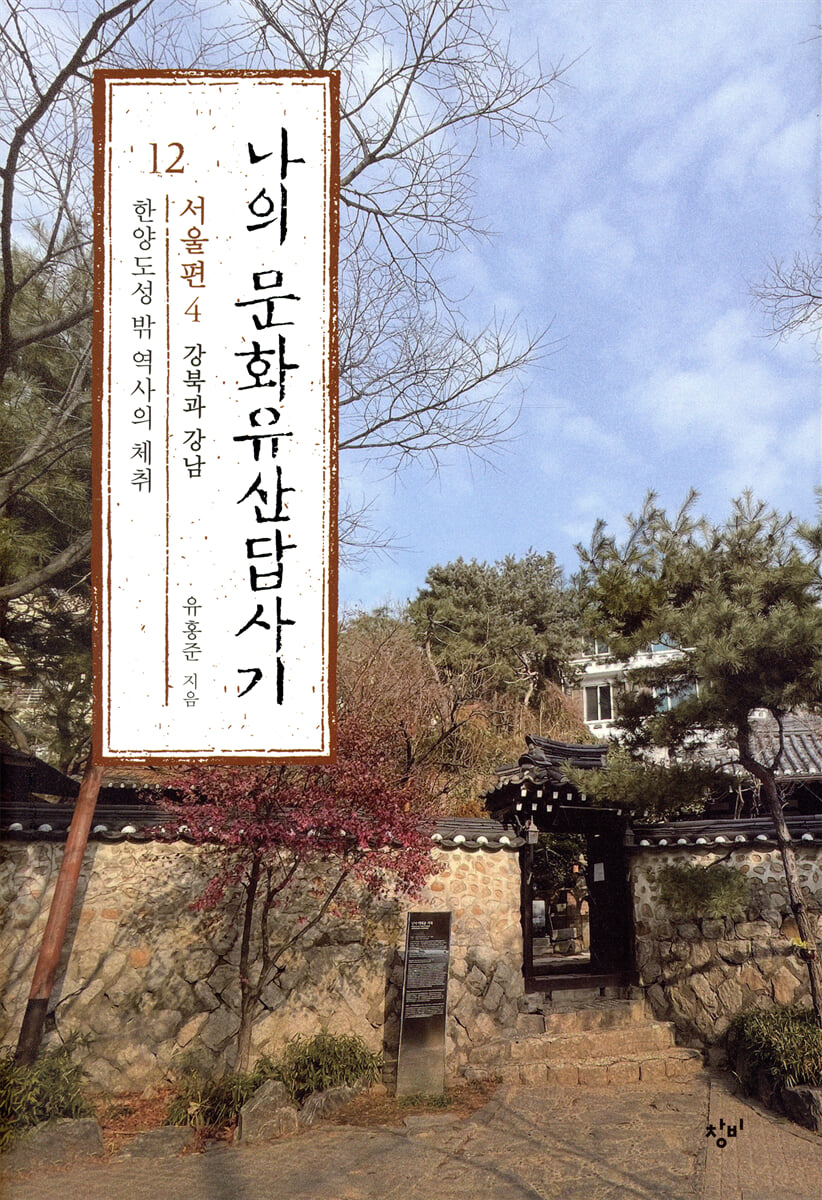
My Cultural Heritage Tour 12: Seoul Part 4
 |
Description
Book Introduction
Through Seoul's yesterday and today
The Seoul edition of 'Trip Report' is finally complete!
The mega-bestseller and representative Korean humanities series, "My Cultural Heritage Tour," has returned with the news of the complete Seoul edition.
After the publication of the Seoul chapter 1 and 2, which were very popular in the series, and the China chapter 3, we are back with the Seoul chapter 3 and 4 after 5 years.
The third volume of the Seoul series, "Sadamun Andongne: Stories of My Hometown Seoul," and the fourth volume, "Gangbuk and Gangnam: The Scent of History Outside the Hanyangdoseong Fortress," which are being published this time, conclude the Seoul series by exploring the old neighborhoods and meaningful cultural heritage of Seoul, a city beloved by people around the world, and unraveling their fascinating histories.
Over the long 600 years of its existence as the capital, Seoul has gradually expanded and deepened.
The author, following up on the previous volumes 1 and 2, has meticulously observed the past and present of the metropolis of Seoul, and has filled these volumes 3 and 4 with the stories of the people who have shaped Seoul and made their lives there.
In particular, we meticulously explore the landmarks that show the history of how today's Seoul was formed through the turbulent modern and contemporary times, and we focus on testifying to and reviving the stories of the alleys that we were not aware of.
You can feel the author's deep love for Seoul, having lived as a 'Seoul native' all his life, as well as his unique composure and wit.
This "Seoul Travelogue," which will be published in four volumes, including Volumes 3 and 4, will become a truly representative guidebook for readers who wish to learn about Seoul's history and culture.
The Seoul edition of 'Trip Report' is finally complete!
The mega-bestseller and representative Korean humanities series, "My Cultural Heritage Tour," has returned with the news of the complete Seoul edition.
After the publication of the Seoul chapter 1 and 2, which were very popular in the series, and the China chapter 3, we are back with the Seoul chapter 3 and 4 after 5 years.
The third volume of the Seoul series, "Sadamun Andongne: Stories of My Hometown Seoul," and the fourth volume, "Gangbuk and Gangnam: The Scent of History Outside the Hanyangdoseong Fortress," which are being published this time, conclude the Seoul series by exploring the old neighborhoods and meaningful cultural heritage of Seoul, a city beloved by people around the world, and unraveling their fascinating histories.
Over the long 600 years of its existence as the capital, Seoul has gradually expanded and deepened.
The author, following up on the previous volumes 1 and 2, has meticulously observed the past and present of the metropolis of Seoul, and has filled these volumes 3 and 4 with the stories of the people who have shaped Seoul and made their lives there.
In particular, we meticulously explore the landmarks that show the history of how today's Seoul was formed through the turbulent modern and contemporary times, and we focus on testifying to and reviving the stories of the alleys that we were not aware of.
You can feel the author's deep love for Seoul, having lived as a 'Seoul native' all his life, as well as his unique composure and wit.
This "Seoul Travelogue," which will be published in four volumes, including Volumes 3 and 4, will become a truly representative guidebook for readers who wish to learn about Seoul's history and culture.
- You can preview some of the book's contents.
Preview
index
In publishing the book
Seongbuk-dong 1: Bukdundohwa in Majeongol, Seongjeosip-ri
Seongbuk-dong, Seoul / Seongjeosip-ri / Seonjamdan / The establishment of Seongbuk-dun / The horse farms and meju of Seongbuk-dong residents / The peach blossom village of Bukdundohwa / Chae Je-gong's travelogue of Seongbuk-dong / The villas of Seongbuk-dong / From 'Seongrakwon' to 'Seongbuk-dong villa in Seoul' / Chunpa Hwang Yun-myeong / Prince Ui's villa / The 'scent of Seongbuk' in the 1930s / The formation of the Seongbuk-dong literary village
Seongbuk-dong 2: The neighborhood of "Sentence" and "Hogo Il-dang"
The Formation of the Literary Village in Seongbuk-dong / Lee Tae-jun's Suyeonsanbang / Lee Tae-jun's Hobby in Ancient Korea / The Coming-of-Age Novel "Moonlit Night of Thought" / Lee Tae-jun's Literary World / "Manchurian Journey" / Bae Jeong-guk's Seungseolam / The Life of Ingok Bae Jeong-guk / A Field Trip to Hogo Il-dang's Branch Garden / Baekyangdang Publishing House in the Liberation Zone / The Origin of Nosisanbang / A Dedication to the Complete Works of Kim Yong-jun of Origin / Kim Yong-jun's Paintings and Essays / Munjang, Vol. 26
Seongbuk-dong 3: Where and in what form will we meet again?
From Nosisanbang to Suhyangsanbang / Suhwa Kim Hwan-ki's love of white porcelain / Kim Hyang-an, or Mrs. Byeon Dong-rim / Daesagwan-ro and the mansions of 'Pheasant Sea' / Our Old Stone Museum and the Korean Furniture Museum / Kim Ja-ya and Baek Seok's love / From Daewongak to Gilsangsa / Jo Ji-hoon's Bangwoosanjang / "Old-fashioned Clothing" by Jo Ji-hoon and Yun Isang / Choi Sun-woo's Old House / Park Tae-won's Gohyeonhak / Manhae Han Yong-un's Simwoojang / Kim Gwang-seop's "Pigeons of Seongbuk-dong"
Seolleung Royal Tomb: The Ill-fated Royal Tomb Robbed by the "Beomneungjeok"
The Royal Tombs of Seolleung / Types of Royal Tombs of the Joseon Dynasty / Proposals for Royal Tombs' Names / UNESCO World Heritage Sites, Royal Tombs of Joseon / Construction Process of Royal Tombs / Hongsalmun and Entry Space of Seolleung of King Seongjong / Jeongjagak and the Ritual Space / Seolleung Royal Tomb Complex / Royal Tomb's Munsinseok and Musinseok / Queen Jeonghyeon's Tomb / Jeongneung of King Jungjong / Japanese Pirates' Robbing of Seolleung Royal Tomb / Capture and Send the Pirates / Tamjeoksa and Saehwansa / The Path of the Joseon Tongsinsa
Bongeunsa Temple: The temple's greatest assets are its old monks and old trees.
Gangnam's Buddhist temple, Bongeunsa Temple / Monk Yeongam's guardian deity of Bongeunsa Temple / Bongeunsa Temple's main gate / Cheonwangmun Gate or Jinyeomun Gate / Monk Cheongho's merit monument in the stupa field / From Gyeonseongsa Temple to Bongeunsa Temple / Buddhist revival under Queen Munjeong and Bou / About the death of Monk Bou / Bongeunsa Temple after the Imjin War / Three Buddha statues in Bongeunsa Temple's Daeungjeon Hall / Seonbuldang Hall / Sang Yu-hyeon's "Chusa Banghyeongi" / Last calligraphy, Bongeunsa Temple's "Panjeon" / Monk Beopjeong's "Nonpossession"
Gyeomjae Jeongseon Art Museum and Heo Jun Museum: The Site of the Gyeonggyo Myeongseungcheop and Donguibogam
Two museums in Gayang-dong, Gangseo-gu / The reason why the site of Yangcheonhyeon-a is in Gangseo-gu / Yangcheonhyeon-a / Yangcheonhyanggyo / Gyeomjae Jeongseon Art Museum / Jinkyung Cultural Experience Center / Gyeomjae's "Yangcheon Sipgyeongdo" from "Gyeonggyo Myeongseungjeop" / Landscapes along the Han River and Apgujeong / Soaknu Pavilion in Gungsan / So and Yu, the owners of Soaknu / Gongam / Heo Ga-bawi Rock / Heo Jun Museum / UNESCO Memory of the World 『Donguibogam』 / Guam Heo Jun's days as a physician / The process of compiling 『Donguibogam』 / Life in a museum
Manguri Byeolgok 1: From Cemetery to History and Culture Park
Manguri Cemetery / The process of constructing Manguri Cemetery / Van Gogh's grave and the grave of O Se-chang / From the cemetery to Manguri Park / Jungnang Manguri Space / Itaewon Cemetery's unclaimed graves and Yu Gwan-sun / Poet Park In-hwan's grave / Lee Jung-seop's grave / National Pledge Tower and Jungnang Observatory / The graves of Jang Deok-su and Park Eun-hye / The grave of Jobongam in Juksan / Achasan Fortress
Manguri Byeolgok 2: A Path to Finding the Souls of Historical and Cultural Figures
Funeral customs / Tomb of Manhae Han Yong-un / Tomb of Hoam Mun Il-pyeong / Tomb of Wi-chang Oh Se-chang / Tomb of Sopa Bang Jeong-hwan / Bang Jeong-hwan and Children's Day / Tomb of Vice-Speaker of the National Assembly Lee Yeong-jun / Tomb of Asakawa Takumi / Pioneers of folk art, the Asakawa brothers / Tomb of Dosan Ahn Chang-ho and Yu Sang-gyu / Tomb of painter Lee In-seong and sculptor Kwon Jin-gyu / Tomb of Songchon Ji Seok-yeong / The tenacity of Ji Seok-yeong / Tomb of poet Kim Sang-yong / Tomb of Samhakbyeong / Nogosan Cheongol Chuijangbi / Again at Jungnang Mangu Space
Seongbuk-dong 1: Bukdundohwa in Majeongol, Seongjeosip-ri
Seongbuk-dong, Seoul / Seongjeosip-ri / Seonjamdan / The establishment of Seongbuk-dun / The horse farms and meju of Seongbuk-dong residents / The peach blossom village of Bukdundohwa / Chae Je-gong's travelogue of Seongbuk-dong / The villas of Seongbuk-dong / From 'Seongrakwon' to 'Seongbuk-dong villa in Seoul' / Chunpa Hwang Yun-myeong / Prince Ui's villa / The 'scent of Seongbuk' in the 1930s / The formation of the Seongbuk-dong literary village
Seongbuk-dong 2: The neighborhood of "Sentence" and "Hogo Il-dang"
The Formation of the Literary Village in Seongbuk-dong / Lee Tae-jun's Suyeonsanbang / Lee Tae-jun's Hobby in Ancient Korea / The Coming-of-Age Novel "Moonlit Night of Thought" / Lee Tae-jun's Literary World / "Manchurian Journey" / Bae Jeong-guk's Seungseolam / The Life of Ingok Bae Jeong-guk / A Field Trip to Hogo Il-dang's Branch Garden / Baekyangdang Publishing House in the Liberation Zone / The Origin of Nosisanbang / A Dedication to the Complete Works of Kim Yong-jun of Origin / Kim Yong-jun's Paintings and Essays / Munjang, Vol. 26
Seongbuk-dong 3: Where and in what form will we meet again?
From Nosisanbang to Suhyangsanbang / Suhwa Kim Hwan-ki's love of white porcelain / Kim Hyang-an, or Mrs. Byeon Dong-rim / Daesagwan-ro and the mansions of 'Pheasant Sea' / Our Old Stone Museum and the Korean Furniture Museum / Kim Ja-ya and Baek Seok's love / From Daewongak to Gilsangsa / Jo Ji-hoon's Bangwoosanjang / "Old-fashioned Clothing" by Jo Ji-hoon and Yun Isang / Choi Sun-woo's Old House / Park Tae-won's Gohyeonhak / Manhae Han Yong-un's Simwoojang / Kim Gwang-seop's "Pigeons of Seongbuk-dong"
Seolleung Royal Tomb: The Ill-fated Royal Tomb Robbed by the "Beomneungjeok"
The Royal Tombs of Seolleung / Types of Royal Tombs of the Joseon Dynasty / Proposals for Royal Tombs' Names / UNESCO World Heritage Sites, Royal Tombs of Joseon / Construction Process of Royal Tombs / Hongsalmun and Entry Space of Seolleung of King Seongjong / Jeongjagak and the Ritual Space / Seolleung Royal Tomb Complex / Royal Tomb's Munsinseok and Musinseok / Queen Jeonghyeon's Tomb / Jeongneung of King Jungjong / Japanese Pirates' Robbing of Seolleung Royal Tomb / Capture and Send the Pirates / Tamjeoksa and Saehwansa / The Path of the Joseon Tongsinsa
Bongeunsa Temple: The temple's greatest assets are its old monks and old trees.
Gangnam's Buddhist temple, Bongeunsa Temple / Monk Yeongam's guardian deity of Bongeunsa Temple / Bongeunsa Temple's main gate / Cheonwangmun Gate or Jinyeomun Gate / Monk Cheongho's merit monument in the stupa field / From Gyeonseongsa Temple to Bongeunsa Temple / Buddhist revival under Queen Munjeong and Bou / About the death of Monk Bou / Bongeunsa Temple after the Imjin War / Three Buddha statues in Bongeunsa Temple's Daeungjeon Hall / Seonbuldang Hall / Sang Yu-hyeon's "Chusa Banghyeongi" / Last calligraphy, Bongeunsa Temple's "Panjeon" / Monk Beopjeong's "Nonpossession"
Gyeomjae Jeongseon Art Museum and Heo Jun Museum: The Site of the Gyeonggyo Myeongseungcheop and Donguibogam
Two museums in Gayang-dong, Gangseo-gu / The reason why the site of Yangcheonhyeon-a is in Gangseo-gu / Yangcheonhyeon-a / Yangcheonhyanggyo / Gyeomjae Jeongseon Art Museum / Jinkyung Cultural Experience Center / Gyeomjae's "Yangcheon Sipgyeongdo" from "Gyeonggyo Myeongseungjeop" / Landscapes along the Han River and Apgujeong / Soaknu Pavilion in Gungsan / So and Yu, the owners of Soaknu / Gongam / Heo Ga-bawi Rock / Heo Jun Museum / UNESCO Memory of the World 『Donguibogam』 / Guam Heo Jun's days as a physician / The process of compiling 『Donguibogam』 / Life in a museum
Manguri Byeolgok 1: From Cemetery to History and Culture Park
Manguri Cemetery / The process of constructing Manguri Cemetery / Van Gogh's grave and the grave of O Se-chang / From the cemetery to Manguri Park / Jungnang Manguri Space / Itaewon Cemetery's unclaimed graves and Yu Gwan-sun / Poet Park In-hwan's grave / Lee Jung-seop's grave / National Pledge Tower and Jungnang Observatory / The graves of Jang Deok-su and Park Eun-hye / The grave of Jobongam in Juksan / Achasan Fortress
Manguri Byeolgok 2: A Path to Finding the Souls of Historical and Cultural Figures
Funeral customs / Tomb of Manhae Han Yong-un / Tomb of Hoam Mun Il-pyeong / Tomb of Wi-chang Oh Se-chang / Tomb of Sopa Bang Jeong-hwan / Bang Jeong-hwan and Children's Day / Tomb of Vice-Speaker of the National Assembly Lee Yeong-jun / Tomb of Asakawa Takumi / Pioneers of folk art, the Asakawa brothers / Tomb of Dosan Ahn Chang-ho and Yu Sang-gyu / Tomb of painter Lee In-seong and sculptor Kwon Jin-gyu / Tomb of Songchon Ji Seok-yeong / The tenacity of Ji Seok-yeong / Tomb of poet Kim Sang-yong / Tomb of Samhakbyeong / Nogosan Cheongol Chuijangbi / Again at Jungnang Mangu Space
Detailed image

Publisher's Review
Seoul is wide and deep
In Volume 4 of the Seoul series (Volume 12 in the series), we turn our attention to Seoul, a dynamic space that has been constantly expanding since the Joseon Dynasty.
The reason Hanyang, the capital of the Joseon Dynasty, was able to maintain its status as the capital even after the fall of the dynasty was because it had a wide field that could expand outside the Hanyang city walls.
Exploring Seoul outside the Hanyangdoseong Wall ultimately leads to the story of the people of Seoul who moved to the fields and made a living there.
Sometimes with a magnifying glass, sometimes with a telescope, he freely changes the clock to convey the true face of the ever-changing capital city of Seoul with the skill of a master.
Seongbuk-dong is a key site in our modern and contemporary cultural history.
The author looks back on the origins of this village, which began as Seongbukdun during the Joseon Dynasty, and reflects on its value.
The residents who made a living by bleaching cloth planted peach trees here, and it became a tourist attraction where flowers bloom every spring.
Many writers and artists visited this place to enjoy this beauty.
Artists who left important marks on our culture, such as Lee Tae-jun, Kim Yong-jun, Kim Hwan-ki, Park Tae-won, Han Yong-un, Jo Ji-hun, Yun Isang, Kim Gwang-seop, and Jeon Hyeong-pil, stayed and interacted in the quiet Seongbuk-dong, which was not part of Seoul at the time, and cultivated their own art and left behind stories.
Even today, Seongbuk-dong exudes a cultural atmosphere, with old houses, art galleries, museums, tea houses, and temples scattered among the grand mansions and residences of foreign embassies.
A new perspective on history and culture
The cultural heritage sites south of the Han River that appear in this book are Seolleung and Bongeunsa Temple in Gangnam-gu and Gayang-dong in Gangseo-gu.
Seolleung Royal Tomb is the royal tomb of King Seongjong of Joseon and his wife Queen Jeonghyeon, and the royal tomb of King Jungjong. It is preserved as a UNESCO World Heritage Site even today amidst the forest of buildings in Gangnam.
It is also a place that holds the pain of having been damaged by the 'Beomneungjeok' during the Imjin War.
Bongeunsa Temple has been valued since ancient times, and today, its value shines as a temple in the heart of Gangnam.
The history of this temple fully captures the ups and downs of the Buddhist policy of the Joseon Dynasty, which alternated between promoting Confucianism and suppressing Buddhism and promoting Confucianism and respecting Buddhism.
In Gayang-dong, there are the Gyeomjae Jeongseon Art Museum and the Heo Jun Museum.
The fact that the traces of Jeong Seon, known as the Hwaseong (Painting Sage) and Heo Jun, known as the Uiseong (Medicine Sage) of the Joseon Dynasty, remain deeply entrenched here alone makes this place worth visiting.
A tour of the Mangwoo History and Culture Park in Mangwoo-dong, Jungnang-gu is a course to find the souls of modern and contemporary historical and cultural figures.
The author begins at the joint tomb of martyr Yu Gwan-sun and visits about ten great figures, including poet Park In-hwan, painter Lee Jung-seop, Jo Bong-am of Juksan, Manhae Han Yong-un, Wi-chang Oh Se-chang, Sopa Bang Jeong-hwan, and Dosan Ahn Chang-ho, and reflects on their lives.
It is a place of great emotion to visit, as these are people who have all played important roles in our national movement, art, academia, and politics.
This place, once called the 'Manguri Cemetery' and an object of avoidance, has been reborn as a historical and cultural park, an example of the growth in awareness of our cultural heritage.
A field trip by Seoul native Yoo Hong-jun
The author says that he wrote this book using the method of 'archaeology', which explores past events, and 'paleoscience', which applies it to the present day.
This means that just as archaeologists reconstruct the past through relics and ruins, we have explored and testified to the process by which Seoul was formed by tracing the traces left behind today.
Therefore, this travelogue is not limited to introducing cultural heritages produced by influential figures, but is written as an 'experiential travelogue' rich in stories of the city dwellers who created and lived in the villages, as well as the author's personal testimony.
Through this Seoul edition, where the author feels determined to share the story of Seoul, the foundation of life, with its citizens, the protagonists of our time, the author powerfully conveys the message that "the force that moves Seoul is the people who lived in Seoul."
Moreover, at a time when Korean culture is increasingly becoming a topic of global interest, the four volumes of the Seoul travelogue, now being published in their entirety, hold special significance.
The cultural prowess and depth of Seoul, the center of the Korean Wave, can be gauged by the cultural heritage left behind here.
The power of time, which cannot be obtained by pursuing only cutting-edge industries and culture, comes only from cultural heritage.
I strongly recommend that you experience the power of Seoul's cultural heritage through this Seoul tour.
High mountains and wide rivers, forests of buildings and fresh green spaces, stories of ancient people and cultures of people from all over the world—Seoul is wide and deep enough to embrace it all.
In Volume 4 of the Seoul series (Volume 12 in the series), we turn our attention to Seoul, a dynamic space that has been constantly expanding since the Joseon Dynasty.
The reason Hanyang, the capital of the Joseon Dynasty, was able to maintain its status as the capital even after the fall of the dynasty was because it had a wide field that could expand outside the Hanyang city walls.
Exploring Seoul outside the Hanyangdoseong Wall ultimately leads to the story of the people of Seoul who moved to the fields and made a living there.
Sometimes with a magnifying glass, sometimes with a telescope, he freely changes the clock to convey the true face of the ever-changing capital city of Seoul with the skill of a master.
Seongbuk-dong is a key site in our modern and contemporary cultural history.
The author looks back on the origins of this village, which began as Seongbukdun during the Joseon Dynasty, and reflects on its value.
The residents who made a living by bleaching cloth planted peach trees here, and it became a tourist attraction where flowers bloom every spring.
Many writers and artists visited this place to enjoy this beauty.
Artists who left important marks on our culture, such as Lee Tae-jun, Kim Yong-jun, Kim Hwan-ki, Park Tae-won, Han Yong-un, Jo Ji-hun, Yun Isang, Kim Gwang-seop, and Jeon Hyeong-pil, stayed and interacted in the quiet Seongbuk-dong, which was not part of Seoul at the time, and cultivated their own art and left behind stories.
Even today, Seongbuk-dong exudes a cultural atmosphere, with old houses, art galleries, museums, tea houses, and temples scattered among the grand mansions and residences of foreign embassies.
A new perspective on history and culture
The cultural heritage sites south of the Han River that appear in this book are Seolleung and Bongeunsa Temple in Gangnam-gu and Gayang-dong in Gangseo-gu.
Seolleung Royal Tomb is the royal tomb of King Seongjong of Joseon and his wife Queen Jeonghyeon, and the royal tomb of King Jungjong. It is preserved as a UNESCO World Heritage Site even today amidst the forest of buildings in Gangnam.
It is also a place that holds the pain of having been damaged by the 'Beomneungjeok' during the Imjin War.
Bongeunsa Temple has been valued since ancient times, and today, its value shines as a temple in the heart of Gangnam.
The history of this temple fully captures the ups and downs of the Buddhist policy of the Joseon Dynasty, which alternated between promoting Confucianism and suppressing Buddhism and promoting Confucianism and respecting Buddhism.
In Gayang-dong, there are the Gyeomjae Jeongseon Art Museum and the Heo Jun Museum.
The fact that the traces of Jeong Seon, known as the Hwaseong (Painting Sage) and Heo Jun, known as the Uiseong (Medicine Sage) of the Joseon Dynasty, remain deeply entrenched here alone makes this place worth visiting.
A tour of the Mangwoo History and Culture Park in Mangwoo-dong, Jungnang-gu is a course to find the souls of modern and contemporary historical and cultural figures.
The author begins at the joint tomb of martyr Yu Gwan-sun and visits about ten great figures, including poet Park In-hwan, painter Lee Jung-seop, Jo Bong-am of Juksan, Manhae Han Yong-un, Wi-chang Oh Se-chang, Sopa Bang Jeong-hwan, and Dosan Ahn Chang-ho, and reflects on their lives.
It is a place of great emotion to visit, as these are people who have all played important roles in our national movement, art, academia, and politics.
This place, once called the 'Manguri Cemetery' and an object of avoidance, has been reborn as a historical and cultural park, an example of the growth in awareness of our cultural heritage.
A field trip by Seoul native Yoo Hong-jun
The author says that he wrote this book using the method of 'archaeology', which explores past events, and 'paleoscience', which applies it to the present day.
This means that just as archaeologists reconstruct the past through relics and ruins, we have explored and testified to the process by which Seoul was formed by tracing the traces left behind today.
Therefore, this travelogue is not limited to introducing cultural heritages produced by influential figures, but is written as an 'experiential travelogue' rich in stories of the city dwellers who created and lived in the villages, as well as the author's personal testimony.
Through this Seoul edition, where the author feels determined to share the story of Seoul, the foundation of life, with its citizens, the protagonists of our time, the author powerfully conveys the message that "the force that moves Seoul is the people who lived in Seoul."
Moreover, at a time when Korean culture is increasingly becoming a topic of global interest, the four volumes of the Seoul travelogue, now being published in their entirety, hold special significance.
The cultural prowess and depth of Seoul, the center of the Korean Wave, can be gauged by the cultural heritage left behind here.
The power of time, which cannot be obtained by pursuing only cutting-edge industries and culture, comes only from cultural heritage.
I strongly recommend that you experience the power of Seoul's cultural heritage through this Seoul tour.
High mountains and wide rivers, forests of buildings and fresh green spaces, stories of ancient people and cultures of people from all over the world—Seoul is wide and deep enough to embrace it all.
GOODS SPECIFICS
- Publication date: October 25, 2022
- Page count, weight, size: 368 pages | 636g | 153*224*22mm
- ISBN13: 9788936479206
- ISBN10: 8936479202
You may also like
카테고리
korean


korean

![GQ KOREA Mark (Monthly): December [2025]](http://librairie.coreenne.fr/cdn/shop/files/8ef265dbbfbf186523ed75ba7319009d.jpg?v=1765340328&width=3840)


