

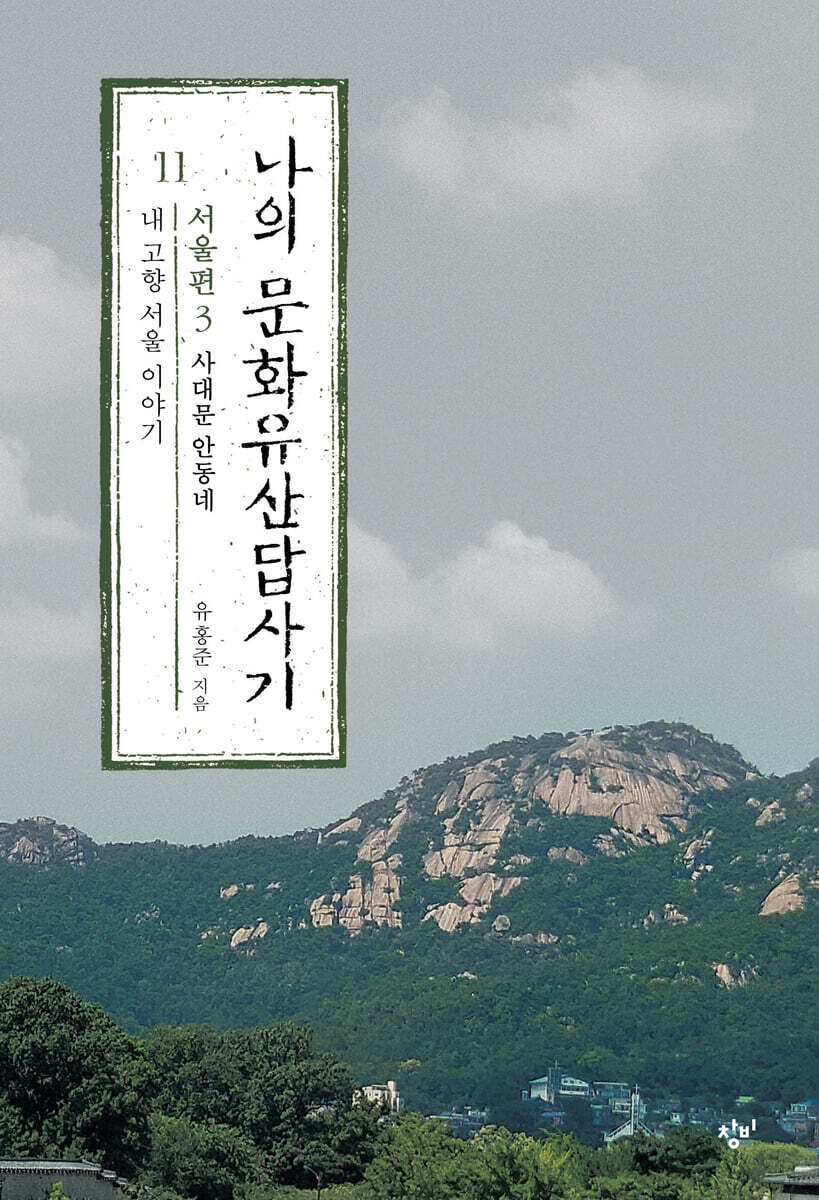
My Cultural Heritage Tour 11: Seoul Part 3
 |
Description
Book Introduction
Through Seoul's yesterday and today
The Seoul edition of 'Trip Report' is finally complete!
The mega-bestseller and representative Korean humanities series, "My Cultural Heritage Tour," has returned with the news of the complete Seoul edition.
After the publication of the Seoul chapter 1 and 2, which were very popular in the series, and the China chapter 3, we are back with the Seoul chapter 3 and 4 after 5 years.
The third volume of the Seoul series, "Sadamun Andongne: Stories of My Hometown Seoul," and the fourth volume, "Gangbuk and Gangnam: The Scent of History Outside the Hanyangdoseong Fortress," which are being published this time, conclude the Seoul series by exploring the old neighborhoods and meaningful cultural heritage of Seoul, a city beloved by people around the world, and unraveling their fascinating histories.
Over the long 600 years of its existence as the capital, Seoul has gradually expanded and deepened.
The author, following up on the previous volumes 1 and 2, has meticulously observed the past and present of the metropolis of Seoul, and has filled these volumes 3 and 4 with the stories of the people who have shaped Seoul and made their lives there.
In particular, we meticulously explore the landmarks that show the history of how today's Seoul was formed through the turbulent modern and contemporary times, and we focus on testifying to and reviving the stories of the alleys that we were not aware of.
You can feel the author's deep love for Seoul, having lived as a 'Seoul native' all his life, as well as his unique composure and wit.
This "Seoul Travelogue," which will be published in four volumes, including Volumes 3 and 4, will become a truly representative guidebook for readers who wish to learn about Seoul's history and culture.
The Seoul edition of 'Trip Report' is finally complete!
The mega-bestseller and representative Korean humanities series, "My Cultural Heritage Tour," has returned with the news of the complete Seoul edition.
After the publication of the Seoul chapter 1 and 2, which were very popular in the series, and the China chapter 3, we are back with the Seoul chapter 3 and 4 after 5 years.
The third volume of the Seoul series, "Sadamun Andongne: Stories of My Hometown Seoul," and the fourth volume, "Gangbuk and Gangnam: The Scent of History Outside the Hanyangdoseong Fortress," which are being published this time, conclude the Seoul series by exploring the old neighborhoods and meaningful cultural heritage of Seoul, a city beloved by people around the world, and unraveling their fascinating histories.
Over the long 600 years of its existence as the capital, Seoul has gradually expanded and deepened.
The author, following up on the previous volumes 1 and 2, has meticulously observed the past and present of the metropolis of Seoul, and has filled these volumes 3 and 4 with the stories of the people who have shaped Seoul and made their lives there.
In particular, we meticulously explore the landmarks that show the history of how today's Seoul was formed through the turbulent modern and contemporary times, and we focus on testifying to and reviving the stories of the alleys that we were not aware of.
You can feel the author's deep love for Seoul, having lived as a 'Seoul native' all his life, as well as his unique composure and wit.
This "Seoul Travelogue," which will be published in four volumes, including Volumes 3 and 4, will become a truly representative guidebook for readers who wish to learn about Seoul's history and culture.
- You can preview some of the book's contents.
Preview
index
In publishing the book
Bukaksan: Seoul's main mountain, a long-forbidden land
Seoul's main mountain, Bukaksan / Baekaksa Temple / Hoemaengdan / Yuksanggung / From Yuksanggung to Chilgung / Naengcheonjeong Pavilion in Chilgung / Five shrines within Chilgung / Yungmundang and Yungmudang in Gyeongmudae / Paldobaemi and Yeongbingwan in Chingyeongjeon / From Gyeongmudae to Cheongwadae / Presidential residence / Sangchunjae and Nokjiwon / Chimryugak / Ounjeong Pavilion / Seated Stone Buddha 'Minambul' / Cheonhajeilbokji Petroglyph
Seochon: My Childhood Story of Seochon
Seoul native / Seochon / Seochon filial son / Childhood memories / Tongui-dong / White pine tree, Changui Palace, Wolseong Palace / Jahamun-ro / Brothers Store and Tongin Market / Jagyo Church and Jasugyo / Shingyo and Seoul National School for the Blind and Deaf / Cheongun Elementary School days / Cheongpunggye / Cheongsongdang, Daeunam, Dohwa-dong / Jeong Seon, the Gyeomjae of Yuran-dong / Baekun-dong
Inwangsan: Restoring the old appearance of Inwangsan Valley
Sejongmaru Pavilion and Five-Way Intersection / The Road to Suseong-dong / Suseong-dong / Chima Rock / The Writings on Byeongpung Rock / Okryu-dong / Gyeomjae's "Samseungjeongdo" / The Palaces of Okin-dong / Ingokjeongsa Temple and Yukcheongheon / Cheonsu-gyeong's Songseokwon / Yun Deok-yeong's Byeoksu Mountain Lodge / Unkerk / Byeoksu Mountain Lodge and Park No-soo Art Museum / At Sejongmaru Pavilion / Lee Sang and Gu Bon-woong / Pilundae / Pilundae Pungryu / Inwangsan Mountain in My Heart
Bukchon: Bukchon Manbo (strolling)
The Eight Scenic Views of Bukchon / Baek Pine Tree in Jaedong / Site of Lord Park Gyu-su's House / The Gapsin Coup and the Changes in This Place / Jaedong Elementary School and Gyodong Elementary School / The Chosun Ilbo and Yeo Un-hyeong / Baek In-je's House / Baek In-je's Baek Hospital and Suseonsa Publishing Company / Gahoe-dong Cathedral / Site of Hyeon Sang-yoon's House / Site of Chwiunjeong Pavilion and Yu Gil-jun's Journey to the West / Site of Maeng Hyeon's Maeng Sa-seong House / Maeng Hyeon's House in "Bukchon: Old Memories of Eleven Houses" / The Emergence of Modified Hanok / 31 Gahoe-dong / Architect Jeong Se-gwon
Insadong 1: The Secret Story of Bookstores on the Old Book Street
A place called Insa-dong / The birth of Insa-dong during the Japanese colonial period / Taehwagwan and the Gimi Independence Declaration / The emergence of publishers and bookstores / Baek Du-yong and Jeon Hyeong-pil's Hannam Bookstore / Lee Gyeom-ro's Tongmungwan / Insa-dong bookstores during the liberation period and after the Korean War / Insa-dong old bookstores in the 1960s / Old bookstores and used bookstores / Regular customers of Insa-dong bookstores / Me and Tongmungwan
Insadong 2: A Street of Folk Crafts and Contemporary Art
Insa-dong's Future Heritage / The Story of Tong-in Store / Antique Art and Folk Craft Shops in Insa-dong / Ajabang, Gogeumdang, Sisanbang / The Formation of the Hwarang Street and Modern Art Galleries / Kim Moon-ho of Myeongdong Gallery / A Harvest of Exhibitions / The Scent of Ink in Insa-dong in the 1970s / The Hwarang Street in the Art Boom Era / The Geumdang Murder Case / The Emergence of Rental Exhibition Halls in the 1980s / The Birth of 'Geummadang Min' / The Insa-dong Gallery Street Today
Insadong 3: People Who Love Insadong
Renaissance Music Appreciation Room on the North Side of Insadong-gil / Munhwa Broadcasting Corporation Building and the Minjung Party Building / Insadong's Korean Restaurant / Insadong's Old Restaurant / Busan Restaurant / Poet Cheon Sang-byeong and Tea House Gwichon / Writers' Advance into Insadong / Cafe Peace Making / Graffiti, Lee Yong-ak's "Longing" / Cafe Novel / Insadong Night Fog, Lingering / Testimony of Kim Wook and Jo Moon-ho / The Emergence of Ssamziegil / Insadong Manga
Bukhansan Mountain: Bukhansan Mountain and King Jinheung's Stele
Bukhansan Mountain / Cultural Heritage of Bukhansanseong Fortress / Temples of Bukhansan Mountain / Seunggasa Temple / Bukhansan King Jinheung's Stele / The Rediscovery of King Jinheung's Stele by Chusa Kim Jeong-hui / Chusa Kim Jeong-hui's "Jinheung Ibigo" / Hwangchoryeong Stele and Maunryeong Stele / Kim No-gyeong and his party's "Samgaksan Travel Poem" / Making a Replica of King Jinheung's Stele / Find the Lost Roof Stone of the Stele
Bukaksan: Seoul's main mountain, a long-forbidden land
Seoul's main mountain, Bukaksan / Baekaksa Temple / Hoemaengdan / Yuksanggung / From Yuksanggung to Chilgung / Naengcheonjeong Pavilion in Chilgung / Five shrines within Chilgung / Yungmundang and Yungmudang in Gyeongmudae / Paldobaemi and Yeongbingwan in Chingyeongjeon / From Gyeongmudae to Cheongwadae / Presidential residence / Sangchunjae and Nokjiwon / Chimryugak / Ounjeong Pavilion / Seated Stone Buddha 'Minambul' / Cheonhajeilbokji Petroglyph
Seochon: My Childhood Story of Seochon
Seoul native / Seochon / Seochon filial son / Childhood memories / Tongui-dong / White pine tree, Changui Palace, Wolseong Palace / Jahamun-ro / Brothers Store and Tongin Market / Jagyo Church and Jasugyo / Shingyo and Seoul National School for the Blind and Deaf / Cheongun Elementary School days / Cheongpunggye / Cheongsongdang, Daeunam, Dohwa-dong / Jeong Seon, the Gyeomjae of Yuran-dong / Baekun-dong
Inwangsan: Restoring the old appearance of Inwangsan Valley
Sejongmaru Pavilion and Five-Way Intersection / The Road to Suseong-dong / Suseong-dong / Chima Rock / The Writings on Byeongpung Rock / Okryu-dong / Gyeomjae's "Samseungjeongdo" / The Palaces of Okin-dong / Ingokjeongsa Temple and Yukcheongheon / Cheonsu-gyeong's Songseokwon / Yun Deok-yeong's Byeoksu Mountain Lodge / Unkerk / Byeoksu Mountain Lodge and Park No-soo Art Museum / At Sejongmaru Pavilion / Lee Sang and Gu Bon-woong / Pilundae / Pilundae Pungryu / Inwangsan Mountain in My Heart
Bukchon: Bukchon Manbo (strolling)
The Eight Scenic Views of Bukchon / Baek Pine Tree in Jaedong / Site of Lord Park Gyu-su's House / The Gapsin Coup and the Changes in This Place / Jaedong Elementary School and Gyodong Elementary School / The Chosun Ilbo and Yeo Un-hyeong / Baek In-je's House / Baek In-je's Baek Hospital and Suseonsa Publishing Company / Gahoe-dong Cathedral / Site of Hyeon Sang-yoon's House / Site of Chwiunjeong Pavilion and Yu Gil-jun's Journey to the West / Site of Maeng Hyeon's Maeng Sa-seong House / Maeng Hyeon's House in "Bukchon: Old Memories of Eleven Houses" / The Emergence of Modified Hanok / 31 Gahoe-dong / Architect Jeong Se-gwon
Insadong 1: The Secret Story of Bookstores on the Old Book Street
A place called Insa-dong / The birth of Insa-dong during the Japanese colonial period / Taehwagwan and the Gimi Independence Declaration / The emergence of publishers and bookstores / Baek Du-yong and Jeon Hyeong-pil's Hannam Bookstore / Lee Gyeom-ro's Tongmungwan / Insa-dong bookstores during the liberation period and after the Korean War / Insa-dong old bookstores in the 1960s / Old bookstores and used bookstores / Regular customers of Insa-dong bookstores / Me and Tongmungwan
Insadong 2: A Street of Folk Crafts and Contemporary Art
Insa-dong's Future Heritage / The Story of Tong-in Store / Antique Art and Folk Craft Shops in Insa-dong / Ajabang, Gogeumdang, Sisanbang / The Formation of the Hwarang Street and Modern Art Galleries / Kim Moon-ho of Myeongdong Gallery / A Harvest of Exhibitions / The Scent of Ink in Insa-dong in the 1970s / The Hwarang Street in the Art Boom Era / The Geumdang Murder Case / The Emergence of Rental Exhibition Halls in the 1980s / The Birth of 'Geummadang Min' / The Insa-dong Gallery Street Today
Insadong 3: People Who Love Insadong
Renaissance Music Appreciation Room on the North Side of Insadong-gil / Munhwa Broadcasting Corporation Building and the Minjung Party Building / Insadong's Korean Restaurant / Insadong's Old Restaurant / Busan Restaurant / Poet Cheon Sang-byeong and Tea House Gwichon / Writers' Advance into Insadong / Cafe Peace Making / Graffiti, Lee Yong-ak's "Longing" / Cafe Novel / Insadong Night Fog, Lingering / Testimony of Kim Wook and Jo Moon-ho / The Emergence of Ssamziegil / Insadong Manga
Bukhansan Mountain: Bukhansan Mountain and King Jinheung's Stele
Bukhansan Mountain / Cultural Heritage of Bukhansanseong Fortress / Temples of Bukhansan Mountain / Seunggasa Temple / Bukhansan King Jinheung's Stele / The Rediscovery of King Jinheung's Stele by Chusa Kim Jeong-hui / Chusa Kim Jeong-hui's "Jinheung Ibigo" / Hwangchoryeong Stele and Maunryeong Stele / Kim No-gyeong and his party's "Samgaksan Travel Poem" / Making a Replica of King Jinheung's Stele / Find the Lost Roof Stone of the Stele
Detailed image

Publisher's Review
New stories in an old neighborhood
In Volume 3 of the Seoul series (Volume 11), we explore the old neighborhoods within Seoul's four great gates, including Seochon, Bukchon, and Insa-dong, as well as the cultural heritage of Bukhansan Mountain.
The Sadamun Andong neighborhoods are representative old downtown areas of Korea, with hanoks (traditional Korean houses) and traditional shops, as well as old streets and historical sites.
Today, these places are major tourist attractions in Seoul and symbols of our traditional culture.
The author walks through these old neighborhoods, recalling the land's long history and the memories of its people.
The starting point is Bukaksan Mountain.
Bukaksan Mountain, the main mountain of Hanyang, the capital of Joseon, and a stronghold of the dynasty, was initially off-limits because it was considered a key element in the defense of the capital. Later, as the Governor-General's Residence and the Blue House were built at its foot, access to the mountain was further restricted until recently when it was finally fully opened.
The author diagnoses that although Gyeongbokgung Palace is a meaningful place to visit because it contains many cultural heritages that we were not familiar with, such as the remains of the royal garden period, Chilgung Palace, and the Blue House, its value has been damaged by the recent unprepared opening.
We emphasize that establishing a clear blueprint for the final form of openness and collaborating with domestic and international experts is the only way to properly preserve and enjoy the cultural heritage of the Blue House and Bukaksan Mountain.
We call the neighborhood west of Gyeongbokgung Palace, below Inwangsan Mountain, which protects Seoul along with Bukaksan Mountain, 'Seochon' today.
Seochon, along with Bukchon, is considered one of Seoul's oldest neighborhoods and has become a bustling area for tourists who come to enjoy its traditional atmosphere.
Adjacent to the royal palace, this area has been home to many writers, artists, and politicians for hundreds of years.
During the modern and contemporary times, it became the residence of influential figures such as Yi Wan-yong and Yun Deok-yeong.
In particular, this is the author's hometown.
The author reminisces about his childhood memories, which he did not reveal in other travelogues, and returns to the role of 'Boy Yoo Hong-jun'.
The author's experiences growing up in Tongin Market, Changseong-dong, and Suseong-dong Valley are in themselves a valuable testimony and cultural heritage.
Those people who lived in Seoul back then
Bukchon is a renowned hanok village filled with grand mansions and traditional houses, but few people truly understand the story of its formation.
The formation of Bukchon vividly illustrates our modernization process.
The Enlightenment movement blossomed here, the Gapsin Coup was plotted here, and those who led the nationalist movement during the Japanese colonial period, including the March 1st Movement, settled here.
In particular, the Hanok Village we visit today is evidence of Seoul's expansion during the Japanese colonial period.
In the 1930s, as Seoul's population exploded, development began in Bukchon, and small-scale urban-style renovated hanoks, different from the existing large-scale mansions, were densely built, forming the current hanok complex.
That process is an important scene in our social history.
The history of Insa-dong is similar to the process of forming our modern and contemporary culture and arts.
Insa-dong began as a site of nationalist and cultural movements during the Japanese colonial period, and has since transformed into a street of old and used bookstores in the 1960s, a street of antique shops and art galleries in the 1970s and 1980s, and a street of traditional culture tourism since the 1990s.
The author's travelogue of Insa-dong is filled with memories and tributes to each and every cultural artist and merchant who gathered and moved along the way.
The author's love for Insadong, who once 'lived' there and played a part in the cultural movement, is vividly conveyed.
In response to concerns that Insa-dong's unique neighborhood value will disappear as it becomes a tourist attraction, the author responds by saying that he looks forward to the new culture that the new generation will create here.
Bukhansan Mountain is the guardian mountain and ancestral mountain of Seoul, and is a blessing that Seoul citizens can enjoy hiking in half a day.
Although it boasts cultural heritages including Bukhansanseong Fortress and over 30 temples, as well as beautiful nature, the cultural heritage that the author pays particular attention to is the Silla King Jinheung's Stele on Bukhansan.
The tour, which follows the perspective of Chusa Kim Jeong-hui, who discovered that this stele is the stele of King Jinheung, continues to the story of how a replica stele was erected in Bibong during the author's time as the head of the Cultural Heritage Administration.
A field trip by Seoul native Yoo Hong-jun
The author says that he wrote this book using the method of 'archaeology', which explores past events, and 'paleoscience', which applies it to the present day.
This means that just as archaeologists reconstruct the past through relics and ruins, we have explored and testified to the process by which Seoul was formed by tracing the traces left behind today.
Therefore, this travelogue is not limited to introducing cultural heritages produced by influential figures, but is written as an 'experiential travelogue' rich in stories of the city dwellers who created and lived in the villages, as well as the author's personal testimony.
Through this Seoul edition, where the author feels determined to share the story of Seoul, the foundation of life, with its citizens, the protagonists of our time, the author powerfully conveys the message that "the force that moves Seoul is the people who lived in Seoul."
Moreover, at a time when Korean culture is increasingly becoming a topic of global interest, the four volumes of the Seoul travelogue, now being published in their entirety, hold special significance.
The cultural prowess and depth of Seoul, the center of the Korean Wave, can be gauged by the cultural heritage left behind here.
The power of time, which cannot be obtained by pursuing only cutting-edge industries and culture, comes only from cultural heritage.
I strongly recommend that you experience the power of Seoul's cultural heritage through this Seoul tour.
High mountains and wide rivers, forests of buildings and fresh green spaces, stories of ancient people and cultures of people from all over the world—Seoul is wide and deep enough to embrace it all.
In Volume 3 of the Seoul series (Volume 11), we explore the old neighborhoods within Seoul's four great gates, including Seochon, Bukchon, and Insa-dong, as well as the cultural heritage of Bukhansan Mountain.
The Sadamun Andong neighborhoods are representative old downtown areas of Korea, with hanoks (traditional Korean houses) and traditional shops, as well as old streets and historical sites.
Today, these places are major tourist attractions in Seoul and symbols of our traditional culture.
The author walks through these old neighborhoods, recalling the land's long history and the memories of its people.
The starting point is Bukaksan Mountain.
Bukaksan Mountain, the main mountain of Hanyang, the capital of Joseon, and a stronghold of the dynasty, was initially off-limits because it was considered a key element in the defense of the capital. Later, as the Governor-General's Residence and the Blue House were built at its foot, access to the mountain was further restricted until recently when it was finally fully opened.
The author diagnoses that although Gyeongbokgung Palace is a meaningful place to visit because it contains many cultural heritages that we were not familiar with, such as the remains of the royal garden period, Chilgung Palace, and the Blue House, its value has been damaged by the recent unprepared opening.
We emphasize that establishing a clear blueprint for the final form of openness and collaborating with domestic and international experts is the only way to properly preserve and enjoy the cultural heritage of the Blue House and Bukaksan Mountain.
We call the neighborhood west of Gyeongbokgung Palace, below Inwangsan Mountain, which protects Seoul along with Bukaksan Mountain, 'Seochon' today.
Seochon, along with Bukchon, is considered one of Seoul's oldest neighborhoods and has become a bustling area for tourists who come to enjoy its traditional atmosphere.
Adjacent to the royal palace, this area has been home to many writers, artists, and politicians for hundreds of years.
During the modern and contemporary times, it became the residence of influential figures such as Yi Wan-yong and Yun Deok-yeong.
In particular, this is the author's hometown.
The author reminisces about his childhood memories, which he did not reveal in other travelogues, and returns to the role of 'Boy Yoo Hong-jun'.
The author's experiences growing up in Tongin Market, Changseong-dong, and Suseong-dong Valley are in themselves a valuable testimony and cultural heritage.
Those people who lived in Seoul back then
Bukchon is a renowned hanok village filled with grand mansions and traditional houses, but few people truly understand the story of its formation.
The formation of Bukchon vividly illustrates our modernization process.
The Enlightenment movement blossomed here, the Gapsin Coup was plotted here, and those who led the nationalist movement during the Japanese colonial period, including the March 1st Movement, settled here.
In particular, the Hanok Village we visit today is evidence of Seoul's expansion during the Japanese colonial period.
In the 1930s, as Seoul's population exploded, development began in Bukchon, and small-scale urban-style renovated hanoks, different from the existing large-scale mansions, were densely built, forming the current hanok complex.
That process is an important scene in our social history.
The history of Insa-dong is similar to the process of forming our modern and contemporary culture and arts.
Insa-dong began as a site of nationalist and cultural movements during the Japanese colonial period, and has since transformed into a street of old and used bookstores in the 1960s, a street of antique shops and art galleries in the 1970s and 1980s, and a street of traditional culture tourism since the 1990s.
The author's travelogue of Insa-dong is filled with memories and tributes to each and every cultural artist and merchant who gathered and moved along the way.
The author's love for Insadong, who once 'lived' there and played a part in the cultural movement, is vividly conveyed.
In response to concerns that Insa-dong's unique neighborhood value will disappear as it becomes a tourist attraction, the author responds by saying that he looks forward to the new culture that the new generation will create here.
Bukhansan Mountain is the guardian mountain and ancestral mountain of Seoul, and is a blessing that Seoul citizens can enjoy hiking in half a day.
Although it boasts cultural heritages including Bukhansanseong Fortress and over 30 temples, as well as beautiful nature, the cultural heritage that the author pays particular attention to is the Silla King Jinheung's Stele on Bukhansan.
The tour, which follows the perspective of Chusa Kim Jeong-hui, who discovered that this stele is the stele of King Jinheung, continues to the story of how a replica stele was erected in Bibong during the author's time as the head of the Cultural Heritage Administration.
A field trip by Seoul native Yoo Hong-jun
The author says that he wrote this book using the method of 'archaeology', which explores past events, and 'paleoscience', which applies it to the present day.
This means that just as archaeologists reconstruct the past through relics and ruins, we have explored and testified to the process by which Seoul was formed by tracing the traces left behind today.
Therefore, this travelogue is not limited to introducing cultural heritages produced by influential figures, but is written as an 'experiential travelogue' rich in stories of the city dwellers who created and lived in the villages, as well as the author's personal testimony.
Through this Seoul edition, where the author feels determined to share the story of Seoul, the foundation of life, with its citizens, the protagonists of our time, the author powerfully conveys the message that "the force that moves Seoul is the people who lived in Seoul."
Moreover, at a time when Korean culture is increasingly becoming a topic of global interest, the four volumes of the Seoul travelogue, now being published in their entirety, hold special significance.
The cultural prowess and depth of Seoul, the center of the Korean Wave, can be gauged by the cultural heritage left behind here.
The power of time, which cannot be obtained by pursuing only cutting-edge industries and culture, comes only from cultural heritage.
I strongly recommend that you experience the power of Seoul's cultural heritage through this Seoul tour.
High mountains and wide rivers, forests of buildings and fresh green spaces, stories of ancient people and cultures of people from all over the world—Seoul is wide and deep enough to embrace it all.
GOODS SPECIFICS
- Publication date: October 25, 2022
- Page count, weight, size: 352 pages | 612g | 153*224*20mm
- ISBN13: 9788936479190
- ISBN10: 8936479199
You may also like
카테고리
korean


korean

![GQ KOREA Mark (Monthly): December [2025]](http://librairie.coreenne.fr/cdn/shop/files/8ef265dbbfbf186523ed75ba7319009d.jpg?v=1765340328&width=3840)


