

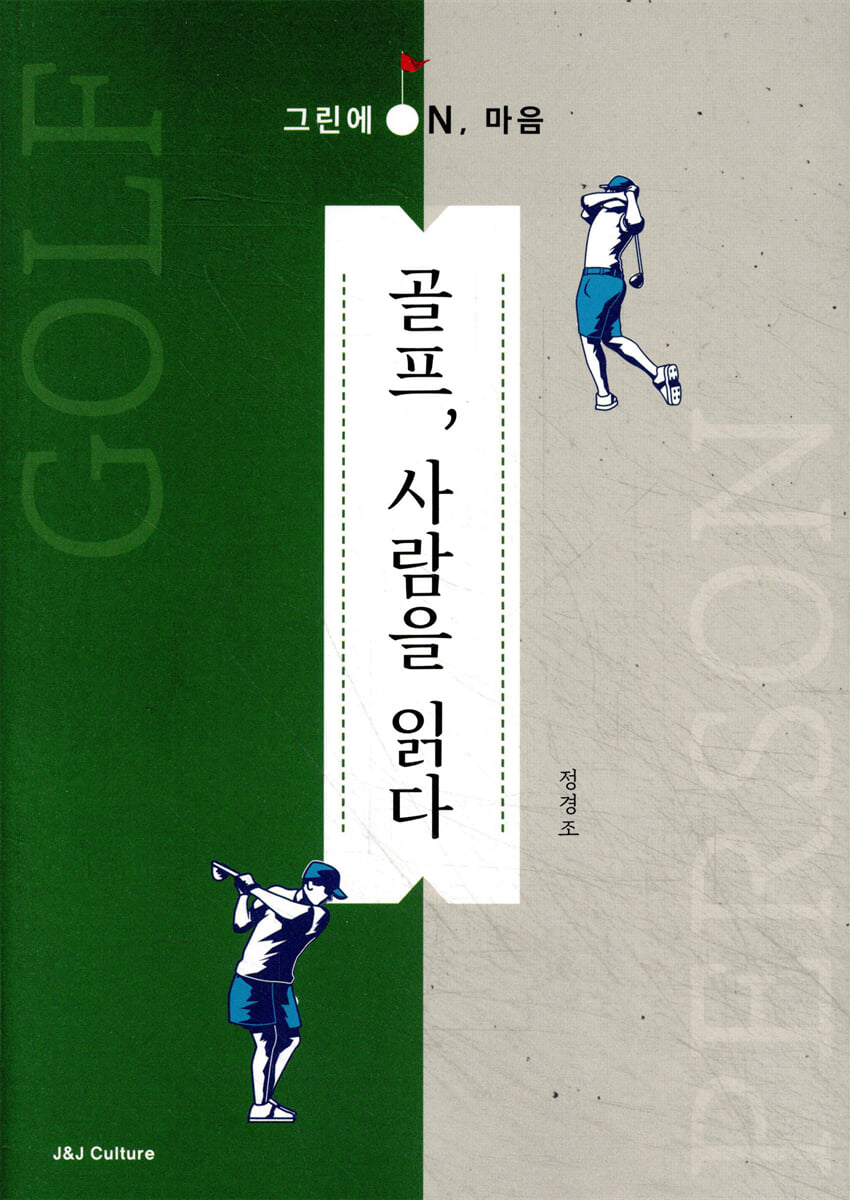
Golf, Reading People - ON the Green, Mind
 |
Description
Book Introduction
"Golf, Reading People" is a book that elevates golf beyond the realm of mere sports and reinterprets it through a humanistic lens that explores humanity, society, philosophy, and ethics.
The lyrical introduction, which begins on a foggy dawn fairway, immediately transports the reader to the quiet, philosophical space of the golf course.
This book reflects on the human mind, relationships, strategies, and ethics through the act of golf.
In particular, the humanistic questions posed in each chapter encourage readers to think deeply and view golf as a microcosm of life.
The nature of golf, where players keep their own scores and judge themselves when they break the rules, is intertwined with the ethical values of autonomy and responsibility.
The author asks the question, “Who am I?” through golf, and finds the answer through swings, failures, consideration, and strategy.
Especially when the reader closes the last chapter, he or she will have a new perspective on people, society, and himself, beyond golf.
This book is a guide that resonates deeply not only with golf lovers but also with anyone who questions the meaning of life.
The thought that begins at the fingertips holding the golf club ultimately reaches the essence of human existence.
The lyrical introduction, which begins on a foggy dawn fairway, immediately transports the reader to the quiet, philosophical space of the golf course.
This book reflects on the human mind, relationships, strategies, and ethics through the act of golf.
In particular, the humanistic questions posed in each chapter encourage readers to think deeply and view golf as a microcosm of life.
The nature of golf, where players keep their own scores and judge themselves when they break the rules, is intertwined with the ethical values of autonomy and responsibility.
The author asks the question, “Who am I?” through golf, and finds the answer through swings, failures, consideration, and strategy.
Especially when the reader closes the last chapter, he or she will have a new perspective on people, society, and himself, beyond golf.
This book is a guide that resonates deeply not only with golf lovers but also with anyone who questions the meaning of life.
The thought that begins at the fingertips holding the golf club ultimately reaches the essence of human existence.
index
Chapter 1.
Philosophy and Psychology (Inner Golf)
01.
What does playing golf with a single-digit handicap teach us about life?
02.
In golf, is the regret of the 'road not taken' a sign of learning, and is the regret of the 'road not taken' a motivation for challenge?
03.
Who is being punished more harshly: the golfer or Sisyphus?
04.
What is the golfer's consistency and 'like two minds' in the 3A-3C-3R process?
05.
Is the 3 hours and 56 minutes of regret following a 4-minute swing a regret or preparation for what's next?
06.
Is the moment that begins, like the 'takeaway' in golf, a turning point in life, an inner preparation, the beginning of a flow?
07.
What is the relationship between trace elements needed for plant growth and 'stroke saver' putting?
08.
Do amateurs fight to win, and do professionals fight to not lose?
09.
Between beds and golf courses, what are the most dangerous places in the world?
10.
Is golf a waste of time and money, or a sport for a purpose?
11.
Is a round of golf a magical space where work, play, and relaxation harmonize?
Chapter 2.
Human Relationships and Society (Golf Between People)
12.
Is the core of 'hospitality golf' 'hospitality', treating others with proper courtesy?
13.
Could the Ten Commandments for Golfers be summarized as "love for golf" and "consideration for your companions"?
14.
What qualities, besides outstanding athletic ability, do respected professional golfers need?
15.
Am I a foursome that fills in your half's shortcomings, or a fourball that does its best in its own way?
16.
What are the qualities that a golf companion should have, as much as golf skills?
17.
What is the cause of the phenomenon of high female student attendance and low male student attendance in Korean golf?
18.
In the power game on the green, can a president lose to the people even while in office?
19.
Is the sandstorm blowing through the golf world a wind of money or a whirlwind of chaos?
20.
Is April the cruelest month for golfers?
21.
How does capitalism on the fairway compete and consume humans?
22.
What are the current status and challenges of popularizing golf in Korea?
Chapter 3.
Skills and Strategy (Golf in the Game)
23.
Could the snake's attributes have anything to do with how you approach the golf course?
24.
Preferred Lie: Is chance the lot of those who act, and opportunity the lot of those who choose?
25.
Will a difficult course setup help with the philosophy and direction of the sport of golf?
26.
Are the crises you encounter during a round of golf a stumbling block or a stepping stone?
27.
Golf Rules: Is Knowledge Powerful?
Is ignorance bliss?
28.
How can we prove Tiger Woods' worth?
29.
If names are linguistic tools that reveal the essence of existence, then what about GC and CC?
30.
Is safety the most important thing in winter golf tips?
31.
Are there any unpredictable disasters on the golf course?
32.
What is the role of a caddy in enhancing the aesthetic value of the game of golf?
33.
If the wise enjoy water and the benevolent enjoy mountains, then what about golfers?
Chapter 4.
Rules and Ethics (Golf of Order)
33.
Is relief the alleviation of suffering or the beginning of resurrection?
35.
Do the postponements and cancellations of golf matches uphold the principles of fairness in sports?
36.
Is using incorrect golf terminology a coup d'état that breaks the social contract?
37.
What if the most nerve-wracking moment in a course round leads to death?
38.
Does Rule 1.2a of Golf tell us that a comfortable relationship can be achieved when consideration for the other person and understanding for oneself are combined?
39.
Are golf rule violations a scarlet letter A or a new brand?
40.
Is a repeated mistake in violation of the rules of golf a choice?
41.
When the fundamental rights of individual golfers and the interests of the association come into conflict, what will the scales of justice, the goddess Dike, weigh?
42.
In the Maze of Rules: Order and Fairness as Seen in Golf
43.
The most frequently broken golf rules by golfers
Philosophy and Psychology (Inner Golf)
01.
What does playing golf with a single-digit handicap teach us about life?
02.
In golf, is the regret of the 'road not taken' a sign of learning, and is the regret of the 'road not taken' a motivation for challenge?
03.
Who is being punished more harshly: the golfer or Sisyphus?
04.
What is the golfer's consistency and 'like two minds' in the 3A-3C-3R process?
05.
Is the 3 hours and 56 minutes of regret following a 4-minute swing a regret or preparation for what's next?
06.
Is the moment that begins, like the 'takeaway' in golf, a turning point in life, an inner preparation, the beginning of a flow?
07.
What is the relationship between trace elements needed for plant growth and 'stroke saver' putting?
08.
Do amateurs fight to win, and do professionals fight to not lose?
09.
Between beds and golf courses, what are the most dangerous places in the world?
10.
Is golf a waste of time and money, or a sport for a purpose?
11.
Is a round of golf a magical space where work, play, and relaxation harmonize?
Chapter 2.
Human Relationships and Society (Golf Between People)
12.
Is the core of 'hospitality golf' 'hospitality', treating others with proper courtesy?
13.
Could the Ten Commandments for Golfers be summarized as "love for golf" and "consideration for your companions"?
14.
What qualities, besides outstanding athletic ability, do respected professional golfers need?
15.
Am I a foursome that fills in your half's shortcomings, or a fourball that does its best in its own way?
16.
What are the qualities that a golf companion should have, as much as golf skills?
17.
What is the cause of the phenomenon of high female student attendance and low male student attendance in Korean golf?
18.
In the power game on the green, can a president lose to the people even while in office?
19.
Is the sandstorm blowing through the golf world a wind of money or a whirlwind of chaos?
20.
Is April the cruelest month for golfers?
21.
How does capitalism on the fairway compete and consume humans?
22.
What are the current status and challenges of popularizing golf in Korea?
Chapter 3.
Skills and Strategy (Golf in the Game)
23.
Could the snake's attributes have anything to do with how you approach the golf course?
24.
Preferred Lie: Is chance the lot of those who act, and opportunity the lot of those who choose?
25.
Will a difficult course setup help with the philosophy and direction of the sport of golf?
26.
Are the crises you encounter during a round of golf a stumbling block or a stepping stone?
27.
Golf Rules: Is Knowledge Powerful?
Is ignorance bliss?
28.
How can we prove Tiger Woods' worth?
29.
If names are linguistic tools that reveal the essence of existence, then what about GC and CC?
30.
Is safety the most important thing in winter golf tips?
31.
Are there any unpredictable disasters on the golf course?
32.
What is the role of a caddy in enhancing the aesthetic value of the game of golf?
33.
If the wise enjoy water and the benevolent enjoy mountains, then what about golfers?
Chapter 4.
Rules and Ethics (Golf of Order)
33.
Is relief the alleviation of suffering or the beginning of resurrection?
35.
Do the postponements and cancellations of golf matches uphold the principles of fairness in sports?
36.
Is using incorrect golf terminology a coup d'état that breaks the social contract?
37.
What if the most nerve-wracking moment in a course round leads to death?
38.
Does Rule 1.2a of Golf tell us that a comfortable relationship can be achieved when consideration for the other person and understanding for oneself are combined?
39.
Are golf rule violations a scarlet letter A or a new brand?
40.
Is a repeated mistake in violation of the rules of golf a choice?
41.
When the fundamental rights of individual golfers and the interests of the association come into conflict, what will the scales of justice, the goddess Dike, weigh?
42.
In the Maze of Rules: Order and Fairness as Seen in Golf
43.
The most frequently broken golf rules by golfers
Publisher's Review
Professor Jeong Gyeong-jo (Ph.D. in English Literature) of Korea Golf Science and Technology University, who won the sympathy of weekend golfers with his humorous 『Golf Rule that Almost Was Fun』(2022), has now published a new work 『Golf, Reading People』 that expands golf through the lens of humanities.
If the last book was a guide for “weekend golfers who get penalized for not knowing the rules,” this book is a philosophical journey for “people who want to find the meaning of life in golf.”
Beyond the rules and situations commonly encountered on the golf course, this time we explore existential questions beyond the tee shot.
"Golf, Reading People" consists of four chapters, each of which reflects on the essence of humanity through golf, focusing on the topics of philosophy and psychology, human relationships and society, technology and strategy, and rules and ethics.
In particular, at the end of each chapter, a golf poem and questions for reflection are included, helping readers to develop their own 'own golf philosophy.'
Professor Jeong said, “Golf is a sport without referees.
It is ultimately up to you to follow the rules and look after yourself.
This book is a “humanistic experiment that asks the question ‘Who am I?’ through golf.”
"Golf, Reading People" offers golf lovers a new perspective and depth, and golf, an unfamiliar stage, to those who love the humanities.
From the moment you pick up a golf club to the final putt you face in life, this book guides readers through 'Golf that Reads People.'
"Golf is a mirror that reflects the inner self." Professor Jeong Gyeong-jo, author of "Golf: Reading People"
Professor Jeong Gyeong-jo (Korea Golf Science and Technology University, Ph.D. in English Literature), who won the sympathy of weekend golfers with his humorous explanation of the rules of golf, 『Golf Rule That Almost Was Fun』, has now published a new book, 『Golf, Reading People』, which interprets golf as a philosophy of life.
This book, which explores the essence of humanity through the swings, putting, waiting, and consideration that take place on the golf course, will resonate deeply with golf lovers.
# “Golf is a practice ground for philosophy.”
“Golf is not just a game of hitting a ball.
“The moment we place the ball on the tee and catch our breath, we face life.”
Professor Jeong describes golf as a 'practice ground for philosophy.'
Life itself is a journey of dozens of failures and rare perfect shots, where strategy and intuition intersect.
## “Rules are a microcosm of ethics.”
Professor Jeong, who explained the rules of golf with humor and examples in his previous book, emphasizes the importance of the rules in this book as well.
“Golf is a sport without referees.
It's a structure where you know the rules, apply them yourself, and judge yourself when you break them.
This is in line with the humanistic values of ethics, responsibility, and fairness.”
### “Golf is the art of relationships.”
Chapter 2 of the book revisits the meaning of community, consideration, and courtesy through golf.
“The etiquette of waiting quietly and respecting your partner’s play is not just a courtesy.
It's a process of learning how to live together.”
#### “I hope to learn more about myself through golf.”
Each chapter of "Golf, Reading People" poses a humanistic question and seeks the answer through golf.
“I hope this book will serve as a small mirror not only for those who love golf, but also for everyone who asks about the meaning of life.
By the time you close the final chapter, readers will have a new perspective on people, society, and themselves, beyond golf.”
If the last book was a guide for “weekend golfers who get penalized for not knowing the rules,” this book is a philosophical journey for “people who want to find the meaning of life in golf.”
Beyond the rules and situations commonly encountered on the golf course, this time we explore existential questions beyond the tee shot.
"Golf, Reading People" consists of four chapters, each of which reflects on the essence of humanity through golf, focusing on the topics of philosophy and psychology, human relationships and society, technology and strategy, and rules and ethics.
In particular, at the end of each chapter, a golf poem and questions for reflection are included, helping readers to develop their own 'own golf philosophy.'
Professor Jeong said, “Golf is a sport without referees.
It is ultimately up to you to follow the rules and look after yourself.
This book is a “humanistic experiment that asks the question ‘Who am I?’ through golf.”
"Golf, Reading People" offers golf lovers a new perspective and depth, and golf, an unfamiliar stage, to those who love the humanities.
From the moment you pick up a golf club to the final putt you face in life, this book guides readers through 'Golf that Reads People.'
"Golf is a mirror that reflects the inner self." Professor Jeong Gyeong-jo, author of "Golf: Reading People"
Professor Jeong Gyeong-jo (Korea Golf Science and Technology University, Ph.D. in English Literature), who won the sympathy of weekend golfers with his humorous explanation of the rules of golf, 『Golf Rule That Almost Was Fun』, has now published a new book, 『Golf, Reading People』, which interprets golf as a philosophy of life.
This book, which explores the essence of humanity through the swings, putting, waiting, and consideration that take place on the golf course, will resonate deeply with golf lovers.
# “Golf is a practice ground for philosophy.”
“Golf is not just a game of hitting a ball.
“The moment we place the ball on the tee and catch our breath, we face life.”
Professor Jeong describes golf as a 'practice ground for philosophy.'
Life itself is a journey of dozens of failures and rare perfect shots, where strategy and intuition intersect.
## “Rules are a microcosm of ethics.”
Professor Jeong, who explained the rules of golf with humor and examples in his previous book, emphasizes the importance of the rules in this book as well.
“Golf is a sport without referees.
It's a structure where you know the rules, apply them yourself, and judge yourself when you break them.
This is in line with the humanistic values of ethics, responsibility, and fairness.”
### “Golf is the art of relationships.”
Chapter 2 of the book revisits the meaning of community, consideration, and courtesy through golf.
“The etiquette of waiting quietly and respecting your partner’s play is not just a courtesy.
It's a process of learning how to live together.”
#### “I hope to learn more about myself through golf.”
Each chapter of "Golf, Reading People" poses a humanistic question and seeks the answer through golf.
“I hope this book will serve as a small mirror not only for those who love golf, but also for everyone who asks about the meaning of life.
By the time you close the final chapter, readers will have a new perspective on people, society, and themselves, beyond golf.”
GOODS SPECIFICS
- Date of issue: September 29, 2025
- Page count, weight, size: 292 pages | 148*225*20mm
- ISBN13: 9791198426543
- ISBN10: 1198426543
You may also like
카테고리
korean


korean

![GQ KOREA Mark (Monthly): December [2025]](http://librairie.coreenne.fr/cdn/shop/files/8ef265dbbfbf186523ed75ba7319009d.jpg?v=1765340328&width=3840)


