

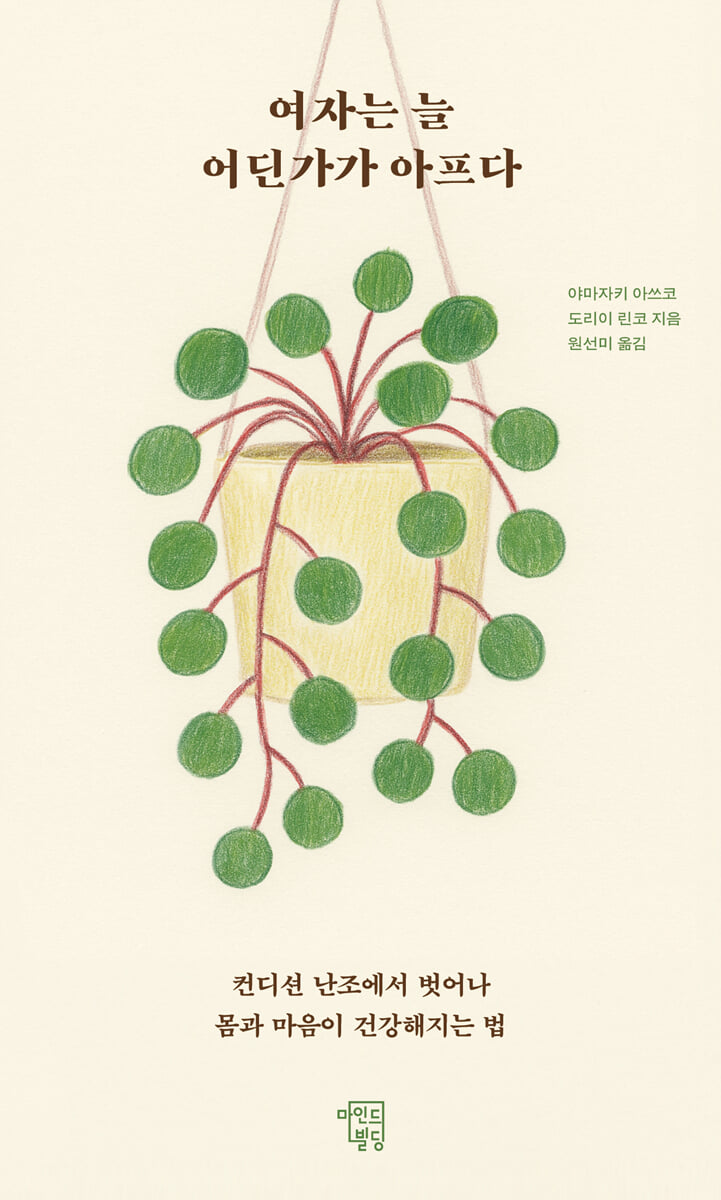
Women always have pain somewhere.
 |
Description
Book Introduction
A record of reading the minds of 70,000 people over 28 years
How to escape from unexplained physical and mental discomfort and find peace of mind
As readers' interest in mental health and psychology grows, a variety of books dealing with these topics are being published.
Most books deal with mental care methods based on psychological theory or are essay-style books for healing, but few books, like this one, connect the body and mind with the theme of "women's health."
Many women, busy with various roles at work or at home, experience inexplicable physical problems one day.
I suspected an illness and went to the hospital for tests, but no particular abnormalities were found and I still felt pain and discomfort all over my body.
This book is written by a female acupuncturist who has seen 70,000 patients over 28 years, making up less than 1% of all acupuncturists. The author kindly shares the mindset, attitude, and lifestyle habits needed to overcome the physical condition caused by autonomic nervous system dysfunction.
Rinko Torii, who co-wrote this book, was also one of the patients. She suffered from various pains of unknown causes due to the imbalance of her autonomic nervous system, but after meeting Atsuko Yamazaki, she was able to gradually recover, and this book was written based on the conversations they had while receiving treatment.
This book provides hints on how to manage your condition without effort and find a way to live a comfortable life.
How to escape from unexplained physical and mental discomfort and find peace of mind
As readers' interest in mental health and psychology grows, a variety of books dealing with these topics are being published.
Most books deal with mental care methods based on psychological theory or are essay-style books for healing, but few books, like this one, connect the body and mind with the theme of "women's health."
Many women, busy with various roles at work or at home, experience inexplicable physical problems one day.
I suspected an illness and went to the hospital for tests, but no particular abnormalities were found and I still felt pain and discomfort all over my body.
This book is written by a female acupuncturist who has seen 70,000 patients over 28 years, making up less than 1% of all acupuncturists. The author kindly shares the mindset, attitude, and lifestyle habits needed to overcome the physical condition caused by autonomic nervous system dysfunction.
Rinko Torii, who co-wrote this book, was also one of the patients. She suffered from various pains of unknown causes due to the imbalance of her autonomic nervous system, but after meeting Atsuko Yamazaki, she was able to gradually recover, and this book was written based on the conversations they had while receiving treatment.
This book provides hints on how to manage your condition without effort and find a way to live a comfortable life.
- You can preview some of the book's contents.
Preview
index
Starting with Atsuko Yamazaki
West Gate Torii Rinko
Chapter 1: Lessons from the Role of a Sensible Person
1.
Don't face the rough waves of menopause head-on / Pain and suffering → Struggle → Empty view of enlightenment, that's it.
2.
That's a characteristic of a woman going through severe menopause / Are you the type who gives everyone salad?
3.
Women are creatures who are shaken by the slightest word / We usually don't realize it, but blood flow is really important!
4.
Like Doraemon's 4-dimensional pocket... / The life of a woman carrying a lot of luggage
5.
To the cute "But Anyway" girls / Let's stop filling our futures with bad horoscopes.
6.
Men and women are on parallel lines / Men with different weapons and strengths say 'windsock'
Column 1: Women are always cold somewhere / Don't touch a woman with a cold body.
Column 2: Women always have a sore spot somewhere / Neglecting the knot causes all kinds of illnesses.
Chapter 2: Lessons on Stopping Carrying Someone's Grief
7.
I got scolded before I even spilled the soybean paste stew… … / I can now graduate from being the ‘good kid’
8.
Humans are inherently negative creatures / There is also a way to surrender without delay, without fighting anxiety or fear.
9.
Anxiety tends to count the number of times… … / Excessive worry stiffens the body and causes stiffness
10.
Don't think of everything as your own business! / There's no need to take on other people's feelings.
11.
Body and mind move as one / Know that poor condition is a sign that you are trying too hard
12.
I know lack of sleep is bad, but… … / The night of my solo reflection is getting deeper
Column 3: Women always feel suffocated somewhere / If a wave of anxiety has washed over them
Column 4: Women are always a bit chubby / Switch on with a 'morning shower'
Chapter 3: Lessons on Not Being Captured by Anxiety
13.
Can't stand being jealous of that person? / Are you planning to live your whole life with a comparison device on 24/7?
14.
Digital Detox Recommendations / In today's world, why not try becoming a natural person?
15.
A good woman is 'past perfect tense' / It hurts because I endured it.
What if I blow it up once?
16.
Anxiety that doesn't go away for no reason! / Self-live broadcasting is effective in organizing thoughts.
17.
Sighs and tears are good for you! / "Haa~" to avoid oxygen deprivation, "crying" to release emotions
18.
Stroke it anyway! / Don't underestimate the feeling of 'feeling good'
Column 5: Women Always Have a Bad Stomach / Let's Warm Up with Casual Moxibustion
Column 6: Women are always awkward at standing / The tragedy of W, a curved back like a shrimp
Chapter 4: Lessons on Putting Myself First
19.
When parting ways with a friend at the ticket gate, do you look back or not? / Which is right, and which is a good person?
20.
I can't like that person, so why not? / That kind of thinking is nonsense in the first place
21.
It's good to work hard, but let's become someone who doesn't give in to the 'law of moderate effort'.
22.
If you're annoyed, close the business / 'I'm tired, so I'm going to sleep.'
'Strange' and go under the blanket
23.
Is it me as I am that you want? / No, no, isn't it 'me as I want to be'?
24.
'Why? Why? How come? Woman' / Don't be obsessed, don't be tied down, listen to your body!
Column 7 Women always have back pain / Don't sit on the floor, don't cross your legs
Column 8: Women Are Always Slaves to Their Smartphones / "Lying Down on Your Smartphone" Causes Fatigue
Chapter 5: Lessons on Happiness with a Can of Beer
25.
You don't need to be "power humble" with yourself! / Let's use self-encouraging words consciously.
26.
A woman who talks a lot gets better easily? / She sorts out her feelings by dozing off and complaining.
27.
Even though I know there is no way… … / I keep bleeding for 40 years.
Well done, you survived!!
28.
Are we running too fast? / At the end of the day, 'Good job, myself!'
Column 9: Women should always keep their lymph flowing / Pressing is not allowed, stroking is.
Column 10: Do Women Always Shake Their Legs? / Trying to 'Move'
Bonus Episode: Atsuko and Rinko's Conversation
In conclusion
West Gate Torii Rinko
Chapter 1: Lessons from the Role of a Sensible Person
1.
Don't face the rough waves of menopause head-on / Pain and suffering → Struggle → Empty view of enlightenment, that's it.
2.
That's a characteristic of a woman going through severe menopause / Are you the type who gives everyone salad?
3.
Women are creatures who are shaken by the slightest word / We usually don't realize it, but blood flow is really important!
4.
Like Doraemon's 4-dimensional pocket... / The life of a woman carrying a lot of luggage
5.
To the cute "But Anyway" girls / Let's stop filling our futures with bad horoscopes.
6.
Men and women are on parallel lines / Men with different weapons and strengths say 'windsock'
Column 1: Women are always cold somewhere / Don't touch a woman with a cold body.
Column 2: Women always have a sore spot somewhere / Neglecting the knot causes all kinds of illnesses.
Chapter 2: Lessons on Stopping Carrying Someone's Grief
7.
I got scolded before I even spilled the soybean paste stew… … / I can now graduate from being the ‘good kid’
8.
Humans are inherently negative creatures / There is also a way to surrender without delay, without fighting anxiety or fear.
9.
Anxiety tends to count the number of times… … / Excessive worry stiffens the body and causes stiffness
10.
Don't think of everything as your own business! / There's no need to take on other people's feelings.
11.
Body and mind move as one / Know that poor condition is a sign that you are trying too hard
12.
I know lack of sleep is bad, but… … / The night of my solo reflection is getting deeper
Column 3: Women always feel suffocated somewhere / If a wave of anxiety has washed over them
Column 4: Women are always a bit chubby / Switch on with a 'morning shower'
Chapter 3: Lessons on Not Being Captured by Anxiety
13.
Can't stand being jealous of that person? / Are you planning to live your whole life with a comparison device on 24/7?
14.
Digital Detox Recommendations / In today's world, why not try becoming a natural person?
15.
A good woman is 'past perfect tense' / It hurts because I endured it.
What if I blow it up once?
16.
Anxiety that doesn't go away for no reason! / Self-live broadcasting is effective in organizing thoughts.
17.
Sighs and tears are good for you! / "Haa~" to avoid oxygen deprivation, "crying" to release emotions
18.
Stroke it anyway! / Don't underestimate the feeling of 'feeling good'
Column 5: Women Always Have a Bad Stomach / Let's Warm Up with Casual Moxibustion
Column 6: Women are always awkward at standing / The tragedy of W, a curved back like a shrimp
Chapter 4: Lessons on Putting Myself First
19.
When parting ways with a friend at the ticket gate, do you look back or not? / Which is right, and which is a good person?
20.
I can't like that person, so why not? / That kind of thinking is nonsense in the first place
21.
It's good to work hard, but let's become someone who doesn't give in to the 'law of moderate effort'.
22.
If you're annoyed, close the business / 'I'm tired, so I'm going to sleep.'
'Strange' and go under the blanket
23.
Is it me as I am that you want? / No, no, isn't it 'me as I want to be'?
24.
'Why? Why? How come? Woman' / Don't be obsessed, don't be tied down, listen to your body!
Column 7 Women always have back pain / Don't sit on the floor, don't cross your legs
Column 8: Women Are Always Slaves to Their Smartphones / "Lying Down on Your Smartphone" Causes Fatigue
Chapter 5: Lessons on Happiness with a Can of Beer
25.
You don't need to be "power humble" with yourself! / Let's use self-encouraging words consciously.
26.
A woman who talks a lot gets better easily? / She sorts out her feelings by dozing off and complaining.
27.
Even though I know there is no way… … / I keep bleeding for 40 years.
Well done, you survived!!
28.
Are we running too fast? / At the end of the day, 'Good job, myself!'
Column 9: Women should always keep their lymph flowing / Pressing is not allowed, stroking is.
Column 10: Do Women Always Shake Their Legs? / Trying to 'Move'
Bonus Episode: Atsuko and Rinko's Conversation
In conclusion
Into the book
There are two kinds of women.
A woman who doesn't usually feel unwell and a woman who always suffers from unwell conditions.
Are you perhaps one of those "women who always feel a little sore"? I am too. I've worked as an acupuncturist for 28 years, examining the bodies and minds of 70,000 people.
There was a time in my past when I lived too hard and ended up destroying the balance of my autonomic nervous system.
is it so.
You and I might both fall into the category of 'women who are prone to physical instability.'
--- p.5
When I say these things to my patients, I feel like I'm probably saying them to myself too.
We are that weak… … Let’s become aware of the ‘habits’ of our bodies and minds, and find a rhythm that suits us when we work hard and when we rest.
--- p.65
“Women always have pain somewhere.
“It’s not your fault!” “It wasn’t my fault….” On the operating table, I held back tears and thought, “I have to tell this story to women who suffer from symptoms they don’t even know the cause of!”
I, too, am still struggling with the aftereffects of menopause, but I continue to visit the teacher and write down as much of her mindset as I can.
The result is this book.
I hope that this book will provide a clue to help women who are struggling find comfort.
I would be really, really happy if I could help.
--- p.17
As someone with 28 years of experience in the field, I have noticed that people with severe menopausal symptoms have two characteristics.
One is simply working too much, being too stressed, and working too hard.
I give it my all, whether it's work, housework, or play! As a result, I'm constantly overdoing things.
It's great to see you working hard, but unfortunately, as people, we gradually become less and less effective.
One day, you may suddenly feel like you've run out of fuel and can't muster any energy.
--- p.33
Because the weight of the burden is proportional to the weight of the mind, which is anxiety or worry.
It may actually be better for women's bodies and minds if they 'don't lift anything heavier than chopsticks.'
At first, I tried to speak plausibly as a professional bedding therapist, but when I think about the realistic part, I think, 'I know that, but that's what people say... '
I can understand the feeling of carrying a heavy load.
No need to hide it, that's exactly me.
The thought that ‘I might need it’, ‘I might be in trouble without it’.
As my mind shifts from 'just in case' to 'no worries if I prepare', when I come to my senses, my burden is quite heavy.
--- p.47
Why not try to seal off the habit of delving a little deeper into "What will others think?" and "What do others want me to do?" and elevate "What do I really want to do?" to the top of your priority list? You've already prioritized yourself enough, even excessively.
Sometimes, you can be 'assertive' and not be punished for it.
--- p.71
If you feel more swayed by others than usual, the first step to taking emergency refuge is to consciously take time away from these factors.
Next, we will develop the five senses that we have had since birth.
The method is to make the five senses feel ‘comfortable’.
That alone can help your brain recover from fatigue.
--- p.90
In fact, I had to fully experience the emotions of anger, sadness, and joy at each moment, but I couldn't express them.
It's like the feeling has sunk deep inside my heart and I don't even know how to salvage it now.
As we experience various things, our time passes by as if we have become enlightened, thinking, "This is life," and "I can't help it (being hurt) because I'm a woman."
But, you know, maybe what you really want isn't self-approval, like, "I'm fine just the way I am, with nothing," but the confidence that wells up from deep within you, like, "I'm fine with this!"
A woman who doesn't usually feel unwell and a woman who always suffers from unwell conditions.
Are you perhaps one of those "women who always feel a little sore"? I am too. I've worked as an acupuncturist for 28 years, examining the bodies and minds of 70,000 people.
There was a time in my past when I lived too hard and ended up destroying the balance of my autonomic nervous system.
is it so.
You and I might both fall into the category of 'women who are prone to physical instability.'
--- p.5
When I say these things to my patients, I feel like I'm probably saying them to myself too.
We are that weak… … Let’s become aware of the ‘habits’ of our bodies and minds, and find a rhythm that suits us when we work hard and when we rest.
--- p.65
“Women always have pain somewhere.
“It’s not your fault!” “It wasn’t my fault….” On the operating table, I held back tears and thought, “I have to tell this story to women who suffer from symptoms they don’t even know the cause of!”
I, too, am still struggling with the aftereffects of menopause, but I continue to visit the teacher and write down as much of her mindset as I can.
The result is this book.
I hope that this book will provide a clue to help women who are struggling find comfort.
I would be really, really happy if I could help.
--- p.17
As someone with 28 years of experience in the field, I have noticed that people with severe menopausal symptoms have two characteristics.
One is simply working too much, being too stressed, and working too hard.
I give it my all, whether it's work, housework, or play! As a result, I'm constantly overdoing things.
It's great to see you working hard, but unfortunately, as people, we gradually become less and less effective.
One day, you may suddenly feel like you've run out of fuel and can't muster any energy.
--- p.33
Because the weight of the burden is proportional to the weight of the mind, which is anxiety or worry.
It may actually be better for women's bodies and minds if they 'don't lift anything heavier than chopsticks.'
At first, I tried to speak plausibly as a professional bedding therapist, but when I think about the realistic part, I think, 'I know that, but that's what people say... '
I can understand the feeling of carrying a heavy load.
No need to hide it, that's exactly me.
The thought that ‘I might need it’, ‘I might be in trouble without it’.
As my mind shifts from 'just in case' to 'no worries if I prepare', when I come to my senses, my burden is quite heavy.
--- p.47
Why not try to seal off the habit of delving a little deeper into "What will others think?" and "What do others want me to do?" and elevate "What do I really want to do?" to the top of your priority list? You've already prioritized yourself enough, even excessively.
Sometimes, you can be 'assertive' and not be punished for it.
--- p.71
If you feel more swayed by others than usual, the first step to taking emergency refuge is to consciously take time away from these factors.
Next, we will develop the five senses that we have had since birth.
The method is to make the five senses feel ‘comfortable’.
That alone can help your brain recover from fatigue.
--- p.90
In fact, I had to fully experience the emotions of anger, sadness, and joy at each moment, but I couldn't express them.
It's like the feeling has sunk deep inside my heart and I don't even know how to salvage it now.
As we experience various things, our time passes by as if we have become enlightened, thinking, "This is life," and "I can't help it (being hurt) because I'm a woman."
But, you know, maybe what you really want isn't self-approval, like, "I'm fine just the way I am, with nothing," but the confidence that wells up from deep within you, like, "I'm fine with this!"
--- p.176
Publisher's Review
A record of reading 70,000 minds over 28 years
A unique psychological healing method that connects the body and mind, focusing on women's health.
Autonomic Nervous System Lessons for Effortless Comfort
A book that connects body and mind with women's health as its theme.
As readers' interest in mental health and psychology grows, a variety of books dealing with these topics are being published.
Most books deal with mental care methods based on psychological theory or are essay-style books for healing, but few books, like this one, connect the body and mind with the theme of "women's health."
Many women, busy with various roles at work or at home, experience inexplicable physical problems one day.
I suspected an illness and went to the hospital for tests, but no particular abnormalities were found and I still felt pain and discomfort all over my body.
This is often caused by 'dysautonomous nervous system disorder', which is particularly common in women.
In the case of women, the range of hormonal changes throughout life is large, and they are also prone to problems with their autonomic nervous system due to menopause.
This book is written by a female acupuncturist who has seen 70,000 patients over 28 years, making up less than 1% of all acupuncturists. The author kindly shares the mindset, attitude, and lifestyle habits needed to overcome the physical condition caused by autonomic nervous system dysfunction.
Rinko Torii, who co-wrote this book, was also one of the patients. She suffered from various pains of unknown causes due to the imbalance of her autonomic nervous system, but after meeting Atsuko Yamazaki, she was able to gradually recover, and this book was written based on the conversations they had while receiving treatment.
“The symptoms are painful, but they are not a disease.”, “That kind of thinking may be the cause of the accumulated toxins.”, “Try to step down from the role of the person who is good at everything.”, “It is not your fault that someone is upset.”, “Women always have a sore spot somewhere.
I know everything.
It contains the experience of realizing the bad 'habits' of the body and mind that had been causing constant pain through words like 'It's okay!', and gradually becoming more comfortable.
This book provides hints on how to manage your condition without effort and find a way to live comfortably.
About women's pain that can arouse the interest of female readers of a wide range of generations.
Looking into the content, it seems that the main keyword is 'dysautonomous nervous system disorder', and the fact that the majority of the reasons why women feel sick and in pain for no reason are due to dysautonomia and that the way to solve this is to improve one's way of thinking or lifestyle habits rather than through medication or other treatments is striking.
ㆍConnecting women's physical health to the psychological aspect using keywords such as 'autonomic nervous system disorder' and 'menopause'
Provides solutions.
ㆍIncreases readers' understanding and empathy through various actual patient cases.
ㆍEach chapter consists of two columns, covering the physical symptoms that women commonly experience and how to resolve them.
Introducing lifestyle habits.
We've all heard about the autonomic nervous system, but few people know exactly how it affects our health or how to improve it.
In fact, if you look at women's communities, you will find that there are quite a few women who are struggling with symptoms caused by dysautonomia.
Dysautonomia also occurs most commonly in young and menopausal women.
This book encompasses the pain of women across a wide range of generations.
I hope that many female readers who are struggling physically and mentally can empathize with and find healing through this book.
A unique psychological healing method that connects the body and mind, focusing on women's health.
Autonomic Nervous System Lessons for Effortless Comfort
A book that connects body and mind with women's health as its theme.
As readers' interest in mental health and psychology grows, a variety of books dealing with these topics are being published.
Most books deal with mental care methods based on psychological theory or are essay-style books for healing, but few books, like this one, connect the body and mind with the theme of "women's health."
Many women, busy with various roles at work or at home, experience inexplicable physical problems one day.
I suspected an illness and went to the hospital for tests, but no particular abnormalities were found and I still felt pain and discomfort all over my body.
This is often caused by 'dysautonomous nervous system disorder', which is particularly common in women.
In the case of women, the range of hormonal changes throughout life is large, and they are also prone to problems with their autonomic nervous system due to menopause.
This book is written by a female acupuncturist who has seen 70,000 patients over 28 years, making up less than 1% of all acupuncturists. The author kindly shares the mindset, attitude, and lifestyle habits needed to overcome the physical condition caused by autonomic nervous system dysfunction.
Rinko Torii, who co-wrote this book, was also one of the patients. She suffered from various pains of unknown causes due to the imbalance of her autonomic nervous system, but after meeting Atsuko Yamazaki, she was able to gradually recover, and this book was written based on the conversations they had while receiving treatment.
“The symptoms are painful, but they are not a disease.”, “That kind of thinking may be the cause of the accumulated toxins.”, “Try to step down from the role of the person who is good at everything.”, “It is not your fault that someone is upset.”, “Women always have a sore spot somewhere.
I know everything.
It contains the experience of realizing the bad 'habits' of the body and mind that had been causing constant pain through words like 'It's okay!', and gradually becoming more comfortable.
This book provides hints on how to manage your condition without effort and find a way to live comfortably.
About women's pain that can arouse the interest of female readers of a wide range of generations.
Looking into the content, it seems that the main keyword is 'dysautonomous nervous system disorder', and the fact that the majority of the reasons why women feel sick and in pain for no reason are due to dysautonomia and that the way to solve this is to improve one's way of thinking or lifestyle habits rather than through medication or other treatments is striking.
ㆍConnecting women's physical health to the psychological aspect using keywords such as 'autonomic nervous system disorder' and 'menopause'
Provides solutions.
ㆍIncreases readers' understanding and empathy through various actual patient cases.
ㆍEach chapter consists of two columns, covering the physical symptoms that women commonly experience and how to resolve them.
Introducing lifestyle habits.
We've all heard about the autonomic nervous system, but few people know exactly how it affects our health or how to improve it.
In fact, if you look at women's communities, you will find that there are quite a few women who are struggling with symptoms caused by dysautonomia.
Dysautonomia also occurs most commonly in young and menopausal women.
This book encompasses the pain of women across a wide range of generations.
I hope that many female readers who are struggling physically and mentally can empathize with and find healing through this book.
GOODS SPECIFICS
- Date of issue: September 30, 2025
- Page count, weight, size: 226 pages | 342g | 114*189*20mm
- ISBN13: 9791199407510
- ISBN10: 1199407518
You may also like
카테고리
korean


korean

![ELLE 엘르 스페셜 에디션 A형 : 12월 [2025]](http://librairie.coreenne.fr/cdn/shop/files/b8e27a3de6c9538896439686c6b0e8fb.jpg?v=1766436872&width=3840)


