

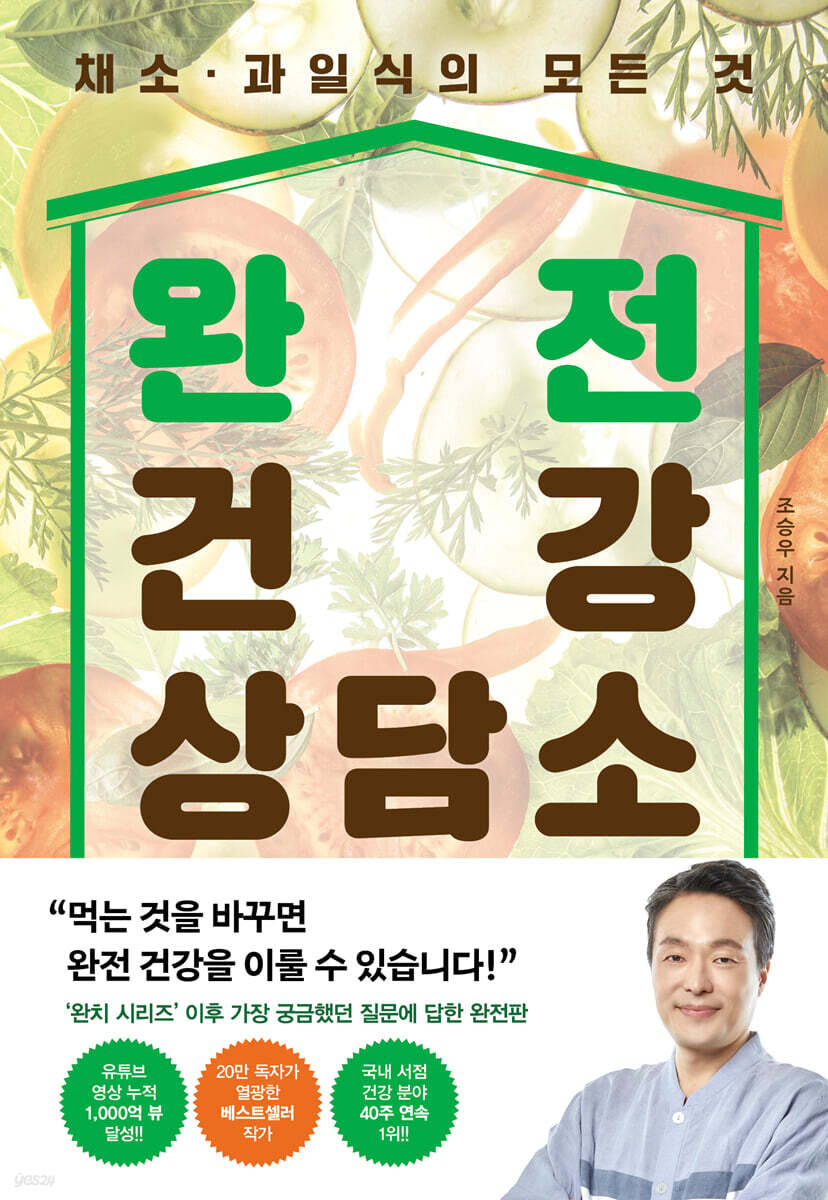
Complete Health Counseling Center
 |
Description
Book Introduction
A health mentor trusted by 200,000 readers, herbalist Seungwoo Cho, shares his advice.
Q&A Health Counseling Center, where you can become healthy naturally from the ground up!
“If you change what you eat, your body will definitely recover!”
★ YouTube video cumulative views: 100 billion
★ #1 bestseller in the health category for 40 consecutive weeks
★ The complete version that answers all your questions after the 'Vegetable and Fruit Diet' and 'Complete Cure Series'!
"Complete Health Counseling Center" is a practical health book in Q&A format that contains a selection of common questions from the countless questions that Cho Seung-woo, a herbal medicine doctor and health mentor trusted by 200,000 readers, has received through consultations, lectures, and YouTube.
Interest in health is higher than ever, but with so much information out there, it's confusing to know what to believe and what to practice.
This book focuses on four topics: eating habits, daily health, diet, and health in old age. It helps you establish health standards that are right for you without being swayed by excessive information.
Through easy-to-understand and friendly explanations, as if you were receiving advice directly from a counseling center, we address essential concerns about health one by one.
The 60 questions in this book provide essential clues to restore balance in your daily life—from eating habits and blood sugar to weight, sleep, and even your mindset.
Beyond simply teaching you how to eat vegetables and fruits, we guide you on your path to sustainable recovery by gradually adjusting your diet to a diet closer to nature and practicing it in accordance with your body's rhythm.
Ultimately, the point is simple.
Adjusting your diet to suit your body's pace and style, and creating your own practices that you can maintain for a long time.
'Perfect health' is not about fitting into a set mold, but rather a healthy lifestyle that involves listening to your body's signals and healing on your own.
If you've ever wondered, "What does my body really want?" or "Can't I become healthy from the ground up?", this book will provide the clearest and most actionable answers to those questions.
If you're struggling to find your way through the countless health methods available, "Complete Health Counseling Center" is the one book that will guide you to the most realistic and effective recovery method you can begin right now.
Q&A Health Counseling Center, where you can become healthy naturally from the ground up!
“If you change what you eat, your body will definitely recover!”
★ YouTube video cumulative views: 100 billion
★ #1 bestseller in the health category for 40 consecutive weeks
★ The complete version that answers all your questions after the 'Vegetable and Fruit Diet' and 'Complete Cure Series'!
"Complete Health Counseling Center" is a practical health book in Q&A format that contains a selection of common questions from the countless questions that Cho Seung-woo, a herbal medicine doctor and health mentor trusted by 200,000 readers, has received through consultations, lectures, and YouTube.
Interest in health is higher than ever, but with so much information out there, it's confusing to know what to believe and what to practice.
This book focuses on four topics: eating habits, daily health, diet, and health in old age. It helps you establish health standards that are right for you without being swayed by excessive information.
Through easy-to-understand and friendly explanations, as if you were receiving advice directly from a counseling center, we address essential concerns about health one by one.
The 60 questions in this book provide essential clues to restore balance in your daily life—from eating habits and blood sugar to weight, sleep, and even your mindset.
Beyond simply teaching you how to eat vegetables and fruits, we guide you on your path to sustainable recovery by gradually adjusting your diet to a diet closer to nature and practicing it in accordance with your body's rhythm.
Ultimately, the point is simple.
Adjusting your diet to suit your body's pace and style, and creating your own practices that you can maintain for a long time.
'Perfect health' is not about fitting into a set mold, but rather a healthy lifestyle that involves listening to your body's signals and healing on your own.
If you've ever wondered, "What does my body really want?" or "Can't I become healthy from the ground up?", this book will provide the clearest and most actionable answers to those questions.
If you're struggling to find your way through the countless health methods available, "Complete Health Counseling Center" is the one book that will guide you to the most realistic and effective recovery method you can begin right now.
- You can preview some of the book's contents.
Preview
index
preface
: Ultimately, if you want to live a happy life, you have to change what you eat.
Chapter 1 Vegetable and Fruit Diet - For those of you who are curious about vegetable and fruit diets
Before entering
: You can achieve lifelong health with foods closest to nature.
Q1 What is the most important thing to consider when starting a vegetable and fruit diet?
Q2 How does drinking lukewarm water (Yin-Yang-Tang) in the morning help your health?
Q3 How many servings of vegetables and fruits should I eat per day?
Q4 How should I structure my vegetable/fruit diet and regular diet to be most effective?
Q5. How should we interpret the controversy surrounding vegetable and fruit juice?
Q6 Is it okay to eat the seeds and peels of vegetables and fruits? Are they good for your health?
Q7 Fermented foods like kimchi and cheonggukjang are said to be good for the body. Should I cut down on them while on a vegetable and fruit diet?
Q8: Is there a recommended age group for which you would introduce vegetables and fruits? Is it better to start early?
Q9: Can growing children eat vegetables and fruits? Will cutting down on meat help with growth?
Q10 Nutrition is even more important for pregnant women. Is eating only vegetables and fruits enough?
Q11 I want to take care of my health by eating vegetables and fruits, but which should I cut down on first: alcohol or cigarettes?
Q12 Are freeze-dried vegetables also processed foods?
Q13: Do I have to eat organic fruits and vegetables?
Q14 I heard that soy protein makes the body colder. Is that okay?
Q15 Is it okay to eat a diet primarily of imported fruits and vegetables?
Q16: Do I have to eat vegetables raw? Is it okay to eat them boiled?
Q17 Are there any precautions to take when adding vegetable oil or vinegar to salad?
Q18 Due to the nature of my job, my meal times are irregular. Can I still see the benefits of eating vegetables and fruits?
Q19 Are there any ways to increase natural healing power other than eating vegetables and fruits?
Q20 Do you have your own golden ratio of vegetables and fruits?
| Examples of Vegetable and Fruit Diets
: Vegetable and fruit meals that make for a day of good sleep, good eating, and good laughter
Chapter 2: Health Concerns in Daily Life - For those of you who are curious about what is good for your body
Before entering
: Leaning eating habits, when you listen to the signals your body sends
Q1 Why do modern people need vegetables and fruits?
Q2 What are the differences between raw food, vegetarian, natural food, and vegetable/fruit diet?
Q3 Should I approach eating differently depending on my constitution or health condition?
Q4 Aren't there nutrients that are lacking from just vegetables and fruits?
Q5 What are some ultra-processed foods we often come across?
Q6 Are the substitute sugars in zero-calorie or sugar-free products really okay?
Q7 Is it true that sweet foods help lift your mood when you're depressed?
Q8 Can a diet of vegetables and fruits help me sleep better?
Q9 Is a vegetable and fruit diet effective in alleviating hair loss?
Q10. Coffee. Is one or two cups a day okay? Do I really need to cut back?
Q11 Are there any healthy drinks that are good alternatives to coffee?
Q12 Vegetables and fruits contain heavy metals and microplastics. Can we really be sure?
Q13 It is said that walking in the sun is good, but is it okay to be exposed to UV rays?
Q14: Do I really need to cut down on meat? Is there a way to eat healthier?
Q15 Is it true that drinking milk when you have an upset stomach is actually bad for you?
| Examples of Vegetable and Fruit Diets
A meal that nourishes both body and mind: the miracle gift of vegetables and fruits.
Chapter 3: Super-Special Excretion Diet - For those who want to be healthier today than yesterday.
Before entering
: Dieting is not about losing weight, it's about restoring health.
Q1 I've been dieting my whole life, is there a way to really succeed without yo-yoing?
Q2 Is there a healthy diet method that doesn't obsess over calories?
Q3 Can eating habits affect mood swings or stress?
Q4 I relieve stress by eating. Can I eat vegetables and fruits?
Q5 Should I pay attention to the order of my meals to increase the effectiveness of my diet?
Q6 If I fast (intermittent fasting) while eating vegetables and fruits, will it be harmful to my body?
Q7 What should I do if I can't sleep because I'm hungry on an empty stomach?
Q8: Can a vegetable and fruit diet help with lifelong constipation? How does it work?
Q9 Can I still feel healthy and full from just vegetables and fruits?
Q10. I don't gain weight easily due to my constitution. Will eating more vegetables and fruits help me lose more weight? Conversely, if I eat too much, will I gain weight?
Q11 Even if I don't have time to exercise or lack physical strength, is it possible to control my weight by eating only vegetables and fruits?
Q12. What's the difference between the enzyme diet, which is popular these days, and the enzymes in vegetables and fruits?
Q13 Can I really change my lifelong eating habits?
| Examples of Vegetable and Fruit Diets
: 958 days of vegetable and fruit diet: A body recovery period that changed even the mind.
Chapter 4: Healthy Aging - For those who want to age healthily
Before entering
: Changing your eating habits now can help you stay healthy for life.
Q1 Is a vegetable and fruit diet good for people in their 50s or older?
Q2 I would like to recommend a vegetable and fruit diet to my parents in their 70s. Are there any specific things I should be careful about depending on their age?
Q3 Can menopause be overcome with vegetables and fruits instead of hormones?
Q4 Is there a way to manage blood sugar levels healthily without obsessing over numbers?
Q5 Can I eat more fruit if I have diabetes?
Q6 I want to prevent vascular aging. Will vegetables and fruits help?
Q7 As we age, we lose muscle mass. Is it possible to maintain muscle mass through a diet of vegetables and fruits?
Q8 Joint pain gets worse with age. Will a vegetable and fruit diet help?
Q9 I heard that white rice is better than whole grains if you have weak digestion. Is that true?
Q10 Can cancer, the number one disease among Koreans, be prevented by eating vegetables and fruits?
Q11: Can a vegetable and fruit diet help with sleep disorders caused by aging?
Q12 What habits should I practice to ensure a comfortable retirement both physically and mentally?
| Examples of Vegetable and Fruit Diets
: Blood sugar and weight return to normal, and a daily routine changed by eating vegetables and fruits
Chapter 5: Beyond Questions and Answers, Everyday Enlightenment - A Vegetable and Fruit Diet: A Choice That Saved Me and Changed My Life
True health lies in daily routine.
From eating for the body to living for the mind
We have become a path that we walk together with the mindset of caring for our health.
My own health standards for physical and mental immunity
Ultimately, health begins in the mind.
Aging Healthily: It's Simpler Than You Think
<supplement>
A Completely Healthy Mind - A Heart-Pleasing Vegetable and Fruit Diet
Perfect Health Lifestyle - Habits for a Healthy Body
Complete Health Exercise - Barefoot Walking to Boost Your Immunity
Complete Health Diary - Time to Record Your Body and Mind
: Ultimately, if you want to live a happy life, you have to change what you eat.
Chapter 1 Vegetable and Fruit Diet - For those of you who are curious about vegetable and fruit diets
Before entering
: You can achieve lifelong health with foods closest to nature.
Q1 What is the most important thing to consider when starting a vegetable and fruit diet?
Q2 How does drinking lukewarm water (Yin-Yang-Tang) in the morning help your health?
Q3 How many servings of vegetables and fruits should I eat per day?
Q4 How should I structure my vegetable/fruit diet and regular diet to be most effective?
Q5. How should we interpret the controversy surrounding vegetable and fruit juice?
Q6 Is it okay to eat the seeds and peels of vegetables and fruits? Are they good for your health?
Q7 Fermented foods like kimchi and cheonggukjang are said to be good for the body. Should I cut down on them while on a vegetable and fruit diet?
Q8: Is there a recommended age group for which you would introduce vegetables and fruits? Is it better to start early?
Q9: Can growing children eat vegetables and fruits? Will cutting down on meat help with growth?
Q10 Nutrition is even more important for pregnant women. Is eating only vegetables and fruits enough?
Q11 I want to take care of my health by eating vegetables and fruits, but which should I cut down on first: alcohol or cigarettes?
Q12 Are freeze-dried vegetables also processed foods?
Q13: Do I have to eat organic fruits and vegetables?
Q14 I heard that soy protein makes the body colder. Is that okay?
Q15 Is it okay to eat a diet primarily of imported fruits and vegetables?
Q16: Do I have to eat vegetables raw? Is it okay to eat them boiled?
Q17 Are there any precautions to take when adding vegetable oil or vinegar to salad?
Q18 Due to the nature of my job, my meal times are irregular. Can I still see the benefits of eating vegetables and fruits?
Q19 Are there any ways to increase natural healing power other than eating vegetables and fruits?
Q20 Do you have your own golden ratio of vegetables and fruits?
| Examples of Vegetable and Fruit Diets
: Vegetable and fruit meals that make for a day of good sleep, good eating, and good laughter
Chapter 2: Health Concerns in Daily Life - For those of you who are curious about what is good for your body
Before entering
: Leaning eating habits, when you listen to the signals your body sends
Q1 Why do modern people need vegetables and fruits?
Q2 What are the differences between raw food, vegetarian, natural food, and vegetable/fruit diet?
Q3 Should I approach eating differently depending on my constitution or health condition?
Q4 Aren't there nutrients that are lacking from just vegetables and fruits?
Q5 What are some ultra-processed foods we often come across?
Q6 Are the substitute sugars in zero-calorie or sugar-free products really okay?
Q7 Is it true that sweet foods help lift your mood when you're depressed?
Q8 Can a diet of vegetables and fruits help me sleep better?
Q9 Is a vegetable and fruit diet effective in alleviating hair loss?
Q10. Coffee. Is one or two cups a day okay? Do I really need to cut back?
Q11 Are there any healthy drinks that are good alternatives to coffee?
Q12 Vegetables and fruits contain heavy metals and microplastics. Can we really be sure?
Q13 It is said that walking in the sun is good, but is it okay to be exposed to UV rays?
Q14: Do I really need to cut down on meat? Is there a way to eat healthier?
Q15 Is it true that drinking milk when you have an upset stomach is actually bad for you?
| Examples of Vegetable and Fruit Diets
A meal that nourishes both body and mind: the miracle gift of vegetables and fruits.
Chapter 3: Super-Special Excretion Diet - For those who want to be healthier today than yesterday.
Before entering
: Dieting is not about losing weight, it's about restoring health.
Q1 I've been dieting my whole life, is there a way to really succeed without yo-yoing?
Q2 Is there a healthy diet method that doesn't obsess over calories?
Q3 Can eating habits affect mood swings or stress?
Q4 I relieve stress by eating. Can I eat vegetables and fruits?
Q5 Should I pay attention to the order of my meals to increase the effectiveness of my diet?
Q6 If I fast (intermittent fasting) while eating vegetables and fruits, will it be harmful to my body?
Q7 What should I do if I can't sleep because I'm hungry on an empty stomach?
Q8: Can a vegetable and fruit diet help with lifelong constipation? How does it work?
Q9 Can I still feel healthy and full from just vegetables and fruits?
Q10. I don't gain weight easily due to my constitution. Will eating more vegetables and fruits help me lose more weight? Conversely, if I eat too much, will I gain weight?
Q11 Even if I don't have time to exercise or lack physical strength, is it possible to control my weight by eating only vegetables and fruits?
Q12. What's the difference between the enzyme diet, which is popular these days, and the enzymes in vegetables and fruits?
Q13 Can I really change my lifelong eating habits?
| Examples of Vegetable and Fruit Diets
: 958 days of vegetable and fruit diet: A body recovery period that changed even the mind.
Chapter 4: Healthy Aging - For those who want to age healthily
Before entering
: Changing your eating habits now can help you stay healthy for life.
Q1 Is a vegetable and fruit diet good for people in their 50s or older?
Q2 I would like to recommend a vegetable and fruit diet to my parents in their 70s. Are there any specific things I should be careful about depending on their age?
Q3 Can menopause be overcome with vegetables and fruits instead of hormones?
Q4 Is there a way to manage blood sugar levels healthily without obsessing over numbers?
Q5 Can I eat more fruit if I have diabetes?
Q6 I want to prevent vascular aging. Will vegetables and fruits help?
Q7 As we age, we lose muscle mass. Is it possible to maintain muscle mass through a diet of vegetables and fruits?
Q8 Joint pain gets worse with age. Will a vegetable and fruit diet help?
Q9 I heard that white rice is better than whole grains if you have weak digestion. Is that true?
Q10 Can cancer, the number one disease among Koreans, be prevented by eating vegetables and fruits?
Q11: Can a vegetable and fruit diet help with sleep disorders caused by aging?
Q12 What habits should I practice to ensure a comfortable retirement both physically and mentally?
| Examples of Vegetable and Fruit Diets
: Blood sugar and weight return to normal, and a daily routine changed by eating vegetables and fruits
Chapter 5: Beyond Questions and Answers, Everyday Enlightenment - A Vegetable and Fruit Diet: A Choice That Saved Me and Changed My Life
True health lies in daily routine.
From eating for the body to living for the mind
We have become a path that we walk together with the mindset of caring for our health.
My own health standards for physical and mental immunity
Ultimately, health begins in the mind.
Aging Healthily: It's Simpler Than You Think
<supplement>
A Completely Healthy Mind - A Heart-Pleasing Vegetable and Fruit Diet
Perfect Health Lifestyle - Habits for a Healthy Body
Complete Health Exercise - Barefoot Walking to Boost Your Immunity
Complete Health Diary - Time to Record Your Body and Mind
Detailed image

Into the book
A vegetable and fruit diet is a great way to improve your health and maintain your diet without yo-yoing.
However, it is advisable not to expect that all the pain in your body will disappear and immediate results will be seen as soon as you start.
Because the body reacts little by little, over time.
If you get impatient because you don't see any noticeable changes or expect results in a few days, you may quickly want to give up.
But once you get past that moment, your body will definitely start to change.
The time spent practicing consistently without giving up is the power that creates real change.
--- p.20
When eating vegetables and fruits, it is important not to be swayed by various information.
There is no need to restrict yourself too much on certain fruits or vegetables.
For example, don't be influenced by nonsensical statements, such as the idea that bananas should only be eaten on an empty stomach by those who exercise.
The purpose of eating vegetables and fruits is to keep our bodies and minds healthy, so it's more important to enjoy your meals with a relaxed mind rather than feeling stressed.
--- p.22
Our bodies have a strong natural healing power, and the best way to increase that power is through a vegetable and fruit diet.
If you want to reduce toxins and inflammation and enjoy antioxidant benefits, it's important to return to nature's most basic foods.
A vegetable and fruit diet is a good eating habit to start at any time, and it is beneficial for anyone, regardless of age.
The earlier you start, the better, but starting right now is enough.
--- p.52
When eating vegetables and fruits, you can eat them based on what your body can comfortably tolerate.
For example, if you experience severe stomach pain, diarrhea, or a cold feeling after eating melon, you can choose another fruit instead of melon.
There is no need to force yourself to eat or endure it because you think, ‘I heard it’s good for something’ or ‘I should eat it because other people are eating it.’
There is no need to worry too much about whether you have a cold or hot temper and cause yourself a headache.
A healthy diet begins with observing your body's reactions and eating a balanced diet, rather than being tied to specific standards.
--- p.79
Now is the time to reflect on what is truly important.
Ultimately, rather than obsessing over a specific body type, it's more important to focus on eating foods that your body naturally accepts.
I sincerely hope that you can now break free from the structure that forces you to continue spending unnecessary money while focusing only on relieving symptoms rather than fundamental healing.
--- pp.124~125
It is realistically difficult to completely cut out ultra-processed foods.
However, it is entirely possible to reduce the proportion of it in my life.
For example, if you eat ultra-processed foods and then the next day think to yourself, "I need to eat as healthy as possible," your body will change.
From now on, try reducing your intake of ultra-processed foods and practicing a diet centered on natural foods, centered on vegetables and fruits.
As small changes accumulate, your body and mind will become lighter, and your health will naturally follow.
--- p.134
The reason why a vegetable and fruit diet is recommended is because it helps reduce toxins accumulated in the body and relieve inflammation.
As inflammation worsens, it can lead to not only pain but also emotional changes such as depression and lethargy. Taking painkillers or steroids for a long period of time to alleviate this can actually disrupt hormonal balance and worsen mood swings.
To break this vicious cycle, changing your eating habits is most important.
And ultimately, that choice is mine to make.
--- pp.144~145
A true diet is not simply about losing weight, but rather a process of restoring balance to your body and mind.
Simplifying your life by reducing your obsession with eating, wearing, and spending is a diet in itself.
Ultimately, the starting point for health is a change in eating habits, and ultimately, true healing begins when peace of mind is achieved.
This is also the most important message I want to convey.
--- p.186
Sometimes, information such as 'a vegetable and fruit diet is actually harmful to your health' is intentionally spread.
This weakens the effectiveness of natural foods, hinders people from making wise health choices, and even confuses people.
But as official health guidelines clearly emphasize, the most important thing for good health is eating plenty of vegetables and fruits.
This is a basic principle that applies to all generations, regardless of age.
--- p.255
I'm not saying you have to be a vegetarian or avoid meat altogether.
However, there is no need to get caught up in unnecessary worries or stereotypes.
You can maintain a healthy body just by eating a diet that is rich in vegetables and fruits.
As you age, I hope you can break free from the obsession with building muscle mass and enjoy a comfortable retirement by maintaining a balanced diet and natural lifestyle habits.
However, it is advisable not to expect that all the pain in your body will disappear and immediate results will be seen as soon as you start.
Because the body reacts little by little, over time.
If you get impatient because you don't see any noticeable changes or expect results in a few days, you may quickly want to give up.
But once you get past that moment, your body will definitely start to change.
The time spent practicing consistently without giving up is the power that creates real change.
--- p.20
When eating vegetables and fruits, it is important not to be swayed by various information.
There is no need to restrict yourself too much on certain fruits or vegetables.
For example, don't be influenced by nonsensical statements, such as the idea that bananas should only be eaten on an empty stomach by those who exercise.
The purpose of eating vegetables and fruits is to keep our bodies and minds healthy, so it's more important to enjoy your meals with a relaxed mind rather than feeling stressed.
--- p.22
Our bodies have a strong natural healing power, and the best way to increase that power is through a vegetable and fruit diet.
If you want to reduce toxins and inflammation and enjoy antioxidant benefits, it's important to return to nature's most basic foods.
A vegetable and fruit diet is a good eating habit to start at any time, and it is beneficial for anyone, regardless of age.
The earlier you start, the better, but starting right now is enough.
--- p.52
When eating vegetables and fruits, you can eat them based on what your body can comfortably tolerate.
For example, if you experience severe stomach pain, diarrhea, or a cold feeling after eating melon, you can choose another fruit instead of melon.
There is no need to force yourself to eat or endure it because you think, ‘I heard it’s good for something’ or ‘I should eat it because other people are eating it.’
There is no need to worry too much about whether you have a cold or hot temper and cause yourself a headache.
A healthy diet begins with observing your body's reactions and eating a balanced diet, rather than being tied to specific standards.
--- p.79
Now is the time to reflect on what is truly important.
Ultimately, rather than obsessing over a specific body type, it's more important to focus on eating foods that your body naturally accepts.
I sincerely hope that you can now break free from the structure that forces you to continue spending unnecessary money while focusing only on relieving symptoms rather than fundamental healing.
--- pp.124~125
It is realistically difficult to completely cut out ultra-processed foods.
However, it is entirely possible to reduce the proportion of it in my life.
For example, if you eat ultra-processed foods and then the next day think to yourself, "I need to eat as healthy as possible," your body will change.
From now on, try reducing your intake of ultra-processed foods and practicing a diet centered on natural foods, centered on vegetables and fruits.
As small changes accumulate, your body and mind will become lighter, and your health will naturally follow.
--- p.134
The reason why a vegetable and fruit diet is recommended is because it helps reduce toxins accumulated in the body and relieve inflammation.
As inflammation worsens, it can lead to not only pain but also emotional changes such as depression and lethargy. Taking painkillers or steroids for a long period of time to alleviate this can actually disrupt hormonal balance and worsen mood swings.
To break this vicious cycle, changing your eating habits is most important.
And ultimately, that choice is mine to make.
--- pp.144~145
A true diet is not simply about losing weight, but rather a process of restoring balance to your body and mind.
Simplifying your life by reducing your obsession with eating, wearing, and spending is a diet in itself.
Ultimately, the starting point for health is a change in eating habits, and ultimately, true healing begins when peace of mind is achieved.
This is also the most important message I want to convey.
--- p.186
Sometimes, information such as 'a vegetable and fruit diet is actually harmful to your health' is intentionally spread.
This weakens the effectiveness of natural foods, hinders people from making wise health choices, and even confuses people.
But as official health guidelines clearly emphasize, the most important thing for good health is eating plenty of vegetables and fruits.
This is a basic principle that applies to all generations, regardless of age.
--- p.255
I'm not saying you have to be a vegetarian or avoid meat altogether.
However, there is no need to get caught up in unnecessary worries or stereotypes.
You can maintain a healthy body just by eating a diet that is rich in vegetables and fruits.
As you age, I hope you can break free from the obsession with building muscle mass and enjoy a comfortable retirement by maintaining a balanced diet and natural lifestyle habits.
--- p.277
Publisher's Review
Eating habits, daily health, diet, and even old age
Finding the perfect health solution for you with 60 questions
“Now is the time to start recovering based on my own standards, not based on someone else’s answers!”
I changed my diet, started exercising, and took supplements regularly to stay healthy, but my body still feels heavy and my mind is tired.
When we're stressed, we crave spicy foods, we reach for snacks even when we're full, and we inevitably feel guilty after binge eating.
The desire to take care of your health is certainly strong, but why doesn't it always go as planned? Herbalist Cho Seung-woo explains that the problem lies not in willpower, but in our long-held lifestyles and distorted standards.
Having shared a fresh perspective with 200,000 readers through the health-focused topic of "vegetable and fruit diet," he has now returned with more fundamental answers to the countless questions he has been asked.
Starting with the bestseller 『Vegetable and Fruit Diet』, which ranked #1 in the health category for 40 consecutive weeks, herbalist Seungwoo Cho has conveyed the importance of recovery in daily life through various topics such as detoxification, diet, mind, and health recipes. In this book, he addresses realistic questions that everyone faces in the process of practicing health.
Based on the experience and insight accumulated through communicating and consulting with countless people in the field over the past decade, this book contains the most realistic and essential answers, and can be called the "complete edition."
"Complete Health Counseling Center" reiterates that the path to health lies not in special secrets or expensive supplements, but in our daily lives and eating habits.
It's not a one-time health trend that spreads like a fad, but a consistent, sustainable practice that delivers the message that listening to your body's signals and making small, simple changes to choosing natural foods can change your entire life.
In these days when it's difficult to navigate the overwhelming amount of information, the true standard for health lies within us, not outside ourselves. The key is finding the right practice for you, not relying on someone else's answers.
The Complete Health Counseling Center will serve as a solid milestone as you begin your journey.
***
“The beginning of health is listening to your body’s reactions!”
A daily change that heals both body and mind
Even many of the eating habits and behaviors we believe and follow for the sake of our health may actually be influenced by repeated exposure and marketing.
For example, the more protein the better, the more muscle you lose if you don't eat meat, the common belief that vegetables and fruits alone aren't enough, and even the idea of health supplements and diets centered on specific nutrients? All of these beliefs may be the result of repeated commercial messages, rather than scientific fact.
But the process of asking ourselves if that choice is really right for our bodies is often skipped.
We may be missing the signals our bodies are sending us.
The Complete Health Counseling Center now proposes a change of direction.
The first step begins with looking back at the most basic act that we can choose and control ourselves: eating.
Rather than following the standards of others or trendy information, asking yourself what your body needs right now and setting the 'standards that are right for you' is the starting point for true recovery.
Based on these messages, the book is divided into five chapters.
Chapter 1 addresses various questions and misunderstandings about vegetable and fruit diets and introduces the simplest and most effective way to restore the body.
Chapter 2 examines the common misconceptions about health and eating habits that we often believe in in an age where health is consumed, and discusses an attitude of basing our bodies' reactions on our beliefs rather than advertising or trends.
Chapter 3 looks at dieting not as a simple matter of weight loss, but as a way to restore health, and we consider ways to achieve sustainable results without the yo-yo effect.
Chapter 4 explains how to take care of your body and mind as they change after middle age by eating vegetables and fruits, and how to accept aging naturally and age healthily.
Chapter 5 breaks away from the previous Q&A format and shares an honest essay by herbalist Seungwoo Cho about how a vegetable and fruit diet changed his life.
In the flow where eating for the body leads to a life that cares for the mind, it contains the message that health ultimately comes from a balance between daily life and the mind.
This book also offers easy and simple practice guides that can be naturally incorporated into daily life, such as the '7:3 rule', the '3 major cycles' of biological rhythms, barefoot walking, meditation routines, and the 'perfect health diary'.
These practices begin with small changes in eating habits and gradually lead to a lifestyle that is in harmony with nature and daily habits that protect health.
In particular, the special feature, which contains vivid examples and know-how from those who have personally experienced change, such as those who say, “Just by changing what I eat, my body, mind, and life changed,” convincingly demonstrates that anyone can restore their health through small, everyday habits, without any special secrets.
***
“Anyone can achieve sustainable ‘perfect health’!”
Healthy habits practiced with balance and flexibility, not perfection
▶ I feel like there's something wrong with my eating habits, but I don't know where to start changing them.
▶ Even if I change my diet or go on a diet, the yo-yo effect always comes back.
▶ I continue to experience discomfort due to chronic illness, digestive problems, and weight management.
▶ Even if I go to the hospital and take medicine, my body is not the same as before.
▶ The abundance of health information makes it even more confusing to know what to believe and practice.
▶ I want to recover my health through ‘practice’ in my daily life, not through ‘theory’.
"Complete Health Counseling Center" addresses a variety of health concerns, including eating habits, diet, chronic diseases, sleep, stress, and aging, and offers specific ways to restore health that can be implemented in everyday life.
Even if you change your diet, the yo-yo effect continues, even if you take medicine, your body is not the same as before, and you are at a loss as to where to start changing, so this book will help you find answers to various questions.
This book is unique in that it goes beyond simply providing health information, focusing on how to create change through physical action rather than simply understanding knowledge in your head.
It naturally helps people regain their body's rhythm through small habits that anyone can practice in their daily lives.
Another important feature of this book is that it proposes flexible and sustainable practices, freeing us from the obsession that vegetables and fruits must be eaten raw or that they must be tailored to our constitution.
This practice-oriented approach stems from the experience of the author, herbalist Seungwoo Cho.
In his early 30s, he recovered his health by changing his eating habits after being diagnosed with a terminal illness. Through lectures and counseling, he has addressed the health concerns of countless people and shared practical recovery methods.
This book is filled with genuine advice drawn from such experiences, offering readers kind, practical solutions along with the belief that recovery is possible through natural means.
“Perfect Health,” which is also the title of the book, refers to an attitude toward life that focuses on balance and sustainability rather than perfection.
As I continue to practice small, simple things in a way that my body naturally accepts, my body and mind will regain their health.
Problems that couldn't be solved by hospitals, medicine, or countless health tips.
This book says that the clue should be found in 'eating habits that suit my body.'
You don't have to give up much for your health.
Just by looking back at what you eat, your body will definitely start to change.
Small, simple changes can lead to sustainable recovery.
The author's recommendations for a diet centered on natural vegetables and fruits, a lifestyle that follows the body's rhythm, and flexible, non-overworked methods will provide practical help in helping readers listen to their bodies and regain balance.
If you want to live healthier and more comfortably than you do now, this book will give you the strength to start that change.
The flow of recovery that countless people have experienced can now be confirmed in your own life.
Finding the perfect health solution for you with 60 questions
“Now is the time to start recovering based on my own standards, not based on someone else’s answers!”
I changed my diet, started exercising, and took supplements regularly to stay healthy, but my body still feels heavy and my mind is tired.
When we're stressed, we crave spicy foods, we reach for snacks even when we're full, and we inevitably feel guilty after binge eating.
The desire to take care of your health is certainly strong, but why doesn't it always go as planned? Herbalist Cho Seung-woo explains that the problem lies not in willpower, but in our long-held lifestyles and distorted standards.
Having shared a fresh perspective with 200,000 readers through the health-focused topic of "vegetable and fruit diet," he has now returned with more fundamental answers to the countless questions he has been asked.
Starting with the bestseller 『Vegetable and Fruit Diet』, which ranked #1 in the health category for 40 consecutive weeks, herbalist Seungwoo Cho has conveyed the importance of recovery in daily life through various topics such as detoxification, diet, mind, and health recipes. In this book, he addresses realistic questions that everyone faces in the process of practicing health.
Based on the experience and insight accumulated through communicating and consulting with countless people in the field over the past decade, this book contains the most realistic and essential answers, and can be called the "complete edition."
"Complete Health Counseling Center" reiterates that the path to health lies not in special secrets or expensive supplements, but in our daily lives and eating habits.
It's not a one-time health trend that spreads like a fad, but a consistent, sustainable practice that delivers the message that listening to your body's signals and making small, simple changes to choosing natural foods can change your entire life.
In these days when it's difficult to navigate the overwhelming amount of information, the true standard for health lies within us, not outside ourselves. The key is finding the right practice for you, not relying on someone else's answers.
The Complete Health Counseling Center will serve as a solid milestone as you begin your journey.
***
“The beginning of health is listening to your body’s reactions!”
A daily change that heals both body and mind
Even many of the eating habits and behaviors we believe and follow for the sake of our health may actually be influenced by repeated exposure and marketing.
For example, the more protein the better, the more muscle you lose if you don't eat meat, the common belief that vegetables and fruits alone aren't enough, and even the idea of health supplements and diets centered on specific nutrients? All of these beliefs may be the result of repeated commercial messages, rather than scientific fact.
But the process of asking ourselves if that choice is really right for our bodies is often skipped.
We may be missing the signals our bodies are sending us.
The Complete Health Counseling Center now proposes a change of direction.
The first step begins with looking back at the most basic act that we can choose and control ourselves: eating.
Rather than following the standards of others or trendy information, asking yourself what your body needs right now and setting the 'standards that are right for you' is the starting point for true recovery.
Based on these messages, the book is divided into five chapters.
Chapter 1 addresses various questions and misunderstandings about vegetable and fruit diets and introduces the simplest and most effective way to restore the body.
Chapter 2 examines the common misconceptions about health and eating habits that we often believe in in an age where health is consumed, and discusses an attitude of basing our bodies' reactions on our beliefs rather than advertising or trends.
Chapter 3 looks at dieting not as a simple matter of weight loss, but as a way to restore health, and we consider ways to achieve sustainable results without the yo-yo effect.
Chapter 4 explains how to take care of your body and mind as they change after middle age by eating vegetables and fruits, and how to accept aging naturally and age healthily.
Chapter 5 breaks away from the previous Q&A format and shares an honest essay by herbalist Seungwoo Cho about how a vegetable and fruit diet changed his life.
In the flow where eating for the body leads to a life that cares for the mind, it contains the message that health ultimately comes from a balance between daily life and the mind.
This book also offers easy and simple practice guides that can be naturally incorporated into daily life, such as the '7:3 rule', the '3 major cycles' of biological rhythms, barefoot walking, meditation routines, and the 'perfect health diary'.
These practices begin with small changes in eating habits and gradually lead to a lifestyle that is in harmony with nature and daily habits that protect health.
In particular, the special feature, which contains vivid examples and know-how from those who have personally experienced change, such as those who say, “Just by changing what I eat, my body, mind, and life changed,” convincingly demonstrates that anyone can restore their health through small, everyday habits, without any special secrets.
***
“Anyone can achieve sustainable ‘perfect health’!”
Healthy habits practiced with balance and flexibility, not perfection
▶ I feel like there's something wrong with my eating habits, but I don't know where to start changing them.
▶ Even if I change my diet or go on a diet, the yo-yo effect always comes back.
▶ I continue to experience discomfort due to chronic illness, digestive problems, and weight management.
▶ Even if I go to the hospital and take medicine, my body is not the same as before.
▶ The abundance of health information makes it even more confusing to know what to believe and practice.
▶ I want to recover my health through ‘practice’ in my daily life, not through ‘theory’.
"Complete Health Counseling Center" addresses a variety of health concerns, including eating habits, diet, chronic diseases, sleep, stress, and aging, and offers specific ways to restore health that can be implemented in everyday life.
Even if you change your diet, the yo-yo effect continues, even if you take medicine, your body is not the same as before, and you are at a loss as to where to start changing, so this book will help you find answers to various questions.
This book is unique in that it goes beyond simply providing health information, focusing on how to create change through physical action rather than simply understanding knowledge in your head.
It naturally helps people regain their body's rhythm through small habits that anyone can practice in their daily lives.
Another important feature of this book is that it proposes flexible and sustainable practices, freeing us from the obsession that vegetables and fruits must be eaten raw or that they must be tailored to our constitution.
This practice-oriented approach stems from the experience of the author, herbalist Seungwoo Cho.
In his early 30s, he recovered his health by changing his eating habits after being diagnosed with a terminal illness. Through lectures and counseling, he has addressed the health concerns of countless people and shared practical recovery methods.
This book is filled with genuine advice drawn from such experiences, offering readers kind, practical solutions along with the belief that recovery is possible through natural means.
“Perfect Health,” which is also the title of the book, refers to an attitude toward life that focuses on balance and sustainability rather than perfection.
As I continue to practice small, simple things in a way that my body naturally accepts, my body and mind will regain their health.
Problems that couldn't be solved by hospitals, medicine, or countless health tips.
This book says that the clue should be found in 'eating habits that suit my body.'
You don't have to give up much for your health.
Just by looking back at what you eat, your body will definitely start to change.
Small, simple changes can lead to sustainable recovery.
The author's recommendations for a diet centered on natural vegetables and fruits, a lifestyle that follows the body's rhythm, and flexible, non-overworked methods will provide practical help in helping readers listen to their bodies and regain balance.
If you want to live healthier and more comfortably than you do now, this book will give you the strength to start that change.
The flow of recovery that countless people have experienced can now be confirmed in your own life.
GOODS SPECIFICS
- Date of issue: June 10, 2025
- Page count, weight, size: 344 pages | 542g | 145*210*23mm
- ISBN13: 9788925573571
- ISBN10: 8925573571
You may also like
카테고리
korean


korean

![GQ KOREA Mark (Monthly): December [2025]](http://librairie.coreenne.fr/cdn/shop/files/8ef265dbbfbf186523ed75ba7319009d.jpg?v=1765340328&width=3840)


