

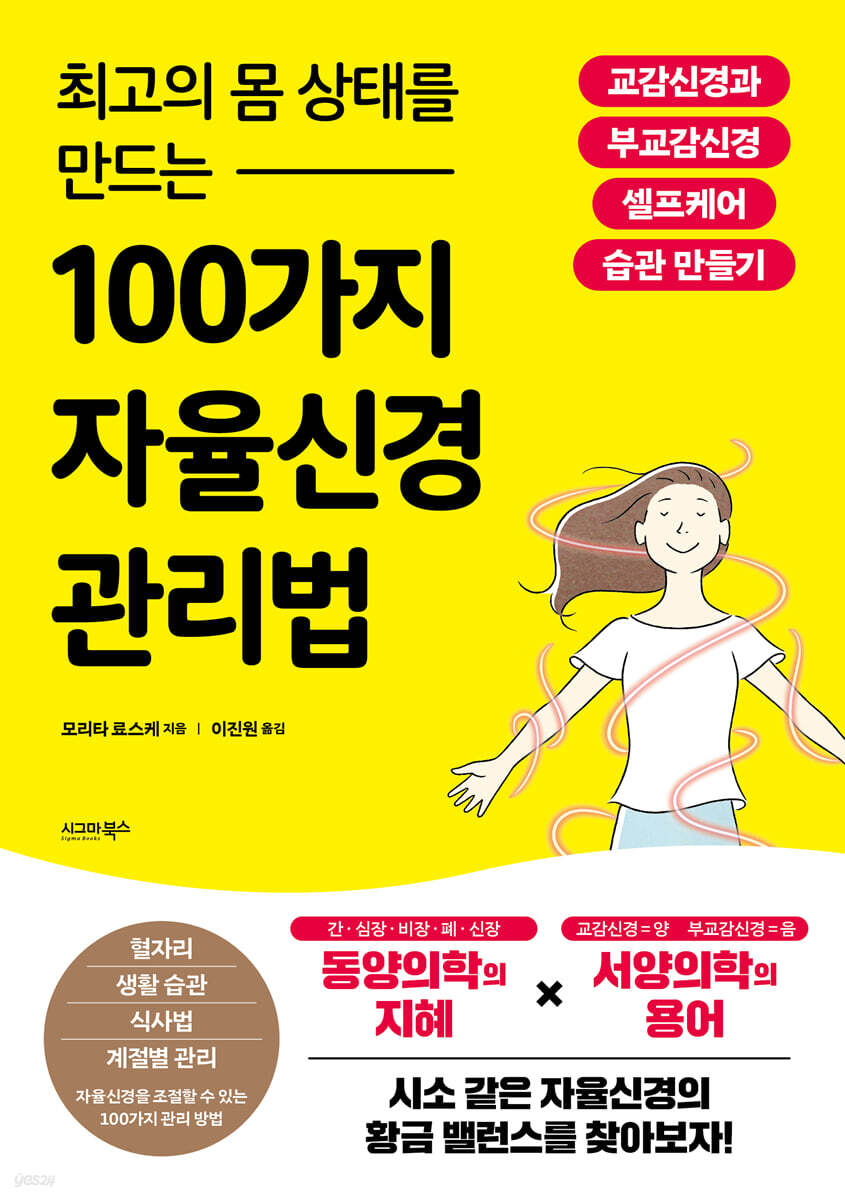
100 Autonomic Nervous System Management Techniques for Optimal Body Condition
 |
Description
Book Introduction
Blood pressure, lifestyle, diet, and seasonal management
100 Ways to Regulate Your Autonomic Nervous System
This book introduces 100 ways to manage your autonomic nervous system and achieve optimal physical condition.
The author, who has been practicing acupuncture, moxibustion, massage, and acupressure for over 10 years, says that various physical abnormalities occur when the balance of the autonomic nervous system, that is, the sympathetic and parasympathetic nerves, is disrupted.
When you go to the hospital because you are not feeling well, the symptoms for which the cause is unknown are called minor illness, and this minor illness is believed to be caused by an imbalance in the autonomic nervous system.
The author contains wisdom in this book to correct the balance of the autonomic nervous system.
If you develop habits one by one, you will be able to have a better day each day.
100 Ways to Regulate Your Autonomic Nervous System
This book introduces 100 ways to manage your autonomic nervous system and achieve optimal physical condition.
The author, who has been practicing acupuncture, moxibustion, massage, and acupressure for over 10 years, says that various physical abnormalities occur when the balance of the autonomic nervous system, that is, the sympathetic and parasympathetic nerves, is disrupted.
When you go to the hospital because you are not feeling well, the symptoms for which the cause is unknown are called minor illness, and this minor illness is believed to be caused by an imbalance in the autonomic nervous system.
The author contains wisdom in this book to correct the balance of the autonomic nervous system.
If you develop habits one by one, you will be able to have a better day each day.
- You can preview some of the book's contents.
Preview
index
Entering
Structure of this book
What is the autonomic nervous system?
What happens when the balance of the autonomic nervous system is disrupted?
The mindset of a beauty soldier
Chapter 1: Managing the Autonomic Nervous System with Seven Habits
1. Get some morning sunlight
2 Take a bath
3 Take a nap
4. Practice double breathing
5 Specially Effective All-Purpose Acupuncture Points: Heopgok and Baekhoe
6. Positive foods that warm the body, negative foods that cool the body
7. Just sit there blankly for 10 minutes a day.
Chapter 2: The Autonomic Nervous System Managed by Acupuncture Points
8 Three Principles of Acupressure
9 Let's try self-moxibustion
10 The four major symptoms for which the 'Cheonju, Pungji, and Wangol' bloods are effective
11. Stiff neck and shoulder 'Susamri'
12. Yangneungcheon for back pain
13. Gokcheon for Bowed Legs Correction and Knee Pain
14 People who get tired easily are called 'Jok-Im-Eup'
15. 'Pungryung' for leg swelling
16. Calf Cramps: A Chance of Success
17. For cold legs, use 'Palpung'; for cold hands, use 'Palsa'
18. 'Joksamri' on the tired stomach
19. Deep Sleep Acupuncture Point 'Silmyeon'
20. Sam-eum-gyo for menstrual cramps and menopausal disorders
21. For anemia, 'blood sea'
22 Representative Beauty Acupuncture Points: Sa-baek
23. 'Haegwan' for wrinkles, sagging skin, and swelling
24 Good acupuncture points for stress① 'Tae-chung' for irritation
25 Good Blood Pressure Points for Stress② 'Newspaper' for Low Mood
26. Good acupuncture points for stress ③ 'Naegwan' for panic and emergency situations
27. 'Ye-pung' in the weather forecast
28 Hay fever 'chicken'
Chapter 3: Managing the Autonomic Nervous System with Food
29 The basis of a balanced diet is Korean food
I started to feel rumbling at 30 degrees and ate it an hour later.
31 Changes in appetite are signals of fatigue from the intestines.
32 The Strongest Foods You Should Eat Every Day: Tomatoes
33 If fatigue does not go away easily, try 'imidazole peptide'
34 It is best to leave natto at room temperature for 20 minutes before eating.
35 Dried foods that become more nutritious when exposed to sunlight
36 Beta-carotene in carrots for hidden freckles
37 Healthy tangerines, including the peel and white flesh
38 Tryptophan in bananas is good for your mental health.
39 Foods That Don't Need a Doctor
40. Radish and honey for cold symptoms
41 Health benefits of loquat, also used in acupuncture treatment
42 Get your protein from one egg a day
43 Buckwheat water 'routine' rejuvenates blood vessels
44 If you have menstrual cramps, avoid tyramine.
45 Symbols of Food and Balance of Health
46 Don't be fooled by foods that look healthy.
47. A healthy gut lowers cholesterol.
Chapter 4: The Autonomic Nervous System, Which Regulates and Manages the Body
48 Keep your body warm
49 Seconds Easy! Neck, Shoulder, and Back Stretches
50 Let's improve the office environment
51 It is ideal to go to bed at 11pm
52 Check your sleeping environment
53 Quadriceps Stretches to Improve Sleep Quality
54 Hip Stretches to Improve Back Pain
55 Scalp Massage to Reduce Hair Loss
56 Warm your body to relieve menstrual cramps
57 The better your condition, the more you should try to keep warm.
58 Use a scent that suits you
59 What is correct posture?
Let's train the 60 'legs'
61 Heel Drops to Strengthen Bones
62 Don't hold back on going to the bathroom in the evening
63 Women are multiples of 7 Men are multiples of 8
64 Prevention and Improvement of the Modern Disease "Smartphone Elbow"
65 Bad Habits That Increase Your Risk of Diabetes
Chapter 5: The Autonomic Nervous System: Managing the Mind
66 Don't Miss the Eight Stress Signals
Chapter 67 has a motivation switch.
68. 'Songs', 'Laughter', and 'Tears': Good for Stress
69 Cleaning calms the mind
70 Learn to do things roughly and moderately
71 When you feel anxious due to dark news
72 Fist clenching exercise for sudden panic attacks
73 Don't fill your heart's cup with stress.
74 Nighttime Habits to Put Your Body and Mind into Sleep Mode
75 Breaks are classified into short breaks, long breaks, and long breaks.
76 Masseter Muscle Massage and Sterile Muscle Stretch
77 The sadder you are, the more you should breathe deeply.
78 Foods that Increase Serotonin, the Happiness Hormone
79 Warms the area around the eyes where many blood vessels gather.
80. For the symptoms of excitement, borrow the power of water.
Chapter 6: Managing the Autonomic Nervous System According to Season and Weather
81 Symptoms that recur every year should be treated 2-3 months in advance.
82 The better the spring weather, the less you should push yourself.
83 Recommended Foods for Spring
84 Lethargy is a sign that you need to rest.
85 Keep your ankles warm during the rainy season
86 Foods Recommended for the Rainy Season
87 Measures to Prevent Heatstroke During the Persistent Summer Heat Wave
88 Summer is surprisingly prone to low temperatures
89 Recommended Foods for Summer
90 In the fall, appropriate exercise helps improve blood circulation.
91 In the fall, go to bed early and wake up early. In the winter, go to bed early and wake up late.
92 Recommended Foods for Fall
93 In winter, protect your body by blocking the cold as much as possible.
94 The condition of your skin in 1994 is determined by your winter lifestyle.
95 Recommended Foods for Winter
96 Toyong is the time to prepare for the next season.
97 Foods and Management to Prevent Pollen Allergies
98 Effective areas for symptoms caused by pressure and temperature changes
The key to preparing for low pressure is your ears.
Health care when the pressure changes rapidly at 100 bar
Major acupuncture points in our body
Positive and negative foods
Transitional ages for women and men
In conclusion
Structure of this book
What is the autonomic nervous system?
What happens when the balance of the autonomic nervous system is disrupted?
The mindset of a beauty soldier
Chapter 1: Managing the Autonomic Nervous System with Seven Habits
1. Get some morning sunlight
2 Take a bath
3 Take a nap
4. Practice double breathing
5 Specially Effective All-Purpose Acupuncture Points: Heopgok and Baekhoe
6. Positive foods that warm the body, negative foods that cool the body
7. Just sit there blankly for 10 minutes a day.
Chapter 2: The Autonomic Nervous System Managed by Acupuncture Points
8 Three Principles of Acupressure
9 Let's try self-moxibustion
10 The four major symptoms for which the 'Cheonju, Pungji, and Wangol' bloods are effective
11. Stiff neck and shoulder 'Susamri'
12. Yangneungcheon for back pain
13. Gokcheon for Bowed Legs Correction and Knee Pain
14 People who get tired easily are called 'Jok-Im-Eup'
15. 'Pungryung' for leg swelling
16. Calf Cramps: A Chance of Success
17. For cold legs, use 'Palpung'; for cold hands, use 'Palsa'
18. 'Joksamri' on the tired stomach
19. Deep Sleep Acupuncture Point 'Silmyeon'
20. Sam-eum-gyo for menstrual cramps and menopausal disorders
21. For anemia, 'blood sea'
22 Representative Beauty Acupuncture Points: Sa-baek
23. 'Haegwan' for wrinkles, sagging skin, and swelling
24 Good acupuncture points for stress① 'Tae-chung' for irritation
25 Good Blood Pressure Points for Stress② 'Newspaper' for Low Mood
26. Good acupuncture points for stress ③ 'Naegwan' for panic and emergency situations
27. 'Ye-pung' in the weather forecast
28 Hay fever 'chicken'
Chapter 3: Managing the Autonomic Nervous System with Food
29 The basis of a balanced diet is Korean food
I started to feel rumbling at 30 degrees and ate it an hour later.
31 Changes in appetite are signals of fatigue from the intestines.
32 The Strongest Foods You Should Eat Every Day: Tomatoes
33 If fatigue does not go away easily, try 'imidazole peptide'
34 It is best to leave natto at room temperature for 20 minutes before eating.
35 Dried foods that become more nutritious when exposed to sunlight
36 Beta-carotene in carrots for hidden freckles
37 Healthy tangerines, including the peel and white flesh
38 Tryptophan in bananas is good for your mental health.
39 Foods That Don't Need a Doctor
40. Radish and honey for cold symptoms
41 Health benefits of loquat, also used in acupuncture treatment
42 Get your protein from one egg a day
43 Buckwheat water 'routine' rejuvenates blood vessels
44 If you have menstrual cramps, avoid tyramine.
45 Symbols of Food and Balance of Health
46 Don't be fooled by foods that look healthy.
47. A healthy gut lowers cholesterol.
Chapter 4: The Autonomic Nervous System, Which Regulates and Manages the Body
48 Keep your body warm
49 Seconds Easy! Neck, Shoulder, and Back Stretches
50 Let's improve the office environment
51 It is ideal to go to bed at 11pm
52 Check your sleeping environment
53 Quadriceps Stretches to Improve Sleep Quality
54 Hip Stretches to Improve Back Pain
55 Scalp Massage to Reduce Hair Loss
56 Warm your body to relieve menstrual cramps
57 The better your condition, the more you should try to keep warm.
58 Use a scent that suits you
59 What is correct posture?
Let's train the 60 'legs'
61 Heel Drops to Strengthen Bones
62 Don't hold back on going to the bathroom in the evening
63 Women are multiples of 7 Men are multiples of 8
64 Prevention and Improvement of the Modern Disease "Smartphone Elbow"
65 Bad Habits That Increase Your Risk of Diabetes
Chapter 5: The Autonomic Nervous System: Managing the Mind
66 Don't Miss the Eight Stress Signals
Chapter 67 has a motivation switch.
68. 'Songs', 'Laughter', and 'Tears': Good for Stress
69 Cleaning calms the mind
70 Learn to do things roughly and moderately
71 When you feel anxious due to dark news
72 Fist clenching exercise for sudden panic attacks
73 Don't fill your heart's cup with stress.
74 Nighttime Habits to Put Your Body and Mind into Sleep Mode
75 Breaks are classified into short breaks, long breaks, and long breaks.
76 Masseter Muscle Massage and Sterile Muscle Stretch
77 The sadder you are, the more you should breathe deeply.
78 Foods that Increase Serotonin, the Happiness Hormone
79 Warms the area around the eyes where many blood vessels gather.
80. For the symptoms of excitement, borrow the power of water.
Chapter 6: Managing the Autonomic Nervous System According to Season and Weather
81 Symptoms that recur every year should be treated 2-3 months in advance.
82 The better the spring weather, the less you should push yourself.
83 Recommended Foods for Spring
84 Lethargy is a sign that you need to rest.
85 Keep your ankles warm during the rainy season
86 Foods Recommended for the Rainy Season
87 Measures to Prevent Heatstroke During the Persistent Summer Heat Wave
88 Summer is surprisingly prone to low temperatures
89 Recommended Foods for Summer
90 In the fall, appropriate exercise helps improve blood circulation.
91 In the fall, go to bed early and wake up early. In the winter, go to bed early and wake up late.
92 Recommended Foods for Fall
93 In winter, protect your body by blocking the cold as much as possible.
94 The condition of your skin in 1994 is determined by your winter lifestyle.
95 Recommended Foods for Winter
96 Toyong is the time to prepare for the next season.
97 Foods and Management to Prevent Pollen Allergies
98 Effective areas for symptoms caused by pressure and temperature changes
The key to preparing for low pressure is your ears.
Health care when the pressure changes rapidly at 100 bar
Major acupuncture points in our body
Positive and negative foods
Transitional ages for women and men
In conclusion
Detailed image
Into the book
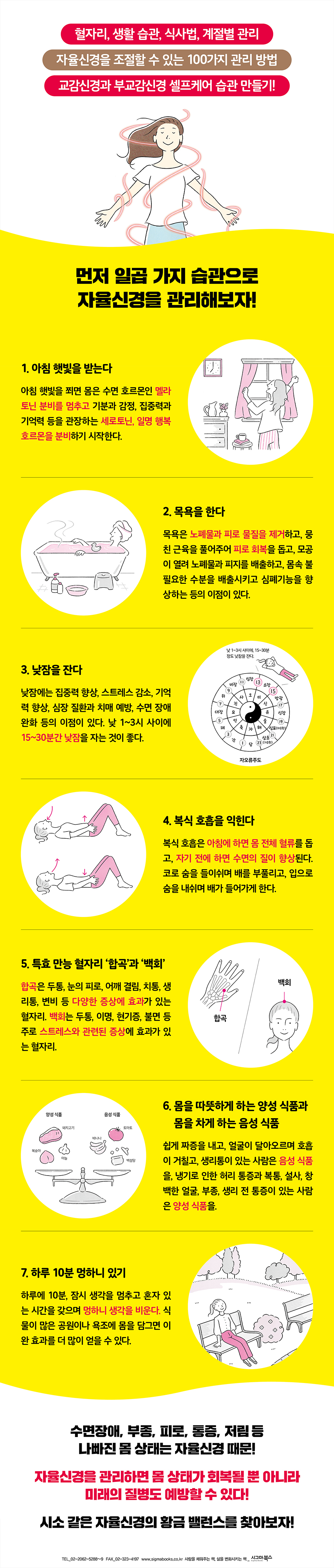
When we wake up in the morning and are exposed to sunlight, our biological clock starts working again.
In fact, not everyone's biological clock is set to exactly 24 hours.
Some people have a 23-hour day, while others have a 25-hour day.
Therefore, it is necessary to reset the biological clock at a set time every morning to avoid any slight deviation from the daily routine, such as the time when you feel hungry.
This is very important in regulating the balance of the autonomic nervous system.
--- From “Chapter 1: Managing the Autonomic Nervous System with Seven Habits”
The correct way to apply acupressure to a point is as follows:
① Find the pressure point and press vertically.
② Press and hold for 3 seconds.
③ Hold for 3 seconds at a cool, yet painful intensity.
④ Slowly release the force over 3 seconds.
⑤ Repeat this process 3 times.
--- From “Chapter 2 Autonomic Nervous System Management through Acupuncture Points”
In addition to the acupressure introduced above, there is also ‘moxibustion’ as a method of stimulating acupoints.
Moxibustion promotes blood circulation through thermal stimulation.
The scent from moxibustion contains calming ingredients.
For those trying it for the first time, it may seem a bit difficult to purchase, but it is surprisingly easy to obtain as it is sold online and in pharmacies.
When choosing a moxibustion, the 'indirect moxibustion' is easier to handle as it reduces the risk of burns.
There are different types of moxibustion depending on the level of heat, so try the soft type with a low temperature first, and then move on to the regular type once you get used to the heat.
--- From “Chapter 2 Autonomic Nervous System Management through Acupuncture Points”
To conclude, the answer is Korean food, the traditional Korean meal that is familiar to Koreans.
The basis of a balanced diet of energy and nutrition is to have a balanced diet of main dishes, main dishes, and side dishes. This balance can be naturally achieved by focusing on Korean food.
In particular, if you actively use seasonal foods, your diet will become even more desirable.
--- From “Chapter 3 Autonomic Nervous System Managed by Food”
The cold that chills the body is the root of all diseases.
When the body gets cold, blood circulation is impaired, muscles become stiff, internal organs do not receive enough nutrients, their functions decline, and brain activity becomes dull.
In addition, various symptoms occur, such as aging and decreased immunity, due to lack of moisture retention.
It is important to keep areas that normally feel cold warm, and even areas that you are not aware of may actually be cold, so check by touching every nook and cranny of your body with warm hands.
--- From “Chapter 4 Autonomic Nervous System that Regulates and Manages the Body”
Vitamins, which are the raw materials for dopamine, are produced by beneficial bacteria in the intestines.
So, when the intestinal environment worsens and harmful bacteria increase, you lose motivation and fall into a mild state of depression, feeling listless.
In other words, we can say that the motivation switch is in the intestines.
Since ancient times, Oriental medicine has considered it important to think of governing the body with the stomach as the center.
However, recently, with the advancement of science, much attention has been paid to the relationship between the 'gut and the brain'.
--- From “Chapter 5: The Autonomic Nervous System: Governing and Managing the Mind”
Many people struggle with weather sickness or fatigue caused by temperature changes, and the preparation for uncomfortable symptoms caused by changes in air pressure or temperature is no different.
It is important to prepare before the problem actually arises.
To do this, identify the period when the symptoms of the problem are severe.
For example, know whether it is the day when there is a significant change in atmospheric pressure, or the day before, or 2-3 days before.
There are also applications that allow you to easily check not only weather forecasts but also temperature and pressure changes, so let's make good use of them.
In fact, not everyone's biological clock is set to exactly 24 hours.
Some people have a 23-hour day, while others have a 25-hour day.
Therefore, it is necessary to reset the biological clock at a set time every morning to avoid any slight deviation from the daily routine, such as the time when you feel hungry.
This is very important in regulating the balance of the autonomic nervous system.
--- From “Chapter 1: Managing the Autonomic Nervous System with Seven Habits”
The correct way to apply acupressure to a point is as follows:
① Find the pressure point and press vertically.
② Press and hold for 3 seconds.
③ Hold for 3 seconds at a cool, yet painful intensity.
④ Slowly release the force over 3 seconds.
⑤ Repeat this process 3 times.
--- From “Chapter 2 Autonomic Nervous System Management through Acupuncture Points”
In addition to the acupressure introduced above, there is also ‘moxibustion’ as a method of stimulating acupoints.
Moxibustion promotes blood circulation through thermal stimulation.
The scent from moxibustion contains calming ingredients.
For those trying it for the first time, it may seem a bit difficult to purchase, but it is surprisingly easy to obtain as it is sold online and in pharmacies.
When choosing a moxibustion, the 'indirect moxibustion' is easier to handle as it reduces the risk of burns.
There are different types of moxibustion depending on the level of heat, so try the soft type with a low temperature first, and then move on to the regular type once you get used to the heat.
--- From “Chapter 2 Autonomic Nervous System Management through Acupuncture Points”
To conclude, the answer is Korean food, the traditional Korean meal that is familiar to Koreans.
The basis of a balanced diet of energy and nutrition is to have a balanced diet of main dishes, main dishes, and side dishes. This balance can be naturally achieved by focusing on Korean food.
In particular, if you actively use seasonal foods, your diet will become even more desirable.
--- From “Chapter 3 Autonomic Nervous System Managed by Food”
The cold that chills the body is the root of all diseases.
When the body gets cold, blood circulation is impaired, muscles become stiff, internal organs do not receive enough nutrients, their functions decline, and brain activity becomes dull.
In addition, various symptoms occur, such as aging and decreased immunity, due to lack of moisture retention.
It is important to keep areas that normally feel cold warm, and even areas that you are not aware of may actually be cold, so check by touching every nook and cranny of your body with warm hands.
--- From “Chapter 4 Autonomic Nervous System that Regulates and Manages the Body”
Vitamins, which are the raw materials for dopamine, are produced by beneficial bacteria in the intestines.
So, when the intestinal environment worsens and harmful bacteria increase, you lose motivation and fall into a mild state of depression, feeling listless.
In other words, we can say that the motivation switch is in the intestines.
Since ancient times, Oriental medicine has considered it important to think of governing the body with the stomach as the center.
However, recently, with the advancement of science, much attention has been paid to the relationship between the 'gut and the brain'.
--- From “Chapter 5: The Autonomic Nervous System: Governing and Managing the Mind”
Many people struggle with weather sickness or fatigue caused by temperature changes, and the preparation for uncomfortable symptoms caused by changes in air pressure or temperature is no different.
It is important to prepare before the problem actually arises.
To do this, identify the period when the symptoms of the problem are severe.
For example, know whether it is the day when there is a significant change in atmospheric pressure, or the day before, or 2-3 days before.
There are also applications that allow you to easily check not only weather forecasts but also temperature and pressure changes, so let's make good use of them.
--- From “Chapter 6: Managing the Autonomic Nervous System According to Season and Weather”
Publisher's Review
Sleep disturbance, swelling, fatigue, pain, numbness, etc.
The worsening physical condition is due to the autonomic nervous system!
What is the autonomic nervous system? The autonomic nervous system regulates the functioning and resting of all organs in the body, including the brain, organs, and blood vessels.
The autonomic nervous system is divided into the sympathetic nervous system and the parasympathetic nervous system, and these two must be balanced like a seesaw depending on the situation.
Blood flow, which supplies nutrients and oxygen, is essential for the brain and internal organs to function normally.
And blood vessels constrict when the sympathetic nerves are activated and dilate when the parasympathetic nerves are activated.
The contraction and expansion of blood vessels promote blood flow in rhythm with each other, and in this balanced state, blood circulation is smooth.
However, if this balance is broken, the time it takes for either contraction or expansion to work becomes longer, which causes problems with blood circulation.
Because circulatory disorders cause various problems, blood vessels, in particular, play a very important role among the autonomic nervous system functions.
What happens when the autonomic nervous system becomes imbalanced? If the sympathetic nervous system remains activated for a prolonged period, symptoms such as stiff neck and shoulder pain, tension headaches, anxiety, palpitations, high blood pressure, thirst, tinnitus, poor circulation (narrowing of blood vessels), dry mouth, and eye fatigue can occur.
Conversely, if the parasympathetic nerves are activated for a long time, symptoms such as depression, lethargy, joint pain, feeling heavy, low blood pressure, lethargy, abdominal pain, feeling easily depressed, poor blood circulation (blood vessels become excessively dilated), and edema appear.
Basically, it is normal for the sympathetic nervous system to be activated during the day when we are awake and active, and for the parasympathetic nervous system to be activated when we are sleeping or resting.
In today's busy modern society, where people spend a lot of time using their smartphones and are prone to fatigue and stress, the sympathetic nervous system is easily activated.
Managing your autonomic nervous system not only helps you recover your physical condition,
Future diseases can also be prevented!
These days, information is overflowing due to the influence of social media and other means.
The most important thing here is to find a management method that works for you.
And that is the power that sustains it.
Even if it's not special, if you consistently practice a method that suits you, you can deal with various symptoms that appear.
Moreover, even if it is a problem that cannot be completely solved, you can find a way to manage it and live well.
This book introduces 100 self-care methods that can be easily implemented.
Even for the same back pain, the causes are different for each person, including muscles, internal organs, and psychological factors.
Just because something works for someone else doesn't mean it will work for you.
Let's read this book and find a method that suits you.
And if you consistently take care of yourself in that way, the number of days when you feel good will gradually increase.
If you continue to feel unwell despite your efforts, do not overdo it. See a specialist for appropriate treatment and practice self-care at the same time.
And once you're healthy, let's continue self-care to maintain our quality of life.
Let's manage our health consistently in this way throughout our remaining life until we are 100 years old.
The worsening physical condition is due to the autonomic nervous system!
What is the autonomic nervous system? The autonomic nervous system regulates the functioning and resting of all organs in the body, including the brain, organs, and blood vessels.
The autonomic nervous system is divided into the sympathetic nervous system and the parasympathetic nervous system, and these two must be balanced like a seesaw depending on the situation.
Blood flow, which supplies nutrients and oxygen, is essential for the brain and internal organs to function normally.
And blood vessels constrict when the sympathetic nerves are activated and dilate when the parasympathetic nerves are activated.
The contraction and expansion of blood vessels promote blood flow in rhythm with each other, and in this balanced state, blood circulation is smooth.
However, if this balance is broken, the time it takes for either contraction or expansion to work becomes longer, which causes problems with blood circulation.
Because circulatory disorders cause various problems, blood vessels, in particular, play a very important role among the autonomic nervous system functions.
What happens when the autonomic nervous system becomes imbalanced? If the sympathetic nervous system remains activated for a prolonged period, symptoms such as stiff neck and shoulder pain, tension headaches, anxiety, palpitations, high blood pressure, thirst, tinnitus, poor circulation (narrowing of blood vessels), dry mouth, and eye fatigue can occur.
Conversely, if the parasympathetic nerves are activated for a long time, symptoms such as depression, lethargy, joint pain, feeling heavy, low blood pressure, lethargy, abdominal pain, feeling easily depressed, poor blood circulation (blood vessels become excessively dilated), and edema appear.
Basically, it is normal for the sympathetic nervous system to be activated during the day when we are awake and active, and for the parasympathetic nervous system to be activated when we are sleeping or resting.
In today's busy modern society, where people spend a lot of time using their smartphones and are prone to fatigue and stress, the sympathetic nervous system is easily activated.
Managing your autonomic nervous system not only helps you recover your physical condition,
Future diseases can also be prevented!
These days, information is overflowing due to the influence of social media and other means.
The most important thing here is to find a management method that works for you.
And that is the power that sustains it.
Even if it's not special, if you consistently practice a method that suits you, you can deal with various symptoms that appear.
Moreover, even if it is a problem that cannot be completely solved, you can find a way to manage it and live well.
This book introduces 100 self-care methods that can be easily implemented.
Even for the same back pain, the causes are different for each person, including muscles, internal organs, and psychological factors.
Just because something works for someone else doesn't mean it will work for you.
Let's read this book and find a method that suits you.
And if you consistently take care of yourself in that way, the number of days when you feel good will gradually increase.
If you continue to feel unwell despite your efforts, do not overdo it. See a specialist for appropriate treatment and practice self-care at the same time.
And once you're healthy, let's continue self-care to maintain our quality of life.
Let's manage our health consistently in this way throughout our remaining life until we are 100 years old.
GOODS SPECIFICS
- Date of issue: April 23, 2025
- Page count, weight, size: 240 pages | 404g | 148*210*15mm
- ISBN13: 9791168623552
- ISBN10: 1168623553
You may also like
카테고리
korean


korean

![GQ KOREA Mark (Monthly): December [2025]](http://librairie.coreenne.fr/cdn/shop/files/8ef265dbbfbf186523ed75ba7319009d.jpg?v=1765340328&width=3840)


