

Master Stretching Based on Anatomy and Physiology
 |
Description
Book Introduction
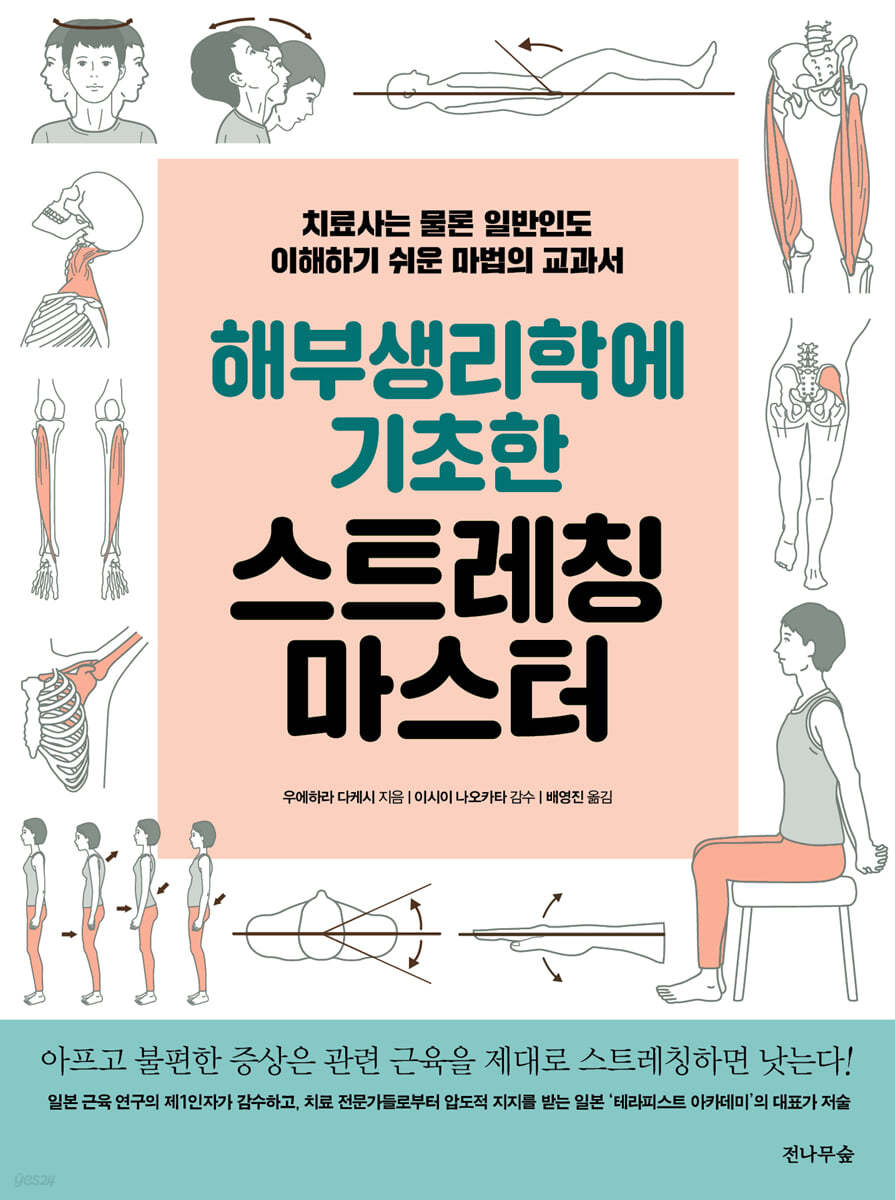
An anatomical and physiological approach to stretching that is practically helpful when you are sick, sore, stiff, or feeling unwell for no reason! In this book, the author states that the cause of unexplained back pain, stiff shoulders, frozen shoulder, knee pain, and neck pain caused by poor sleeping posture is the breakdown of the cooperative system of muscles, joints, bones, and nerve tissues, and that the most effective way to treat these symptoms is stretching to restore the cooperative system of the broken muscles, joints, bones, and nerve tissues. This book not only explains in detail the causes of neck pain, stiff shoulders, back pain, and fatigue in the arms, hips, hip joints, thighs, and calves, but also provides detailed illustrations of the related muscles and actual stretching methods for each area with photos of actual treatments, making it helpful for both therapists, aspiring therapists, and the general public. It is actually of great help in the field of exercise therapy, rehabilitation therapy, exercise training, yoga, and Pilates. |
- You can preview some of the book's contents.
Preview
index
preface
letter.
Let's learn about the connections between muscles, joints, bones, and nerves.
It all starts with understanding how your body moves.
Body movements are achieved through the teamwork of muscles, joints, bones, and nerve tissue.
Chapter 1.
Improvement of neck stiffness
1-1 Reasons for a stiff neck
1-2 What is a smartphone neck?
1-3 Checking the movement of the neck
1-4 Flexion and extension of the neck
[Muscles to target] · Neck flexor / sternocleidomastoid
[Muscles to target] · Neck flexor / scalene sternocleidomastoid
[Muscles to target] · Neck extension / trapezius
[Muscles to target] · Neck extension / platysma
1-5 rotation of the neck
[Muscles to Access] · Neck Rotator Cuff / Platysma
[Muscles to Access] · Neck Rotation / Sternocleidomastoid
1-6 Lateral bending of the neck
Neck Stretching Practice | Effective Stretching for Neck Stiffness
Advice for Proper Treatment | Shrimp Back Posture Aggravates Neck Discomfort
Chapter 2.
Improvement of frozen shoulder
2-1 Reasons why your shoulders are stiff
2-2 Check shoulder movement
2-3 Elevation and depression of the shoulder blades
[Muscles to target] · Elevator scapulae / levator scapulae
2-4 Flexion and extension of the shoulder blade
[Muscles to target] · Flexor scapulae / pectoralis minor
[Muscles to target] · Flexor scapulae / pectoralis major
[Muscles to target] · Scapular extension / rhomboids major
[Muscles to target] · Scapular extension / rhomboids minor
2-5 Shoulder abduction and adduction
[Muscles to target] · Shoulder abduction / deltoid
[Muscles to Access] · Shoulder Adduction / Teres Major
Shoulder Stretching Practice | Effective Stretching for Frozen Shoulders
Advice for Proper Treatment | First, Find the Cause of Shoulder Muscle Tightness
Chapter 3.
Improve arm fatigue
3-1 Why Your Arms Get Tired
3-2 Flexion and extension of the elbow, dorsiflexion and supination
[Muscles to target] · Flexion and dorsiflexion of the elbow / Biceps brachii
[Muscles to target] · Flexion and dorsiflexion of the elbow / triceps brachii
3-3 Flexion and extension of the wrist, radial flexion and ulnar flexion
[Muscles to target] · Wrist flexor / superficial flexor
[Muscles to target] · Wrist flexor, ulnar flexor / flexor carpi ulnaris
[Muscles to target] · Wrist extension / finger extensor
[Muscles to target] · Wrist extension, flexor carpi radialis longus / extensor carpi radialis longus
Arm Stretching Practice | Effective Stretching for Relief of Arm Fatigue
Advice for Proper Treatment | Patient Cooperation is Essential for Tenosynovitis Treatment
Chapter 4.
Improvement of back pain
4-1 Reasons for Back Pain
4-2 Correct position of the pelvis
4-3 Bending and extending the waist, side bending, and rotation
[Muscles to target] · Bending, turning, and lateral bending of the waist / internal oblique muscles
[Muscles to target] · Bending, turning, and lateral bending of the waist / external oblique abdominis
[Muscles to target] · Extension, rotation, and lateral bending of the waist / Quadratus lumborum
[Muscles to target] · Lumbar extension / latissimus dorsi
4-4 Change in perception about abdominal pressure
Back Stretching Practice | Effective Stretching for Lower Back Pain
Advice for the Right Treatment | Create Your Own Back Pain Treatment Recipe
Chapter 5.
Improvement of hip fatigue
5-1 Why Your Butt Gets Tired
5-2 Hip movements (hip extension, lateral rotation)
[Muscles to target] · Hip extension and lateral rotation / gluteus maximus
[Muscles to target] · Hip extension and lateral rotation / gluteus medius
[Muscles to target] · Hip extension and lateral rotation / gluteus minimus
[Muscles to target] · Lateral rotation of the hip joint / Sacroiliac crest
[Muscles to target] · Lateral rotation of the hip joint / Gemini superioris
[Muscles to target] · Lateral rotation of the hip joint / inferior twin
[Muscles to target] · Lateral rotation of the hip joint / obturator internalus
[Muscles to target] · Lateral rotation of the hip joint / obturator externalis
[Muscles to target] · Lateral rotation of the hip joint / Quadratus femoris
Hip Stretching Practice | Effective Stretching for Relief from Buttock Fatigue
Advice for the right treatment | Let us explain the effects after the procedure.
Chapter 6.
Improvement of hip joint fatigue
6-1 Why Your Hip Joints Fatigue
6-2 Hip flexion
[Muscles to target] · Hip flexor / psoas major
[Muscles to target] · Hip flexor / gluteus maximus
6-3 Hip abduction and adduction
[Muscles to target] · Hip adductors / gluteus medius
[Muscles to target] · Hip adductor / brevis
[Muscles to target] · Hip adductor / longus adductor
[Muscles to target] · Hip adduction / adductor magnus
[Muscles to target] · Hip adduction / pubis tibialis
[Muscles to target] · Hip abduction / tensor fasciae latae
Hip Joint Stretching Exercises | Effective Stretching for Relief of Hip Joint Fatigue
Advice for Proper Treatment | The hip joint fully supports the weight of your body.
Chapter 7.
Improvement of thigh fatigue
7-1 Why Your Thighs Get Tired
7-2 Flexion and extension of the knee
[Muscles to target] · Knee joint extension / Rectus femoris
[Muscles to target] · Knee joint extension / Vastus intermedius
[Muscles to target] · Knee joint extension / vastus medialis
[Muscles to target] · Knee joint extension / vastus lateralis
[Muscles to target] · Knee joint flexor / gluteus medius
[Muscles to target] · Knee joint flexor / biceps femoris
[Muscles to Access] · Knee joint flexor / semitendinosus
Thigh Stretching Practice | Effective Stretching for Relief of Thigh Fatigue
Advice for Proper Treatment | Exercise Must Be Balanced to Be Effective
Chapter 8.
Improvement of calf fatigue
8-1 Why Your Calves Get Tired
8-2 Dorsiflexion and plantarflexion of the ankle joint, inversion and lateral extension, adduction and abduction
[Muscles to target] · Dorsiflexor of the ankle joint / Anterior tibialis
[Muscles to target] · Dorsiflexor of the ankle / extensor digitorum longus
[Muscles to target] · Plantar flexor of the ankle / gastrocnemius
[Muscles to target] · Plantar flexor of the ankle / soleus
Calf Stretching Practice | Effective Stretching for Relief from Calf Fatigue
Advice for Proper Treatment | Movement involves not only muscles but also bones, ligaments, and more.
Conclusion
letter.
Let's learn about the connections between muscles, joints, bones, and nerves.
It all starts with understanding how your body moves.
Body movements are achieved through the teamwork of muscles, joints, bones, and nerve tissue.
Chapter 1.
Improvement of neck stiffness
1-1 Reasons for a stiff neck
1-2 What is a smartphone neck?
1-3 Checking the movement of the neck
1-4 Flexion and extension of the neck
[Muscles to target] · Neck flexor / sternocleidomastoid
[Muscles to target] · Neck flexor / scalene sternocleidomastoid
[Muscles to target] · Neck extension / trapezius
[Muscles to target] · Neck extension / platysma
1-5 rotation of the neck
[Muscles to Access] · Neck Rotator Cuff / Platysma
[Muscles to Access] · Neck Rotation / Sternocleidomastoid
1-6 Lateral bending of the neck
Neck Stretching Practice | Effective Stretching for Neck Stiffness
Advice for Proper Treatment | Shrimp Back Posture Aggravates Neck Discomfort
Chapter 2.
Improvement of frozen shoulder
2-1 Reasons why your shoulders are stiff
2-2 Check shoulder movement
2-3 Elevation and depression of the shoulder blades
[Muscles to target] · Elevator scapulae / levator scapulae
2-4 Flexion and extension of the shoulder blade
[Muscles to target] · Flexor scapulae / pectoralis minor
[Muscles to target] · Flexor scapulae / pectoralis major
[Muscles to target] · Scapular extension / rhomboids major
[Muscles to target] · Scapular extension / rhomboids minor
2-5 Shoulder abduction and adduction
[Muscles to target] · Shoulder abduction / deltoid
[Muscles to Access] · Shoulder Adduction / Teres Major
Shoulder Stretching Practice | Effective Stretching for Frozen Shoulders
Advice for Proper Treatment | First, Find the Cause of Shoulder Muscle Tightness
Chapter 3.
Improve arm fatigue
3-1 Why Your Arms Get Tired
3-2 Flexion and extension of the elbow, dorsiflexion and supination
[Muscles to target] · Flexion and dorsiflexion of the elbow / Biceps brachii
[Muscles to target] · Flexion and dorsiflexion of the elbow / triceps brachii
3-3 Flexion and extension of the wrist, radial flexion and ulnar flexion
[Muscles to target] · Wrist flexor / superficial flexor
[Muscles to target] · Wrist flexor, ulnar flexor / flexor carpi ulnaris
[Muscles to target] · Wrist extension / finger extensor
[Muscles to target] · Wrist extension, flexor carpi radialis longus / extensor carpi radialis longus
Arm Stretching Practice | Effective Stretching for Relief of Arm Fatigue
Advice for Proper Treatment | Patient Cooperation is Essential for Tenosynovitis Treatment
Chapter 4.
Improvement of back pain
4-1 Reasons for Back Pain
4-2 Correct position of the pelvis
4-3 Bending and extending the waist, side bending, and rotation
[Muscles to target] · Bending, turning, and lateral bending of the waist / internal oblique muscles
[Muscles to target] · Bending, turning, and lateral bending of the waist / external oblique abdominis
[Muscles to target] · Extension, rotation, and lateral bending of the waist / Quadratus lumborum
[Muscles to target] · Lumbar extension / latissimus dorsi
4-4 Change in perception about abdominal pressure
Back Stretching Practice | Effective Stretching for Lower Back Pain
Advice for the Right Treatment | Create Your Own Back Pain Treatment Recipe
Chapter 5.
Improvement of hip fatigue
5-1 Why Your Butt Gets Tired
5-2 Hip movements (hip extension, lateral rotation)
[Muscles to target] · Hip extension and lateral rotation / gluteus maximus
[Muscles to target] · Hip extension and lateral rotation / gluteus medius
[Muscles to target] · Hip extension and lateral rotation / gluteus minimus
[Muscles to target] · Lateral rotation of the hip joint / Sacroiliac crest
[Muscles to target] · Lateral rotation of the hip joint / Gemini superioris
[Muscles to target] · Lateral rotation of the hip joint / inferior twin
[Muscles to target] · Lateral rotation of the hip joint / obturator internalus
[Muscles to target] · Lateral rotation of the hip joint / obturator externalis
[Muscles to target] · Lateral rotation of the hip joint / Quadratus femoris
Hip Stretching Practice | Effective Stretching for Relief from Buttock Fatigue
Advice for the right treatment | Let us explain the effects after the procedure.
Chapter 6.
Improvement of hip joint fatigue
6-1 Why Your Hip Joints Fatigue
6-2 Hip flexion
[Muscles to target] · Hip flexor / psoas major
[Muscles to target] · Hip flexor / gluteus maximus
6-3 Hip abduction and adduction
[Muscles to target] · Hip adductors / gluteus medius
[Muscles to target] · Hip adductor / brevis
[Muscles to target] · Hip adductor / longus adductor
[Muscles to target] · Hip adduction / adductor magnus
[Muscles to target] · Hip adduction / pubis tibialis
[Muscles to target] · Hip abduction / tensor fasciae latae
Hip Joint Stretching Exercises | Effective Stretching for Relief of Hip Joint Fatigue
Advice for Proper Treatment | The hip joint fully supports the weight of your body.
Chapter 7.
Improvement of thigh fatigue
7-1 Why Your Thighs Get Tired
7-2 Flexion and extension of the knee
[Muscles to target] · Knee joint extension / Rectus femoris
[Muscles to target] · Knee joint extension / Vastus intermedius
[Muscles to target] · Knee joint extension / vastus medialis
[Muscles to target] · Knee joint extension / vastus lateralis
[Muscles to target] · Knee joint flexor / gluteus medius
[Muscles to target] · Knee joint flexor / biceps femoris
[Muscles to Access] · Knee joint flexor / semitendinosus
Thigh Stretching Practice | Effective Stretching for Relief of Thigh Fatigue
Advice for Proper Treatment | Exercise Must Be Balanced to Be Effective
Chapter 8.
Improvement of calf fatigue
8-1 Why Your Calves Get Tired
8-2 Dorsiflexion and plantarflexion of the ankle joint, inversion and lateral extension, adduction and abduction
[Muscles to target] · Dorsiflexor of the ankle joint / Anterior tibialis
[Muscles to target] · Dorsiflexor of the ankle / extensor digitorum longus
[Muscles to target] · Plantar flexor of the ankle / gastrocnemius
[Muscles to target] · Plantar flexor of the ankle / soleus
Calf Stretching Practice | Effective Stretching for Relief from Calf Fatigue
Advice for Proper Treatment | Movement involves not only muscles but also bones, ligaments, and more.
Conclusion
Detailed image

Publisher's Review
Unexplained back pain, frozen shoulder, frozen shoulder, knee pain, neck pain, etc.
Recurring painful and uncomfortable symptoms
This is because the teamwork of muscles, joints, bones, and nerve tissue has broken down!
·This is a stretching master book based on anatomy and physiology, supervised by Naokata Ishii, a leading figure in Japanese muscle research and author of "Muscle Building," and written by Takeshi Uehara, a therapist and representative of the Japanese "Therapist Academy," which enjoys overwhelming support from therapists.
The author, who is also an anatomy and physiology instructor, worked as a camp trainer in Major League Baseball and has treated many people in various fields, including athletes and dancers.
In addition, we established an academy, a UK international license 'iTEC' certified school, and trained a total of 30,000 therapists.
·The most significant feature of this book is that it combines the difficult subject of anatomy and physiology with stretching, allowing readers to feel as if they are traveling through various parts of the human body, and provides an opportunity to deeply understand the structure of the human body by directly touching and moving it.
It provides a detailed explanation of the mechanisms by which human body movements occur and which muscles to approach for pain or discomfort symptoms based on the principles of anatomy and physiology, allowing you to pinpoint the muscle causing the problem.
Additionally, by showing actual stretching methods for each body part through pictures, we are broadening the scope of understanding.
·In this book, the author states that the cause of unexplained back pain, stiff shoulders, frozen shoulder, knee pain, and neck pain caused by poor sleeping posture is the breakdown of the cooperative system of muscles, joints, bones, and nerve tissues, and that the most effective way to treat these symptoms is stretching to restore the cooperative system of the broken muscles, joints, bones, and nerve tissues.
This book not only explains in detail the causes of neck pain, stiff shoulders, back pain, and fatigue in the arms, hips, hip joints, thighs, and calves, but also provides detailed illustrations of the related muscles and actual stretching methods for each area with photos of actual treatments, making it helpful for both therapists, aspiring therapists, and the general public.
It is actually of great help in the field of exercise therapy, rehabilitation therapy, exercise training, yoga, and Pilates.
Repeated symptoms of body pain and discomfort
This is because the teamwork of muscles, joints, bones, and nerve tissue has broken down!
As we age, more and more people are complaining of stiff necks, sore shoulders, tight calves, and constant back pain.
Perhaps that's why orthopedic and pain medicine hospitals are increasingly popping up in newly constructed buildings, and countless people are turning to physical therapy for even the slightest ailment.
But why do symptoms recur despite the increasing number of hospitals and physical therapy? The reason is a breakdown in the teamwork of the muscles, joints, bones, and nerve tissues associated with repetitive movements.
When we feel pain or discomfort somewhere in our body, we assume it is due to muscle problems caused by incorrect movement.
So, we stimulate the muscles hard, but in fact, the movement of the body is the movement of the 'joints'.
A joint is a place where bones meet and connect to each other, and muscles move those joints.
And it is the nerves that send the command to the muscles to “move!”
In other words, body movements are achieved through the cooperation of not only muscles but also related parts, and when this cooperation system breaks down, painful and uncomfortable symptoms appear.
There is no problem with the muscles, no abnormalities in the bones or joints on X-rays, and no nerve disease, but back pain is a typical symptom that appears when the coordination system of muscles, joints, bones, and nerve tissue breaks down.
The same goes for unexplained frozen shoulder, frozen shoulder, knee pain, and neck pain caused by poor sleeping posture.
These symptoms can be sufficiently resolved by restoring the cooperative system of the broken muscles, joints, bones, and nerve tissues.
The teamwork of broken muscles, joints, bones, and nerve tissue
You can recover through 'stretching'!
So how can we restore the damaged coordination of muscles, joints, bones, and nerves? Should we stimulate the muscles with machines? Or massage the sore areas with our hands? Neither approach is effective.
The most effective way is to stretch.
Stretching not only improves the teamwork of the muscles, joints, bones, and nerve tissues involved in body movement, but also reduces pain, and produces results that are beyond recognition, such as making body movements smoother or enabling movements that were previously impossible.
Not only can you feel it yourself, but those around you can also see the change at a glance.
However, the person performing the stretching must clearly understand how the symptoms occur and what kind of stretching to do for which part in order to maximize the stretching effect.
This is because the level of understanding of symptoms between people who are already familiar with the human body and those who are not is quite different.
Especially for therapists, it is essential to go through the process of feeling the 'image' that permeates the body and realizing the knowledge by directly touching, moving, and understanding the human body, rather than simply 'memorizing' knowledge about the human body.
Learn proper stretching for each symptom and area
Get rid of painful and uncomfortable symptoms!
The author of this book, Takeshi Uehara, is a 'Karada Juku' (からだ塾).
He is a professional therapist who teaches anatomy and physiology while running an anatomy and physiology academy for therapists called ‘Body Academy’ and ‘Magic Hands THERAPIST ACADEMY’.
In this book, he explains from anatomic and physiological perspective why painful and uncomfortable symptoms occur in the body, and shows in detail which muscles to approach and how to stretch to manage those symptoms through photos of stretching treatments for each area.
The reason he combined the difficult subject of anatomy and physiology with practical stretching in this book is because he hopes that by directly touching, moving, and understanding the human body, readers will feel the 'image' of stretching ingrained in their bodies and gain knowledge.
The conqueror of judo.
The author, who entered this industry as a specialist in restoring broken or missing bones, said that after 10 years of experience, he was so impressed that his heart thumped when he took on the job of a 'therapist'.
Because it is the therapist, not the doctor, who can regularly touch and treat the client's health.
He is convinced that raising the level of knowledge and skills as a therapist will undoubtedly increase the world's healthy life expectancy. He hopes that readers will gain a deeper understanding of the human body structure through this book, which will be helpful in the field of treatment, and feel a sense of "friendliness" as if traveling to various parts of the body through stretching.
Recurring painful and uncomfortable symptoms
This is because the teamwork of muscles, joints, bones, and nerve tissue has broken down!
·This is a stretching master book based on anatomy and physiology, supervised by Naokata Ishii, a leading figure in Japanese muscle research and author of "Muscle Building," and written by Takeshi Uehara, a therapist and representative of the Japanese "Therapist Academy," which enjoys overwhelming support from therapists.
The author, who is also an anatomy and physiology instructor, worked as a camp trainer in Major League Baseball and has treated many people in various fields, including athletes and dancers.
In addition, we established an academy, a UK international license 'iTEC' certified school, and trained a total of 30,000 therapists.
·The most significant feature of this book is that it combines the difficult subject of anatomy and physiology with stretching, allowing readers to feel as if they are traveling through various parts of the human body, and provides an opportunity to deeply understand the structure of the human body by directly touching and moving it.
It provides a detailed explanation of the mechanisms by which human body movements occur and which muscles to approach for pain or discomfort symptoms based on the principles of anatomy and physiology, allowing you to pinpoint the muscle causing the problem.
Additionally, by showing actual stretching methods for each body part through pictures, we are broadening the scope of understanding.
·In this book, the author states that the cause of unexplained back pain, stiff shoulders, frozen shoulder, knee pain, and neck pain caused by poor sleeping posture is the breakdown of the cooperative system of muscles, joints, bones, and nerve tissues, and that the most effective way to treat these symptoms is stretching to restore the cooperative system of the broken muscles, joints, bones, and nerve tissues.
This book not only explains in detail the causes of neck pain, stiff shoulders, back pain, and fatigue in the arms, hips, hip joints, thighs, and calves, but also provides detailed illustrations of the related muscles and actual stretching methods for each area with photos of actual treatments, making it helpful for both therapists, aspiring therapists, and the general public.
It is actually of great help in the field of exercise therapy, rehabilitation therapy, exercise training, yoga, and Pilates.
Repeated symptoms of body pain and discomfort
This is because the teamwork of muscles, joints, bones, and nerve tissue has broken down!
As we age, more and more people are complaining of stiff necks, sore shoulders, tight calves, and constant back pain.
Perhaps that's why orthopedic and pain medicine hospitals are increasingly popping up in newly constructed buildings, and countless people are turning to physical therapy for even the slightest ailment.
But why do symptoms recur despite the increasing number of hospitals and physical therapy? The reason is a breakdown in the teamwork of the muscles, joints, bones, and nerve tissues associated with repetitive movements.
When we feel pain or discomfort somewhere in our body, we assume it is due to muscle problems caused by incorrect movement.
So, we stimulate the muscles hard, but in fact, the movement of the body is the movement of the 'joints'.
A joint is a place where bones meet and connect to each other, and muscles move those joints.
And it is the nerves that send the command to the muscles to “move!”
In other words, body movements are achieved through the cooperation of not only muscles but also related parts, and when this cooperation system breaks down, painful and uncomfortable symptoms appear.
There is no problem with the muscles, no abnormalities in the bones or joints on X-rays, and no nerve disease, but back pain is a typical symptom that appears when the coordination system of muscles, joints, bones, and nerve tissue breaks down.
The same goes for unexplained frozen shoulder, frozen shoulder, knee pain, and neck pain caused by poor sleeping posture.
These symptoms can be sufficiently resolved by restoring the cooperative system of the broken muscles, joints, bones, and nerve tissues.
The teamwork of broken muscles, joints, bones, and nerve tissue
You can recover through 'stretching'!
So how can we restore the damaged coordination of muscles, joints, bones, and nerves? Should we stimulate the muscles with machines? Or massage the sore areas with our hands? Neither approach is effective.
The most effective way is to stretch.
Stretching not only improves the teamwork of the muscles, joints, bones, and nerve tissues involved in body movement, but also reduces pain, and produces results that are beyond recognition, such as making body movements smoother or enabling movements that were previously impossible.
Not only can you feel it yourself, but those around you can also see the change at a glance.
However, the person performing the stretching must clearly understand how the symptoms occur and what kind of stretching to do for which part in order to maximize the stretching effect.
This is because the level of understanding of symptoms between people who are already familiar with the human body and those who are not is quite different.
Especially for therapists, it is essential to go through the process of feeling the 'image' that permeates the body and realizing the knowledge by directly touching, moving, and understanding the human body, rather than simply 'memorizing' knowledge about the human body.
Learn proper stretching for each symptom and area
Get rid of painful and uncomfortable symptoms!
The author of this book, Takeshi Uehara, is a 'Karada Juku' (からだ塾).
He is a professional therapist who teaches anatomy and physiology while running an anatomy and physiology academy for therapists called ‘Body Academy’ and ‘Magic Hands THERAPIST ACADEMY’.
In this book, he explains from anatomic and physiological perspective why painful and uncomfortable symptoms occur in the body, and shows in detail which muscles to approach and how to stretch to manage those symptoms through photos of stretching treatments for each area.
The reason he combined the difficult subject of anatomy and physiology with practical stretching in this book is because he hopes that by directly touching, moving, and understanding the human body, readers will feel the 'image' of stretching ingrained in their bodies and gain knowledge.
The conqueror of judo.
The author, who entered this industry as a specialist in restoring broken or missing bones, said that after 10 years of experience, he was so impressed that his heart thumped when he took on the job of a 'therapist'.
Because it is the therapist, not the doctor, who can regularly touch and treat the client's health.
He is convinced that raising the level of knowledge and skills as a therapist will undoubtedly increase the world's healthy life expectancy. He hopes that readers will gain a deeper understanding of the human body structure through this book, which will be helpful in the field of treatment, and feel a sense of "friendliness" as if traveling to various parts of the body through stretching.
GOODS SPECIFICS
- Publication date: December 9, 2022
- Page count, weight, size: 208 pages | 428g | 183*245*14mm
- ISBN13: 9791188544929
- ISBN10: 1188544926
You may also like
카테고리
korean


korean

![GQ KOREA Mark (Monthly): December [2025]](http://librairie.coreenne.fr/cdn/shop/files/8ef265dbbfbf186523ed75ba7319009d.jpg?v=1765340328&width=3840)


