

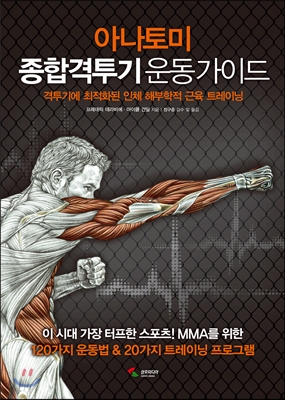
Anatomy Mixed Martial Arts Workout Guide
 |
Description
Book Introduction
Let's train your muscles in an anatomical way that suits your body type.
There are countless pieces of exercise equipment and equipment available to train strength and fighting skills.
However, just because a particular piece of exercise equipment is popular doesn't necessarily mean it will be effective.
In fact, you can get great strength training with just a weight bar and dumbbells.
The exercise programs included in this book are also designed with a focus on barbells and dumbbells.
Because it is easily available to anyone and has the best exercise effect.
In the past, people who practiced martial arts had no choice but to force themselves to learn fighting techniques that did not suit their body type.
The great thing about mixed martial arts is that you can develop your own style by learning only the techniques that fit your body type.
Even when doing strength training, you should keep this in mind and not blindly follow the exercise programs of your peers or champions.
Because everyone has a different body type, it is essential to be aware of your own physical characteristics to become the best martial artist.
Despite the recent surge in interest in mixed martial arts, there is not much information available about it.
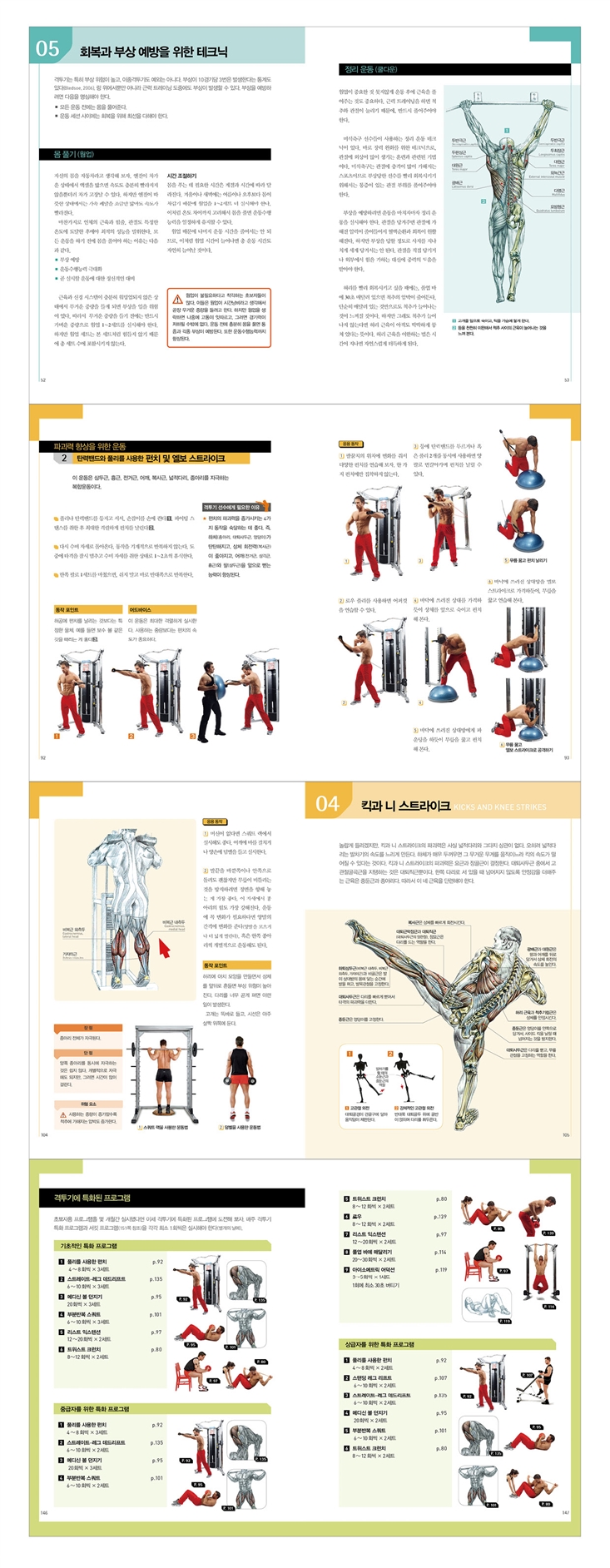
[Anatomy MMA Workout Guide] provides over 120 exercises essential for MMA fighters through detailed color photos and human anatomy diagrams.
You can also learn various fighting techniques by learning how your muscles interact with the surrounding joints and bones.
It also includes exercises that help prevent injuries and aid muscle recovery, allowing you to exercise more safely.
If you master the included exercise program, you will be able to improve your fighting skills, from stand-up striking to ground fighting, by addressing your weaknesses and strengthening your strengths.
There are countless pieces of exercise equipment and equipment available to train strength and fighting skills.
However, just because a particular piece of exercise equipment is popular doesn't necessarily mean it will be effective.
In fact, you can get great strength training with just a weight bar and dumbbells.
The exercise programs included in this book are also designed with a focus on barbells and dumbbells.
Because it is easily available to anyone and has the best exercise effect.
In the past, people who practiced martial arts had no choice but to force themselves to learn fighting techniques that did not suit their body type.
The great thing about mixed martial arts is that you can develop your own style by learning only the techniques that fit your body type.
Even when doing strength training, you should keep this in mind and not blindly follow the exercise programs of your peers or champions.
Because everyone has a different body type, it is essential to be aware of your own physical characteristics to become the best martial artist.
Despite the recent surge in interest in mixed martial arts, there is not much information available about it.
[Anatomy MMA Workout Guide] provides over 120 exercises essential for MMA fighters through detailed color photos and human anatomy diagrams.
You can also learn various fighting techniques by learning how your muscles interact with the surrounding joints and bones.
It also includes exercises that help prevent injuries and aid muscle recovery, allowing you to exercise more safely.
If you master the included exercise program, you will be able to improve your fighting skills, from stand-up striking to ground fighting, by addressing your weaknesses and strengthening your strengths.
- You can preview some of the book's contents.
Preview
index
Introduction: Why do fighters need strength training?
Recommendation
Part 1: Principles of Strength Training
Let's create your own program
Questions to Ask Yourself to Build Your Training Program
Techniques for improving strength and agility
Things to Consider When Training Muscles for Fighting
The three main types of strength used in martial arts
The Secret of a Destructive Strike
Breathing techniques during strength training
Perform strength training appropriate for martial arts
Techniques for improving conditioning and endurance
Strength and Conditioning: The Opposite Properties of Muscle
Three principles for developing strength and endurance simultaneously
Creating a Circuit Program to Improve Conditioning
Techniques for Improving Flexibility
Flexibility and Stiffness: Two Characteristics of Muscles
When you need to stretch
How to Stretch
Techniques for Improving Flexibility
Warm up
Clean-up exercise
Massage with a foam roller
Muscle imbalances that lead to injury
Cross-training to aid injury recovery
How to Take Supplements to Aid Recovery
Part 2 For Fighters
strength training
Neck, trapezius, jaw
[Neck Exercise]
Neck Flexion
Neck extension
Lateral neck flexion
Strengthening the jaw
Protect your neck with the massive trapezius muscle
Shrug
abdominal wall
[Abdominal wall exercise]
Sit-ups
Standing Cable Crunch
Twist Crunch
Leg rotations performed on a pull-up bar
Plank
Punches and elbow strikes
[Exercise to Increase Destructive Power]
Narrow grip bench press
Punches and elbow strikes using elastic bands and pulleys
Medicine ball throw
forearm
Forearm exercises
List Extension
List Curl
Strengthen your stance
Partial rep squats
Standing Calf Raises
Kicks and knee strikes
[The Paradox of the Psoas Muscle]
Exercises to improve muscle strength
Standing leg lift
Leg lifts performed on a pull-up bar
Ground knee kick
Grabbing, pulling, and pushing exercises
[Abdominal wall exercise]
pull-ups
Power Triceps Pushdowns
Hanging from a pull-up bar
hammer curl
Choke and counterattack
[Exercise to improve endurance]
Hanging on a strap
Isometric Adduction
Leg press using full range of motion
Seated squat
Lying leg curl
Reverse Calf Raise
Bridge
Lifting and throwing
[Lifting and Throwing Exercises]
Conventional deadlift
Straight-leg deadlift
Dumbbell Clean
Low
Part 3 Training Program
Strength Building Program for Beginners
Get used to strength training
Increase your exercise volume
Advanced Program
A program specialized in martial arts
Basic specialized program
Specialized program for intermediate learners
Specialized program for advanced users
Segmented programs
boxing program
Kick Program
Ground Fighting Program
Close combat program
Conditioning Circuit
Beginner's Circuit
Intermediate circuit
Advanced circuit
Subdivided circuit
boxing circuit
Kick Circuit
Ground Fighting Circuit
Close Combat Circuit
Circuits you can do at home
Circuit for neck protection
Circuit for strengthening the abdominal wall
Circuit for injury prevention
Preventing Shoulder Pain
Preventing Back Pain
Preventing Neck Pain
Preventing Pelvic Pain
Preventing Knee Pain and Hamstring Tear
Recommendation
Part 1: Principles of Strength Training
Let's create your own program
Questions to Ask Yourself to Build Your Training Program
Techniques for improving strength and agility
Things to Consider When Training Muscles for Fighting
The three main types of strength used in martial arts
The Secret of a Destructive Strike
Breathing techniques during strength training
Perform strength training appropriate for martial arts
Techniques for improving conditioning and endurance
Strength and Conditioning: The Opposite Properties of Muscle
Three principles for developing strength and endurance simultaneously
Creating a Circuit Program to Improve Conditioning
Techniques for Improving Flexibility
Flexibility and Stiffness: Two Characteristics of Muscles
When you need to stretch
How to Stretch
Techniques for Improving Flexibility
Warm up
Clean-up exercise
Massage with a foam roller
Muscle imbalances that lead to injury
Cross-training to aid injury recovery
How to Take Supplements to Aid Recovery
Part 2 For Fighters
strength training
Neck, trapezius, jaw
[Neck Exercise]
Neck Flexion
Neck extension
Lateral neck flexion
Strengthening the jaw
Protect your neck with the massive trapezius muscle
Shrug
abdominal wall
[Abdominal wall exercise]
Sit-ups
Standing Cable Crunch
Twist Crunch
Leg rotations performed on a pull-up bar
Plank
Punches and elbow strikes
[Exercise to Increase Destructive Power]
Narrow grip bench press
Punches and elbow strikes using elastic bands and pulleys
Medicine ball throw
forearm
Forearm exercises
List Extension
List Curl
Strengthen your stance
Partial rep squats
Standing Calf Raises
Kicks and knee strikes
[The Paradox of the Psoas Muscle]
Exercises to improve muscle strength
Standing leg lift
Leg lifts performed on a pull-up bar
Ground knee kick
Grabbing, pulling, and pushing exercises
[Abdominal wall exercise]
pull-ups
Power Triceps Pushdowns
Hanging from a pull-up bar
hammer curl
Choke and counterattack
[Exercise to improve endurance]
Hanging on a strap
Isometric Adduction
Leg press using full range of motion
Seated squat
Lying leg curl
Reverse Calf Raise
Bridge
Lifting and throwing
[Lifting and Throwing Exercises]
Conventional deadlift
Straight-leg deadlift
Dumbbell Clean
Low
Part 3 Training Program
Strength Building Program for Beginners
Get used to strength training
Increase your exercise volume
Advanced Program
A program specialized in martial arts
Basic specialized program
Specialized program for intermediate learners
Specialized program for advanced users
Segmented programs
boxing program
Kick Program
Ground Fighting Program
Close combat program
Conditioning Circuit
Beginner's Circuit
Intermediate circuit
Advanced circuit
Subdivided circuit
boxing circuit
Kick Circuit
Ground Fighting Circuit
Close Combat Circuit
Circuits you can do at home
Circuit for neck protection
Circuit for strengthening the abdominal wall
Circuit for injury prevention
Preventing Shoulder Pain
Preventing Back Pain
Preventing Neck Pain
Preventing Pelvic Pain
Preventing Knee Pain and Hamstring Tear
Detailed image
Publisher's Review
It strengthens the impact, increases endurance and toughness, and increases the range of motion to prevent injuries.
120 exercises and 20 training programs specifically designed for martial artists
Mixed Martial Arts (MMA), the toughest sport of our time, fulfills the primal human desire to become stronger.
Fighters undergo tremendous amounts of training and go through grueling weight loss just for a 15-minute match.
Strength training is now so essential that it is indispensable for mixed martial artists.
Strength training can help you hit harder, build endurance and toughness, and increase your range of motion for movements like kicking.
Strength training creates an armor that can withstand the blows of an opponent.
There are separate muscle training methods for martial artists.
Training for mixed martial arts is different from regular exercise and requires a tremendous amount of physical strength.
While general exercise is simply about reducing body fat and increasing muscle mass to make the body look better, training for mixed martial arts requires actual muscle training for combat sports.
It is often thought that if you build strength through strength training at the gym, your performance in the ring will also improve.
This may be true for beginners, but it is different for experienced players.
To achieve more noticeable results, you should focus on the physical abilities required for combat sports.
Popular strength training exercises often don't fit well with combat sports.
Therefore, it is important to consider the characteristics of the martial arts and understand the types of muscle strength primarily used in martial arts, including which parts of the body are used during the match, the types of muscle contractions that occur during the match, the speed of movement, and the direction of movement and force.
When designing a training program, you should also arrange the exercises that improve each muscle strength in order according to these priorities.
120 exercises and 20 training programs specifically designed for martial artists
Mixed Martial Arts (MMA), the toughest sport of our time, fulfills the primal human desire to become stronger.
Fighters undergo tremendous amounts of training and go through grueling weight loss just for a 15-minute match.
Strength training is now so essential that it is indispensable for mixed martial artists.
Strength training can help you hit harder, build endurance and toughness, and increase your range of motion for movements like kicking.
Strength training creates an armor that can withstand the blows of an opponent.
There are separate muscle training methods for martial artists.
Training for mixed martial arts is different from regular exercise and requires a tremendous amount of physical strength.
While general exercise is simply about reducing body fat and increasing muscle mass to make the body look better, training for mixed martial arts requires actual muscle training for combat sports.
It is often thought that if you build strength through strength training at the gym, your performance in the ring will also improve.
This may be true for beginners, but it is different for experienced players.
To achieve more noticeable results, you should focus on the physical abilities required for combat sports.
Popular strength training exercises often don't fit well with combat sports.
Therefore, it is important to consider the characteristics of the martial arts and understand the types of muscle strength primarily used in martial arts, including which parts of the body are used during the match, the types of muscle contractions that occur during the match, the speed of movement, and the direction of movement and force.
When designing a training program, you should also arrange the exercises that improve each muscle strength in order according to these priorities.
GOODS SPECIFICS
- Date of issue: May 10, 2016
- Page count, weight, size: 160 pages | 532g | 188*254*10mm
- ISBN13: 9788978495424
- ISBN10: 8978495427
You may also like
카테고리
korean


korean

![GQ KOREA Mark (Monthly): December [2025]](http://librairie.coreenne.fr/cdn/shop/files/8ef265dbbfbf186523ed75ba7319009d.jpg?v=1765340328&width=3840)


