

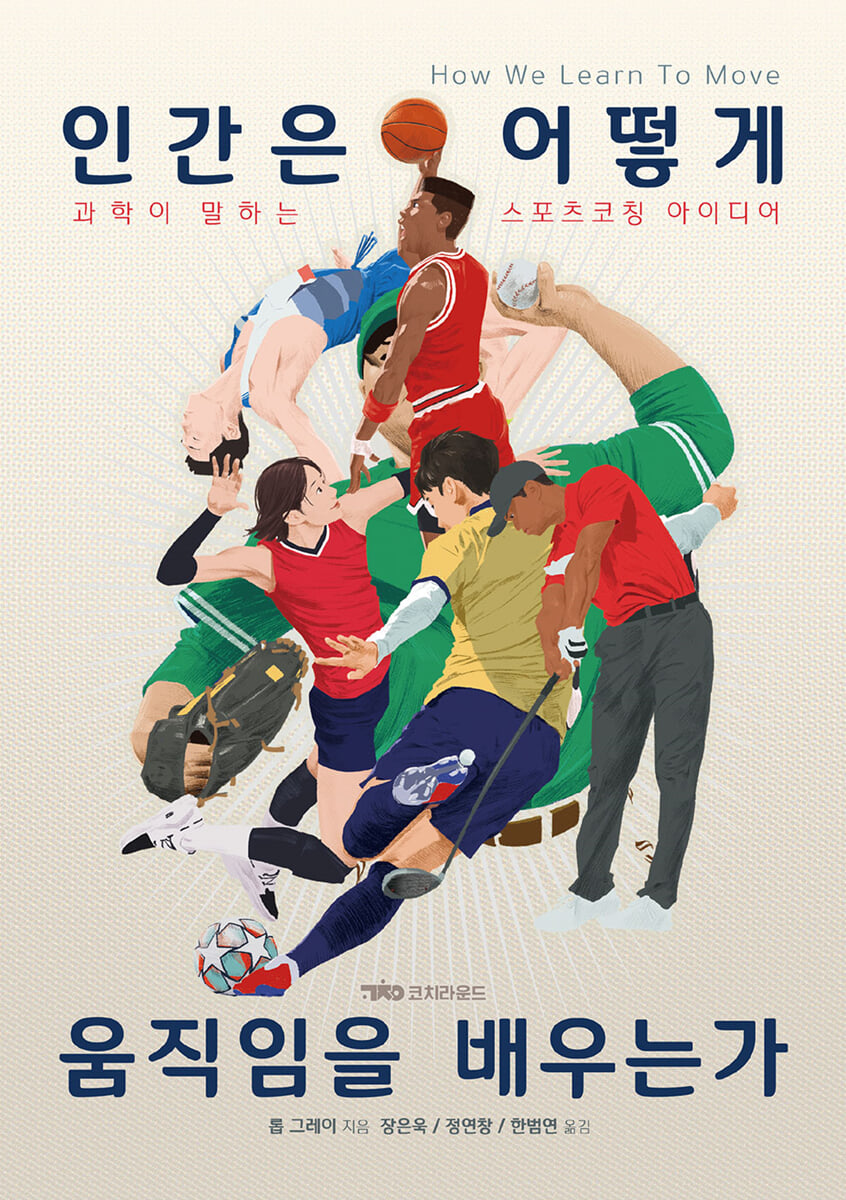
How do humans learn to move?
 |
Description
Book Introduction
Sports coaching ideas from science!
Are the best athletic skills really achieved through repetition alone?
Dr. Rob Gray is out for a walk when he sees young children playing sports in the park.
On the soccer field, they are practicing dribbling by going over cones placed on the ground.
The children stand in a long line, waiting for their turn.
On another field, a high school football team practices running through a series of tires.
At the baseball field, you can see people practicing batting with the ball on a batting tee.
On the tennis court, a player is practicing his strokes.
Repeat the practice of hitting the ball that the coach gives you underhand and sending it to the opposite court.
As he gazes at these scenes, a large question mark appears above Dr. Gray's head.
"Is this the best way to learn motor skills?" This book is Dr. Gray's journey with readers to find the answer to this question.
The latest research in the fields of sports and motor learning is explained in an easy-to-understand, story-based manner using interesting case studies.
We propose a new perspective on practice and exercise techniques, moving away from the traditional coaching approach that emphasizes “fundamentals,” “good form,” and “repetitive training.”
Are the best athletic skills really achieved through repetition alone?
Dr. Rob Gray is out for a walk when he sees young children playing sports in the park.
On the soccer field, they are practicing dribbling by going over cones placed on the ground.
The children stand in a long line, waiting for their turn.
On another field, a high school football team practices running through a series of tires.
At the baseball field, you can see people practicing batting with the ball on a batting tee.
On the tennis court, a player is practicing his strokes.
Repeat the practice of hitting the ball that the coach gives you underhand and sending it to the opposite court.
As he gazes at these scenes, a large question mark appears above Dr. Gray's head.
"Is this the best way to learn motor skills?" This book is Dr. Gray's journey with readers to find the answer to this question.
The latest research in the fields of sports and motor learning is explained in an easy-to-understand, story-based manner using interesting case studies.
We propose a new perspective on practice and exercise techniques, moving away from the traditional coaching approach that emphasizes “fundamentals,” “good form,” and “repetitive training.”
- You can preview some of the book's contents.
Preview
index
Chapter 1 The Myth of the "One Right Move"
Bernstein's Blacksmith Experiment
Repetition without repetition: the ability to produce the same result with different movements.
The easy trap of averages
The human body loves change
Chapter 2 Every Stroke I Make Is Different
Heart rate variability reveals the body's secrets
The human nervous system is full of noise
No two balls fly the same.
Why You Can Still Ride a Bike After 10 Years
Are injuries really caused by incorrect movements?
Chapter 3: How Human Movement Occurs
Movement that occurs according to command
Perception practice is separate from movement practice
Can the brain control all movements?
Self-organization: Birds that fly in flocks without a boss
Chapter 4: Brazilian children kicking a ball on bare ground
Abilities developed when throwing a ball in a sandbox
Exaggerate errors to correct behavior
Lower the goal and lighten the racket
Batting practice, not knowing what kind of ball will fly
Chapter 5: We Perceive the World Through Our Bodies
What does it mean when someone says the ball looks like a watermelon?
We do not see the world as it is.
Athlete perception changes according to athletic ability
Baseballs that look different depending on the task
Chapter 6: Why Tim Tebow, the best college player, failed in the pros
Attractor: A valley created on a motion map
The deeper the valley, the harder it is to get out.
Movements that emerge at unexpected moments
Movement Complexity and the Role of the Coach
Chapter 7: Changing Actions with Balloons
The problem of explicit instruction that teaches actions with words
Players who automatically recall the coach's words during the game
The purpose of setting constraints in practice
Small-sided games with spatial limitations
Coaching Language of a Pharmaceutical-Led Approach
Chapter 8: What's Important is Problem-Solving Ability
Good Volatility vs. Bad Volatility
Differential learning methods that disrupt habitual movement patterns
Fixed practice and random practice
Volatility through three frameworks
Rather, variability is necessary to consistently achieve desired results.
Chapter 9: Why You Shouldn't Imitate the Best Players
The stage where the player learns the movements
Human movements that are difficult to imitate
Exercise synergy created by the body itself
Good variability develops exercise synergy abilities.
Chapter 10: Where do creative movements come from?
The Hidden Stories Behind the Birth of Back Jumping
Creativity comes from exploring movement.
The solo batting practice that made a cricket legend
Athlete creativity varies depending on the practice environment
Chapter 11: Other Thoughts on Fundamentals Practice
What's missing from dribbling practice with cones
Simplify tasks without breaking them down
The limitations of practice that disconnect perception and action
Changes that occur when holding a short and light racket
I think you have to master the basics before you can play the game.
The dangers of going all-in on one stock when you're young
Chapter 12: Is the automatic movement a good technique?
What made Ronaldo the greatest player ever
When you drive abroad
Information directly changes movement.
Are you building a habit or learning a skill?
Chapter 13: How to Effectively Apply Science and Technology to Practice
Instead of telling people not to dribble while looking at the ball,
The Future of Sports Coaching: Virtual Reality Technology
Pitfalls in Biomechanical Analysis
Provides audible feedback on how you moved
How data is delivered is as important as how it is analyzed.
Emphasizing what not to do: The paradoxical fallacy phenomenon
If you worry about your posture or movements, your performance will suffer.
Chapter 14: Variation in Exercises Reduces the Risk of Injury
Coupled perception and movement exercises prevent overload.
Are injuries really caused by poor form?
Let's drop the word 'rehabilitation'
Chapter 15: You Can't Become a Top Chef Just by Following Recipes
My story of escaping from the deep valley of attractors
The athlete's body doesn't care about what the coach says.
A journey created through hands-on experience
Bernstein's Blacksmith Experiment
Repetition without repetition: the ability to produce the same result with different movements.
The easy trap of averages
The human body loves change
Chapter 2 Every Stroke I Make Is Different
Heart rate variability reveals the body's secrets
The human nervous system is full of noise
No two balls fly the same.
Why You Can Still Ride a Bike After 10 Years
Are injuries really caused by incorrect movements?
Chapter 3: How Human Movement Occurs
Movement that occurs according to command
Perception practice is separate from movement practice
Can the brain control all movements?
Self-organization: Birds that fly in flocks without a boss
Chapter 4: Brazilian children kicking a ball on bare ground
Abilities developed when throwing a ball in a sandbox
Exaggerate errors to correct behavior
Lower the goal and lighten the racket
Batting practice, not knowing what kind of ball will fly
Chapter 5: We Perceive the World Through Our Bodies
What does it mean when someone says the ball looks like a watermelon?
We do not see the world as it is.
Athlete perception changes according to athletic ability
Baseballs that look different depending on the task
Chapter 6: Why Tim Tebow, the best college player, failed in the pros
Attractor: A valley created on a motion map
The deeper the valley, the harder it is to get out.
Movements that emerge at unexpected moments
Movement Complexity and the Role of the Coach
Chapter 7: Changing Actions with Balloons
The problem of explicit instruction that teaches actions with words
Players who automatically recall the coach's words during the game
The purpose of setting constraints in practice
Small-sided games with spatial limitations
Coaching Language of a Pharmaceutical-Led Approach
Chapter 8: What's Important is Problem-Solving Ability
Good Volatility vs. Bad Volatility
Differential learning methods that disrupt habitual movement patterns
Fixed practice and random practice
Volatility through three frameworks
Rather, variability is necessary to consistently achieve desired results.
Chapter 9: Why You Shouldn't Imitate the Best Players
The stage where the player learns the movements
Human movements that are difficult to imitate
Exercise synergy created by the body itself
Good variability develops exercise synergy abilities.
Chapter 10: Where do creative movements come from?
The Hidden Stories Behind the Birth of Back Jumping
Creativity comes from exploring movement.
The solo batting practice that made a cricket legend
Athlete creativity varies depending on the practice environment
Chapter 11: Other Thoughts on Fundamentals Practice
What's missing from dribbling practice with cones
Simplify tasks without breaking them down
The limitations of practice that disconnect perception and action
Changes that occur when holding a short and light racket
I think you have to master the basics before you can play the game.
The dangers of going all-in on one stock when you're young
Chapter 12: Is the automatic movement a good technique?
What made Ronaldo the greatest player ever
When you drive abroad
Information directly changes movement.
Are you building a habit or learning a skill?
Chapter 13: How to Effectively Apply Science and Technology to Practice
Instead of telling people not to dribble while looking at the ball,
The Future of Sports Coaching: Virtual Reality Technology
Pitfalls in Biomechanical Analysis
Provides audible feedback on how you moved
How data is delivered is as important as how it is analyzed.
Emphasizing what not to do: The paradoxical fallacy phenomenon
If you worry about your posture or movements, your performance will suffer.
Chapter 14: Variation in Exercises Reduces the Risk of Injury
Coupled perception and movement exercises prevent overload.
Are injuries really caused by poor form?
Let's drop the word 'rehabilitation'
Chapter 15: You Can't Become a Top Chef Just by Following Recipes
My story of escaping from the deep valley of attractors
The athlete's body doesn't care about what the coach says.
A journey created through hands-on experience
Detailed image

GOODS SPECIFICS
- Date of issue: January 20, 2023
- Page count, weight, size: 368 pages | 560g | 150*210*20mm
- ISBN13: 9791198140715
- ISBN10: 1198140712
You may also like
카테고리
korean


korean

![GQ KOREA Mark (Monthly): December [2025]](http://librairie.coreenne.fr/cdn/shop/files/8ef265dbbfbf186523ed75ba7319009d.jpg?v=1765340328&width=3840)


