

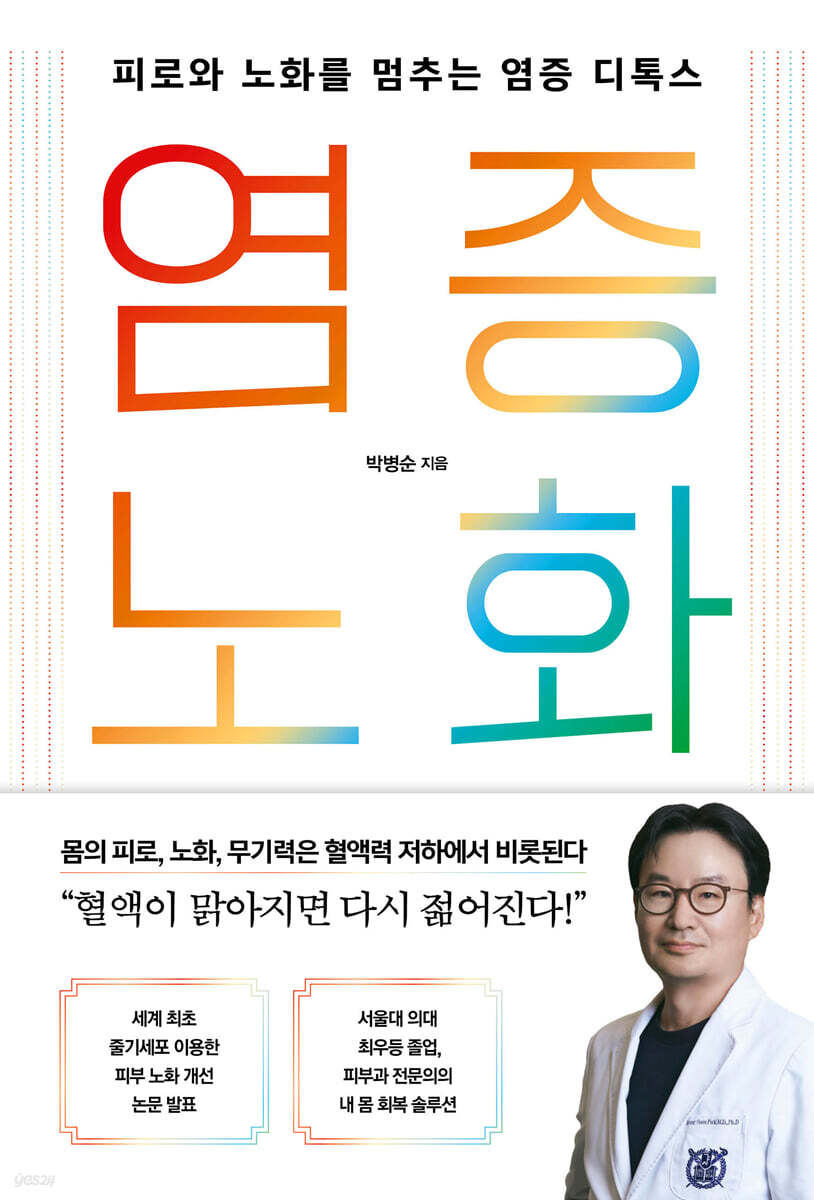
Inflammatory aging
 |
Description
Book Introduction
★★★★★The Inflammatory Aging Bible, a compilation of global trends in aging science.
★★★★★The Reality of Inflammation and the 4-Step Recovery Program Focused on by Stanford
Weakness, fatigue, and aging are signs of accumulated blood inflammation.
“When your blood is purified, you become young again.”
Dr. Park Byeong-sun, a doctor who tells patients who come to the hospital with skin concerns, “Let’s start with a blood test,” finds the answer to aging in the blood, not the skin.
After studying regenerative medicine and treating patients for over 20 years, he became convinced.
Aging begins not on the outside, but inside the body, when the functions of blood and immune cells break down.
As inflammation spreads, fatigue sets in, serotonin is depleted, and depression and anxiety take over the brain.
Immune cells become powerless and cellular energy stops.
The result is skin aging, organ aging, and emotional burnout.
But this trend can be reversed.
By purifying the blood, activating immune cells, and reactivating mitochondria, the body can become young again.
"Inflammation Aging" guides you through the most scientific detoxification methods to stop fatigue and aging.
★★★★★The Reality of Inflammation and the 4-Step Recovery Program Focused on by Stanford
Weakness, fatigue, and aging are signs of accumulated blood inflammation.
“When your blood is purified, you become young again.”
Dr. Park Byeong-sun, a doctor who tells patients who come to the hospital with skin concerns, “Let’s start with a blood test,” finds the answer to aging in the blood, not the skin.
After studying regenerative medicine and treating patients for over 20 years, he became convinced.
Aging begins not on the outside, but inside the body, when the functions of blood and immune cells break down.
As inflammation spreads, fatigue sets in, serotonin is depleted, and depression and anxiety take over the brain.
Immune cells become powerless and cellular energy stops.
The result is skin aging, organ aging, and emotional burnout.
But this trend can be reversed.
By purifying the blood, activating immune cells, and reactivating mitochondria, the body can become young again.
"Inflammation Aging" guides you through the most scientific detoxification methods to stop fatigue and aging.
- You can preview some of the book's contents.
Preview
index
Recommendation
Prologue: When your blood is purified, you become young again.
Chapter 1: We've Been Fooled by the Phenomenon
The doctor didn't look closely | What cancer and Alzheimer's disease have in common | There's a sequence to the collapse of the body, bones, and brain | Chronic fatigue syndrome and long-term COVID-19 are essentially the same | Inflammation management is the first step to staying young.
Chapter 2: When Mito is damaged, aging begins.
The more iron you have, the more likely you are to get sick? | When adding good, reduce the bad | Invisible forces rule us | The Mito War on the Playground | The Pancreas and the Brain: Mito's Most Vulnerable Organs | When Mito Takes Revenge, Humans Age
Chapter 3: All Arrows Point to the Party
The Sweetest Poison That Destroys Your Body | Sugar: A Special Requirement | 10g of Sugar a Day Changes Your Biological Age | A Sweet Bite Destroys Your Liver and Brain
Chapter 4: Reset the Aging Clock in Your Blood
Controlling inflammation can also help with mood swings, hair loss, and insomnia. | No longevity without blood—what studies say. | Blood is a conduit for 'aging signals.' | Eliminate aging cells and purify your blood. | Why you should get regular blood tests.
Chapter 5: The War on Inflammation: A Winning Routine
A Healthy Meal That Reduces Inflammation | Eat Less, Purge, Choose, and Change | Treat Bad Foods as Poison | It's Best to Eat Vegetables Boiled | Get the Right Stimulation with a Sauna | Sitting Makes You Old, Moving Makes You Young | A 4-Step Routine to Stop Fatigue and Aging
References and Sources
About the Author
Prologue: When your blood is purified, you become young again.
Chapter 1: We've Been Fooled by the Phenomenon
The doctor didn't look closely | What cancer and Alzheimer's disease have in common | There's a sequence to the collapse of the body, bones, and brain | Chronic fatigue syndrome and long-term COVID-19 are essentially the same | Inflammation management is the first step to staying young.
Chapter 2: When Mito is damaged, aging begins.
The more iron you have, the more likely you are to get sick? | When adding good, reduce the bad | Invisible forces rule us | The Mito War on the Playground | The Pancreas and the Brain: Mito's Most Vulnerable Organs | When Mito Takes Revenge, Humans Age
Chapter 3: All Arrows Point to the Party
The Sweetest Poison That Destroys Your Body | Sugar: A Special Requirement | 10g of Sugar a Day Changes Your Biological Age | A Sweet Bite Destroys Your Liver and Brain
Chapter 4: Reset the Aging Clock in Your Blood
Controlling inflammation can also help with mood swings, hair loss, and insomnia. | No longevity without blood—what studies say. | Blood is a conduit for 'aging signals.' | Eliminate aging cells and purify your blood. | Why you should get regular blood tests.
Chapter 5: The War on Inflammation: A Winning Routine
A Healthy Meal That Reduces Inflammation | Eat Less, Purge, Choose, and Change | Treat Bad Foods as Poison | It's Best to Eat Vegetables Boiled | Get the Right Stimulation with a Sauna | Sitting Makes You Old, Moving Makes You Young | A 4-Step Routine to Stop Fatigue and Aging
References and Sources
About the Author
Detailed image

Into the book
When you visit a hospital, they usually do a blood test.
When you look at the test results, they are usually within the normal range or some values are slightly off.
If the test results come back normal, your doctor will advise you.
“That’s usually the case at that age,” or “It looks like you need to manage your stress.”
Eventually, you feel the aging process with your whole body, but you spend each day without finding a clear solution.
Of course, if the numbers are outside the normal range, the situation is a little different.
If your blood pressure is high, you take antihypertensive medication. If your cholesterol level is high, you take statins (a specialized drug used to treat hyperlipidemia by inhibiting cholesterol synthesis in the body).
So, are patients more satisfied after taking the medication? Unfortunately, no.
Even if the numbers stabilize, the symptoms that were actually uncomfortable, such as fatigue, frequent pain, and insomnia, do not improve significantly.
There is an easily overlooked pitfall here.
In the medical community, the term 'WNL Within Normal Limits' is used when test results are within the normal range.
However, some medical professionals interpret this critically as 'We Never Looked'.
This is to warn of the dangers of judging a patient's condition based solely on simple numbers.
In fact, health cannot be defined by simple numbers.
While numbers can be objective indicators, true health is determined by more complex factors that lie beyond the charts.
--- p.17~18, from “The Doctor Didn’t Look Properly”
A woman in her early 20s came to the hospital seeking treatment for acne and skin scars.
She was majoring in art, but had to drop out of her studies due to extreme fatigue.
I couldn't fall asleep easily at night and couldn't get up in the morning.
She complained that she was having difficulty maintaining her studies, let alone her daily life.
The moment I heard the story, I knew it wasn't just a simple skin problem.
I thought that acne was just a superficial symptom and that there must be a deeper cause behind it.
After conducting blood tests and a questionnaire, it was confirmed that she was suffering from chronic fatigue syndrome.
What's more interesting is that her blood tests showed abnormally high levels of inflammatory markers, even though no specific medical conditions were found.
This suggested that she may be experiencing physiological changes similar to inflammatory aging, rather than simple fatigue.
As her treatment continued, her symptoms became increasingly reminiscent of inflammatory aging.
I focused on treatments that reduced inflammation and modulated immune function.
As a result, her condition gradually improved over time, and she finally recovered enough to return to her studies.
This case study revealed that chronic fatigue syndrome is not simply a state of energy deficiency, but a disease deeply related to inflammation in the body.
Furthermore, we were able to confirm that the symptom patterns of patients with chronic fatigue syndrome were quite similar to those of people with severe inflammatory aging.
So when I see patients in my clinic with high inflammation levels, I often refer to the diagnostic criteria for chronic fatigue syndrome.
In fact, if you apply the criteria one by one, you can find significant similarities with the symptoms of patients with severe inflammatory aging.
--- p.44~45, from “Chronic Fatigue Syndrome and Long COVID, the Essence is the Same”
We tend to think that more iron is better, but as with everything, too much of anything is bad.
If excessive, it can actually act as a factor that promotes inflammation.
In particular, increased ferritin levels in severe COVID-19 patients are not simply the result of an inflammatory response, but are closely related to abnormalities in iron metabolism.
The more severe the inflammation, the more likely it is that free iron (Fe2+) will increase, which activates the 'Fenton reaction' in the body.
When the Fenton reaction is activated, a powerful reactive oxygen species called hydroxyl radical (OH) is generated, which damages cells and increases oxidative stress, further aggravating inflammation.
This process is likely to be one of the key factors determining the severity of COVID-19.
Iron levels also affect longevity and health.
American biologist Dennis Mangan said in his book Dumping Iron, “One of the reasons women live longer than men is because they menstruate.”
This is because menstruation helps prevent iron overload by periodically releasing blood.
In fact, when comparing the amount of iron in a 45-year-old adult, men have about four times more than women.
In proportion to this, the incidence of myocardial infarction is four times higher in men.
Additionally, men have higher rates of cancer, heart disease, and neurodegenerative diseases such as Parkinson's and Alzheimer's than women.
These are all known diseases that are related to iron.
Of course, postmenopausal women also experience increased risk of heart disease and cancer as their iron levels rise.
--- p.75~76, from “The more iron you have, the more likely you are to get sick?”
An interesting study was recently published that revealed a link between sugar and aging.
Researchers at the University of California, San Francisco, studied how eating habits affected the epigenetic clock of 350 women.
Research has shown that the healthier your diet, the younger your cells are, and that every ounce of added sugar you consume increases your biological age.
“Because epigenetic patterns are reversible, reducing your daily added sugar intake by 10 grams is equivalent to turning back your biological age by 2.4 months,” the researchers explained.
So, how much is 10g of added sugar? Coke contains 20g of added sugar per 200ml.
Snacks, ice cream, and various flavored milks easily exceed 10g of sugar.
Considering this, we can see that aging can be reversed simply by reducing the amount of snacks and drinks we frequently consume in our daily lives.
The results of this study clearly show that reducing sugar intake is the first step toward preventing aging and maintaining a youthful appearance.
Sugar doesn't just age you on the outside; it affects you deep inside.
As mentioned earlier, glucose and fructose are metabolized in different ways, damaging our bodies and accelerating aging.
Sugar has the harmful effects of both glucose and fructose, slowly destroying our bodies from the inside out – our blood vessels, organs, immune system, and overall metabolic function.
--- p.135~136, from “10g of sugar a day changes your biological age”
A recent study revealed some shocking findings regarding the intake of multivitamins.
According to the British Guardian, a research team led by Dr. Erika Loftfield of the National Cancer Institute in the United States analyzed data from more than 390,000 adults who were followed for more than 20 years and found no evidence that taking a daily multivitamin reduces the risk of death.
Rather, the risk of death was 4% higher among users during the first few years of follow-up.
Taking a daily multivitamin does not help you live longer and may even increase your risk of premature death.
(…)
There are also a growing number of studies showing that excessive intake of antioxidant supplements can actually be detrimental to your health.
Normally, active oxygen is known to increase the risk of cancer and cardiovascular disease, so it can be thought of as a dangerous substance.
However, a certain level of reactive oxygen species is required for mito to function normally.
Reactive oxygen species play a role in mito's body's defense mechanisms, such as cell death, predation, and detoxification.
In other words, it is not something that should be completely eliminated, but rather has a dual-sided nature that has a beneficial effect on the body.
These active oxygen species can basically be sufficiently controlled with vitamins contained in food.
(…)
I always reach the same conclusion when talking with Professor Myung Seung-kwon of the National Cancer Center, who is conducting a meta-analysis on nutritional supplement use.
He always says, “Nothing works except iron supplements for pregnant women.”
I think the same thing.
I believe that it is most important to get nutrients from foods in their natural state.
Natural foods contain a balanced amount of vitamins, minerals, and other nutrients that our bodies need, and have a high absorption rate.
--- p.199~200, from “A Healthy Table that Reduces Inflammation”
It is important to consider the ‘order’ of aerobic exercise and strength training.
As we have seen, strength training stimulates the mTOR pathway and promotes muscle growth and protein synthesis.
It is especially activated with the intake of nutrients such as protein or essential amino acids (BCAA).
Aerobic exercise, on the other hand, activates the AMPK pathway.
It plays a role in regulating energy balance and promoting mitochondrial production and fatty acid oxidation.
Because these two pathways interact, the effects can vary depending on the order of exercise. AMPK activation is relatively short-lived, returning to normal within a few hours after aerobic exercise.
In contrast, the mTOR pathway is maintained for a relatively long period of time.
Considering this, it is ideal to do 'strength training' first and then 'aerobic exercise'.
By doing this, you will sufficiently stimulate the protein synthesis pathways necessary for muscle growth, and then use aerobic exercise to help with mitochondria production and recovery.
Conversely, if you do aerobic exercise first and then immediately do strength training, AMPK may be activated first, inhibiting the action of mTOR.
In particular, performing strength training immediately after high-intensity aerobic exercise can have a negative impact on muscle recovery and protein synthesis.
Of course, doing cardio first isn't always a problem.
Light walking or low-intensity jogging is safe to do after strength training because it does not overstimulate AMPK.
However, caution is advised with exercises that involve high AMPK activity, such as high-intensity interval training or marathons, as these may interfere with muscle recovery.
When you look at the test results, they are usually within the normal range or some values are slightly off.
If the test results come back normal, your doctor will advise you.
“That’s usually the case at that age,” or “It looks like you need to manage your stress.”
Eventually, you feel the aging process with your whole body, but you spend each day without finding a clear solution.
Of course, if the numbers are outside the normal range, the situation is a little different.
If your blood pressure is high, you take antihypertensive medication. If your cholesterol level is high, you take statins (a specialized drug used to treat hyperlipidemia by inhibiting cholesterol synthesis in the body).
So, are patients more satisfied after taking the medication? Unfortunately, no.
Even if the numbers stabilize, the symptoms that were actually uncomfortable, such as fatigue, frequent pain, and insomnia, do not improve significantly.
There is an easily overlooked pitfall here.
In the medical community, the term 'WNL Within Normal Limits' is used when test results are within the normal range.
However, some medical professionals interpret this critically as 'We Never Looked'.
This is to warn of the dangers of judging a patient's condition based solely on simple numbers.
In fact, health cannot be defined by simple numbers.
While numbers can be objective indicators, true health is determined by more complex factors that lie beyond the charts.
--- p.17~18, from “The Doctor Didn’t Look Properly”
A woman in her early 20s came to the hospital seeking treatment for acne and skin scars.
She was majoring in art, but had to drop out of her studies due to extreme fatigue.
I couldn't fall asleep easily at night and couldn't get up in the morning.
She complained that she was having difficulty maintaining her studies, let alone her daily life.
The moment I heard the story, I knew it wasn't just a simple skin problem.
I thought that acne was just a superficial symptom and that there must be a deeper cause behind it.
After conducting blood tests and a questionnaire, it was confirmed that she was suffering from chronic fatigue syndrome.
What's more interesting is that her blood tests showed abnormally high levels of inflammatory markers, even though no specific medical conditions were found.
This suggested that she may be experiencing physiological changes similar to inflammatory aging, rather than simple fatigue.
As her treatment continued, her symptoms became increasingly reminiscent of inflammatory aging.
I focused on treatments that reduced inflammation and modulated immune function.
As a result, her condition gradually improved over time, and she finally recovered enough to return to her studies.
This case study revealed that chronic fatigue syndrome is not simply a state of energy deficiency, but a disease deeply related to inflammation in the body.
Furthermore, we were able to confirm that the symptom patterns of patients with chronic fatigue syndrome were quite similar to those of people with severe inflammatory aging.
So when I see patients in my clinic with high inflammation levels, I often refer to the diagnostic criteria for chronic fatigue syndrome.
In fact, if you apply the criteria one by one, you can find significant similarities with the symptoms of patients with severe inflammatory aging.
--- p.44~45, from “Chronic Fatigue Syndrome and Long COVID, the Essence is the Same”
We tend to think that more iron is better, but as with everything, too much of anything is bad.
If excessive, it can actually act as a factor that promotes inflammation.
In particular, increased ferritin levels in severe COVID-19 patients are not simply the result of an inflammatory response, but are closely related to abnormalities in iron metabolism.
The more severe the inflammation, the more likely it is that free iron (Fe2+) will increase, which activates the 'Fenton reaction' in the body.
When the Fenton reaction is activated, a powerful reactive oxygen species called hydroxyl radical (OH) is generated, which damages cells and increases oxidative stress, further aggravating inflammation.
This process is likely to be one of the key factors determining the severity of COVID-19.
Iron levels also affect longevity and health.
American biologist Dennis Mangan said in his book Dumping Iron, “One of the reasons women live longer than men is because they menstruate.”
This is because menstruation helps prevent iron overload by periodically releasing blood.
In fact, when comparing the amount of iron in a 45-year-old adult, men have about four times more than women.
In proportion to this, the incidence of myocardial infarction is four times higher in men.
Additionally, men have higher rates of cancer, heart disease, and neurodegenerative diseases such as Parkinson's and Alzheimer's than women.
These are all known diseases that are related to iron.
Of course, postmenopausal women also experience increased risk of heart disease and cancer as their iron levels rise.
--- p.75~76, from “The more iron you have, the more likely you are to get sick?”
An interesting study was recently published that revealed a link between sugar and aging.
Researchers at the University of California, San Francisco, studied how eating habits affected the epigenetic clock of 350 women.
Research has shown that the healthier your diet, the younger your cells are, and that every ounce of added sugar you consume increases your biological age.
“Because epigenetic patterns are reversible, reducing your daily added sugar intake by 10 grams is equivalent to turning back your biological age by 2.4 months,” the researchers explained.
So, how much is 10g of added sugar? Coke contains 20g of added sugar per 200ml.
Snacks, ice cream, and various flavored milks easily exceed 10g of sugar.
Considering this, we can see that aging can be reversed simply by reducing the amount of snacks and drinks we frequently consume in our daily lives.
The results of this study clearly show that reducing sugar intake is the first step toward preventing aging and maintaining a youthful appearance.
Sugar doesn't just age you on the outside; it affects you deep inside.
As mentioned earlier, glucose and fructose are metabolized in different ways, damaging our bodies and accelerating aging.
Sugar has the harmful effects of both glucose and fructose, slowly destroying our bodies from the inside out – our blood vessels, organs, immune system, and overall metabolic function.
--- p.135~136, from “10g of sugar a day changes your biological age”
A recent study revealed some shocking findings regarding the intake of multivitamins.
According to the British Guardian, a research team led by Dr. Erika Loftfield of the National Cancer Institute in the United States analyzed data from more than 390,000 adults who were followed for more than 20 years and found no evidence that taking a daily multivitamin reduces the risk of death.
Rather, the risk of death was 4% higher among users during the first few years of follow-up.
Taking a daily multivitamin does not help you live longer and may even increase your risk of premature death.
(…)
There are also a growing number of studies showing that excessive intake of antioxidant supplements can actually be detrimental to your health.
Normally, active oxygen is known to increase the risk of cancer and cardiovascular disease, so it can be thought of as a dangerous substance.
However, a certain level of reactive oxygen species is required for mito to function normally.
Reactive oxygen species play a role in mito's body's defense mechanisms, such as cell death, predation, and detoxification.
In other words, it is not something that should be completely eliminated, but rather has a dual-sided nature that has a beneficial effect on the body.
These active oxygen species can basically be sufficiently controlled with vitamins contained in food.
(…)
I always reach the same conclusion when talking with Professor Myung Seung-kwon of the National Cancer Center, who is conducting a meta-analysis on nutritional supplement use.
He always says, “Nothing works except iron supplements for pregnant women.”
I think the same thing.
I believe that it is most important to get nutrients from foods in their natural state.
Natural foods contain a balanced amount of vitamins, minerals, and other nutrients that our bodies need, and have a high absorption rate.
--- p.199~200, from “A Healthy Table that Reduces Inflammation”
It is important to consider the ‘order’ of aerobic exercise and strength training.
As we have seen, strength training stimulates the mTOR pathway and promotes muscle growth and protein synthesis.
It is especially activated with the intake of nutrients such as protein or essential amino acids (BCAA).
Aerobic exercise, on the other hand, activates the AMPK pathway.
It plays a role in regulating energy balance and promoting mitochondrial production and fatty acid oxidation.
Because these two pathways interact, the effects can vary depending on the order of exercise. AMPK activation is relatively short-lived, returning to normal within a few hours after aerobic exercise.
In contrast, the mTOR pathway is maintained for a relatively long period of time.
Considering this, it is ideal to do 'strength training' first and then 'aerobic exercise'.
By doing this, you will sufficiently stimulate the protein synthesis pathways necessary for muscle growth, and then use aerobic exercise to help with mitochondria production and recovery.
Conversely, if you do aerobic exercise first and then immediately do strength training, AMPK may be activated first, inhibiting the action of mTOR.
In particular, performing strength training immediately after high-intensity aerobic exercise can have a negative impact on muscle recovery and protein synthesis.
Of course, doing cardio first isn't always a problem.
Light walking or low-intensity jogging is safe to do after strength training because it does not overstimulate AMPK.
However, caution is advised with exercises that involve high AMPK activity, such as high-intensity interval training or marathons, as these may interfere with muscle recovery.
--- p.231-232, from “If you sit, you get old, if you move, you get young”
Publisher's Review
“My health checkup results are normal, but why am I so tired?”
We tend to feel relieved when the results of a health checkup are within the 'normal range'.
I think there will be no problem.
However, Director Park Byeong-sun, author of “Inflammatory Aging,” says:
“Even if your numbers are normal, your body may already be aging.” In many cases, there is no diagnosis, let alone a solution, despite persistent, inexplicable changes like fatigue, pain, and insomnia.
At the hospital, all I get back are vague comments like, “That’s just how it is at that age” or “Try to reduce your stress.”
The bigger problem is when the numbers are abnormal.
If your cholesterol is high, you get prescribed medication, and if your blood pressure is high, you take blood pressure medication.
However, many people say that their symptoms do not improve even after taking medication.
Even though the numbers may have gone down, the fire of ‘inflammation’ continues to burn deep inside the body.
The author says this is the essence of aging that we face today.
After graduating with honors from Seoul National University College of Medicine and becoming a dermatologist at Seoul National University Hospital, he has been studying aging mechanisms encompassing the skin, immune system, and nervous system for over 20 years by combining stem cells and microbial immunology.
He views aging not as a problem of appearance but as a problem of blood and mitochondrial function, and unravels the link between disease, aging, and lethargy with the concept of 'InflammAging'.
Aging begins in the blood, and recovery begins in the blood.
The Real Health Routine You Never Knew About
His treatment philosophy is consistent.
“Aging doesn’t start in the skin.
“It starts in the blood.” A female patient in her 20s is a case that perfectly demonstrates that philosophy.
She went to the hospital with acne and scars, but was suffering from extreme fatigue and sleep disturbance.
The blood test results showed no particular problems, but the inflammation level was unusually high, and Director Park interpreted this as an early sign of 'inflammatory aging.'
By lowering inflammation and regulating immune function, her life was quickly restored.
This case convinced him that chronic fatigue syndrome was not simply a disease of energy depletion, but was deeply connected to blood inflammation.
Another patient was a man in his 60s.
He has been exercising his entire life, but he has never been able to overcome the 70kg barbell barrier.
But after concurrent immunomodulatory therapy, I finally lifted the weight.
The author realized this through these cases.
Managing inflammation well can go beyond just maintaining health and enhance physical abilities, regardless of age.
Based on numerous clinical cases and scientific evidence, "Inflammation Aging" dissects the reality of aging and suggests ways to reverse its pace.
The author questions the "common sense" of health we've believed, drawing on globally recognized research and the latest aging science data.
And sometimes it contradicts them head on.
For example, is the belief that the more iron you consume, the better? In fact, men's iron levels are about four times higher than women's, and their risk of heart disease, cancer, and dementia is correspondingly higher.
Iron excess causes inflammation, increases free radicals, and causes cell damage.
We also need to reconsider our attitude of blindly trusting vitamins and nutritional supplements.
A large-scale study in the United States showed that people who took multivitamins every day had a higher mortality rate, and the results also showed that excessive suppression of reactive oxygen species can actually reduce mitochondrial function.
The author emphasizes:
“Nutrition must be obtained from food.
“You need to change your diet itself, not just supplements.” The order of your exercises is also important.
You should do strength training first and then aerobic exercise to ensure efficient mitochondrial production and muscle recovery.
Conversely, doing high-intensity aerobic exercise first can actually accelerate aging.
In this way, each and every small choice in our daily lives determines the speed of aging.
Clean out the waste inside your body before adding nutrients!
'Guide to Interpreting Blood Test Results' and 'Pro-Inflammatory Foods vs.
Included in the 'Inflammation-Reducing Diet'
This book diagnoses that "blood inflammation" is at the heart of all problems, from aging and fatigue to emotional issues and immune disorders, and presents a four-step program to recover from it.
Step 1 is to recognize the reality of inflammation,
Step 2: Purify your blood through diet and lifestyle.
Step 3 restores mitochondrial function,
Step 4 is to restore the nervous system, immune system, and intestinal axis together.
This book scientifically uncovers the true nature of inflammation, the starting point of aging, and presents specific, actionable strategies for preventing and recovering from it, including dietary therapies, methods for improving blood flow, and lifestyle routines.
This book goes beyond simple health tips and gives you a blueprint for anti-aging based on physiological principles.
This is why experts in various fields, including Seoul National University College of Medicine Professor Emeritus Han Gyu-seop, actress Song Yoon-ah, and medical journalist Lee Jin-han, recommended this book.
Because it contains both scientificity, practicality, and trustworthiness.
If you are someone who is always tired, feels listless for no reason, or suddenly feels like you are getting older, it is time to suspect the spark of 'inflammation' hiding in your blood.
《Inflammatory Aging》 guides you on the path to extinguishing that flame and becoming young again.
Can we reverse the course of aging? This book offers the most realistic answer to that question.
We tend to feel relieved when the results of a health checkup are within the 'normal range'.
I think there will be no problem.
However, Director Park Byeong-sun, author of “Inflammatory Aging,” says:
“Even if your numbers are normal, your body may already be aging.” In many cases, there is no diagnosis, let alone a solution, despite persistent, inexplicable changes like fatigue, pain, and insomnia.
At the hospital, all I get back are vague comments like, “That’s just how it is at that age” or “Try to reduce your stress.”
The bigger problem is when the numbers are abnormal.
If your cholesterol is high, you get prescribed medication, and if your blood pressure is high, you take blood pressure medication.
However, many people say that their symptoms do not improve even after taking medication.
Even though the numbers may have gone down, the fire of ‘inflammation’ continues to burn deep inside the body.
The author says this is the essence of aging that we face today.
After graduating with honors from Seoul National University College of Medicine and becoming a dermatologist at Seoul National University Hospital, he has been studying aging mechanisms encompassing the skin, immune system, and nervous system for over 20 years by combining stem cells and microbial immunology.
He views aging not as a problem of appearance but as a problem of blood and mitochondrial function, and unravels the link between disease, aging, and lethargy with the concept of 'InflammAging'.
Aging begins in the blood, and recovery begins in the blood.
The Real Health Routine You Never Knew About
His treatment philosophy is consistent.
“Aging doesn’t start in the skin.
“It starts in the blood.” A female patient in her 20s is a case that perfectly demonstrates that philosophy.
She went to the hospital with acne and scars, but was suffering from extreme fatigue and sleep disturbance.
The blood test results showed no particular problems, but the inflammation level was unusually high, and Director Park interpreted this as an early sign of 'inflammatory aging.'
By lowering inflammation and regulating immune function, her life was quickly restored.
This case convinced him that chronic fatigue syndrome was not simply a disease of energy depletion, but was deeply connected to blood inflammation.
Another patient was a man in his 60s.
He has been exercising his entire life, but he has never been able to overcome the 70kg barbell barrier.
But after concurrent immunomodulatory therapy, I finally lifted the weight.
The author realized this through these cases.
Managing inflammation well can go beyond just maintaining health and enhance physical abilities, regardless of age.
Based on numerous clinical cases and scientific evidence, "Inflammation Aging" dissects the reality of aging and suggests ways to reverse its pace.
The author questions the "common sense" of health we've believed, drawing on globally recognized research and the latest aging science data.
And sometimes it contradicts them head on.
For example, is the belief that the more iron you consume, the better? In fact, men's iron levels are about four times higher than women's, and their risk of heart disease, cancer, and dementia is correspondingly higher.
Iron excess causes inflammation, increases free radicals, and causes cell damage.
We also need to reconsider our attitude of blindly trusting vitamins and nutritional supplements.
A large-scale study in the United States showed that people who took multivitamins every day had a higher mortality rate, and the results also showed that excessive suppression of reactive oxygen species can actually reduce mitochondrial function.
The author emphasizes:
“Nutrition must be obtained from food.
“You need to change your diet itself, not just supplements.” The order of your exercises is also important.
You should do strength training first and then aerobic exercise to ensure efficient mitochondrial production and muscle recovery.
Conversely, doing high-intensity aerobic exercise first can actually accelerate aging.
In this way, each and every small choice in our daily lives determines the speed of aging.
Clean out the waste inside your body before adding nutrients!
'Guide to Interpreting Blood Test Results' and 'Pro-Inflammatory Foods vs.
Included in the 'Inflammation-Reducing Diet'
This book diagnoses that "blood inflammation" is at the heart of all problems, from aging and fatigue to emotional issues and immune disorders, and presents a four-step program to recover from it.
Step 1 is to recognize the reality of inflammation,
Step 2: Purify your blood through diet and lifestyle.
Step 3 restores mitochondrial function,
Step 4 is to restore the nervous system, immune system, and intestinal axis together.
This book scientifically uncovers the true nature of inflammation, the starting point of aging, and presents specific, actionable strategies for preventing and recovering from it, including dietary therapies, methods for improving blood flow, and lifestyle routines.
This book goes beyond simple health tips and gives you a blueprint for anti-aging based on physiological principles.
This is why experts in various fields, including Seoul National University College of Medicine Professor Emeritus Han Gyu-seop, actress Song Yoon-ah, and medical journalist Lee Jin-han, recommended this book.
Because it contains both scientificity, practicality, and trustworthiness.
If you are someone who is always tired, feels listless for no reason, or suddenly feels like you are getting older, it is time to suspect the spark of 'inflammation' hiding in your blood.
《Inflammatory Aging》 guides you on the path to extinguishing that flame and becoming young again.
Can we reverse the course of aging? This book offers the most realistic answer to that question.
GOODS SPECIFICS
- Date of issue: August 18, 2025
- Page count, weight, size: 256 pages | 456g | 152*224*15mm
- ISBN13: 9791194755678
- ISBN10: 1194755674
You may also like
카테고리
korean


korean

![GQ KOREA Mark (Monthly): December [2025]](http://librairie.coreenne.fr/cdn/shop/files/8ef265dbbfbf186523ed75ba7319009d.jpg?v=1765340328&width=3840)


