

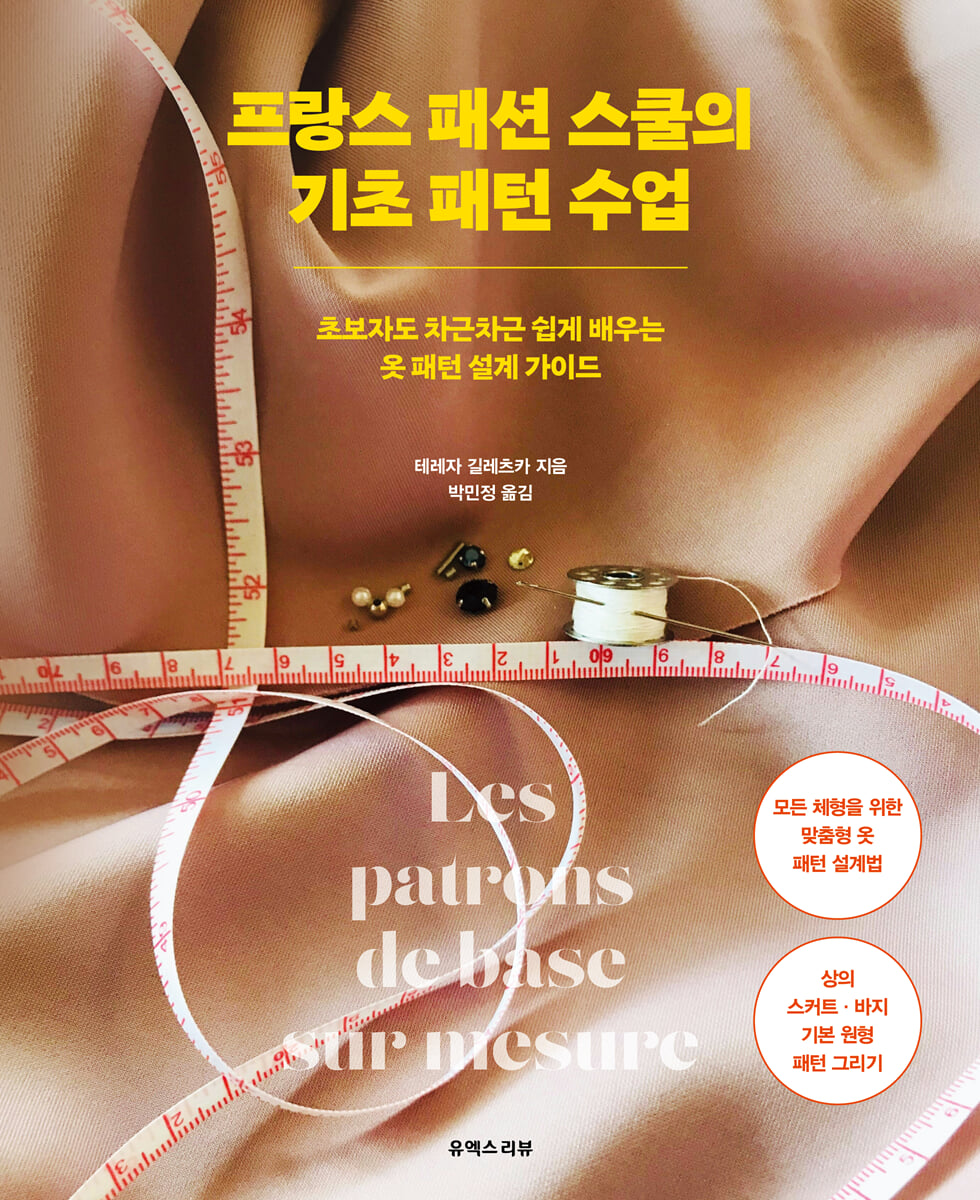
Basic pattern class at a French fashion school
 |
Description
Book Introduction
Learn the basics of clothing making with the curriculum of a famous French fashion school.
A pattern design guide with infinite applications for any body type!
A comprehensive guide to creating circular patterns for tops, sleeves, skirts, and pants.
Forget those pattern books that simply follow along! Pattern design is the most fundamental step in garment making, the starting point that determines the direction of the entire production process.
Only by properly understanding the principles of why each part of a garment is designed that way, what adjustments are needed depending on the design, and what areas to pay special attention to, can you acquire a solid foundation of knowledge that can flexibly adapt to various body types and styles.
- Basic design structure of top, sleeves, skirt, and pants
- How to properly measure your body measurements to fit your body type
- Tips to avoid common mistakes in the pattern design process
- How to modify and transform patterns according to your design
This book is structured to help readers easily understand the basics and principles of pattern design step by step based on the above content.
Following the actual curriculum of a famous French fashion school, it systematically teaches the basic circular pattern drawing method of tops, sleeves, skirts, and pants, which are the core of clothing composition.
If you master the basics, you can create any design you want.
It contains explanations and rich image material that can be used immediately in practice, providing sufficient depth and practicality for both fashion students and practitioners working in the field.
For readers who already have experience with pattern design, this book will provide an opportunity to review the basics and solidify the system, and for beginners, it will serve as a reliable companion to start making clothes on their own.
A pattern design guide with infinite applications for any body type!
A comprehensive guide to creating circular patterns for tops, sleeves, skirts, and pants.
Forget those pattern books that simply follow along! Pattern design is the most fundamental step in garment making, the starting point that determines the direction of the entire production process.
Only by properly understanding the principles of why each part of a garment is designed that way, what adjustments are needed depending on the design, and what areas to pay special attention to, can you acquire a solid foundation of knowledge that can flexibly adapt to various body types and styles.
- Basic design structure of top, sleeves, skirt, and pants
- How to properly measure your body measurements to fit your body type
- Tips to avoid common mistakes in the pattern design process
- How to modify and transform patterns according to your design
This book is structured to help readers easily understand the basics and principles of pattern design step by step based on the above content.
Following the actual curriculum of a famous French fashion school, it systematically teaches the basic circular pattern drawing method of tops, sleeves, skirts, and pants, which are the core of clothing composition.
If you master the basics, you can create any design you want.
It contains explanations and rich image material that can be used immediately in practice, providing sufficient depth and practicality for both fashion students and practitioners working in the field.
For readers who already have experience with pattern design, this book will provide an opportunity to review the basics and solidify the system, and for beginners, it will serve as a reliable companion to start making clothes on their own.
- You can preview some of the book's contents.
Preview
index
introduction
basic
virtual line
- Main lines used in the pattern
- From the pattern to the finished pattern
- Pattern features
How to measure body measurements
- Measurements for making tops
- Measurements for making a skirt
- Measurements for making pants
consultation
Designing a top pattern
- Drawing the back plate
- Drawing the front panel
- Pelvic line
- Check the dimensions
- Neckline
- Shoulder slope and shoulder width
- Forward and backward vibration
- Basic darts
- Neckline shape
- Check the vibration
- Basic allowance
- Poetry
Completed basting pattern
- Foundation
Connecting and basting the panels
- Connecting the panels
- To basting
- Connecting the top for basting
- Fitting the top
- Move changes to the pattern
Completed basic circular pattern
- Two patterns on the same blueprint
sleeve
Features of sleeves
Dimensions required for retail system
Designing a retail store
- Retail size
- Sleeve darts
- Front sleeve length
- Back sleeve length
Completed pattern
Cutting fabric
Connecting the Panel
- Sewing the sleeves
- Vibration sewing
- Panel connection order
Gabon and Modification
- Sleeve fit
- The most common mistake
skirt
Designing a Skirt Pattern
- Drawing the back plate
- Drawing the front panel
- Waist darts
- Waistline
Completed basic circular pattern
- To cut
- Connecting the skirt panels
- To basting
- Dart location
- Adjust the waistline
- Move changes to the pattern
pants
Designing a Pants Pattern
- Drawing the front panel
- Drawing the back plate
- Hem width
- Draw a border
Check the pattern
- Apply dimensions
- Poetry
- To cut
Connecting the Panel
- Sewing the side seam
- Sewing the human heart
- Re-dreaming of Siri
Gabon
- Before trying on the fitting pants
- Fit of the pants
- Backsiri
- Front view
- Most frequently occurring errors
- Side line
- Waistline
- Modify the design to fit your body type
Transforming the basic circular pattern
expansion
- Expand height
- Expand width
Modify the pattern
- Transform the top
- Modify the sleeves
- Modifying the skirt
- Modify pants
- Tools used in pattern drawing
basic
virtual line
- Main lines used in the pattern
- From the pattern to the finished pattern
- Pattern features
How to measure body measurements
- Measurements for making tops
- Measurements for making a skirt
- Measurements for making pants
consultation
Designing a top pattern
- Drawing the back plate
- Drawing the front panel
- Pelvic line
- Check the dimensions
- Neckline
- Shoulder slope and shoulder width
- Forward and backward vibration
- Basic darts
- Neckline shape
- Check the vibration
- Basic allowance
- Poetry
Completed basting pattern
- Foundation
Connecting and basting the panels
- Connecting the panels
- To basting
- Connecting the top for basting
- Fitting the top
- Move changes to the pattern
Completed basic circular pattern
- Two patterns on the same blueprint
sleeve
Features of sleeves
Dimensions required for retail system
Designing a retail store
- Retail size
- Sleeve darts
- Front sleeve length
- Back sleeve length
Completed pattern
Cutting fabric
Connecting the Panel
- Sewing the sleeves
- Vibration sewing
- Panel connection order
Gabon and Modification
- Sleeve fit
- The most common mistake
skirt
Designing a Skirt Pattern
- Drawing the back plate
- Drawing the front panel
- Waist darts
- Waistline
Completed basic circular pattern
- To cut
- Connecting the skirt panels
- To basting
- Dart location
- Adjust the waistline
- Move changes to the pattern
pants
Designing a Pants Pattern
- Drawing the front panel
- Drawing the back plate
- Hem width
- Draw a border
Check the pattern
- Apply dimensions
- Poetry
- To cut
Connecting the Panel
- Sewing the side seam
- Sewing the human heart
- Re-dreaming of Siri
Gabon
- Before trying on the fitting pants
- Fit of the pants
- Backsiri
- Front view
- Most frequently occurring errors
- Side line
- Waistline
- Modify the design to fit your body type
Transforming the basic circular pattern
expansion
- Expand height
- Expand width
Modify the pattern
- Transform the top
- Modify the sleeves
- Modifying the skirt
- Modify pants
- Tools used in pattern drawing
Detailed image

Into the book
The pattern includes all vertical and horizontal lines drawn arbitrarily on the body.
Only after going through several construction steps can a pattern be created from which the fabric can be cut into desired pieces and the desired sample (finished pattern) be created.
At each step, new lines are added, and the lines added are distinguished by their purpose.
Distinguish between circular patterns, basting patterns (basic correction and verification), lines reflecting corrections, and lines used in cutting patterns.
It is rare to redraw a circular pattern at each stage of construction.
The flat pattern is used by gradually modifying it into a finished pattern (cutting pattern), and at this time, all lines are usually drawn on the same drawing.
For the final drawing to be clear and easy to read, the lines at each step need to be clearly distinguishable.
--- p.13, from “Basics”
To create a custom pattern design that is as close to the garment pattern and silhouette as possible, you need to take accurate body measurements.
At this time, it is best not to hesitate and ask others for help.
Of course, even if the measurements are incorrect, they can be corrected later through fitting.
However, it can be a long and tiring task and there is the hassle of having to repeat the same task over and over again.
In reality, the process involves redrawing the pattern based on body measurements, sewing, reflecting the modifications on the fabric, and then recording them on the pattern.
And then cut the fabric again and sew it again to check.
If it still doesn't fit well (for example, if there's an issue with the upper body fit), you'll have to go through this whole process again.
Before repeating these tasks, if you accurately determine your body measurements from the beginning, you can save time and achieve accuracy at the same time.
--- p.18, from “Basics”
Like the back shoulder dart, the shoulder dart prevents the vibration line from spreading.
In particular, it is essential to apply the basic circular pattern to create clothes that fit the body well.
The default value of the shoulder dart can be derived from the dart that enters above the shoulder slope line.
Shoulder darts vary depending on chest volume or circumference.
When making a pattern based on standard measurements, 1cm is added to the default value, but for custom patterns, the amount of darts is increased or decreased to fit the chest volume during fitting.
Even though shoulder darts are located on the shoulder line, they can be moved anywhere around the chest depending on the cut used or the model you are creating.
--- p.49, from “Consultation”
When designing a basic circular pattern or a finished pattern, several types of basic allowances are included.
The allowance added to the measurements is absolutely necessary and may vary depending on style, fabric thickness, or personal preference (loose clothing).
The basic circular pattern includes only the minimum allowance corresponding to the seam thickness, which is rarely used in clothing pattern design.
The expansion of the trouser circle pattern adds extra height and width.
At this time, it is important to anticipate the amount of leeway in advance.
Otherwise, the pants may be too tight and difficult to wear.
Since you can't try it on to see if it fits, it's difficult to tell if it fits your body type or if the fabric flows nicely.
Only after going through several construction steps can a pattern be created from which the fabric can be cut into desired pieces and the desired sample (finished pattern) be created.
At each step, new lines are added, and the lines added are distinguished by their purpose.
Distinguish between circular patterns, basting patterns (basic correction and verification), lines reflecting corrections, and lines used in cutting patterns.
It is rare to redraw a circular pattern at each stage of construction.
The flat pattern is used by gradually modifying it into a finished pattern (cutting pattern), and at this time, all lines are usually drawn on the same drawing.
For the final drawing to be clear and easy to read, the lines at each step need to be clearly distinguishable.
--- p.13, from “Basics”
To create a custom pattern design that is as close to the garment pattern and silhouette as possible, you need to take accurate body measurements.
At this time, it is best not to hesitate and ask others for help.
Of course, even if the measurements are incorrect, they can be corrected later through fitting.
However, it can be a long and tiring task and there is the hassle of having to repeat the same task over and over again.
In reality, the process involves redrawing the pattern based on body measurements, sewing, reflecting the modifications on the fabric, and then recording them on the pattern.
And then cut the fabric again and sew it again to check.
If it still doesn't fit well (for example, if there's an issue with the upper body fit), you'll have to go through this whole process again.
Before repeating these tasks, if you accurately determine your body measurements from the beginning, you can save time and achieve accuracy at the same time.
--- p.18, from “Basics”
Like the back shoulder dart, the shoulder dart prevents the vibration line from spreading.
In particular, it is essential to apply the basic circular pattern to create clothes that fit the body well.
The default value of the shoulder dart can be derived from the dart that enters above the shoulder slope line.
Shoulder darts vary depending on chest volume or circumference.
When making a pattern based on standard measurements, 1cm is added to the default value, but for custom patterns, the amount of darts is increased or decreased to fit the chest volume during fitting.
Even though shoulder darts are located on the shoulder line, they can be moved anywhere around the chest depending on the cut used or the model you are creating.
--- p.49, from “Consultation”
When designing a basic circular pattern or a finished pattern, several types of basic allowances are included.
The allowance added to the measurements is absolutely necessary and may vary depending on style, fabric thickness, or personal preference (loose clothing).
The basic circular pattern includes only the minimum allowance corresponding to the seam thickness, which is rarely used in clothing pattern design.
The expansion of the trouser circle pattern adds extra height and width.
At this time, it is important to anticipate the amount of leeway in advance.
Otherwise, the pants may be too tight and difficult to wear.
Since you can't try it on to see if it fits, it's difficult to tell if it fits your body type or if the fabric flows nicely.
--- p.150, from "Pants"
Publisher's Review
Infinite applications! Master the basic circular pattern!
A masterclass in the fundamentals of pattern design from a French fashion school!
Forget those pattern books that simply follow along! Pattern design is the most fundamental step in garment making, the starting point that determines the direction of the entire production process.
Only by properly understanding the principles of why each part of a garment is designed that way, what adjustments are needed depending on the design, and what areas to pay special attention to, can you acquire a solid foundation of knowledge that can flexibly adapt to various body types and styles.
- Basic design structure of top, sleeves, skirt, and pants
- How to properly measure your body measurements to fit your body type
- Tips to avoid common mistakes in the pattern design process
- How to modify and transform patterns according to your design
This book is structured to help readers easily understand the basics and principles of pattern design step by step based on the above content.
Following the actual curriculum of a French fashion school, it systematically teaches the basic circular patterns of tops, sleeves, skirts, and pants, which are the core of clothing composition.
Based on her long experience teaching fashion school students, author Tereza Gilecka has come to understand the importance of personalized pattern design education.
“This book you are reading was created from experience.
Whether you want to learn how to design patterns for work or as a hobby, this book will teach you a proven learning method.
Whether they were beginners or experienced, all of my students learned how to create their own patterns at their own pace.
(…) The custom pattern design method inevitably follows one logic.
This book will help you develop quickly and steadily.”
Once you understand the principles, making clothes becomes much easier!
Developing a Sense of Pattern Design Through a Structural Approach
The biggest feature of this book is that it is structured to help students develop the ability to understand and design the structure of clothing, rather than simply copying and drawing.
Rather than memorizing patterns, each chapter guides you to judge and apply design principles on your own.
We analyze the key elements that determine the silhouette of a garment and explain, step by step, how they are reflected in actual patterns.
It contains explanations and rich image material that can be used immediately in practice, providing sufficient depth and practicality for both fashion students and practitioners working in the field.
For fashion majors and practitioners, this will be an opportunity to review the basics and re-establish their design sense, and for beginners just starting out in clothing design, it will be a systematic first step.
Even beginners can get started with confidence thanks to the structure that provides a foundation for self-design and modification, along with practical information needed in the field.
With just this one book, pattern design, which once felt complicated, will become much easier and more interesting.
A masterclass in the fundamentals of pattern design from a French fashion school!
Forget those pattern books that simply follow along! Pattern design is the most fundamental step in garment making, the starting point that determines the direction of the entire production process.
Only by properly understanding the principles of why each part of a garment is designed that way, what adjustments are needed depending on the design, and what areas to pay special attention to, can you acquire a solid foundation of knowledge that can flexibly adapt to various body types and styles.
- Basic design structure of top, sleeves, skirt, and pants
- How to properly measure your body measurements to fit your body type
- Tips to avoid common mistakes in the pattern design process
- How to modify and transform patterns according to your design
This book is structured to help readers easily understand the basics and principles of pattern design step by step based on the above content.
Following the actual curriculum of a French fashion school, it systematically teaches the basic circular patterns of tops, sleeves, skirts, and pants, which are the core of clothing composition.
Based on her long experience teaching fashion school students, author Tereza Gilecka has come to understand the importance of personalized pattern design education.
“This book you are reading was created from experience.
Whether you want to learn how to design patterns for work or as a hobby, this book will teach you a proven learning method.
Whether they were beginners or experienced, all of my students learned how to create their own patterns at their own pace.
(…) The custom pattern design method inevitably follows one logic.
This book will help you develop quickly and steadily.”
Once you understand the principles, making clothes becomes much easier!
Developing a Sense of Pattern Design Through a Structural Approach
The biggest feature of this book is that it is structured to help students develop the ability to understand and design the structure of clothing, rather than simply copying and drawing.
Rather than memorizing patterns, each chapter guides you to judge and apply design principles on your own.
We analyze the key elements that determine the silhouette of a garment and explain, step by step, how they are reflected in actual patterns.
It contains explanations and rich image material that can be used immediately in practice, providing sufficient depth and practicality for both fashion students and practitioners working in the field.
For fashion majors and practitioners, this will be an opportunity to review the basics and re-establish their design sense, and for beginners just starting out in clothing design, it will be a systematic first step.
Even beginners can get started with confidence thanks to the structure that provides a foundation for self-design and modification, along with practical information needed in the field.
With just this one book, pattern design, which once felt complicated, will become much easier and more interesting.
GOODS SPECIFICS
- Date of issue: July 25, 2025
- Page count, weight, size: 188 pages | 210*257*20mm
- ISBN13: 9791194793120
- ISBN10: 1194793126
You may also like
카테고리
korean


korean

![GQ KOREA Mark (Monthly): December [2025]](http://librairie.coreenne.fr/cdn/shop/files/8ef265dbbfbf186523ed75ba7319009d.jpg?v=1765340328&width=3840)


